Currently reading: The best MPVs and people carriers – driven and tested

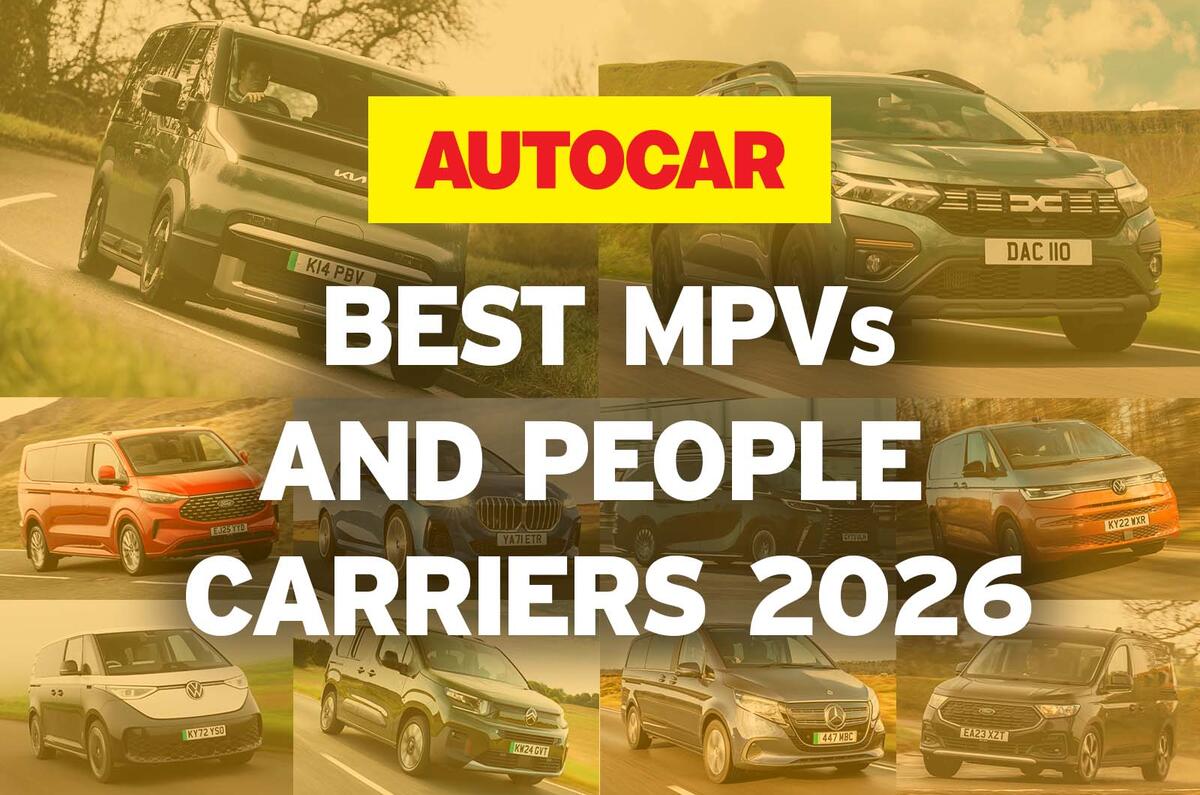
The best way to haul people and cargo is still with an MPV. These are the best ones currently on sale

The multi-purpose vehicle (MPV) has long been the ultimate exercise in automotive packaging. While sales charts are now dominated by high-riding SUVs, the MPV is still the unassailable leader for interior space, boot capacity and everyday practicality. 

It’s not necessarily about the amount of space an MPV offers: their main draw card is how efficiently they use their footprint to maximise their people-moving capabilities. 

In an era where cars are only growing in size, the best MPVs still offer more seats and greater interior flexibility than other types of car.

Right now you can have an MPV with five, six or seven seats. Some of the largest ones can even be had with up to nine. 

Of course, the uptick in sales of SUVs has watered down the level of choice. Traditional MPVs are less common, so van-derived haulers now dominate. Still, they can be had with either a combustion engine or an electric powertrain. 

Right now we think the Dacia Jogger is the best MPV on sale: it’s cheaper than a host of rivals and supremely practical inside. But are there any other models you should consider? 

Read on to find out about the top 10 MPVs and people carriers…

https://images.cdn.autocar.co.uk/
  • Design8
  • Interior8
  • Performance7
  • Ride & Handling8
  • Costs9

Best for: Value for money

Amid a flood of more premium options that have superior badge appeal, the Jogger stands at the top of the pile as the best MPV on sale today.

At just over 4.5 metres in length, the Jogger is a little shorter at the kerb than a typical C-segment MPV, but that doesn’t prevent it from offering usable passenger accommodation for up to seven.

It’s a genuine seven-seat family car that you can buy new for less than £19,000 – and there’s much more to this versatile Dacia than its bargain-basement price.

It offers five decent-sized seats and a couple of more kiddy-sized ones in the boot, but the latter can easily be lifted out entirely when carrying bigger loads.  

Performance, ride and handling are all as capable as you would expect, although you will encounter comical levels of body roll if you push too hard. 

Regardless, there hasn't been a new MPV with the potential to rejuvenate interest in this class for a decade or more, but the Jogger's value alone could do that.

Advertisement

Read our review

Car review

MPV and SUV tropes fuse with a compact seven-seater of likeably humble aspect

Back to top
https://images.cdn.autocar.co.uk/
  • Design9
  • Interior8
  • Performance8
  • Ride & Handling8
  • Costs8

Best for: Daily driving

While many van-based cars can look a bit derivative, the PV5 Passenger is a much more striking option in the MPV class. Indeed, its futuristic styling will catch your eye, but you will buy it for its endlessly practical and versatile interior. 

It's impressive just how normal the PV5 feels on the road, considering it's anything but.

Being an electric MPV, Kia has been able to maximise interior space, which means there’s generous amounts of head and leg room throughout. Adults will have no trouble getting comfortable in the second row and with the seats fixed there’s still a staggering 1330 liters to play with. 

Prices start from a very reasonable £32,995, which makes the PV5 much cheaper than the Volkswagen ID Buzz. 

Real-world range for the larger 71.2kWh battery (51.5kWh is also available) is around 200 miles, which is better than many other electric vans. 

https://images.cdn.autocar.co.uk/
  • Design8
  • Interior9
  • Performance8
  • Ride & Handling7
  • Costs7

Best for: Interior versatility 

The Transporter-based Multivan is arguably the most stylish and car-like version to appear in ‘T’ history, which you can trace back nearly 80 years.

For vans, it’s usually what’s inside that counts, but the T7’s car-derived platform and electrified powertrain make it surprisingly composed and comfortable on the move.

Underpinned by the Volkswagen Group's MQB car platform rather than a commercial vehicle one, the Multivan drives with all the assurance, comfort and refinement of a very large Golf.

You can have it with either a 2.0-litre diesel or as a petrol plug-in hybrid, which has a claimed electric-only range of up to 55 miles.  

Inside, the Multivan is simply vast and offers the sort of flexibility that other MPVs can only dream of. There are seven individual seats (you can have fewer if you wish) and the ones in the back slide, swivel and fold.

Remove the seats and you could run a removal service on the weekend. Just be prepared to pay more than £50,000 after options. 

Find Volkswagen Multivan deals with Autocar

Back to top
https://images.cdn.autocar.co.uk/
  • Design9
  • Interior8
  • Performance8
  • Ride & Handling8
  • Costs7

Best for: Character

The Volkswagen ID Buzz was one of the industry’s most hotly anticipated vehicles before it arrived. 

The ID Buzz is a surprisingly wieldy, manoeuvrable and composed drive when nipping around urban environments, and it maintains respectable body control out of town.

It sits on the Volkswagen Group’s MEB platform, which means this big bus shares the same underpinnings as the ID 3, ID 4 and ID 5 electric cars. 

A seven-seat, long-wheelbase version with a larger, 86kWh battery has been available since mid-2024 too, improving its versatility further.

SWB models have a 79kWh battery, with the range dependent on whether you go for a five-, six- or seven seater. Real-world range is around 200 miles, while a peak charging speed of 185kW makes top-ups quick. 

Entry-level models are driven by a single 281bhp electric motor, but a sporty GTX variant adds a second motor for four-wheel drive and a combined 335bhp. 

Whether you’re a devotee of Volkswagen’s traditional camper van or after a conventional people carrier, the ID Buzz offers a likeable package of versatility-first electric family motoring. 

Find Volkswagen ID Buzz deals with Autocar

https://images.cdn.autocar.co.uk/
  • Design8
  • Interior8
  • Performance8
  • Ride & Handling8
  • Costs8

Best for: Handling

The latest Tourneo Connect picks up where its underrated predecessor left off. That car delivered Citroën Berlingo-style space and utility with genuine dynamic polish, and the latest version is no different.

The ride is generally comfortable, even if it is prone to thumping when it encounters a particularly difficult intrusion (hardly a surprise for a big, empty, 1.7-tonne metal box), and you can corner with confidence.

Based on the Volkswagen Group's MQB platform, it has been tuned by Ford’s engineers to give it a poised and plush feel that allows it to scythe through corners as effortlessly as it soaks up bumps.

There’s a choice of two bodystyles: a standard five-seater and a longer seven-seater. Both deliver acres of interior space and loads of handy storage, while the sliding rear side doors boost an already versatile package.

Go for the seven-seat Grand Tourneo Connect and, with both rear benches removed, there’s a cavernous 3100 litres of carrying capacity.

Find Ford Grand Tourneo Connect deals with Autocar

Back to top
https://images.cdn.autocar.co.uk/
  • Design8
  • Interior8
  • Performance7
  • Ride & Handling7
  • Costs8

Best for: Interior space

More than two decades and almost two million sales ago, Citroën pioneered the van-based MPV with the Berlingo, and the third-generation model returns to the original's charm and oddball likeability.

A vast interior, which is used intelligently with an array of storage spaces and solutions, sliding rear doors that improve access in tight confines and robust furnishings make this a fine choice.

A facelift for 2024 gave the Berlingo a new lease of life, with its styling brought into line with the rest of Citroën’s cars. The engine line-up comprises a 1.2-litre petrol and 101bhp and 129bhp 1.5-litre diesel. Then there's the ë-Berlingo EV, which gets a 134bhp front-mounted electric motor and a 52kWh battery for a 212-mile range. 

Whatever the motive force, there are stout reasons to buy a Berlingo instead of a more conventional MPV. The interior is truly cavernous, particularly in XL form, which gets seven seats. Opt for the five-seater and you get a huge 1050-litre boot. 

It’s also super cheap, with prices starting from a hair over £24,000. 

Find Citroen Berlingo deals with Autocar

https://images.cdn.autocar.co.uk/
  • Design7
  • Interior8
  • Performance8
  • Ride & Handling8
  • Costs8

Best for: Technology 

It’s somewhat surprising that in such a declining sector, premium player BMW has stuck by the MPV.

It’s a more dynamic, better-equipped and versatile choice than its only real remaining rival, the Mercedes-Benz B-Class.

You can now get this classy and composed hatchback only in five-seat form after BMW dropped the seven-seat Gran Tourer version, but still, it serves up plenty of space for most growing families, with generous room in the rear, where a sliding bench allows you to choose between extra space for luggage or legs. 

The fit and finish is excellent, plus it gets BMW's latest slick infotainment and advanced driver aids. It feels like a BMW on the move too, with just enough agility and engagement to satisfy a keen driver. 

There’s a pair of smooth and responsive 48V mild-hybrid petrols and a diesel, plus the option of four-wheel-drive plug-in hybrids.

Both PHEVs claim an impressive 54 miles of EV range and the 230e makes a hot-hatch-humbling 322bhp.

Find BMW 2 Series Active Tourer deals with Autocar

Back to top
https://images.cdn.autocar.co.uk/
  • Design4
  • Interior7
  • Performance7
  • Ride & Handling7
  • Costs5

Best for: Load-lugging

If maximising the amount of space and passenger-carrying capacity is your top priority, you need to be looking at the passenger versions of medium-sized vans.

It feels above all like a van with no pervading sense that it shrinks around you, but it’s absolutely competent enough.

The best van to drive is the Transit Custom, and the Tourneo Custom is the same but made more habitable for carrying passengers.

You can have the Tourneo Custom with a variety of powertrains: there’s a choice of two 2.0-litre diesels which can be had with either a manual or eight-speed automatic gearbox. The plug-in hybrid pairs a 2.5-litre petrol engine with an 11.8kWh battery for an EV range of up to 32 miles. You can also have the electric E-Tourneo Custom, which can travel up to 202 miles on a charge. 

Pleasingly there are different bodystyles to choose from, too, with the long-wheelbase version offering up to nine seats. 

https://images.cdn.autocar.co.uk/
  • Design7
  • Interior8
  • Performance7
  • Ride & Handling7
  • Costs6

Best for: Style

Mercedes has got the electric seven-seater market pretty well served between the EQB crossover and the larger and more expensive EQV MPV.

The MPV is generous in size and tall, so a big battery (90kWh in this case) slips underneath it a treat, with little to no sacrifice in floor height or head room.

Effectively an electric V-Class, the EQV is a big, tall, van-like vehicle with sliding side doors and captain's chairs in the second row that can spin to face either forwards or backwards.

It's powered by a 204bhp electric motor and has a usable range of just over 200 miles. And with air suspension and plenty of mass rolling along, it's quiet, comfortable and handles well for something so large and heavy.

You would be lucky to pick up an airport transfer in an EQV – and, allowing for the tax advantages, your chauffeur would be pretty happy to run one, assuming they have easy access to a charger.

The EQV will soon be replaced by the new VLE, which boasts a range of up to 435 miles thanks to its large 115kWh battery. 

Find Mercedes-Benz EQV deals with Autocar

Back to top
https://images.cdn.autocar.co.uk/
  • Design7
  • Interior10
  • Performance4
  • Ride & Handling7
  • Costs8

Best for: Luxury

The Lexus LM is exactly the sort of posh MPV that you would expect to see transporting the wealthy to a black-tie ball in central London.

Plush and expansive in the back and fitted out like nothing else, it would do short-hop luxury transportation exceptionally well.

Starting from £89,995, it’s the most expensive MPV on this list by a considerable margin, but it’s easy to see why once you step inside. The LM’s interior has been designed for old-school luxury, and it certainly feels special.

The rear seats are airline-style recliners with heating and ventilation functions, and there are even seven massage functions, footrests and cushions. You can also lay the seats flat and use them as a sleeping area. 

Not enough? You might be interested in the 48in television. Or if that's a bit old-school for you, you can use the LM’s phone-sized touchscreen to control all media functions and top up your phone's battery using the wireless phone charger hidden in the armrest. Other hotel room functions include a fridge and shoe storage.

However, the LM isn’t the best to drive – not anywhere near it. It’s powered by a 2.5-litre four-cylinder petrol engine paired with one or two electric motors. 

Both specifications struggle with the weight of the LM, and it often feels slow, unresponsive and generally underpowered. It’s also surprisingly noisy and isn’t quite refined enough. 

HOW TO CHOOSE THE BEST MPV

Choosing the right MPV depends entirely on how many people you will be transporting and how often you will be doing it. 

Here is what you need to consider:

Seating
Why it matters: Extra seats often come at the expense of boot space.

  • Full-time seven-seaters: If you use the third row daily, look for van-based MPVs (like the Volkswagen Multivan), in which the third-row seats can actually fit adults.
  • Occasional seaters-seaters: If the extra seats are only used occasionally, a 5+2 car (like the Dacia Jogger) is more compact and easier to park.

Entry and access
Why it matters
: MPVs are often wider and taller than standard hatchbacks.

  • Sliding side doors: These are a must-have for many and make loading children into car seats in narrow parking bays infinitely easier.
  • Step-in height: Check how high the floor is. Lower floors are better for toddlers and elderly passengers to climb in unaided.

Powertrain
Why it matters:
 This will determine how far your MPV will go and shape your running costs.

  • Diesel: Still the king for heavy-load, long-distance towing or motorway cruising.
  • Hybrid (HEV) or plug-in hybrid (PHEV): Ideal for urban school runs where you can utilise electric-only modes to save on fuel and emissions.
  • Electric (EV): Great for refinement and low running costs, but be sure to check the real-world range. A full car and a roof box will significantly impact the battery's mileage.

Storage 
Why it matters:
It’s the small things that make an MPV a home.

  • Hidden storage: Underfloor cubbies, airline-style seatback tables and an abundance of USB ports (ideally in every row) to keep devices charged on long journeys.

How to decide if you actually need an MPV

An MPV makes sense if:

  • You find yourself constantly struggling to fit three child seats across a standard bench.
  • You value a walk-through cabin in which you can move between rows without exiting the car.
  • You prioritise sheer volume and space over the lifestyle image of an SUV.

An MPV doesn’t make sense if:

  • You rarely carry more than four people.
  • You don’t need a vast boot.
  • You want a faster, more efficient car that’s also better to drive.

HOW WE TESTED AND SELECTED

When reviewing MPVs, we look past the boxy silhouettes to find the vehicles that truly make life easier. An MPV needs to balance car-like refinement with van-like interior flexibility.

Here’s what we assessed:

1. Practicality and versatility
We didn't just look at boot capacity: we also looked out for quirky features that enhanced an MPV's practicality and flexibilty. This involved sliding, folding, and removing seats to see how an MPV can transition from school-run shuttle to tip-run hero. We measured the aperture of sliding doors and the height of the loading lip to see how easy it is to load heavy items. 

2. Real-world performance
We tested these cars with full passenger loads to evaluate engine tractability and braking performance. We specifically looked for good body control, ensuring the higher centre of gravity doesn't lead to excessive leaning in corners. 

3. Long-distance refinement
We subjected each car on this list to substantial motorway miles to measure cabin noise levels (NVH). We assessed whether the suspension remained composed over expansion joints and rough UK Tarmac, ensuring the ride isn't too bouncy for those in the third row.

4. Driver ergonomics and tech
While the focus is on the passengers, the driver shouldn't feel they’re driving a bus. We evaluated the driving position, visibility and the intuitiveness of the infotainment. We prioritised systems with physical climate controls and helpful tech like 360deg cameras, which are vital for manoeuvering larger vehicles.

5. Ownership costs
Whether it’s a frugal diesel for high-mileage users or a plug-in hybrid (PHEV) for city-dwelling families, we measured its real-world efficiency. We also took into account predicted residual values and the durability of interior materials, checking if the plastics and fabrics are durable and built to survive family life.

FAQs

What is an MPV?

A multipurpose vehicle (MPV) is a car that excels in versatility. They're the best option for people carrying, load-lugging and families, offering excellent all-round interior space. MPVs are often overlooked in place of SUVs, but they're more spacious, can be equipped with more seats and benefit from a higher number of storage compartments. What's not to like?

How is an MPV different from an SUV?

While both MPVs and SUVs can carry multiple passengers, the main differences between the two are: MPVs are typically more spacious inside, with better options for adjusting seats and maximizing interior volume. SUVs also generally have higher ground clearance and may offer off-road capabilities. MPVs focus more on comfort and practicality, while SUVs tend to emphasize performance and style.

What are the seating configurations in MPVs?

The number of seats in. an MPV can vary. Generally speaking, they have between five and seven seats, although some more expensive and larger options can have up to nine seats. In a standard seven-seater, they're usually organised in a 2+3+2 formation - that's two seats in the front, three in the middle row and two at the rear. While the second row of seats is often a standard seating arrangement, the rearmost, third row is often a bench seat, which can fold down or be removed completely in some models for a cavernous cargo space

What's the biggest MPV on sale in the UK today?

Lots of MPVs pride themselves on offering more space than the competition, but few will offer more room than the Ford Tourneo Custom. Ford's minivan offers up to 1200 litres of cargo space in L1 specification, rising to 1900 litres for the larger L2 model. The Tourneo can have up to nine seats, laid out in a 3+3+3 organisation, and there's plenty of room for passengers of all heights.     

Is there an electric MPV?

While the number of MPVs might be generally dwindling, the number of electric options on sale is growing. Some of the biggest brands in the UK offer MPVs with EV-only power, including Ford, Citroen, Mercedes and Volkswagen.  Some options appear in our top ten list, but our highest recommendations include the Volkswagen ID Buzz, Ford Tourneo Custom and Tourneo Connect, the Citroen e-Berlingo (or it's Stellantis stablemates from Vauxhall and Peugeot), and the Mercedes EQV. 

Join our WhatsApp community and be the first to read about the latest news and reviews wowing the car world. Our community is the best, easiest and most direct place to tap into the minds of Autocar, and if you join you’ll also be treated to unique WhatsApp content. You can leave at any time after joining - check our full privacy policy here.

Sam Phillips

Sam Phillips
Title: Staff Writer

Sam joined the Autocar team in summer 2024 and has been a contributor since 2021. He is tasked with writing used reviews and first drives as well as updating top 10s and evergreen content on the Autocar website. 

He previously led sister-title Move Electric, which covers the entire spectrum of electric vehicles, from cars to boats – and even trucks. He is an expert in new car news, used cars, electric cars, microbility, classic cars and motorsport. 

Sam graduated from Nottingham Trent University in 2021 with a BA in Journalism. In his final year he produced an in-depth feature on the automotive industry’s transition to electric cars and interviewed a number of leading experts to assess our readiness for the impending ban on the sale of petrol and diesel cars.

Join the debate

Comments
13
Add a comment…
aurasame 9 December 2025

It's intriguing that places a premium on MPVs for family vacations. What makes MPVs, as opposed to other vehicle types like minivans or SUVs, the best fit for their needs? 

flash games

SprunkiRetake 19 August 2025

just test-drove the new 2 Series Active Tourer and wow—it’s like BMW took everything I loved about the 1 Series and made it way more family-friendly without losing that premium feel! The sliding rear bench is a game-changer for road trips, and the tech inside is so intuitive, even my kids figured it out faster than I did. Now, if only my parking skills were as smooth as my Sprunki Retake high scores—maybe I should practice both in ‘easy mode’ first! Sprunki Retake

 
10001 21 February 2026

Alamin dito ang paggamit ng 10.0.0.0.1 1.0.0.0.1 10.0.0.1 pause time 10.0 0.1 para sa maayos na kontrol ng network, mas ligtas na koneksyon, at mabilis na internet access sa bahay man o opisina palagi para sa lahat ng users ngayon. 10.0.0.1


winolazoe 27 July 2025

Great recommendations for family cars! Though I usually read Someone Stop Her for laughs during road trips, these MPVs look perfect for comfortable travel with the whole crew. Love how spacious they are!