
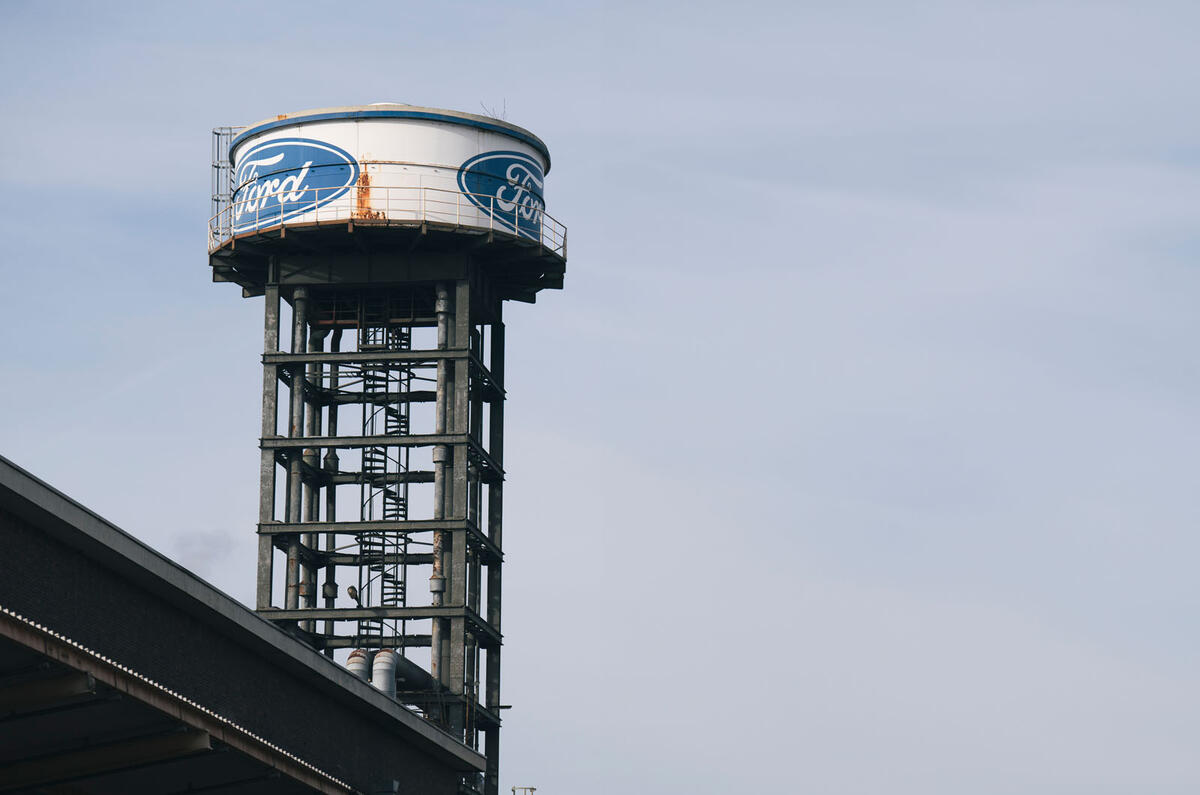
The sprawling Peoples Ford dealership in Prescot, a west Liverpool suburb, last year hoisted a new name onto its distinctive teepee structure: BYD.
A little farther towards the Mersey and even closer to Ford’s Halewood transmission and e-motor plant, Peoples Ford Speke was shrunk down at the same time in order to make space for another Chinese newcomer: Omoda/Jaecoo.

When the Peoples Ford dealer group was established back in 1983, Ford was the UK’s largest brand by far, with 29% of the market.
The Escort Mk3 – built in Halewood in the plant now belonging to JLR – sat astride the charts ahead of the Cortina in second.
But the world is now a very different place. In the first nine months, Ford was only the UK’s fourth biggest brand, with a 5.8% share.
Peoples – named for the accessibility of the pioneering Ford Model T – made the decision last year to end its 40-year solus relationship with Ford. “Ford's decision to stop Fiesta production and go all in on electric vehicles has proved to be challenging,” said chairman Brian Gilda last year. “The decision to work with BYD and Omoda/Jaecoo… will broaden our offering to the market place.”
Others are having to do the same as Ford works to hit its goal for this year of halving its dealer network in the UK from 400 in 2020.
Gilda’s decision proved prescient. The combined UK market share of BYD and Chery-owned Omoda/Jaecoo in September beat that of Ford, underlining the seriousness of the threat presented by the Chinese to established volume players like Ford.
Meanwhile, Ford is shrinking further. November will be the end of production of the Focus, marking the last time a vehicle will leave Ford’s Saarlouis plant in Germany. It follows out of the door the Fiesta, S-Max and Galaxy in 2023 and the Mondeo in 2021.
The UK remains Ford’s largest European market – just – ahead of Germany. But in the region overall, Ford has gone from being the second biggest brand after Volkswagen, with sales of just over one million cars and a share of 7% in 2015, to 12th last year at a share of 3.7%, with sales below half a million, according to figures from European automotive industry group ACEA.
In fact, last year Ford’s European sales fell to the same level as the company achieved in the UK alone in 1980.
Ford’s aim has been to reverse a chronic run of unprofitability in the region by moving from being a ‘generalist’ brand selling cars at tight or negative margins to one with fewer but theoretically more profitable ‘hero’ models.

Add your comment