Currently reading: Inside Magma: Why Genesis is taking on BMW M and AMG

Hyundai boss is hoping Magma will allow Genesis to grow its European sales by 650% in the next five years

For the launch of a new performance brand called Magma, it was freezing cold.

That probably wasn't a consideration when Genesis management planned the event, most likely imagining guests basking in Provençal sunshine as they gathered at Circuit Paul Ricard near Marseille late last year.

But the track's mile-long main straight is called Le Mistral for a reason: it's named after a strong wind, which was carrying a chill air and even snow through the region.

So a late decision was taken to move the event from a stage on the circuit itself into an aircraft hangar.

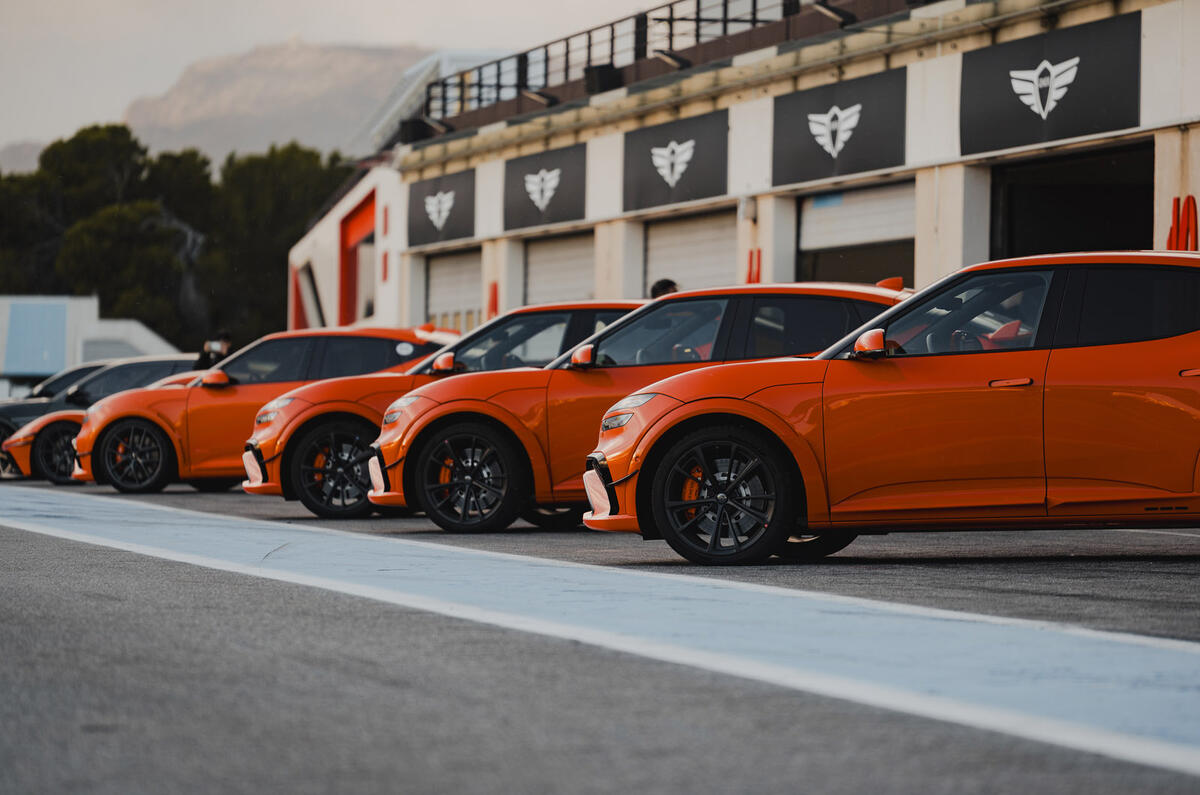
It protected guests from the wind but not the cold: blankets and handwarmers were laid on initially, before a veritable eruption of orange, performance-honed Genesis models and concepts were paraded at dizzying speed.

There were Magma versions of the G70 and G80 saloons, a coupé version of the GV80, a stunning G90 Wingback estate concept, the firm's Le Mans hypercar and the 'one more thing' mic-drop arrival of the Magma GT concept.

Technically this event's purpose was to launch the GV60 Magma the 641bhp, Porsche-Macan-rivalling electric SUV that shares much of its underpinnings with the Hyundai Ioniq 5 N.

But the gathering also marked 10 years of the Hyundai group's premium brand itself and presented a chance for Hyundai boss José Muñoz and Genesis creative chief Luc Donckerwolke to lay out their manifesto for the next decade.

The launch of Magma is key to plans to turn Genesis into what Donckerwolke calls a "luxury high-performance brand" over the coming decade.

Back to top

Every Genesis model whether petrol or electric will eventually be offered with a Magma variant, but the idea is for the brand's hot credentials to flow into all cars.

So why wait until now to launch Magma? "In the past 10 years we have achieved what other brands take decades to do," says Donckerwolke. "We've done 100 years in 10. We could not have launched Magma earlier; we needed to earn it on the ground."

Those first 10 years have, by headline metrics, been a huge success: Genesis has shifted nearly 1.5 million cars globally, a number that Muñoz says has been achieved "faster than any luxury marque in history". He adds: "This is remarkable: some people are talking about Tesla and some about Lexus, or other companies. And we said to ourselves: 'Hey, how long did it take them to reach one million sales?"

And yes, the answer is it took them longer than Genesis.

Genesis currently has annual global sales of around 225,000; the goal is to hit 350,000 a year by 2035.

That said, a challenge for Genesis is that the distribution of those sales has been extremely uneven: more than two-thirds have been in Korea, where domestic manufacturers still enjoy massive support.

Back to top

It's doing reasonably well in the US and Canada but is less well established in Europe, partly because Genesis only launched here in 2021, and then only in selected countries.

Genesis sold around 1000 cars in the UK last year and just over 5000 here in total.

It has also had to pivot from original plans to go EV-only (it's far from the only brand to have done that due to slowing EV sales growth) and switch from an online-only sales strategy to using dealerships.

Even so, Donckerwolke says: "I would not consider Europe to be less successful. We have just started, and we originally planned to be a fully electric brand from 2025. But we had to adjust and, because of the Euro 7 rules, we have a limited portfolio. But we'll bring new products to Europe and add new markets so we are just in development in Europe."

The goal is ambitious: Muñoz is aiming for Genesis to grow its European sales by 650% in the next five years. "We have a very bold plan," he says, adding the region will get a "new strategy, new product, new technology, new distribution."

The Magma brand will be one key aspect of that new European approach, although Donckerwolke is quick to differentiate it from performance sub-brands such as Mercedes-AMG, Audi Sport and BMW M.

"We are a young brand, and we have to appeal to customers," he says. "If you are in an environment where people can choose between different brands, you have to have all the facets of the brand. You have to be luxurious, you have to be sporty, you have to be cool."

Back to top

But if Genesis isn't a 'classic' performance subbrand, what is it? "It's high performance but not purely high performance," says Donckerwolke.

"We're amplifying the products of Genesis so we decided not to make a sub-brand. Every model in the line-up will have Magma at the top of the range. Magma means performance and luxury refinement; we're bringing these parameters together. We are just adding another level to the top of the existing one."

Join our WhatsApp community and be the first to read about the latest news and reviews wowing the car world. Our community is the best, easiest and most direct place to tap into the minds of Autocar, and if you join you’ll also be treated to unique WhatsApp content. You can leave at any time after joining - check our full privacy policy here.

James Attwood

James Attwood, digital editor
Title: Associate editor

James is Autocar’s associate editor, and has more than 20 years of experience of working in automotive and motorsport journalism. He has been in his current role since September 2024, and helps lead Autocar's features and new sections, while regularly interviewing some of the biggest names in the industry. Oh, and he once helped make Volkswagen currywurst. Really.

Before first joining Autocar in 2017, James spent more than a decade in motorsport journalist, working on Autosport, autosport.com, F1 Racing and Motorsport News, covering everything from club rallying to top-level international events. He also spent 18 months running Move Electric, Haymarket's e-mobility title, where he developed knowledge of the e-bike and e-scooter markets. 

Add a comment…