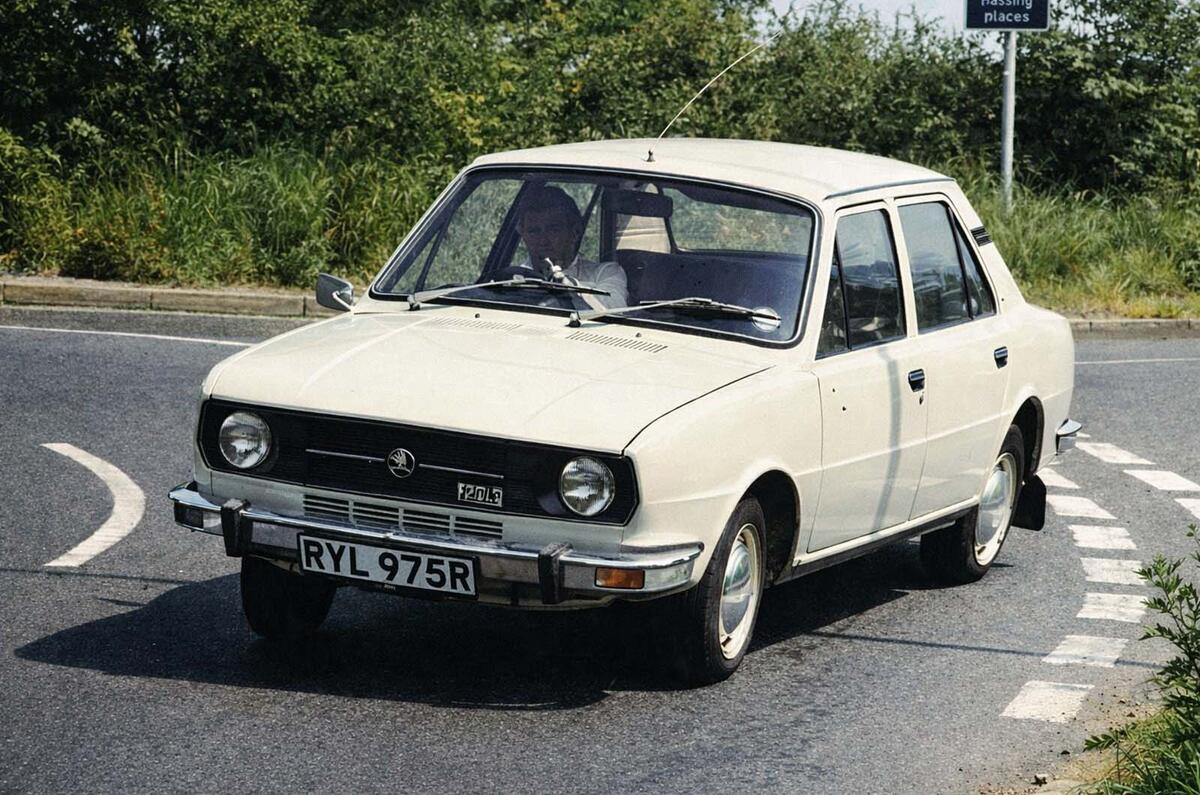

Back in the late 1970s, we mentioned a rear-engined Skoda as having "dangerous" handling characteristics – and we weren't exaggerating.
Skoda had planned to follow its western European rivals in moving to a front-engined, front-driven format with the replacement for its 100/110 saloon, the essence of which dated back to the 1000MB of 1964. But the Czechoslovakian communist state wouldn't allocate requisite funds, compelling Mladá Boleslav to simply dress its existing old-school chassis in a fresh body.
Autocar tested the 'new' Estelle 120L in August 1977, concluding that it was "not entirely without merit" despite there being "many aspects that are very poor", chief among them its handling. This would have been quite normal in decades past, certainly to VW Beetle owners, but Western car makers had since moved on to much more sympathetic set-ups.
Thus while the Estelle's handling "can be abused and controlled as a hilarious way of going round corners, causing concern for other road users", it required more skill than many drivers had. So, "we find ourselves facing this question: 'Would you be happy to know that your wife, your daughter, or perhaps even your young sales rep was going to undertake a long motorway journey in it?'
Put in the dock this way, we would have to confess to being anything but happy about it, especially if the weather was bad, and the more so if one had doubts about the person's driving ability."
Enjoy full access to the complete Autocar archive at the magazineshop.com
We later explained its flaw in a technical manner: "Swing axles are at their worst when used on driven axles of rear-engined cars, because the effective length of the arm is normally from the sides of the differential to the wheel and there is a lot of body weight to control.
With this arrangement, the roll centre of the suspension is above the height of the hubs, and this gives the worst condition for the dreaded 'jack-up'. "As the car corners, the friction force between the outer tyre and the road pushes inwards at ground level, while the mass of the car is pushing outwards above ground level.
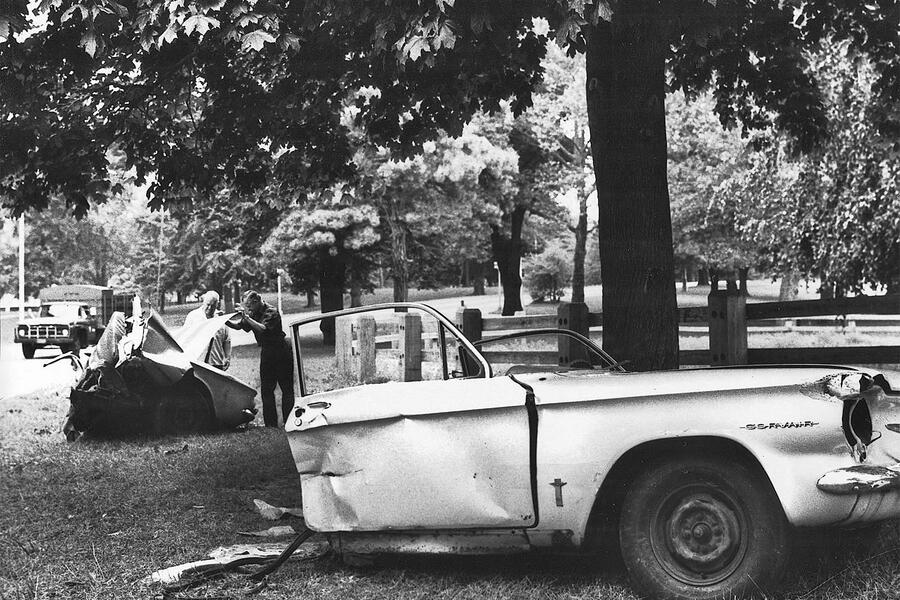
The result is the wheel and arm assembly are twisted, lifting the inner pivot and the car upwards. As soon as the body is jacked up a bit, the camber of the outer wheel changes, and if the cornering force is high enough, the wheel will lean outwards so much that it will dig in and the car will just turn over.
"That is bad enough, but the problem is compounded by the fact that there is a lot of camber change inherent with a swing-axle set-up-because the arms are relatively short and as the camber angle changes, so does the actual cornering power. In other words, if you arrived at a corner with the car level, the cornering performance would be very different than if you arrived with the nose down under heavy braking."