Currently reading: Inside the chaotic 1975 Earls Court Motor Show

We take a look back at the International Motor Show held in Earls Court in 1975

Back to top

The International Motor Show at the Earls Court Exhibition Centre - its status can’t be overstated.

But back in 1975 it was a grim time for Britain in general, with economic stagnation and inflation somehow coexisting, and a car industry in turmoil.

Just months before the show, British Leyland had been nationalised after a government report had revealed that it was on the brink of collapse; many were sad that it had killed off its Wolseley brand; Jensen’s stand was actually hosted by receivers appointed by the Bank of America; and there was bitterness about GM reducing unproductive Vauxhall to a mere rebadger of Opels.

Nevertheless, 25 British brands attended, many bringing new metal, alongside a similarly healthy cohort of imports, and attendance rose 4% to 450,000, having sunk to barely 400,000 during the oil crisis of 1973.

Enjoy full access to the complete Autocar archive at the magazineshop.com
This year we complemented our usual sober tour of the stands with commentary by four leading lights of the industry: Tony Rudd of Lotus Advanced Engineering; Robin Herd of the March Formula 1 team; Roy Foster of Avis Rent-a-Car; and Tom Karen of design agency Ogle.

We started with Panther, the Surrey individualist displaying its new Rio luxury saloon alongside the flamboyant, retro De Ville coupé.

“It doesn’t have the visual impact of a £10,000 car,” remarked Foster of the Rio – but to our surprise, the De Ville made Karen, usually so modest, think he “could really show off in that, which is wonderful”.

By contrast, Karen “wasn’t sure” about Lancia’s new Monte Carlo or indeed the future of two-seat sports cars in general, reasoning: “You can get up to 70mph a bit quicker, but that’s all. You can take much less luggage, insurance is very high…

"Some people say that sports cars are good bird-pullers, but what can you do with a bird in a sports car? Very often there’s a big tunnel between you, you can’t move back, you can’t move forwards, your steering wheel is jammed in front of you…”
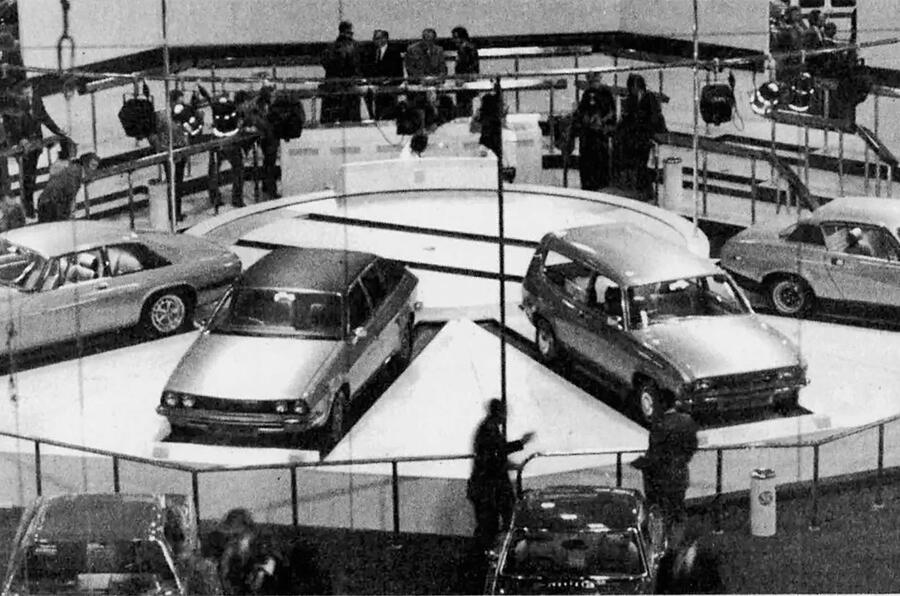
Our judges were “uneasy” about Jaguar’s new limo-derived coupé, the XJ-S. Karen thought it already looked dated. Herd said: “It’s not that it’s bad, it’s just that in comparison to what they’ve done in the past, it’s a nothing.”

"And for Rudd, “it looks as if three people designed it and they weren’t speaking to each other. I can’t bear the [hexagonal] headlamps; they really offend me.”

The Princess 18/22 saloon and Austin Allegro 2 that sat beside the Jag GT on BL’s spinning centrepiece received praise, but Herd said the Triumph TR7 sports car was “just about the ugliest car I’ve ever seen”.

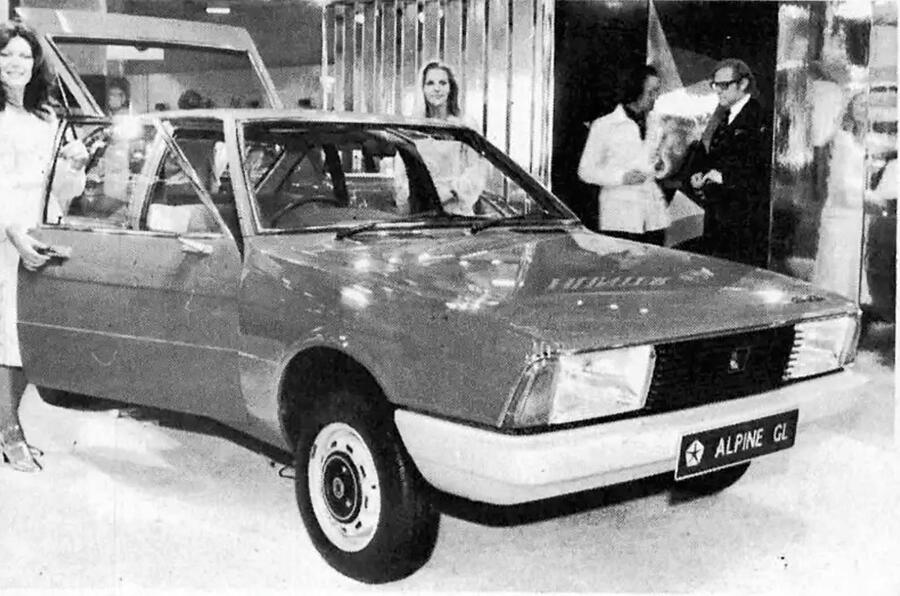
As for the new Alpine family five-door by Chrysler (or was it Simca?), Herd was “delighted it is designed in England, sad it is made in France”. Our judges also took aim at Cadillac’s latest barge, the Seville (Herd: “Here we have epitomised the taste of Americans – I can say no more”), and the Japanese brands (Rudd: “Their styling and design lags behind. And they can’t make seats – maybe that’s because they’ve been sitting on the floor for years”).

But Herd was far more positive about the look of Lotus’s new Esprit, and Karen concurred: “I have a lot of respect for [Giorgetto] Giugiaro, and I think he’s done it again here.”

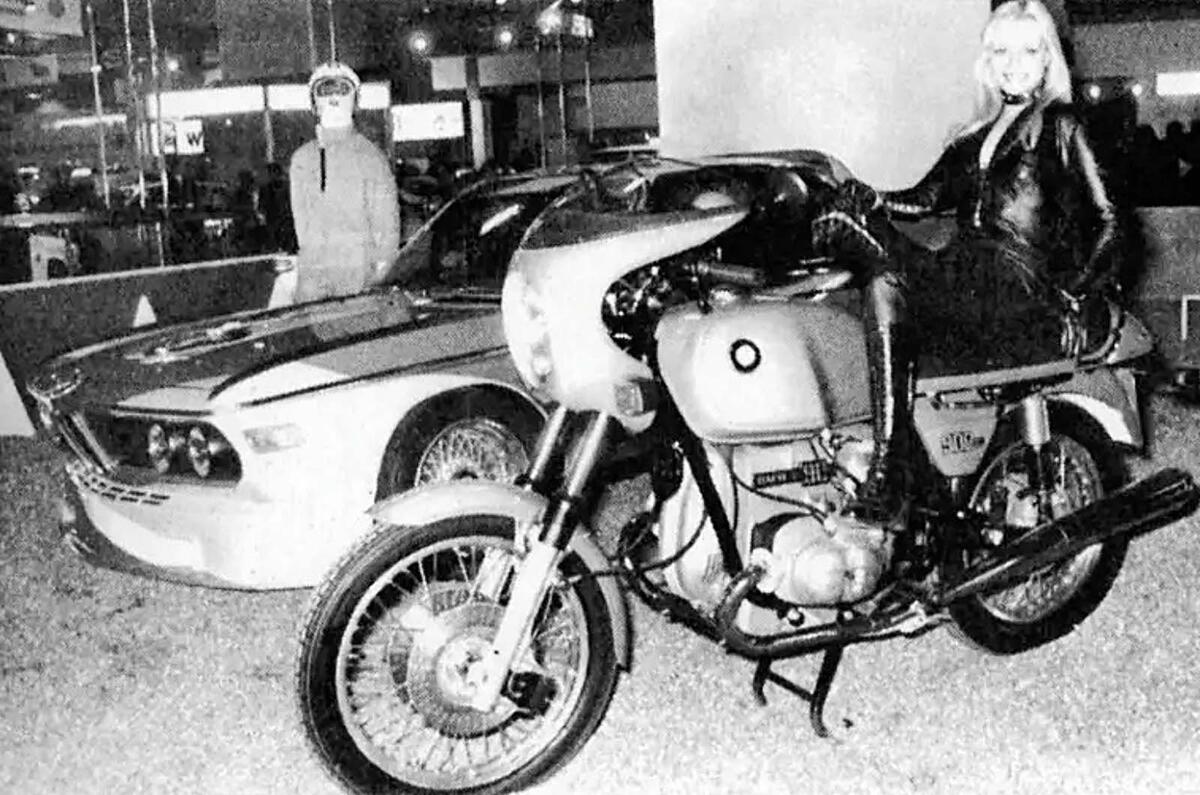
German coachbuilder Karmann was showcasing its work for BMW. We said “the fully bearded and spoiled and bewinged 3.5 CSL racing coupé should delight the schoolboy visitors” and were rather miffed that a motorbike had sneaked in. “The best thing about that was the model who was sitting on it,” said Herd.

We wouldn’t print comments like that today, but this was the 1970s – and so there were plenty of models of both varieties. It was perhaps understandable that Reliant felt its Kitten supermini could do with some added glamour, but TVR really didn’t need a practically naked woman to draw attention to its first turbocharged sports car, the V6 3000M, given that it would be one of the fastest cars made in Britain.

And we were fortunate not to come across Ms Blaupunkt, who the audio firm had dressed in a shiny cyborg suit, unnerving face mask included.

On a more progressive note, we were fascinated by the electric taxi prototype by British parts supplier Lucas. Designed by our man Karen, it was meant to get a 100-mile range from lead-acid batteries – slightly more than a London taxi did daily.

Certainly it was more impressive than the Zagato Zele being peddled by Bristol: £1995 (that’s £15,630 today) got you a laughable 6ft-long box with just two seats, a 40mph top speed and a 35-mile range.

Join the debate

Comments
1
Add a comment…
GZ 28 December 2025

I remember going to as a boy of 9 with my father who was on the BMW stand as he had the contract to deliver BMW to the dealers.... I remember stopping in the Earls Court Rd outside the exhibition centre and unloading the cars. My father had one of the first CSL' in green.