
There are lots of things wrong with the NEDC, the process via which cars sold in Europe have their emissions and fuel consumption calculated.
The chief grumbles are that the New European Driving Cycle isn’t new, bears no resemblance to European conditions and features no driving. Other than that, it’s spot on.
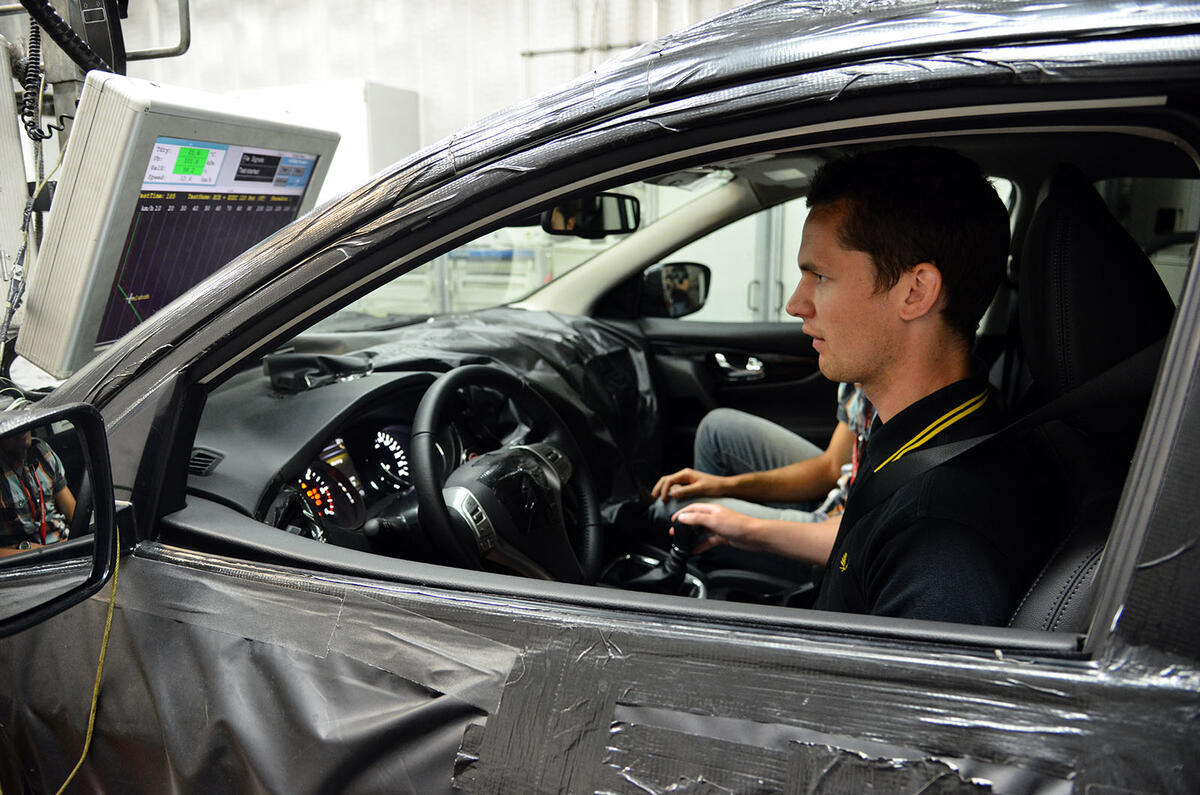
The NEDC, last revised in 1997, is usually conducted in a laboratory on a rolling road, where it’s most repeatable. Manufacturers can switch off ancillaries and set the ambient temperature, and the whole shebang lasts only 11 (stationary) kilometres – some urban driving and some higher-speed driving, after which you get a combined total.
A manufacturer can conduct the test itself, as many times as it likes before the car goes on sale, until it has a result it’s happy to publish; and although an engineer has to use the pedals to match speeds and acceleration points, it is, according to my colleague Mark Tisshaw, “like playing a really hard game of Space Invaders with your feet”, rather than driving.
The number that comes out of the end is the one that manufacturers quote, and that we quote in our first drives until we’ve had the chance to obtain a more realistic number ourselves.
At the moment, the NEDC has been pulled into the mire alongside Volkswagen, although it shouldn’t really be. Any sensible manufacturer will do its homework to perform as well as it can in what amounts to the NEDC’s classroom examination. VW arrived at said exam having slipped a cheat sheet into its back pocket. As BMW’s R&D boss, Klaus Fröhlich, said last week: “A defeat device is a no-go. That brings you in jail.”
The NEDC’s actual issues, then, are simply that they’re not representative of what you’d see in the ‘real world’. What you get in that laboratory is a figure you’ll never match on the road.
The thing is, if you really try, you will. Our chief sub editor, Tim Dickson, frequently beats a test car’s combined cycle figure but admits sometimes you have to drive “extremely anti-socially” to do it. In the MPG Marathon run by Fleet World Group, they do just that, too, bettering the combined figure by 10-15% on average.
But if you don’t beat it, is it so shocking? “You wouldn’t expect to match a car’s quoted 0-60mph time on the road,” says Dickson, because like the combined figure, it’s set in optimised conditions.
But, yes, the NEDC is outdated and needs replacing. It needs to be longer and more varied so it’s harder to optimise a car for it and, hopefully, it’ll bear more resemblance to actual driving. But car makers will still try to perform as well as they can – and there isn’t a whole lot we can do about that.
Get the latest car news, reviews and galleries from Autocar direct to your inbox every week. Enter your email address below: