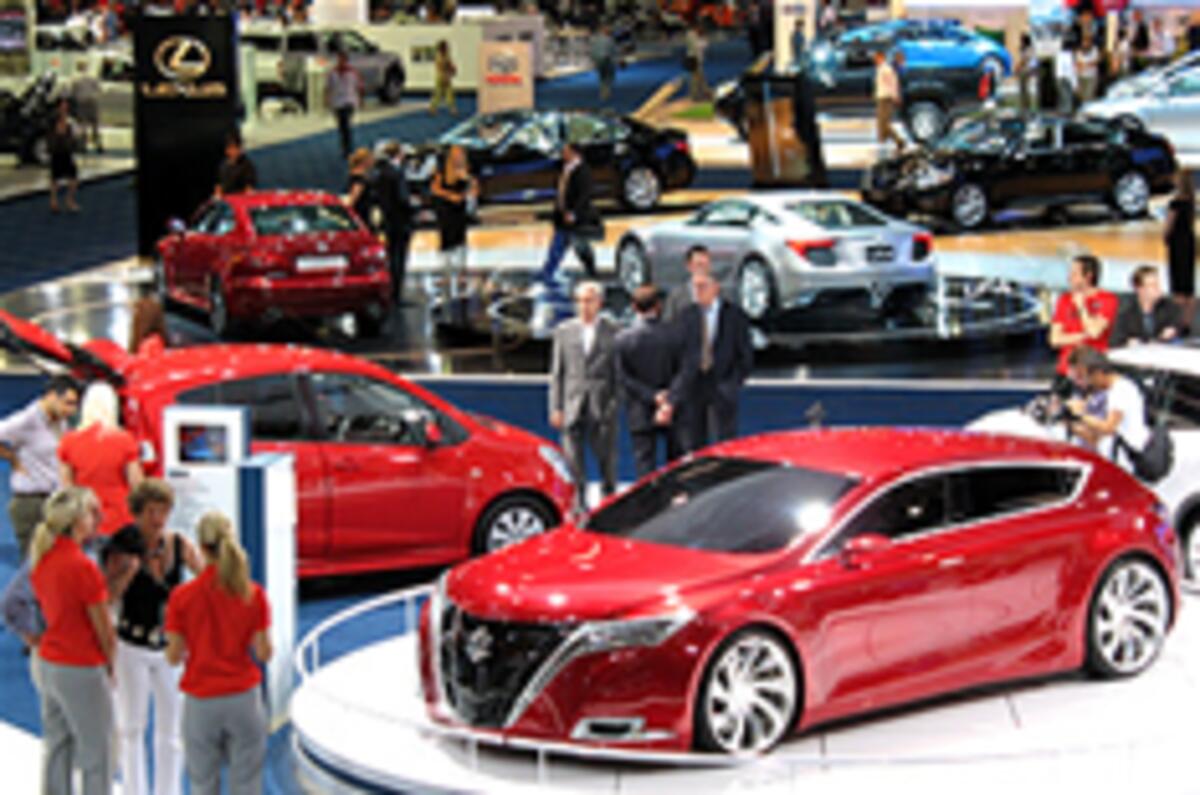

There’s no getting away from it: the predominant colour — and major buzz-word — at this year’s London Motor Show was Green.
It’s everywhere – on signs and a record-breaking number of cars. Both main halls have green car areas stuffed with electric cars of various viability, and every major manufacturer had at least one special ‘green’ model, usually dubbed Eco-something, and demonstrating its maker’s commitment to a low-carbon future.
In stark contrast to the increasingly vocal ranks of green futurists —including our magnificently under-briefed Prime Minister — the volume car-makers know that before the world can be filled with new low-carbon models, which they’re well capable of building, the majority of buyers has to be prepared to pay for them.
Interestingly, the boldest use of green was on the stunning new 300 bhp Ford Focus RS, which sported a brilliant metallic paint-job mainly because the when the car was being developed, the order came down from Ford’s carbon-conscious bosses: “Whatever you do with that car, guys, make sure there’s a green angle.” Team RS boss Jost Capito, acting literally, painted the RS in a shade he dubbed Ultimate Green, but some of us wondered whether it wouldn’t have been better dubbed Ivory Tower Green. The car itself is brilliant, a painstaking development of the ST in every high-performance direction. There’s a cunning tweak to the strut front suspension which changes the strut angle to reduce wheel fight when you deploy the full 300 brake. Capito says the RS has less tortque steer than the ST - which has hardly any to start with. Lotus definitely crew the biggest press-day crowd with its late-morning unveiling of the new Evora, whose awkward name — announced by the Proton chairman at the show — didn’t cause as much negative comment as expected.
The car looked terrific, and won respect from other designers (Esprit designer Peter Stevens and Elise designer Julian Thompson were both in the crowd) but no-one was allowed to try and squeeze into the back to test the two-plus-two packaging because this solitary prototype has lots of work to do and they wanted to keep it pristine. Other significant high performance cars included the magnificent Chevrolet Camaro, a model soon to be made with an “economy” engine that shuts off half its cylinders when cruising, and the carbon-bonneted, roll-caged Renault R26R, which recently became the fastest-ever front-drive saloon at Nurburgring, and whose development was assisted by our own columnist and consummate wheel-man, Steve Sutcliffe.
Other stars included Honda’s OSM a pretty two-seater roadster dubbed ‘low emissions’ though its precise mechanical package wasn’t specified. It looked good enough, and practical enough to drive away from the show stand. After its London success two years ago with Corsa, Vauxhall followed through on its promise of another London world debut by unveiling the new Insignia, which most agreed looked terrific. The Insignia changes everything about Vauxhall’s staple family car. The forward-looking styling lays down ground rules for new Astra, coming next year. I’m with the Peugeot boss Jean Philippe Colin, who recently observed that the mainstreamers are closer than to the likes of Audi and BMW than ever before. Most of the German premium makers haven’t favoured London show with their presence this year (honourable exception: Mercedes-Benz) which I believe is an act of gross disloyalty to British car-lovers on the part of a group which trades at other times on customer loyalty and has made huge profits the UK from buyers’ preoccupation with high-spec cars.