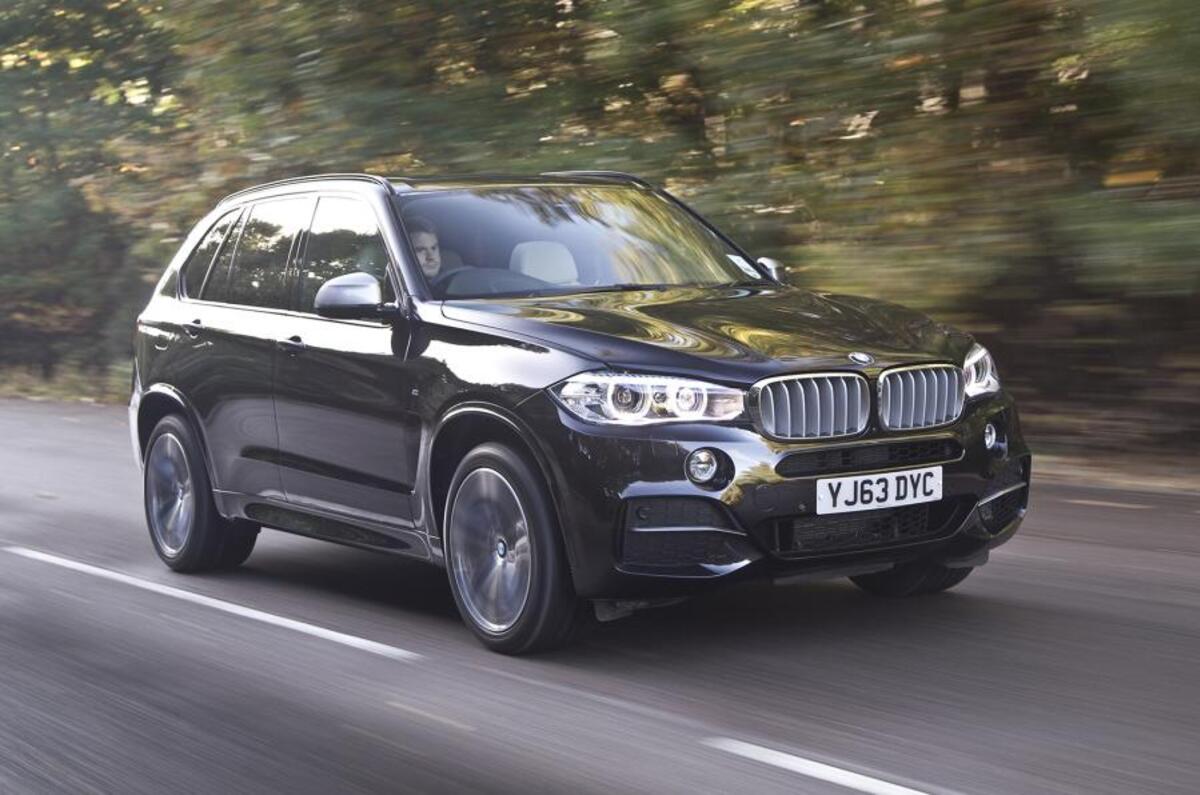

BMW has revealed that the next BMW X5 will be built upon the same underpinnings as the latest 7 Series.
Despite the current X5’s relatively short production life (it only arrived three years ago), the model’s successor is already in advanced stages of development. It could arrive next year using BMW’s new Cluster Architecture (CLAR), which is predominantly used as a rear-wheel drive structure but can also cater for four-wheel drive layouts.
The current 7 Series, for example, is available in both rear and all-wheel drive, and the same is expected with the next X5.
2017 BMW 5 Series Touring spotted testing
The CLAR platform uses a mixture of high-strength steel, aluminium and carbonfibre, increasing structural rigidity while saving weight. The next 5 Series is expected to shed 50kg compared with its predecessor thanks to CLAR.
Other models to use CLAR will include the next-generation 3 Series and 6 Series, although it’s not yet known if these models will get four-wheel drive options in the UK.
The 2018 X7, which is set to be BMW’s largest model, will use its own version of the same underpinnings. Speaking to Autocar at the New York motor show last month, BMW head of sales and marketing Ian Robertson said the X7’s underpinnings will be so heavily adjusted that the structure will be basically new.
2018 BMW X7 will definitely be sold in the UK
“If you put both cars [the X5 and X7] next to each other, the resemblance is small in terms of wheelbase and so on,” he said. “We’re not going to just extend the wheelbase; it’s a complete new panel cell."
Engines likely to be offered with the next X5 include a 3.0-litre straight six and a new twin-turbocharged V8, while a 6.0-litre V12 could also feature in range-topping models. Robertson hinted that a hybrid model could also join the line-up later on, because BMW “sold more hybrids to the UK in the first two months of 2016 than in all of 2015".
Robertson said that rather than sharing the X5’s engine line-up, the X7 would take its pick of engines from the entire BMW range.