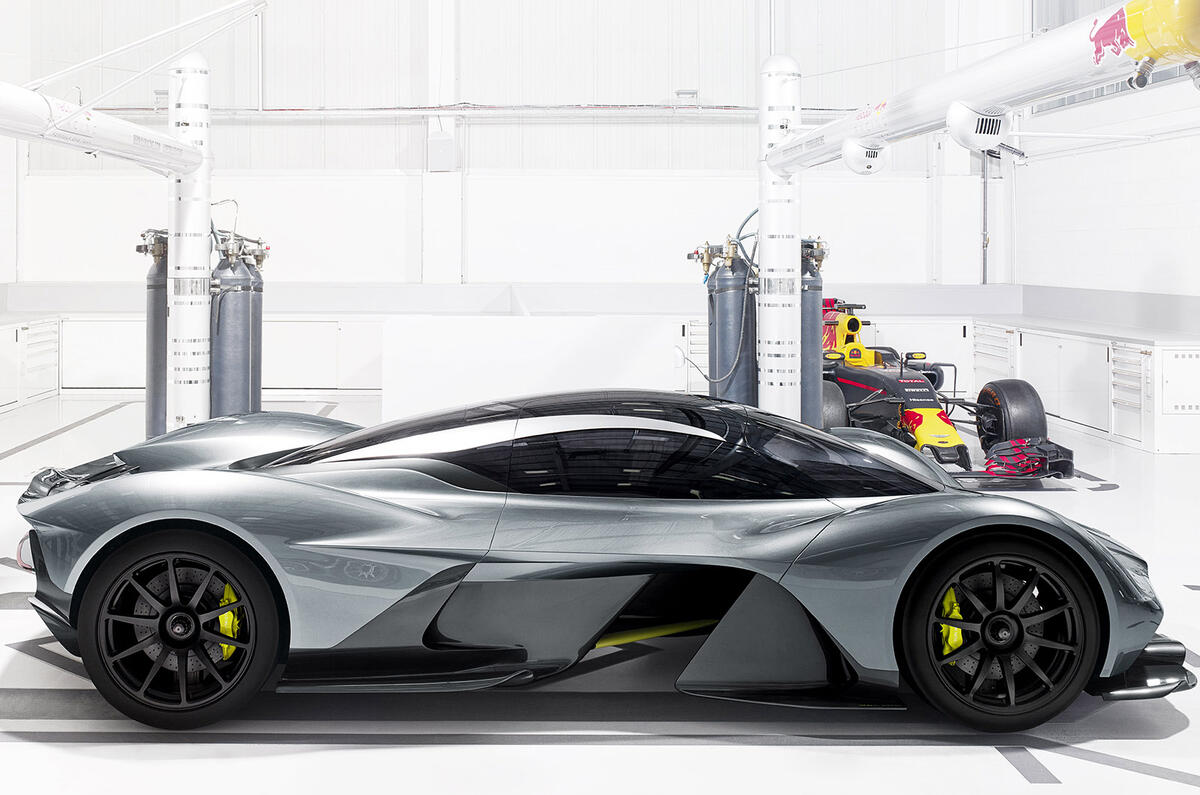
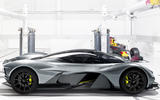


The Aston Martin AM-RB 001 hypercar looks likely to feature semi-active suspension when it arrives in 2018 because project partner Red Bull Advanced Technologies is recruiting engineering experts with knowledge of such systems to work on the car’s development.
Aston Martin Valkyrie - full details
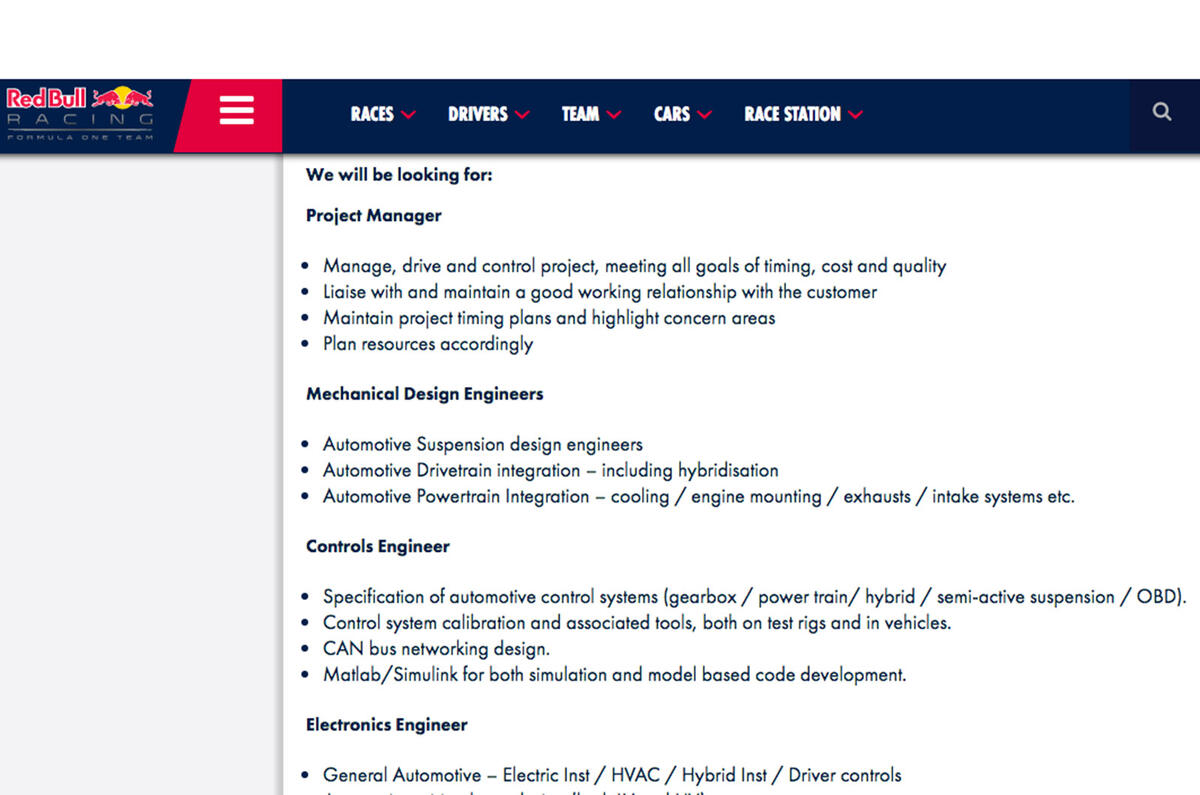
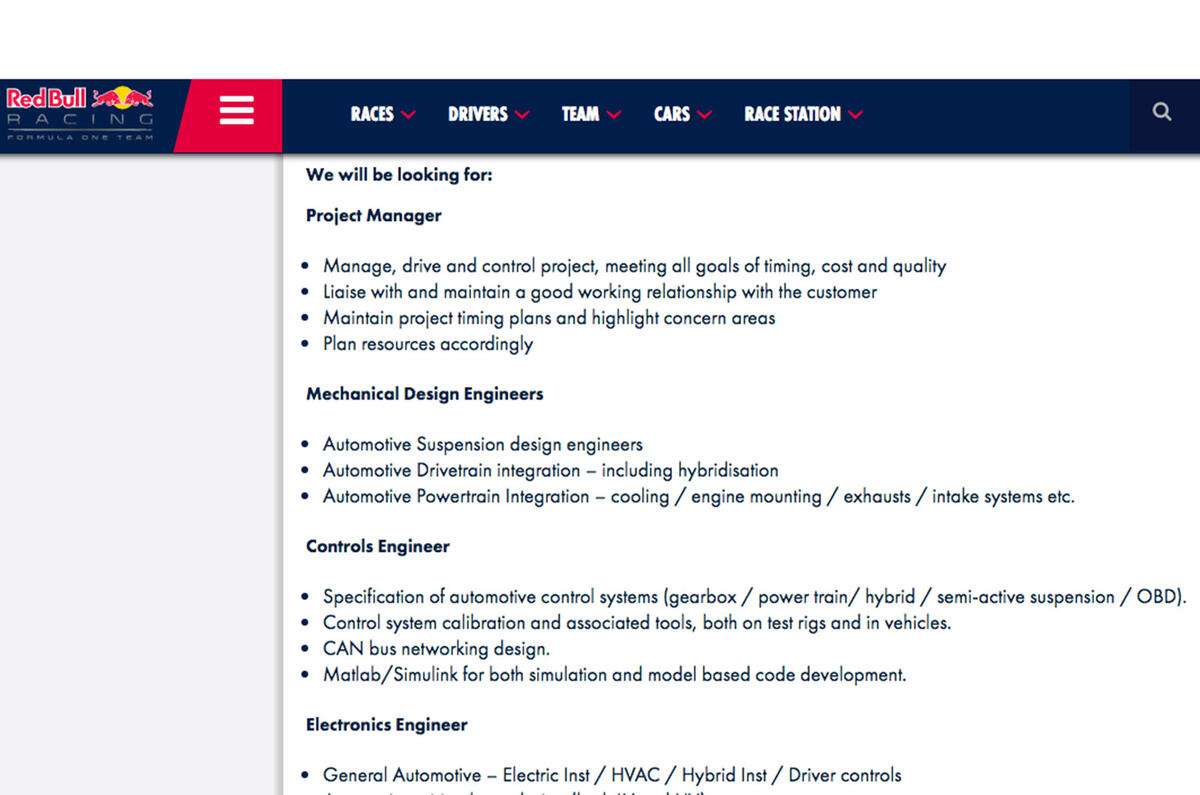
A situations vacant advert posted on Red Bull’s website says the company has “a number of exciting opportunities for highly motivated and skilled engineers to join Red Bull Advanced Technologies (RBAT) and to be part of the team working on the groundbreaking AM-RB 001 hypercar”.
The Milton Keynes company is collaborating with Aston Martin on the new machine, the design of which was revealed for the first time in July.
The company is interested in hearing from “experienced engineers within the motorsport and automotive industry”. Significantly, RBAT is looking for a controls engineer with experience of hybrid systems and semi-active suspension.
Active suspension is a specialist area for Red Bull design boss Adrian Newey who, together with Aston’s design chief Marek Reichman and special operations chief David King, is leading the project.
Aston Martin would not comment on whether the AM-RB 001 would have semi-active suspension, but project chiefs have previously spoken about the £2-3m car having “innovative” adjustable suspension to ensure it can meet its twin aims of being comfortable enough to “potter down to the shops in”, as Newey puts it, but also cope with substantial aerodynamic loading such as that experienced during high-speed laps of a race track.
The suspension - most likely an inboard pushrod arrangement - will “employ principles honed by Newey over his 30-year career”, as Aston said at the car's launch, and RBAT’s search for an engineer versed in “semi-active suspension” suggests AM-RB 001 could draw on the learnings of some of Newey’s most successful Formula 1 designs.
Whereas today’s fully active suspension systems replace traditional springs with hydraulic actuators controlled by the car’s ECU, semi-active versions use electronically adjusted dampers. They also tend to be cheaper to implement than fully active systems and consume less power.
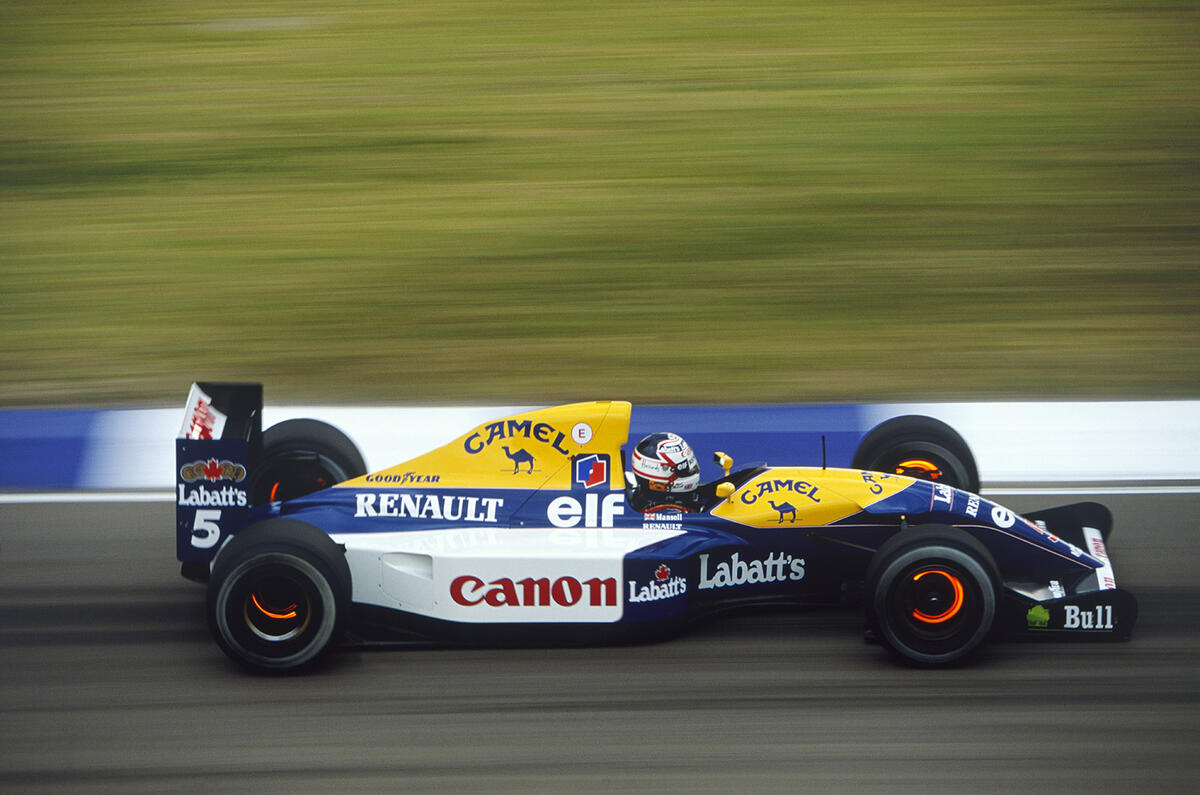
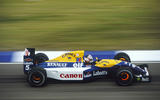
Although active suspension is now outlawed in Formula 1, Newey was chief designer on the Williams FW14B, which used the system to devastating effect on the track, playing a key role in Nigel Mansell’s world championship victory in 1992.