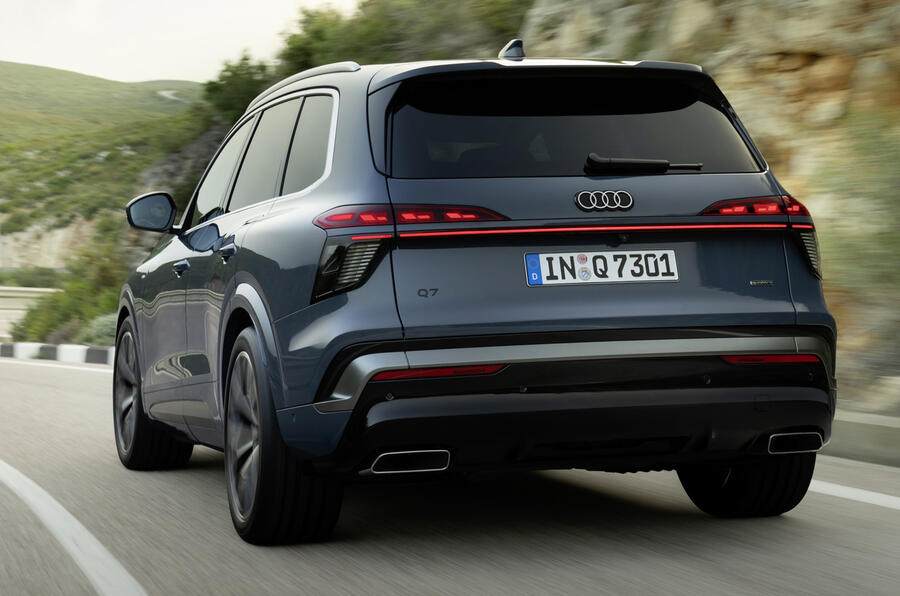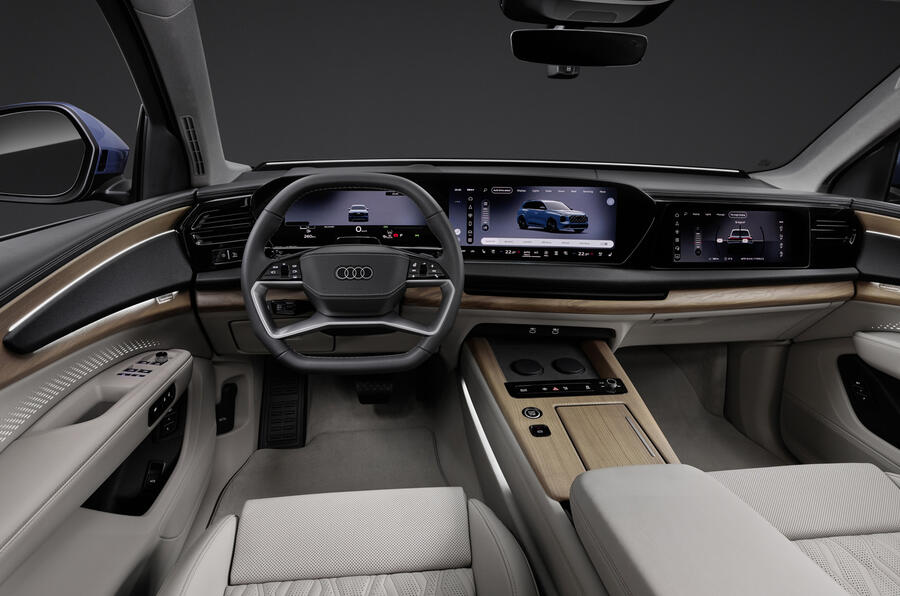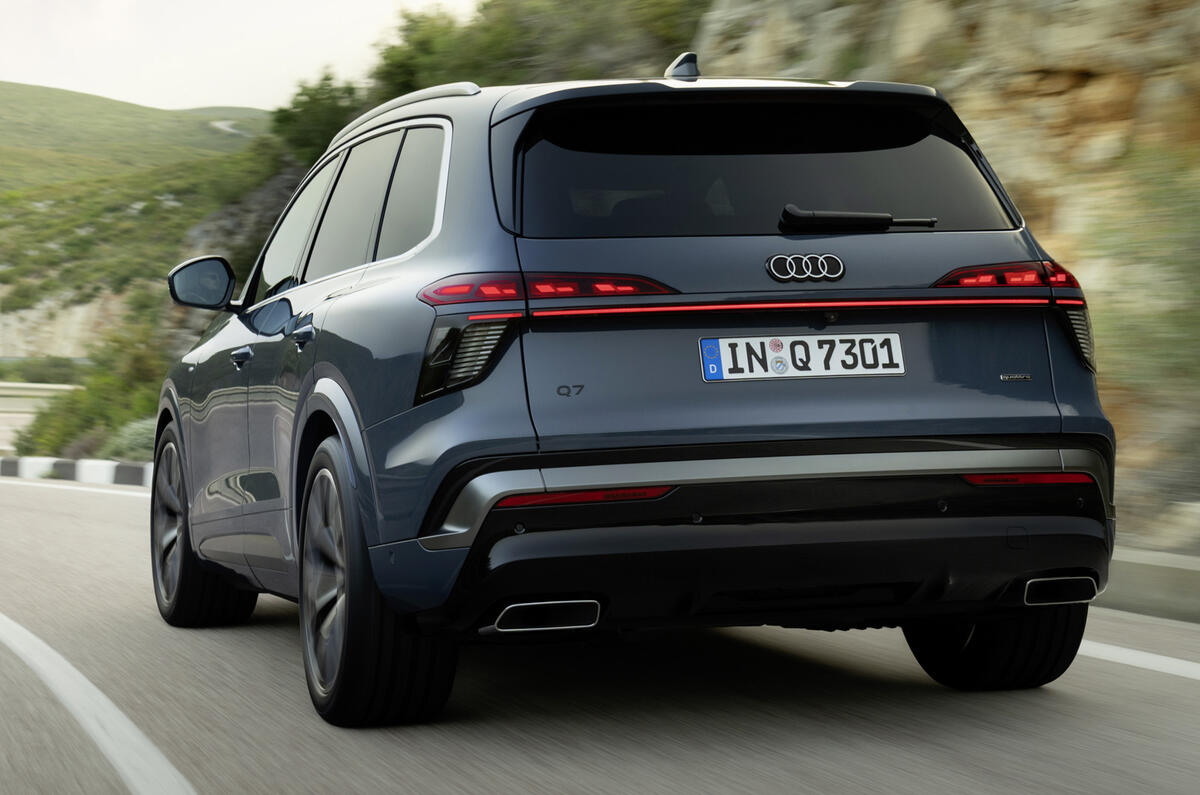
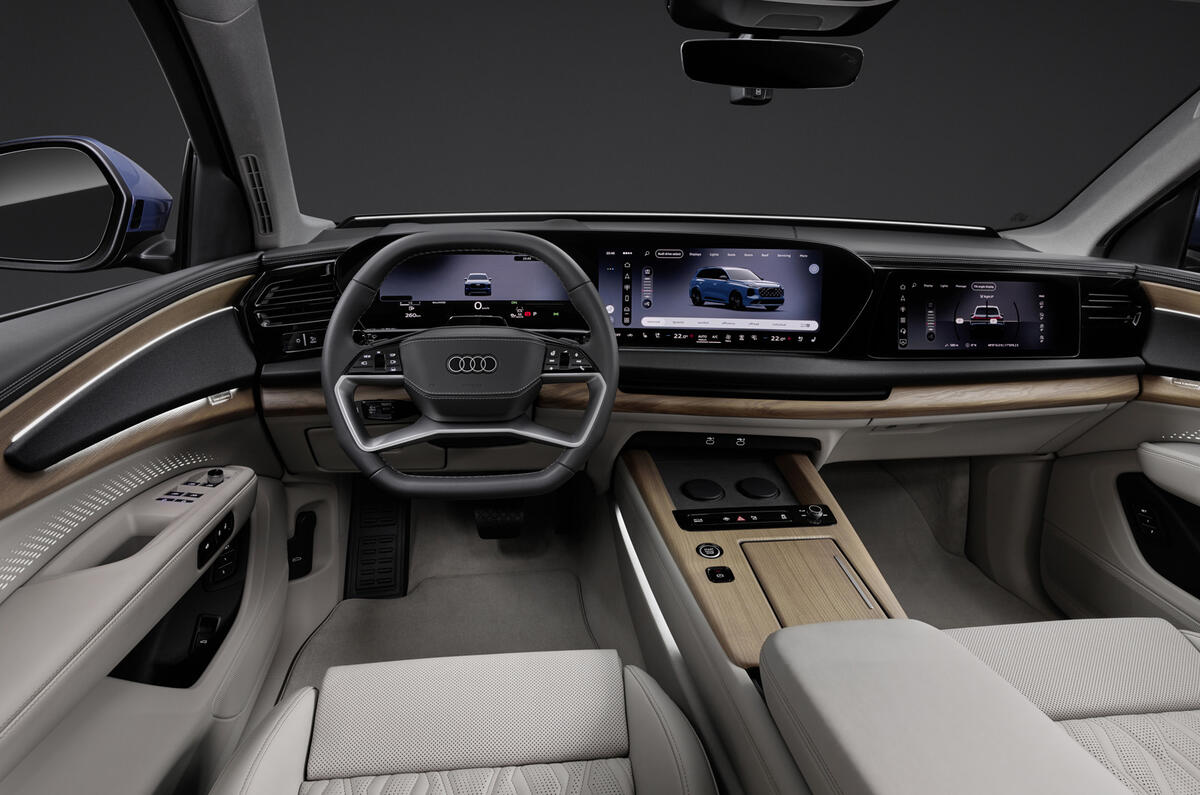
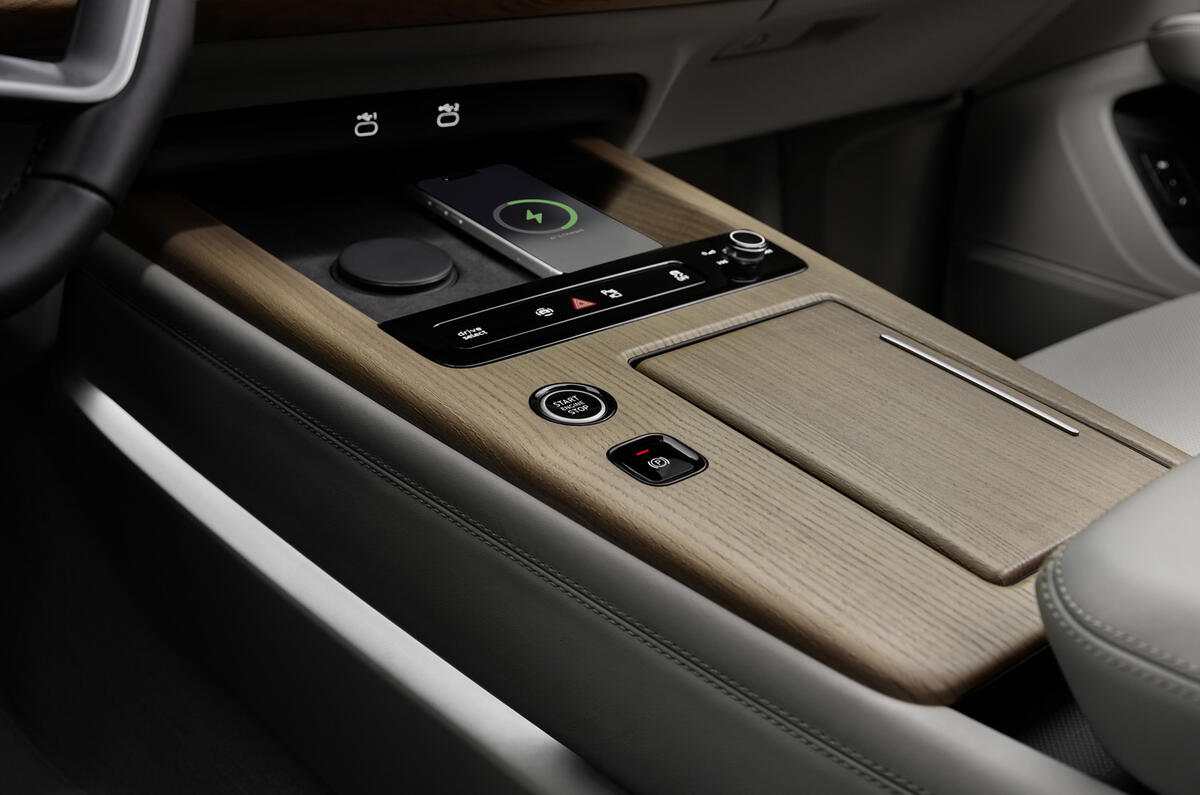
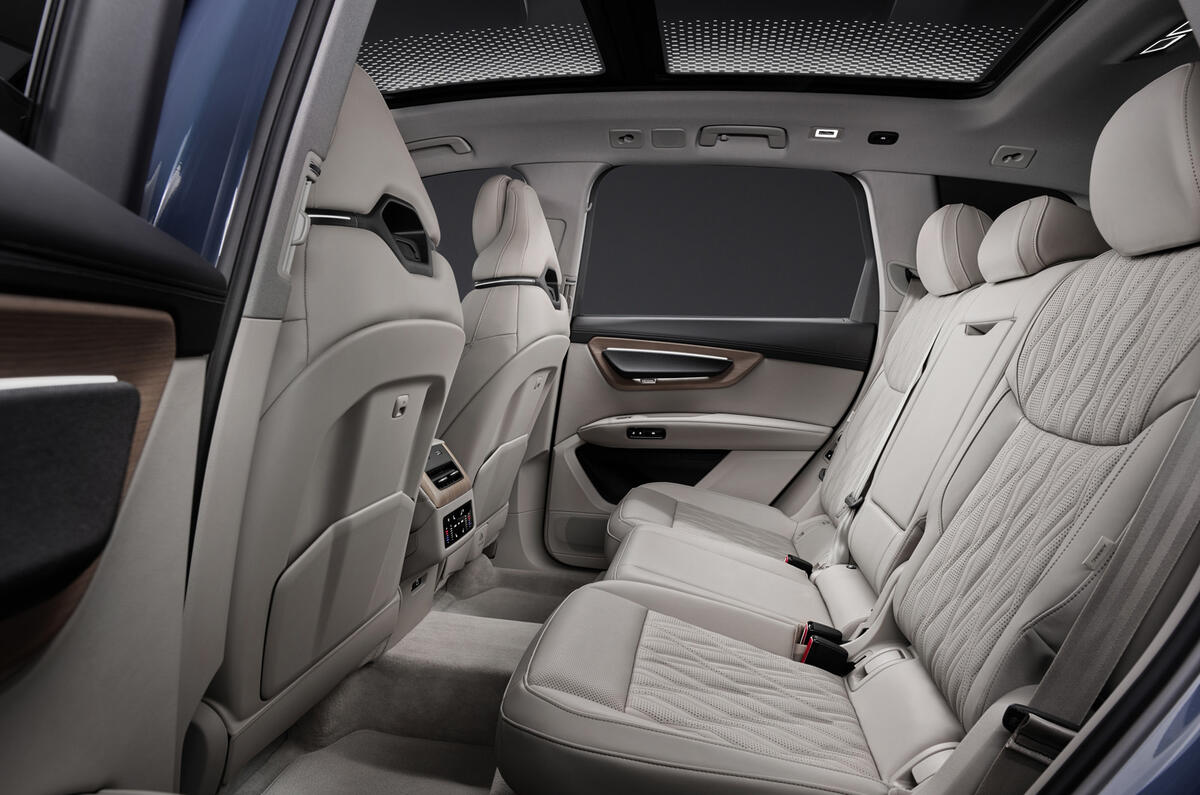
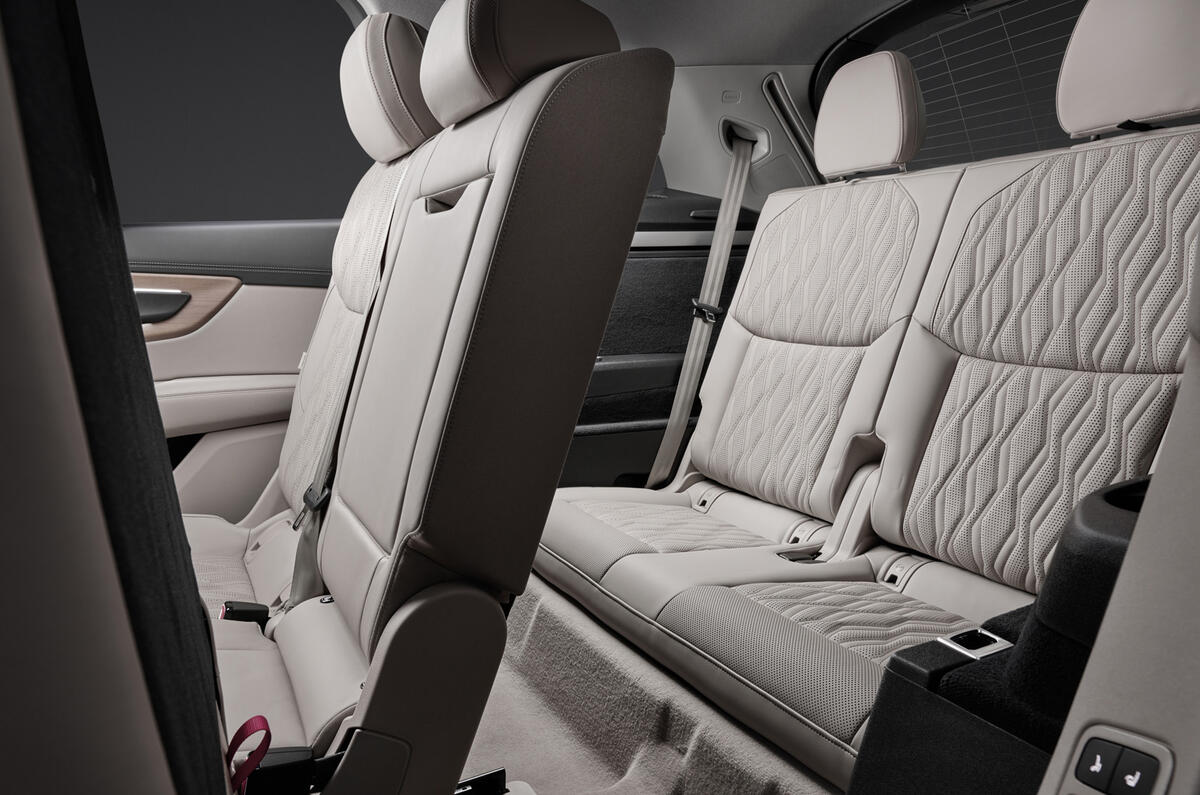

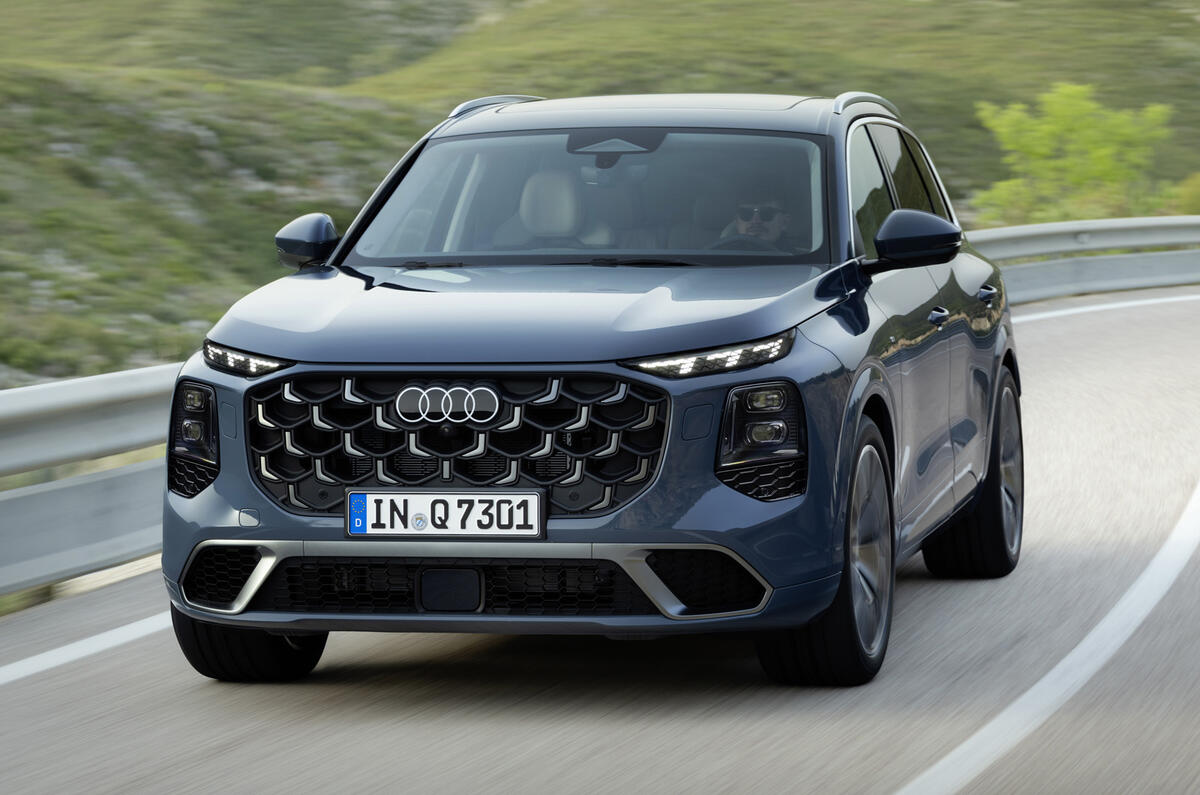
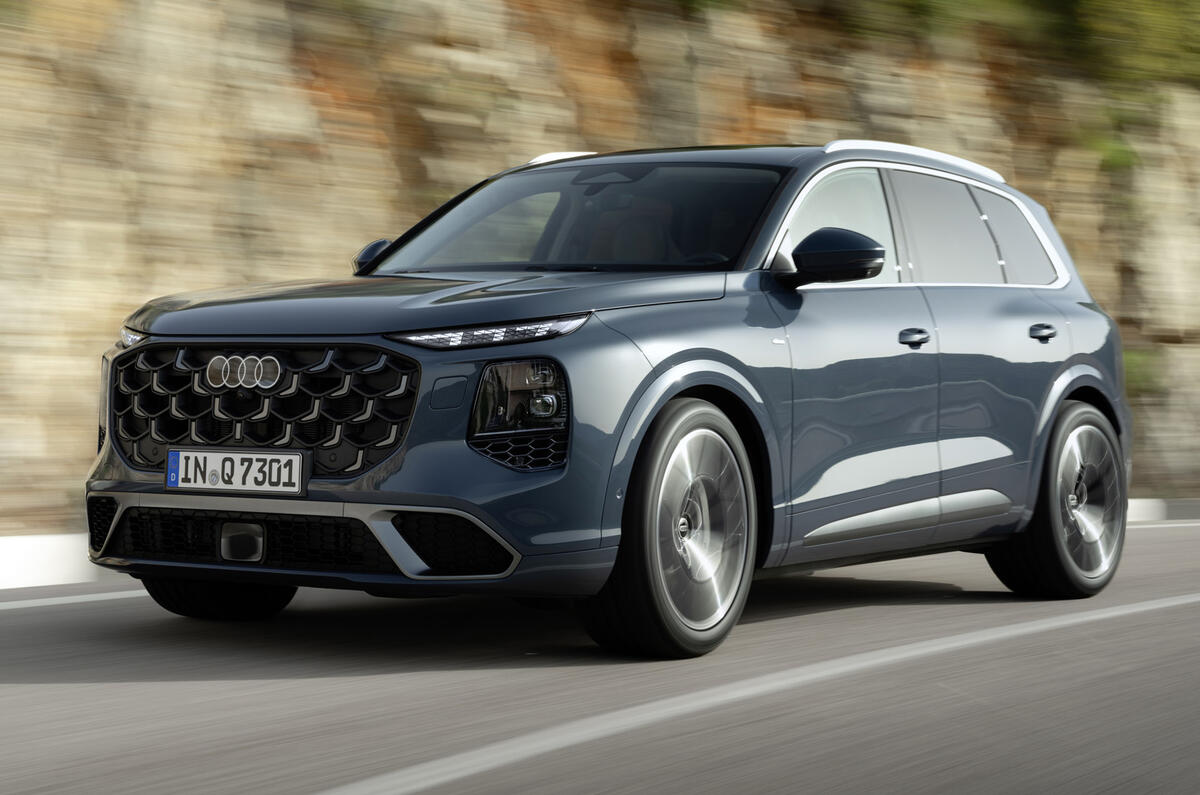
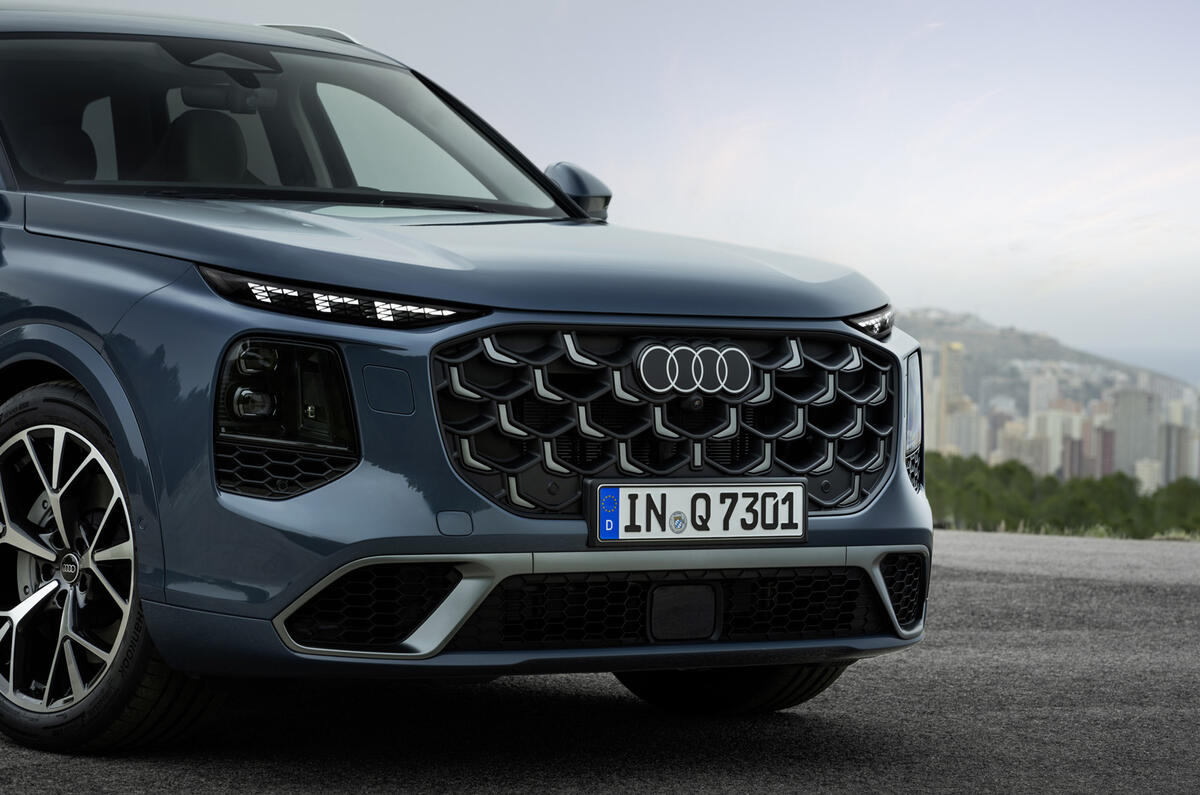

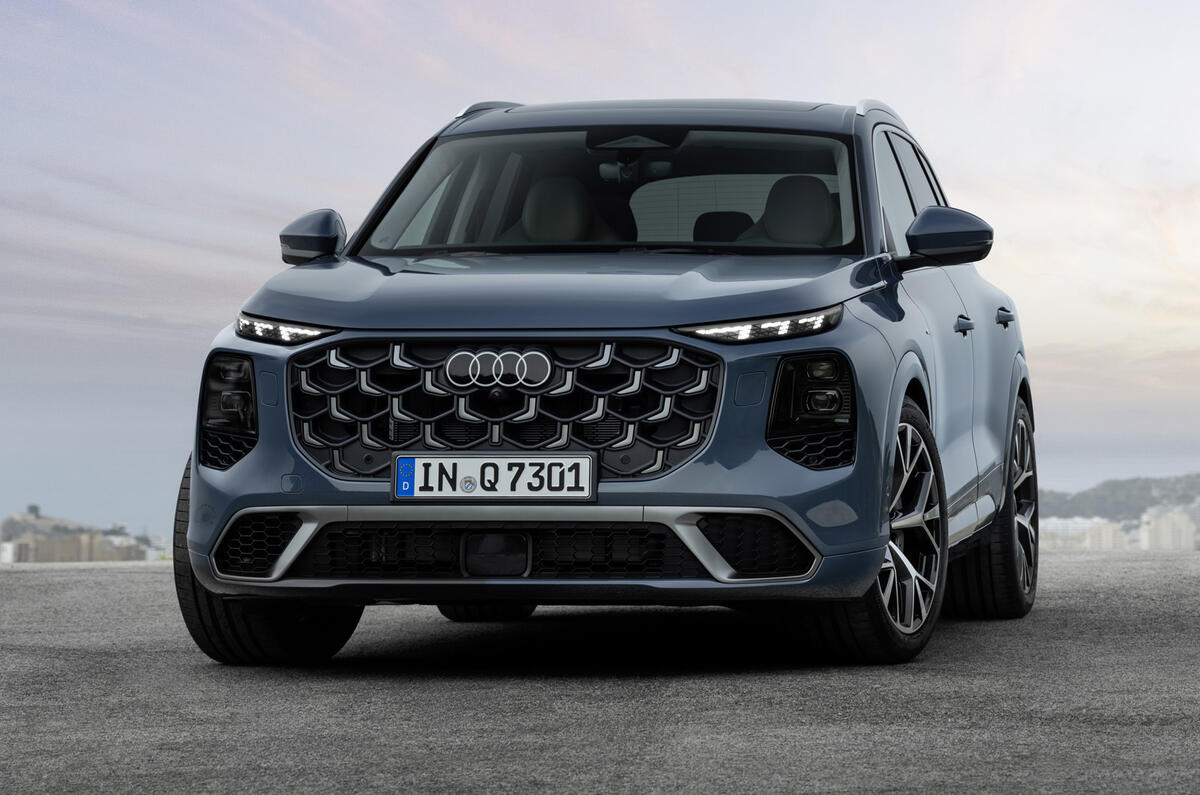

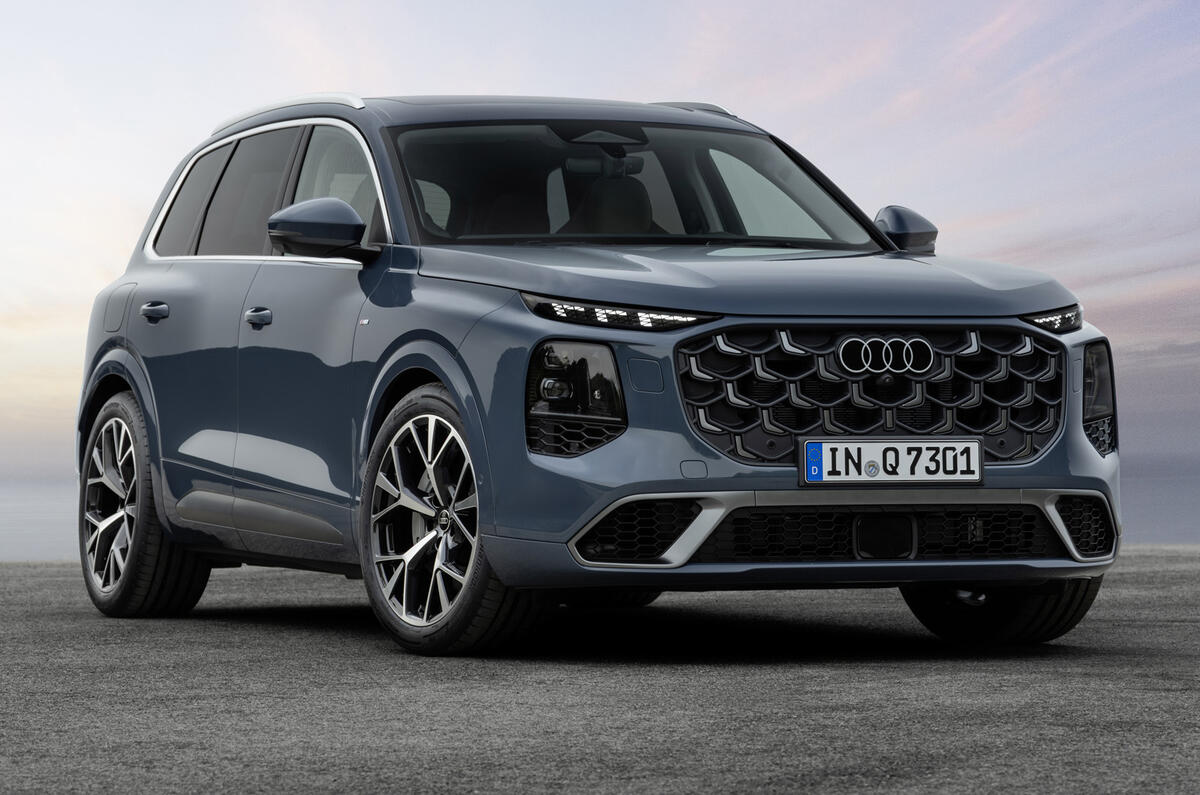
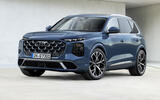





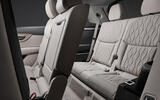
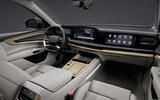


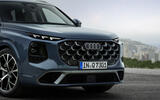



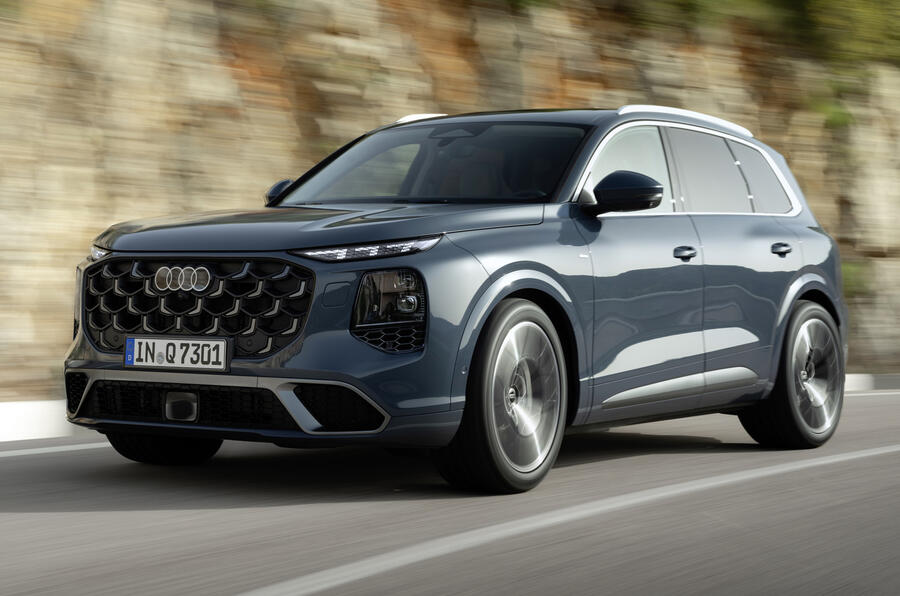
Audi has reinvented its Q7 large SUV for a third generation, taking the fight to the Volvo XC90 and Hyundai Santa Fe with a bold new look, a futuristic cabin and a punchy diesel V6.
Available to order next month from around £80,000, the latest generation of Audi’s seven-seat family 4x4 has been completely restyled inside and out as it moves onto the Premium Platform Combustion architecture that underpins its A5, A6 and Q5 siblings.
While the outgoing Mk2 evolved the rakish, curvy form of its predecessor, the new car adopts a straighter-edged, two-box silhouette that boosts roominess and emphasises its practicality credentials.
Audi calls it a “striking and confident exterior” treatment and says the aim was to create a “commanding silhouette” – which will be carried over and extended for the closely related Q9, a new flagship SUV model arriving in the next few months to rival the BMW X7 and Range Rover.
Unlike its predecessor – and its platform-mates – the new Q7 eschews a multi-powertrain line-up at launch in favour of a sole 3.0-litre diesel V6, which is offered in two states of tune and drives all four wheels.
This will be the first outing in the UK for Audi’s new-generation V6 TDI powerplant. It is mated to a conventional belt-driven 48V starter-alternator but also adds a powertrain generator and an electric compressor, which uses a motor to spin the turbo, rather than exhaust gas – reaching 90,000rpm in just 250 milliseconds to boost response and torque output across the rev range.
As standard, the mildly hybridised six-pot produces 242bhp and 369lb ft of torque but it can be optionally upgraded to 295bhp and 465lb ft – making it slightly more powerful than the same-sized V6 diesel that could be had in the previous Q7.
Audi has yet to give full performance details but says the set-up ensures “a linear and fast response, impressive mid-range acceleration with even more direct pedal feel, increased efficiency, and improved long-term durability”. The firm also compares the power delivery characteristics to those of an EV, given the smoother torque curve afforded by the more consistent turbo input.
On its own, the 48V generator produces 24bhp and 273lb ft, chipping in under hard acceleration and to allow engine-off running for short distances at low speed.