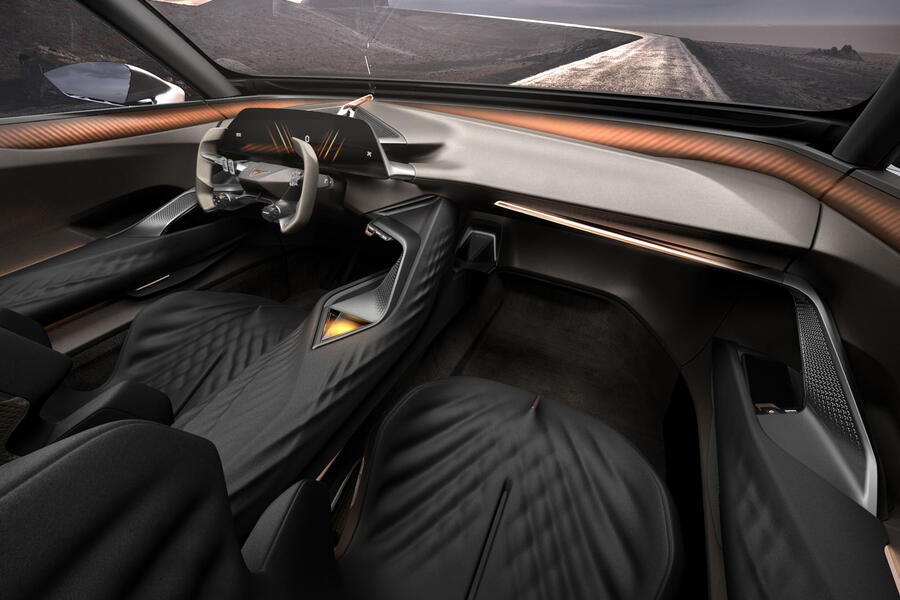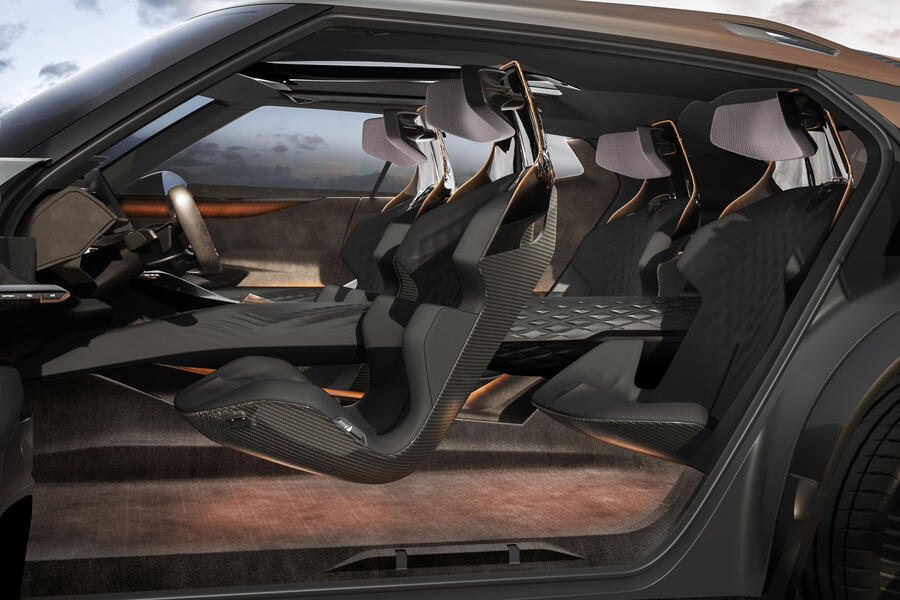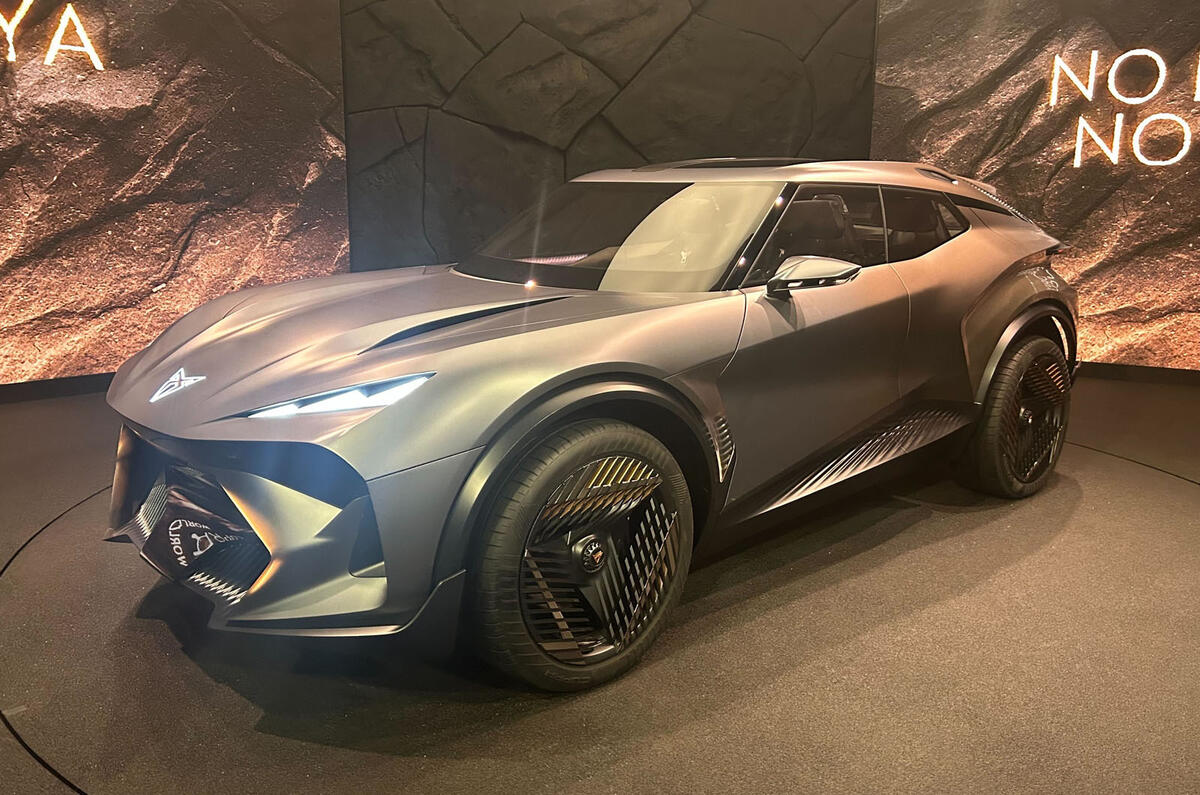
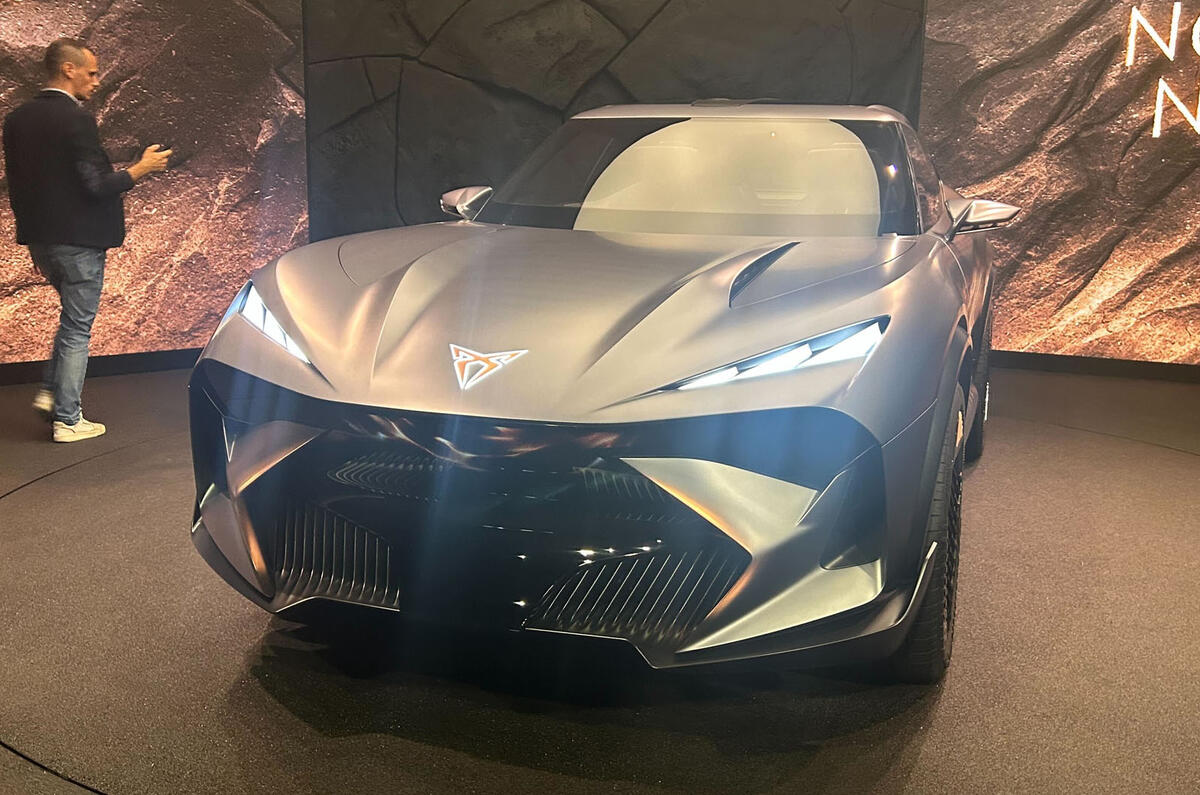
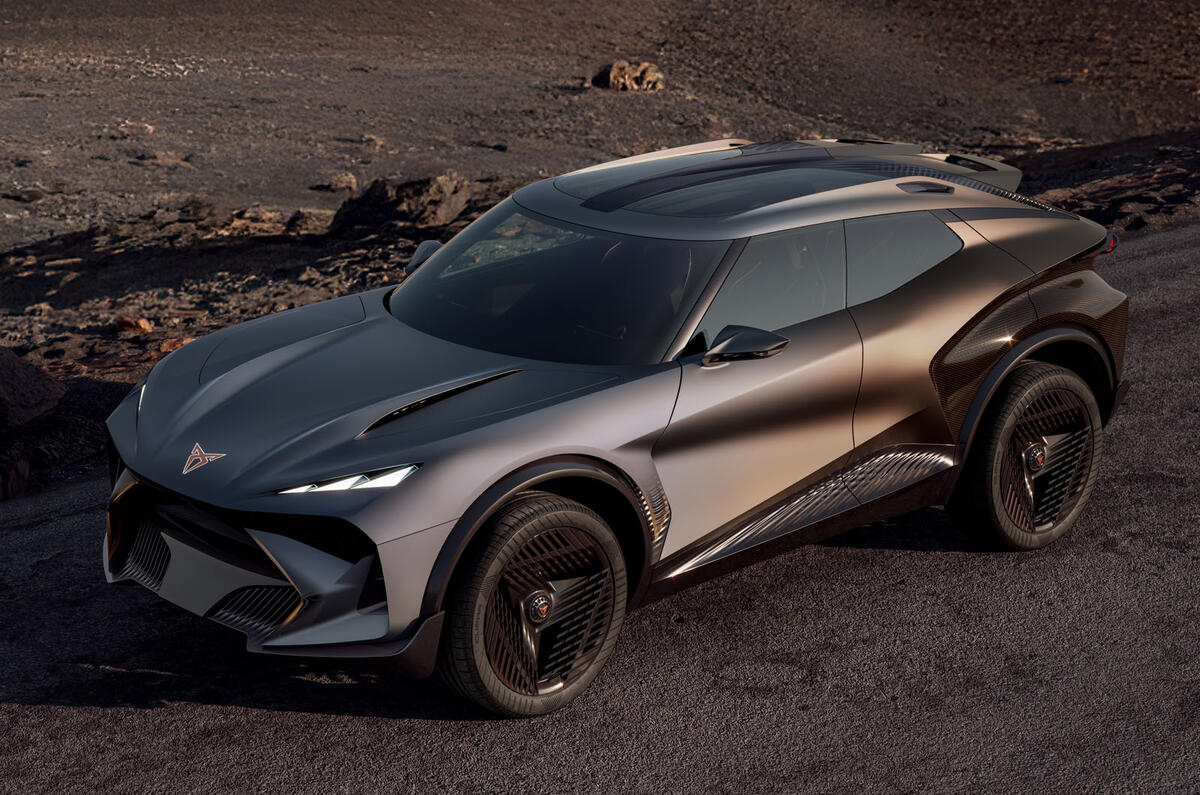
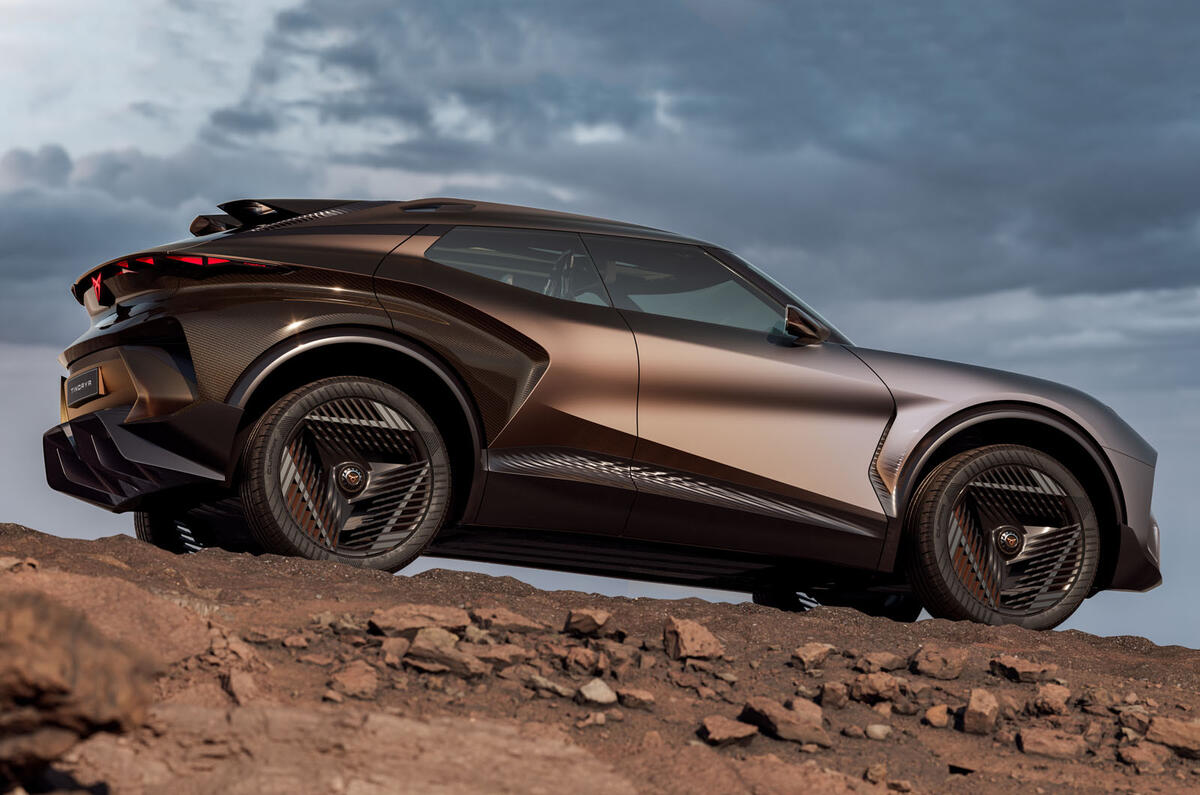
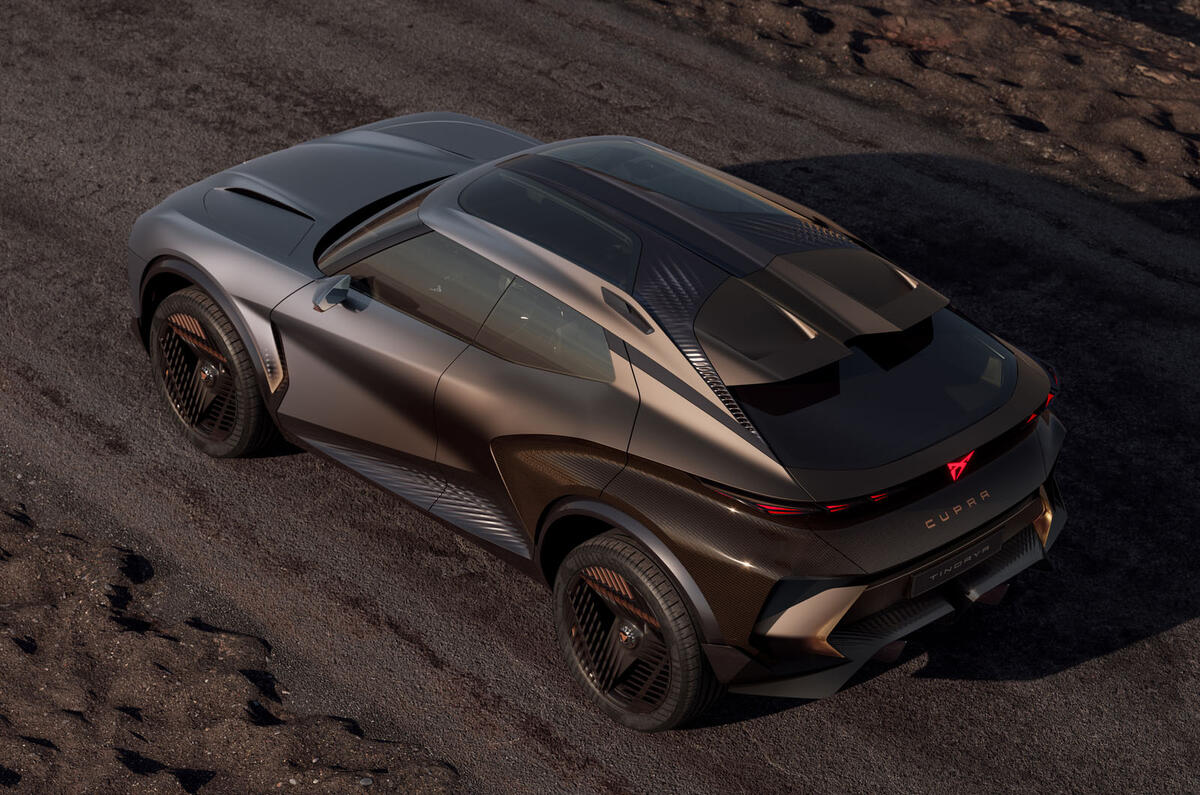
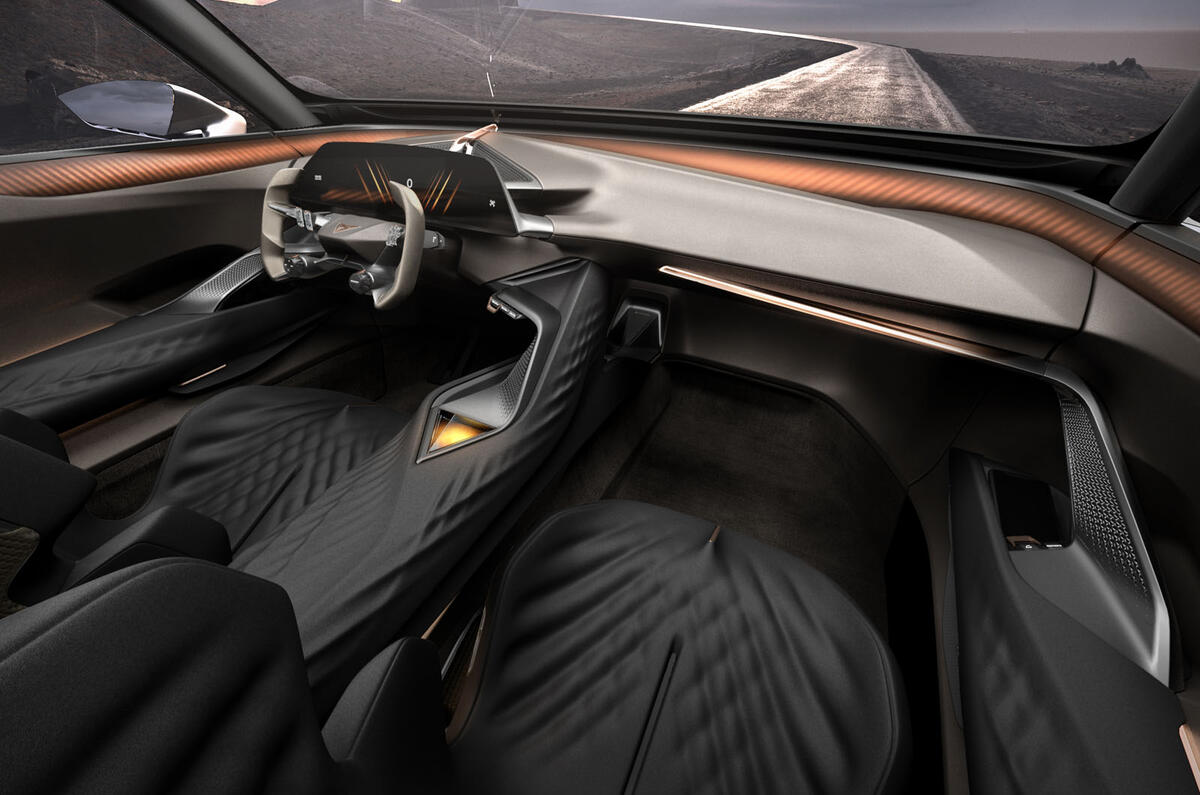
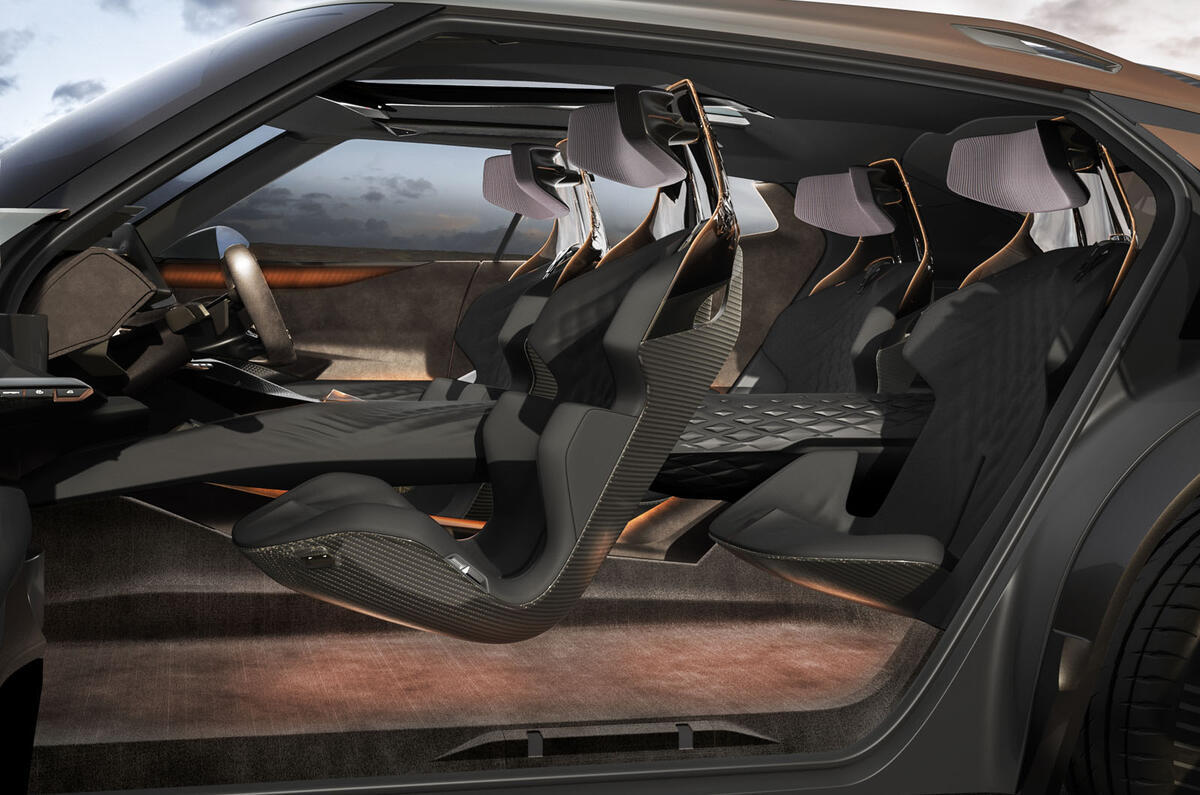






Cupra's new Tindaya concept car shows how the Spanish brand will emphasise driver engagement in its next cars - and uses a radical new range-extender (REx) drivetrain that enables it to go further and faster than current Cupra EVs.
At 4.72 metres long, it's the largest car Cupra has built – and with a 0-62mph time of just 4.1sec, it's also the quickest.
But while it is likely to eventually make production in toned-down form (potentially as a successor to today's Formentor), the Tindaya has been created primarily to show off the futuristic technology and radical new design cues that will be rolled out to all upcoming Cupra models.
New powertrains
Hypothetically based on the same SSP platform that will underpin other Volkswagen Group EVs (including the next Volkswagen Golf and Skoda Octavia), the Tindaya is said to offer the choice of either pure-electric power or, as showcased in this concept, a new REx system that uses a petrol engine to charge the battery.
This is the first indication that the SSP architecture can accommodate a combustion powertrain of any sort – and suggests that a similar set-up could be deployed in other next-generation Volkswagen Group cars.
The Tindaya REx's drivetrain comprises an electric motor on each axle giving a combined 489bhp, a battery that's good for 186 miles of range in its own right and a 1.5-litre four-cylinder petrol engine that Cupra says could boost that to a huge 620 miles by topping up the battery on the move.
Cupra hasn’t given any specifics about its make-up, but Volkswagen-owned American SUV brand Scout will offer its electric 4x4s with the option of a naturally aspirated four-cylinder petrol engine as a REx, sourced from Volkswagen's Mexico factory, and that's likely the unit used here.
Cupra is the latest in a line of manufacturers – including Mazda, Hyundai, Leapmotor and Ford – to experiment with REx technology in Europe, amid a surge in demand for such powertrains in China.
It hasn't shared any plans to deploy such a set-up in a production car, but sibling brand Volkswagen has suggested that wavering uptake of pure-EVs in Europe could create a hospitable market for REx alternatives.
More concrete are the clues the Tindaya provides with regard to the styling of Cupra's next-generation line-up, which head of UX/UI design Ruben Rodriguez Bosch said is all about emphasising emotional appeal.
"When we created this car, we didn't want to create another machine - we wanted to create a car that is alive, like an animal, with some kind of connection with the driver," he explained.
Design overhaul
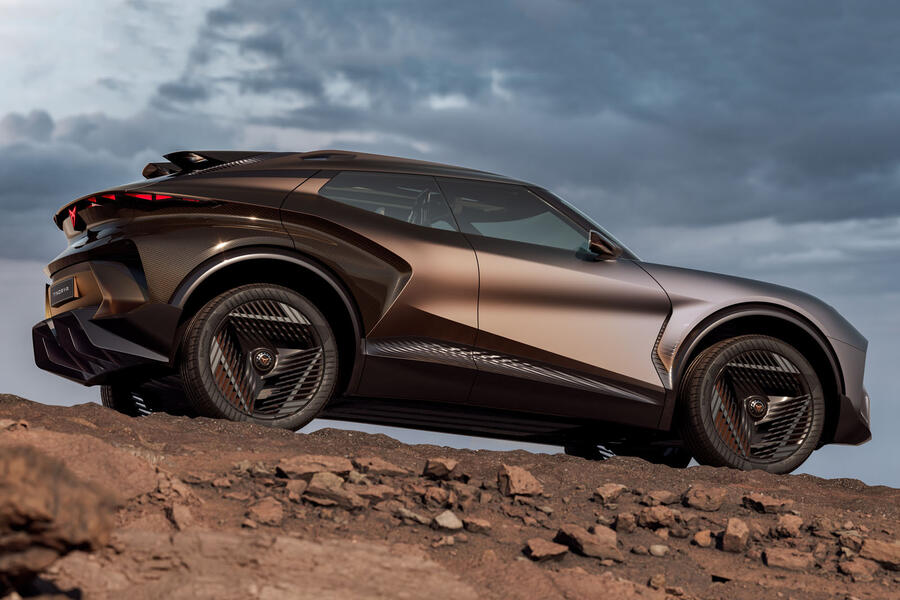
As such, there are display screens at each end of the car that are said to give the effect of breathing, while the muscular haunches and accentuated curves down the sides are described as 'humanised sculptures' - complete with exposed 'under-skin' in the lower portion, where lightweight BComp material represents the Tindaya's "muscles and nerves".
BComp – a "more respectful" alternative to carbonfibre that Cupra will use on upcoming models – is also used to mark out the prominent 'blister' motif that runs around the rear arches.