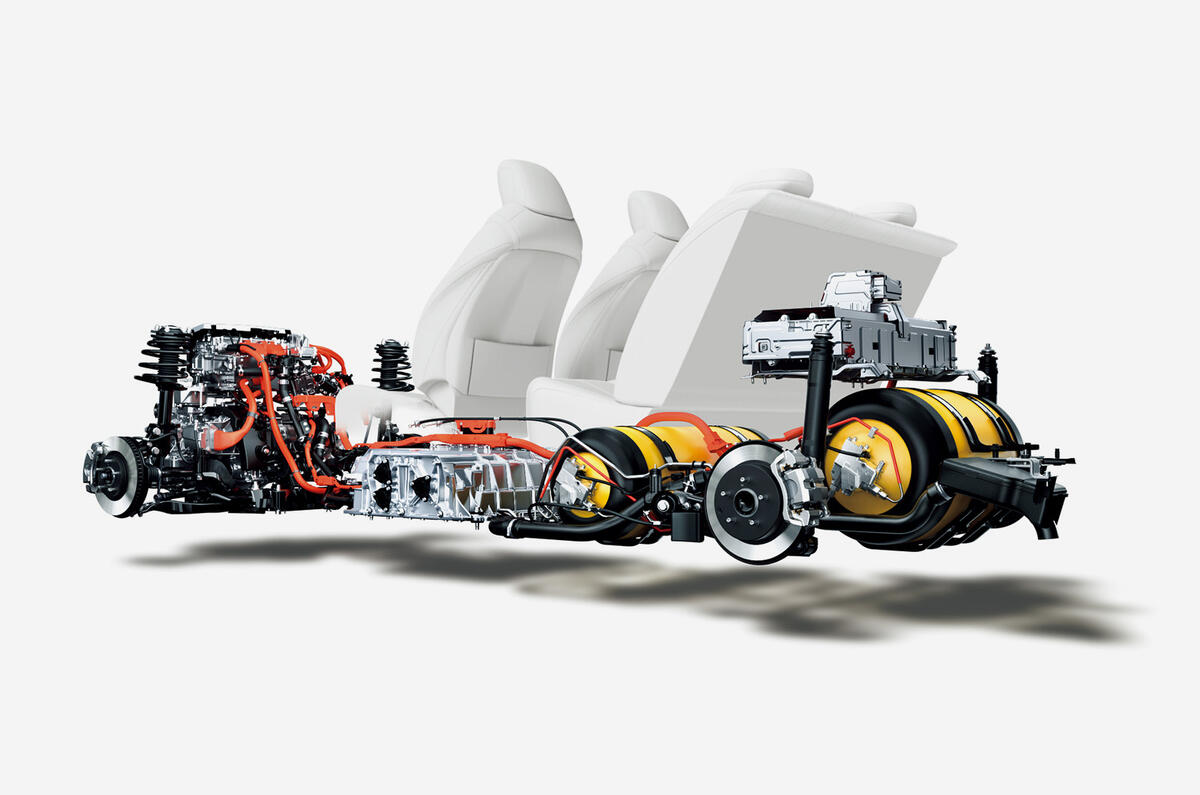

The government is putting £2 million towards the furtherment of hydrogen fuel cell vehicles and plans to triple the number of FCVs on UK roads to 100 by next spring.
The £2 million pledged, which is offered to businesses interested in adopting FCVs, will cover 75% of the cost of new vehicles, in addition to the vehicles’ running costs over three years. These businesses include local authorities, police forces and fire brigades, as well as private sector companies.
Currently, the only two available FCVs on the UK market are the Hyundai ix35 Fuel Cell and Toyota Mirai, although both companies plan to bring more vehicles of their type to market in the future. The ix35 Fuel Cell costs £53,105 to buy, while the Mirai has a price tag of £66,000.
In 2014, the government earmarked £5 million for 12 hydrogen refuelling stations, two of which have now opened. The rest are scheduled to open before the end of the year.
In spite of the investment in FCVs and their infrastructure, industry experts explain that the national hydrogen refuelling infrastructure is still too weak to support a mainstream hydrogen fuel cell vehicle, and public awareness still needs to be raised concerning FCVs.
Riversimple, builder of the Rasa hydrogen fuel cell vehicle, base its beta testing and sales plan around the location of hydrogen refuelling stations, rather than the blanket approach used by petrol-powered car manufacturers.
Speaking to Autocar recently, Diana Raine, European business manager of hydrogen energy for distributor Air Products, said: “Ultimately, the strength of the framework is what will drive the adoption of these technologies.
“Hydrogen is definitely on the [government’s] agenda; it’s better understood and people understand the environmental benefits of hydrogen cars better than they ever have, but certainly more could be done.”
Raine did, however, acknowledge that ensuring refuelling stations will be used is key to their development. “We need people using the station to justify the station itself, so we need to be nurturing vehicle deployment simultaneously.” she said.