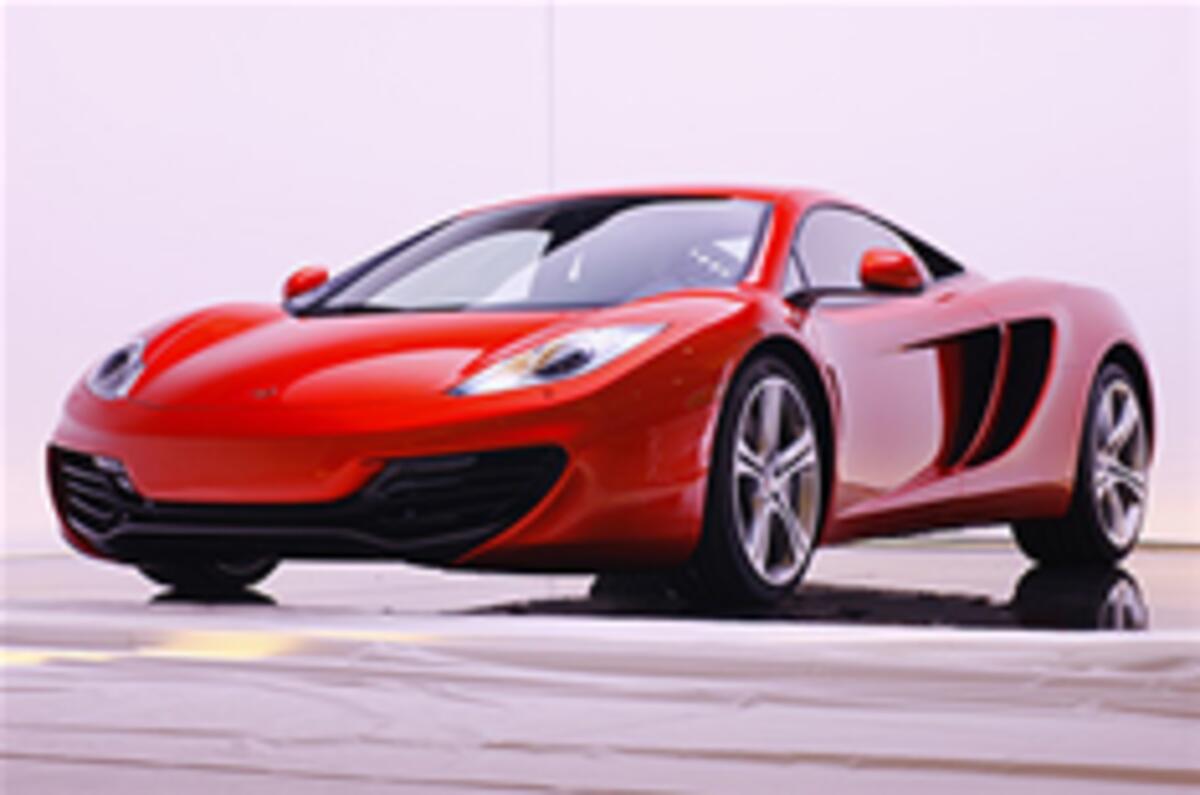

This is the MP4-12C mid-engined supercar, which will go on sale sometime in 2011.
Its designation comes from three sources: ‘MP4’ because every McLaren grand prix car has used that designation since 1981, ‘12’ because that’s its efficiency coefficient according to a secret McLaren performance scale, and ‘C’ because the important bits are made from carbonfibre.
See Autocar's exclusive McLaren MP4-12C picture gallery
Download the McLaren MP4-12C wallpaper picture
See Autocar's exclusive McLaren MP4-12C video
Who is McLaren's MD Antony Sheriff?
Chas Hallett blog - inside the McLaren MP4-12C
John McIlroy blog - MP4-12C: subtle can be brilliant
The company intends to price the car towards the upper limit of the supercar segment at between £125,000 and £175,000, against rivals like the forthcoming Ferrari 458, the Lamborghini Gallardo and Aston Martin DB9.
Autocar’s Steve Cropley is your guide:
Design, engineering
Your first impression of the MP4-12C is that it’s a classy car with logical proportions and a near-perfect stance, but it’s far less spectacular than some rivals. That’s the whole idea, says design director Frank Stephenson.
He says in-your-face supercar styling can be “wearing and boorish” and risks becoming dated. “Great design looks relevant years later,” he says.
However, Stephenson and his team have resisted building any F1 family resemblance into the 12C. Instead, they have used the McLaren badge (team members call it “the McLaren tick”) in areas like radiator air scoops and headlight surrounds.
According to Stephenson, the 12C design has been led by a need for great aerodynamics.
The car is lower, shorter and narrower that all of its rivals, which makes it feel agile on the road and cuts its frontal area. The passengers have been moved closer together for the same purpose.
The front wings are shaped so their highest point is exactly above the contact patches of the front tyres, allowing the driver to place the car accurately on the road.
The forward screen pillars are positioned mostly for aerodynamic efficiency and good visibility, and both rear and rear three-quarter vision are much better than you might expect on a car so focused on performance.
The side-mounted radiators are placed near the engine to eliminate complex, heavy pipe arrangements and extra fluid, and to centralise their weight.
The twin exhausts run straight out through the rear body, also to save space and weight. Even the standard brakes – steel discs with forged alloy hubs – weigh around 8kg less than a 12C equipped with the optional carbon-ceramic discs that will be offered, and careful computer design of the wheels and their special Pirelli tyres has shaved another four kilos.