
Vehicle safety body Euro NCAP is dramatically changing the way it tests cars, primarily to better evaluate the effectiveness of cars' driver assistance systems and the usability of their cockpits.
NCAP says this is the biggest change it has made to its testing programme since 2009. The new procedure overhauls the way cars are tested and scored – under four new core pillars of safety: safe driving, crash avoidance, crash protection and post-crash safety.
Importantly, the organisation says, several of these changes have been made "in response to consumer feedback", highlighting criticism over the "annoying warnings or intrusive interventions" of some advanced driver assistance systems (ADAS). The changes will come into effect from 2026.
NCAP is also seeking to better evaluate the real-world utility of such systems, to ensure they function as required outside of the confines of the test track.
From 2026, higher safety ratings will be awarded to cars equipped with "driver monitoring technologies that maintain attention and engagement behind the wheel", with points awarded to "systems that monitor driver performance in real time".
The best scores will be given to cars that continuously track the head and eye movements of their drivers, and use that information to adjust the sensitivity of the ADAS functions - with special commendation to systems that can detect the influence of drugs or alcohol, and safely stop the car if the driver falls unconscious.
NCAP will also evaluate the "placement, clarity and ease of use" of essential controls and its new scoring system will emphasise the importance of physical buttons for commonly used functions in response to consumer feedback that suggests they can reduce distraction.
Various parts of the testing process will also be updated to ensure NCAP's ratings are based on the real-world effectiveness of safety systems, not just their performance on the test track.
Testers will evaluate the accuracy of speed-limit recognition functions – a common pitfall of modern ADAS suites – on the road, for example, "with the aim of improving consumer acceptance".
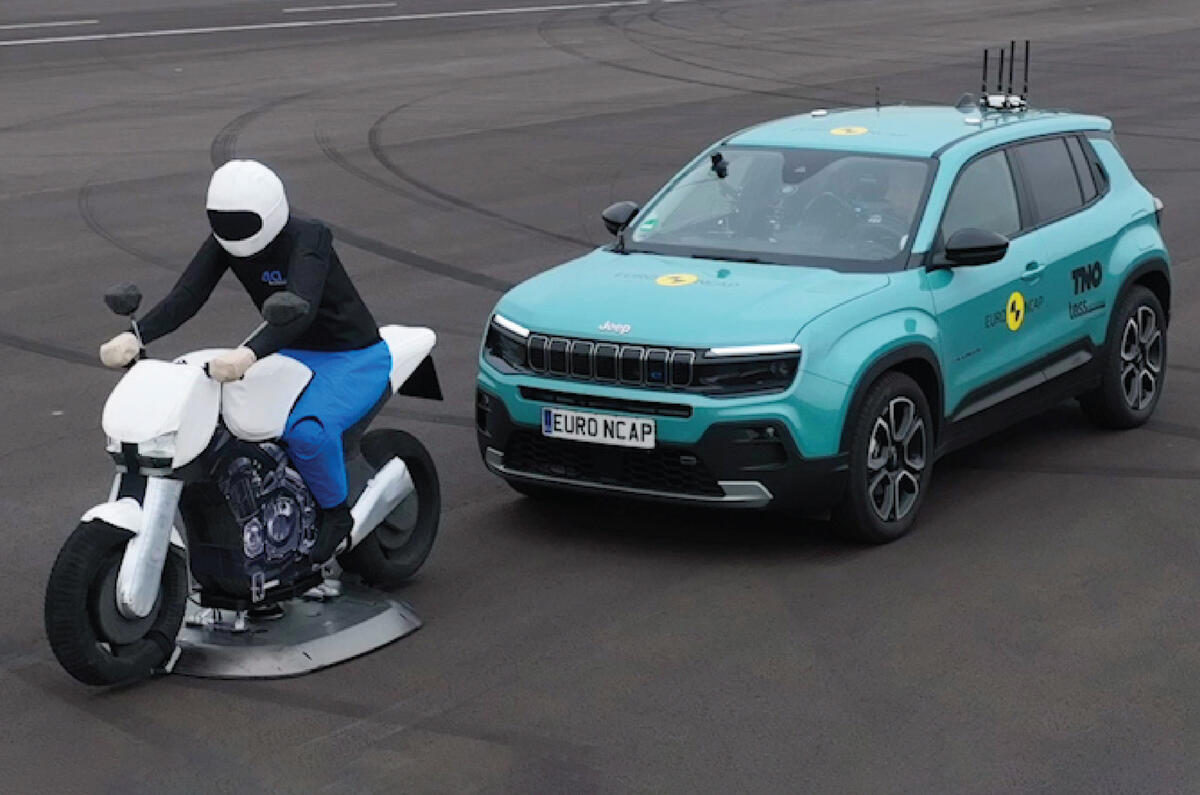
The focus on real-world efficacy extends to a new testing programme for crash-prevention technologies, including autonomous emergency braking (AEB) and lane keep assist. This will "reflect real-world accident patterns" by introducing new urban-focused test scenarios that include cyclists and motorcyclists as part of the simulated traffic.
These systems will also be rated on their "smoothness and intuitiveness", in response to criticism that they can intervene unpredictably and distractingly.
As well as revamping its testing process for crash prevention and protection, Euro NCAP will also place more focus on 'post-crash safety': electric door handles must now remain functional after an accident and EVs must "correctly manage the isolation" of their batteries to mitigate any fire risk.
Automated emergency response functions will also now need to be able to tell responders how many occupants are in the car, following an impact, so the correct emergency response can be organised.
Euro NCAP secretary general Michiel van Ratingen said the wide-reaching changes are aimed at boosting the "rigour and relevance" of the organisation's test procedure, while ensuring cars are tested on their performance before, during and after a crash.