


‘Look behind you!’ is a cry increasingly being heard by leasing companies, car dealers and car buyers as that spectre which haunts the used car market threatens to disrupt an emerging part of it.
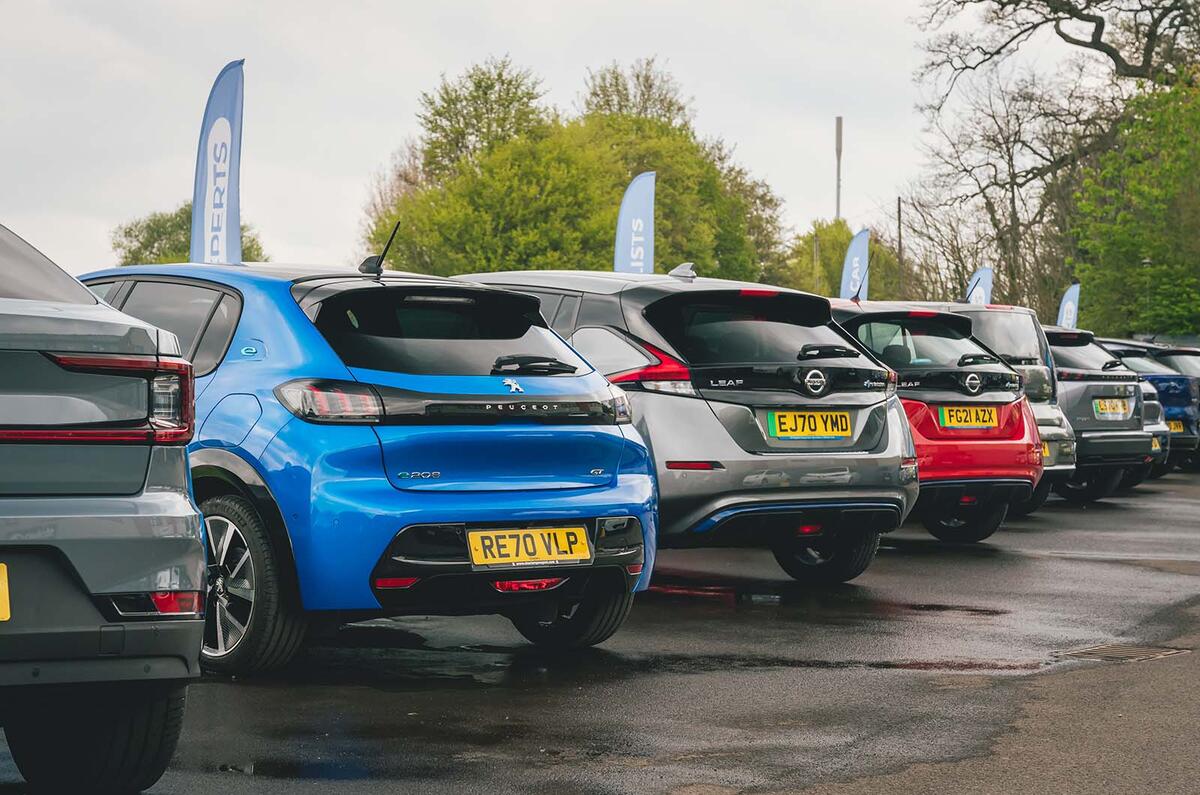
We are talking about ex-fleet cars, specifically the growing number of used electric ones that lease companies and businesses could soon be disposing of in a market already struggling with weak consumer confidence, heavy depreciation, over-supply of certain models and the fear that technological progress risks making even some fairly youthful EVs look old-hat.
On the surface, recent new car registration figures paint a positive picture. EVs were up 39.4% year on year in June and up 32.7% year to date.
However, dig deeper and the figures reveal that business and fleet registrations accounted for almost 79% (24,953) of the total number of EVs registered – a proportion that has been increasing as private buyers continue to favour petrol and hybrid cars.
The Society of Motor Manufacturers and Traders’ CEO, Mike Hawes, said: “Battery-electric vehicle registrations grew again, with the segment up 39.4% as buyers chose to get behind the wheel of a zero-emission car. It’s business and fleets, however, rather than private buyers that continue to drive this growth, thanks to attractive fiscal incentives.”
Those incentives include the reduced benefit-in-kind tax that EVs attract (2% at present, compared with, for example, 30% for a 1.5-litre petrol Volkswagen Golf) and salary-sacrifice schemes, whereby an employee is offered an EV on a lease through their employer at an all-inclusive monthly rate with no deposit while paying reduced national insurance contributions.
Some experts fear that the incentives are leading to a two-speed market that risks undermining EVs and disadvantaging private buyers. “The fleet market is a huge opportunity for car makers wanting to sell EVs in volume,” said Philip Nothard, insight and strategy director at services provider Cox Automotive.
“Already we can see the likes of new entrant BYD targeting it with £199-per-month deals and low deposits. But where are the incentives for private buyers? There’s no clear incentive for them to transition to EVs. There’s a big imbalance.”