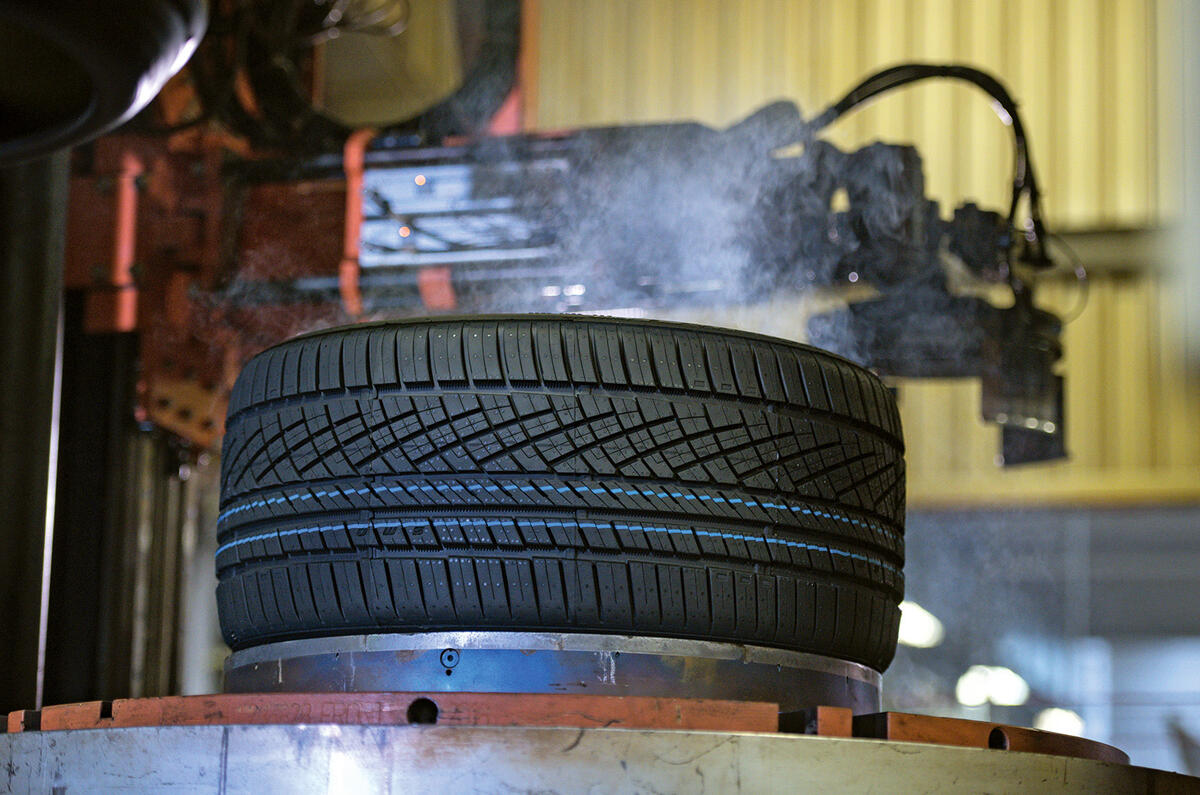


A few years ago, there was a fad for putting filtered used cooking oil in diesel cars in place of pump diesel, which caused a degree of alarm among manufacturers of modern diesels.
Today, after years of research and development, B7 pump diesel (containing up to 7% biodiesel) is available on forecourts, can include used cooking oil as a raw material and is safe to use in diesels. Now tyre companies are also turning their attention to used cooking oil in the manufacture of new tyres.
Continental, for instance, is using cooking oil to make synthetic rubber. The firm says it is ramping up its commitment to a circular economy, which in practical terms means using as many recycled and recyclable materials as possible.
Many raw materials including steel, textiles, carbon black and silica go into the making of tyres. Rubber, of course, forms a large proportion of that and in Continental's case it is as much as 40% by weight. A hundred or so raw materials are used to make up to 20 different types of rubber (and other things) and the type of rubber used in any specific tyre depends on the kind of use it is going to get.
Increasing quantities of recycled additives are used in the formulation of the customised rubber compounds and recyclable resins are used to make the rubber more pliable and improve the performance of the tyre.
Continental mainly uses two categories of rubber in specific areas of the tyre. Natural rubber is used in the tyre tread, where it needs to be very hard-wearing due to the abrasion from the road surface. Its properties include impact resistance and durability, which is imparted by something called 'strain-induced crystallisation'.
This phenomenon occurs when rubber is stretched, which causes chains of molecules, usually tangled and unordered (amorphous), to align into crystal-like structures. It is this that gives natural rubber its durability, but inconveniently it is also a property that can't be reproduced artificially.
Synthetic rubber is used in sidewalls but also incorporated into the tread of car tyres along with the natural rubber, to improve braking performance and reduce rolling resistance. This is where the waste cooking oil plays a part as a raw material, along with pyrolysis oil, which is derived by breaking down materials from end-of-life tyres at high temperatures.
Some additives used in tyre production to protect rubber from heat during the vulcanising process (which turns it into the tough stuff suitable for use in tyres) are made using biocircular acetone. This form of acetone (also used in things like nail polish removers and paint thinners) is made from 'waste of biological origin', which also includes used cooking oil.

Add your comment