Performance estates are one of those unusual kinds of cars that we petrolheads love – just look at the reaction to the new Porsche Panamera Sport Turismo – but rarely get built, as they’re never going to come even close to being volume sellers.
Another type of car most of us have some affinity with is a selection of retro German machinery. Do the names Audi 200, Audi Quattro, Mercedes-Benz W124, Porsche 924, Porsche 928 and Volkswagen Scirocco give you a warm, nostalgic feeling?
You’ve probably guessed where I’m going with this.
Back in 1980, Autocar’s Richard Laurence came across a fascinating company by the name of Artz, which, as he put it, provided “exclusive estate car conversions courtesy of a rather eccentric German businessman”, and one that had made ‘Kombi’ estate versions of all of those aforementioned cars.
Despite the market for estates not prospering in West Germany at the time, this “delightfully eccentric or astute businessman, Günter Artz, was providing for “a small, snob sector that requires the capacity of an estate wagon and the exclusivity of express transportation”; the same market the Mercedes-Benz T-Series of the time was pitched at.
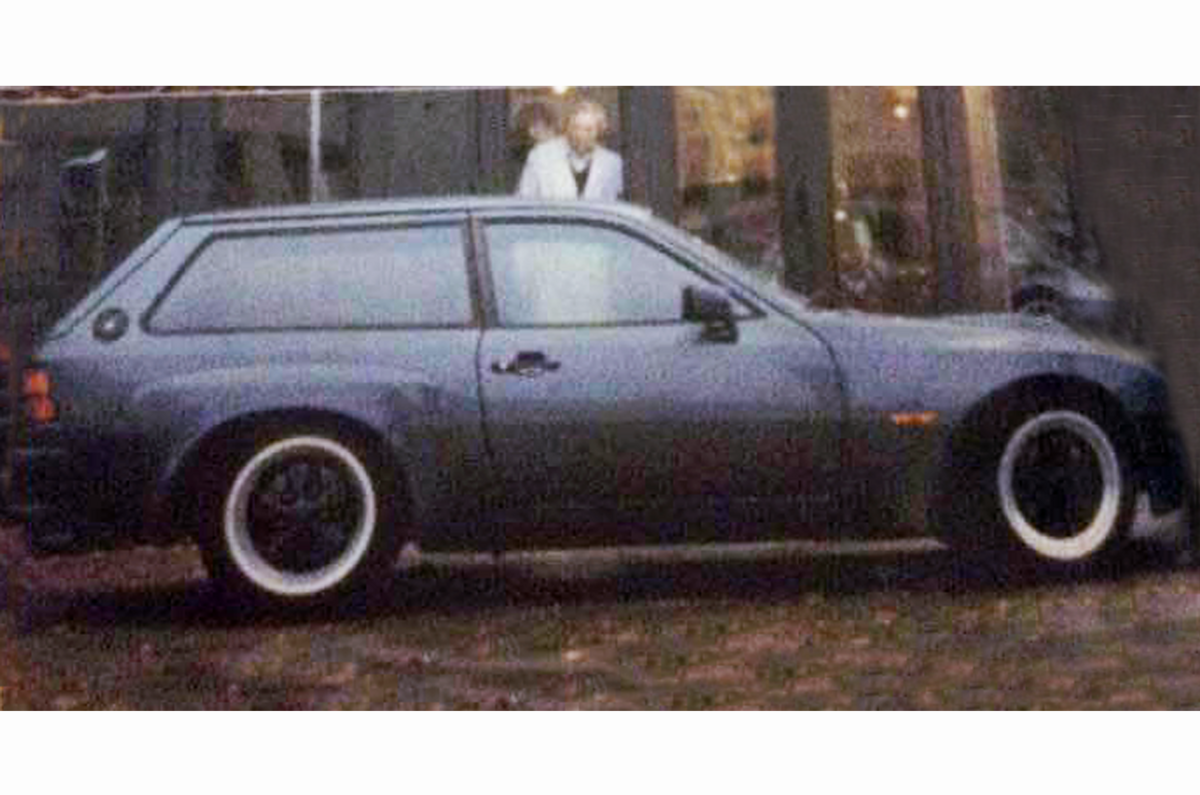
“Mr Artz has a record of weird behaviour and bizarre automobiles,” Laurence began. “True aficionados of the automotive art will remember him as the man who stuffed the mechanical innards of a Porsche 928 into an oversized Volkswagen Golf bodyshell. He also preserves cars in giant, air-conditioned plastic bags and has been known to don a wet suit and aqualung, and drive a water-filled Volkswagen Beetle about the streets of his native city of Hannover.
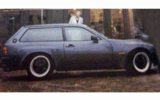
“Rumour has it, that having bought a Porsche 924 Carrera GT, he mentioned his purchase to a friend, who retorted that it was not good for carrying washing machines. The seed was sown.”
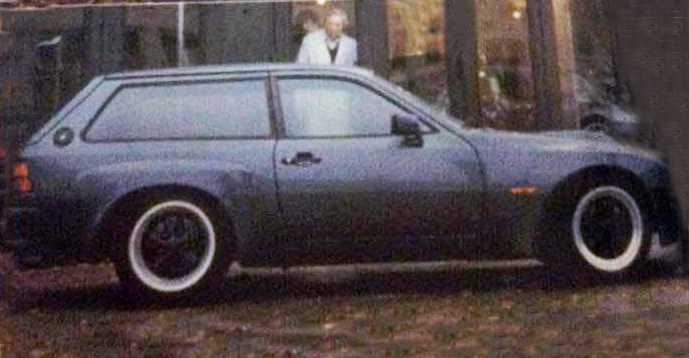
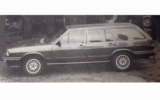
This first conversion was Artz’s simplest. He simply “cut directly behind the B-pillar and back, parallel with the body crease that runs around the waist of the car. A fabricated sheet metal roof extension is grafted in a little forward of the doorpost and runs straight back to the new C-pillar, which drops sharply down and houses the small rear tailgate”.
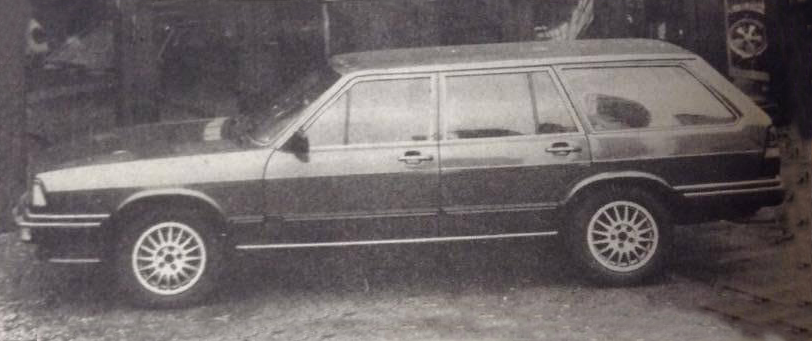
A similar operation was carried out an Audi 200, with which Artz would provide you a Quattro four-wheel drive system if you so wished. Autocar considered the 200 Kombi “an attractive alternative to the current market, and at about £12,700 without the four-wheel drive, not ridiculously expensive”.
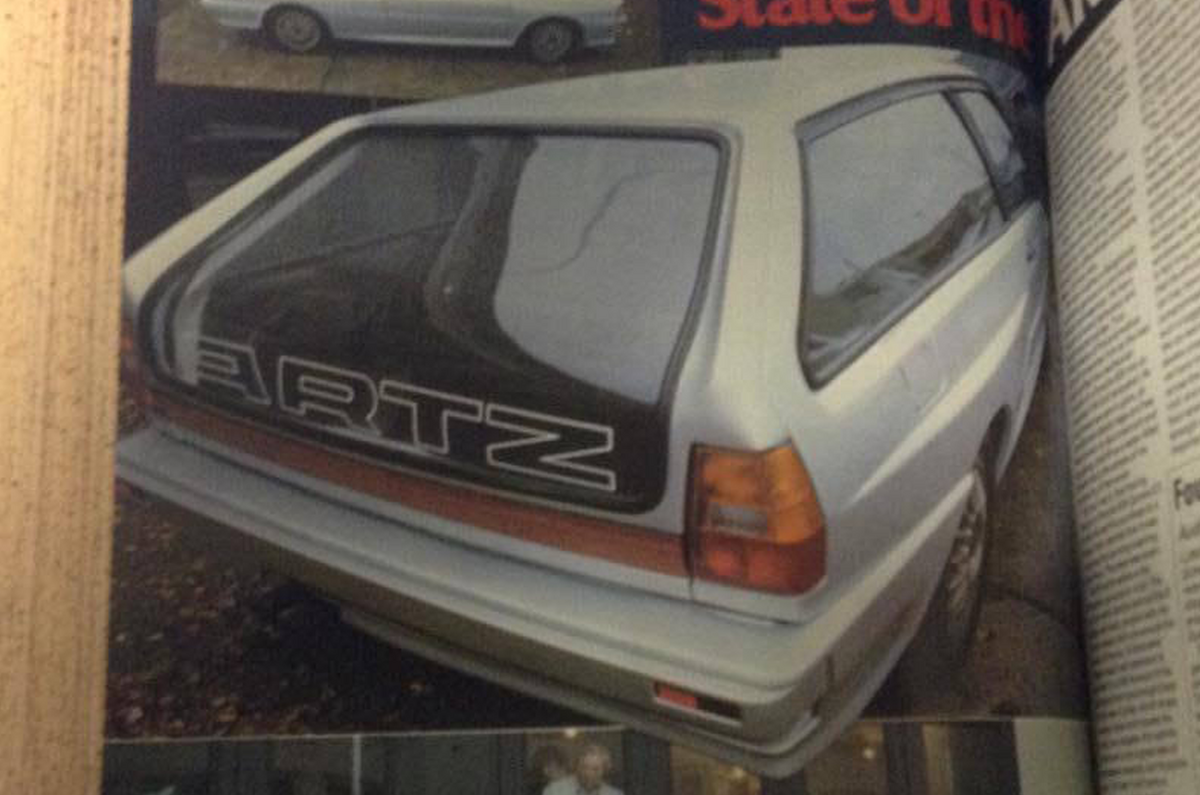
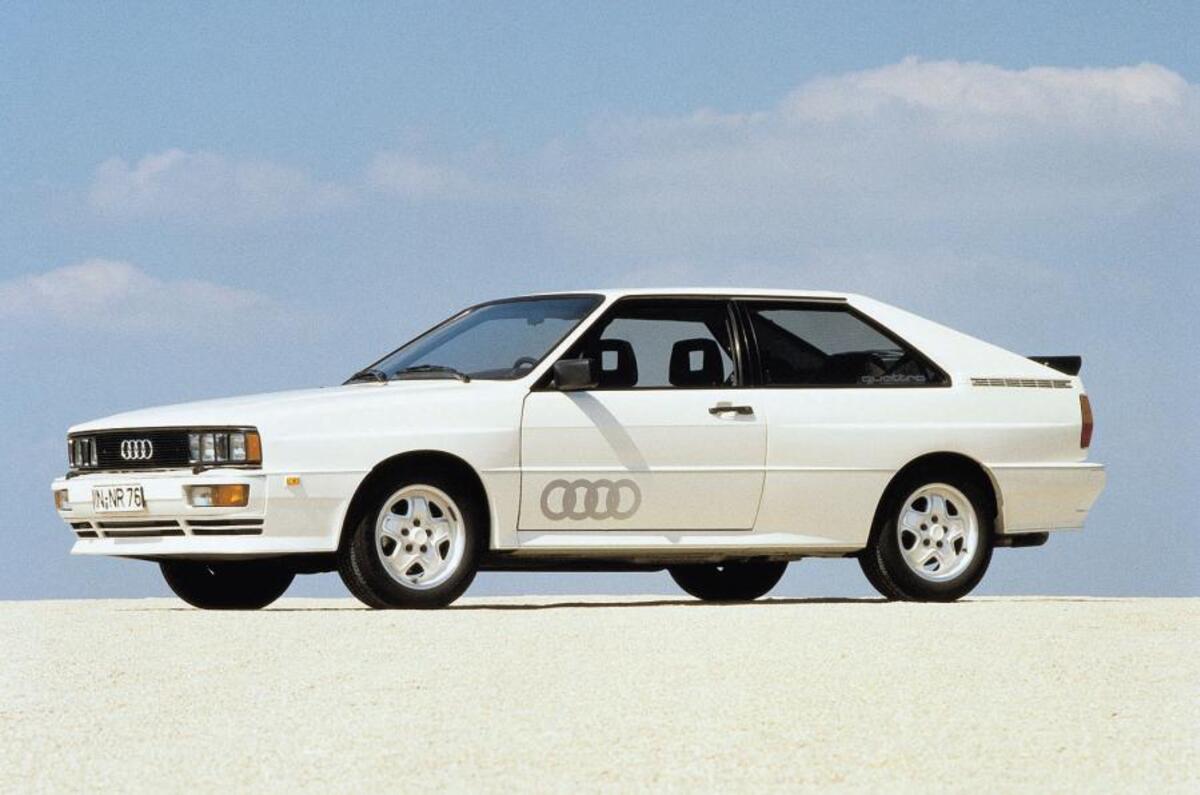
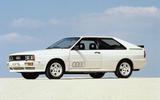
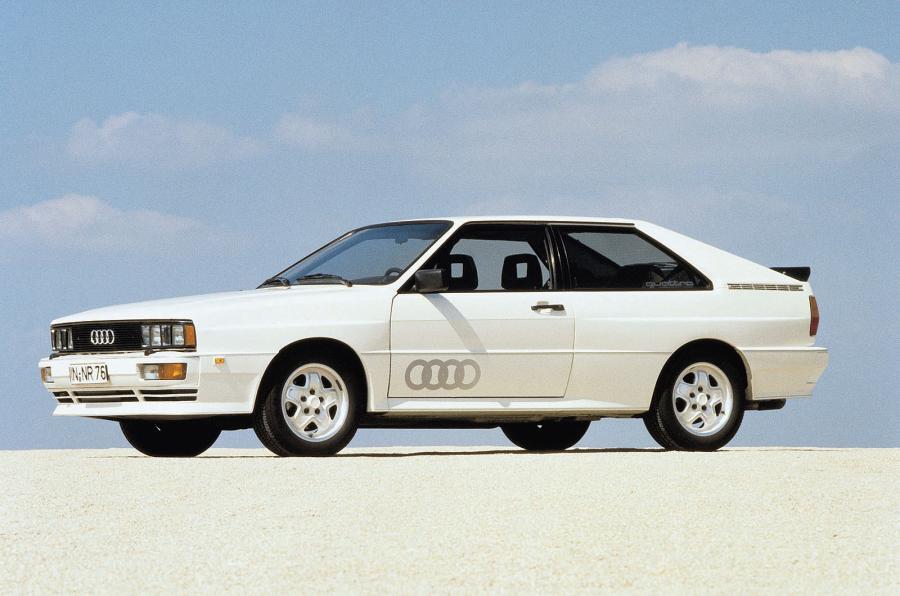
However, “the ultimate in cargo chic,” we reckoned, was the Audi Quattro Kombi. The operation to create this one went thus: “The complete C-pillar has been scrapped, the roof extended straight back and an acutely angled rear tailgate, originally a standard Volkswagen Scirocco part, finishes off the re-worked rear end.”

“The side windows are exceptionally long,” Laurence said, “in fact so long enough to suggest that the structural rigidity of the car may have been compromised.”
Of course, Artz refuted this claim, saying: “Certainly, the car would not be suitable for severe cross-country work, but we have installed spreaders across the B and C points of the roof, and a great deal of cross-floor strengthening.”
Autocar continued: “Additional strength seems all the more important after viewing the complex bends and angles of the tailgate glass, the weight of which must be a considerable burden on the rubber sealing strips.” In fact, Artz himself said he may incorporate a cross piece instead, as the glass used was “exceptionally expensive”.
The Quattro Kombi being a prototype, we speculated at a price of £6,700 – after you supplied the original sports coupé, of course. We were very impressed, in fact, saying: “Artz’s work is nicely understated – a contrast to most German tuning specialists. Finish is to exceptionally high standards. There is little, in fact, to suggest that these cars are not production line items."
Read more - Throwback Thursday: 1982 Zender Volkswagen Scirocco Z40 Turbo
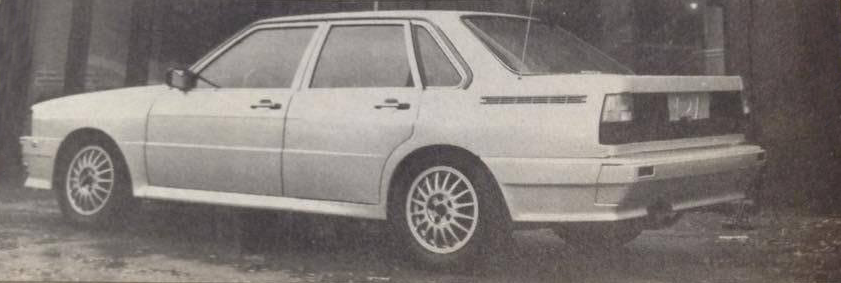
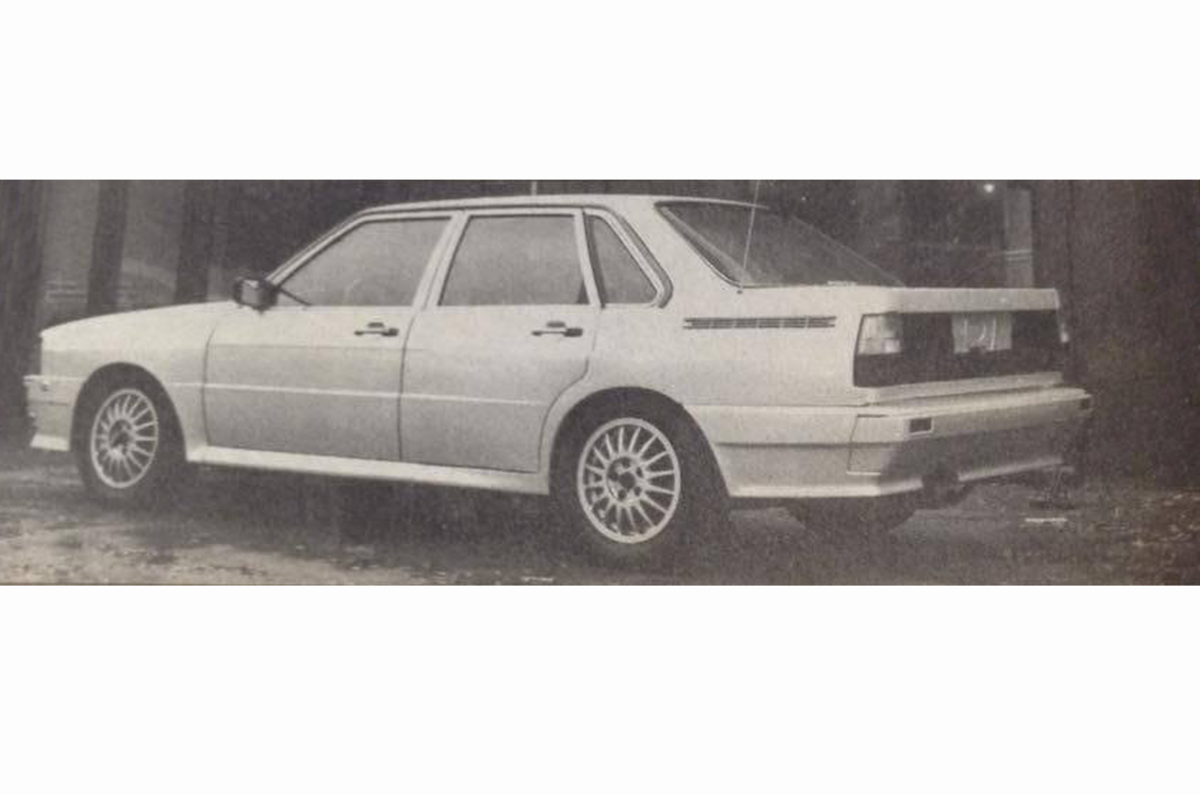
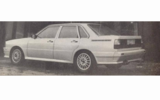
So, what else did we find “lurking in the shadows of Günter Artz’s workshop"? Well, a Quattro with four doors, bastardised from an Audi 80. Naturally.
It was built at the request of a customer, and with relative ease, too, seeing as the Quatto is based on the Audi 80’s ground group. This meant that “the Quattro’s mechanical entrails slotted neatly into the 80’s shell, with only changes to the floorplan's backbone needed to accommodate the new propshaft, and newly fabricated mountings for the location of the rear differential”.

We explained further: “Bodily, the car takes pure Quattro panels up to the A-pillar, including the front spoiler, headlight grille, bumpers and wings. The front doors are standard Audi 80 production items, while the rear doors are re-skins of the originals beaten to match the Quattro’s bulbous and distinctive wheel arch blistered which have been heavily cut and refinished before being offered up to the hip frame of the original car.
“The rear panel and wraparound bumper is straight from the Quattro parts bin with only the tops of the rear wings being modified to meet the Audi 80’s C pillar, in what is a surprisingly harmonious design. The boot lid is totally new and fabricated by the Artz body builders. The resulting rear end treatment gives the car a dramatic wedge shape with a sharply cut off back, reminiscent in some ways of the Alfa Romeo Giulietta.”
“No wonder Audi, keen to spread the four-wheel drive concept to other models, have looked and noted the neat conversion job,” our man noted.
Autocar was smitten with the fine creations, and concluded by saying: “If your penchant is for a Teutonic express to transport your valuables, then Günter Artz is your man. If you really want to go overboard, he’ll no doubt build you a three-axled, Porsche-powered and stretched Golf. Don’t laugh – it’s on the drawing board!”

Join the debate
Add your comment
love this guy
5wheels wrote:
I like your thinking. Converting a Sport Quattro to a mini estate would be fun, the rear seats were of no use to anyone with legs (or a head) anyhow. Incidentally Michèle's best WRC year was runner-up in 1982, but that doesn't detract from her greatness, or how much she's achieved in motorsport since she retired from driving.
BMW 4-series Touring
924