8

Mazda pulls out the stops for the all-new third-generation version of its big-selling CX-5

Find Mazda CX-5 deals
Other Services
Sell your car
84% get more money with

Nobody would pretend that every car holds appeal for the typical Autocar reader, but it’s also true that there exists a place in every class where that appeal can be found.

In the world of crossovers, the Mazda CX-5 has long represented one of those places – ever since the happy-faced Mk1 was launched in 2012 on a clean-sheet platform. A balanced chassis that seemed to genuinely enjoy changing direction, along with honest but capable engines and, if you wanted it, a snickety manual gearbox, stood Mazda’s crossover out against perfectly competent but dynamically steadier big-volume foes from Kia and Volkswagen.

A second generation and nearly five million sales later, we now have the Mk3: a larger, steelier-looking CX-5 than ever there was. But also, as we will now discover, a simpler proposition from a buying perspective, and perhaps also a considerably more premium one.

The new model isn’t without risk for its maker, mind – not when you consider that the CX-5 typically represents between a quarter and a third of Mazda’s total production. Offering just one engine stands in contrast to the approaches of rivals from Nissan, Citroën, Vauxhall, Kia and Hyundai, all of which give you the option of hybrid power. And there is also the small matter of the new, digital-heavy cockpit.

Advertisement

DESIGN & STYLING

7
Mazda CX 5 review 2026 064

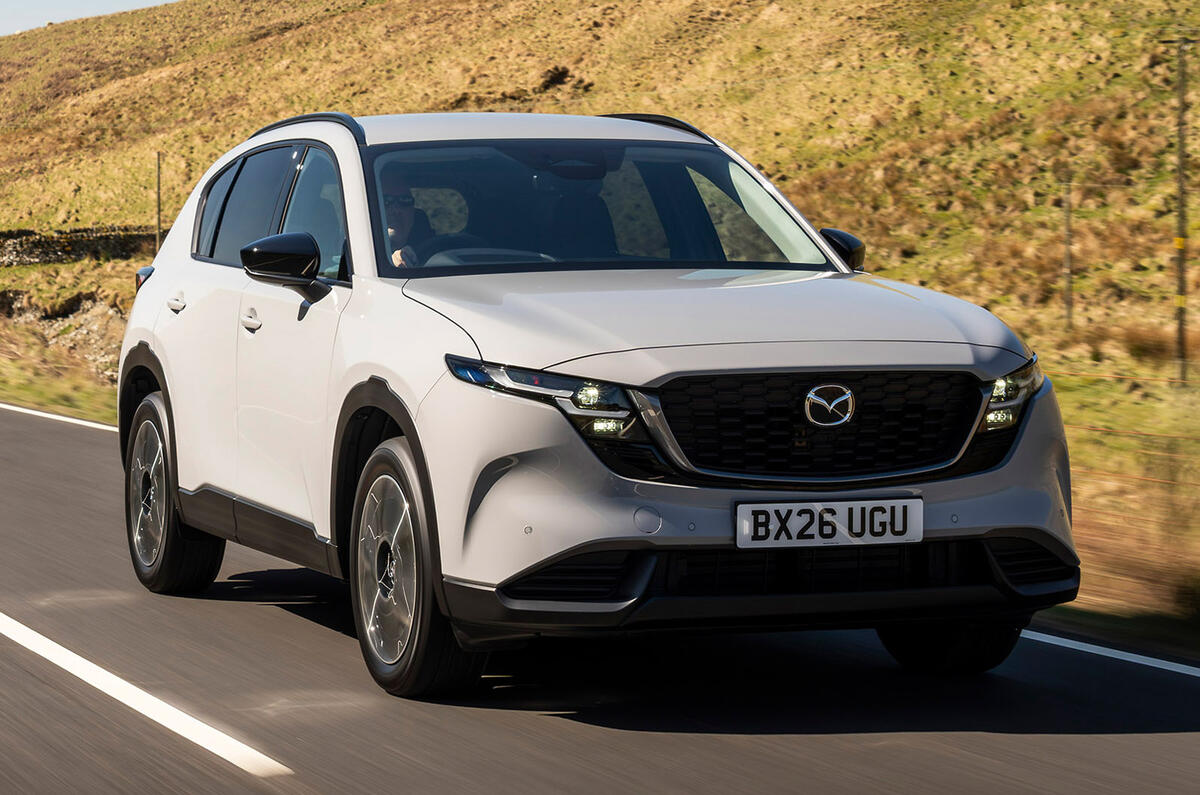
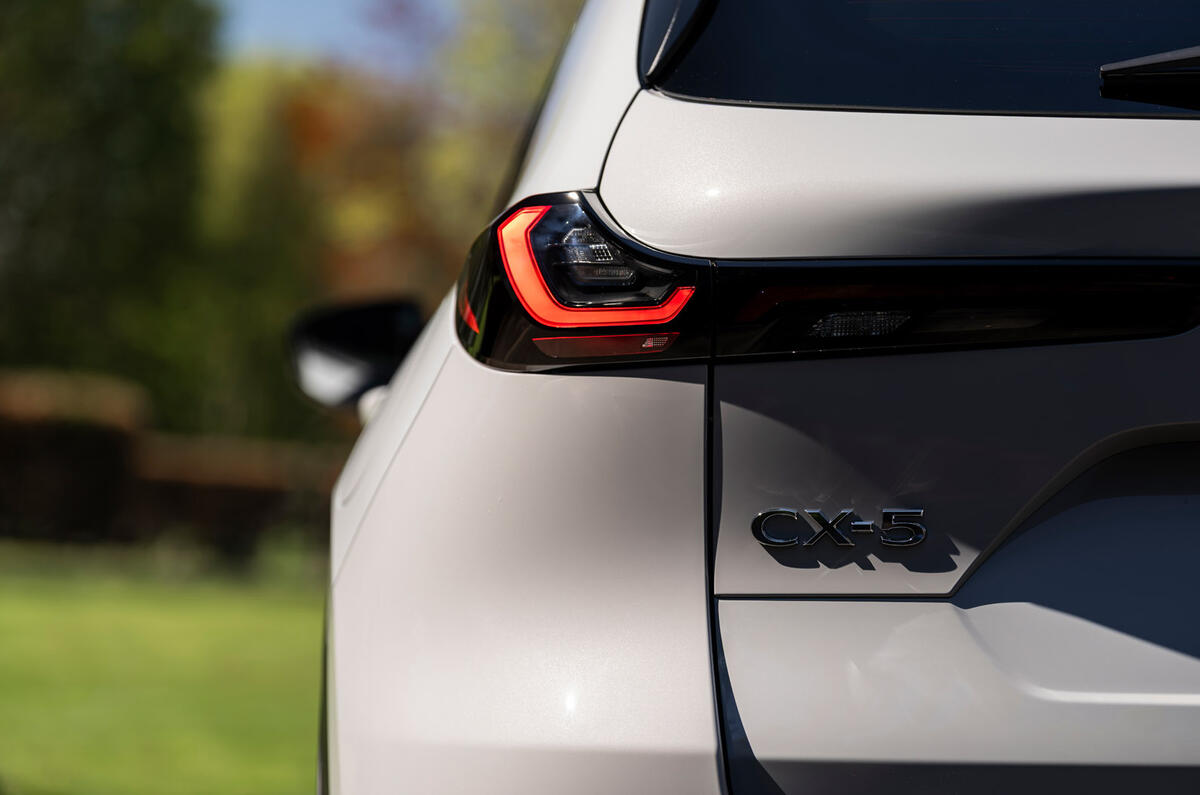
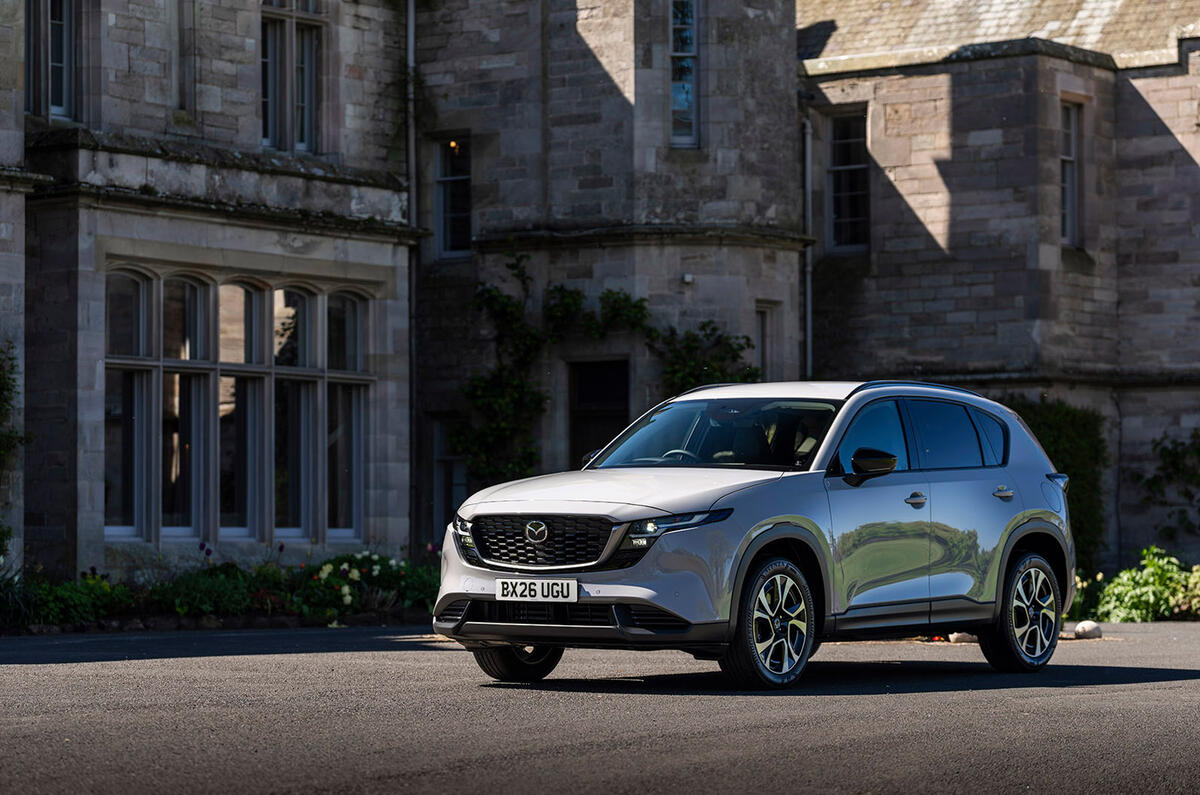
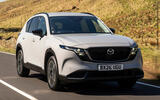
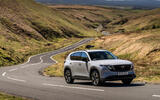
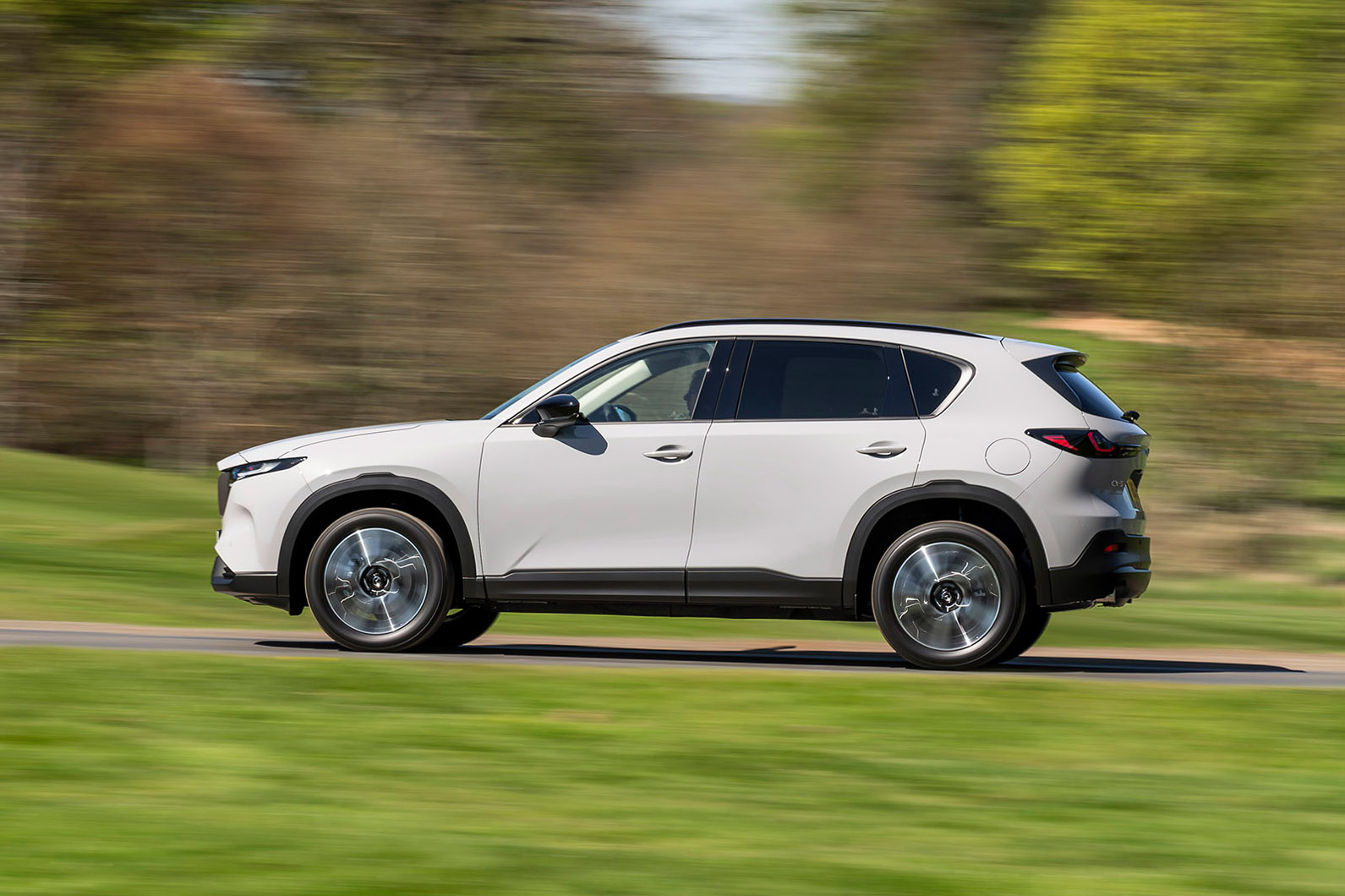
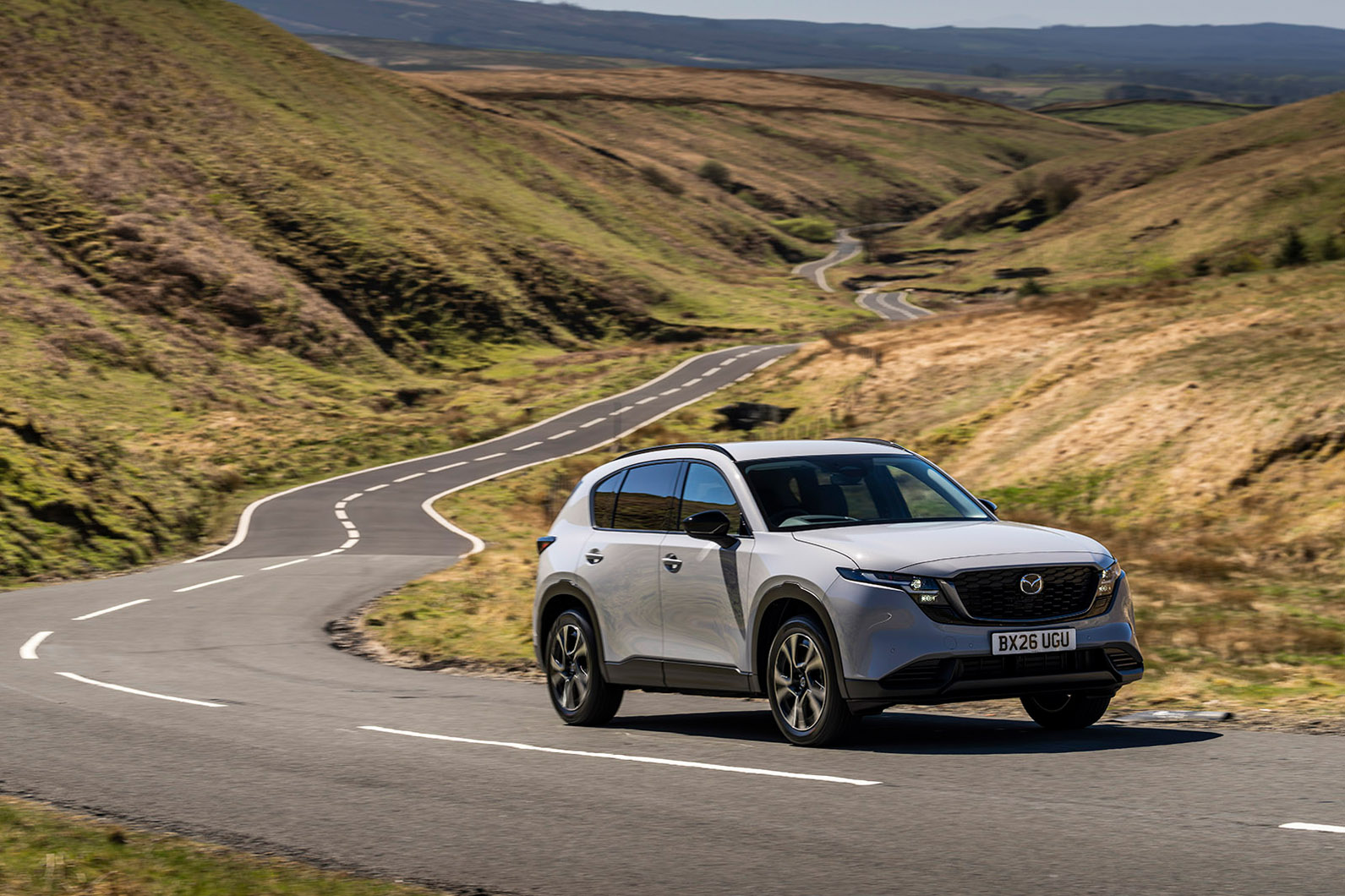
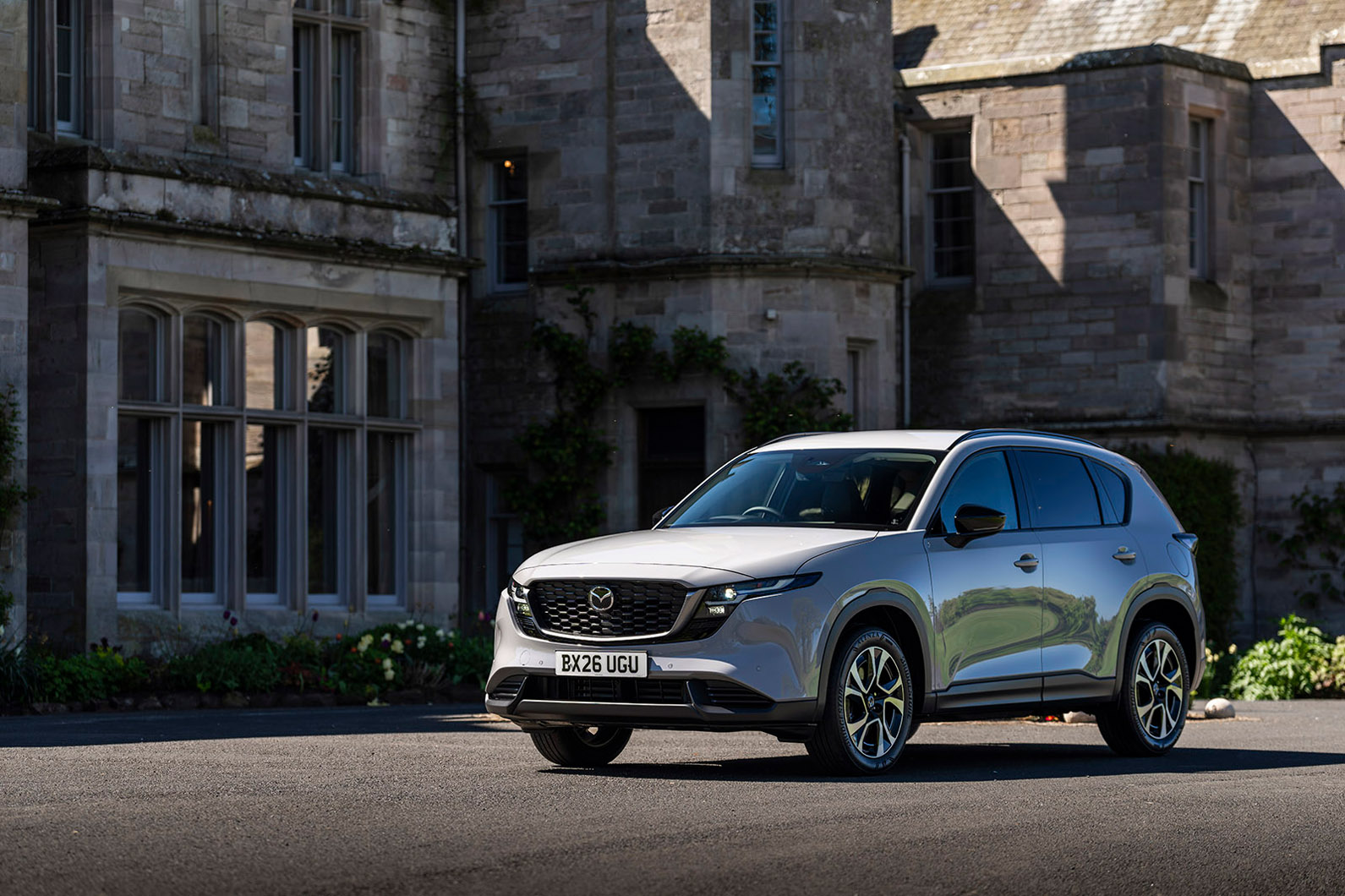
The Mk3 continues to be built at Mazda’s Ujina plant in Hiroshima and remains recognisably CX-5.

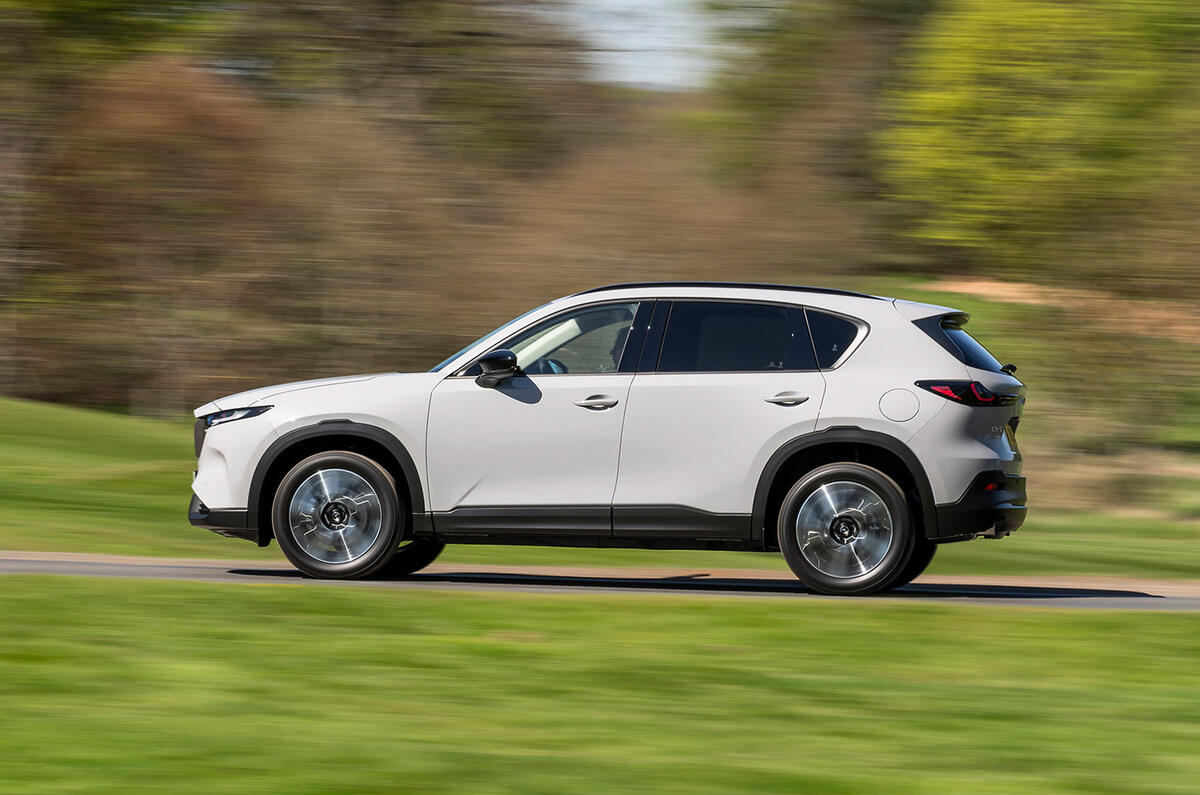
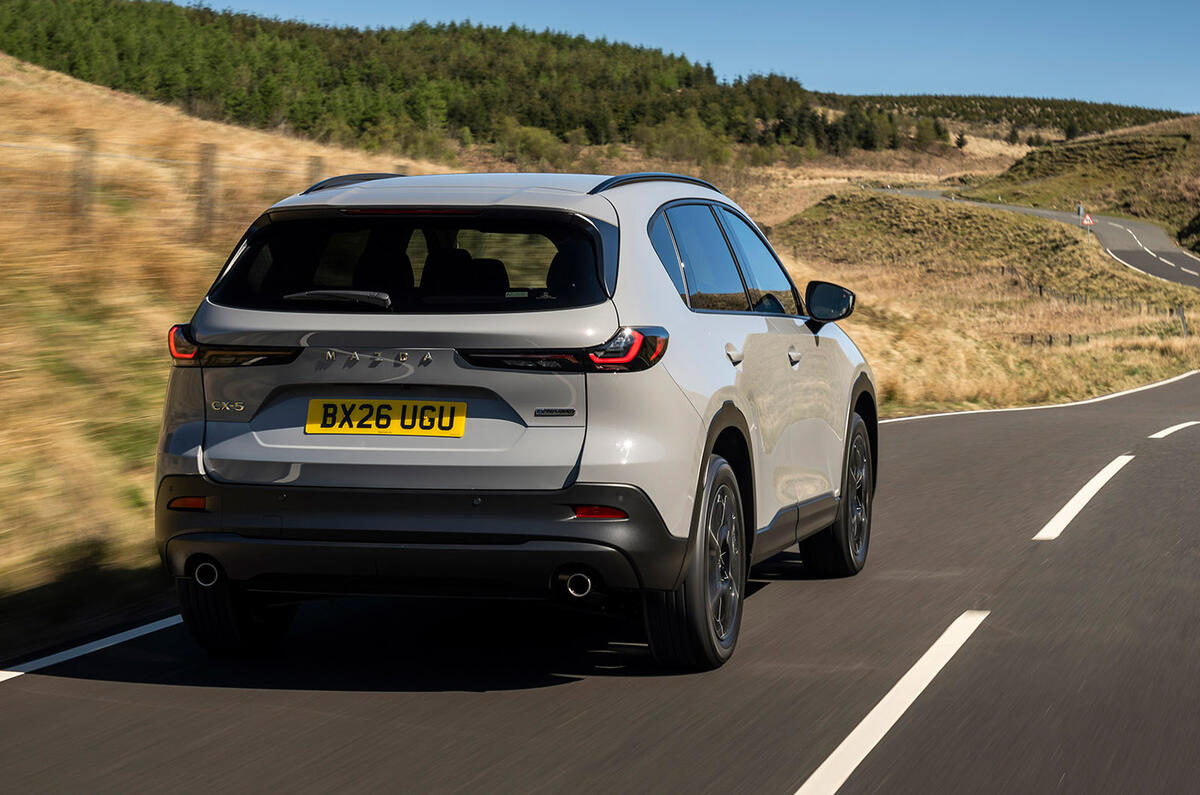
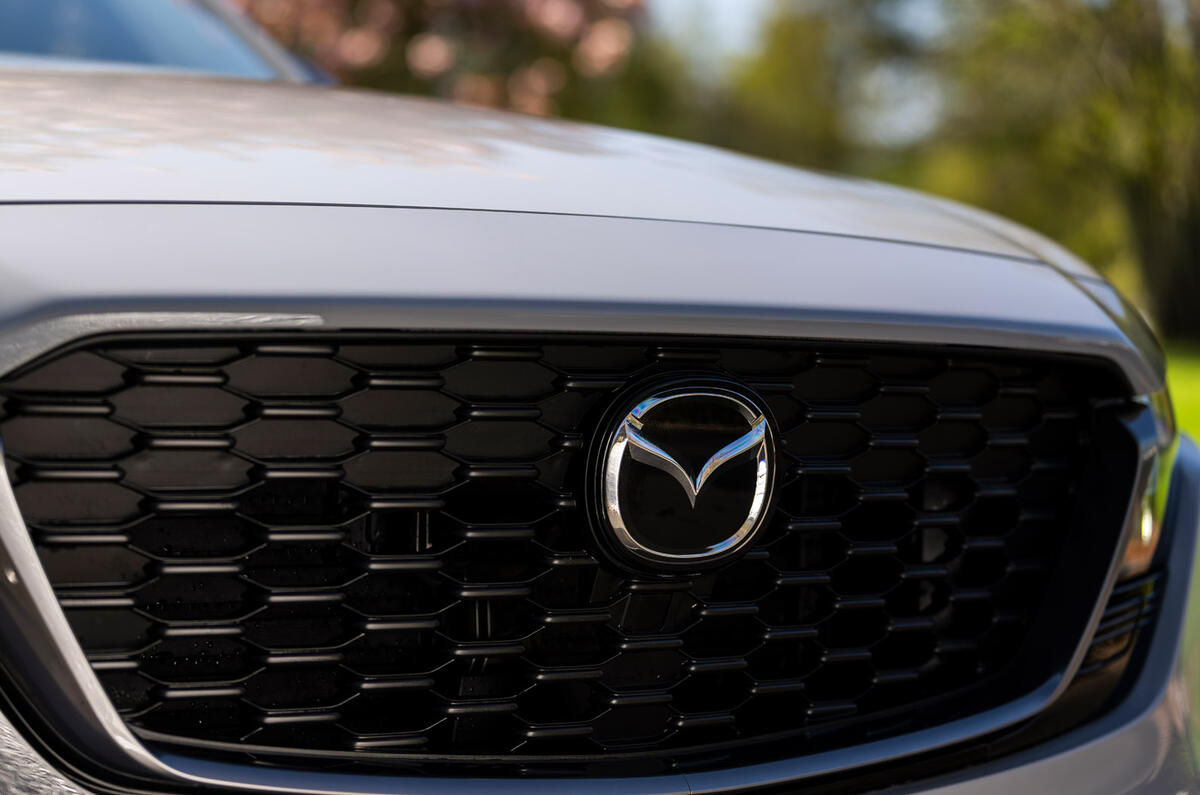
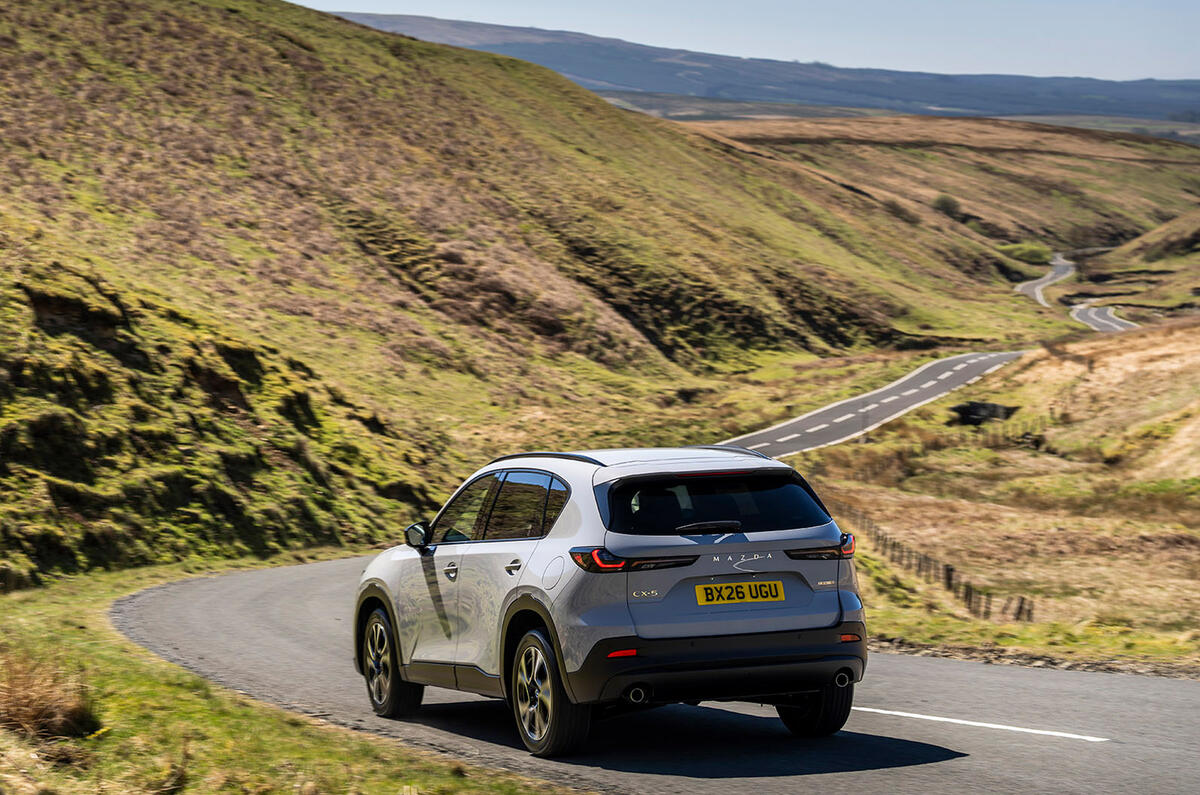
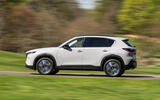
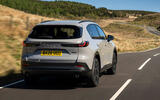
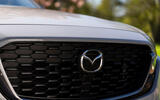
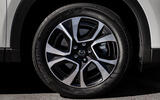
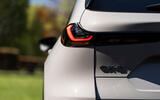
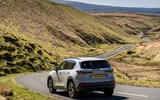
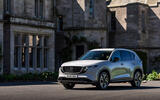
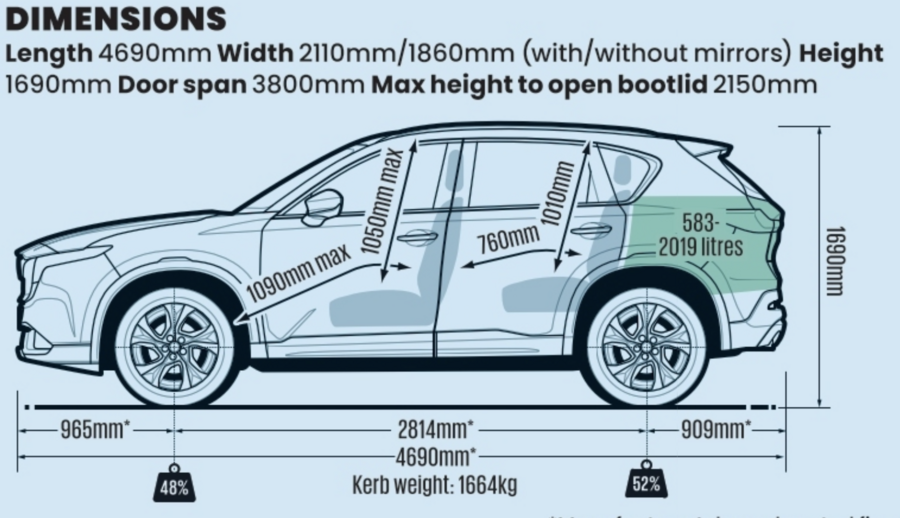
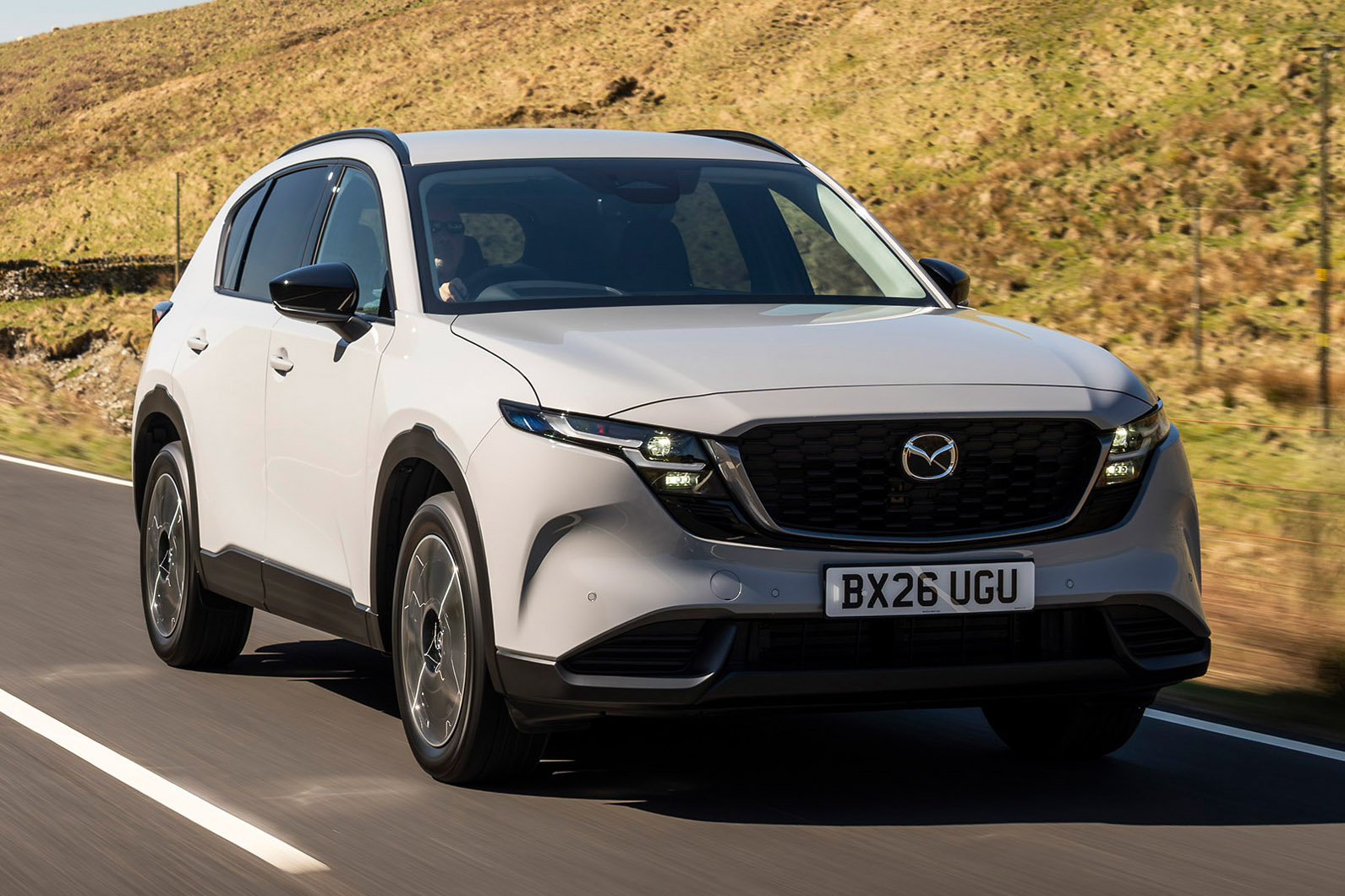
The most notable aspect of the redesign that simultaneously gives the car an angrier expression while removing some of the crisp creases that made previous iterations surprisingly attractive is the increase in exterior dimensions. The new CX-5 is 115mm longer than before (all the extra length is in the wheelbase), 30mm taller and 15mm wider, all of which bodes well for the families at whom this car is targeted.

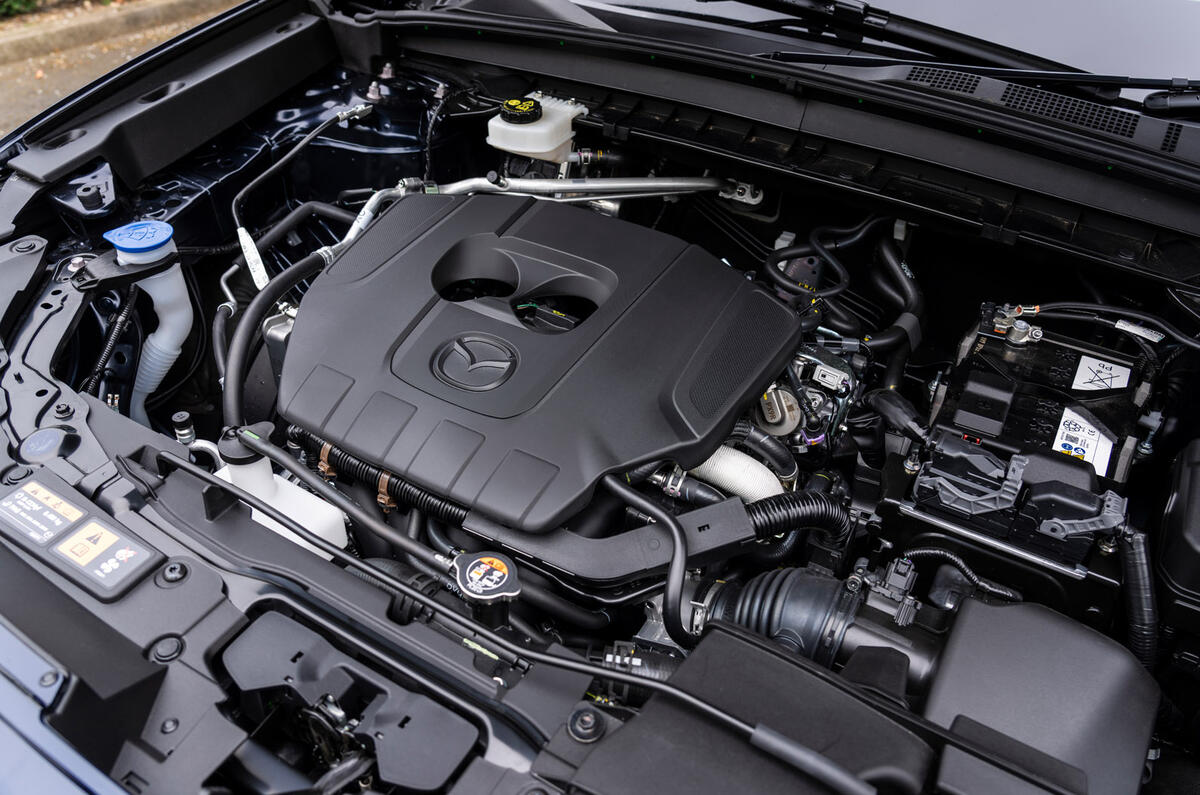
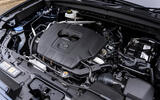
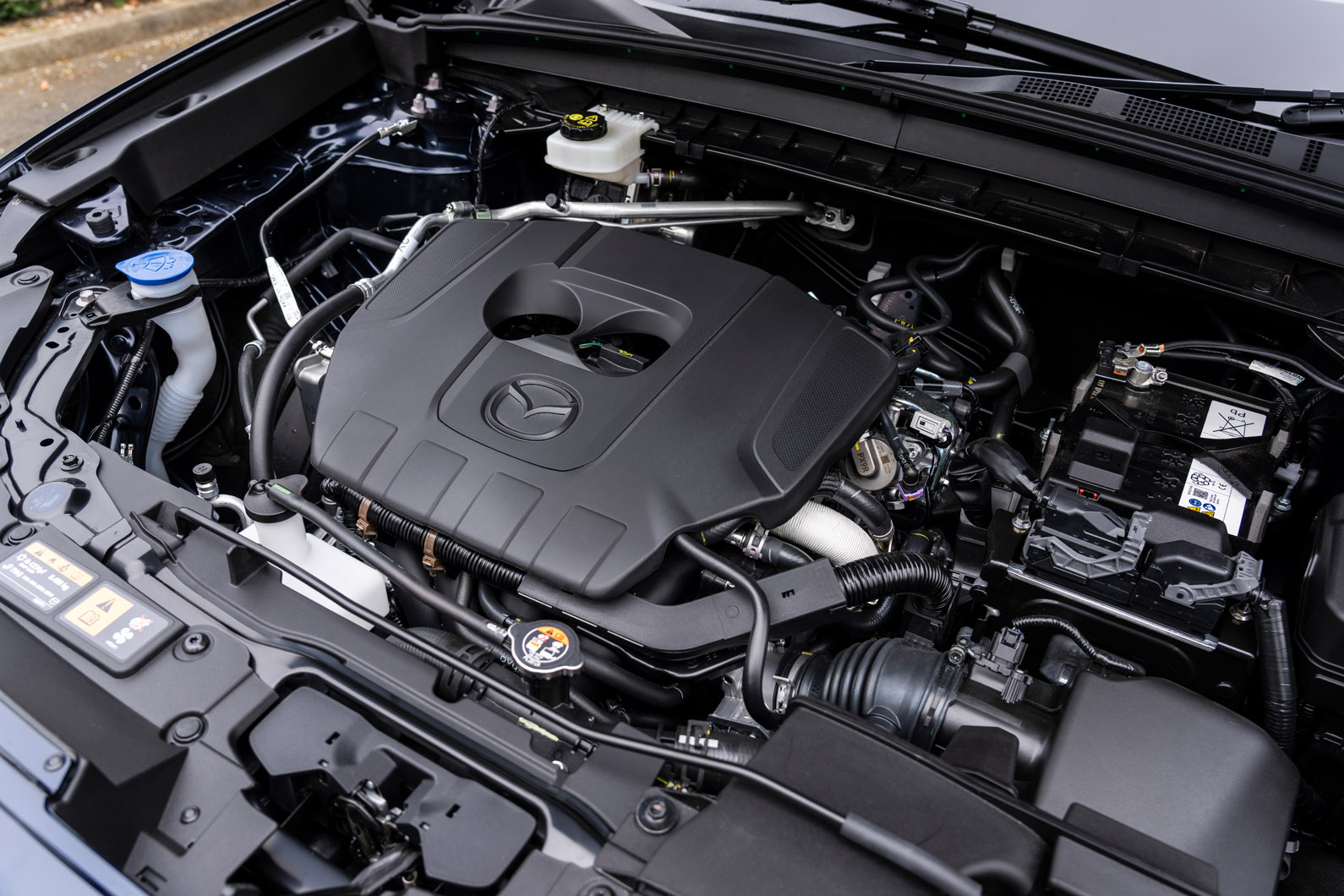
With a modest 139bhp, the engine doesn’t have a particularly high specific output, but the 24V starter-generator gives an instant kick of assistance at low revs and helps deliver a healthy 176lb ft at 3500rpm

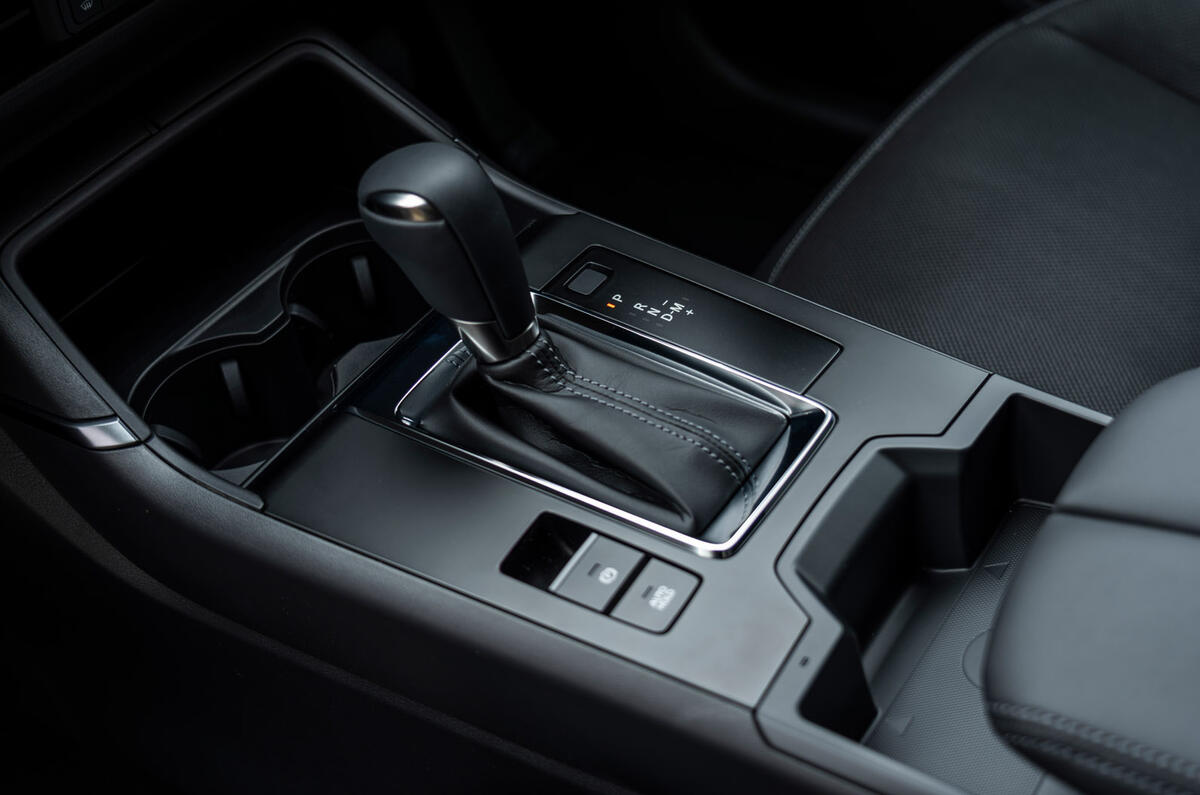
Unlike with the old model, there’s no longer the option of a manual transmission (and the slick and precise six-speeder was a good one). The free-revving naturally aspirated 2.0-litre petrol has also gone, as has the smooth and effortlessly muscular 2.2-litre diesel. What’s left is a mildly hybridised e-Skyactiv G 2.5-litre petrol four-cylinder – already seen in the 3 hatchback and CX-30 crossover – which is mated to a traditional six-speed automatic.

Conspicuous by their absences, particularly next to rivals, are electric or plug-in hybrid derivatives. Mazda is upfront in believing it doesn’t think customer demand is there.

INTERIOR

8
Mazda CX 5 review 2026 069

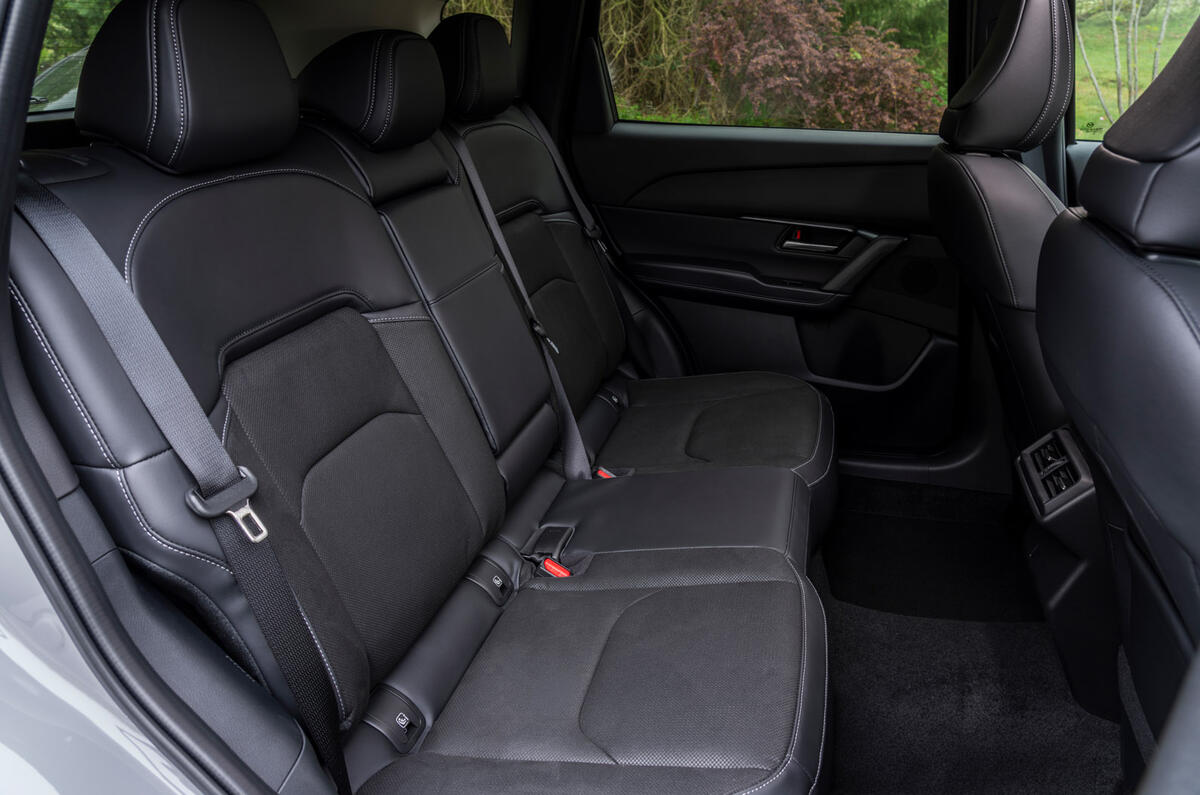
So how much space does some additional metal in the wheelbase give you? Our road test rule confirms an improvement, the new car offering 1090mm of front leg room and 760mm in the back, versus respective measurements of 1070mm and 730mm for the Mk2. These are incremental differences but they are discernible in practice and make the CX-5 more versatile than ever.

More notably, it gets the better of the current VW Tiguan, and not only in leg room – head room is more generous for all occupants. Note also that Mazda has lengthened the rear-door apertures, as well as engineering the doors themselves to open to around 90deg – all the easier for installing child seats, and for adult ingress.

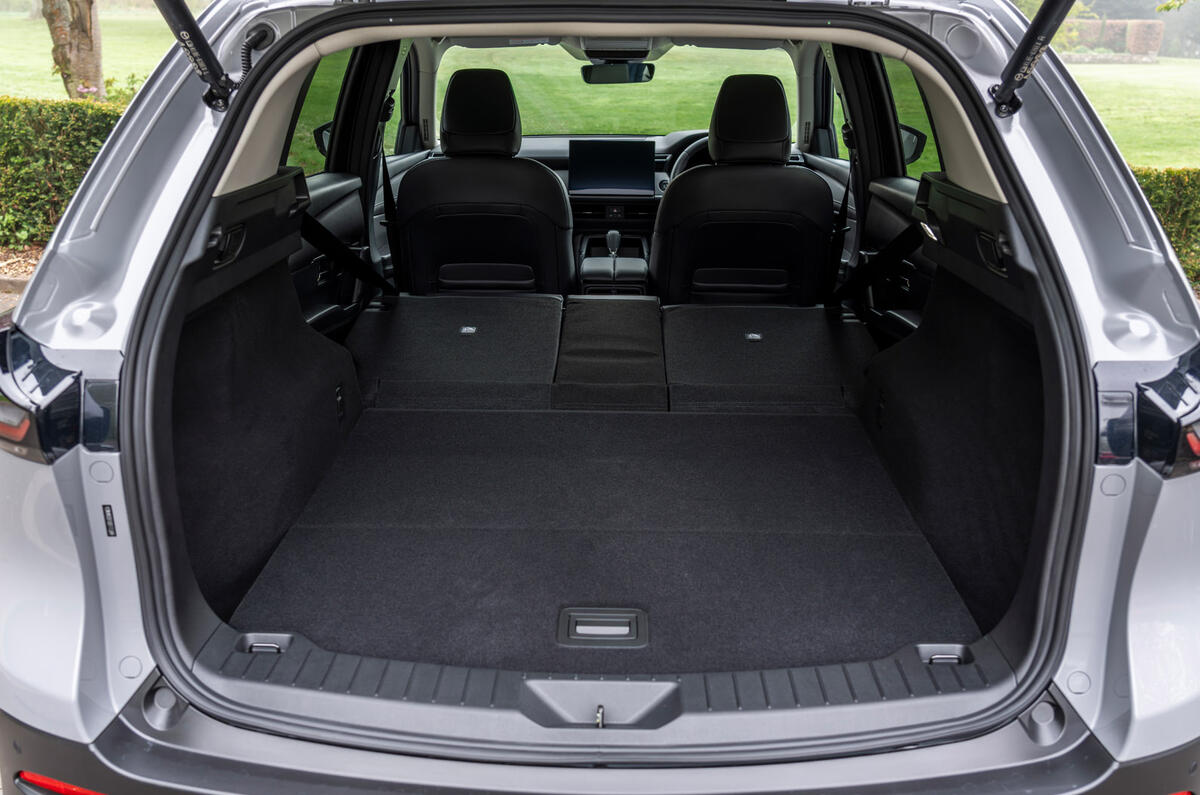
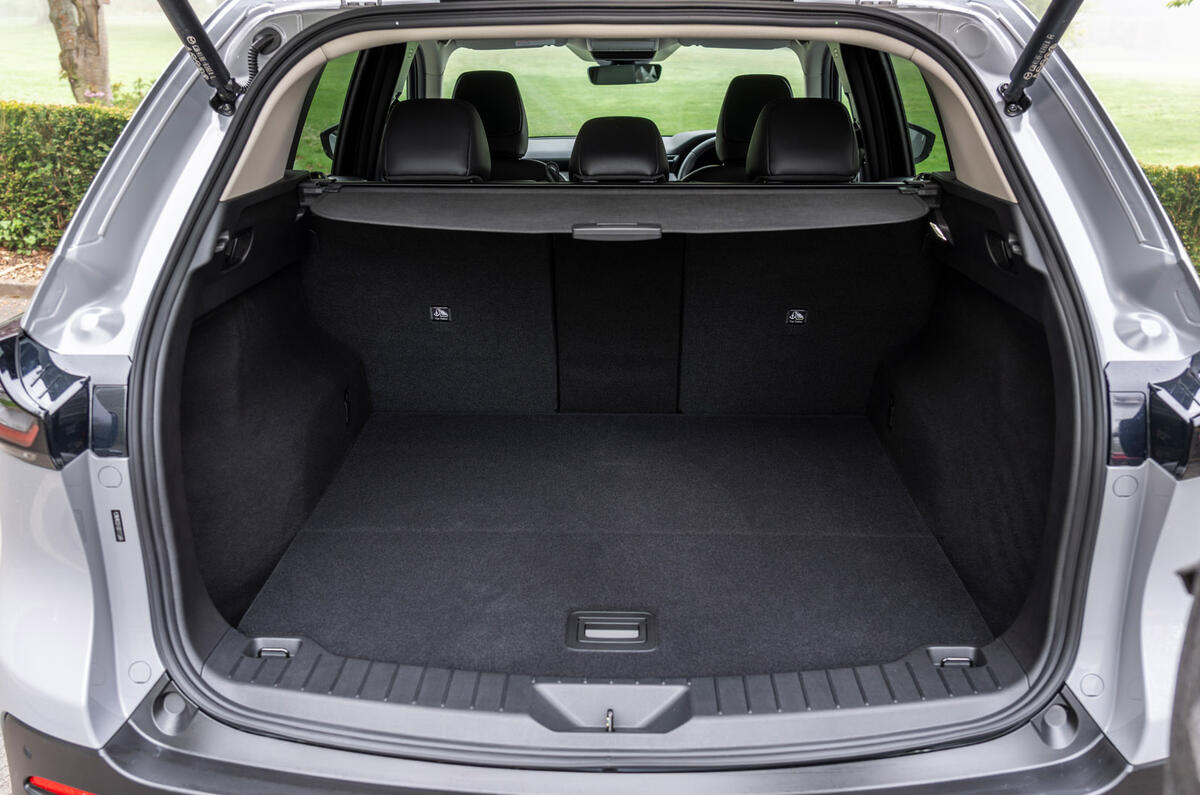
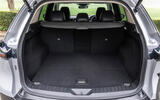
There’s also a bigger boot with the seats in place (583 litres, up by 61 litres) and a cavernous 2019 litres when the new 40/20/40-split folding rear bench is lowered (easily done with quick-release handles either side of the load bay). The loading lip is low and there’s some handy underfloor storage, though this is sacrificed in order to house a Bose subwoofer on higher trims.

Elsewhere Mazda’s now trademark quality is still on display, with plush materials for the price point, and a solid finish giving the CX-5 an upmarket ambience. You can also expect the usual choice of interesting textures and lighter colours for the dashboard and upholstery, right across the range. Opting for either the light or tan colour schemes instantly elevates the Mazda’s cockpit above the fairly dour norm in the segment.

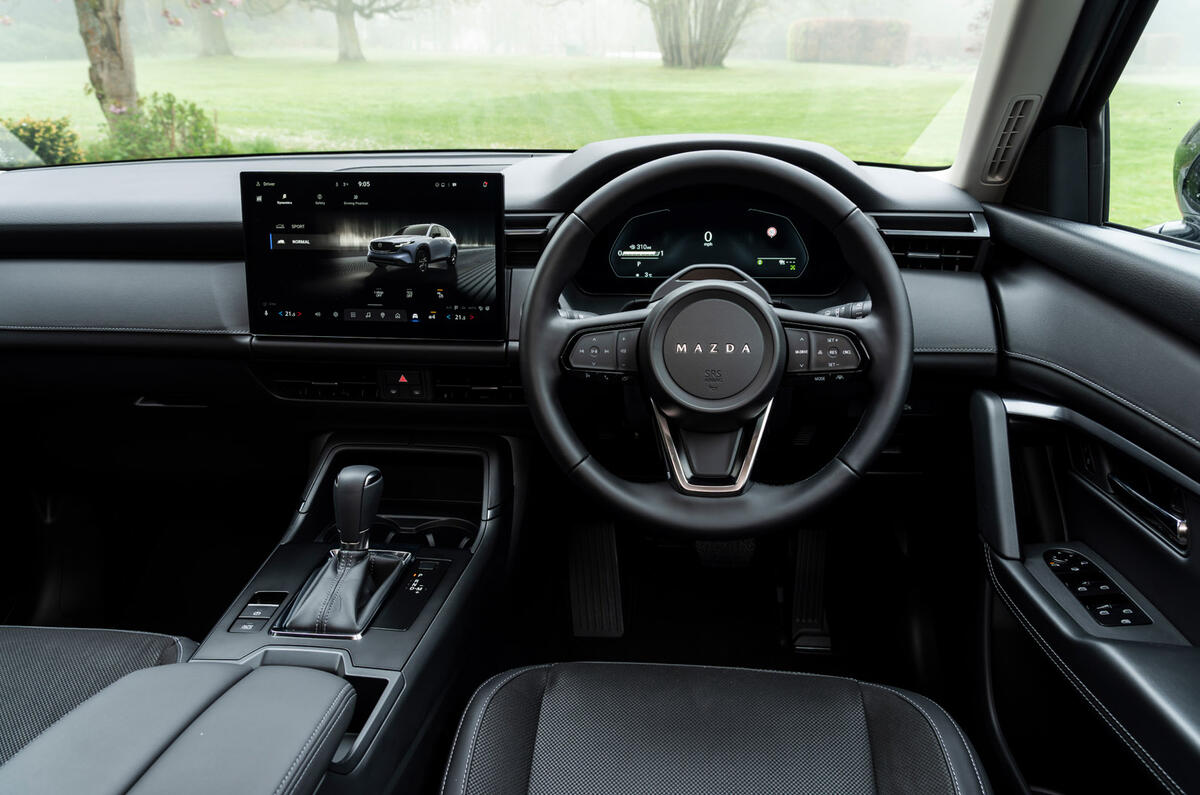
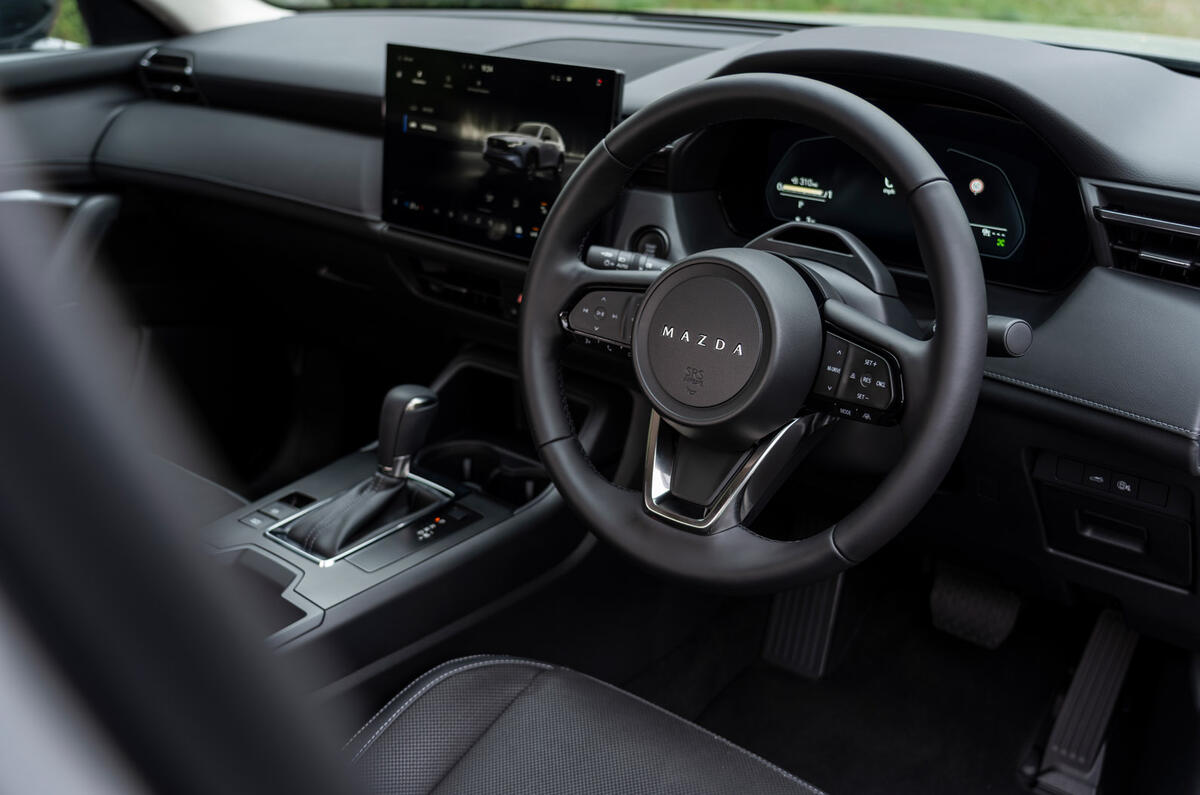
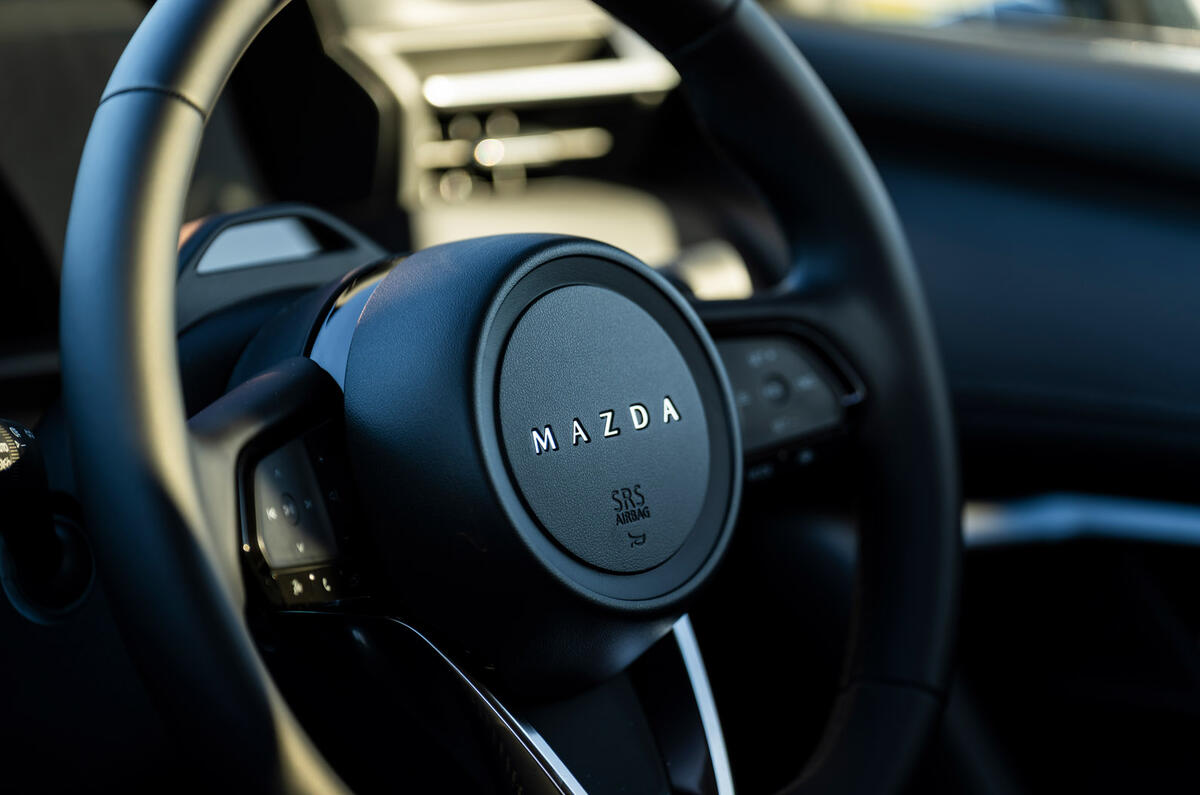
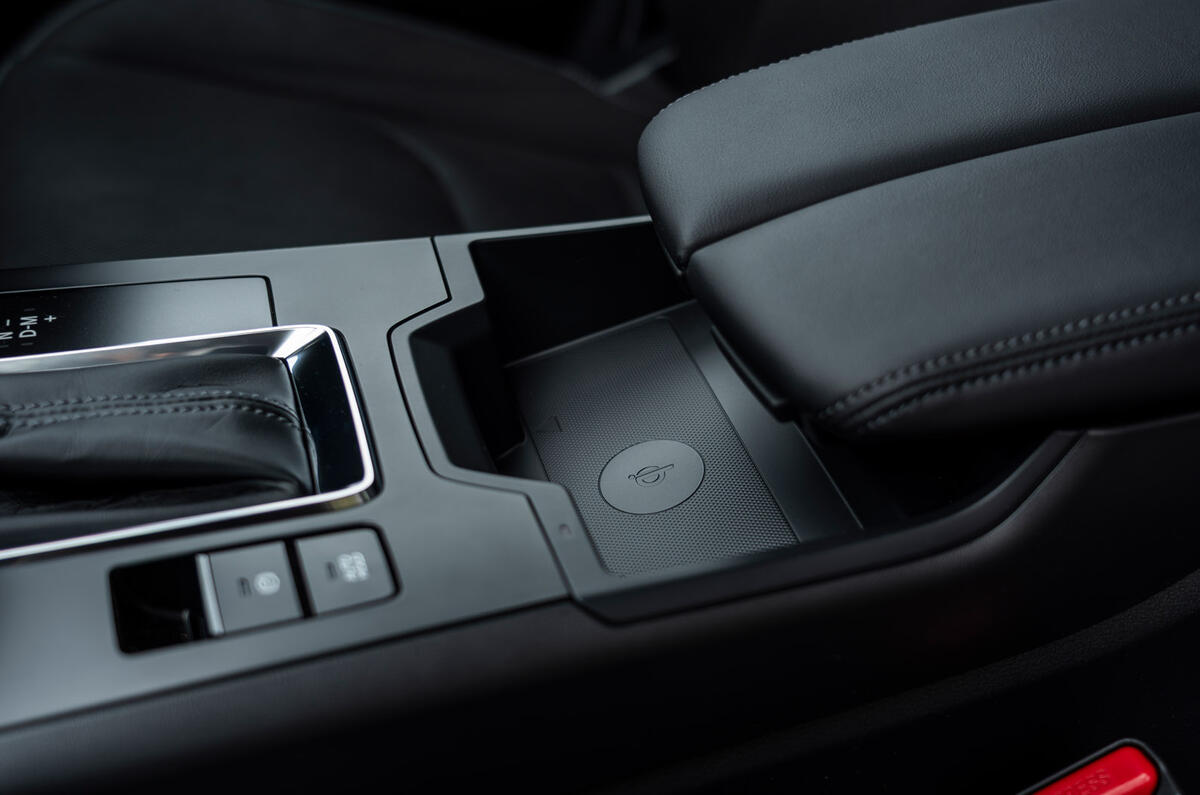
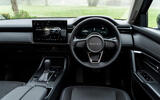
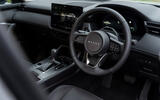
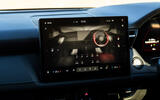
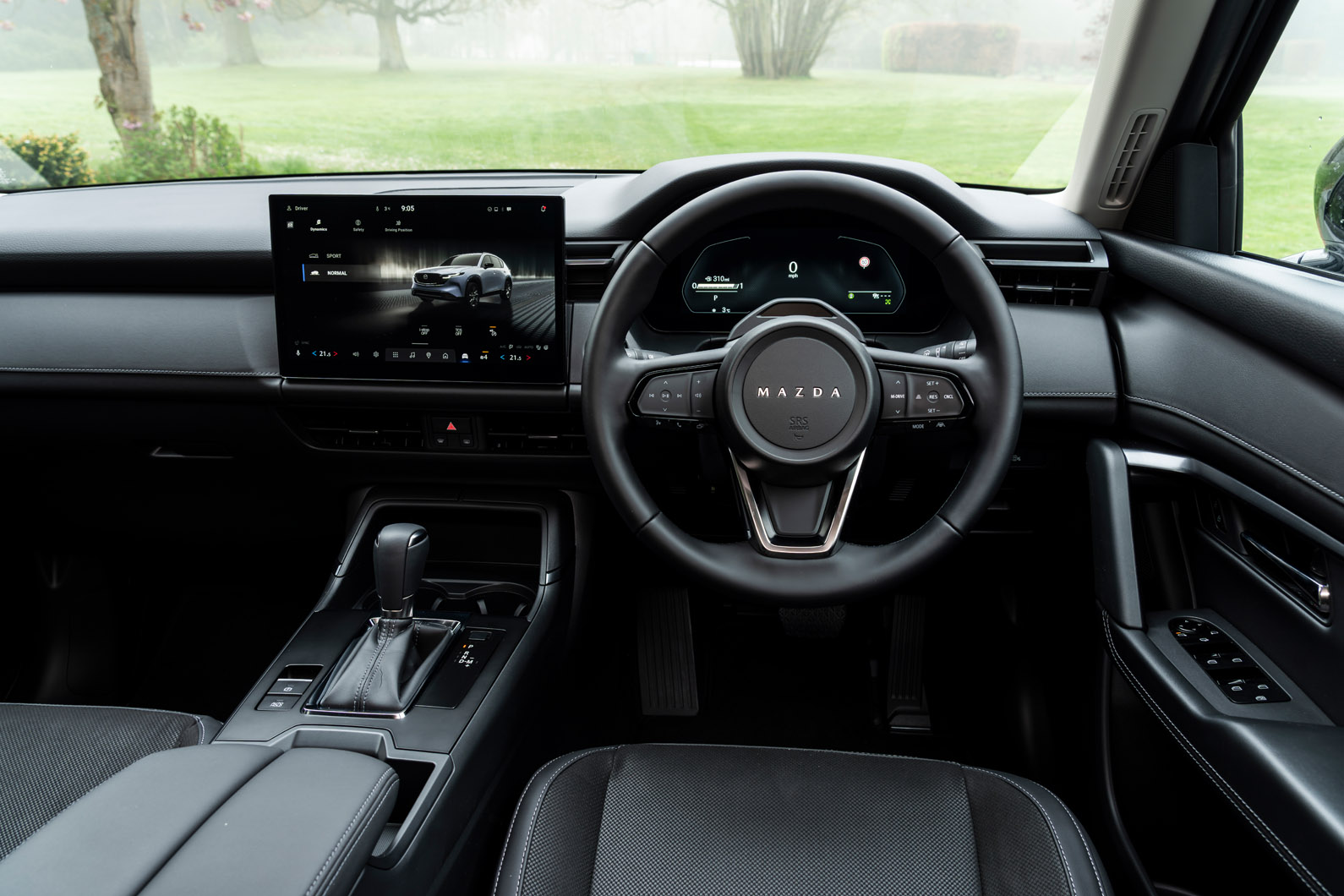
In terms of layout, the CX-5 is twinned with the new 6e EV (which doesn’t have the tall gearlever, of course). It is smart and fairly minimalistic, but it does deviate from Mazda’s old driver-centric, simplicity-first approach.

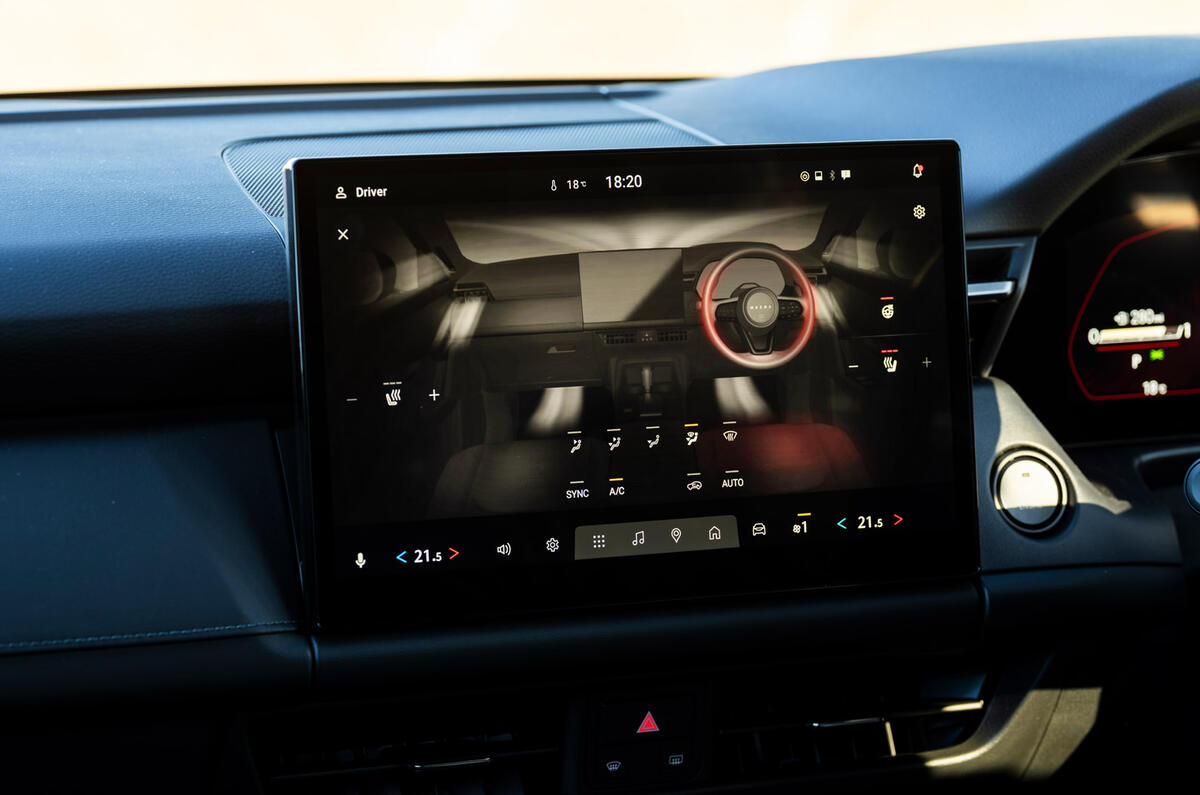
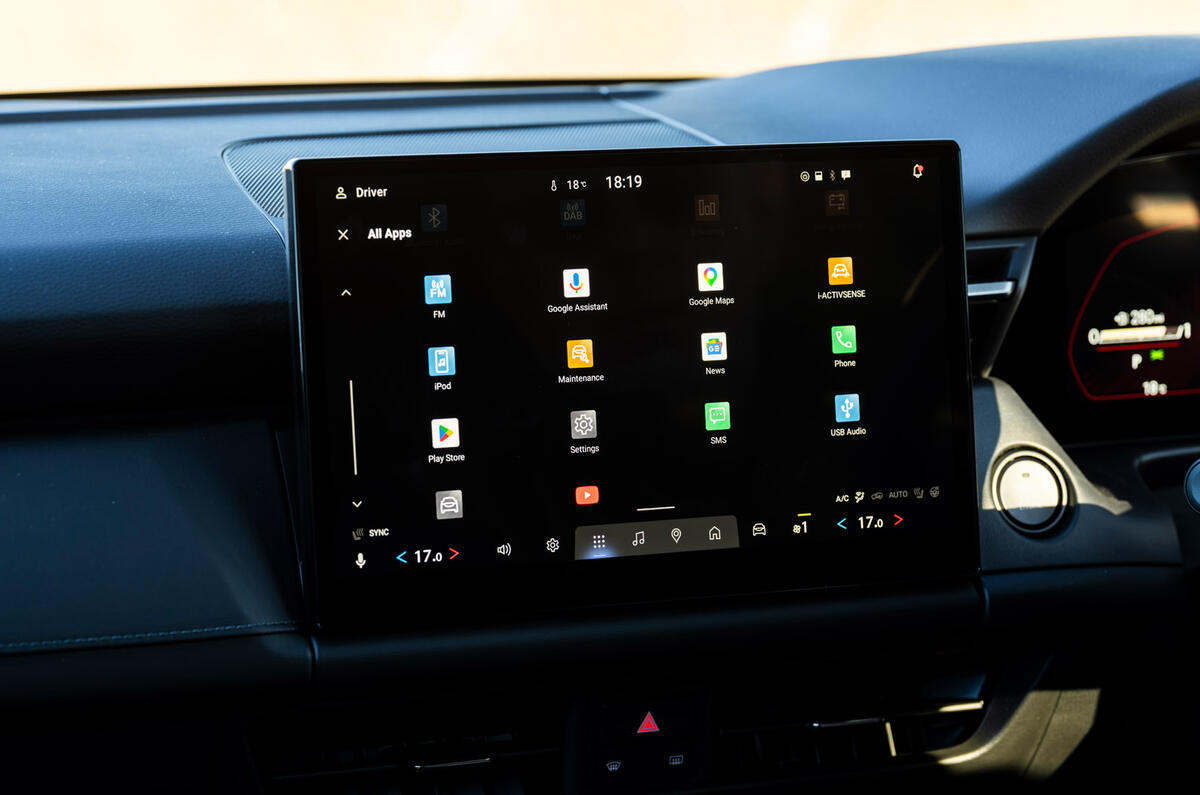
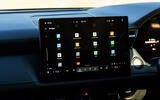
For starters, the new car bundles almost all of its frequently used functions into the new Google-underpinned central infotainment screen.Depending on the trim level it’s either a 12.9in or 15.6in unit, but regardless of size you get the same functionality, which means you have to stab at the display to change the climate control settings or adjust the audio volume. The only physical controls are buttons for the rear window heater, screen demister and hazard warning lights.

In practice it works crisply enough, but not with the same eyes-on-the-road ease and finger-pleasing tactility as the old car’s knurled metal knobs. Mazda claims it was customer demand that forced the change, although the voices were louder on the other side of the Atlantic, in the huge US market.Then there’s the instrument cluster, which has ditched the classic, carefully rendered LCD analogue clocks of the outgoing model in favour of BMW-style quadrants at the corners.

ENGINES & PERFORMANCE

7
Mazda CX 5 review 2026 079

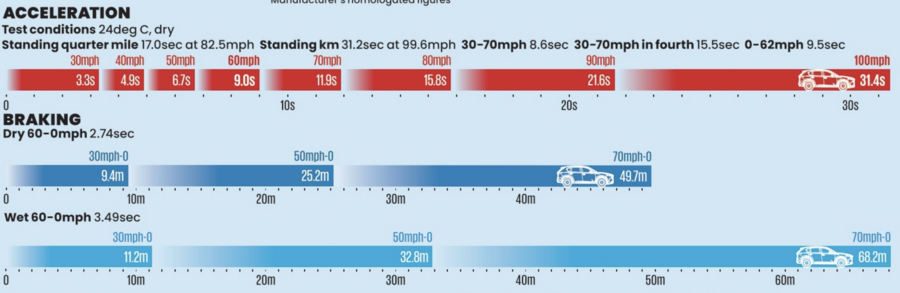
Given the generous displacement, the CX-5 looks lacklustre on the spec sheet, with a claimed 0-62mph of 10.5sec. In reality, it’s a bit quicker than that, taking 9.5sec against our stopwatch – a figure that puts its just a tenth behind the more powerful and pricier VW Tiguan 1.5 eTSI 150 we tested in 2024.

So the CX-5 is adequately quick under duress, if not quite as thrusty as the old 2.2-litre diesel (a lighter car and with more torque). Unlike the sterling work Mazda does with the naturally aspirated Skyactiv engines in the MX-5, this 2.5-litre unit is no particular joy to stretch out, either, and if you’re in a hurry it never quite seems to get on top of the CX-5’s mass, which is beyond 1750kg with driver and fuel.

The brake-by-wire system lacks the ultimate progression for the smoothest stops but isn’t short of outright power

The CX-5 is at its best when being stroked along, using its mid-range torque and the linear throttle to encourage the gearbox – well mannered but not what you would call clinical – to shift up early. Driven like this, progress can be swift and serene, the Mazda pulling keenly with minimal commotion.

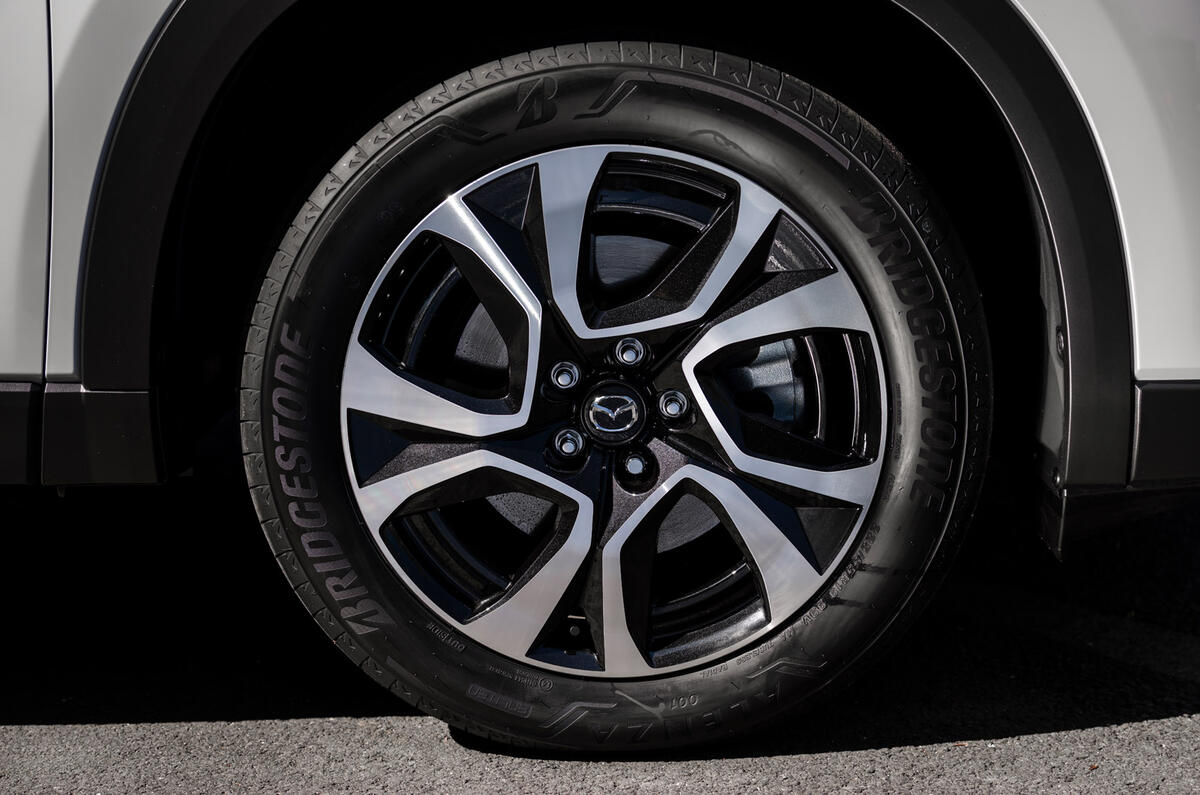
Braking is in general fine, the CX-5 lacking any regenerative capabilities that might have undermined the consistency and feel of the pedal. However, wet braking distances were longer than expected. Our test car, on its Bridgestone Alenza Enliten tyres, needed 68.2m to come to a stop on the sprinkler-wetted surface at Horiba MIRA. This is 10% or so longer than we would expect for a car of this ilk. For that matter, dry braking was also only so-so, the CX-5 needing 49.7m versus 46.0m for the Tiguan and 47.3m for the comparable Nissan Qashqai.

RIDE & HANDLING

8
Mazda CX 5 review 2026 080

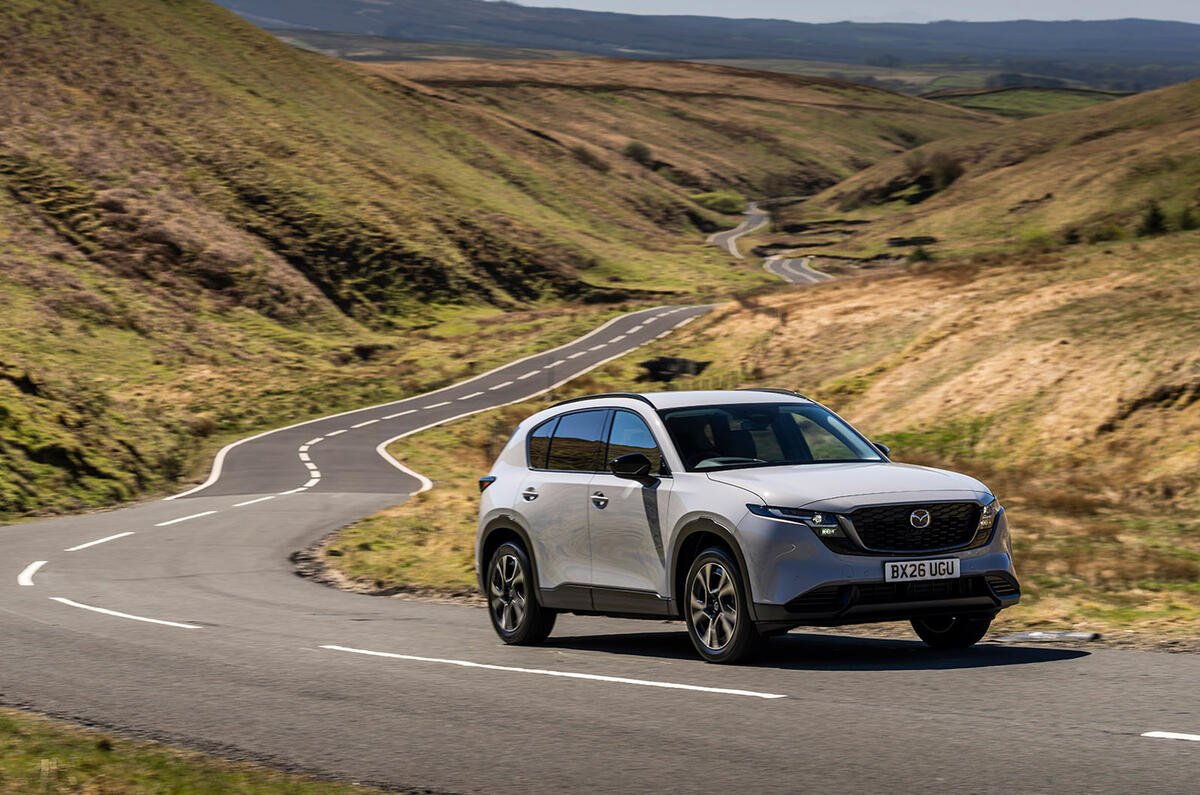
Mazda has subtly recharacterised the CX-5 for the third generation. Softer springs and slimmer anti-roll bars are intended to give the car a more relaxed gait, and the steering assistance has also increased to make it even more wieldy in everyday driving. At the same time, the rebound damping has been increased at both ends, in an attempt to settle the low-speed ride.

Overall this remains a pleasing crossover to drive – certainly more so than the norm. The CX-5 has lost none of its characteristic easiness to place on the road and is in the main a more refined family car than ever. It also reprises the neutral balance of its predecessors, which allows it to neatly hug a tight cornering line beyond the point where you would expect the front tyres to give up.

Understeer will of course set in when you’re really pushing on, but the CX-5 will happily tighten its line with a little extra lock or a gentle lift. The steering is nicely weighted and has a well-judged rate of response – there are no surprises.

Elsewhere the ride can be prone to brittleness at low speeds, though strangely this is often felt more through the steering rim than through the seats, and in general doesn’t diminish the CX-5’s good road manners. Those extend to noise mitigation. Recording 65dBA at 70mph, the Mazda is quieter than even the Citroën C5 Aircross – a car that makes comfort its raison d’être.
MPG & RUNNING COSTS

8
Mazda CX 5 review 2026 063

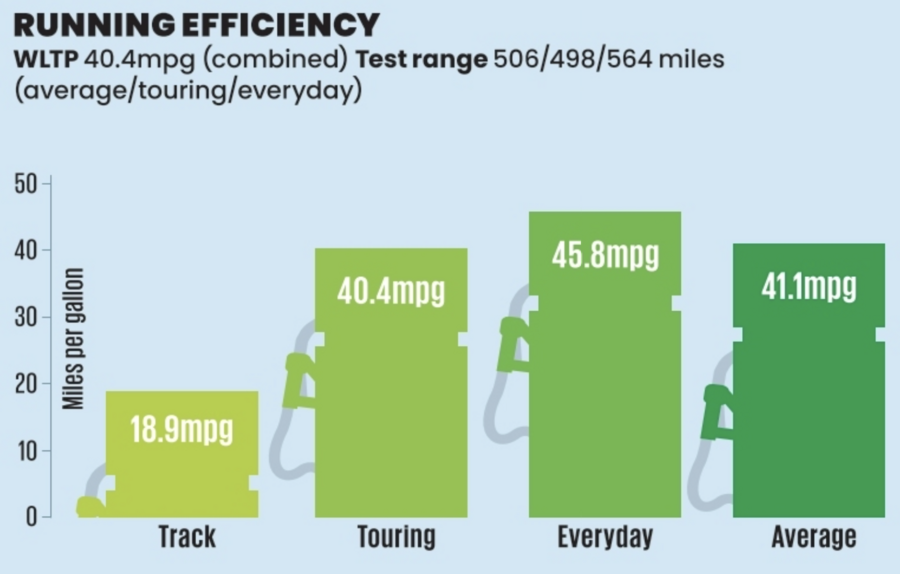
Our test car returned 45.8mpg in our ‘everyday’ economy test and 40.4mpg for touring. A 56-litre tank means total autonomy is respectable in both cases, but this is unspectacular efficiency in the context of the class. Evidently the car’s 48V ISG and cylinder deactivation can’t quite offset the engine’s considerable displacement, whatever Mazda might claim.

By comparison, the VW T-Roc 1.5 eTSI we tested earlier this year achieved 54.1mpg in everyday driving and 47.2mpg for touring.

CO2 emissions of 157g/km result in a whopping 37% BiK rating

The CX-5 otherwise makes a stronger case for itself with a starting price of £31,550 for the entry-level Prime-Line. It’s a compelling price, given the capaciousness, equipment and power on offer. Today the lowliest Tiguan will set you back £38,920, and a comparably equipped Kia Sportage costs thousands more.

The sweet spot is probably the Centre-Line tested here. It gets various amenities including a powered tailgate and wireless Apple CarPlay and Android Auto.
Available on top-spec Exclusive-Line and Homura trims only, and for a £200 surcharge, there’s also an all-wheel drive system, said to offer both enhanced on-road agility and a dash of go-anywhere ability in the rough for a small penalty of 42kg.

VERDICT

8
Mazda CX 5 review 2026 082

For anybody who enjoys a car that is dynamically joined up – that is, with the ride, handling and steering in harmony – the CX-5 remains the go-to in an otherwise unremarkable segment.

That Mazda has also stretched the wheelbase in order to improve cabin space and rear ingress, while retaining the car’s comparatively elegant silhouette, is another reason to consider the CX-5, as is its attractive pricing and smart cabin. But the 2.5-litre engine, while responsive, is starting to feel anachronistic without much electric assistance. The move to digital controls is also unwelcome.

James Disdale

James Disdale
Title: Special correspondent

James is a special correspondent for Autocar, which means he turns his hand to pretty much anything, including delivering first drive verdicts, gathering together group tests, formulating features and keeping Autocar.co.uk topped-up with the latest news and reviews. He also co-hosts the odd podcast and occasional video with Autocar’s esteemed Editor-at-large, Matt Prior.

For more than a decade and a half James has been writing about cars, in which time he has driven pretty much everything from humble hatchbacks to the highest of high performance machines. Having started his automotive career on, ahem, another weekly automotive magazine, he rose through the ranks and spent many years running that title’s road test desk. This was followed by a stint doing the same job for monthly title, evo, before starting a freelance career in 2019. The less said about his wilderness, post-university years selling mobile phones and insurance, the better.

Richard Lane

Richard Lane
Title: Deputy road test editor

Richard is Autocar's deputy road test editor. He previously worked at Evo magazine. His role involves travelling far and wide to be among the first to drive new cars. That or heading up to Nuneaton, to fix telemetry gear to test cars at MIRA proving ground and see how faithfully they meet their makers' claims. 
He's also a feature-writer for the magazine, a columnist, and can be often found on Autocar's YouTube channel. 
Highlights at Autocar include a class win while driving a Bowler Defender in the British Cross Country Championship, riding shotgun with a flat-out Walter Röhrl, and setting the magazine's fastest road-test lap-time to date at the wheel of a Ferrari 296 GTB. Nursing a stricken Jeep up 2950ft to the top of a deserted Grossglockner Pass is also in the mix.