From £42,985

Wide-ranging overhaul of Toyota's first electric car puts it on a competitive footing for the first time

Toyota probably anticipated a challenging few years for its first all-electric production model, the Toyota BZ4X. Even so, the steepness of the learning curve that this car has had to surmount, on its way to becoming the permanent fixture in the firm’s showroom range that it would now appear to be, is quite something to contemplate.

Almost as soon as it appeared in 2022, it had a critical safety recall for faulty wheel hubs. Then there were issues with the overly conservative ‘battery buffering’ software, which caused the car to underestimate its available range, and with the cabin heater, which caused it to actually compromise its available range - at least until a new ‘radiant’ heater could be added. And then came the grumblings of owners about the car’s performance and rapid charging speed in cold weather.

And so now, with plenty of confidence to restore, an unusually comprehensive job has been made on the car’s mid-life facelift. The 2025 bZ4X is more like a new model generation, considering what has gone into its effort of ‘kaizen' continuous improvement. From battery to motors to inverters, from suspension to chassis to steering, and taking in both the exterior design and cabin specification, this update touches almost every important aspect of the car and aims to leave it in a more competitive position in one of the most fiercely fought parts of the market for new EVs.

Advertisement

DESIGN & STYLING

Toyota bZ4X review 2025 048

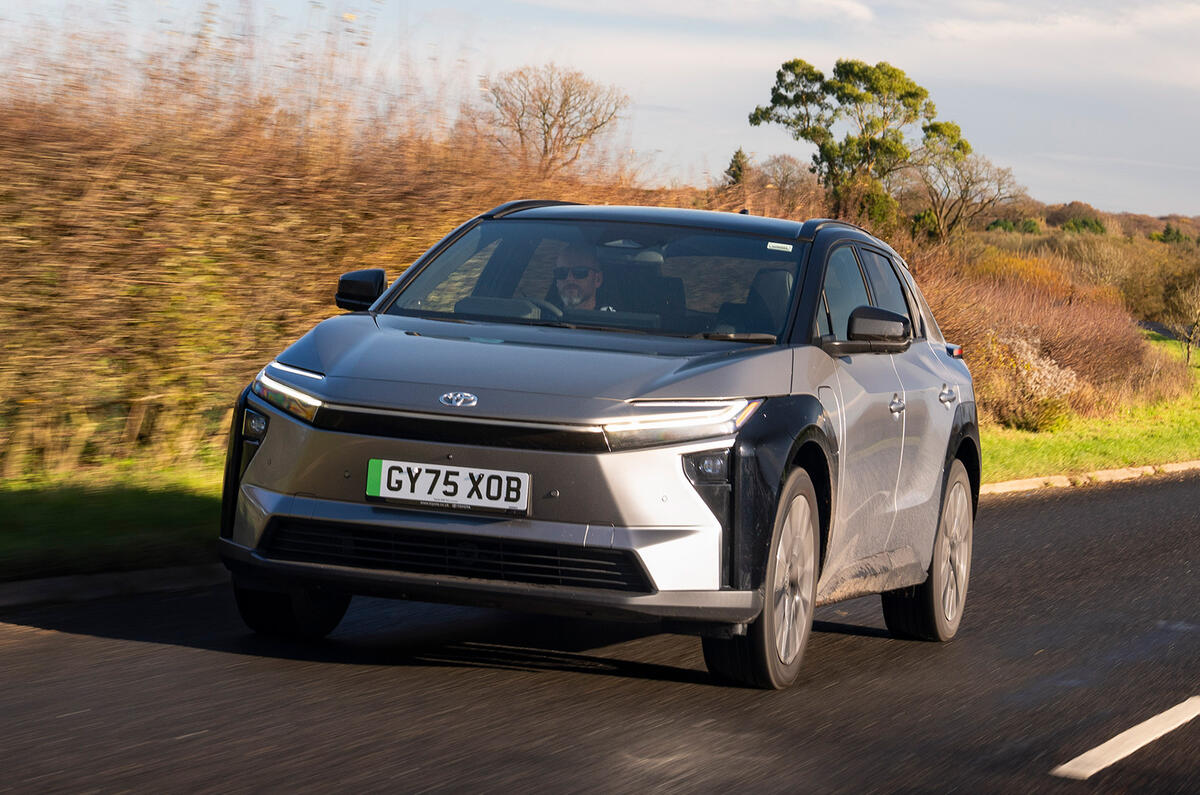
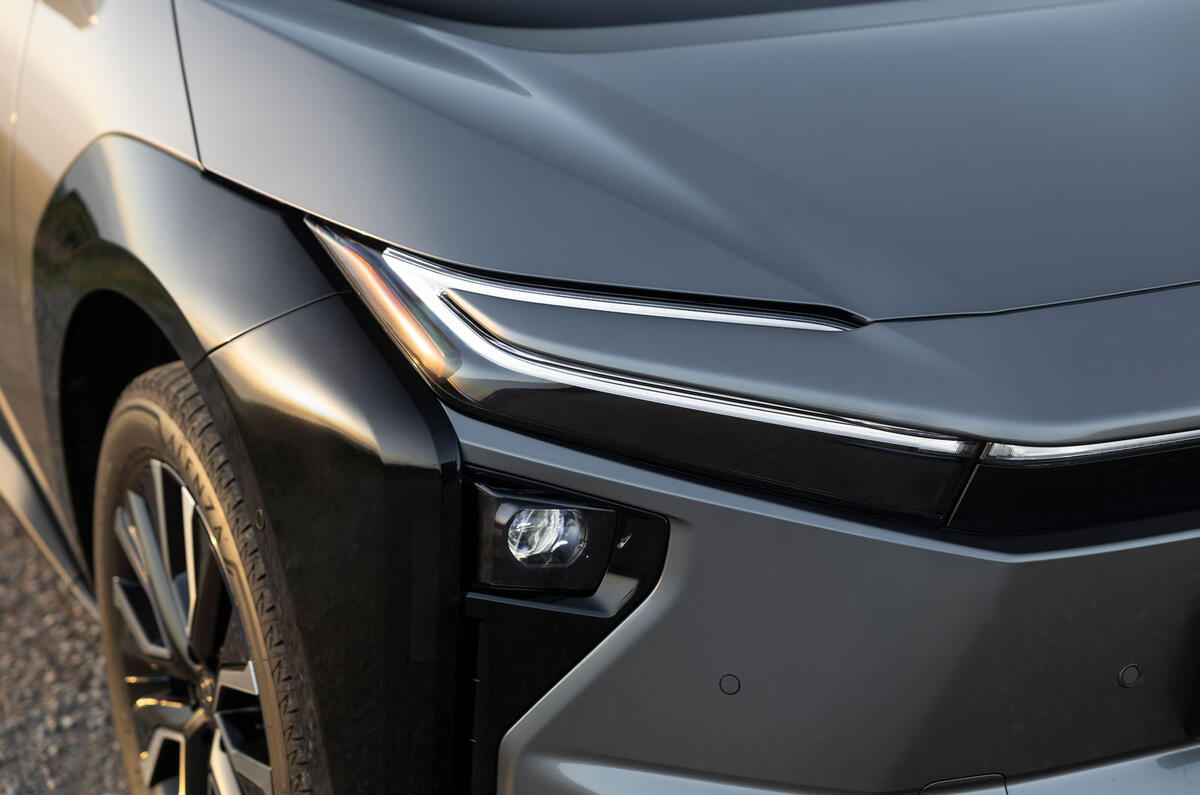
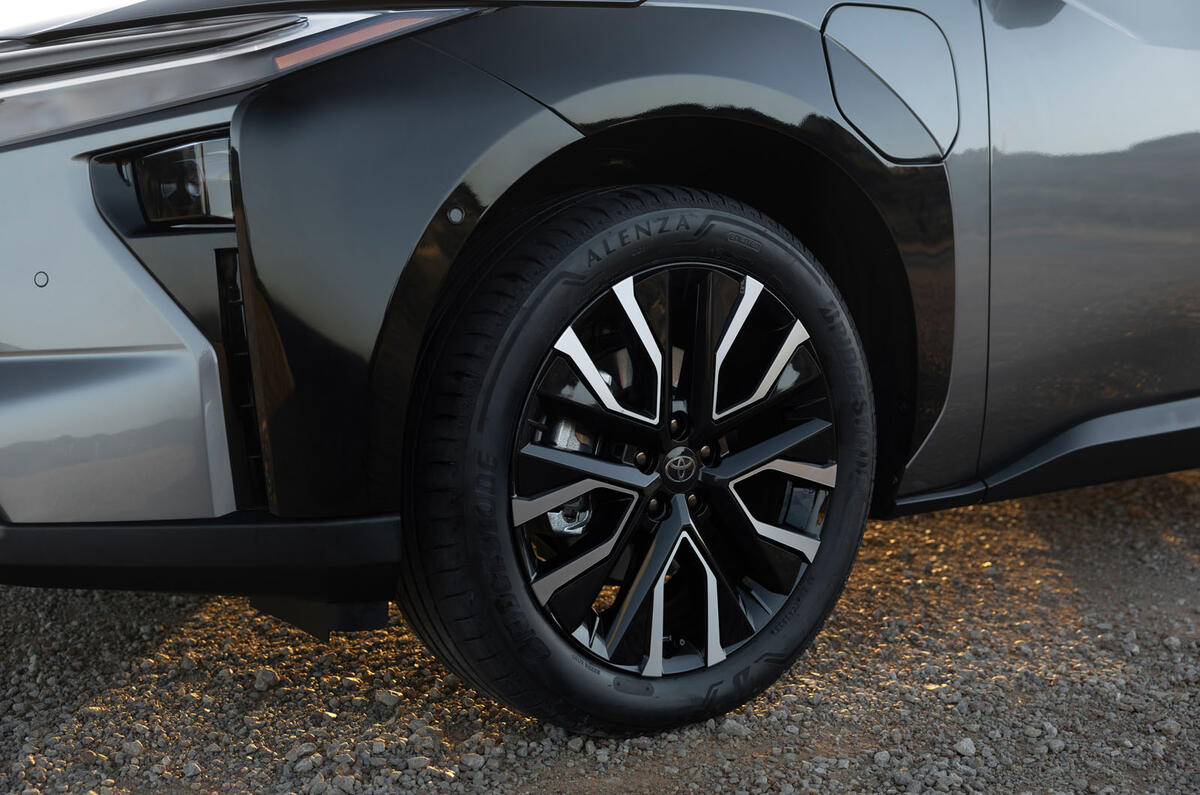
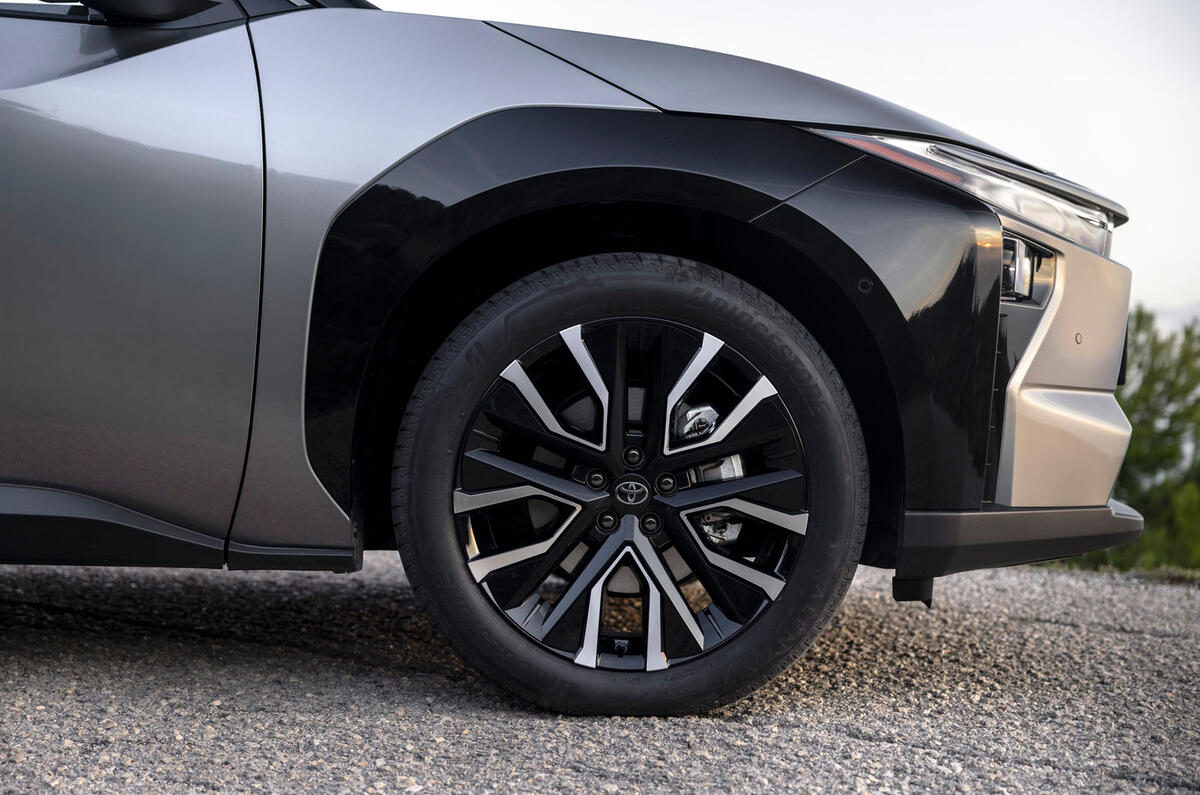
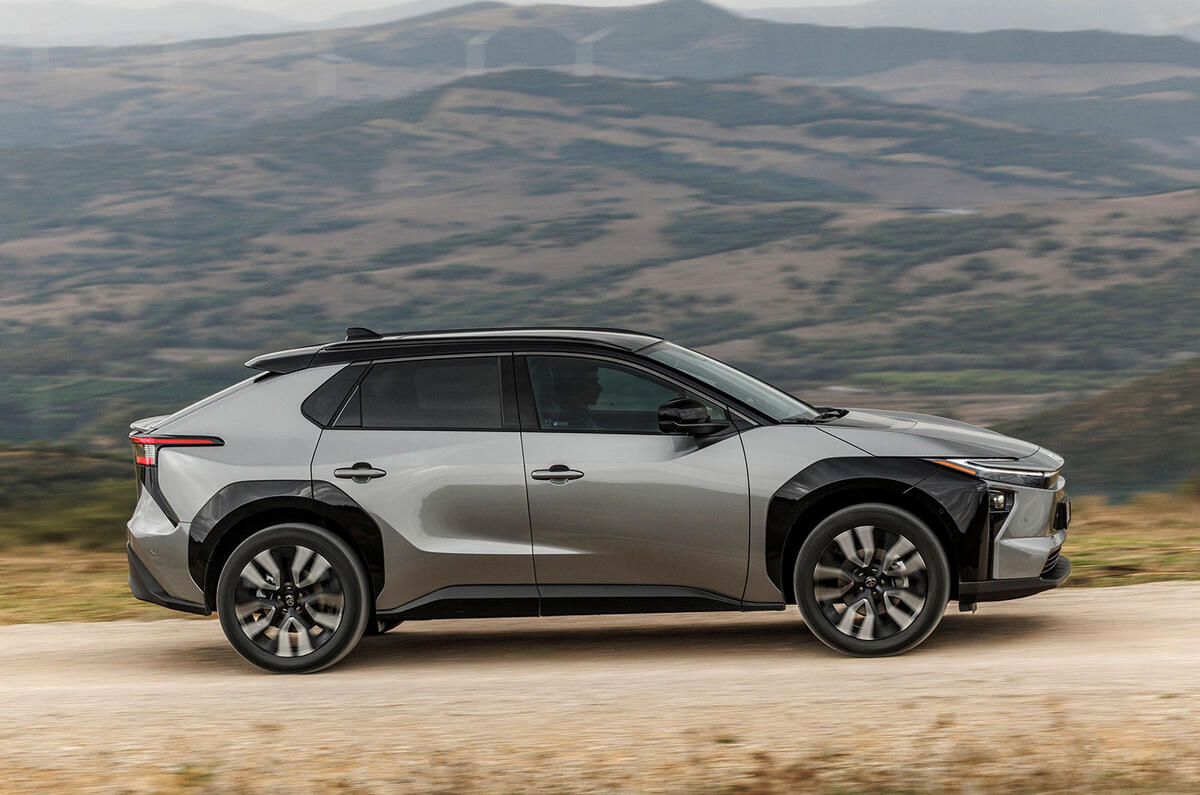
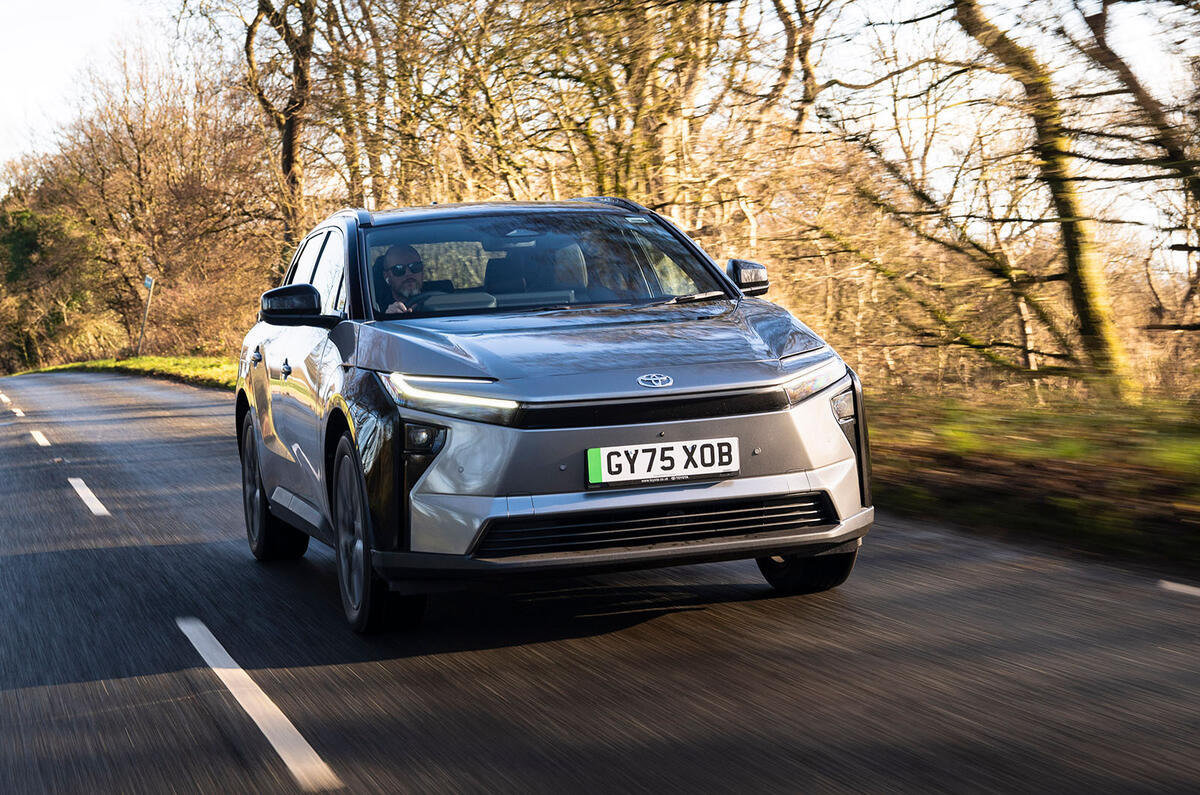
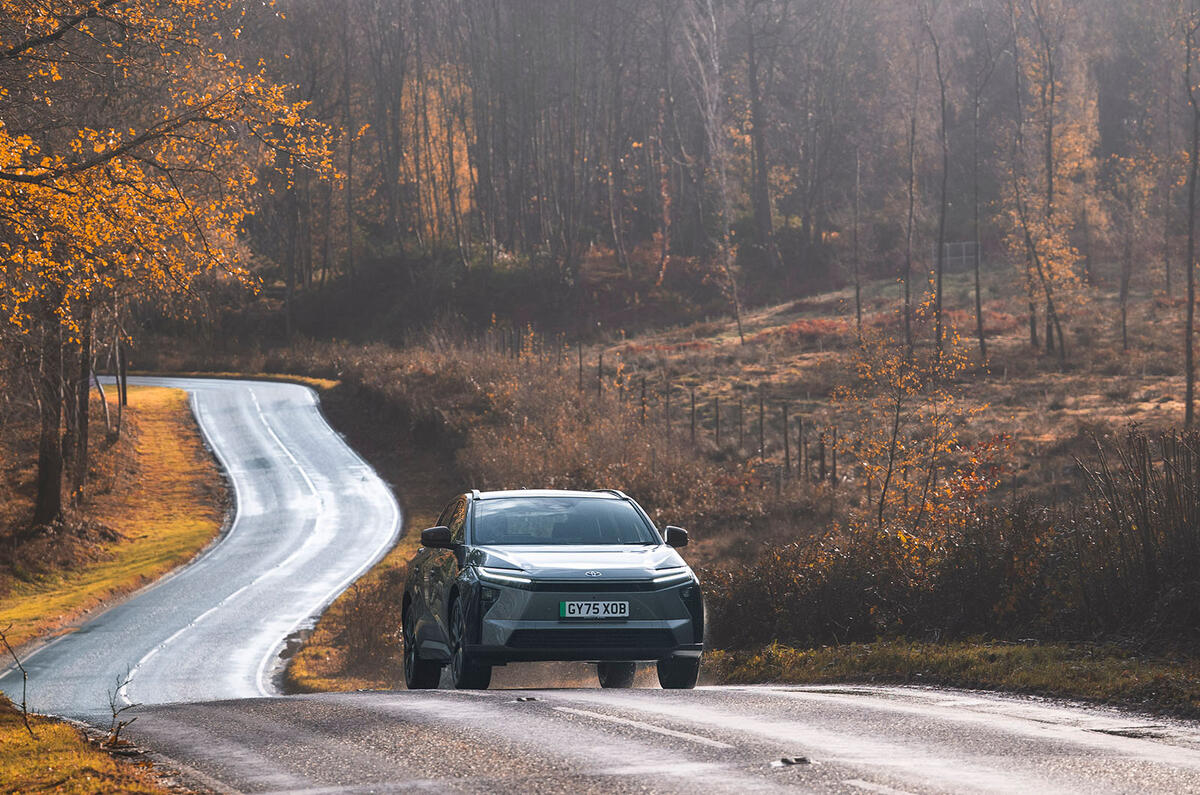
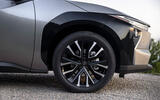
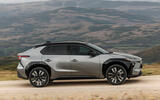
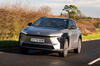
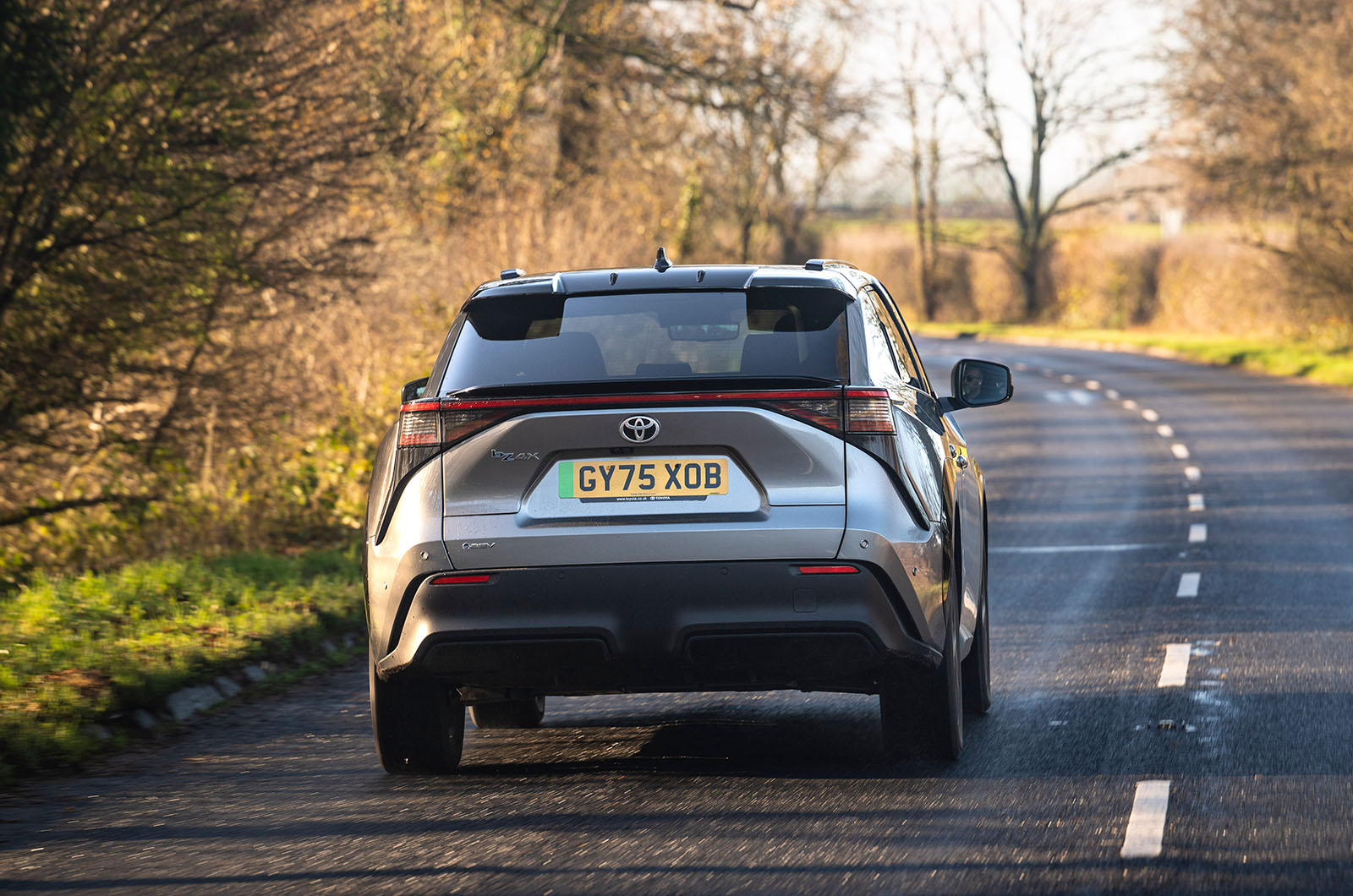
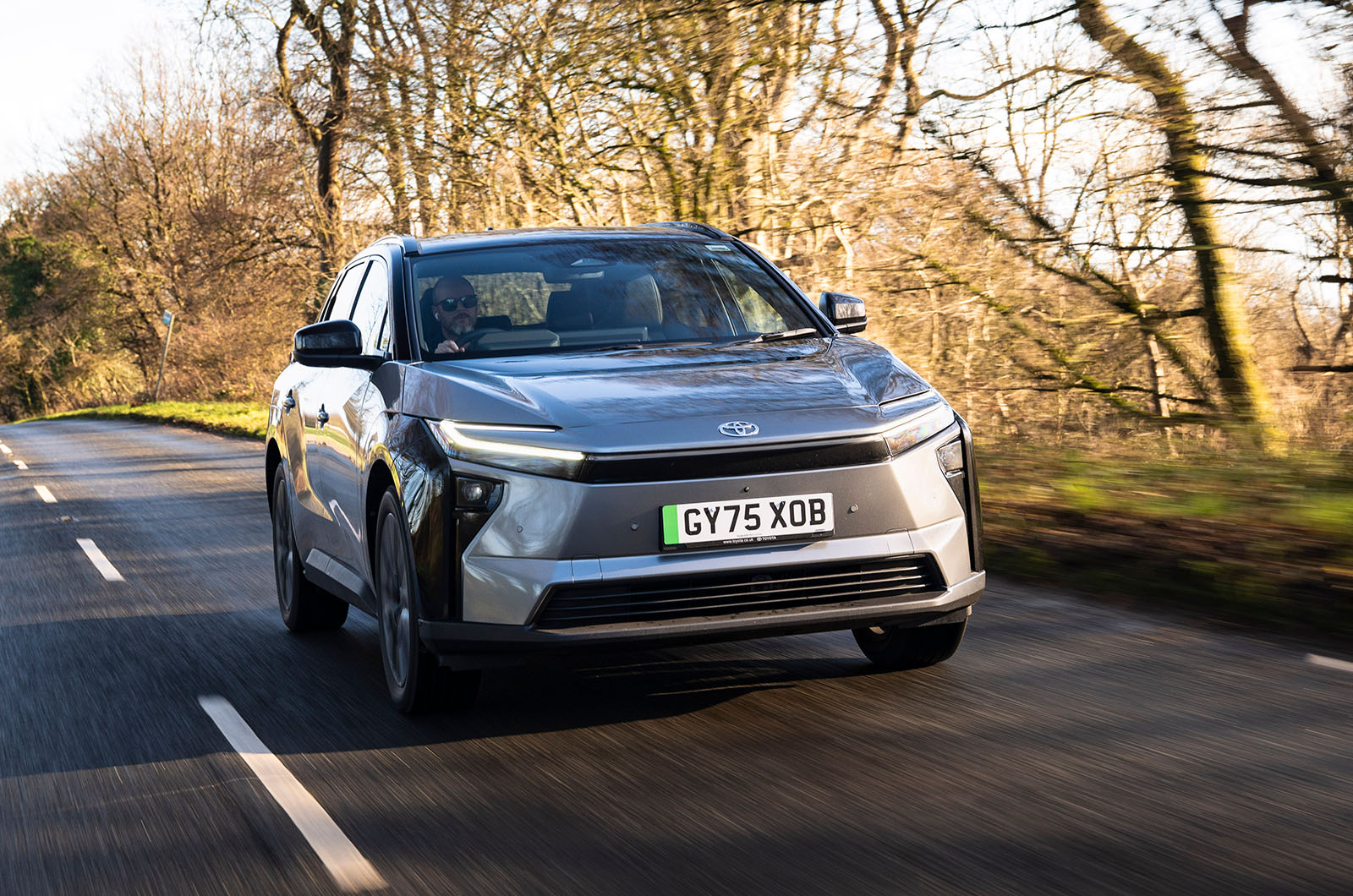
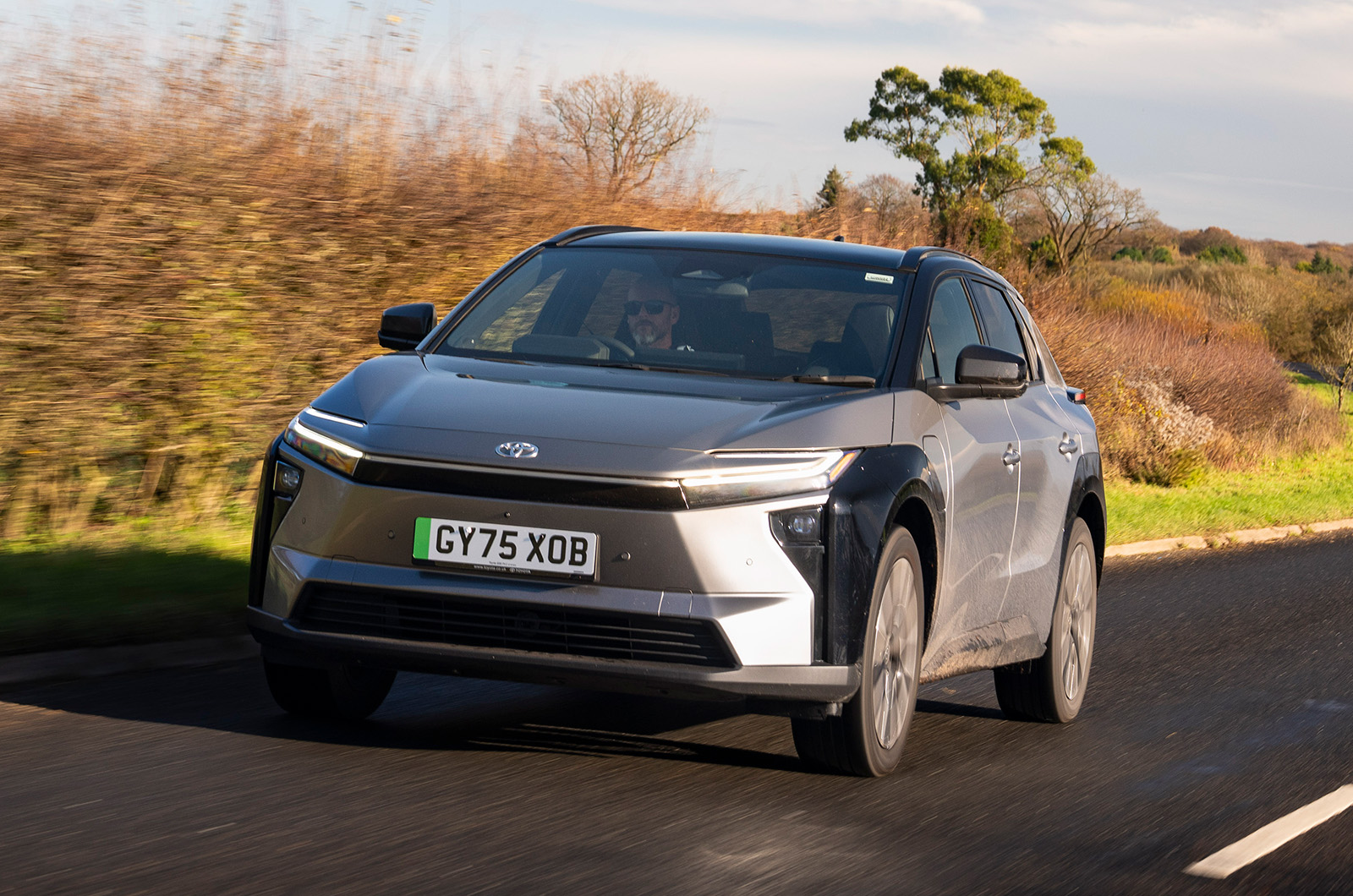
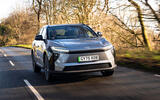
On the outside, the bZ4X’s dull plastic wheel-arch panels have been replaced by gloss black ones and its headlights substituted with a set with differently patterned daytime running lights, as facelifted cars so typically have. 

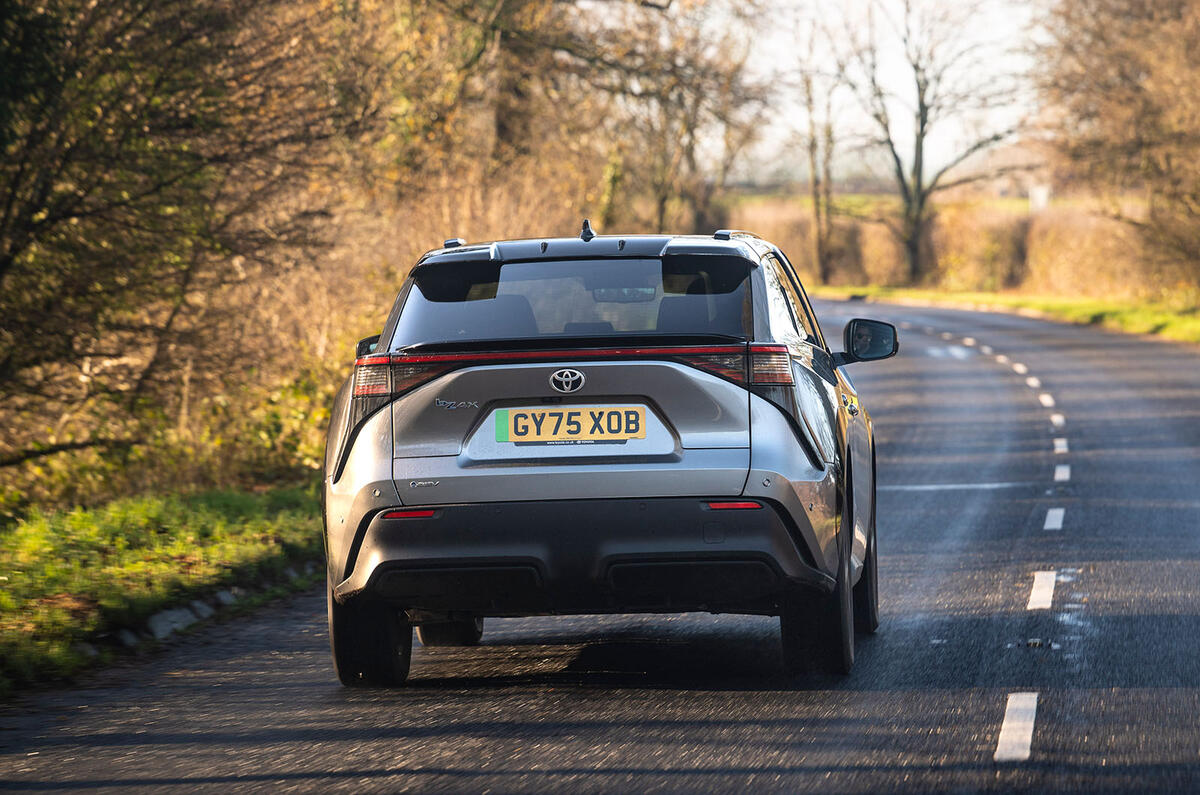
There are slightly different bumper designs front and rear, the former supposed to better accentuate Toyota’s current ‘hammerhead’ design language; there’s a slightly more prominent bootlid spoiler at the rear; and there’s more effective underbody aero panelling, which helps cut drag. But it’s the newly shiny wheel arches that you will really notice.

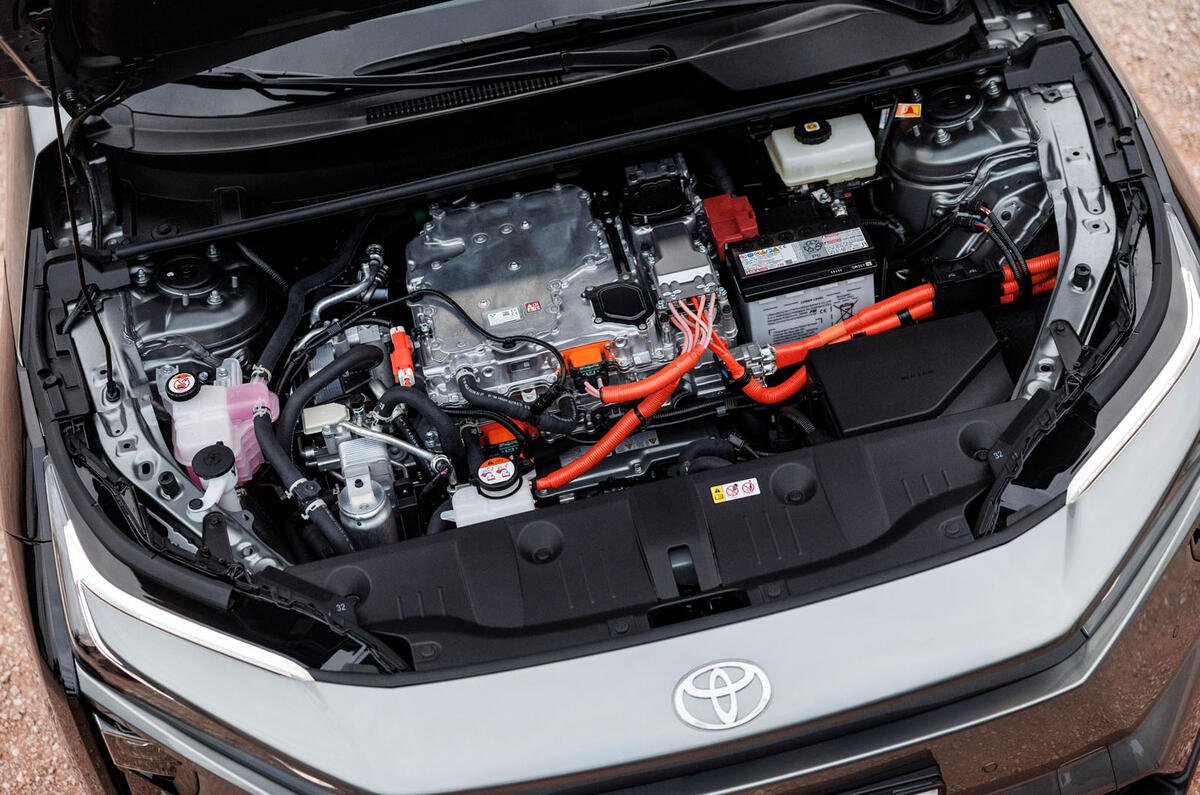
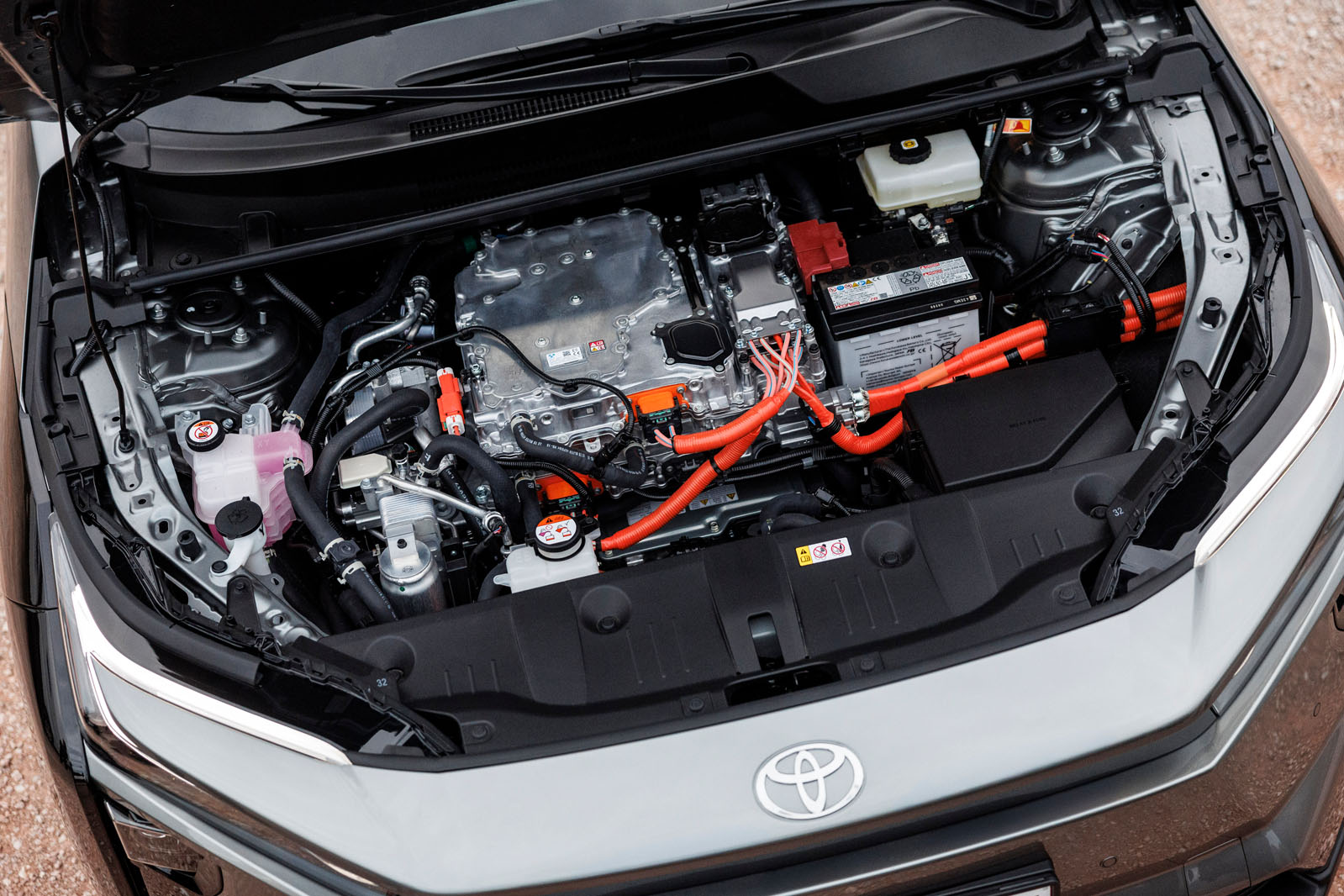
Most of the efforts made elsewhere have been about boosting efficiency and range and refining ride and handling. To that end, the car gets new batteries, new silicon-carbide high-voltage power inverters, widely revised motors and new transaxle transmissions.

The chassis has had to be redesigned and braced in order to accommodate the bigger batteries. These packs still feature nickel-manganese-cobalt cells but are now wider. They offer a choice of two capacities: 56kWh of usable storage in the new entry-level model or 69kWh in the longer-range one, the latter a gain of about 10% on the car’s initial offering.

That may not sound transformative in a class where rivals offer 90kWh and more, but it’s accompanied by a hefty improvement on energy efficiency. The bZ4X retains a front-mounted motor by default, for front-wheel drive. But while peak power has jumped from 201bhp to 221bhp, efficiency has hiked by some 25% at the same time. If they had focused exclusively on efficiency and left power at the same level, the Toyota engineers say, they could have delivered a 40% improvement. This comes thanks to those new, more efficient power inverters but also to lower-friction transmissions with ‘super-polished’ gear teeth.

If 221bhp still doesn’t sound like enough for your bZ4X (and, given how much oomph some EVs in this class offer for the money, perhaps it mightn't), there’s a bigger output hike for the twin-motor, four-wheel-drive model. Having had 214bhp before, it now offers a more fullsome 338bhp, with a 117bhp motor driving its rear axle, and can crack 62mph from rest in a closer-to-Tesla-rivalling 5.1sec.

In the UK market, the 4WD model will be offered only in range-topping Excel model grade, and Toyota doesn’t expect much take-up; but for those willing to put in a dedicated order with their dealer, it will be available. 

Elsewhere, revised spring and damper rates feature for the bZ4X's suspension, which also has more firmly bushed front lower wishbones, while there’s also a rigid mounting for the power steering. More adhesive and new joining techniques are used around the car’s unitary chassis to boost rigidity. Toyota has also refined the torque-vectoring software of the AWD model's motors and claims better-balanced handling as a result.

INTERIOR

Toyota bZ4X review 2025 055

The bZ4X sits roughly in the middle of the mid-sized electric SUV class on space and practicality. At just under 4.7m long, it’s not one of the bigger cars of this sort that the budget will buy, and it isn’t without a few limitations as regards passenger comfort, to which we’ll come. But it nonetheless offers more space than some of its rivals and a decent-sized boot.

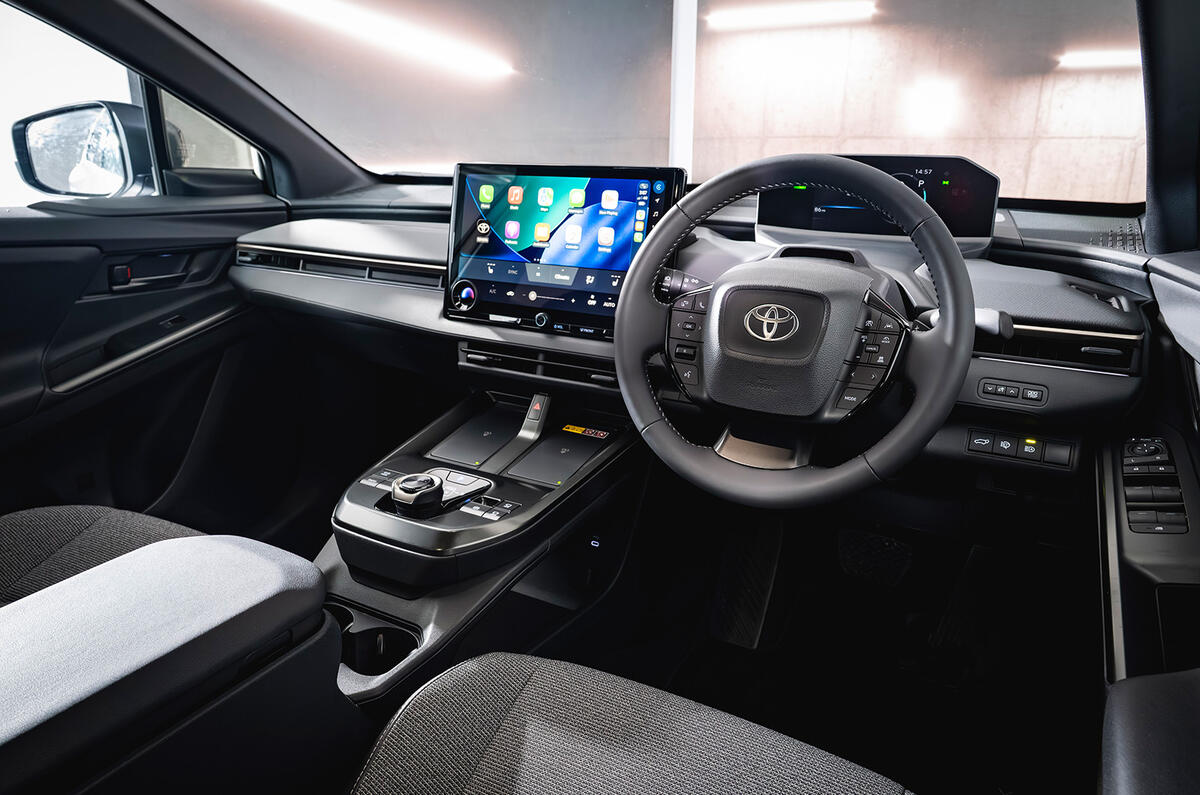
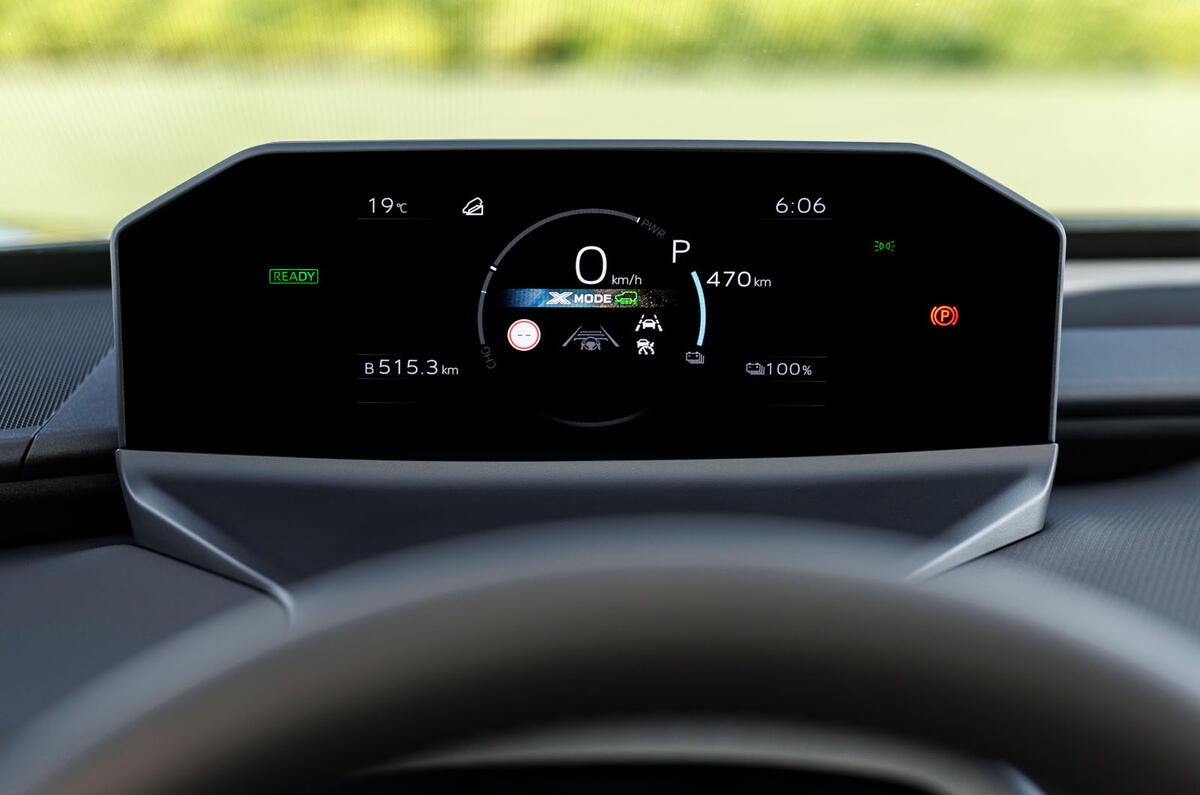
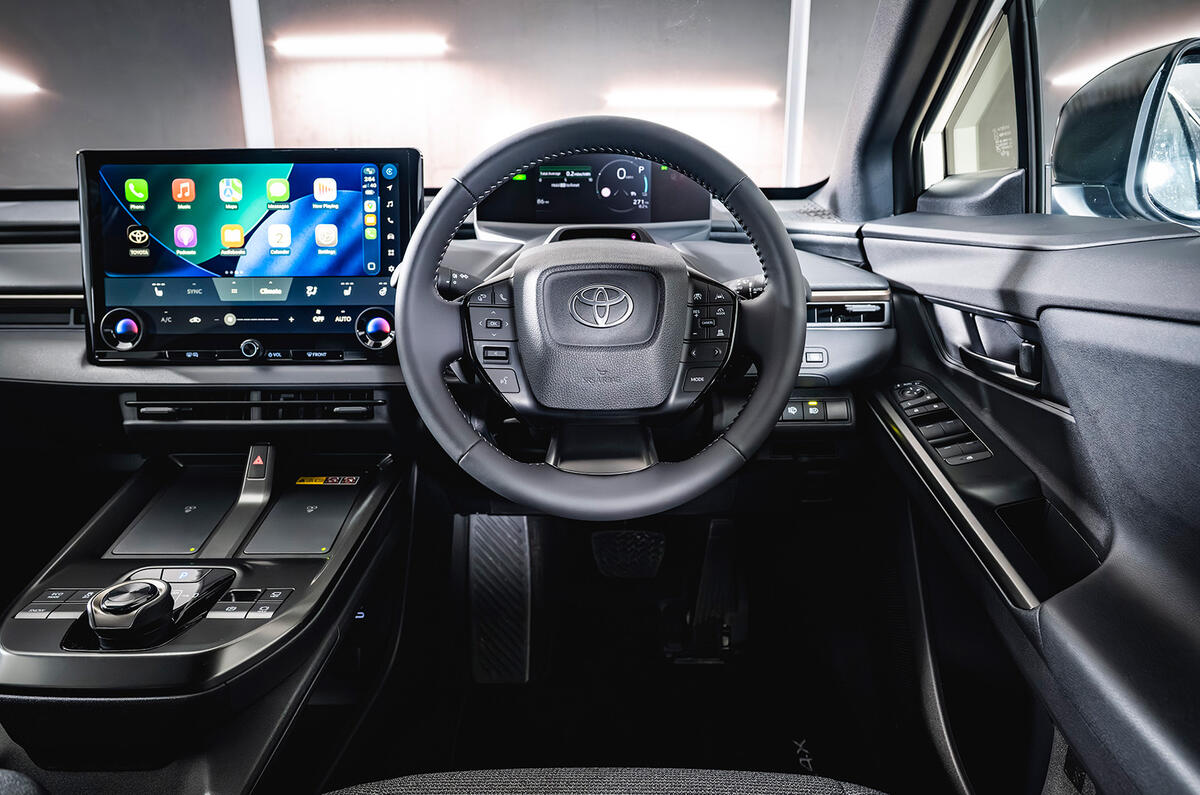
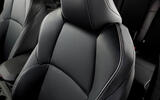
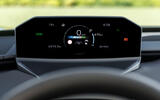
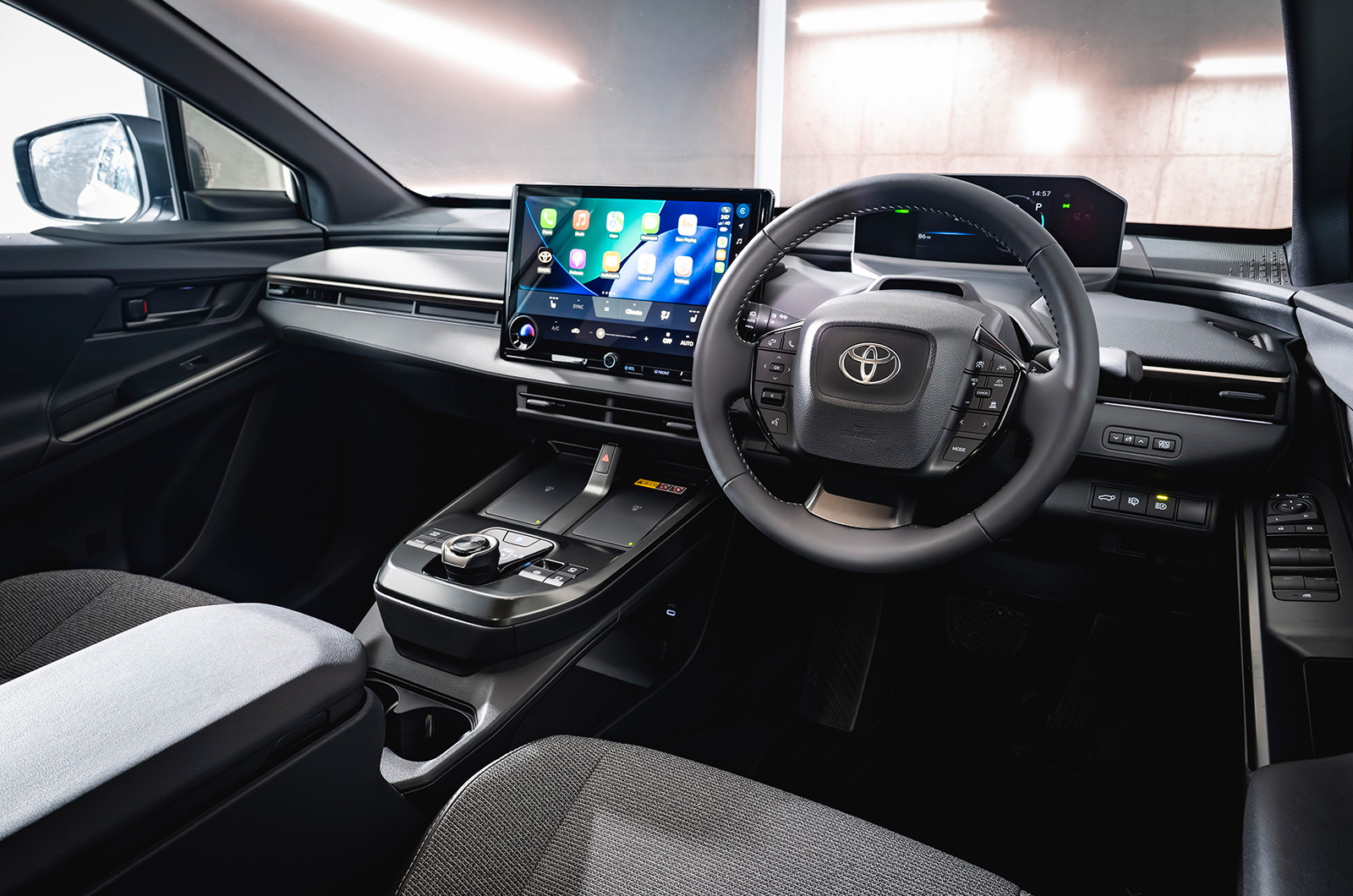
The raised driving position, with its fairly dinky and low-sprouting steering wheel, seemed like one of the chief quirks of the car when first we met it in 2022 - and remains so. You look over the top of the steering rim at a pod of digital instruments set close to the base of the windscreen – a design choice that in turn limits the diameter of the steering rim and means the column has a fairly raked angle. Peugeot's 3008 and 5008 are laid out in a similar way, so perhaps we’ve grown more used to the idea now. Whatever the reason, it doesn’t seem as curious an ergonomic philosophy now as it used to. We didn’t find it too difficult to become accustomed to, although the front seats do have slightly short cushions, without enough base inclination adjustment or any cushion extension, which longer-legged drivers will certainly notice.

Toyota has done a few things to drive up the bZ4X’s standard for perceived quality and usability. Firstly, it’s banished the profusion of ‘piano black’ glossy plastic that covered the centre console and doors and replaced it with some less smudgy and reflective grey trim, which, simple as it sounds, has actually had a noticeable impact. 
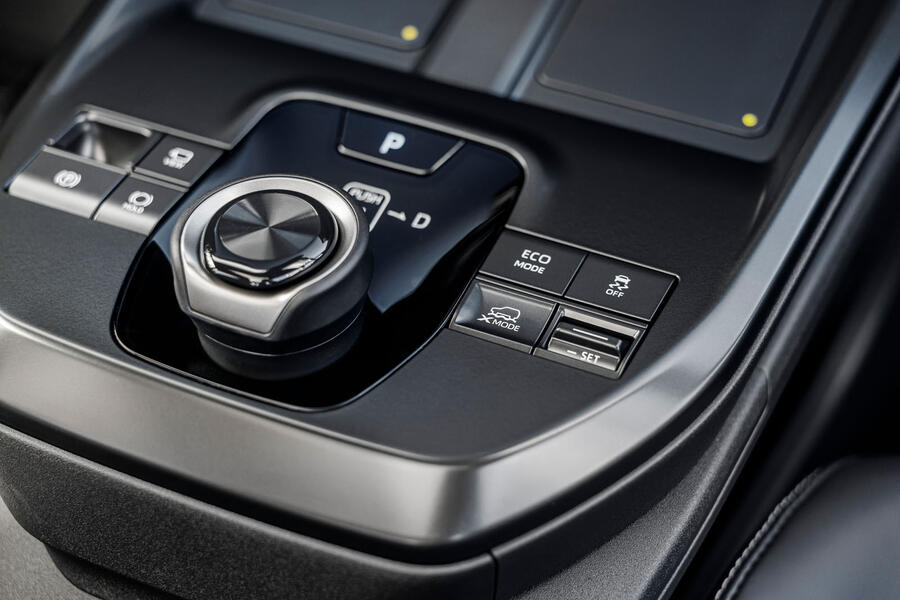
The cloth trim on the fascia has been replaced with a smart, soft-touch moulded dashpad and a bigger multimedia system has been shipped in, some slightly ritzier-looking heating and ventilation controls coming with it.

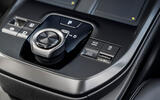
The touchscreen system is undoubtedly easier to use than the old one, giving quick access to ADAS functions and making it easy to get in and out of smartphone mirroring mode. There are also two new wireless smartphone charging pads on the revised centre console (which Toyota has rather pretentiously dubbed ‘the digital island’) and plenty of storage hidden around and about it.

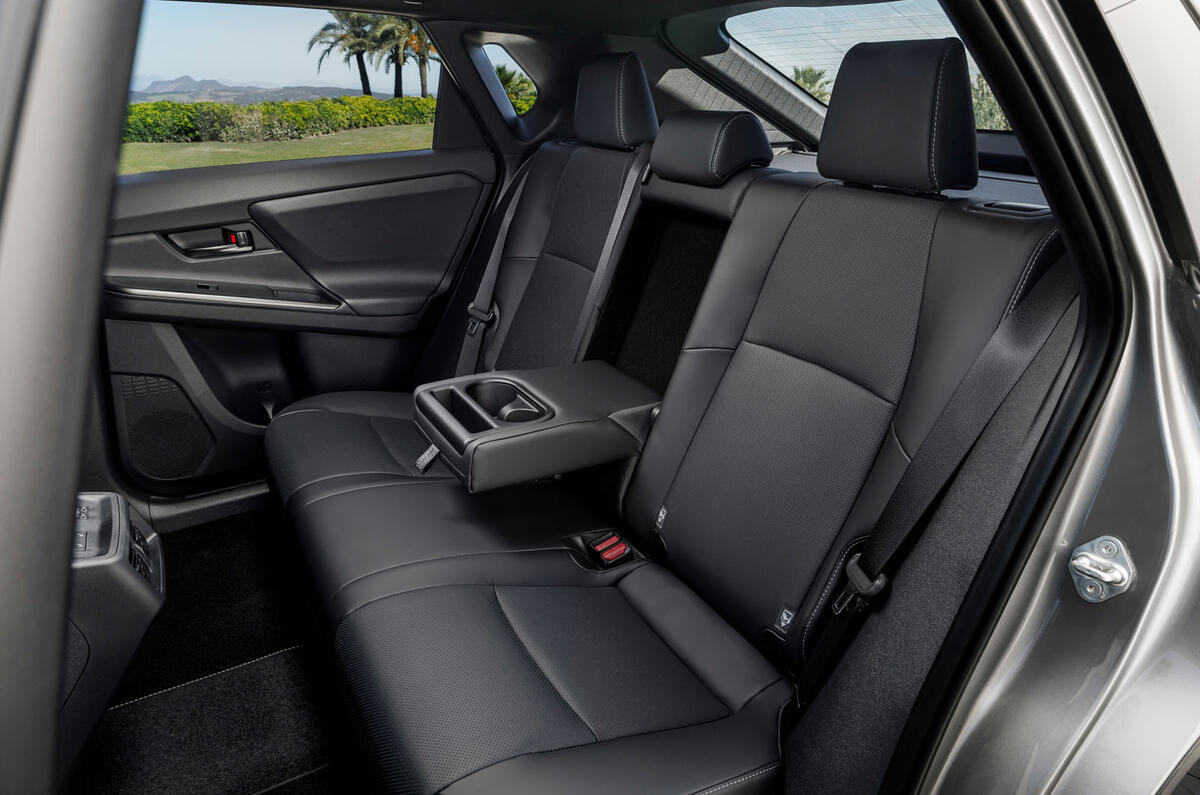
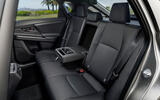
Passenger space in the second row is slightly tighter than in some cars in the class but competitive enough all the same. Leg and knee room are fairly plentiful, although short and flat seat cushions feature here too, while a high cabin floor displaces your knees and thighs upwards and will adversely impact comfort for taller adults.

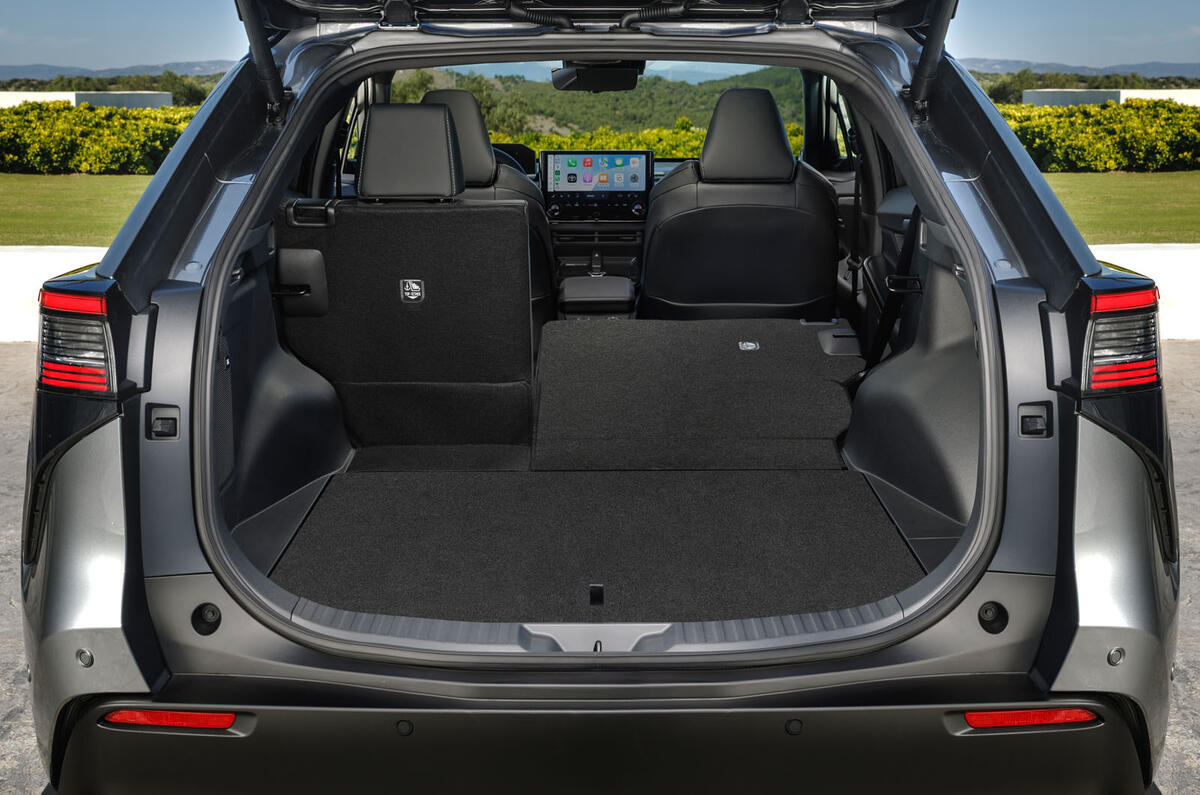
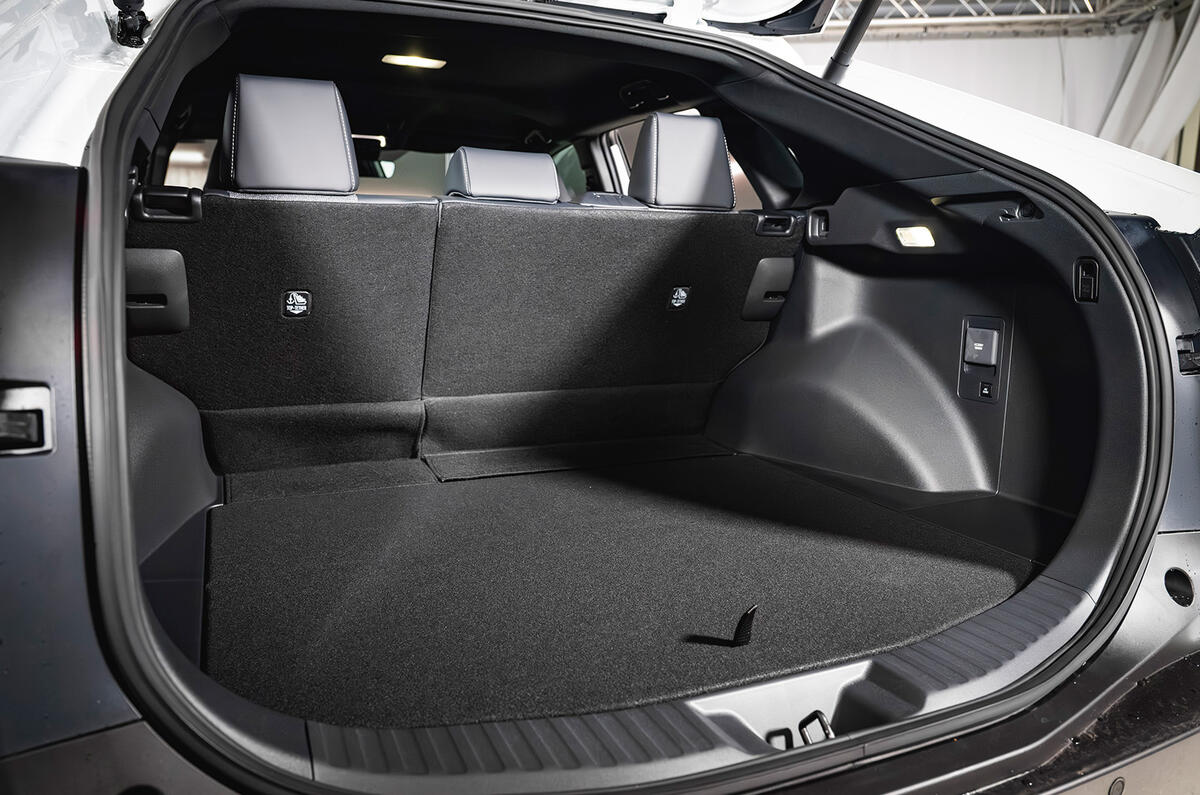
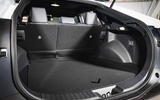
The boot, at up to 452 litres in volume, is a bit small for a class in which some cars have close to 600 litres behind the seats. Blame the raked angle of the bZ4X's roofline for that. A false floor does give you somewhere out of the way for charging cable storage. And if you do need so much extra carrying space, the related but more rugged-looking, adventurously themed bZ4X Touring, due in the UK later in 2026, is due to bring as much.

ENGINES & PERFORMANCE

Toyota bZ4X review 2025 066

Even in its newly powerful 4WD guise, the bZ4X isn’t an EV that’s out to impress with its power or performance. Toyota is sticking to a familiar sort of product positioning here, giving as much power and pace as the average driver is likely to really need and focusing on making that performance level accessible and predictable, which the car manages better than it used to.

Regenerative braking paddles are the noticeable addition, allowing you to dial up and down the strength of the effect though four settings, the least of which is a full-on coasting mode, with some ‘auto regen’ functionality as the traffic ahead slows or you’re approaching junctions. There’s no one-pedal driving mode, which some EV drivers might miss, but generally the car’s momentum and speed are easier to closely manage now without relying on the brake pedal. And even if it’s only in your head, you feel like you’re getting better driving efficiency as a result.

The single-motor FWD model takes off from rest with a generous swell of torque, which remains ample-feeling up until around motorway speeds - where it begins to tail off. The dual-motor 4WD model is quite a lot quicker, although it has a slightly curiously calibrated accelerator pedal that seems to give you a sudden and non-linear hit of torque at around three-quarters travel. Regular motorway drivers might appreciate the 4WD car’s extra assertiveness, likewise those who plan to tow (because it doubles the rated braked towing capacity to 1500kg). It doesn’t transform the bZ4X into a particularly engaging driver’s car, but it does boost its off-roading capability considerably.

This is delivered with the help of Toyota joint-venture partner Subaru, whose X-Mode 4WD traction and hill descent control is included on the 4WD car. Try it off road and you’ll find that the standard-fit Bridgestone Alenza road tyres handle gravel and dirt fairly well but slippery mud less well. 
The low-speed traction control makes it easy to make slow-steady progress on almost any surface, though. On gravel, the torque-vectoring software makes the 4WD bZ4X handle a little like a combustion-engined, Haldex-coupling-type 4WD car, since the front axle seems to need to be forced into wheel slip before the rear motor really contributes much. Ultimately there’s more than enough traction to keep the car travelling through and beyond any particular bend nicely enough, however.

RIDE & HANDLING

Toyota bZ4X review 2025 068

A fairly modestly sized battery in a not-excessively large SUV body makes the bZ4X one of few cars in its class capable of weighing less than two tonnes at the kerb. We needn’t perhaps expect stellar things of it in this section as a result, but it does ride and handling at least modestly well, retaining closer and more settled body control on testing roads than some competitors manage and escaping any sense of punitive size and weight in its handling and manoeuvrability.

Toyota fits 18in wheels to lower-rung models and 20in wheels on Excel models, the former contributing a good 10% to the range of FWD Design models when compared directly with FWD Excel models, without really hurting grip levels much so speak of.

Toyota’s Subaru connection means the 4WD bZ4X comes with an ‘invisible bonnet’ camera display mode that shows you rocks and troughs that you otherwise couldn’t see as they disappear underneath the car. But the image it creates is nowhere near as sharp as that of Land Rover's equivalent system.

The extra weight and feel that the car’s stiffer steering and front suspension mounts create are apparent and make the revised car that bit more intuitive to place than the old one. Although 4WD cars have a slightly quicker steering box than FWD cars, neither is especially sporty-feeling. But both are neat and agile enough when cornering, resisting roll fairly well. Both are tuned for stability and, if you ask too much of the single-motor car particularly, you’ll learn that it’s still a determined understeerer on the limit of grip. But neither struggles to go where you point it or to hold the road keenly enough to carry speed when you need to.

Ride quality is on the softer-side of the dynamic spectrum, with plenty of wheel travel and bump absorption over bigger intrusions, and a gentle character much closer to that of the Nissan Ariya or Skoda Enyaq than, say, the Tesla Model Y or BMW iX1. 

Although it’s soft, however, the Toyota doesn’t wallow or fidget notably. Ride isolation is quite good, thanks in part to new refinement measures fitted within the car’s rear wheel arches and under its rear bulkhead specifically intended to make life quieter for those travelling in row two.

MPG & RUNNING COSTS

Toyota bZ4X review 2025 047

With WLTP range boosted to as much as 352 miles, the bZ4X officially offers a much more competitive standard than it used to. It was something we were keen to verify on the European press launch in Spain, where a bigger-batteried Design car on 18in wheels averaged an impressive 4.4mpkWh on a route of mixed motorway and A-road driving. The Excel AWD car we tested meanwhile managed 3.4mpkWh in mixed use for a 235-mile range.

Pricing makes only the entry-level, smaller-battery model available for less than £40,000, so the bZ4X won’t qualify for the UK's Electric Car Grant. A mid-spec grade remains competitive value compared with key rivals (Enyaq, Model Y, BYD Sealion 7), however.

Toyota also claims that, thanks to a new battery preconditioning system as well as its new battery design, the bZ4X's DC rapid-charging performance (possible at up to 150kW) is much improved – although we didn’t have chance to verify this on the European test drive. Three-phase AC charging at 22kW is possible on Excel-grade cars only.

Toyota advertises a manufacturer warranty of up to 10 years and 100,000 miles. In reality, though, it gives just three years and 60,000 miles as standard and adds a year and 10,000 miles every time it is serviced at a Toyota dealer.

The battery is warranted for 70% of its capacity for a minimum of eight years or 100,000 miles; and up to 10 years and an interstellar 620,000 miles if you continue to use that franchised dealer. That is a lot - but it’s bad news if you prefer to use an independent garage.

The bZ4X also wants servicing every year or 10,000 miles, which is rather a lot for an EV with no engine oil or filters to change.

VERDICT

Toyota bZ4X review 2025 069

The bZ4X isn’t the kind of family EV that stands out, glossy new wheel arches aside. Like so many Toyotas, it aims to be a versatile, competent, inoffensive, unremarkable mid-market sort of car; to avoid vices and weaknesses rather than cultivating particular specialisms. 

And thanks to the raft of revisions that it has received, the bZ4X now manages that much better than it did originally. It is notably more efficient than it used to be; has better drivability and refinement; has an improved interior, albeit one with some comfort and practicality limitations; rides and handles moderately well; and performs more than adequately. 

It isn’t big, fast, desirable, dynamic, lavish and luxurious or weird and wonderful; it does a bit of everything and has a functional, unpretentious vibe about it. Like the CorollaRAV4 or Yaris, it sits more or less in the middle of its class and represents a sort of line of respectability, showing that while rivals can give you more of one or other thing, they typically can’t do it without either costing more or compromising on this or that.

Thus the bZ4X can now be considered a classic Toyota – a sound, sensible, rational choice - if not an inspired or daring one.

Matt Saunders

Matt Saunders Autocar
Title: Road test editor

As Autocar’s chief car tester and reviewer, it’s Matt’s job to ensure the quality, objectivity, relevance and rigour of the entirety of Autocar’s reviews output, as well contributing a great many detailed road tests, group tests and drive reviews himself.

Matt has been an Autocar staffer since the autumn of 2003, and has been lucky enough to work alongside some of the magazine’s best-known writers and contributors over that time. He served as staff writer, features editor, assistant editor and digital editor, before joining the road test desk in 2011.

Since then he’s driven, measured, lap-timed, figured, and reported on cars as varied as the Bugatti Veyron, Rolls-Royce PhantomTesla RoadsterAriel Hipercar, Tata Nano, McLaren SennaRenault Twizy and Toyota Mirai. Among his wider personal highlights of the job have been covering Sebastien Loeb’s record-breaking run at Pikes Peak in 2013; doing 190mph on derestricted German autobahn in a Brabus Rocket; and driving McLaren’s legendary ‘XP5’ F1 prototype. His own car is a trusty Mazda CX-5.