



Comprehensive update to SF90 hybrid hypercar results in 1036bhp revival of a famous old name

Find Ferrari 849 Testarossa deals
New car deals
Nearly-new car deals
Other Services
Sell your car
84% get more money with

As the Amalfi recently was to the Roma, so the Ferrari 849 Testarossa is to the SF90 Stradale.

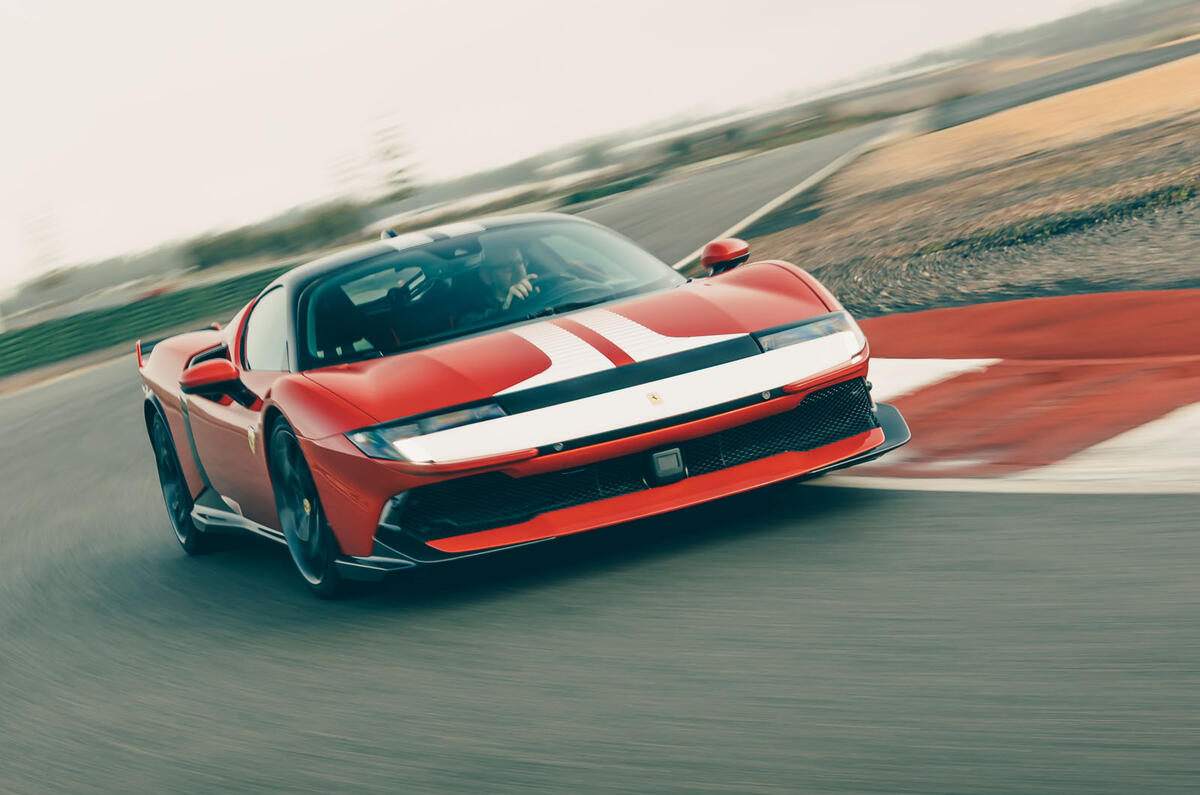
Ferrari won’t say it gives cars facelifts (it’s not the only car maker to do this), but the 849 is a striking reworking of the plug-in hybrid SF90, which it supersedes in the Ferrari line-up as the topmost performance model in the regular range. Only limited-volume models – most recently the F80 – sit above it.

Of late, the existence of the SF90 has had a positive effect on Ferrari’s front-engined V12 coupé, the 12Cilindri, which hasn’t needed to be the range’s performance benchmark and has relaxed (a little – these things are relative) into a fine, comfortable, super-GT. Yet on its own merit the SF90 wasn’t entirely satisfying. It was fast, yes, because with near-enough 1000bhp and four-wheel drive from a V8 supplemented by three electric motors it couldn’t be anything else, but it wasn’t engaging enough as a driver’s car to satisfy the benchmark role Ferrari wanted to give it. It felt like something of a technical exercise, created so Ferrari could prove it could make a series-production PHEV hypercar work – something the 296 GTB better realised. 

So to dub the 849 Testarossa just a facelift might indeed be harsh. It’s meant to be a significant course correction for this model, to turn a QR code on a table into a handwritten menu. And as we will see, it delivers.
Advertisement

DESIGN & STYLING

Ferrari 849 Testarossa review 2026 002

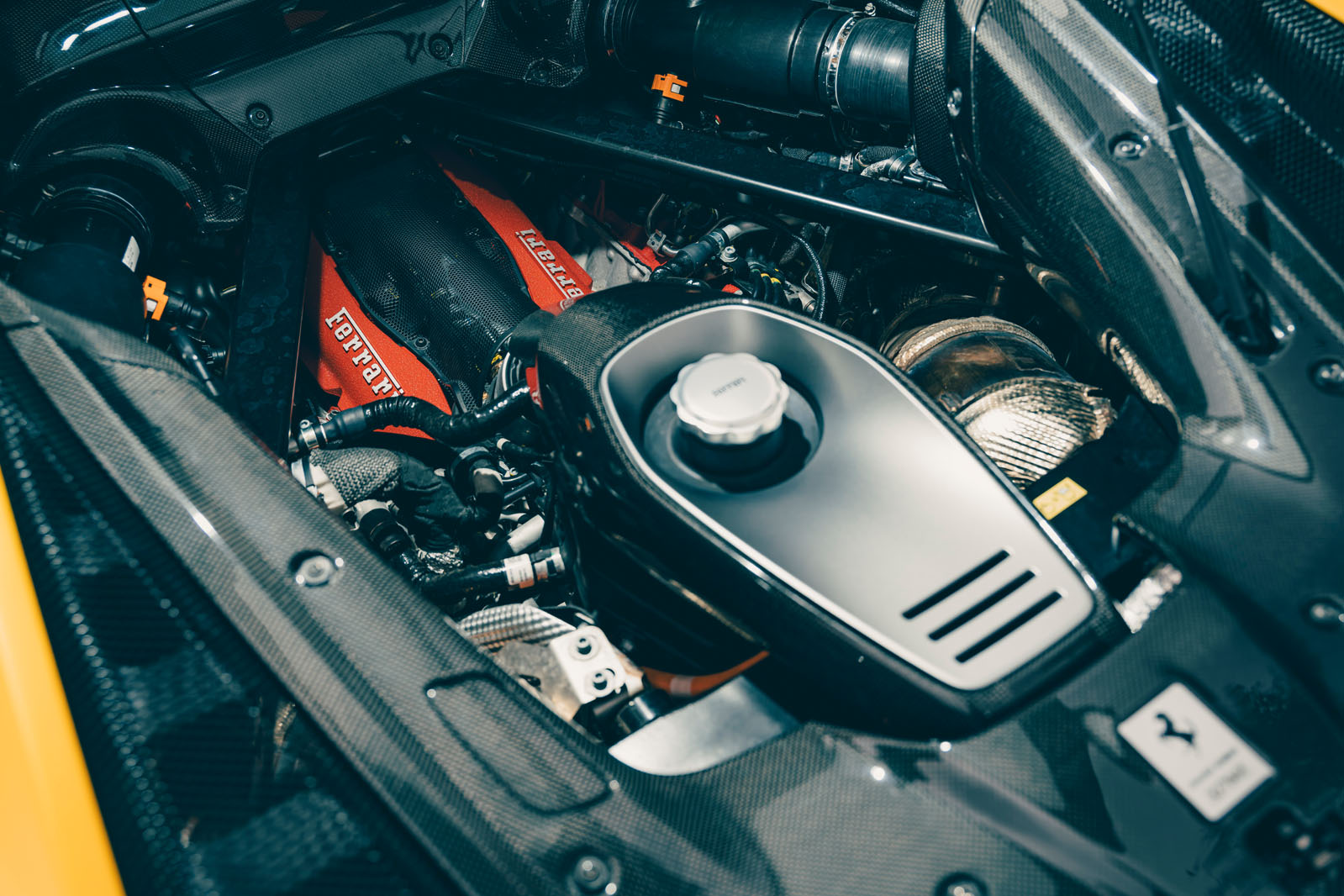
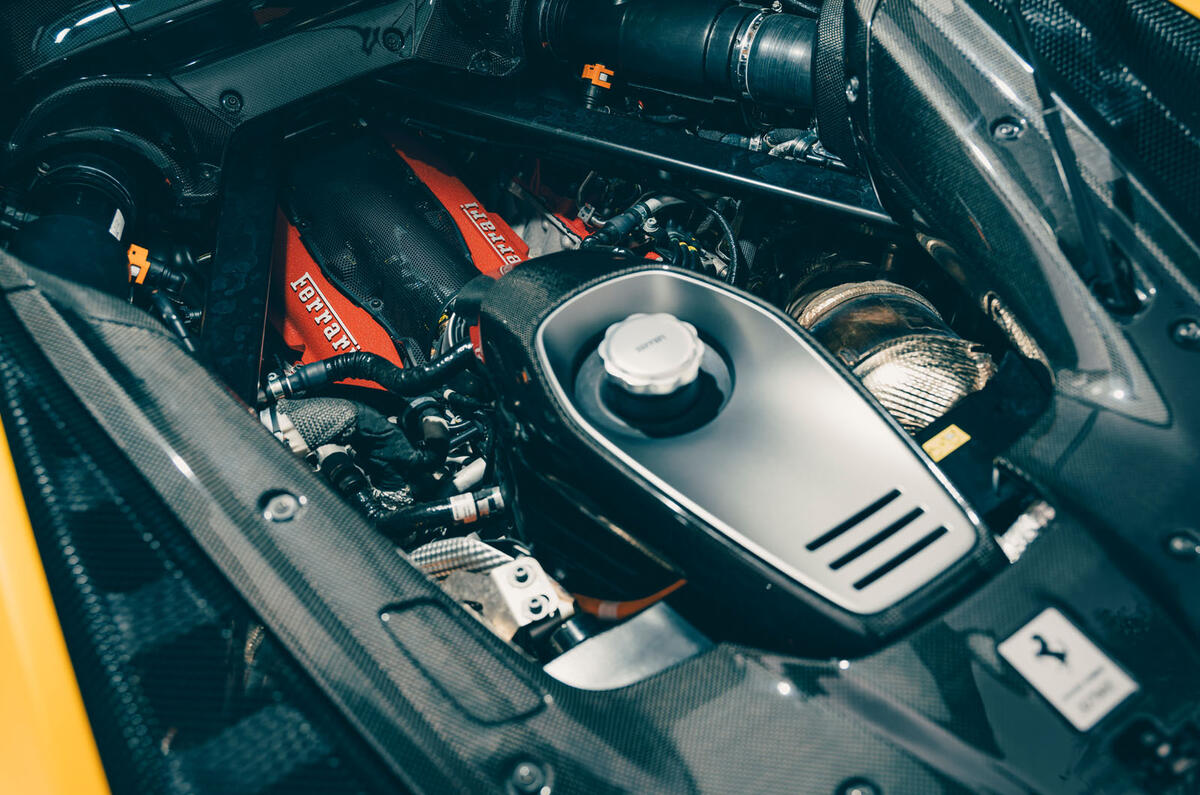
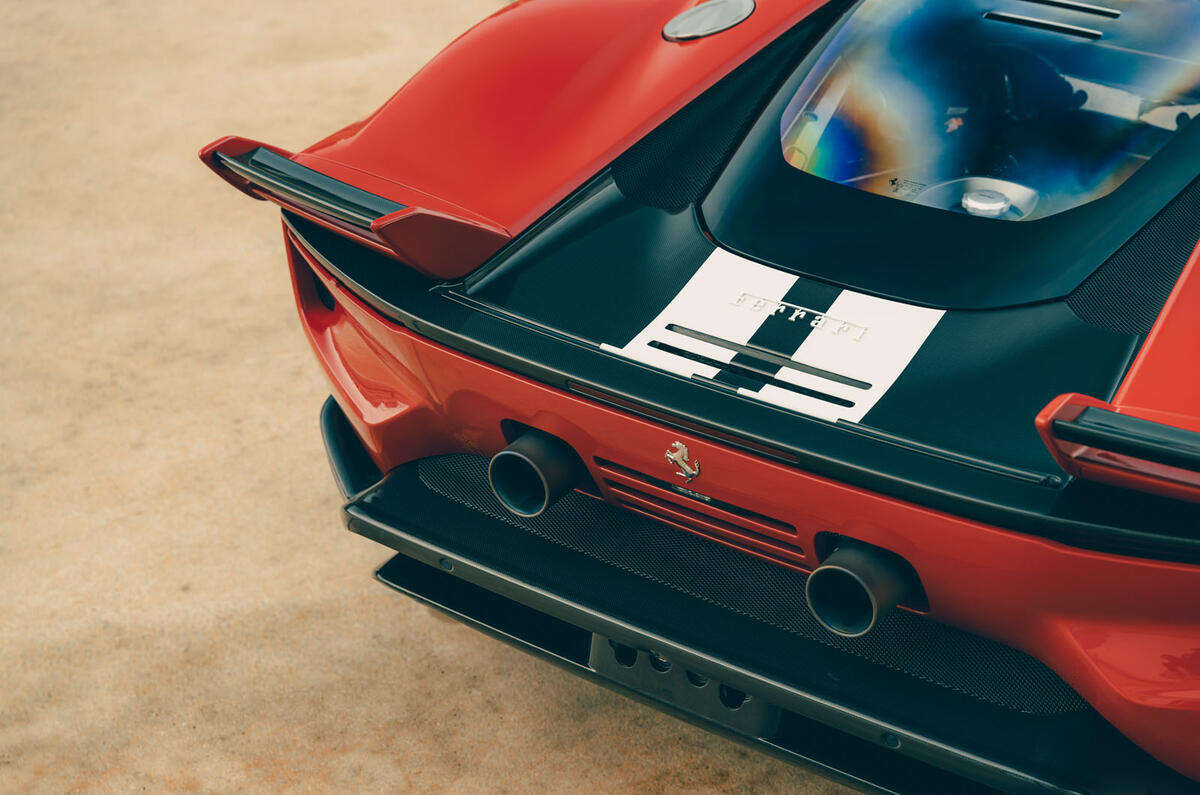
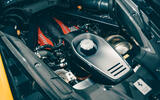
The hardware has received multiple and significant detail upgrades, the headline one being 50 extra horsepower for the 4.0-litre V8 engine that’s mounted exceptionally low (and ahead of the rear wheels) within the 849’s mostly aluminium structure. Its increase to 819bhp is largely afforded by new turbochargers, the largest ever fitted to a roadgoing Ferrari, which boost half a bar higher than the old ones, featuring F80-derived bearings and heat shields from a GT3 race car. A redesigned Inconel exhaust system to accommodate the turbos, some cylinder head modifications and bigger intercoolers complete the roll call.

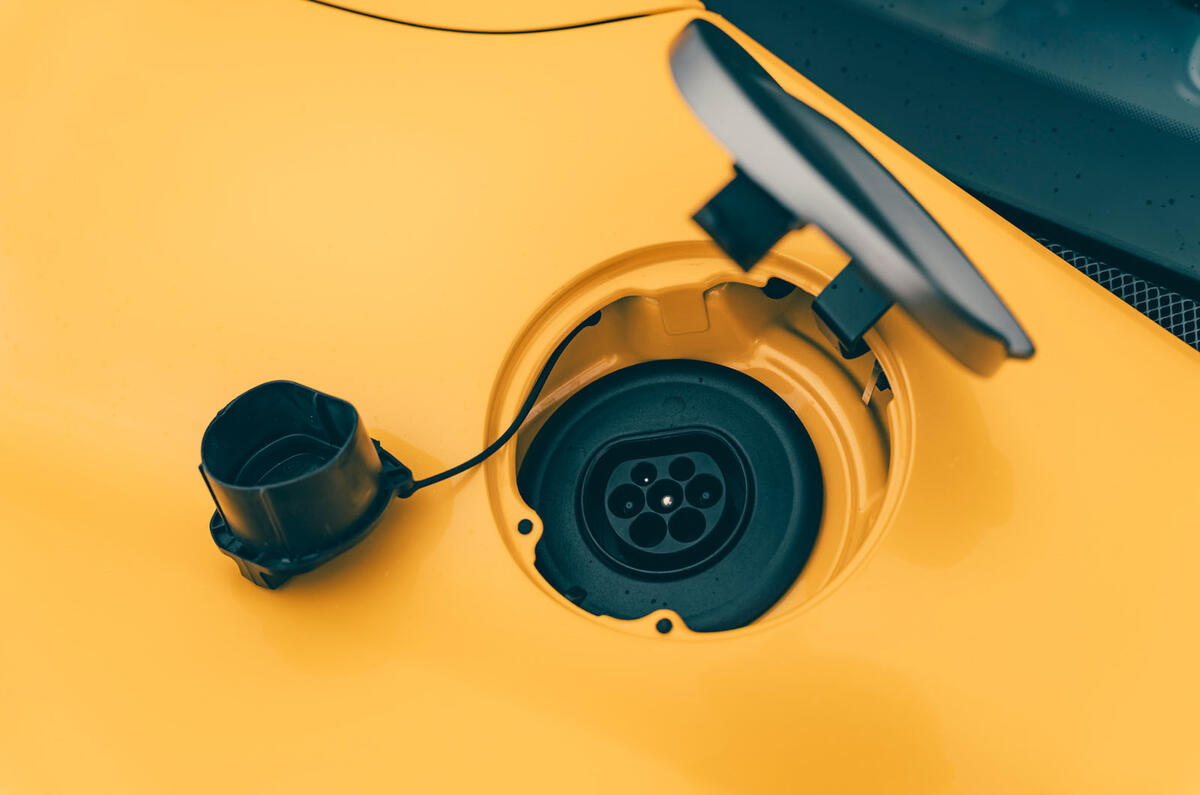
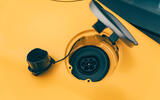
The hardware of the PHEV system remains the same as before, but with 217bhp, the powertrain total is now 1036bhp (a round 1050PS). Driving on the motors alone, power is 161bhp and, thanks to a 7.45kWh battery (tucked transverse and low, just behind the passenger cell), it's good for a 16-mile electric range.

There are two motors at the front axle, one for each wheel, and one at the rear between the engine and the eight-speed dual-clutch automatic gearbox. The advantage of it being here is that not only can it fill turbo lag with its electric response, it can also help blip the engine to rapidly rev-match on downshifts, and even drag to add engine braking, or drag during acceleration to charge the battery, where throttle-demand exceeds traction. 

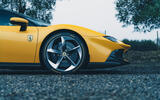
There’s new software to make all of that happen better, which talks to traction and stability control systems, all of the motors and the by-wire braking system. That has new front pads on the 410mm discs; there are new 372mm rear discs and new pads and calipers too. If you select the standard Magneride suspension and its adaptive dampers, it will work with those too (there’s also an optional passive Multimatic option that’s better for the track).

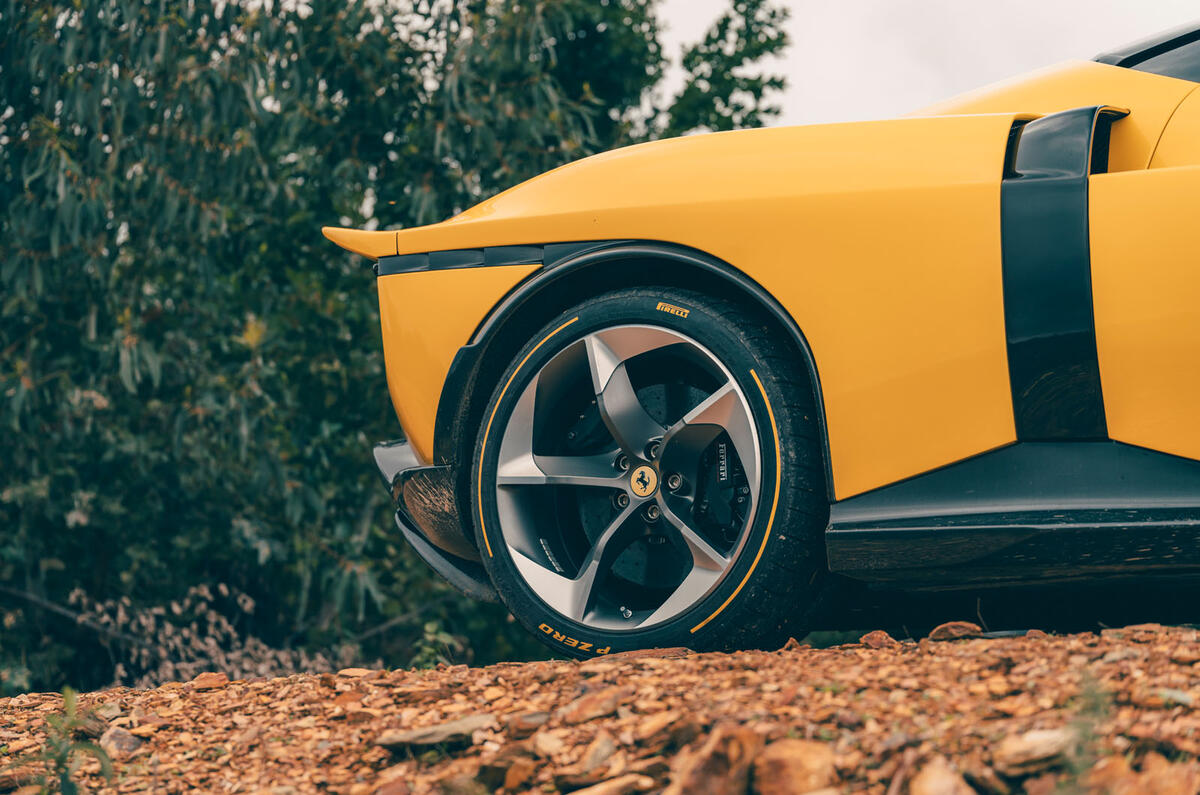
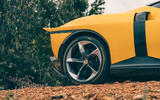
The springs are 35% lighter than previously and are said to contribute to 10% less roll rate. There are three tyre options, from Pirelli, Bridgestone and Michelin, for the 265/35 R20 front and 325/30 R20 rear tyres. Overall grip is claimed to be up by 3% and the overall Fiorano lap time 1.5sec quicker than the SF90's.

As is the way with so many sports cars and supercars, though, like a film that finds its character in the edit, it’s the way that all of these dynamic elements are blended that will reveal the way the 849 drives. As Ferrari’s chief engineer Raffaele di Simone puts it: “I like to emphasise the difference between complexity and complication. Technically [the 849] is very complex, but it isn’t complicated to drive.” With all of this kit, totalling 1570kg dry (a touch under 1700kg at the kerb), the 849 is complex, certainly.

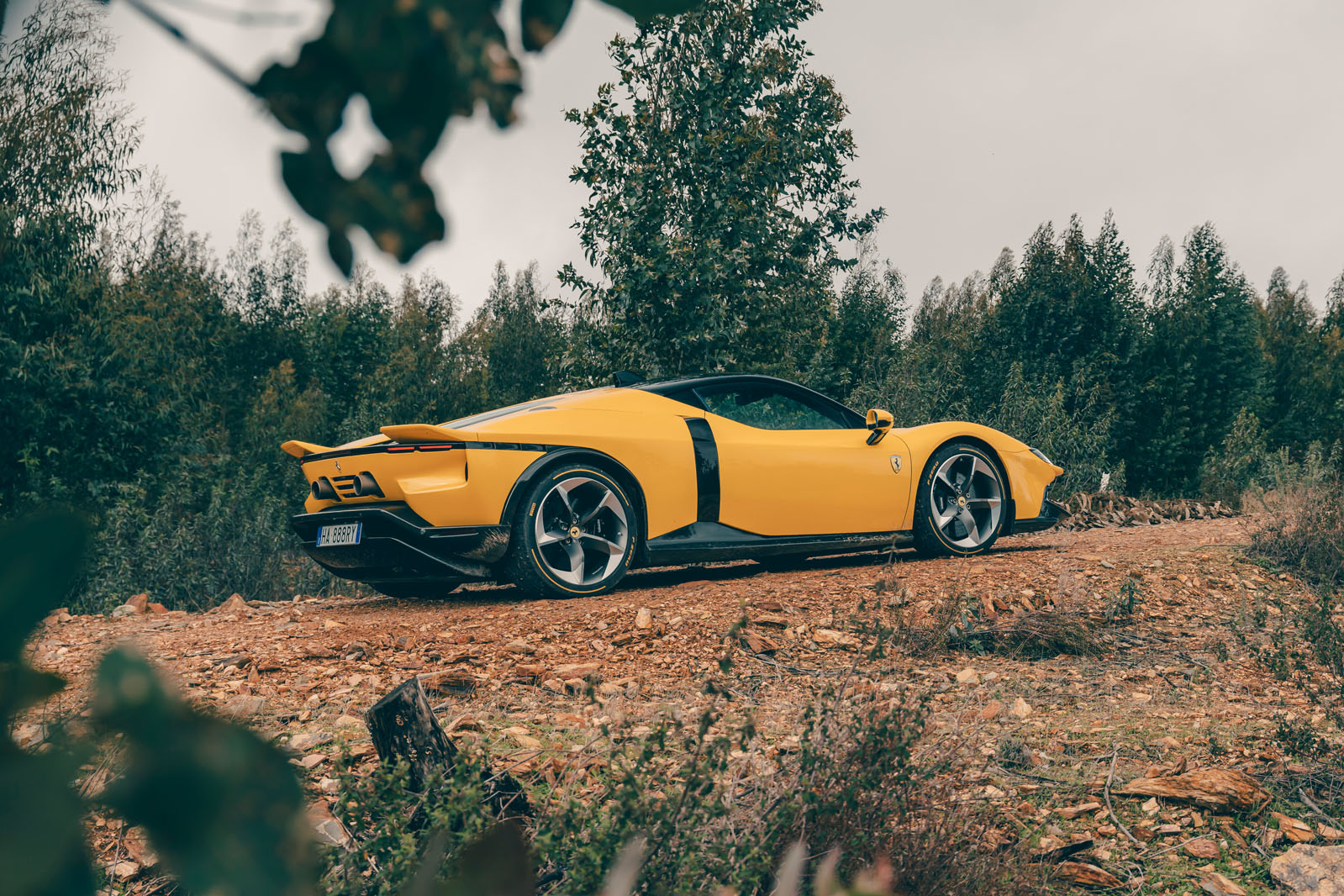
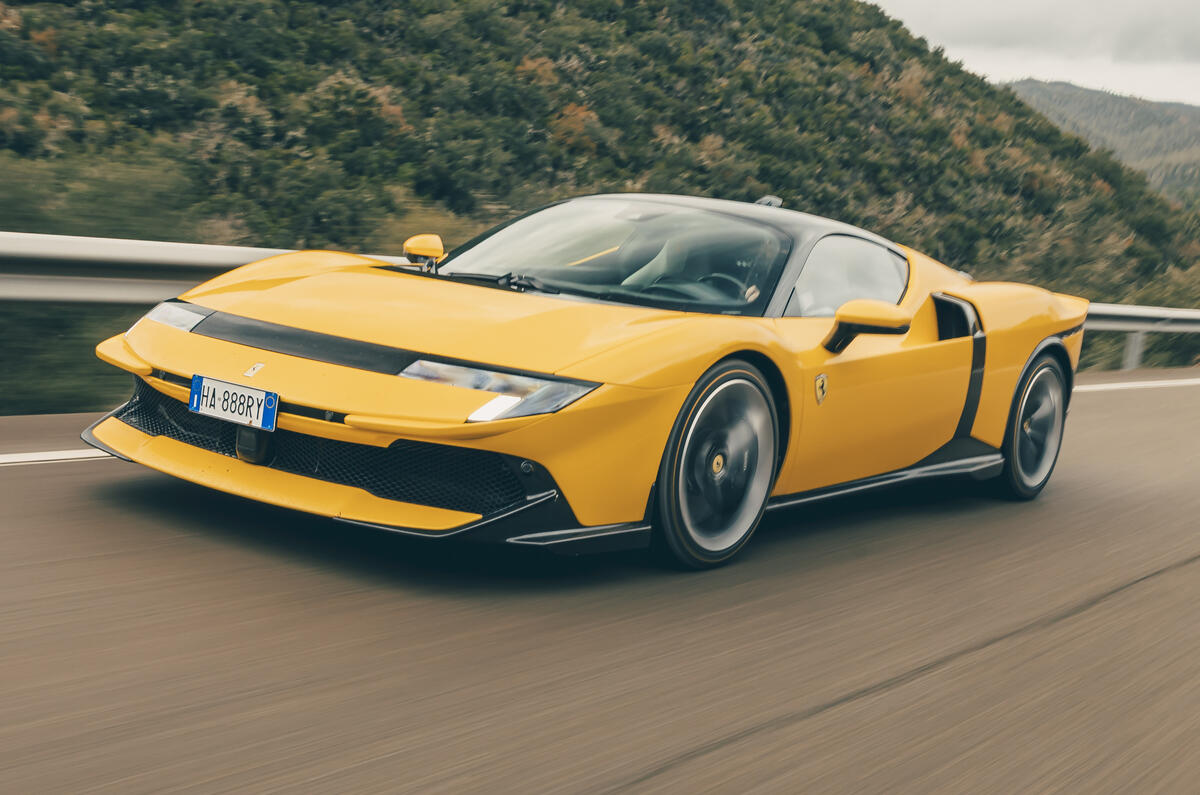
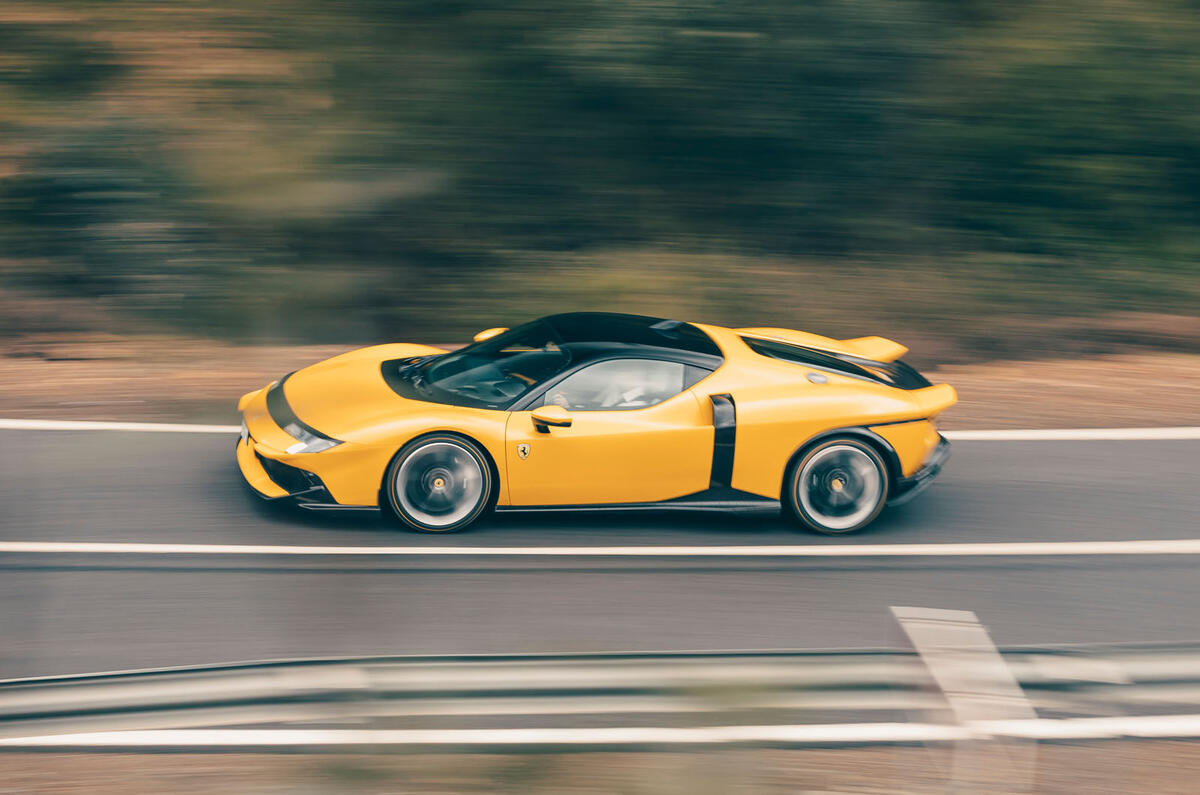
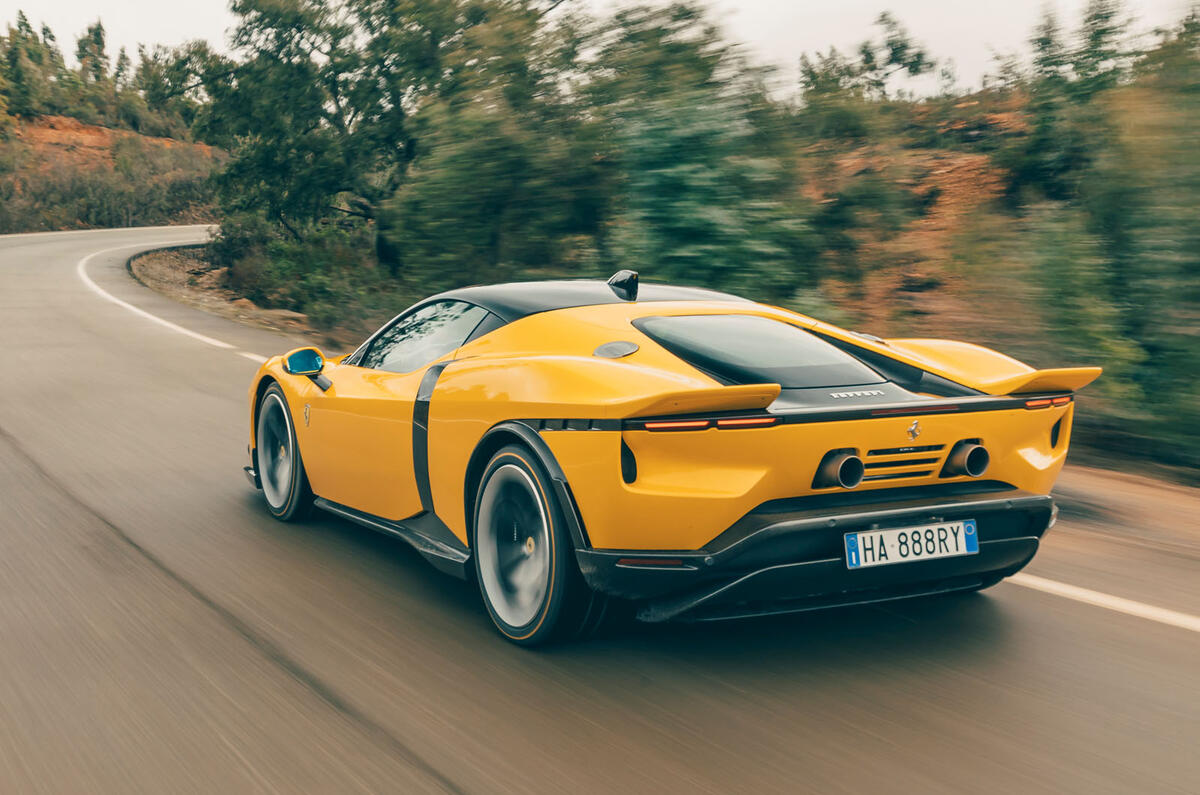
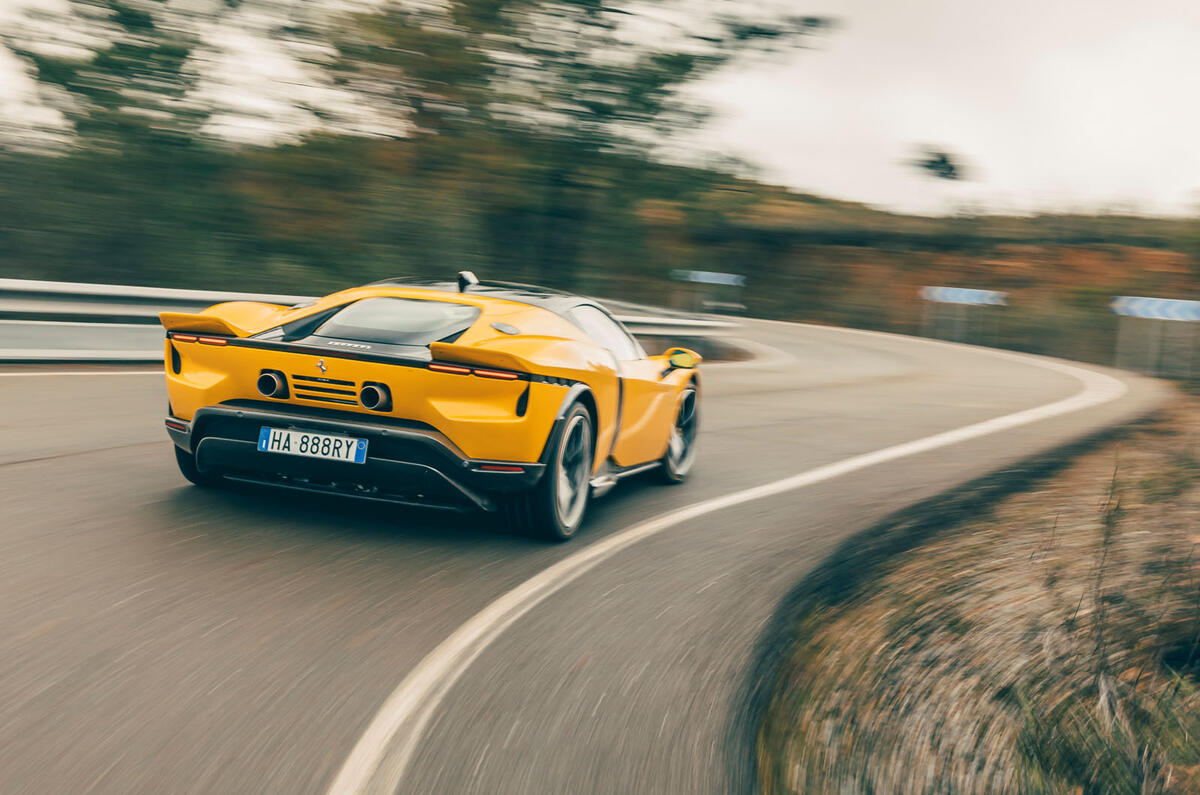
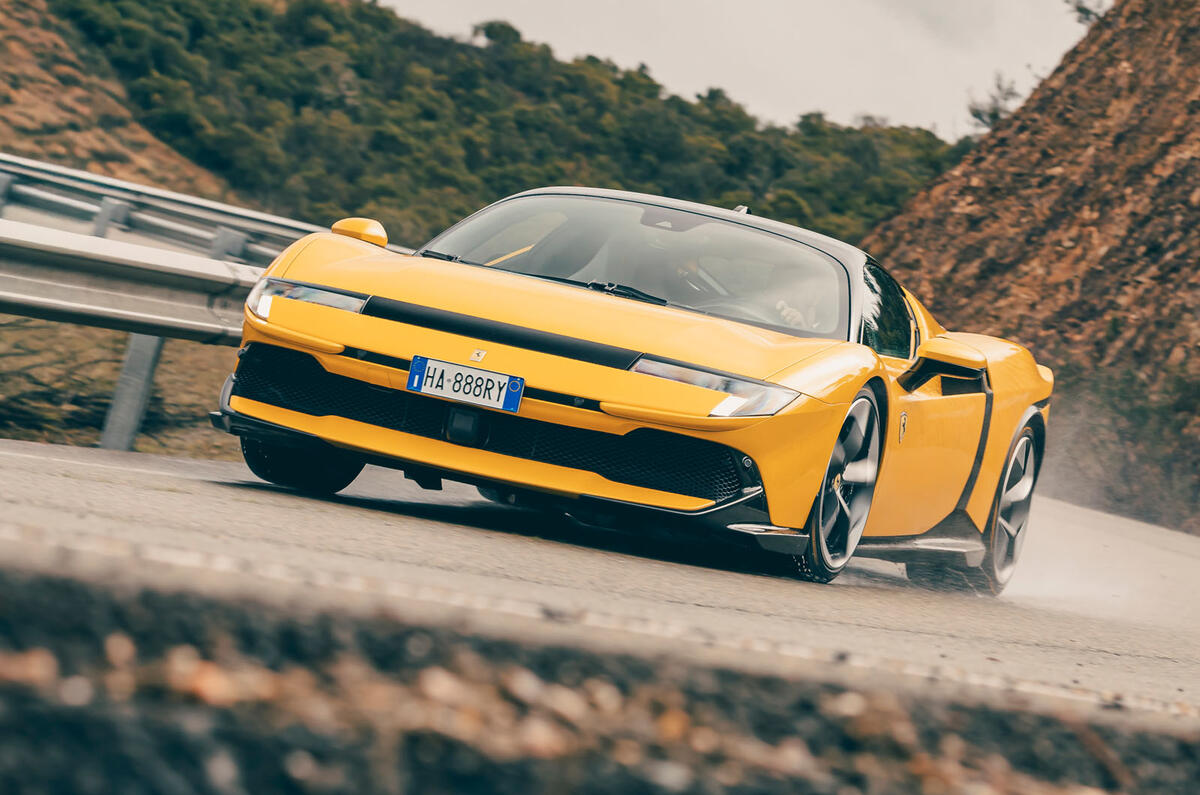
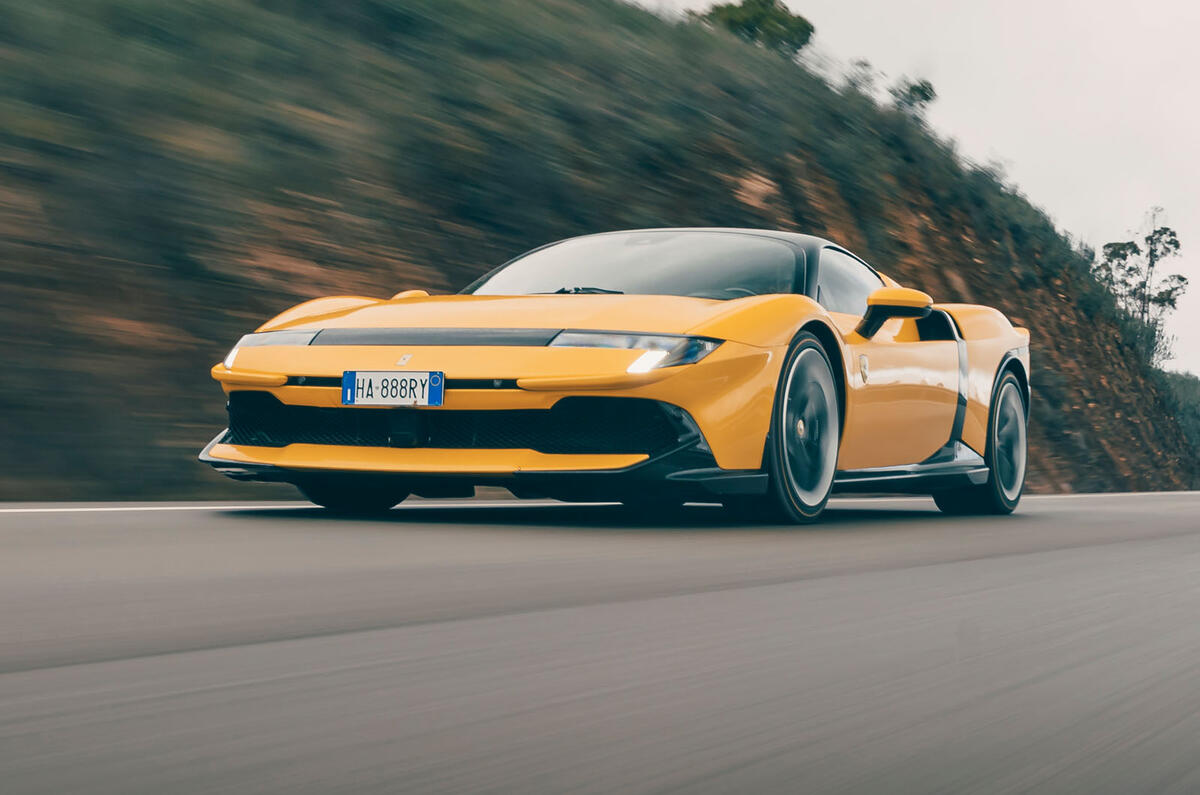
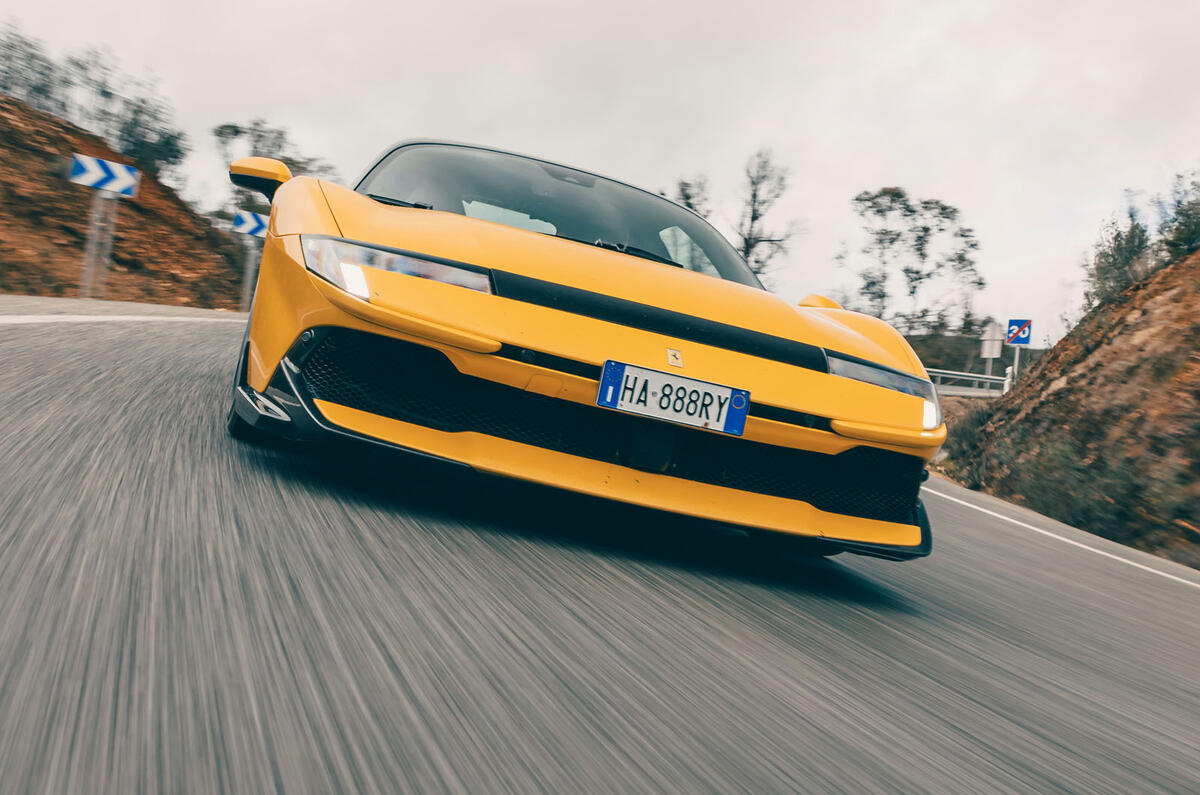
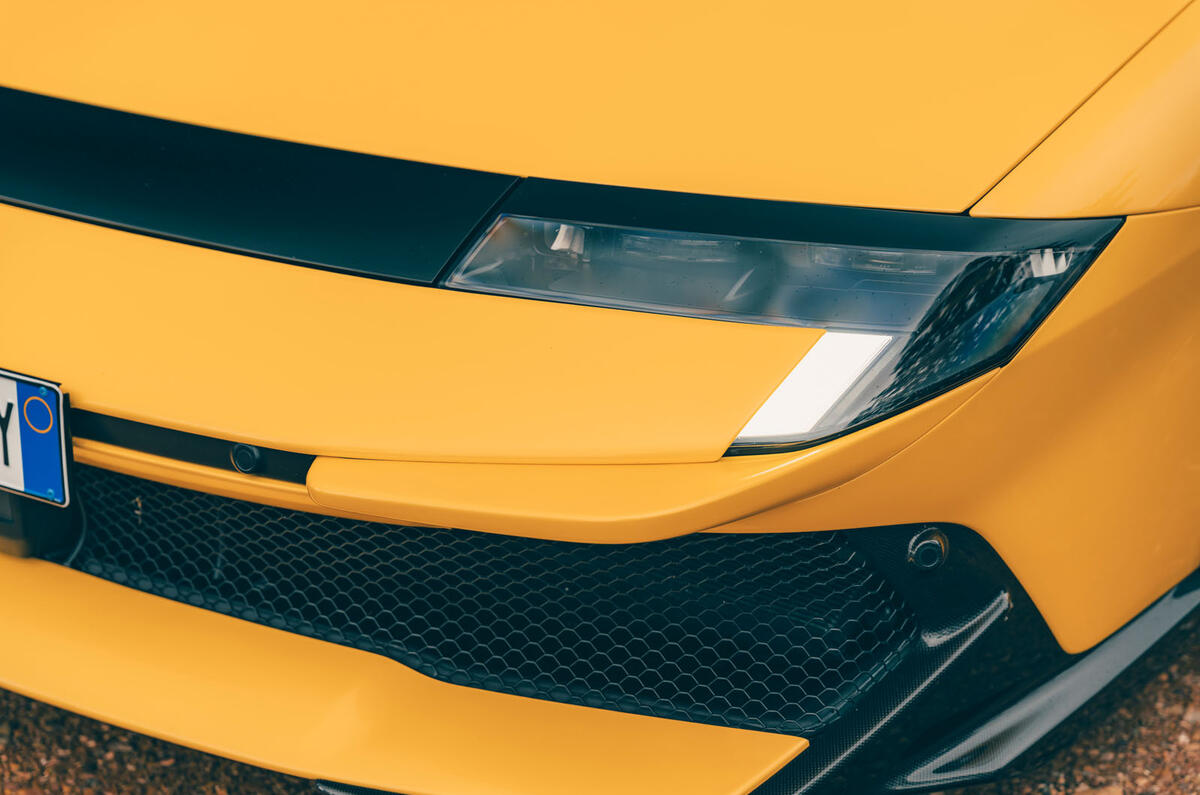
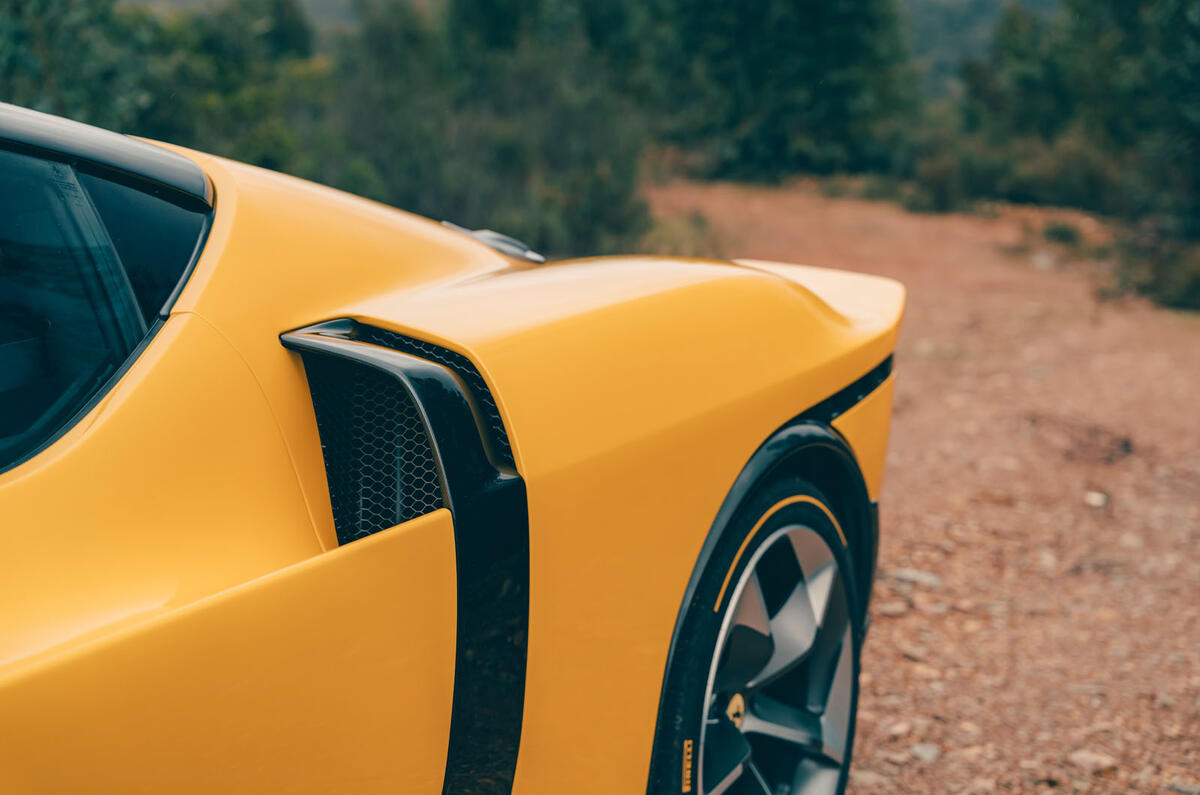
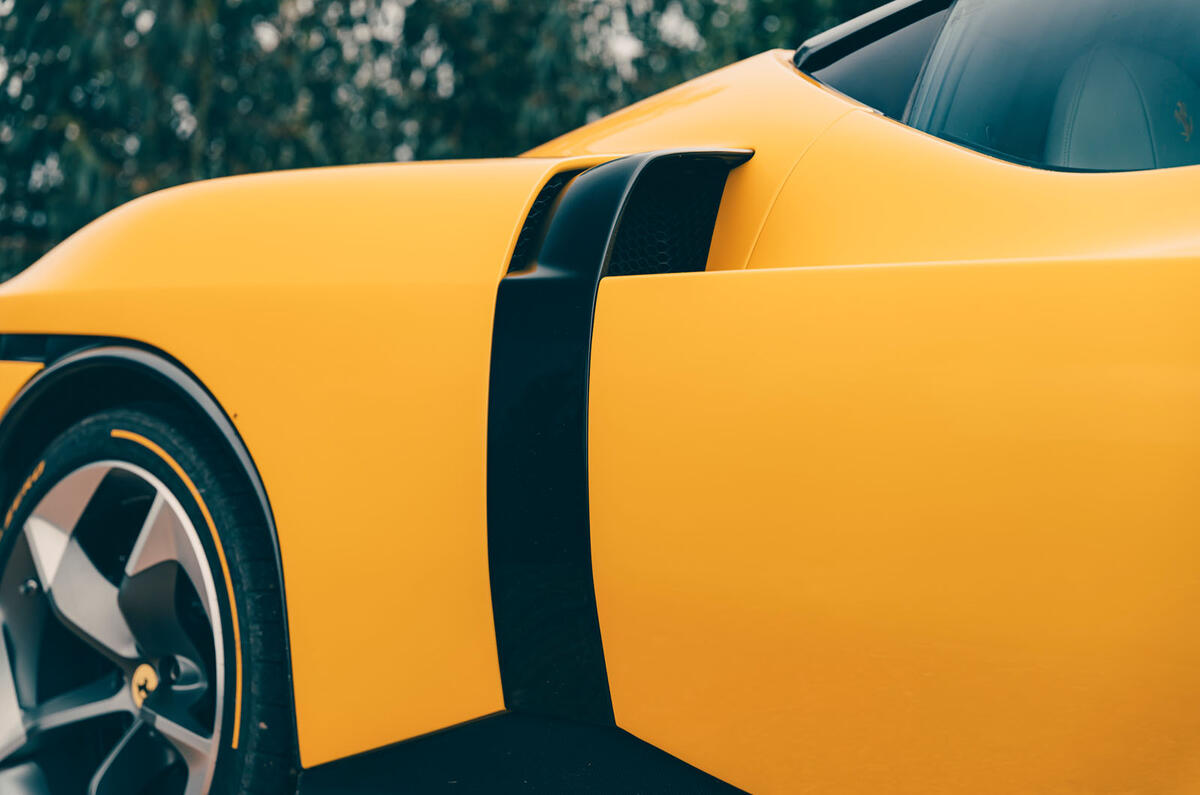
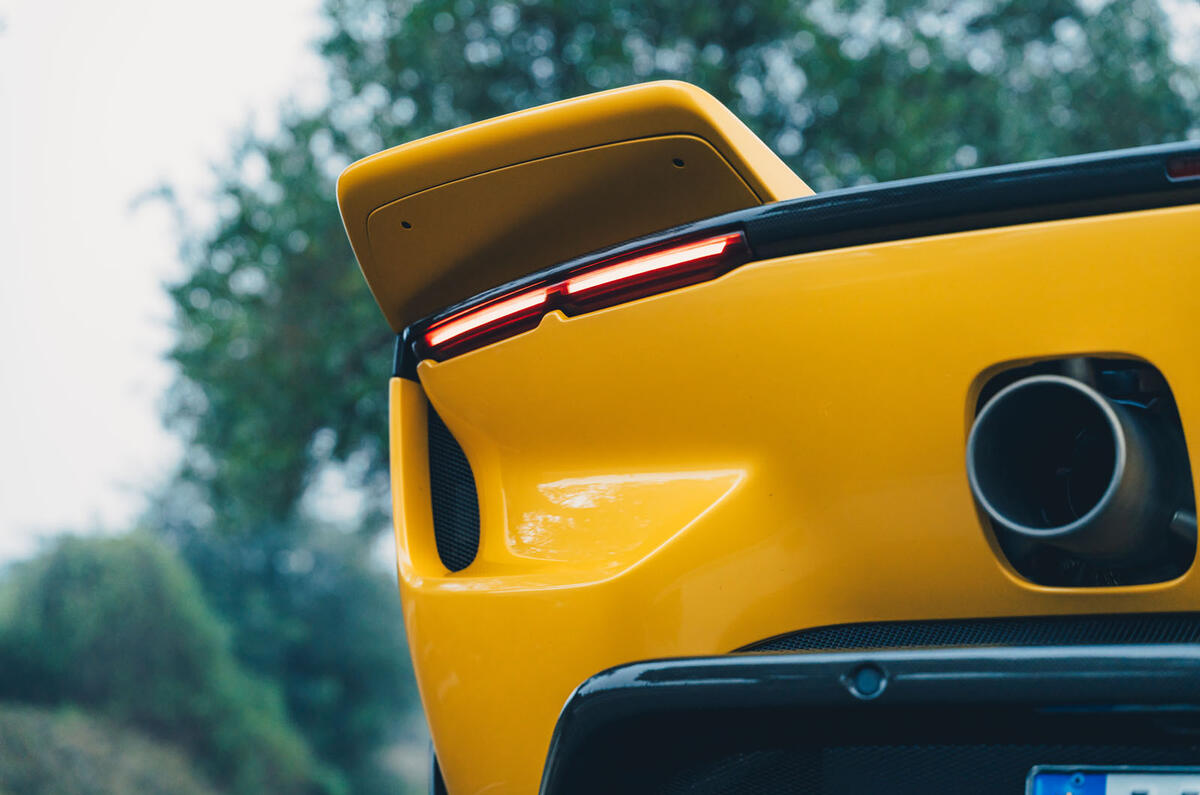
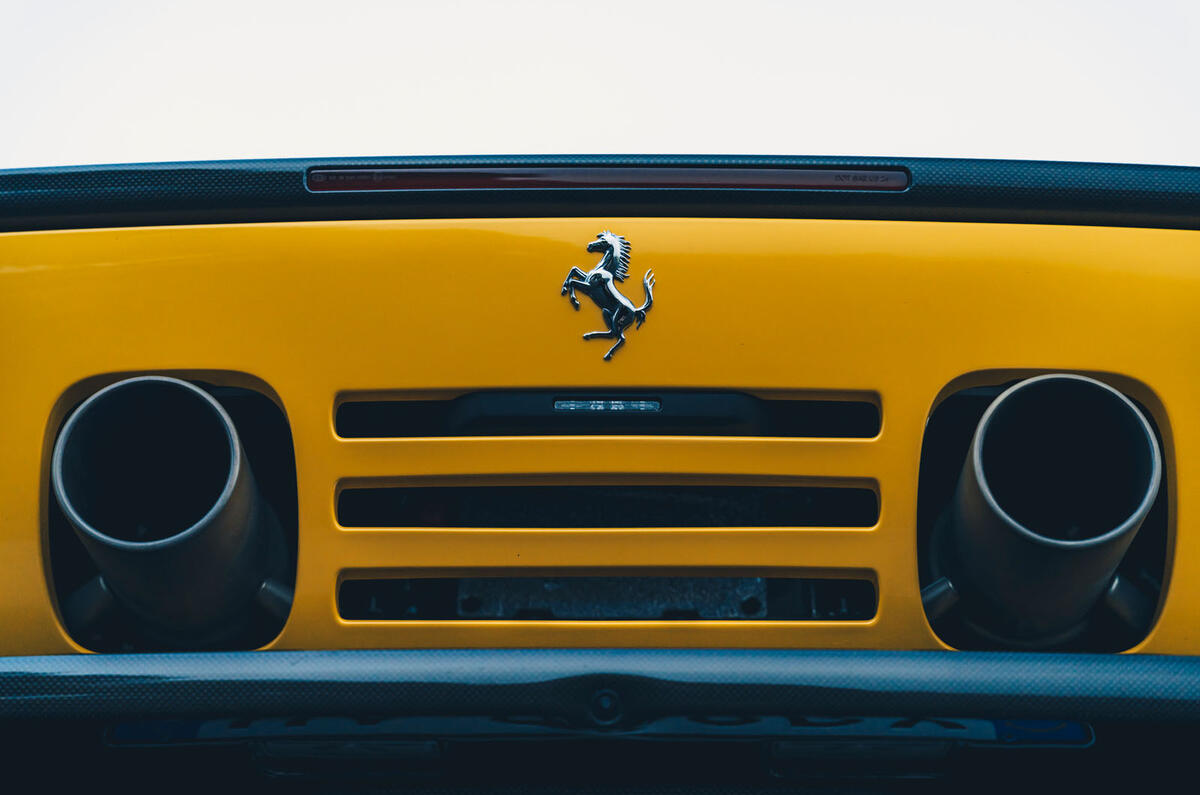
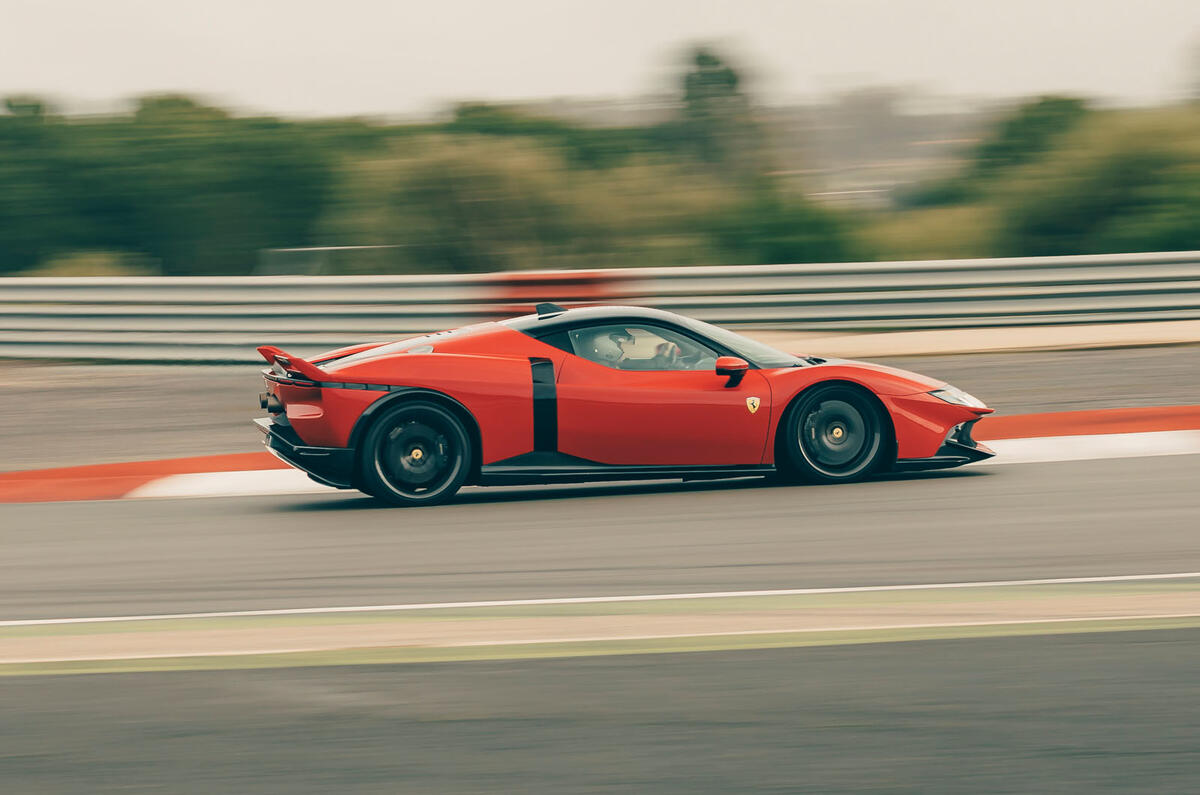
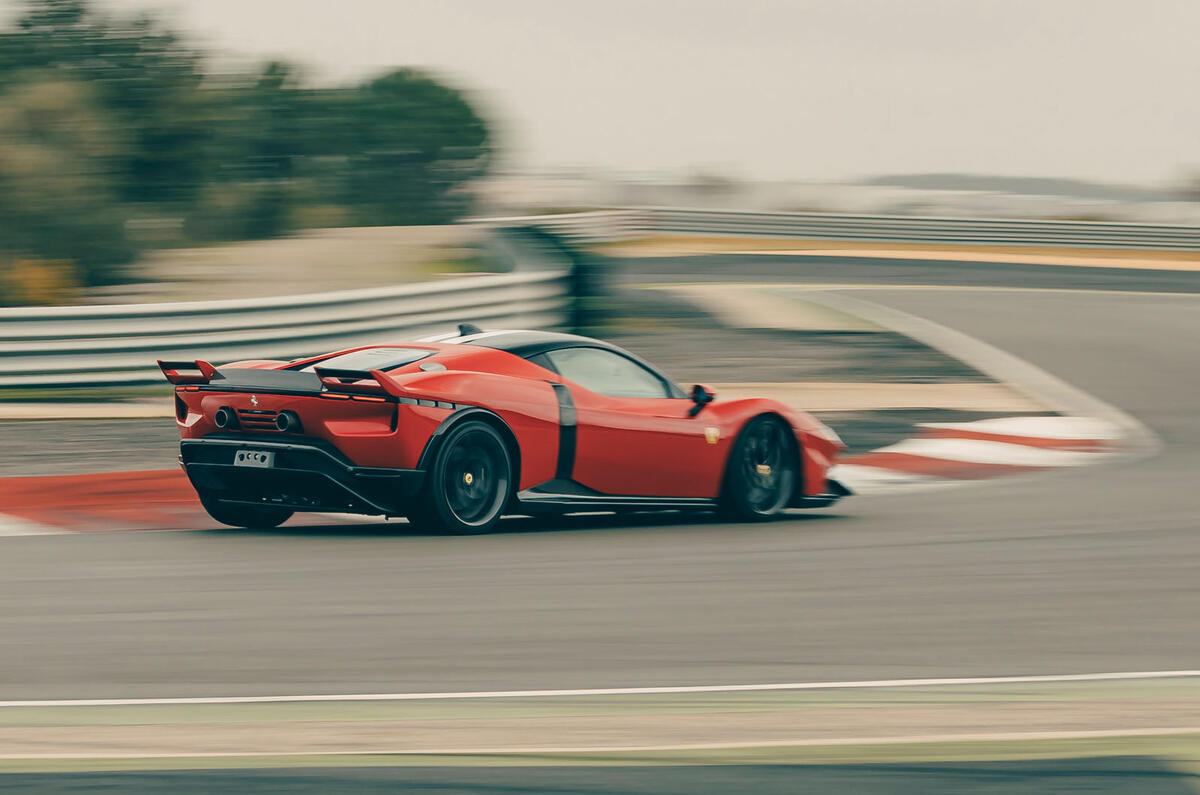
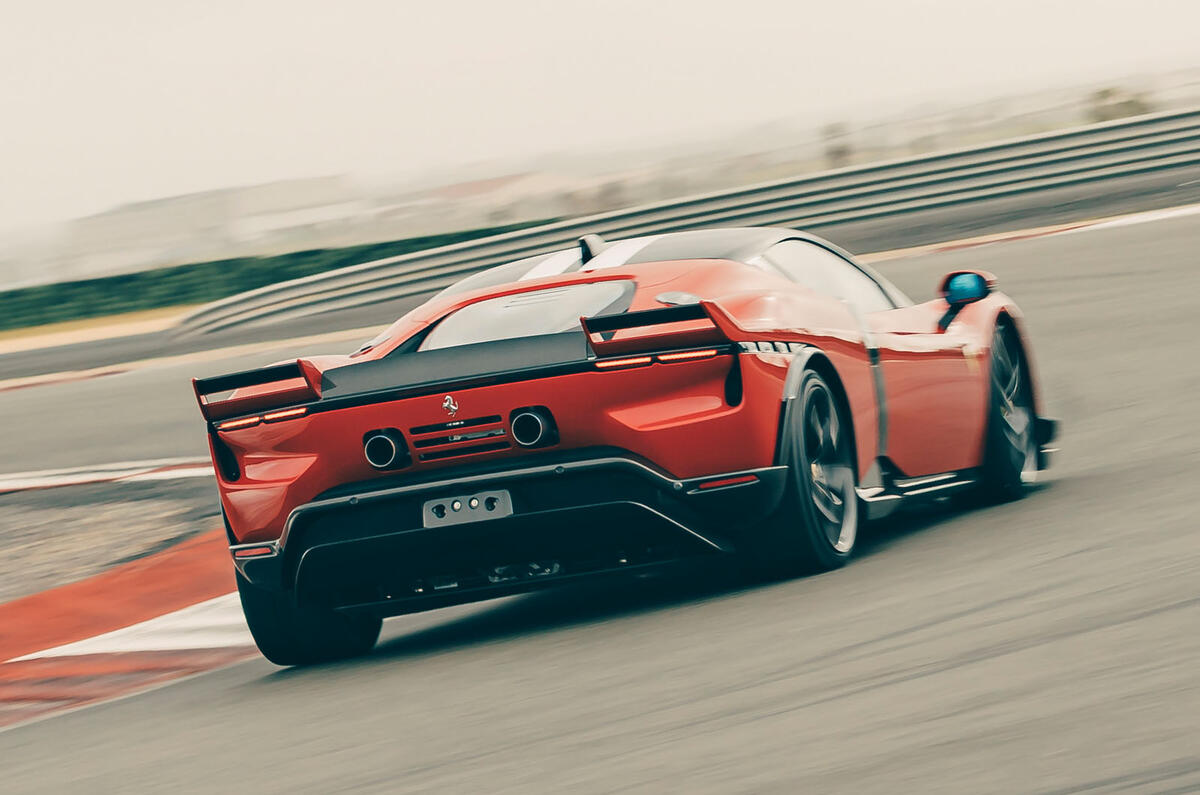
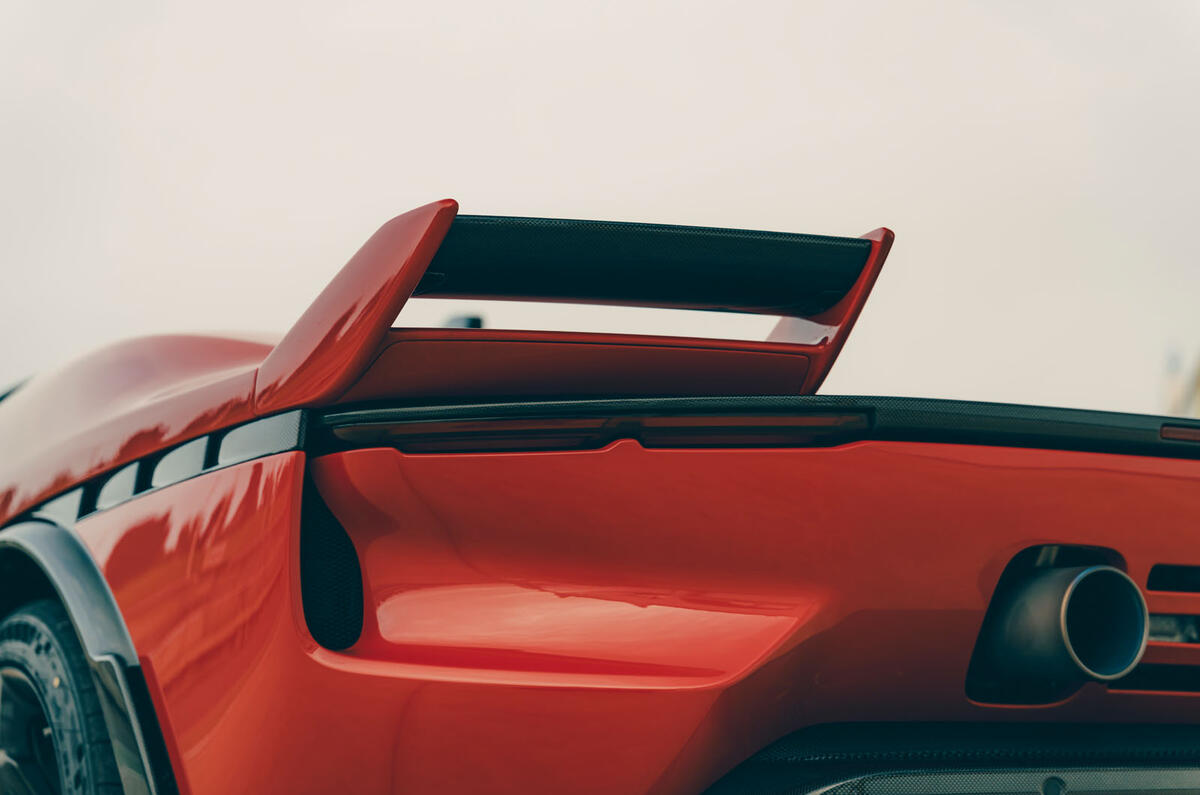
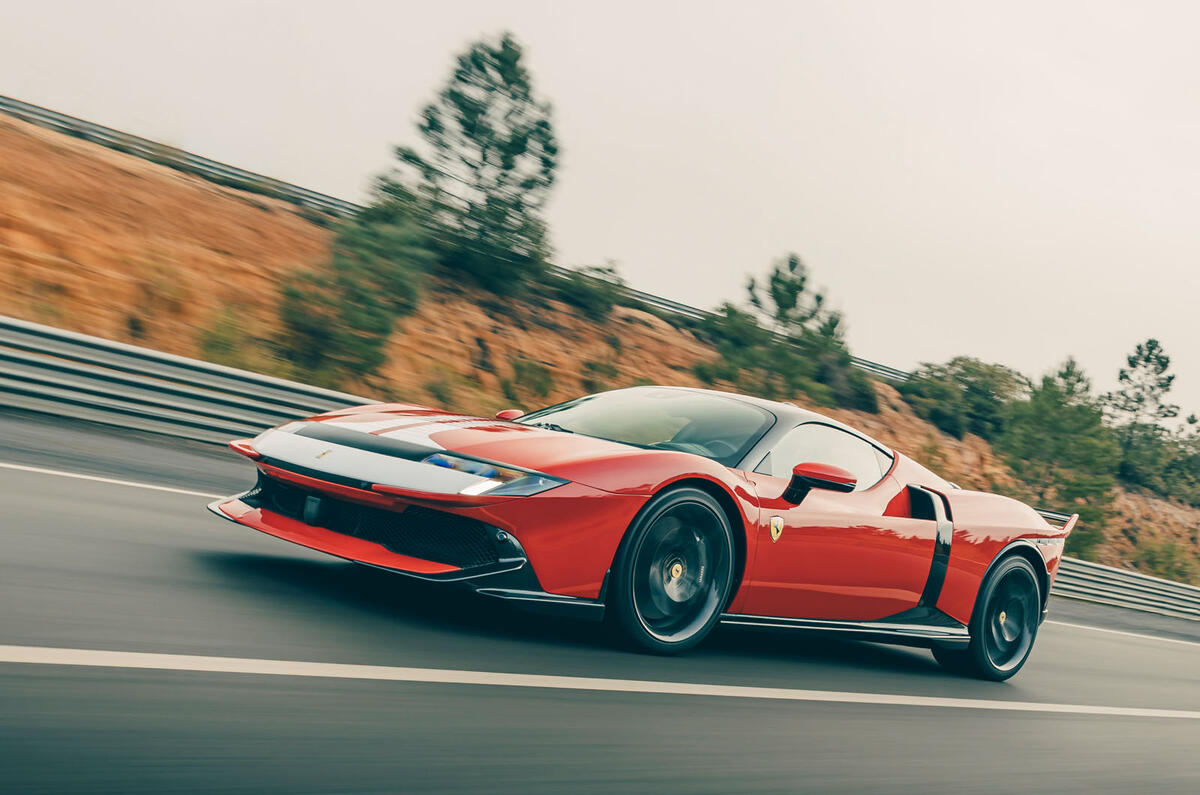
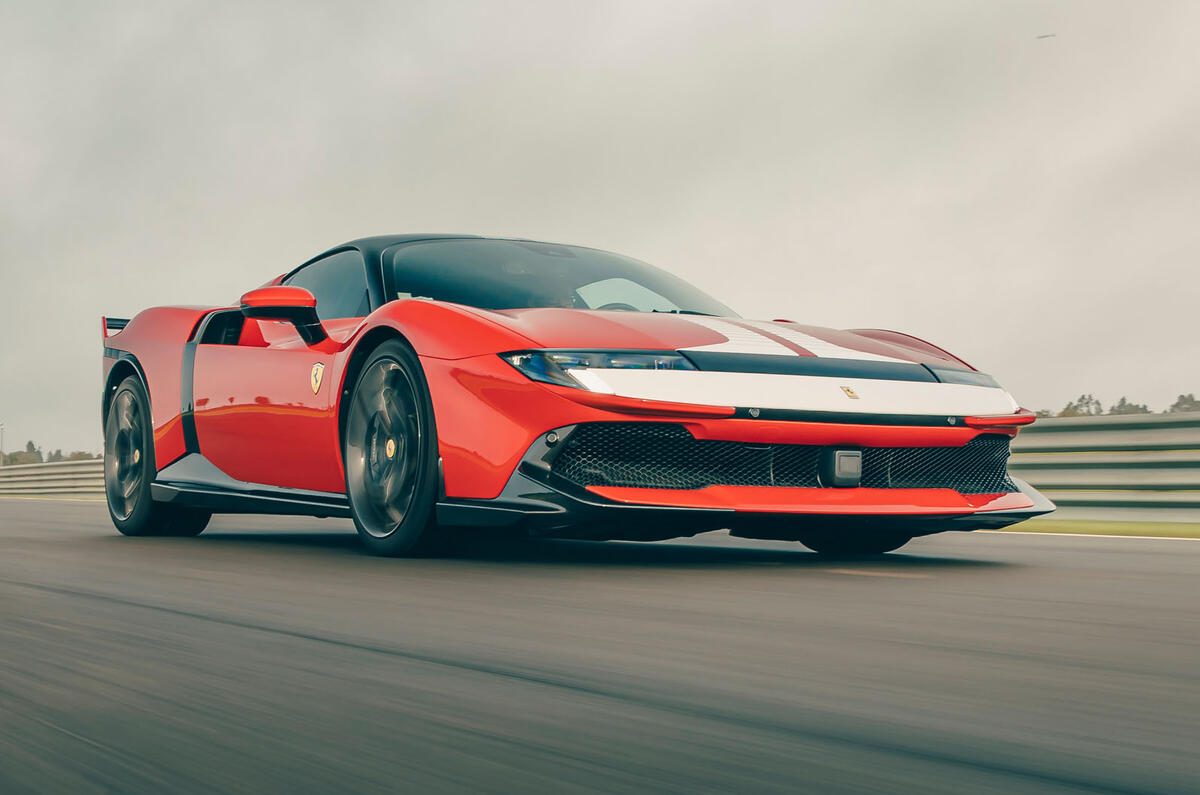
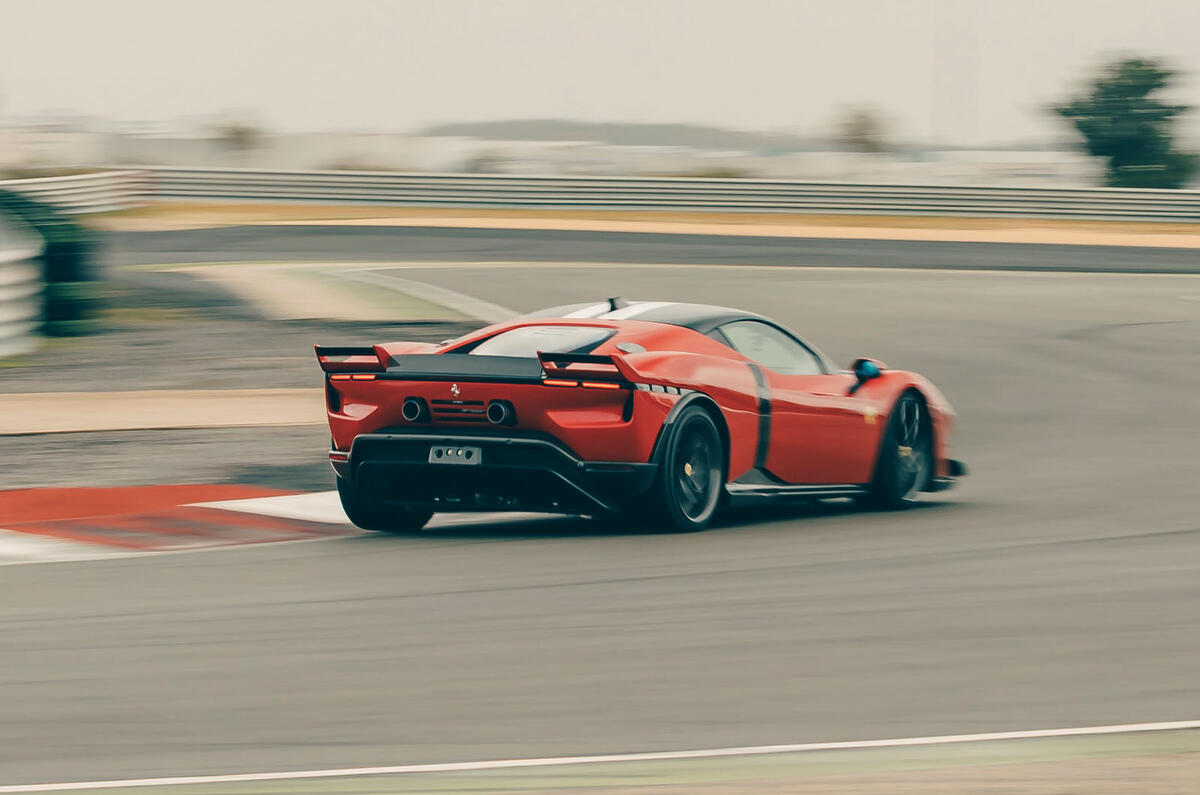
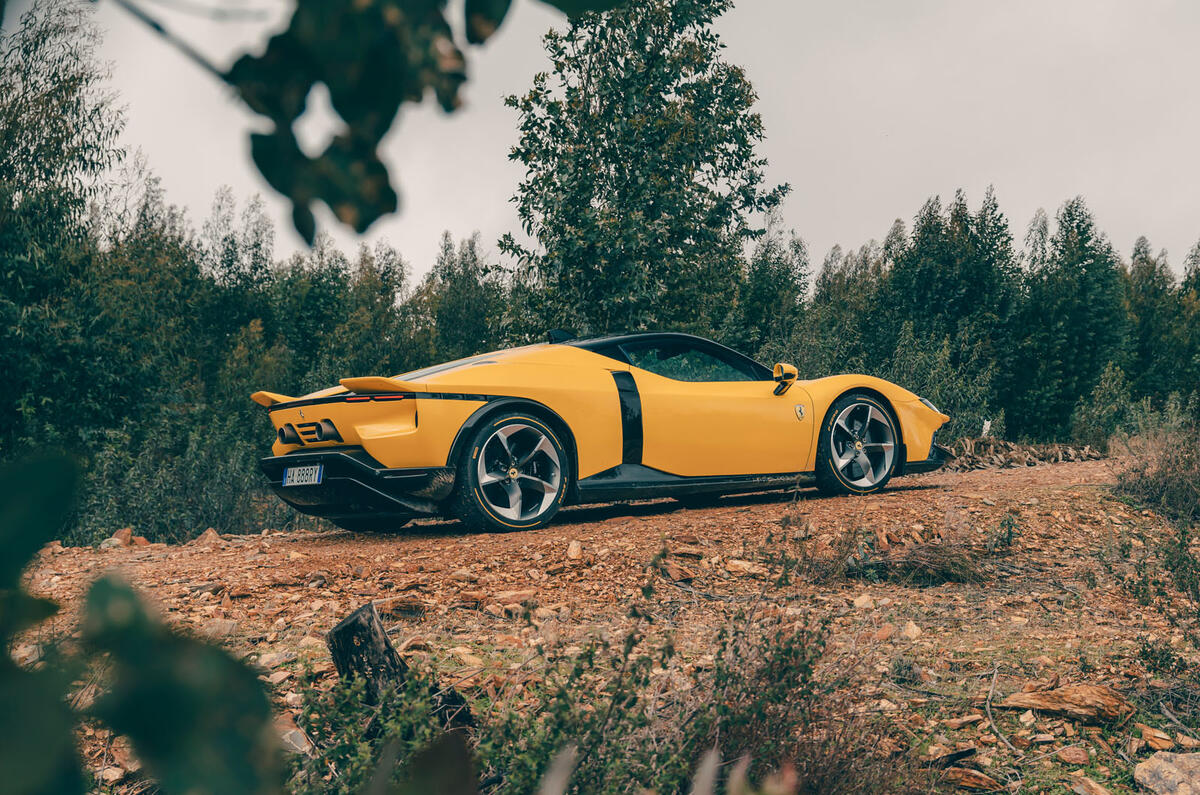
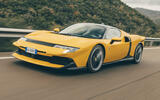
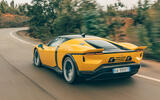
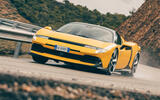
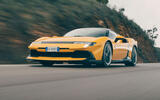
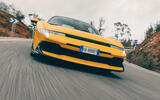
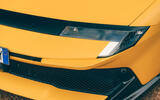
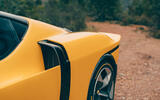
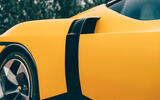
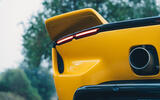
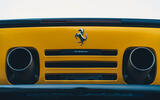
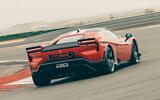
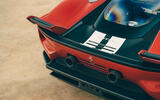
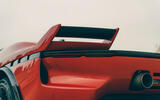
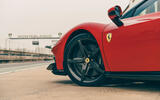
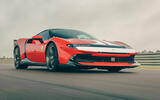
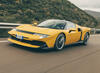
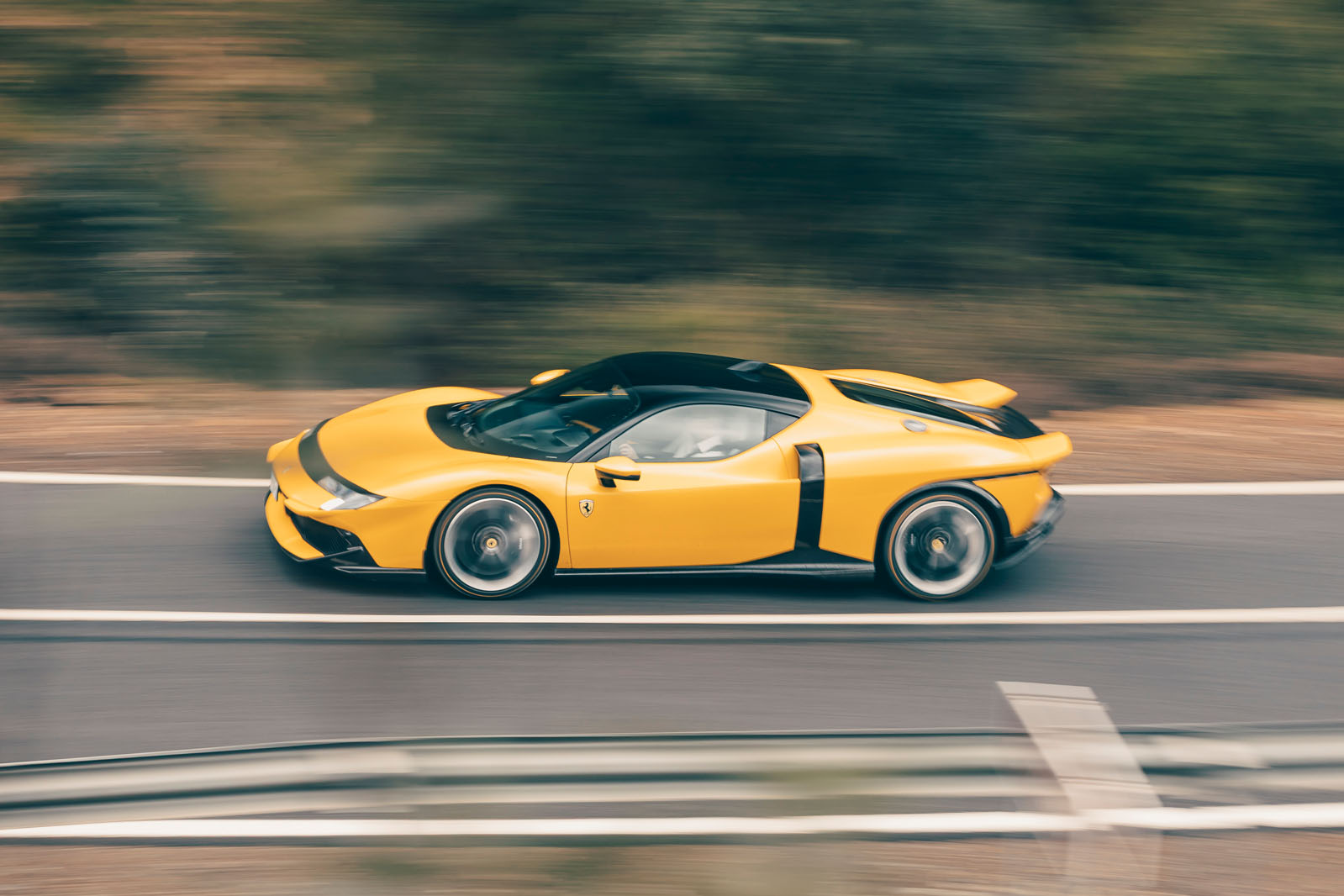
There are aerodynamics to blend into things, too, of course, 415kg of downforce at 155mph, plus the design. You can decide for yourself whether you like that (I will say I really like elements of it), and Ferrari’s sports car exterior designer Carlo Palazzani explains that “for the first time marketing, aerodynamics and design teams were all at the same table at the same time” when the car was conceived. It’s clearly inspired by cars like the 512M Le Mans winner, including its double tail, which Ferrari “had been thinking about reintroducing for years”, with the front light design being “the closest interpretation possible of a 1980s pop-up headlamp”. And those vertical slashes amidships? Hints of “afterburner and the pinched effect of a corset,” says Palazzani. But whatever you think of it, it is not a supercar that you would mistake for another, and I see merit in that.

INTERIOR

Ferrari 849 Testarossa review 2026 021

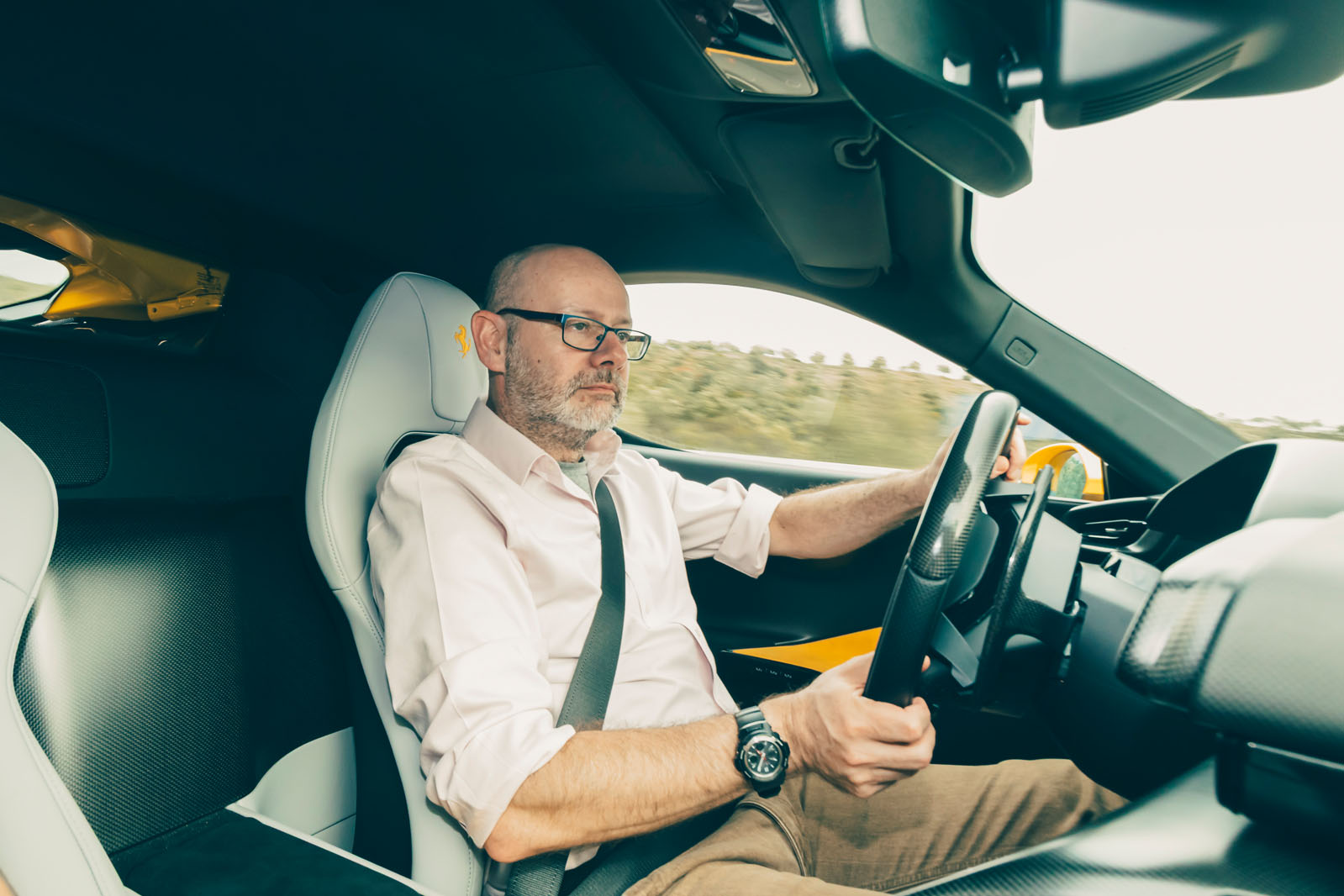
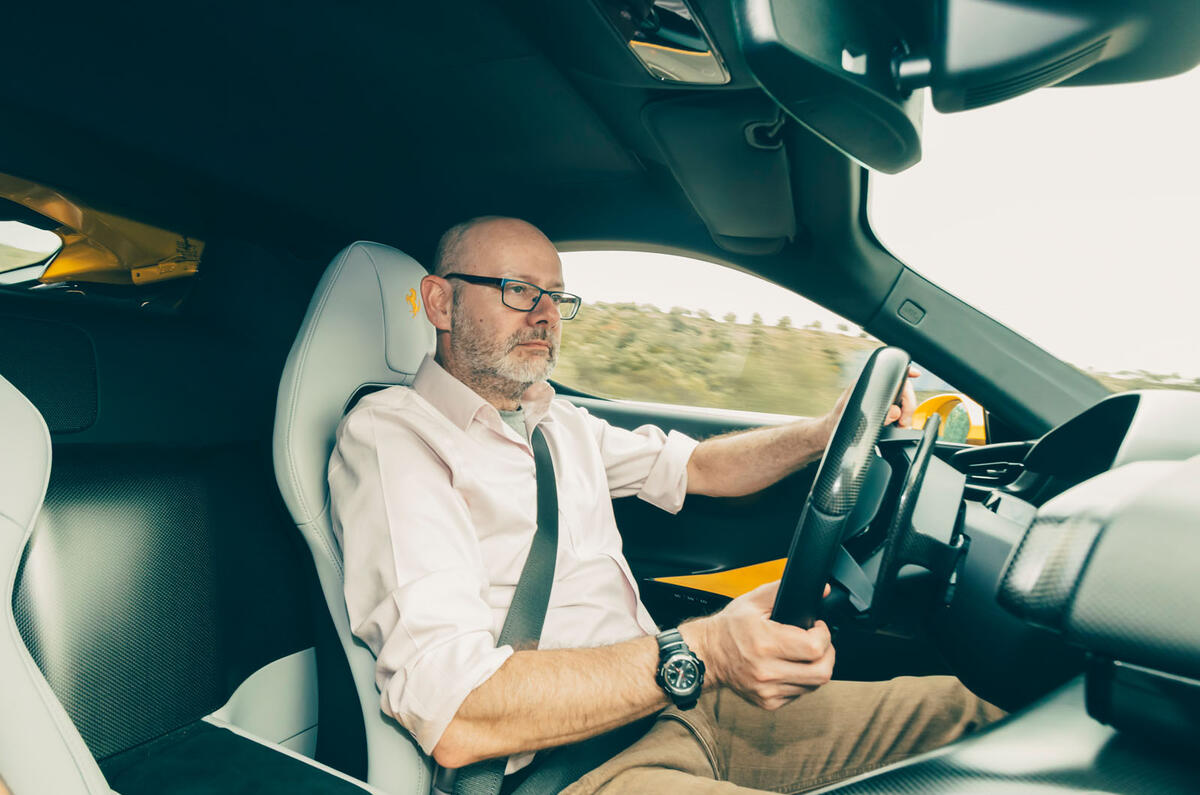
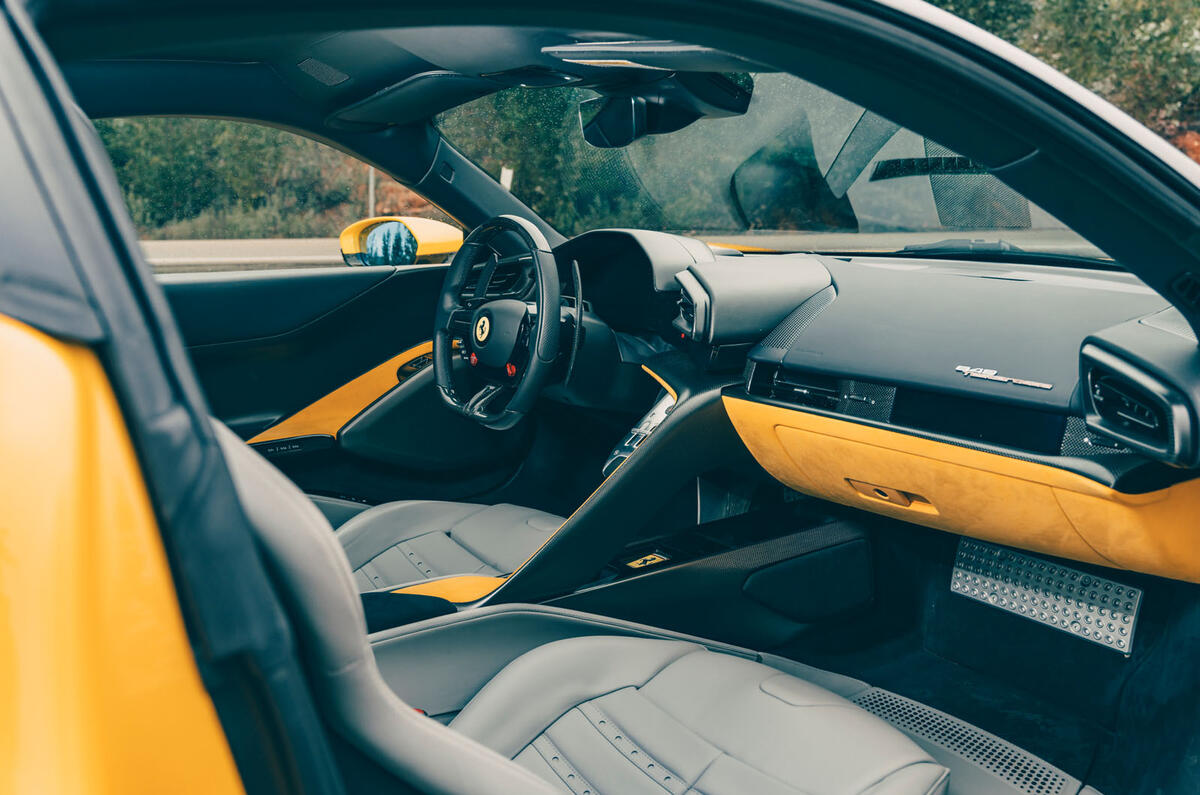
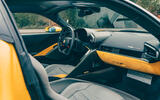
The 849's interior represents an effective reworking of the SF90's cockpit: same size, still two seats and still a really sound driving position but with two major ergonomic advantages.

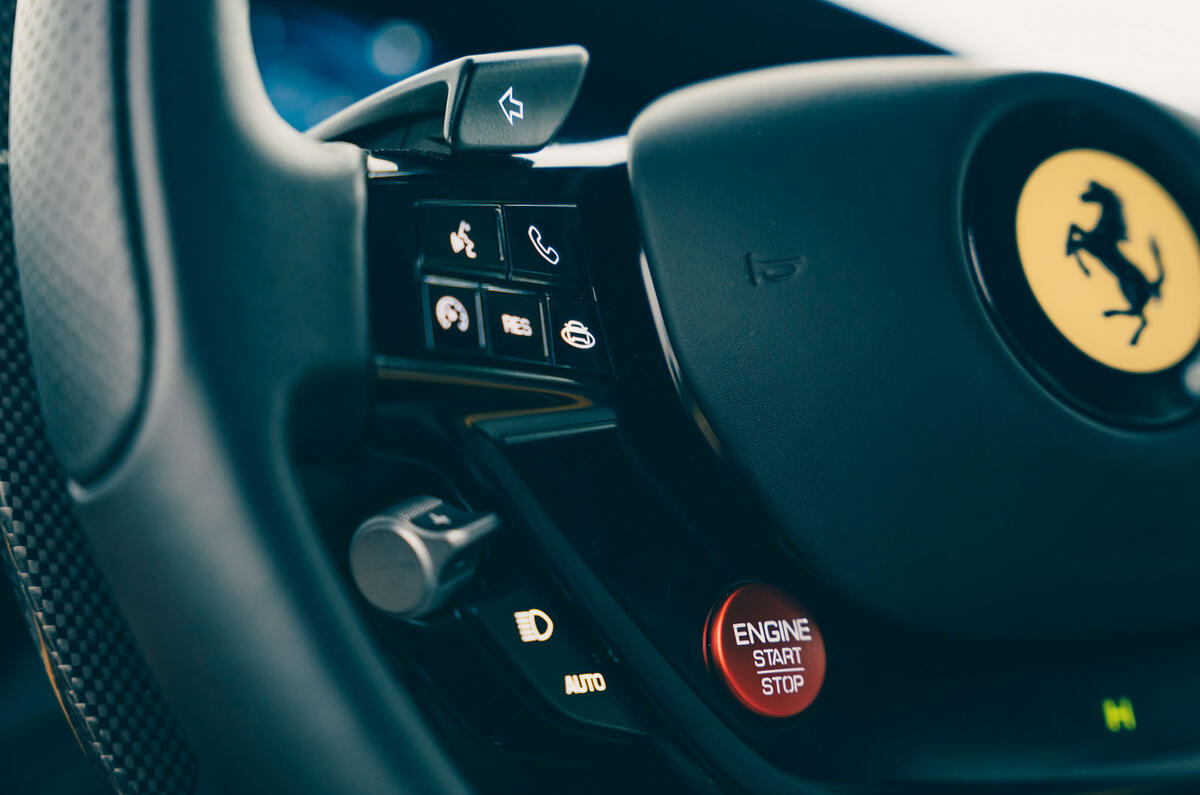
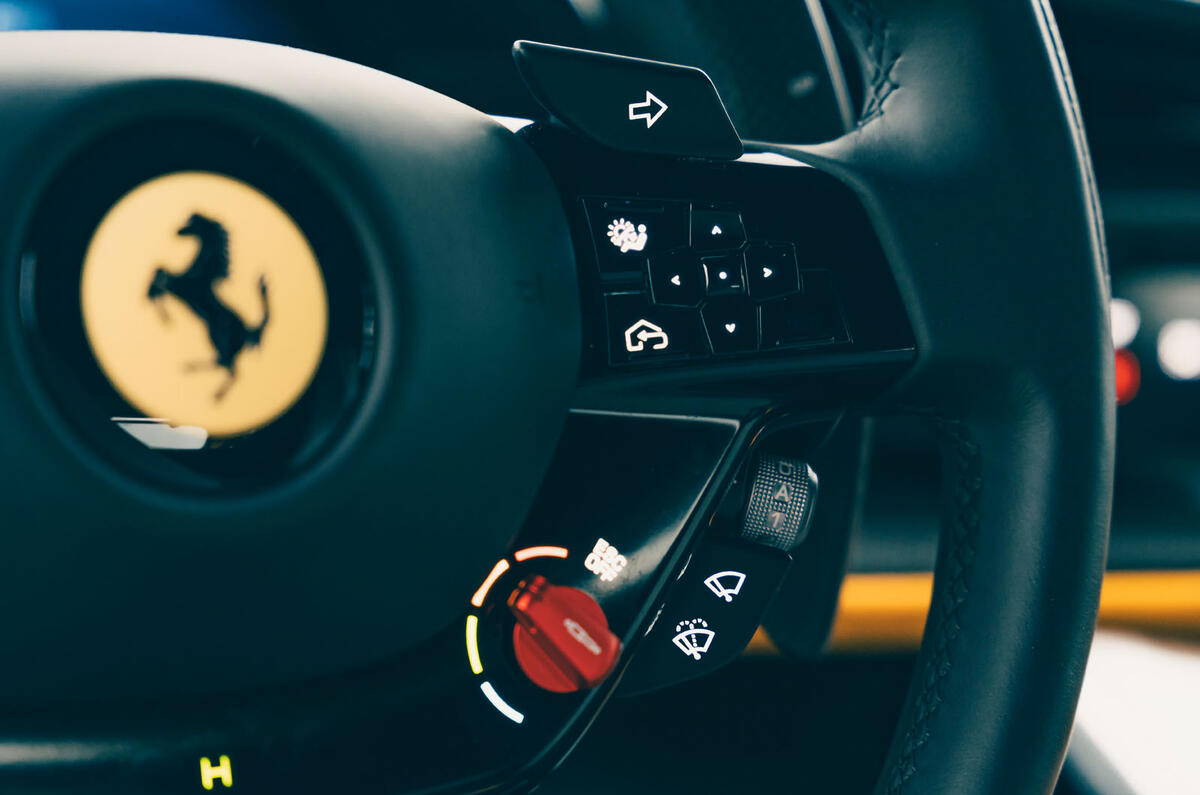
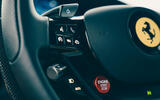
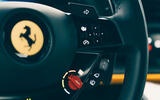
The first is the return of proper physical buttons to the steering wheel owing to overwhelming customer feedback. This is a new Ferrari policy that began on the F80 and has already been followed by the Amalfi.

Secondly is a new bar wrapping around the edge of the division of driver from passenger: stylish by itself but more usefully bringing the gear selector closer to the driver's eyeline. If you're after selecting reverse or wanting to flick from automatic to manual gearbox mode, it's now much easier, I found, than having to divert one's gaze and hand a long way from where they'd like to be while driving.

Otherwise things are good. There's high perceived material quality. Luggage space remains limited to a relatively shallow space beneath the bonnet, mind.

ENGINES & PERFORMANCE

Ferrari 849 Testarossa review 2026 025

Ferrari says the 849's engine makes a more “throaty” noise than it did before in the SF90 and that’s true, plus it has exceptional response even at low revs and spins to 8000rpm gladly.

The performance claims - including a sub-2.3sec 0-62mph time - aren't ones I'm going to get close to on a wet circuit or roads, but there's no doubt this is a car of pretty epic speed and fabulous response.

My overriding impression, though, especially on the track, is of how impressive the transmission is. That’s true even on pure-turbocharged Ferraris, but the electric motor elements introduce a new dimension of rev-matching. I’d be amazed if there’s a more accomplished transmission in operation anywhere.

RIDE & HANDLING

Ferrari 849 Testarossa review 2026 027

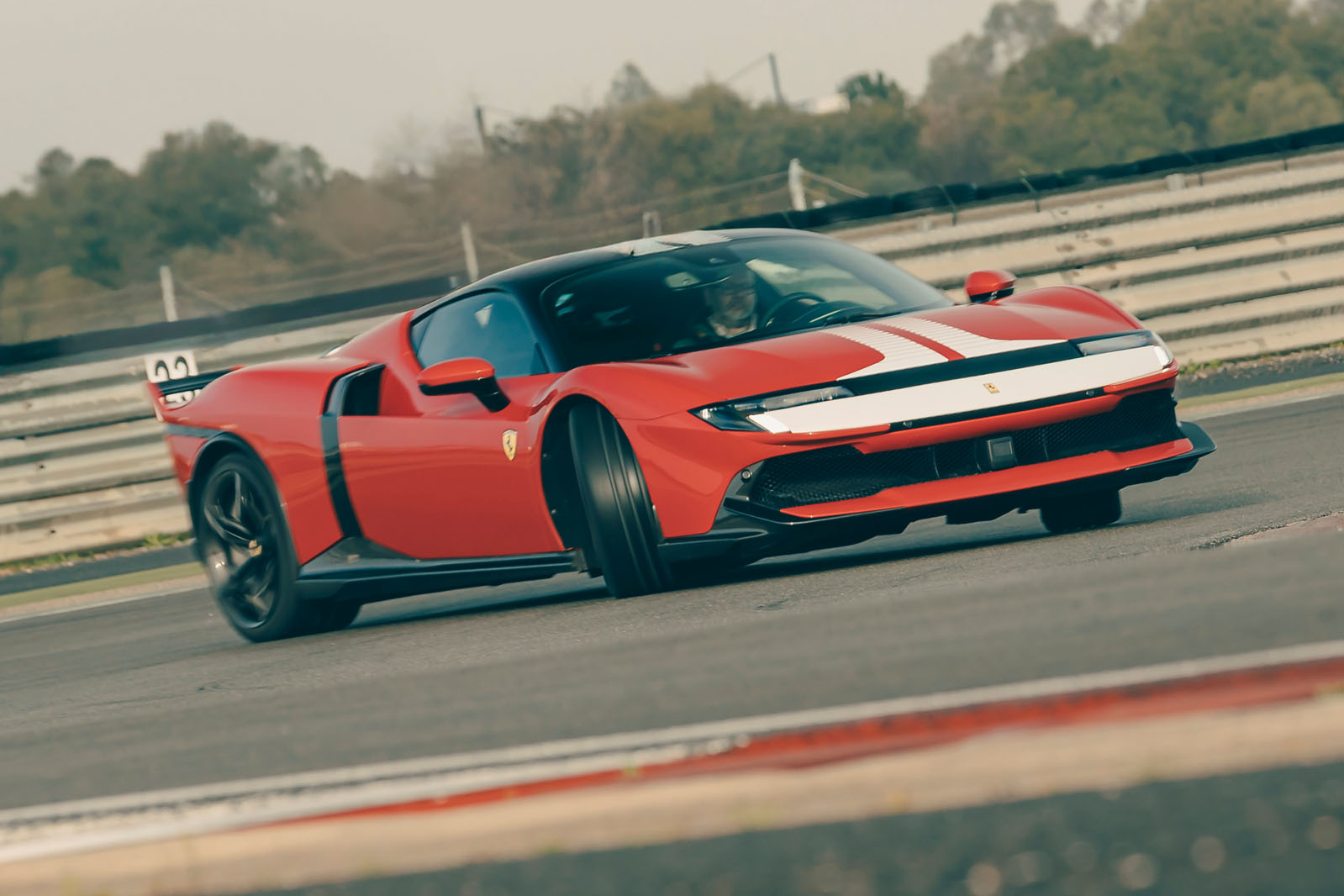
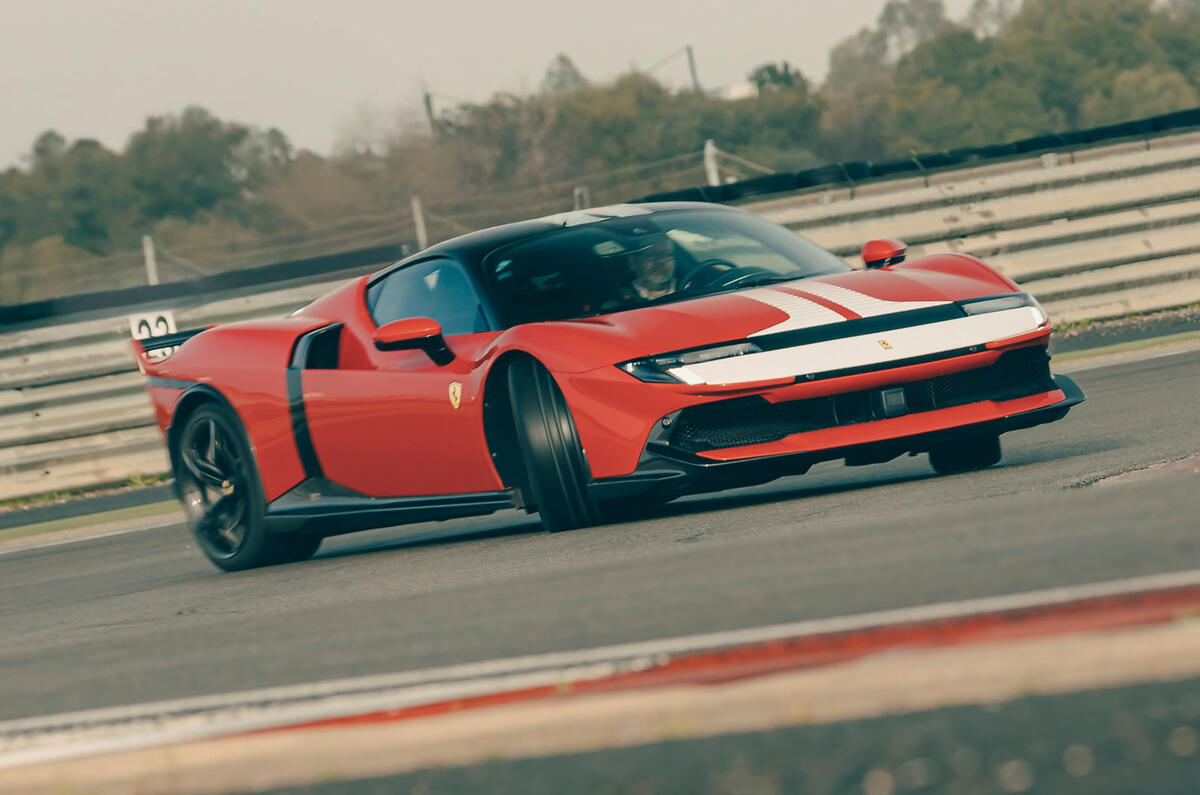
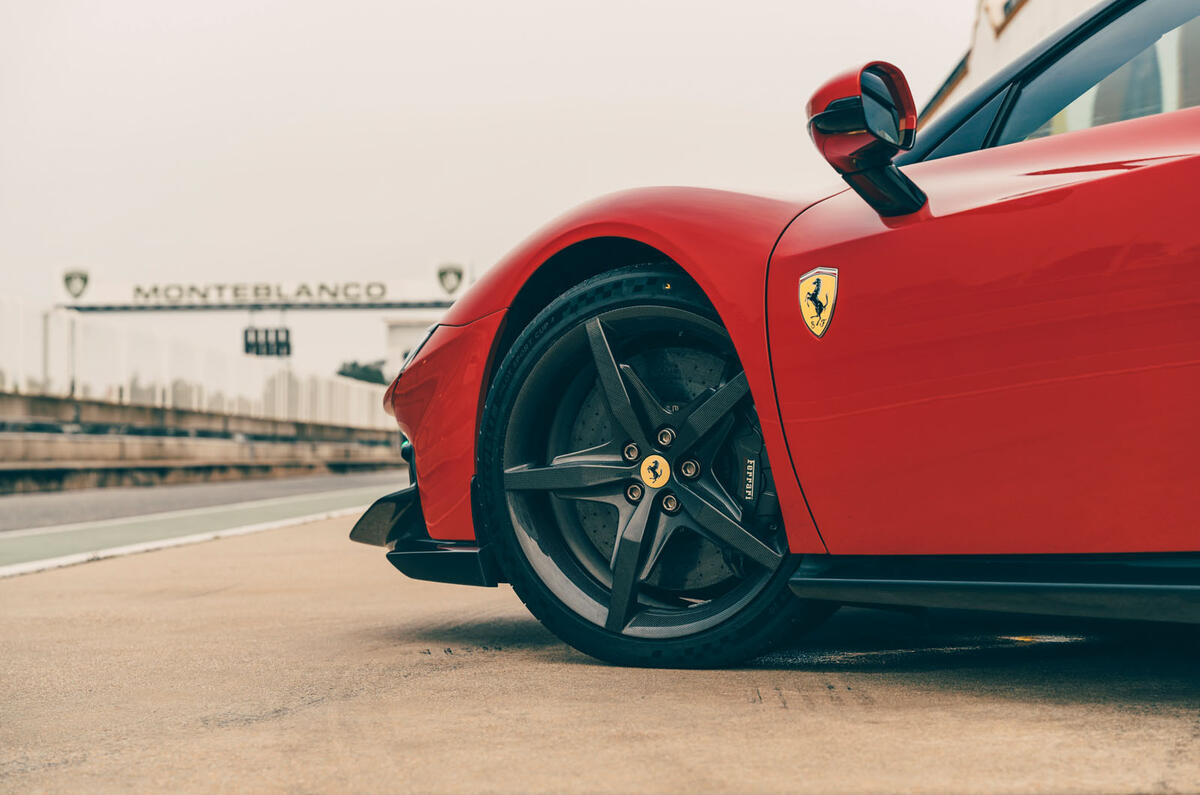
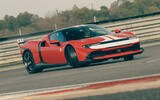
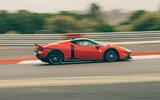
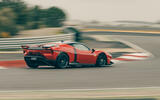
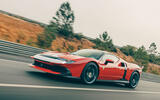
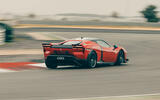
I'm driving two 849s. First the red one (pictured) on circuit, fitted with Michelin Pilot Sport Cup 2 tyres and an Assetto Fiorano package that makes things 30kg lighter than standard and includes extensions on the rear spoiler (weight and downforce numbers are quoted with it equipped), plus Multimatic dampers.

It is a greasy track, which rather limits grip in every direction. And while I find that the 849 is a car that’s more talkative and engaging than the SF90 before it, it isn't afraid to move around – but then it does have over a thousand mostly rear-wheeled horsepower.

The steering, at two-turns between locks, is fast but not nervous. There’s steady-state understeer that very rapidly gives way to oversteer, easily caught but, in these conditions, sometimes a little clumsily, because everything but me is very sharp.

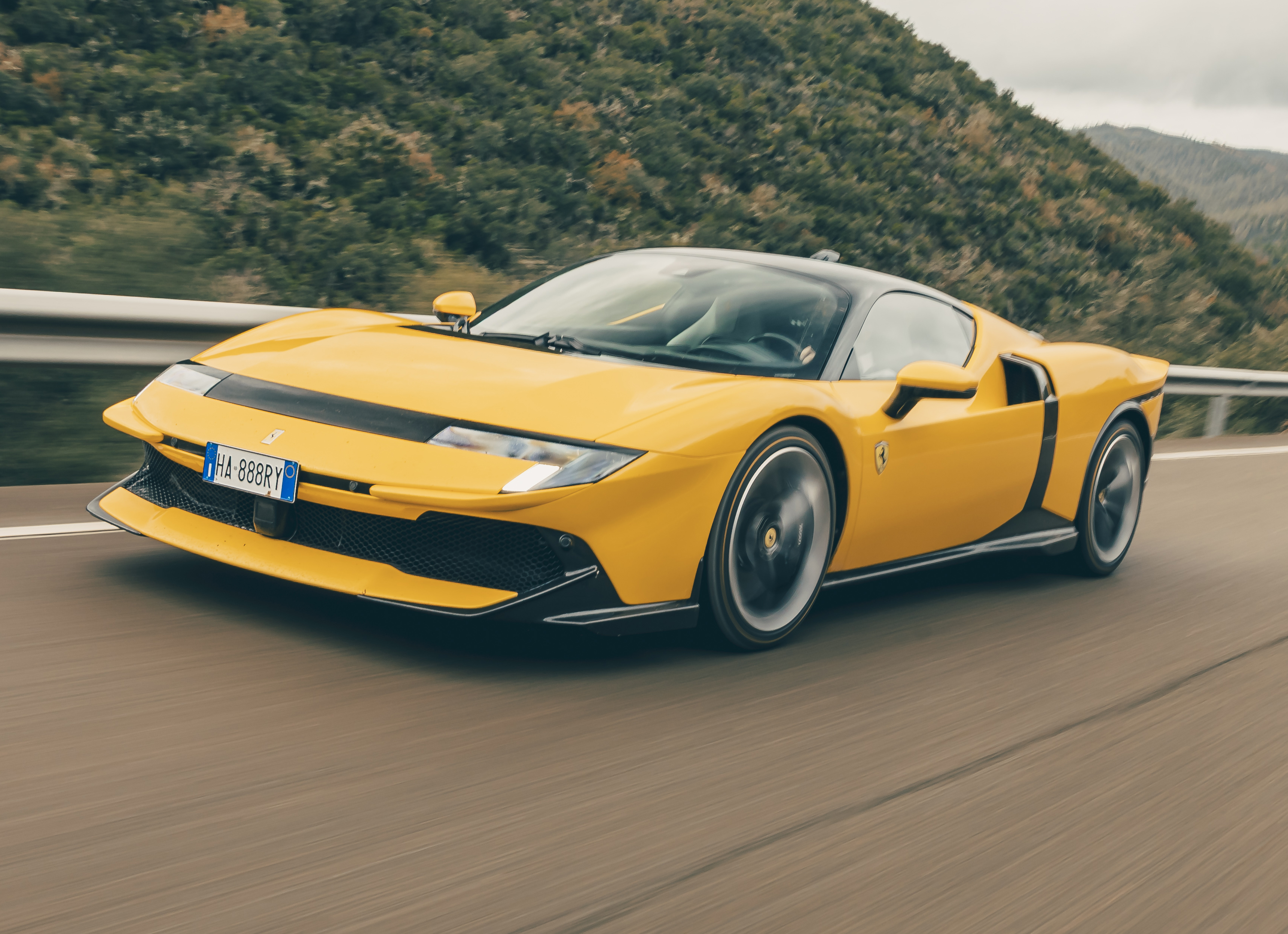
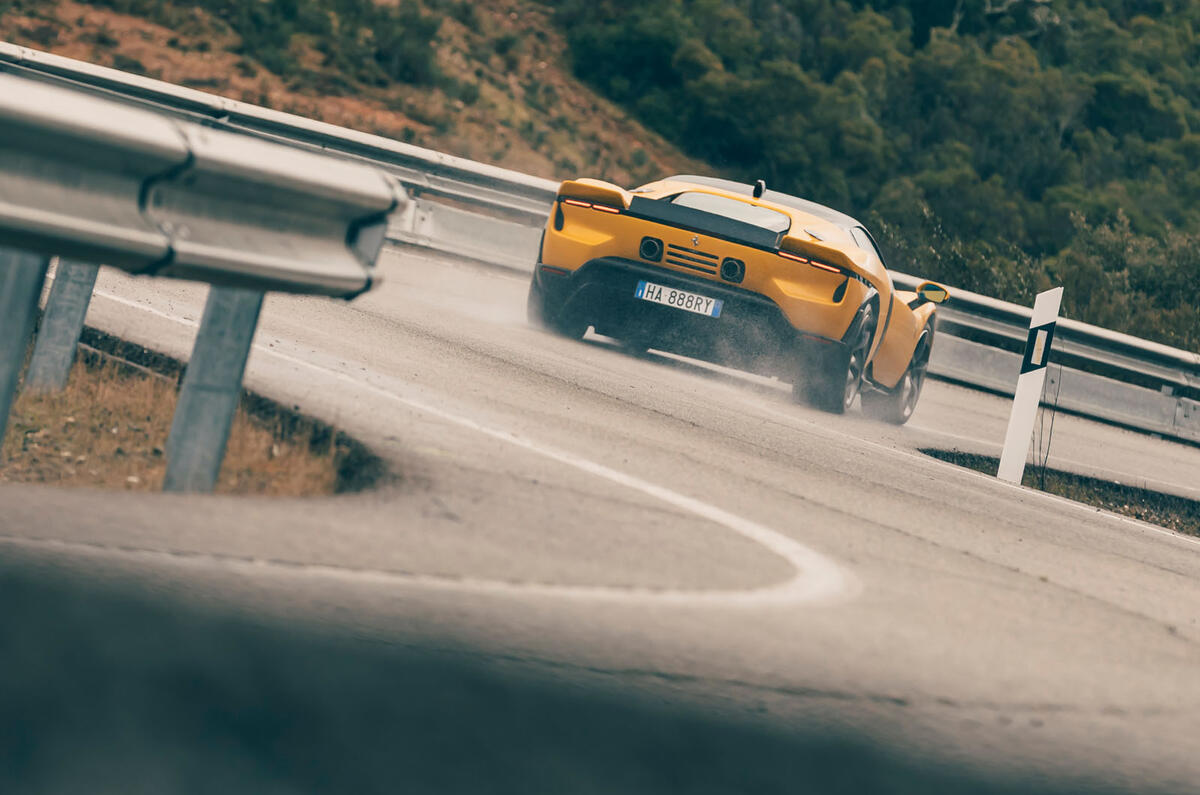
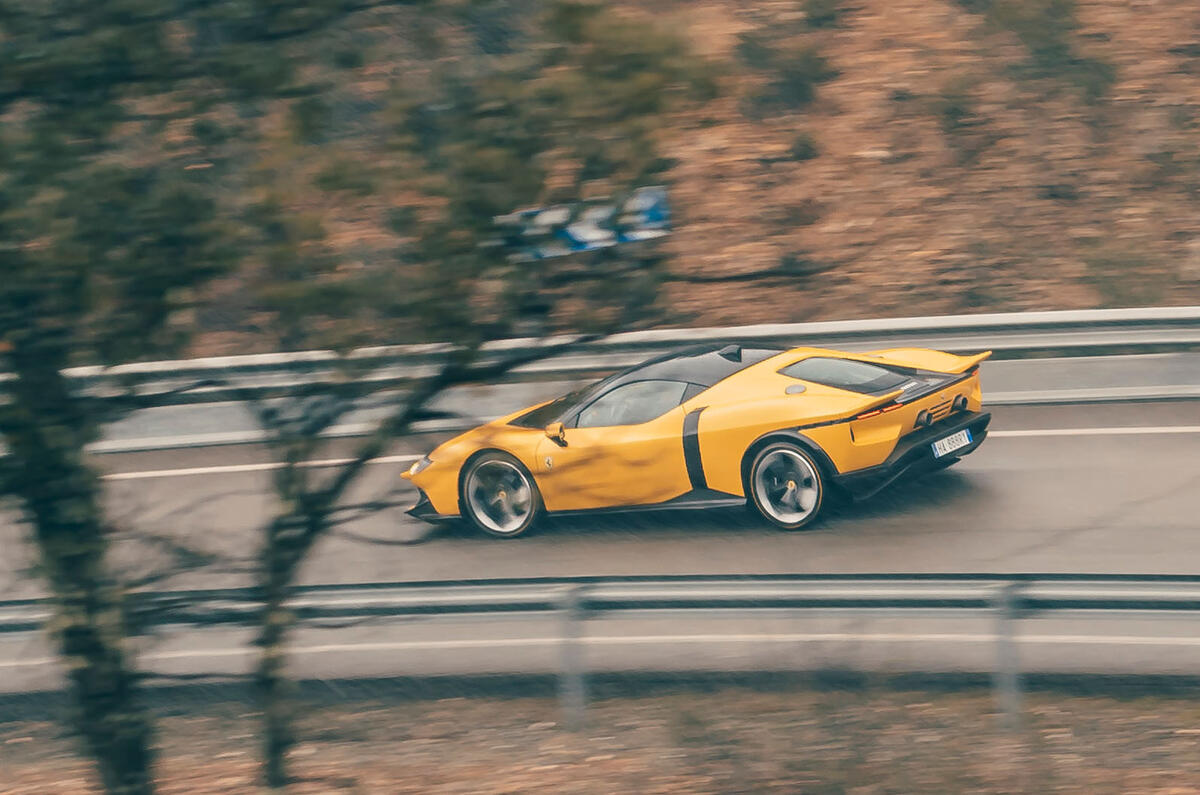
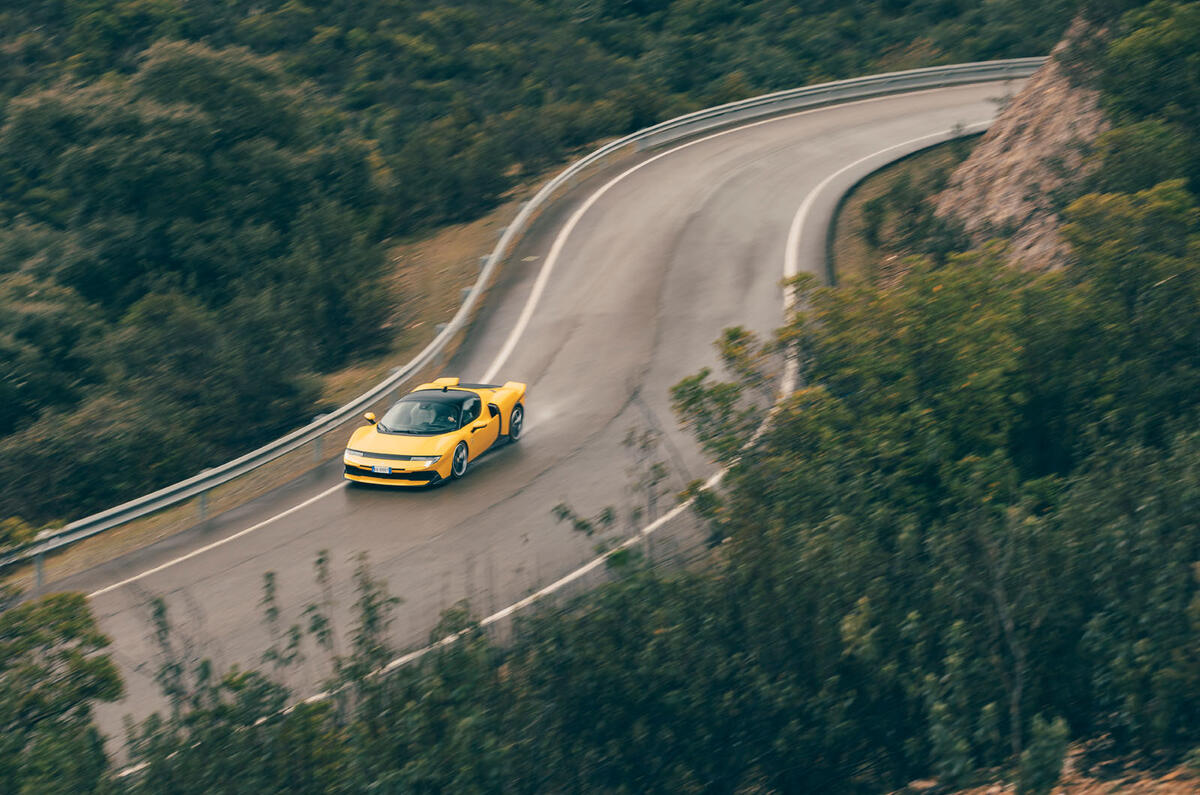
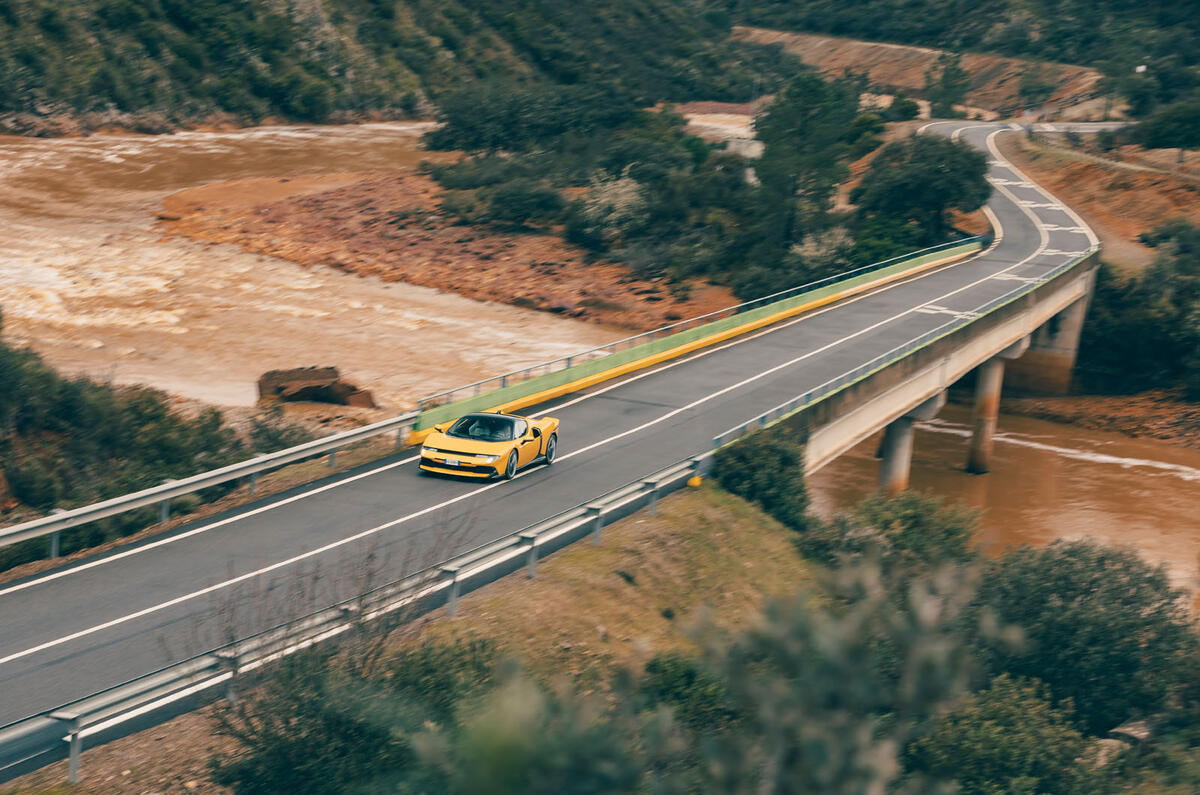
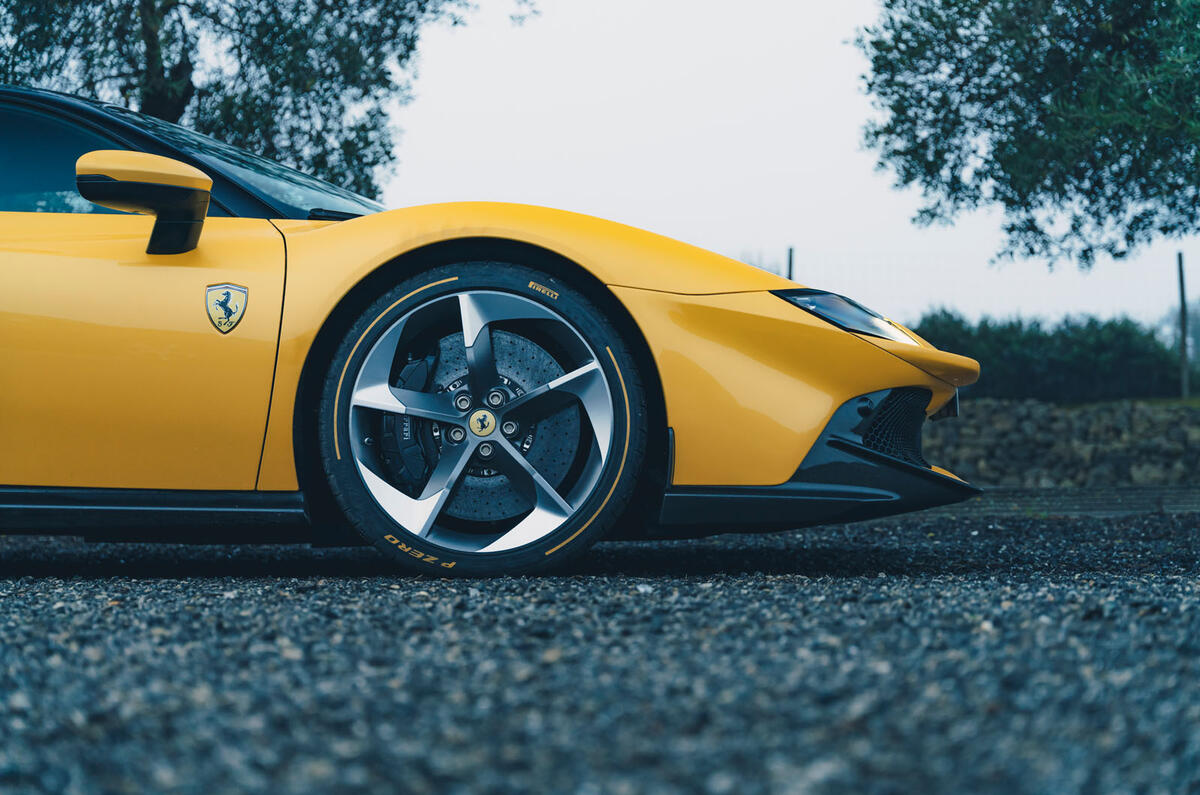
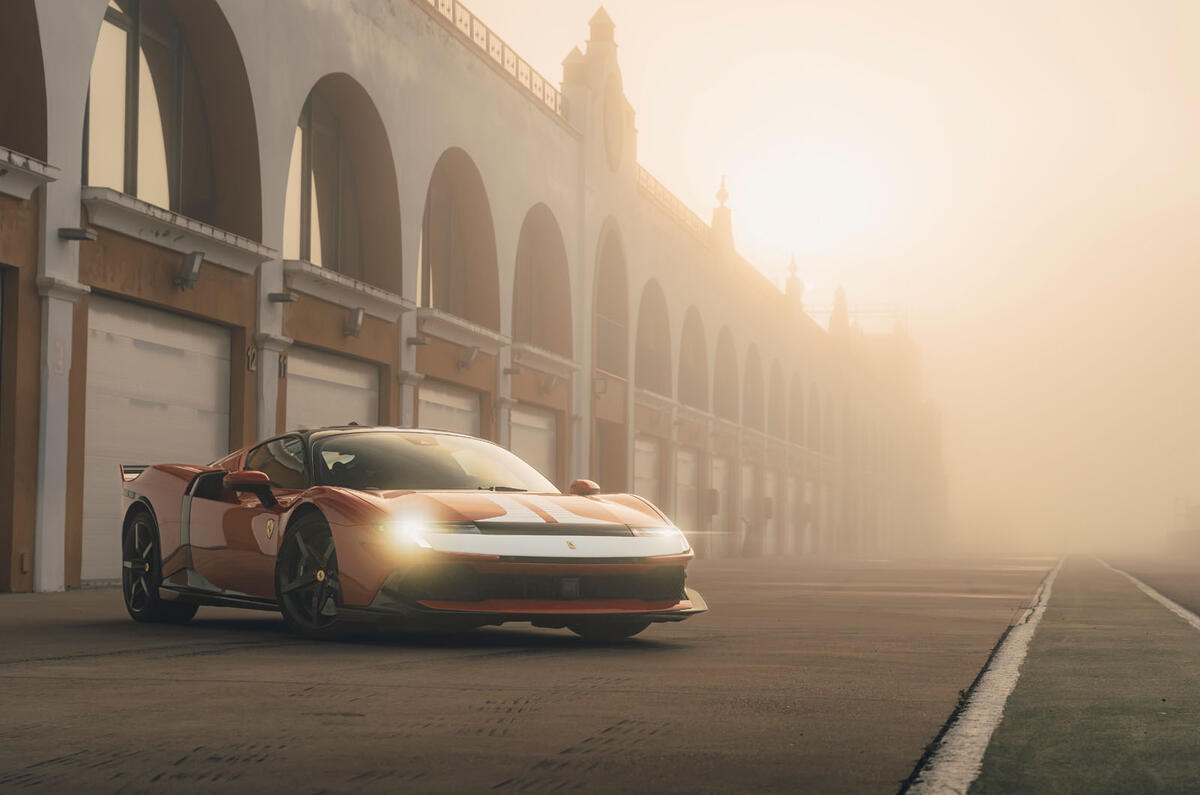
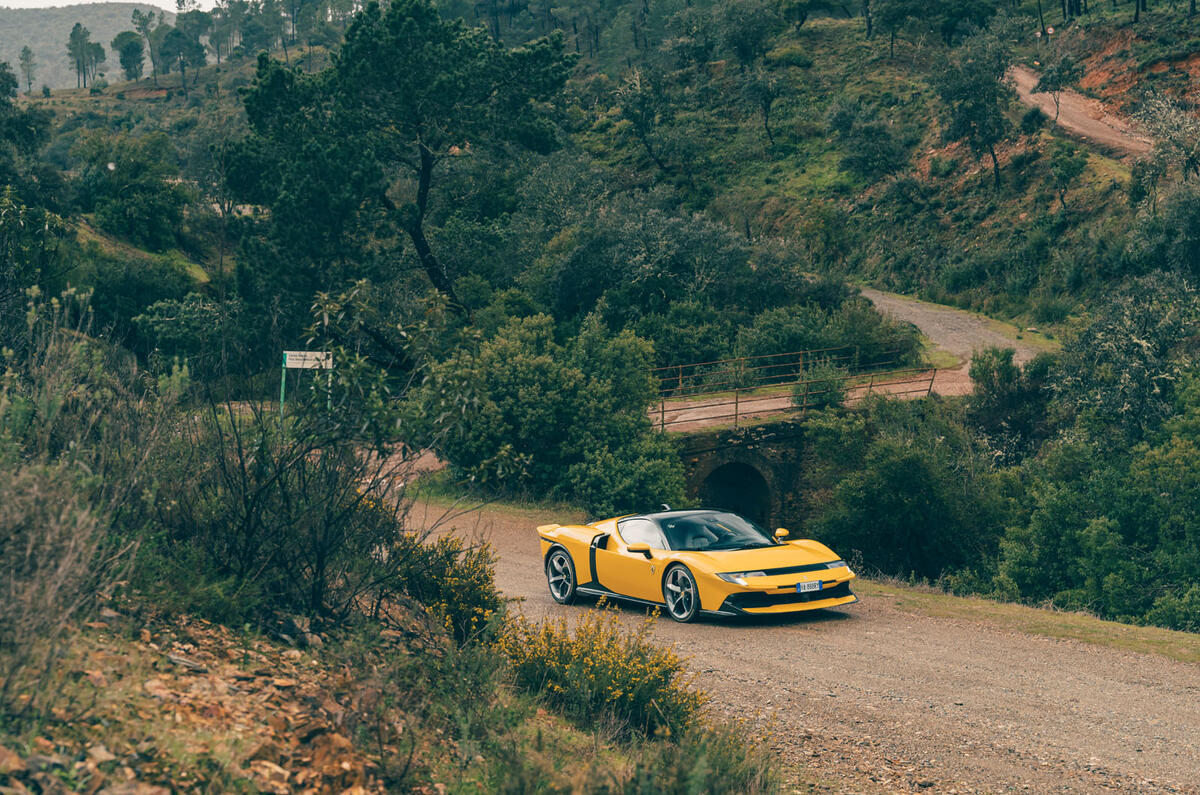
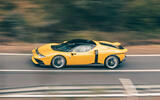
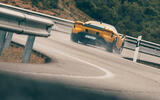
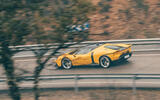
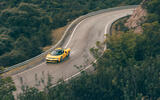
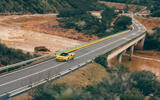
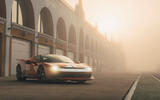
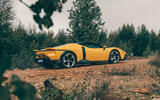
Then I drive the yellow car (pictured earlier) on adaptive dampers and Pirelli P Zero R tyres and with no Fiorano performance pack on the road.

It’s still damp, wet at times, but without the compulsion to keep up with pace car driven by a hot-shoed Italian, I find easer to get into a real rhythm. All modern Ferraris ride well and this one is no exception, particularly if you press the ‘bumpy road’ setting on the steering wheel’s rotary manettino switch – still the industry’s easiest and best way to change drive modes. (An obligatory similar compliment is owed the column-mounted gearshift paddles too, by the way.)

With the dampers in soft or firm mode, body control is great, and even on bad roads and whumps it doesn’t feel to me like it will crunch its underbody.

The steering is communicative, quick and light enough to make a big car feel more agile but not hyperactive. And because I’m driving further from the outright limit, I guess the electrickery is shuffling power around less frantically, and the car feels really natural.

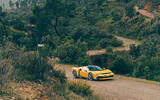
I take it for a strop up a stretch of road that would make a good hillclimb stage and afterwards wonder what I’d change. Not a lot is the short of it. I’d like a bit less weight, which isn’t uncommon in new sports cars, but it disguises its masses well, and they’re centred around the middle so don’t impact agility like, say, a front-mounted V12 would. And in terms of engagement and involvement it felt like a natural-handling, mid-engined, secure, rear-driven supercar.

It has been a while since I drove an SF90, but I don’t remember being this entertained.

MPG & RUNNING COSTS

Ferrari 849 Testarossa review 2026 001

Some cars wear their PHEV credentials overtly greenly. The 849, like the SF90 before it, doesn't do so. This is officially a 30.4mpg, 212g/km hypercar, and I suspect that if you charged it regularly and used it on the road modestly, it might actually return that. But use the 4.0-litre V8 to its full, even with electrical assistance, and it won't. Really the electrics are there to aid performance – and that they do.

Running costs on any Ferrari are high. As I write, the 849 is priced at a little over £400,000 on the road before options, with the Spider convertible at a tad over £440,000. This is 'only' around 7% more expensive than the SF90, and I think it's more than 7% better.

VERDICT

Ferrari 849 Testarossa review 2026 040

The introduction of the 849 hasn't just made sense of this one model but also left the Ferrari range as good as I’ve ever known it. Instead of the old 812 Superfast being a bit too hyper, the 12Cilindri has matured into an expressive super-GT. 

Meanwhile, the perhaps overly clinical SF90 has matured too, into a car whose inherent mid-engined performance remains undimmed yet whose handling and engagement has been turned up so that this is a car that exhibits a genuinely warm personality.

They said it was complex without feeling complicated to drive; I think that this is now true.


Matt Prior

Matt Prior
Title: Editor-at-large

Matt is Autocar’s lead features writer and presenter, is the main face of Autocar’s YouTube channel, presents the My Week In Cars podcast and has written his weekly column, Tester’s Notes, since 2013.

Matt is an automotive engineer who has been writing and talking about cars since 1997. He joined Autocar in 2005 as deputy road test editor, prior to which he was road test editor and world rally editor for Channel 4’s automotive website, 4Car. 

Into all things engineering and automotive from any era, Matt is as comfortable regularly contributing to sibling titles Move Electric and Classic & Sports Car as he is writing for Autocar. He has a racing licence, and some malfunctioning classic cars and motorbikes.