

8

Has Nissan rekindled the ’90s magic for its sixth-generation supermini?

The diminutive Nissan Micra is a car whose significance is easy to overlook in the late 20th- and early 21st-century development of the UK car market.

As the first-generation model, it helped to cement within the British consciousness the reputation for reliability, robustness, longevity and value of the volume-selling Japanese small car. And having done that, it became a British-made ‘transplant’ car itself, moving into production at Nissan’s Washington plant on Wearside for its popular second generation. This was the bug-eyed Micra supposedly beloved of pensioners, learner drivers and their driving instructors – an image that the car is still associated with to this day.

I hear early sketches made the Micra and 5 a lot more different than they ended up looking: the Renault lower and more classic hatchback, the Nissan more mini-SUV. Money probably got in the way somewhere along the line. It’s a shame, but no tragedy.

Just as the reimagined Mini came along, the noughties-era, third-generation Micra aimed to prove that the car could be desirable, too. It became something of a technical pioneer and fashionista.

But then the Micra’s fortunes changed. It was supplanted on Nissan’s Sunderland production line by the Juke; and the Micras that followed, imported as they were first from Thailand and then from France, struggled to emulate the sales of their forebears. The essence of the car’s identity was, if not lost forever, then certainly misplaced.

Time for Micra number six, then. The ‘K15’ becomes the first electric Micra, in anticipation of the Euro 7 emissions regulations that its maker expects to make the business case for combustion-engined superminis unviable.

Advertisement
Back to top

Built in Douai, France, it is the new sibling model of the popular Renault 5. That much takes little more than a momentary glance to realise. So what will the scrutiny of a full Autocar road test reveal about it?

DESIGN & STYLING

6
NIssan Micra review 2026 002

Nissan’s long history of collaboration with Renault is what allowed the Mk5 Micra a return from the wilderness, when it was spun off the fourth-generation Renault Clio a decade ago. So the idea of a Micra that’s very closely related to its opposite number from Renault isn’t new.

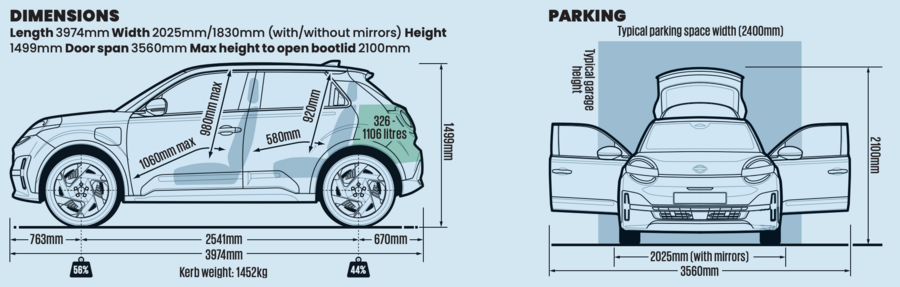
Even so, it has been stretched even further with this ‘K15’ version. Built on what was until recently known as Renault’s Ampr Small platform, the Micra is from a technical standpoint meaningfully no different from a 5. Unique bumpers front and rear make for slightly greater overall length, but it is almost identical on width, wheelbase and height – and it weighs almost the same too. So similar are the two cars, in fact, that the Nissan can simply adopt the crash test results of the Renault wholesale; the evidence is clear to be seen on the Euro NCAP website.

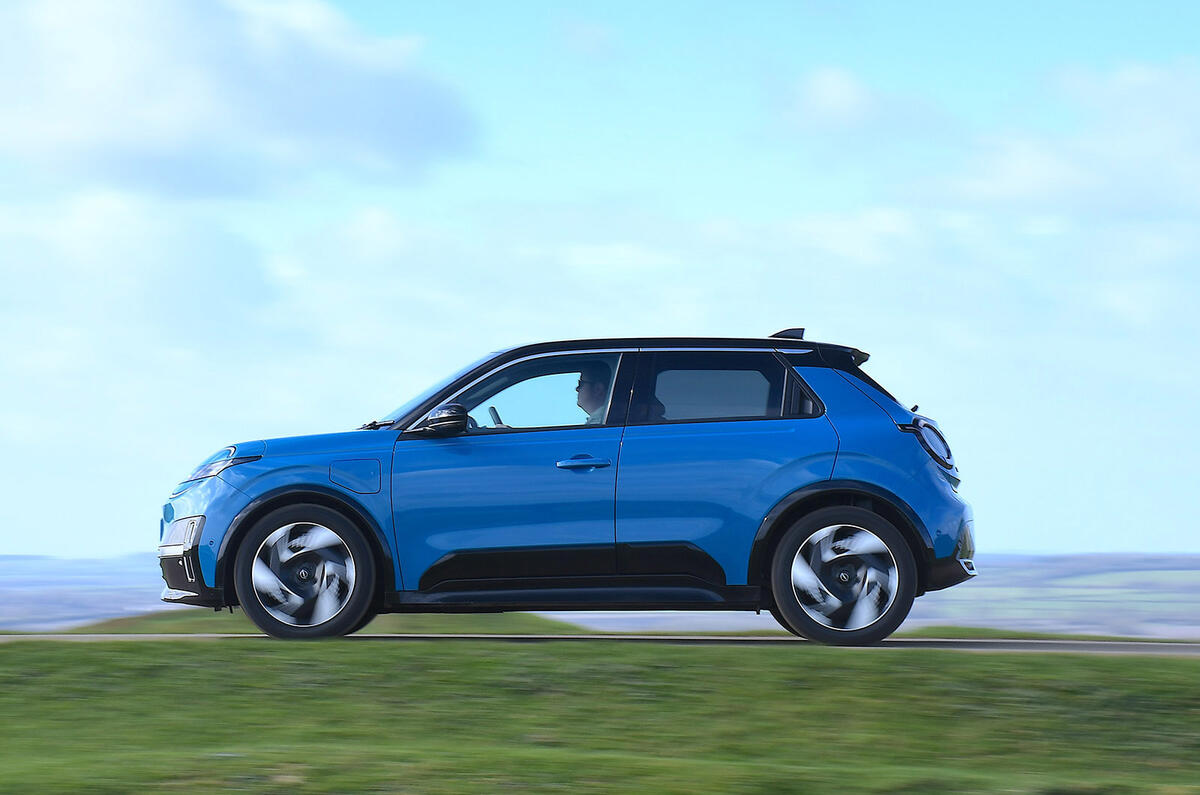
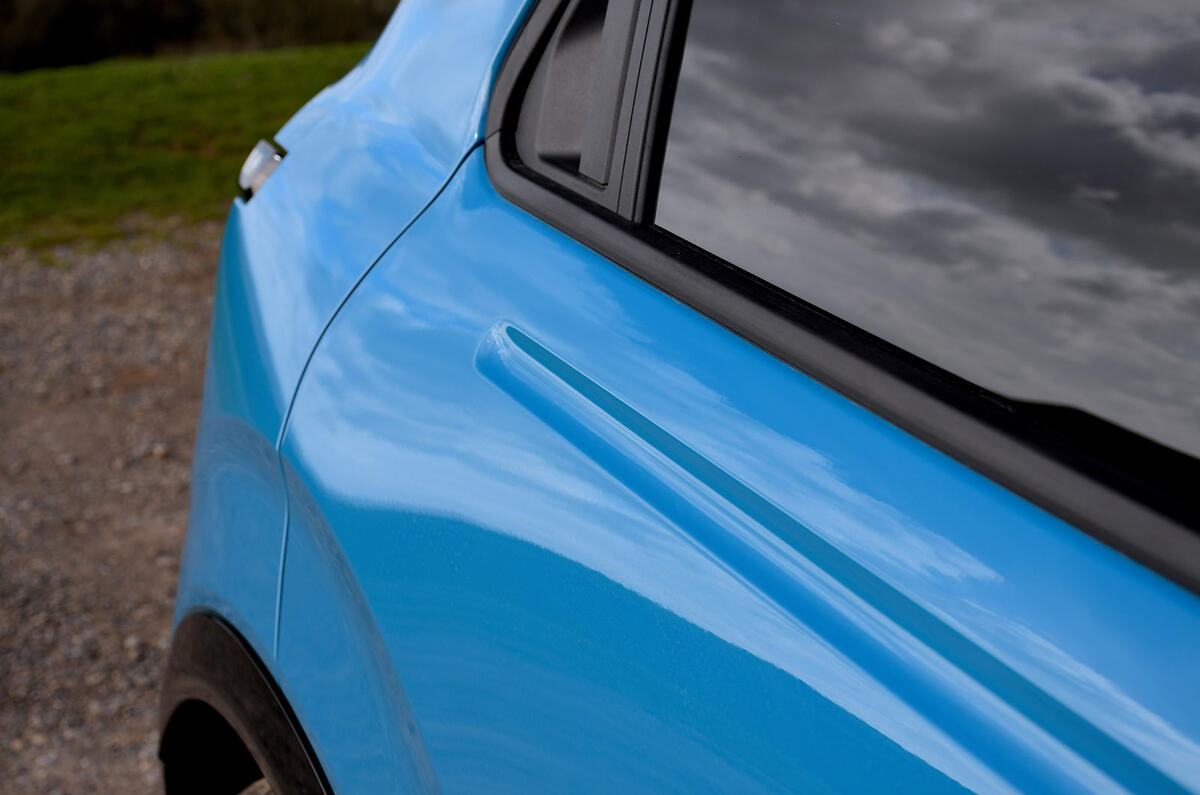
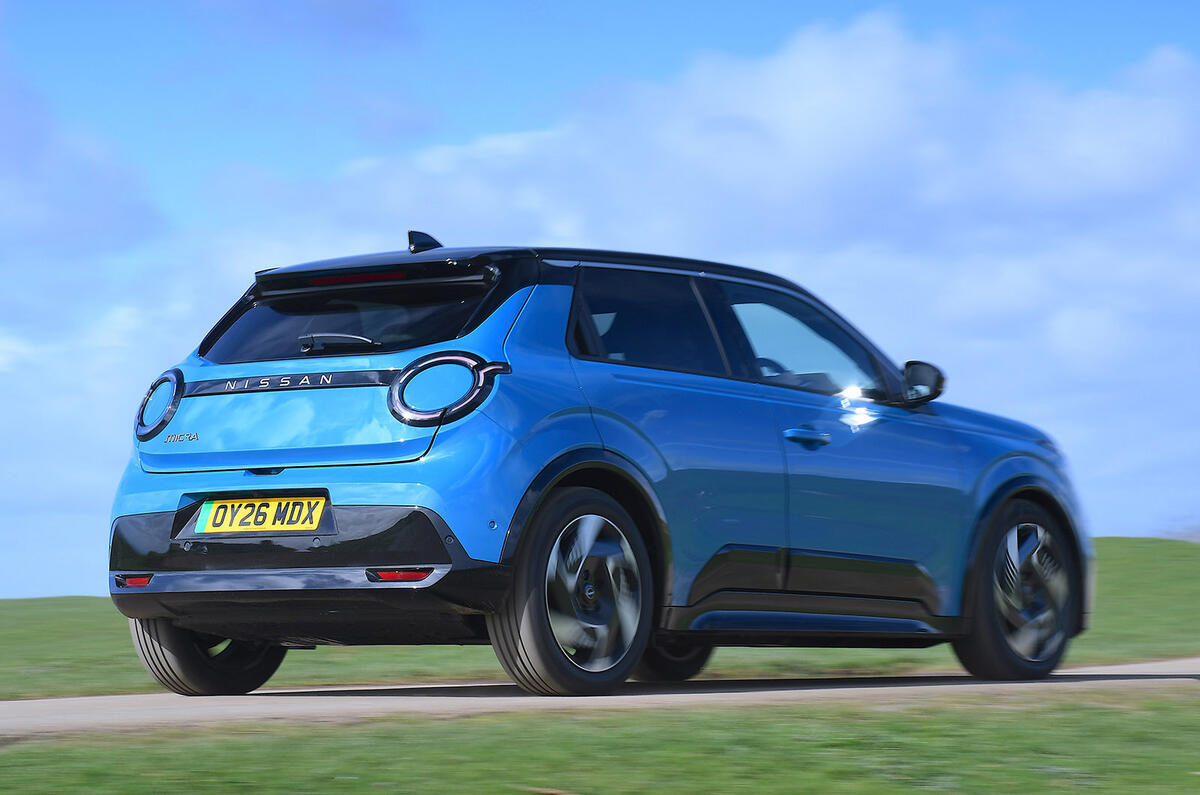
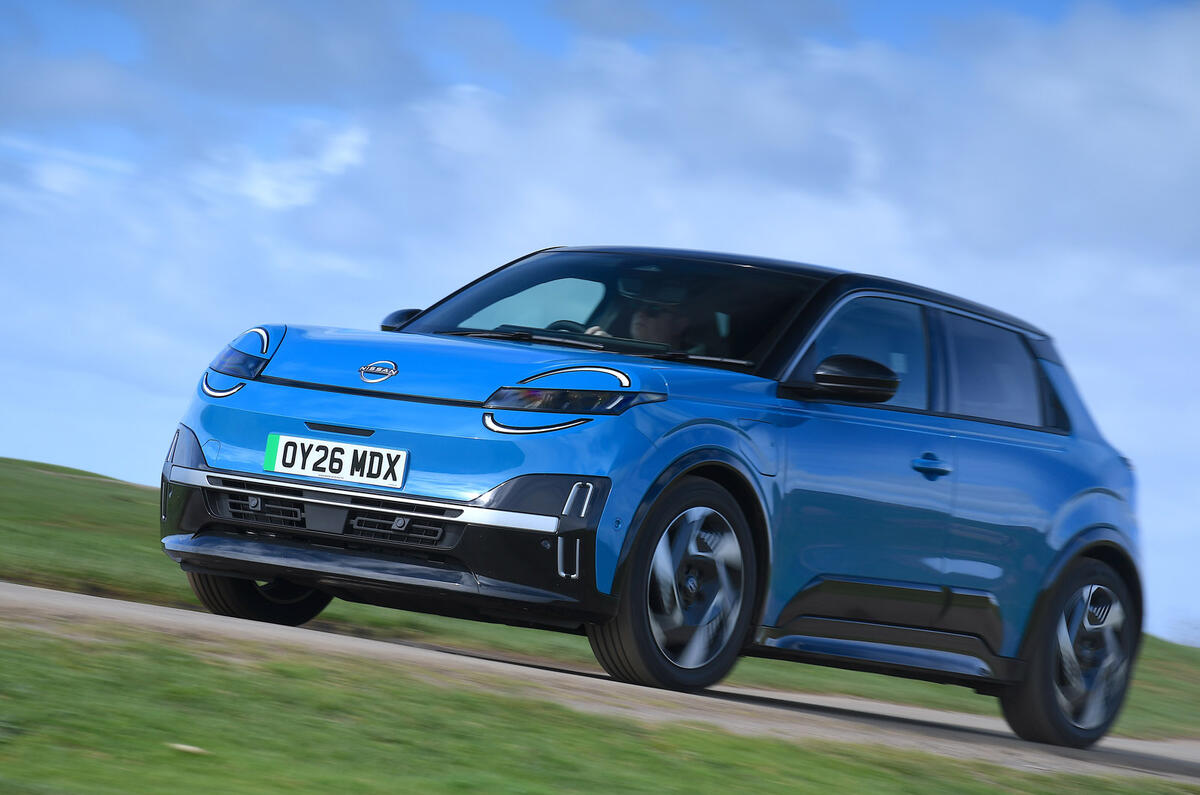
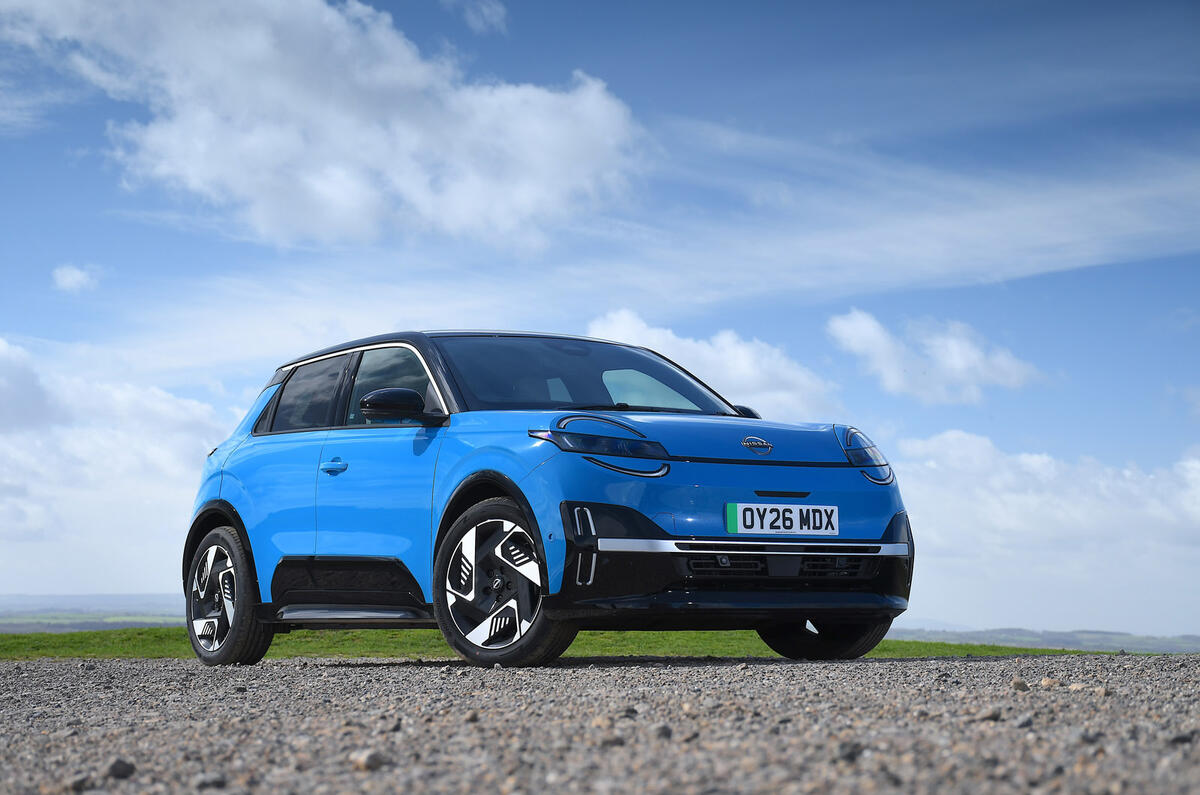
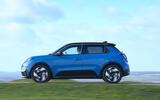
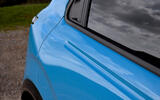
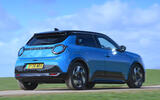
Nissan’s designers call the styling feature line running just below the car’s waistline the ‘ice cream scoop’. Presumably because it looks like the trail such a thing leaves behind. It’s fun and unusual, but it’s doing more heavy lifting than it should be.

Which makes for a familiar technical story. Like the 5, the Micra uses a steel unitary chassis; has a front transverse-mounted, separately excited drive motor making either 121bhp or 148bhp and front-wheel drive; features all-independent suspension front and rear, under steel coil springs; and is powered by an underfloor drive battery of either 40kWh (lithium iron phosphate) or 52kWh (nickel manganese cobalt) capacity.

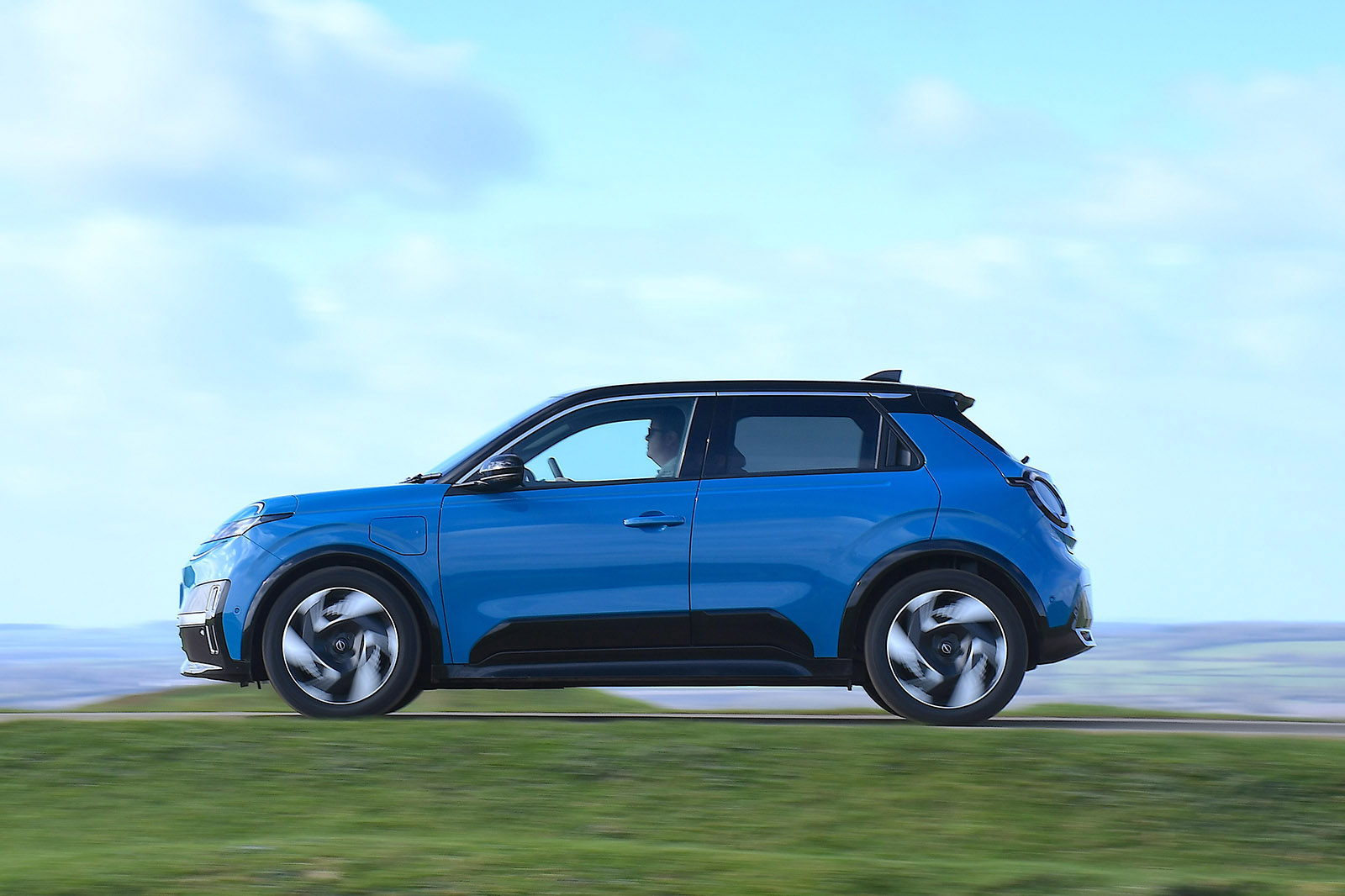
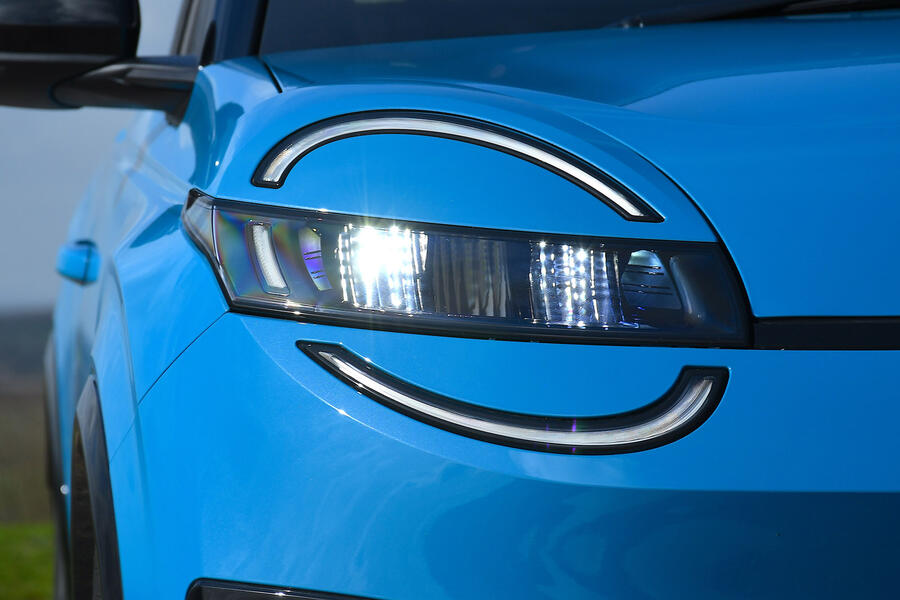
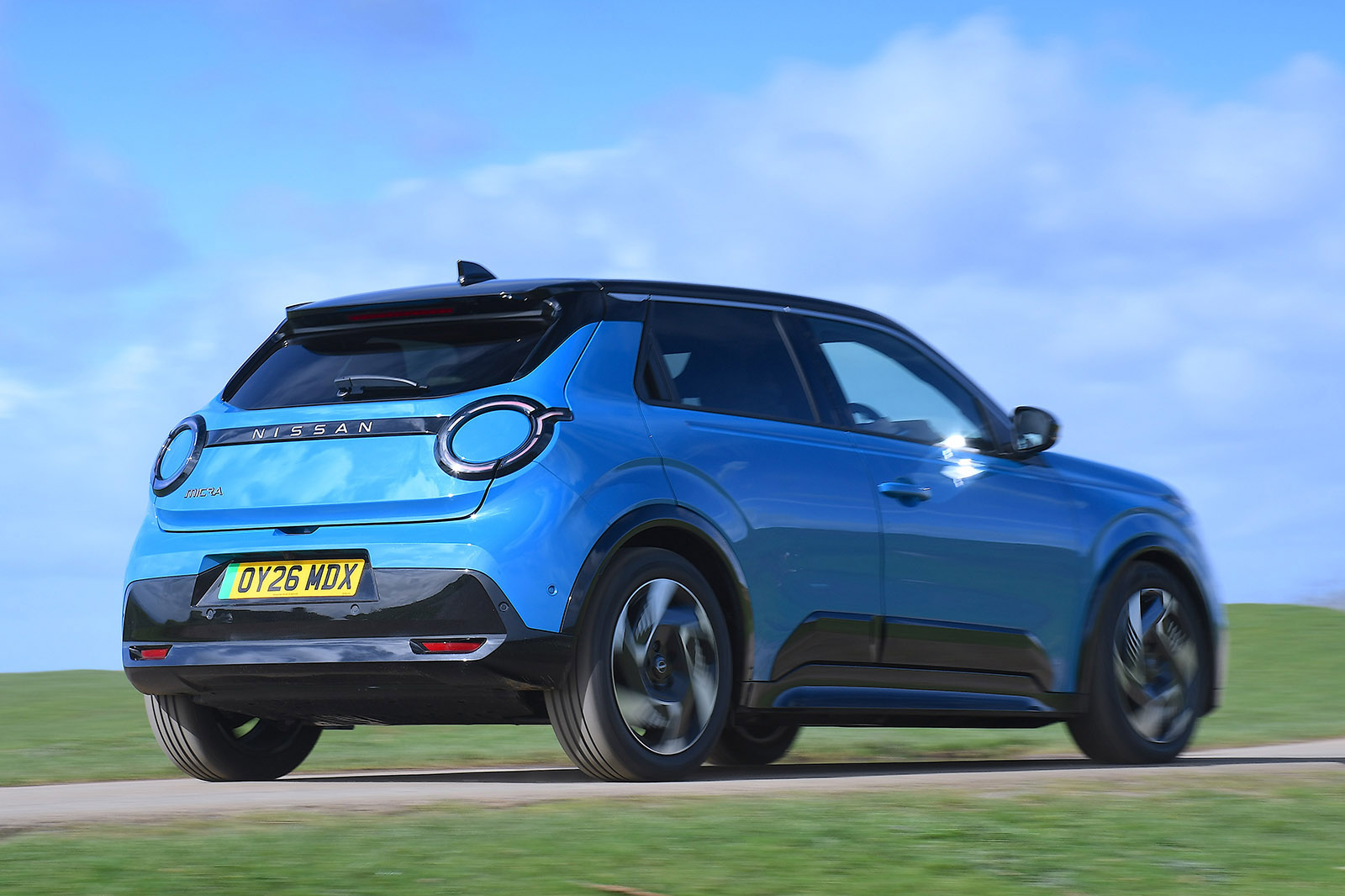
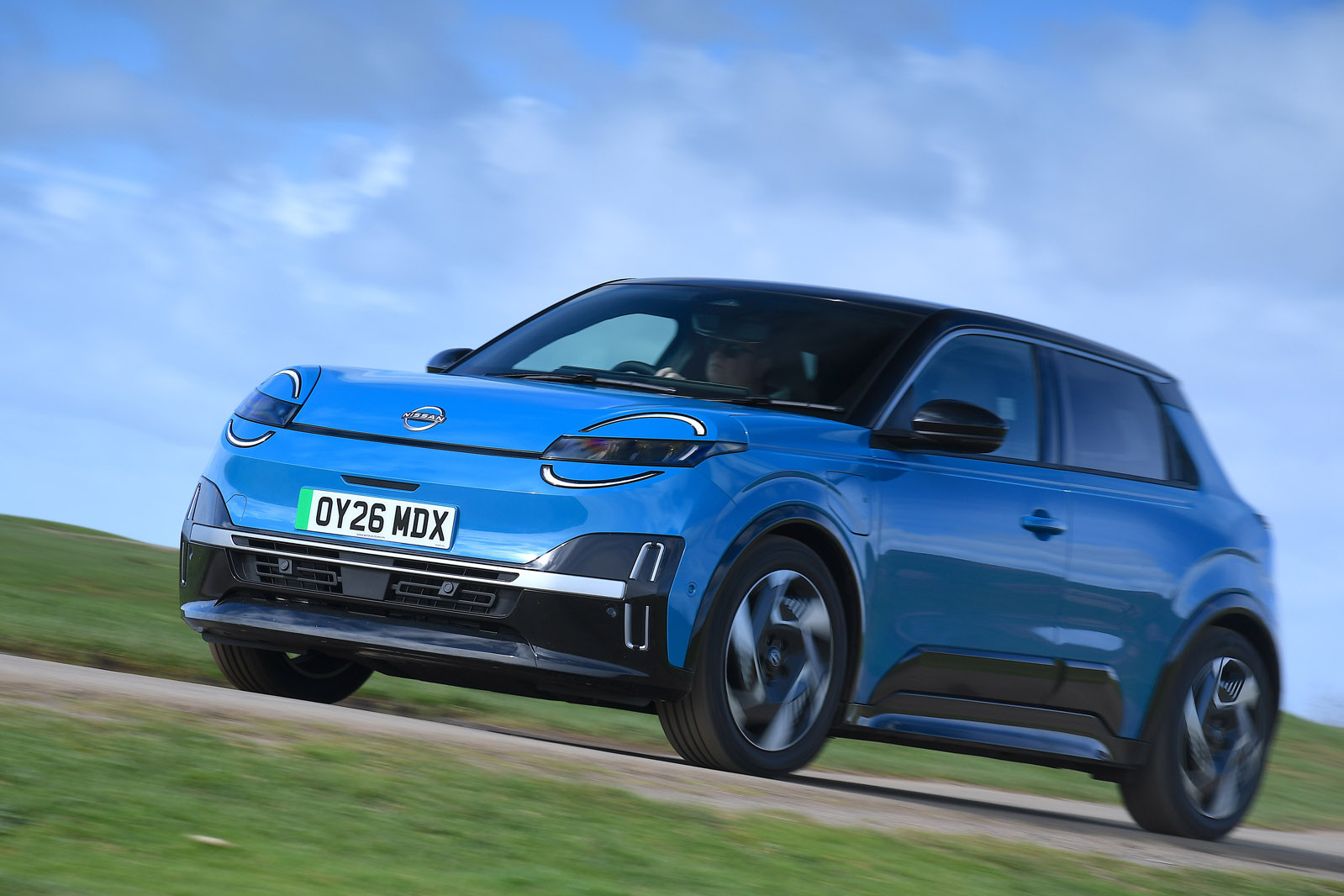
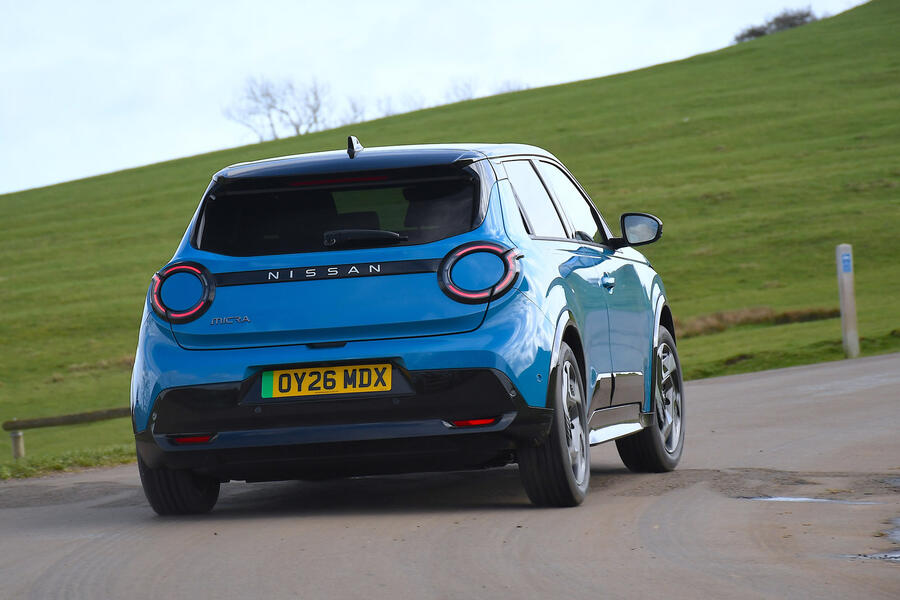
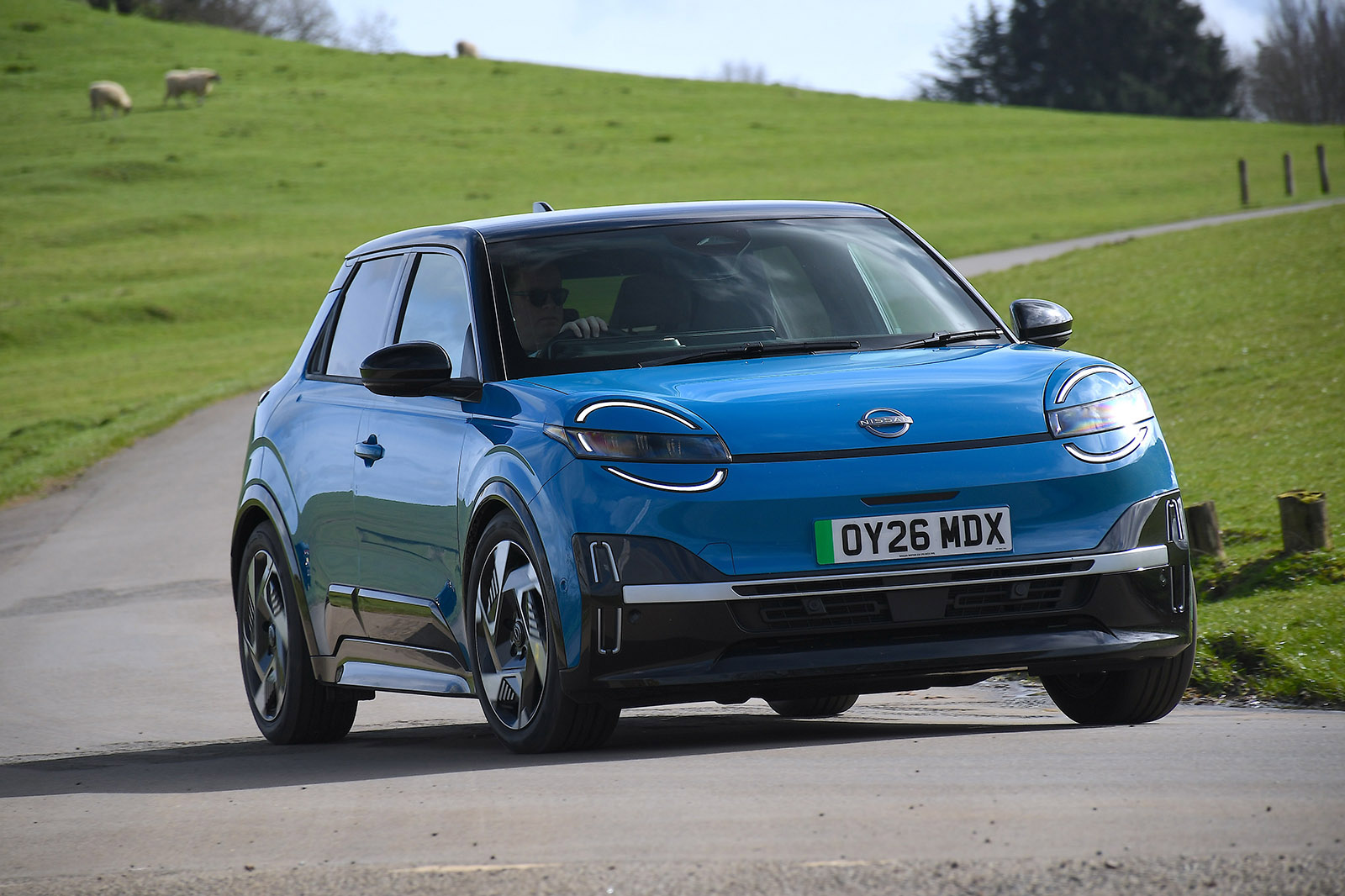
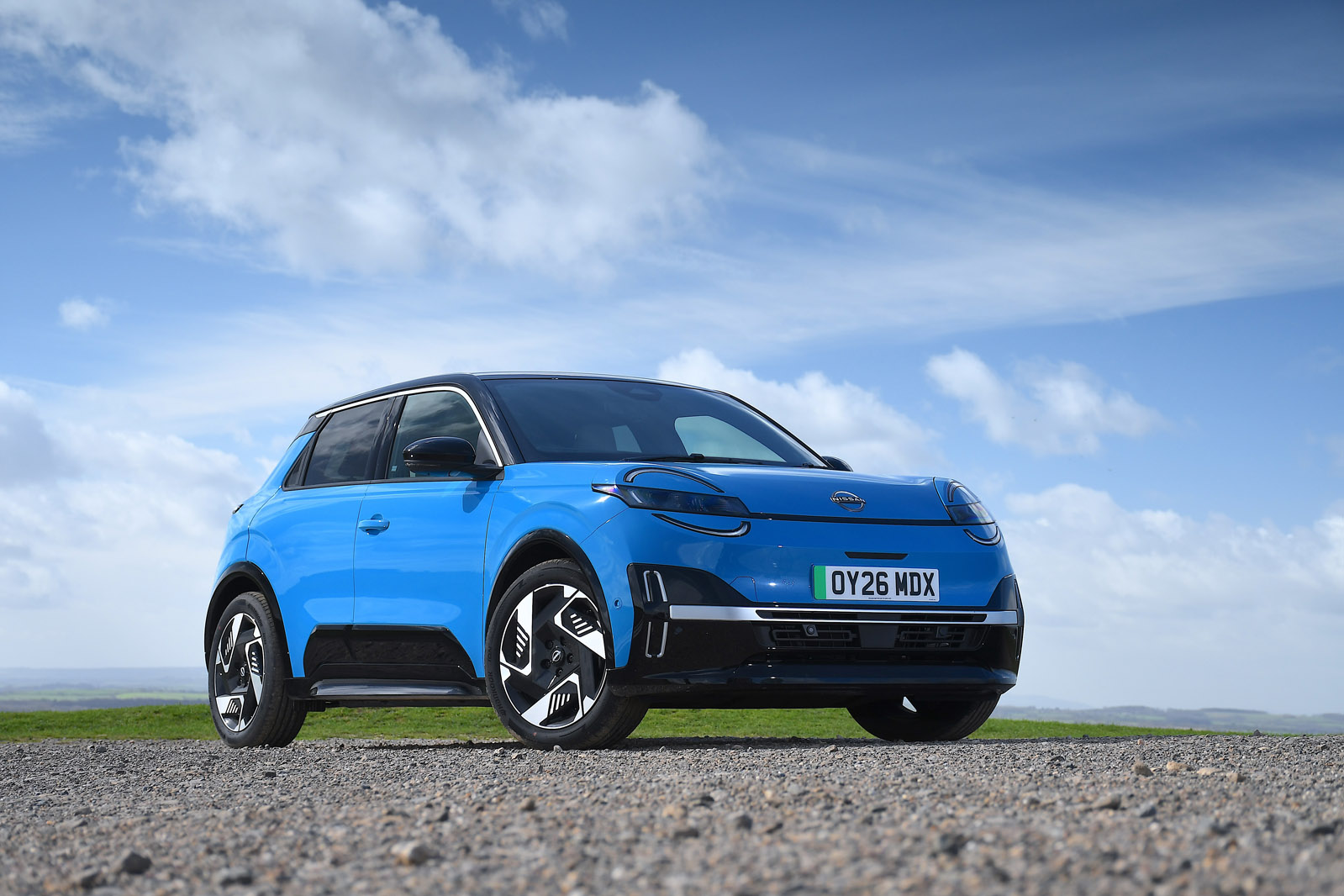
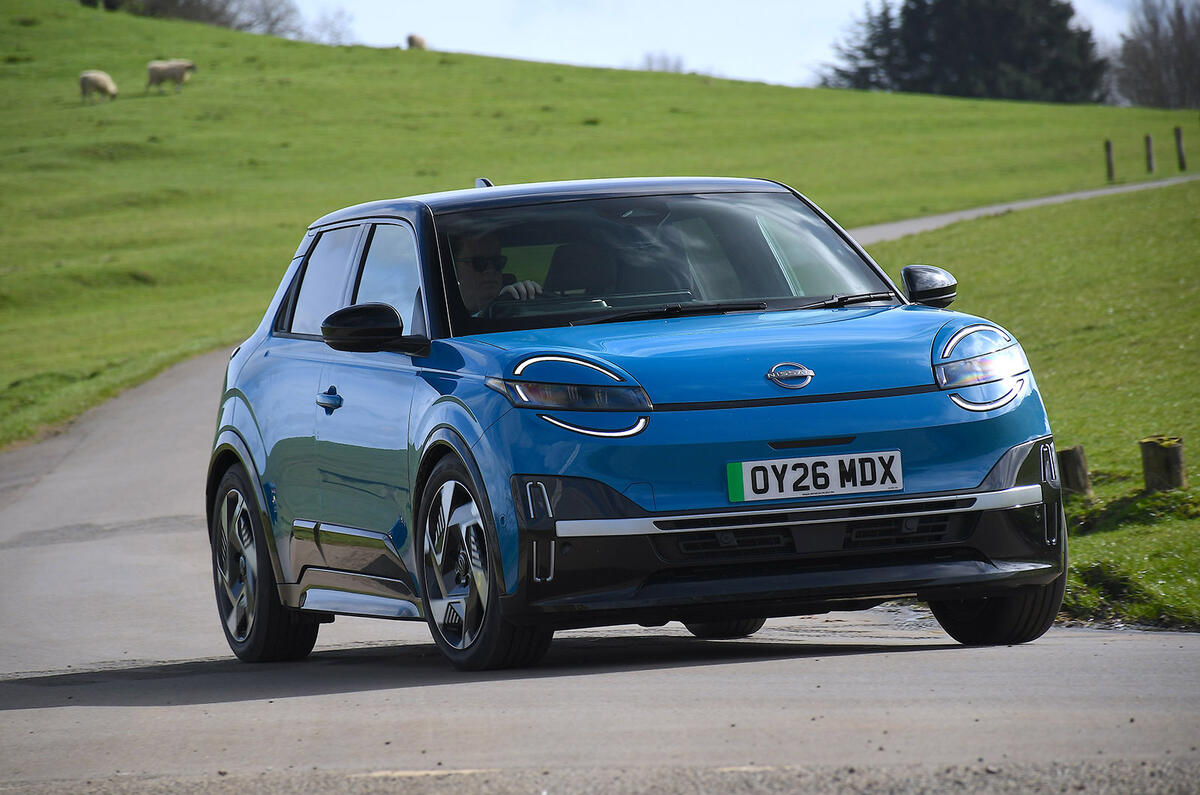
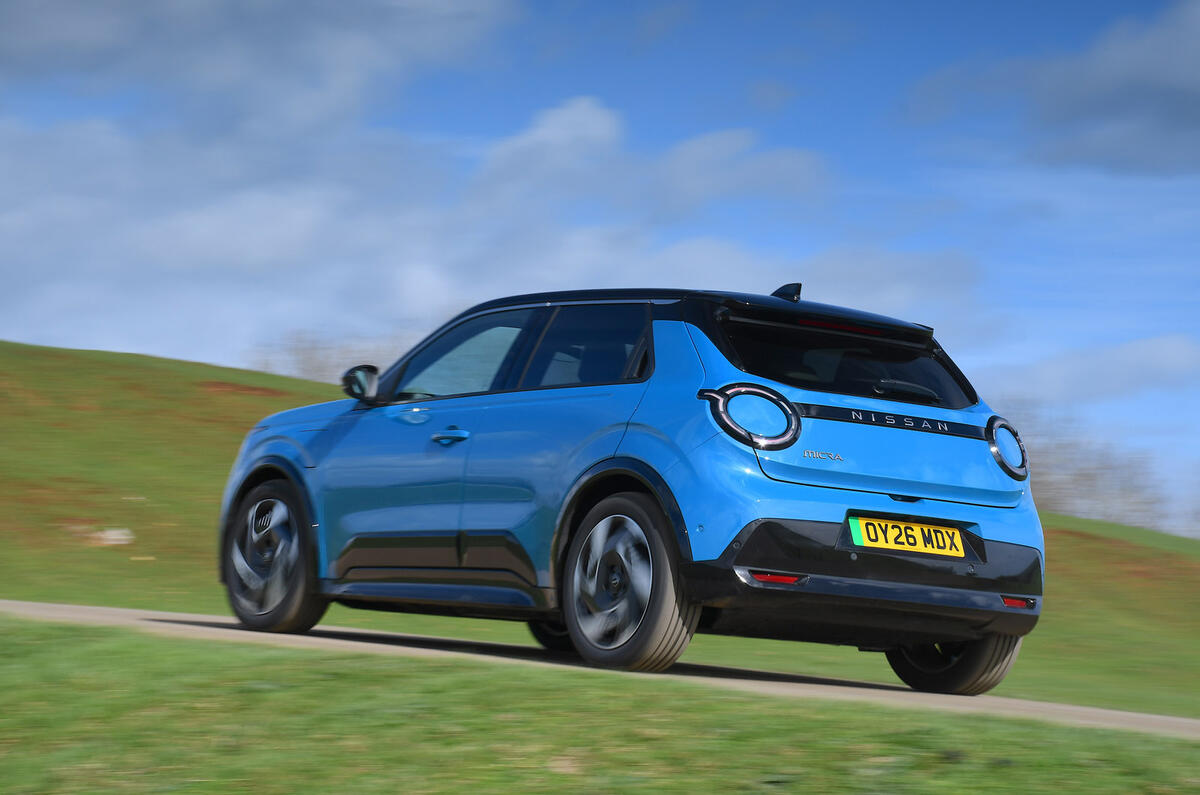
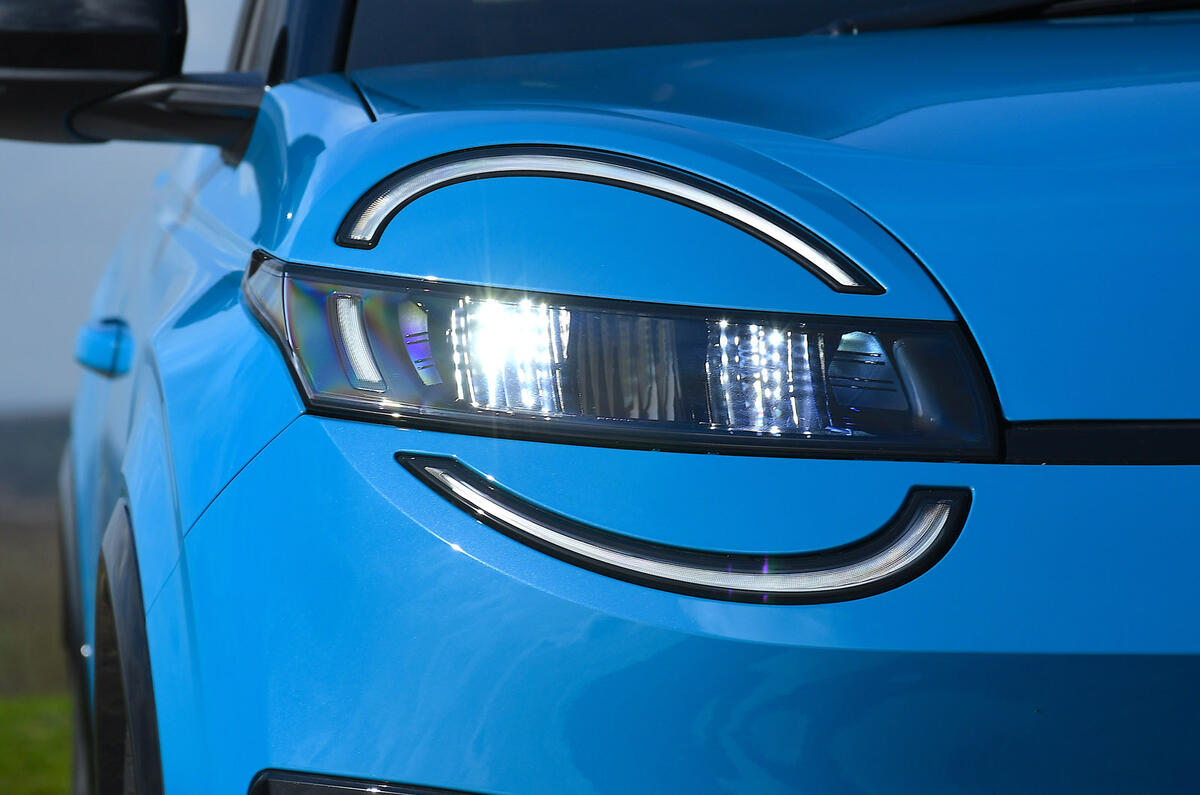
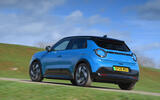
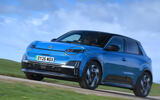
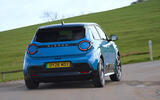
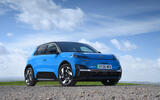
Nissan’s efforts to distinguish the Micra visually aren’t limited to only headlights and bumpers. Most of the Nissan’s bodywork is clearly its own, and it does create a slightly more angular, pumped-up, street-tough look for the car than the sleeker and more effete Renault has.

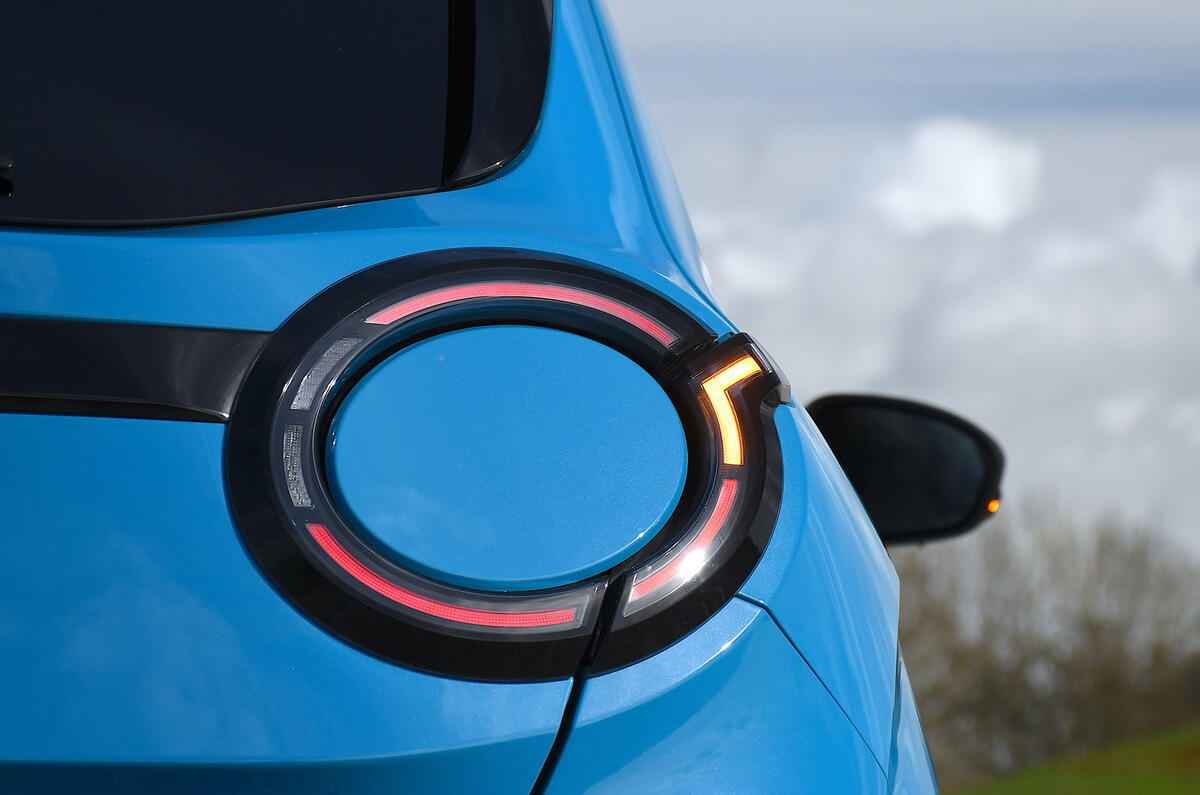
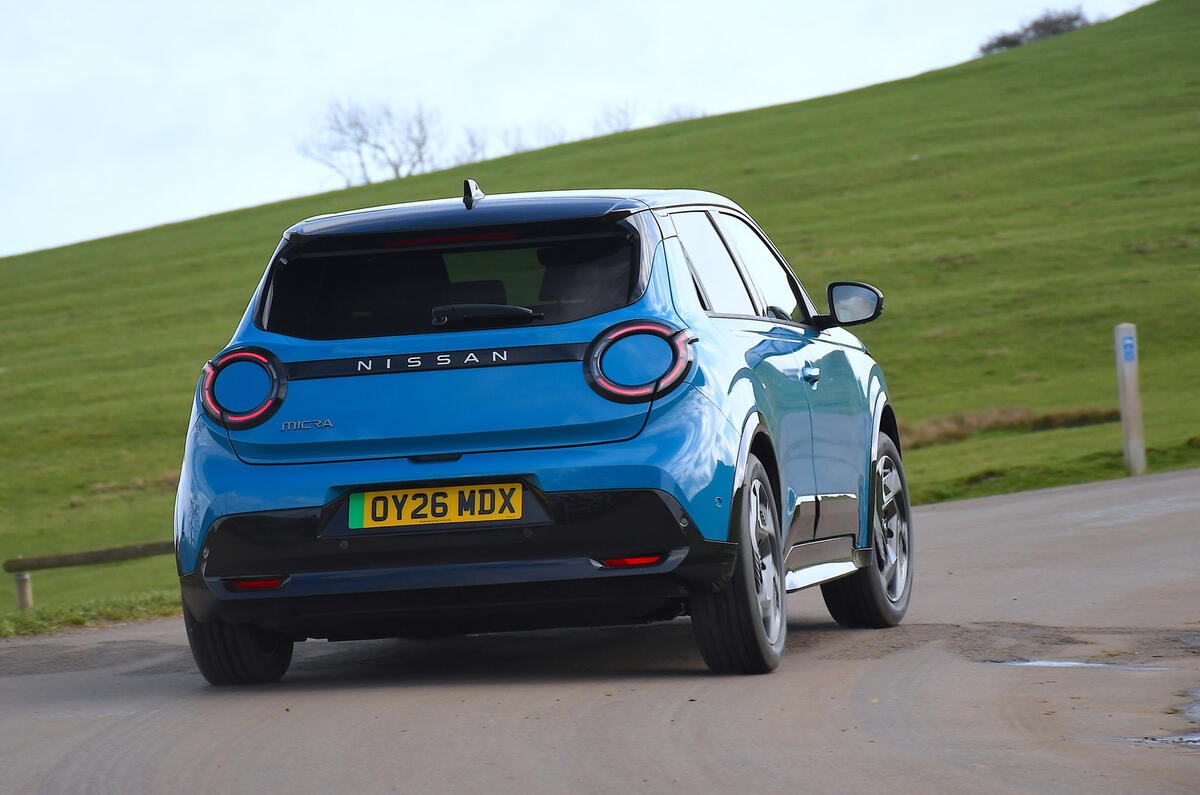
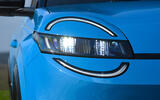
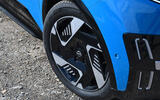
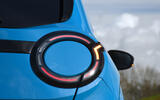
But counting the Nissan’s Manga-cartoonish head- and tail-lights, the double-creased wheel arches and the ‘ice cream scoop’ feature line running down the bodyside, you can’t help concluding that this is a car working hard to assert a visual point of difference. Ultimately, it’s a bit of a vain effort. Look at the car in profile and the Renault 5 bones underneath and all the window dressing are clear.

Is it fair, then, to call this a pretty brazen 5 clone, and leave it at that? It’s certainly a thinly differentiated design by the standards of most modern platform-engineered cars, though perhaps only as close a copy as the Fiat 600 was of the Jeep Avenger.

Ultimately, it’s the design of the product that makes it seem a lazy solution, though. And as for how fair it is to paint Nissan as the hitchhiking party, and give Renault the lion’s share of the technical and creative credit, we may never know. Our perspective on the situation is imperfect. Nissan will have certainly paid a price to ‘buy into’ the agreement, and it will have been involved much longer ago than many people realise.

INTERIOR

8
NIssan Micra review 2026 008

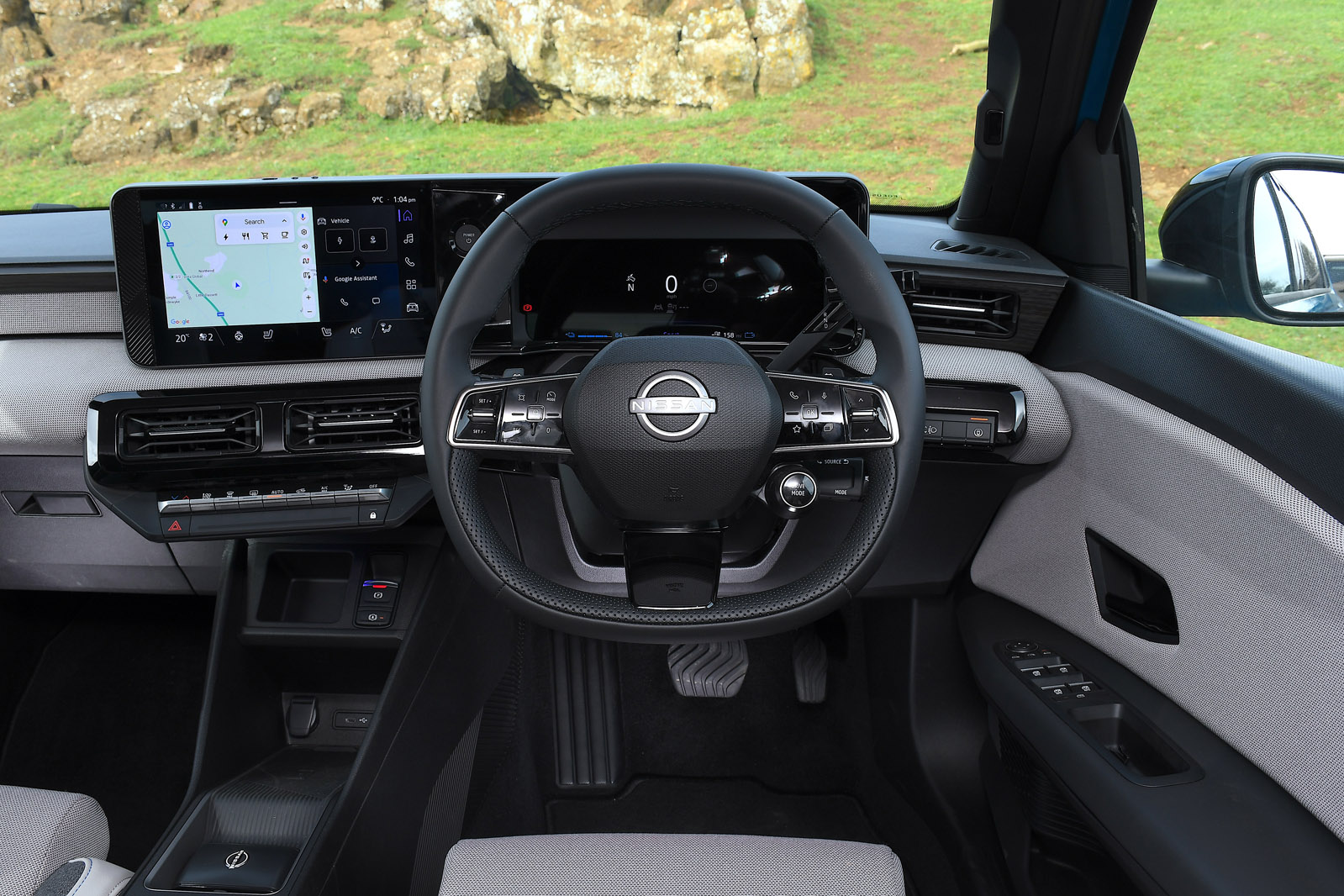
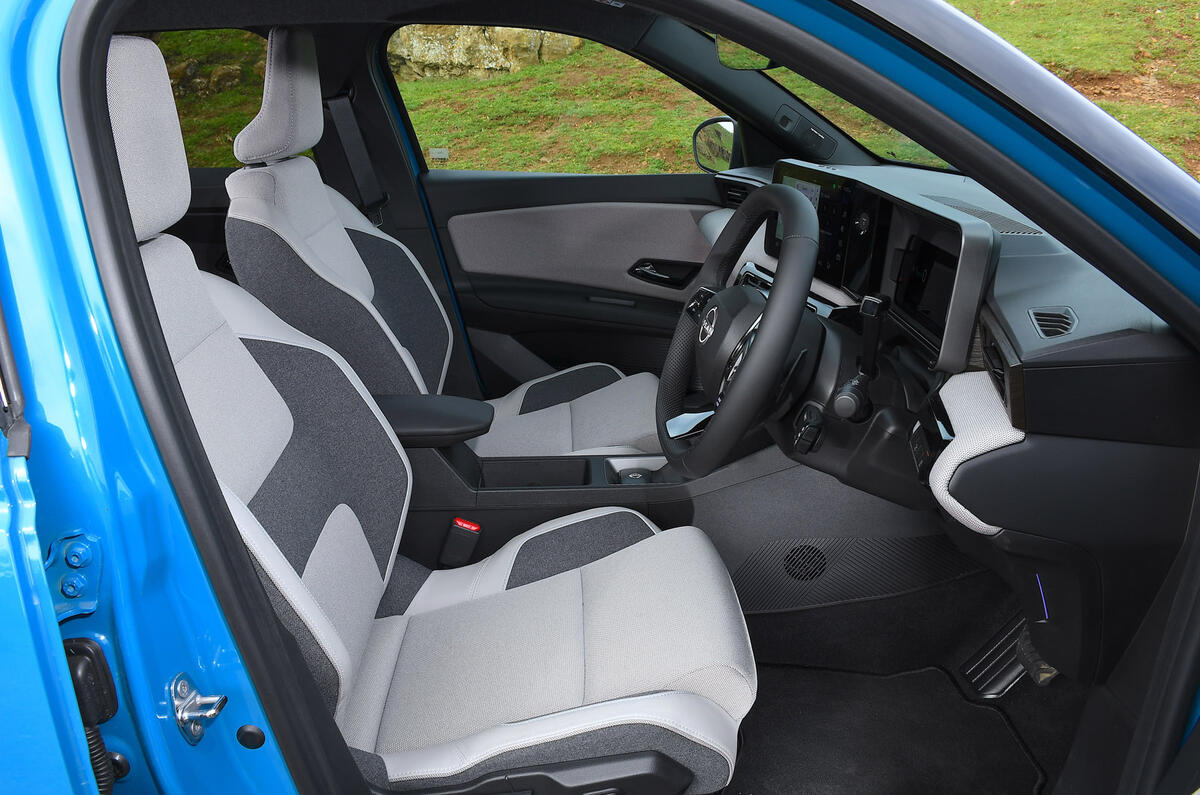
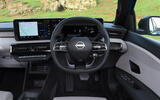
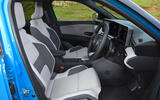
We have already road tested not only the Renault 5 but also the Renault 4 and Alpine A290, so the Micra’s interior held few secrets for us. Nissan has switched up some of the decorative materials on the fascia, the end result being slightly closer to the Alpine’s more leathery, classically upmarket look and feel than the Renault’s brighter and more breezily informal textiles.

Entry-level Micras get a dark, monotone cabin, but on top-end cars you can choose between cream grey and “audacious” blue leather-effect trim, and reflected ambient lighting is used to subtle but impressive effect.

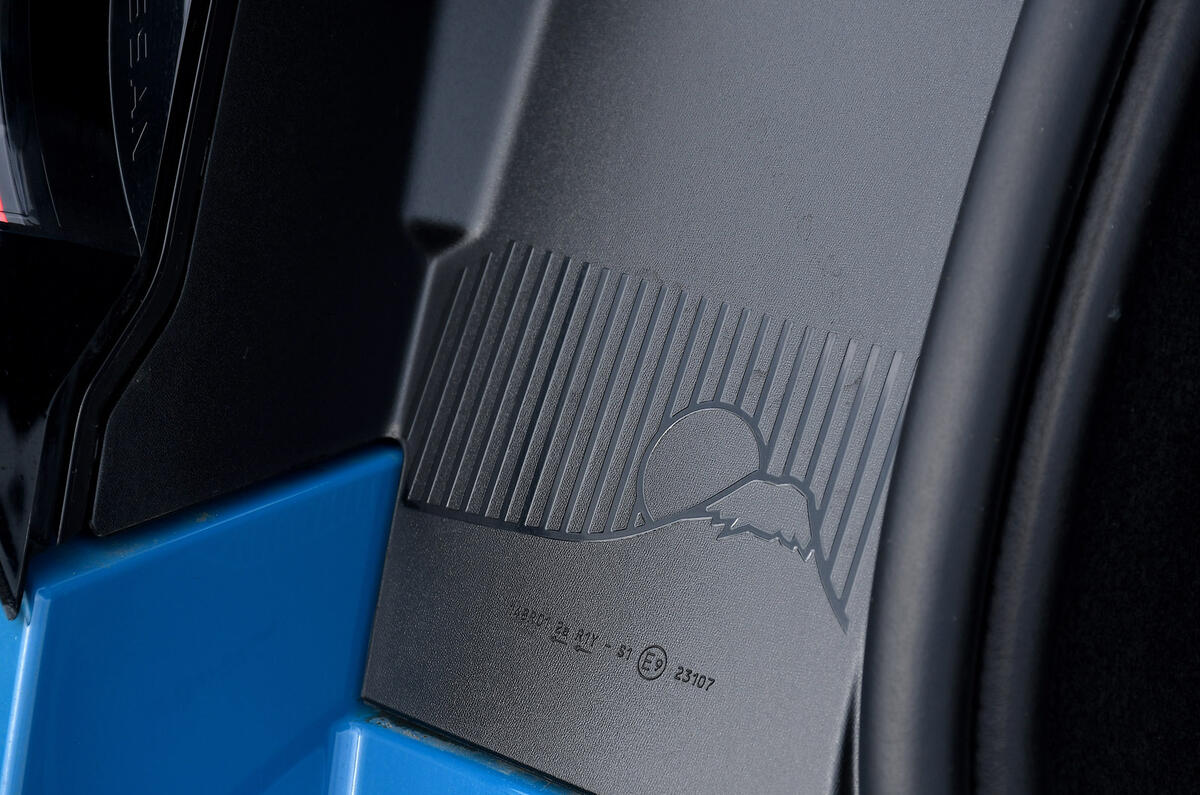
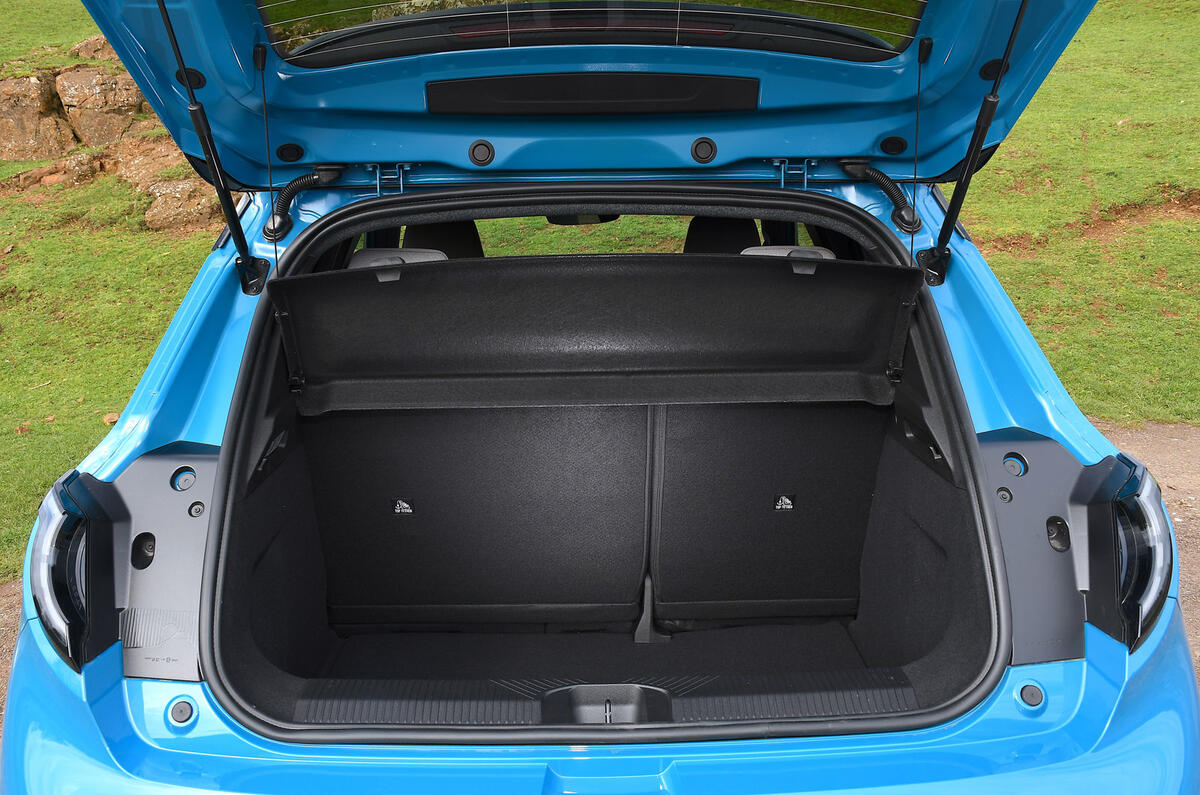
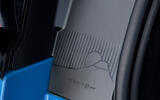
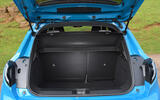
There’s an 'easter egg' graphic of Mount Fuji in the central storage between the seats, and another on the boot trim. They're supposed to show how proud the car is of its Japanese roots, apparently. Hmm.

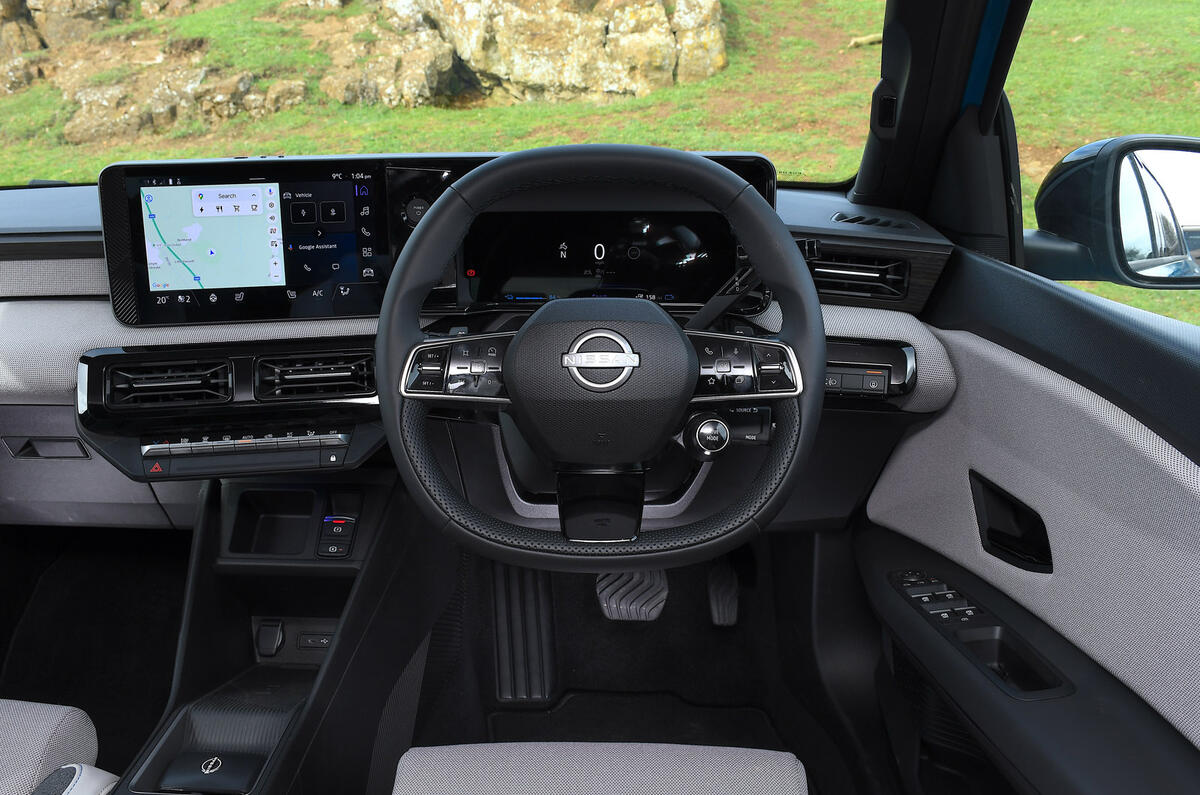
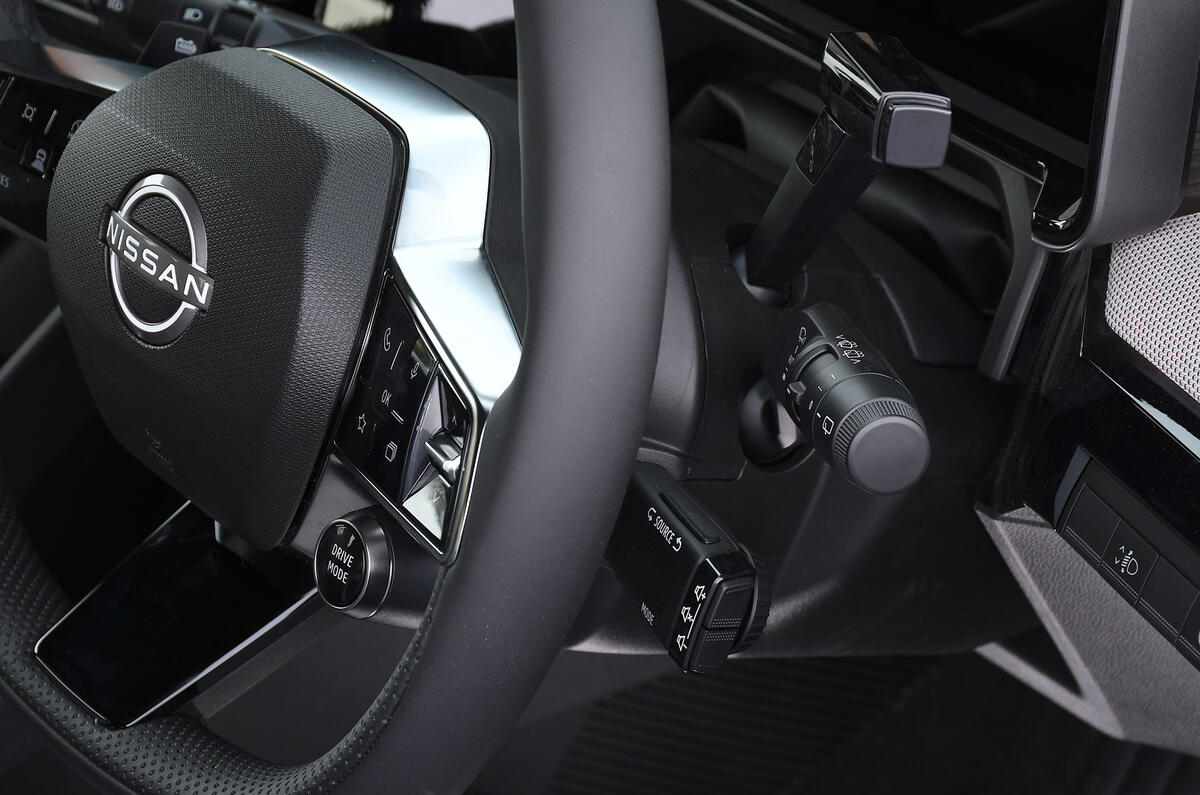
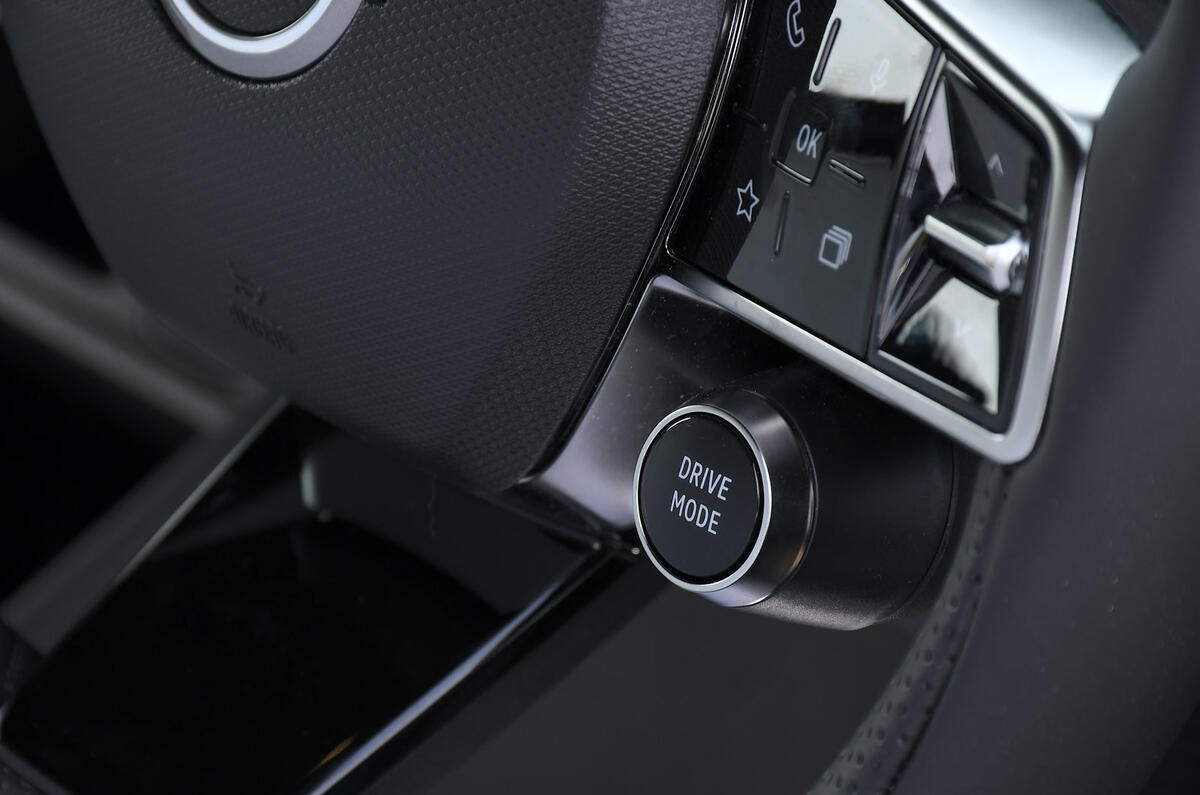
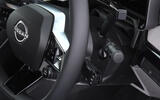
The Micra’s driving position is fairly supermini-typical, being of medium-low height but adjustable enough, and in front of well-positioned controls that cover everything the modern EV driver might want. There’s a column-shift drive selector; manual paddles for regen control; a good-sized physical drive mode toggle switch; and a wide range of simple physical switchgear for the trip computer, radio and cruise control dotted around the steering wheel spokes.

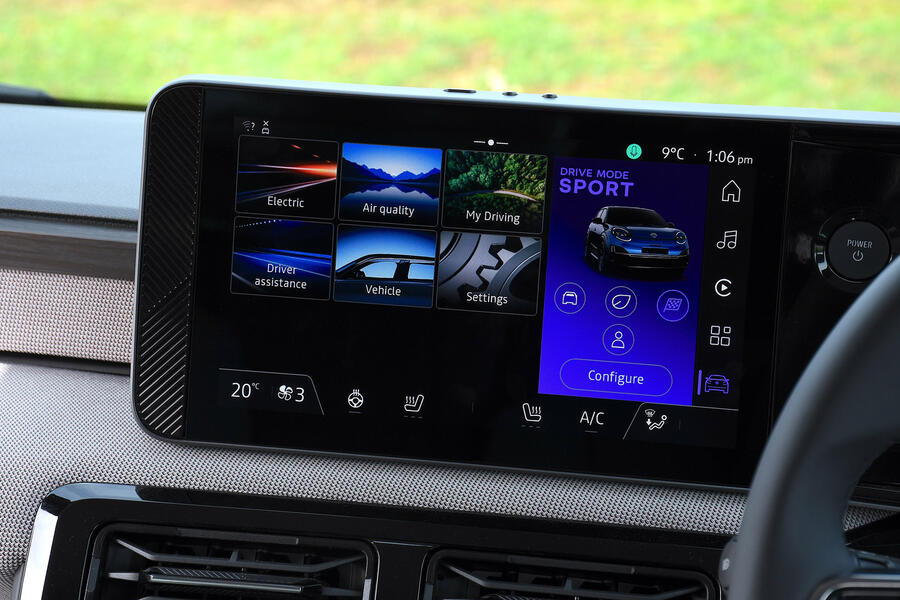
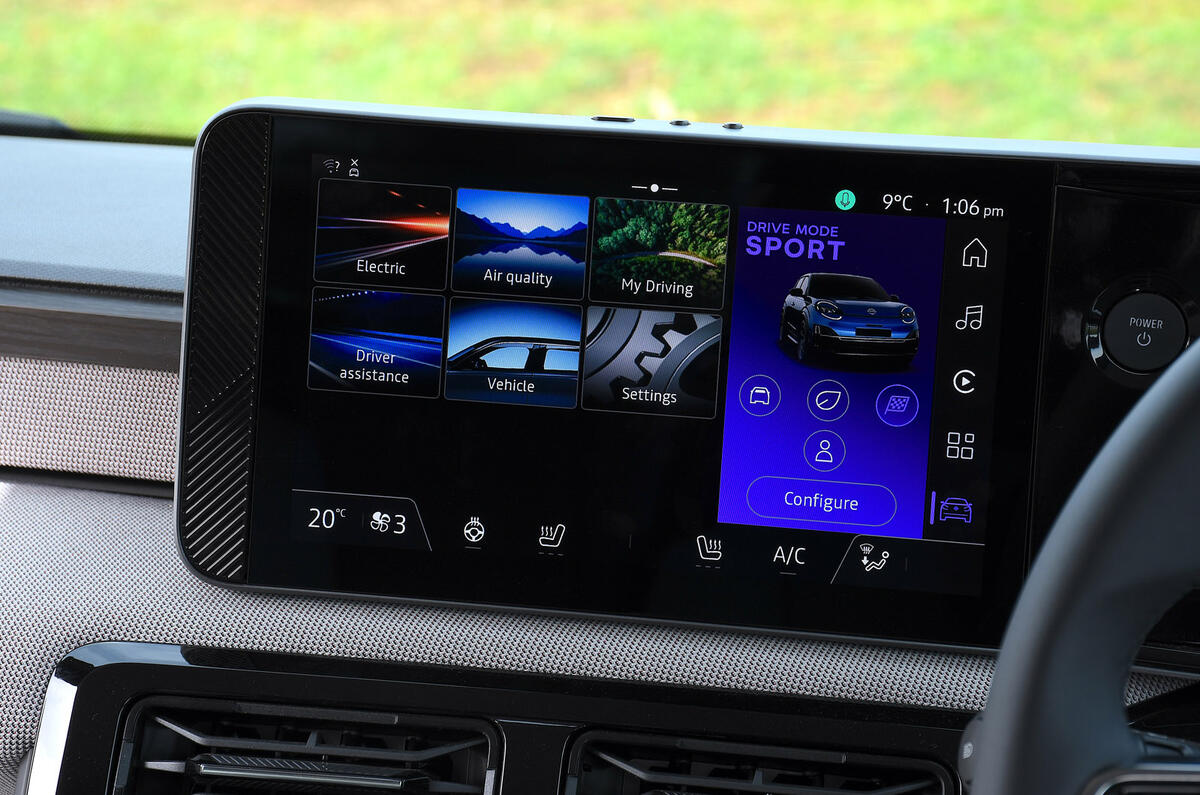
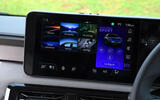
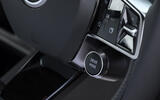
There are few important adjustments you will need to make via the 10.1in touchscreen while driving, then. Like the Renault 5, the Micra even has the ‘My Safety Perso’ ADAS custom button (which allows you to tame its active safety alerts with a couple of presses), as well as useful fixed, physical heating and ventilation controls.

The infotainment set-up itself is one of the better touchscreen-dependent systems on the market, with good top-level usability courtesy of the right-hand nav bar, and an effective way of quickly letting you find the function you’re looking for. There is zero pretence that it’s anything but Renault’s system with a very light and only partial graphical reskin, however.

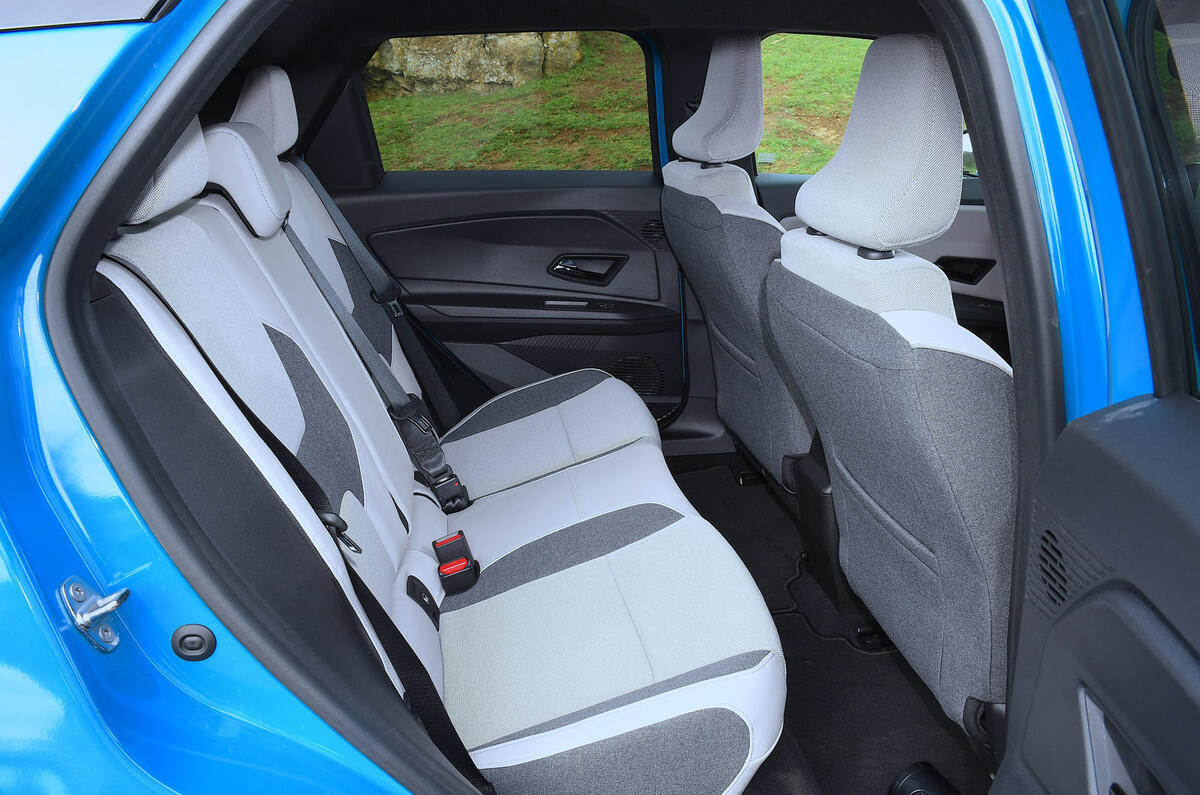
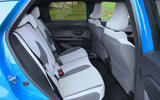
Practicality in the Micra isn’t so great, as much as that matters in a car that might seldom be expected to carry more than one passenger. According to our tape measure, both a BYD Dolphin Surf and a Citroen ë-C3 (and so, by extension, probably a Fiat Grande Panda Electric, too) offer second-row occupants more space. But the Micra hits back with a boot that is longer and wider than the Dolphin Surf’s, and also wider than the ë-C3’s.

ENGINES & PERFORMANCE

8
NIssan Micra review 2026 016

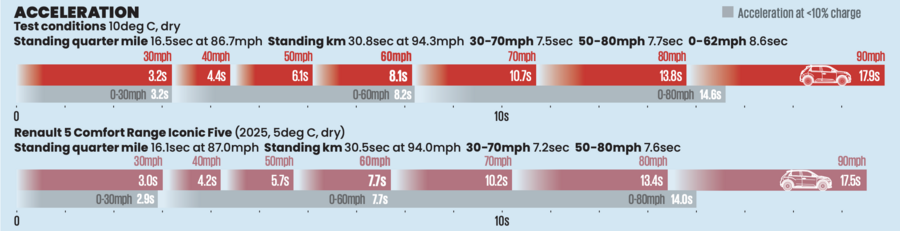
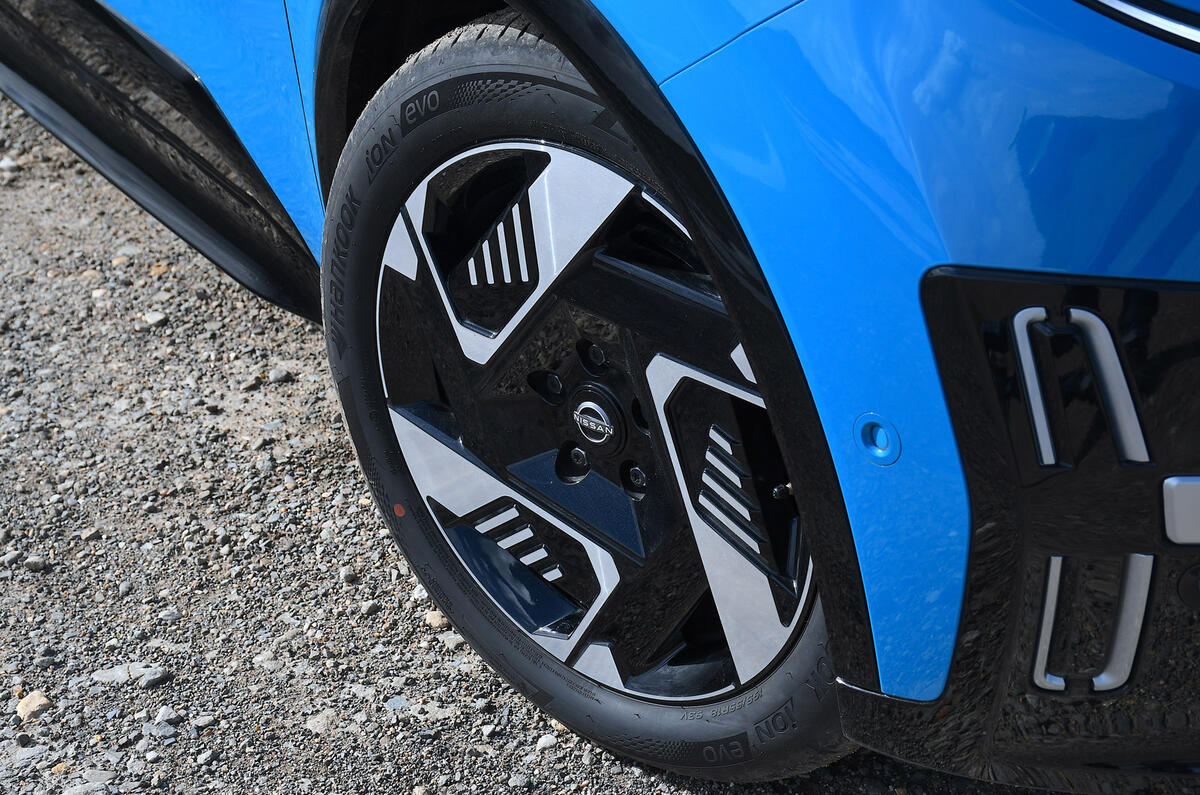
The Micra weighed about 20kg heavier on the proving ground scales than the equivalent Renault 5 did a little under 12 months ago. That, a different fitted tyre (the Micra uses Hankook iOn Evo EV-specific rubber, while the 5 wore Continental EcoContact 6s), and whatever particular motor calibration and drivability tuning preferences Nissan decided on, all contributed to making our test car a little slower-accelerating than its lozenge-badged cousin (8.1sec to 60mph versus 7.7-).

You would be hard-pressed to say it felt that way without the satellite timing data to tell you, though. That’s because, by electric supermini standards, 8.1sec from rest to 60mph is fairly quick. A Mini Cooper E or SE may show this car a clean pair of heels in a traffic-light sprint, but few other comparable cars that we have tested would. It makes for plenty of response and athleticism around town and up to the national speed limit, and a likeable sense of sprightliness too.

Indeed, if Nissan has aimed for a particular sensation for the Micra’s style of delivery, you wouldn’t know it. The car picks up from stationary under full power smoothly and progressively, without breaking traction at the front wheels or needing help from its traction control. It then ramps up the torque, and hits 50mph in little over six seconds, which is the sort of pace that hot hatchbacks of the same size were producing a couple of decades ago.

The Micra’s brake pedal wouldn’t really have passed muster on, say, a Citroën C2 VTS or Seat Ibiza Cupra, because it’s a bit too soft to be suited to quicker motoring and harder pressures, and doesn’t let you feel when the friction brakes are biting too clearly. It’s progressive enough in normal motoring, though, and brings the Micra to rest smoothly, which is really what matters most. There’s paddle-based control of motor regen too, which often tends to give the brake pedal less to do in any case.

In line with expectations based on our acceleration tests, the Hankook tyres did make for poorer stopping distances than the Renault recorded, however. The Micra needed a little under a metre longer than the 5 to stop from 70mph in the dry but 7.5m longer from the same speed in wet conditions.

You wouldn’t call the Micra’s braking result desperately poor in a broader sense, though (aptly enough, the BYD Dolphin Surf needed more than 61m to stop in the wet). We will find out shortly if those tyres also deliver the Micra less rolling resistance than the 5, and better associated range and efficiency - but it’s certainly at least some empirical evidence that the Nissan grips the road a little less keenly than its Renault sibling.

RIDE & HANDLING

8
NIssan Micra review 2026 017

If the Micra looks like a slightly chunkier, tougher and more SUV-esque prospect than its platform relation, it drives a little like that too.

The difference isn’t huge; in isolation, it probably wouldn’t even be enough to warrant a comment. But if you happen to already know the fluent-riding gait, light and positive steering and generally supple, biddable dynamic persona of the Renault 5, the Nissan’s temperament probably will strike you as a deliberate change of tack.

A slightly firmer, burlier-feeling, closer-controlled ride is the main difference. The Micra doesn’t quite bob along as freely and happily as the 5, instead checking its vertical movements a bit more sternly, and having a slightly more serious, closely controlled manner about it. It steers with a little more substantial heft too, though still predictably, with consistent gearing and an intuitive end result.

There is balance and agility about the Micra’s handling, and it’s fun to drive. But it doesn’t quite seem to grip with the same tenacity in mid-corner limit conditions as the 5 – the difference made by the Nissan’s choice of tyre, together with what at least feel like marginally stronger and more resistant anti-roll bar settings, pushing the front axle wide that split second sooner.

Will the average Micra owner notice any of the above during their daily routine? Almost certainly not. The chances are they will be perfectly happy with a car that rides and handles more than adequately well – with some big-car maturity and sophistication, and plenty of little-car zest and enthusiasm – and better than most of its rivals. But if they cared to investigate the question fully, we would expect them to find the Renault 5 a slightly more willing entertainer, and a Mini Cooper E an even more dedicated - if potentially more tiresome - one.

Assisted Driving - 4.5 stars

The Micra’s suite of driver assistance systems extends further than it really needs to in order to satisfy the law. So, in addition to the mandatory driver monitoring, lane keeping, autonomous braking and speed limit assist systems, mid-trim Advance models include adaptive cruise control, blindspot monitoring and a couple of reversing collision avoidance systems. Top-trim Evolve adds ProPilot Assist semi-autonomous highway cruise assistance and automated parking.

None of the car’s ADAS are quick to annoy if you simply leave them on. The most likely to get your attention is the driver monitoring system, although the car indicates visually as well as audibly when it’s alerting for that reason, so you know straight away what’s going on and what you might do about it.

The piloted cruise control is quite a good one, doesn’t seem spooked by cars in adjacent lanes, and is quick to react to changing traffic conditions on the motorway (although we wouldn’t recommend using it anywhere else).

In exactly the same way as with the Renault 5’s ADAS functions, you can configure the various alerts and monitoring technology to your liking once, and then recall your preferences with two short presses of the ‘My Safety Perso’ button to the right of the steering wheel. That remains one of the most foolproof ways to avoid distraction in a modern production car that we know of.


MPG & RUNNING COSTS

8
NIssan Micra review 2026 001

Our test car’s trim level makes it look more expensive than the rivals listed over the page, and if you go for the upper-level derivatives it certainly can be. Yet, thanks in part to the UK government’s Electric Car Grant, the Micra’s basic value proposition is more competitive than that would make it seem.

The model range is confusing at first glance. Understanding why is simple enough, though. Micras with the bigger, 52kWh battery (built in Douai) now qualify for the full £3750 (because those packs satisfy the necessary sustainability requirements), whereas those with the 40kWh unit only get £1500 off. That, a little oddly, makes a mid-trim 52kWh car slightly cheaper than an equivalent 40kWh one.

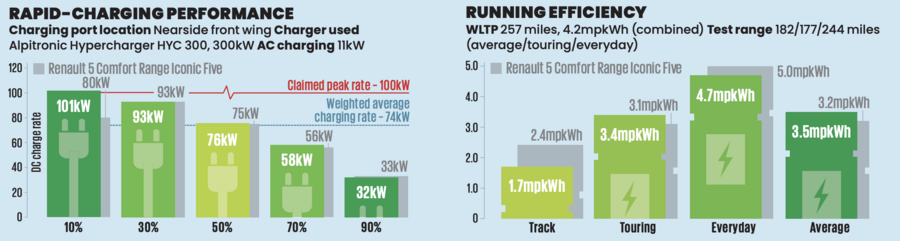
Half an hour of DC charging will return the battery capacity from 15% to 80%.

More widely, however, the entry-grade, 40kWh Micra Engage is identically priced as the equivalent Renault 5 Evolution: £21,495 after the ECG. Hyundai, BYD, Fiat and Citroën all currently undercut that price with their equivalent entry-level models, often without any help from HMRC - but not always with cars of the same range and performance.

Our 52kWh Evolve test car did indeed return a slightly better touring efficiency test result than the Renault 5 managed in 2025, but not by a huge margin. A motorway range of 177 miles (versus the 5’s 161 miles) is commendable for the class, but still likely to make you think quite hard about longer journeys.

VERDICT

8
NIssan Micra review 2026 019

The electric supermini class has filled up over the past 18 months, proving compact zero-emissions cars can be quirky, desirable, cool and fun to drive, and needn’t cost as much as you thought.

But there are still few EVs in it as sophisticated or well-rounded as the Nissan Micra. It looks smart and alternative, and is equally pleasant to inhabit. It performs, rides and handles strongly, avoiding drivability flaws and ADAS niggles. It’s practical enough. It has creditable efficiency and usable range. And if all of that comes at a slight price premium, it’s only compared with cars with even clearer ownership compromises.

This Micra proves how hard it is to make a business case for a small car in 2026. If Nissan had invested more money and made an electric supermini all of its own, would it be better than this? Different, sure. But better? I doubt it.

How much credit does Nissan actually deserve for most of that? Perhaps not much. But if owners don’t notice or don’t care, and are drawn to the Micra anyway, we would certainly understand why.

Matt Saunders

Matt Saunders Autocar
Title: Road test editor

As Autocar’s chief car tester and reviewer, it’s Matt’s job to ensure the quality, objectivity, relevance and rigour of the entirety of Autocar’s reviews output, as well contributing a great many detailed road tests, group tests and drive reviews himself.

Matt has been an Autocar staffer since the autumn of 2003, and has been lucky enough to work alongside some of the magazine’s best-known writers and contributors over that time. He served as staff writer, features editor, assistant editor and digital editor, before joining the road test desk in 2011.

Since then he’s driven, measured, lap-timed, figured, and reported on cars as varied as the Bugatti Veyron, Rolls-Royce PhantomTesla RoadsterAriel Hipercar, Tata Nano, McLaren SennaRenault Twizy and Toyota Mirai. Among his wider personal highlights of the job have been covering Sebastien Loeb’s record-breaking run at Pikes Peak in 2013; doing 190mph on derestricted German autobahn in a Brabus Rocket; and driving McLaren’s legendary ‘XP5’ F1 prototype. His own car is a trusty Mazda CX-5.