Currently reading: Top 10: Best-looking French aircraft

Top 10: Best-looking French aircraft

The first people to fly were French; Jean-François Pilâtre de Rozier and François Laurent d’Arlandes went up in a hot-air balloon in 1783.

To this day, France continues to be a nation that excels at building beautiful flying machines. We recently asked readers of the Hush-Kit aviation site to vote for the 10 best-looking French aircraft and here are the results:


10: Dassault Falcon 20
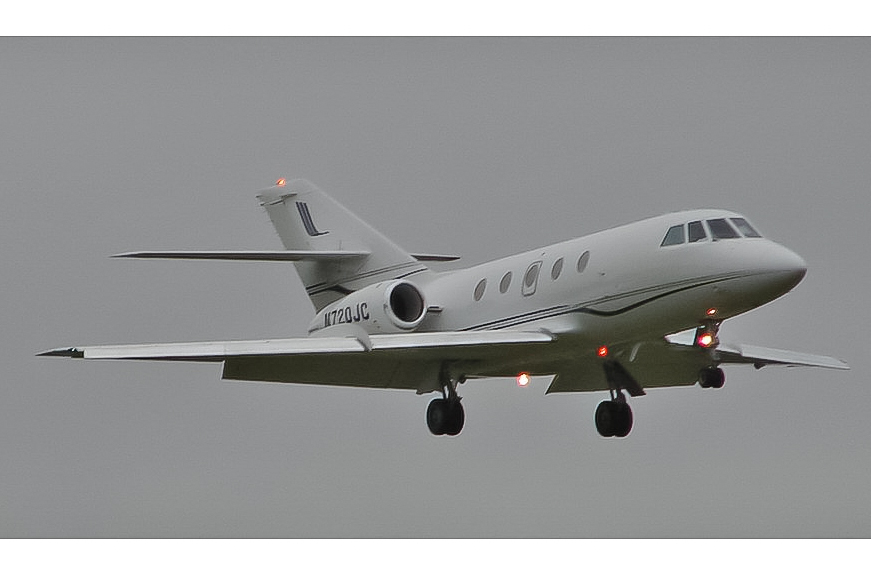
 Dassault Falcon 20

The Falcon was initially known as the Dassault-Breguet Mystère 20 as the design was based on the Dassault Mystère IV fighter-bomber. The Mystère 20 took its first flight on 4 May 1963, even earlier than the famous American Lear Jet 23.

Lacking penetration in the potentially lucrative US market, Dassault teamed up with American airline Pan-Am to promote the aircraft. The Falcon 20 proved to be such a smash hit that it was in production until 1988 (and totally winding down in 1991), by then superseded by more advanced Falcon family members.

The Falcon 20 was featured in many movies, including Wall Street (1987), 2 Fast 2 Furious (2003), Snakes on a Plane (2006), as well as TV series such as the A-Team, The Man From U.N.C.L.E and The Bionic Woman.

An inherent weakness of small jets is their green credentials, so it was heartening when, in November 2012, a Falcon 20 became the first civilian jet to fly on 100% biofuel. An impressive total close to 500 aircraft was created, forming the basis of the larger ongoing Falcon series.


9: Bréguet 1001 Taon
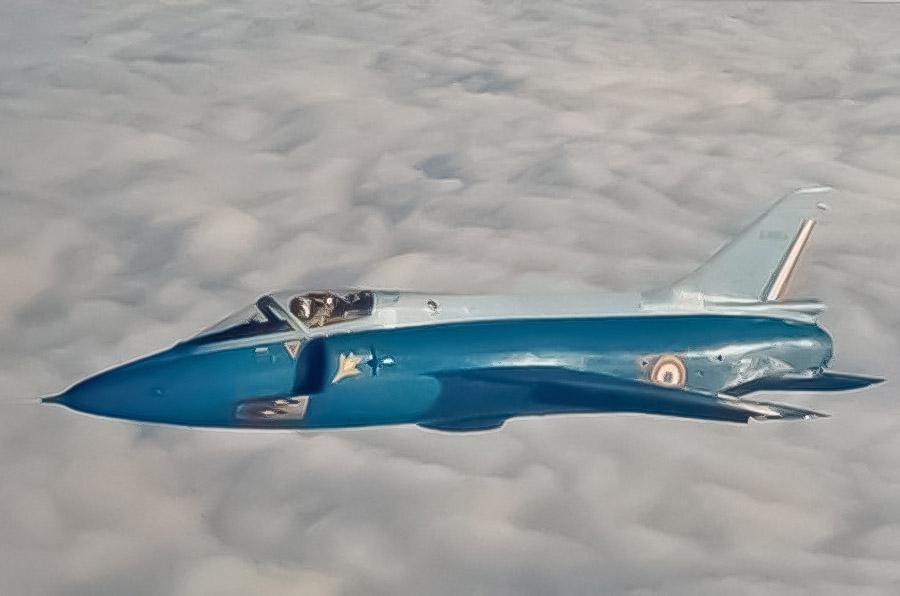
 Bréguet 1001 Taon

The achingly beautiful Taon was submitted for the NATO Light Weight Strike Fighter competition in 1953. The Fiat G91 defeated the Taon (among other entrants), but France rarely took the results of NATO procurement contests seriously if it didn’t win them.

In the end, it didn’t order the G91- but neither did it opt for the Taon, and this promising type was cancelled. Before its demise, the aircraft set an international speed record for a 1000 km closed circuit with a speed of 1,046.65 km/h (650.36 mph) on 25 April 1958. Four months later, it bettered this by 61 km/h (38mph).

The Taon was petite and purposeful in shape, with a wingspan of only 6.8 m (22 ft 4 in) and a gross weight of 5000 kg (11,023 lb). Power came from the Orpheus B.Or.3. The Taon’s distinctive jet intake design sat above the gunport; service aircraft would have been armed with four 12.7 mm (0.5 in) Colt-Browning machine-guns.

The Taon was far from a wasted effort, as it led to the larger twin-engined Breguet Br.121 concept, the basis of the SEPECAT Jaguar fighter-bomber. The Jaguar was produced from 1972 to 2008, and remains in service with the Indian Air Force today.


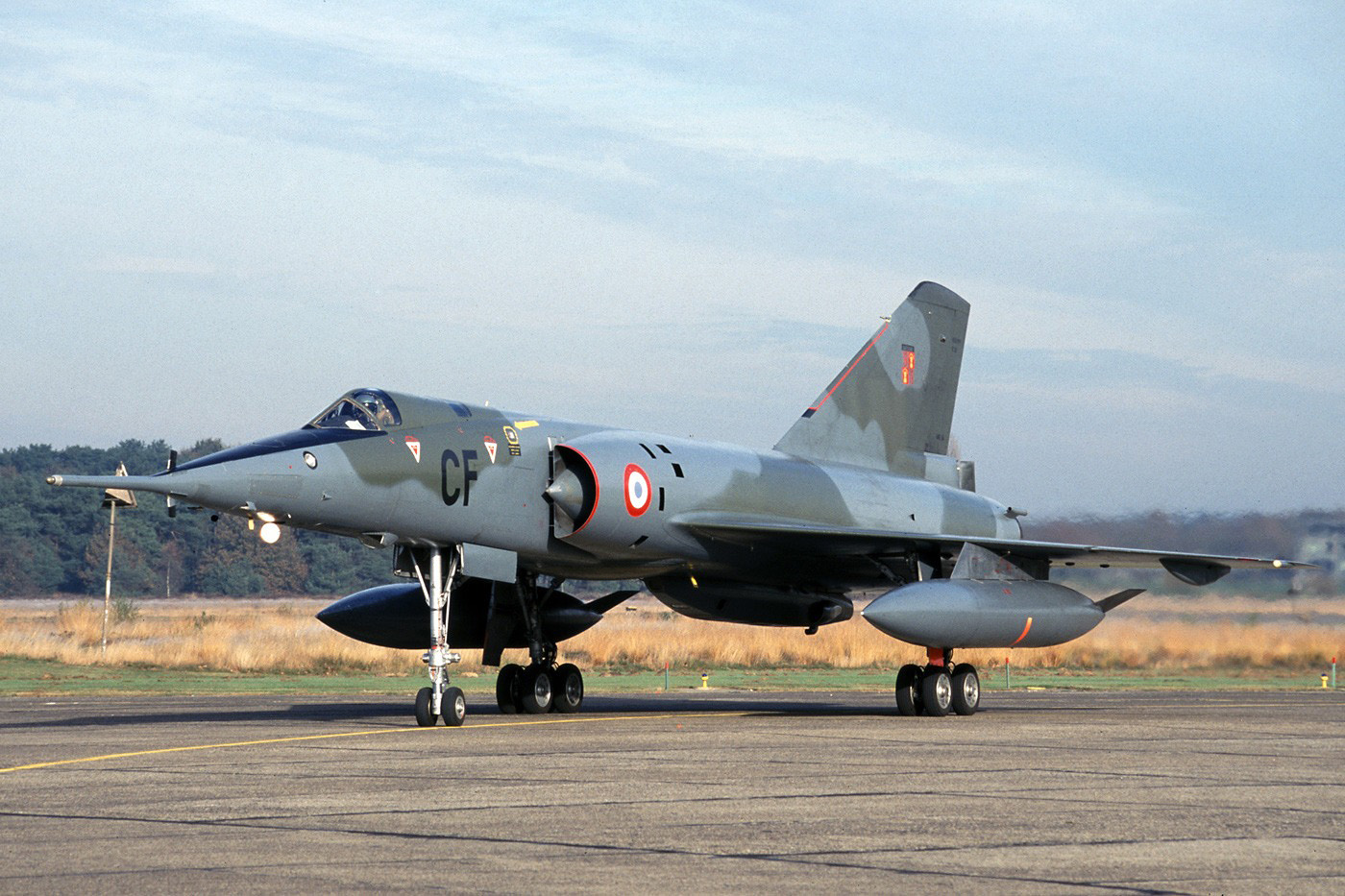
8: Mirage III/5/50
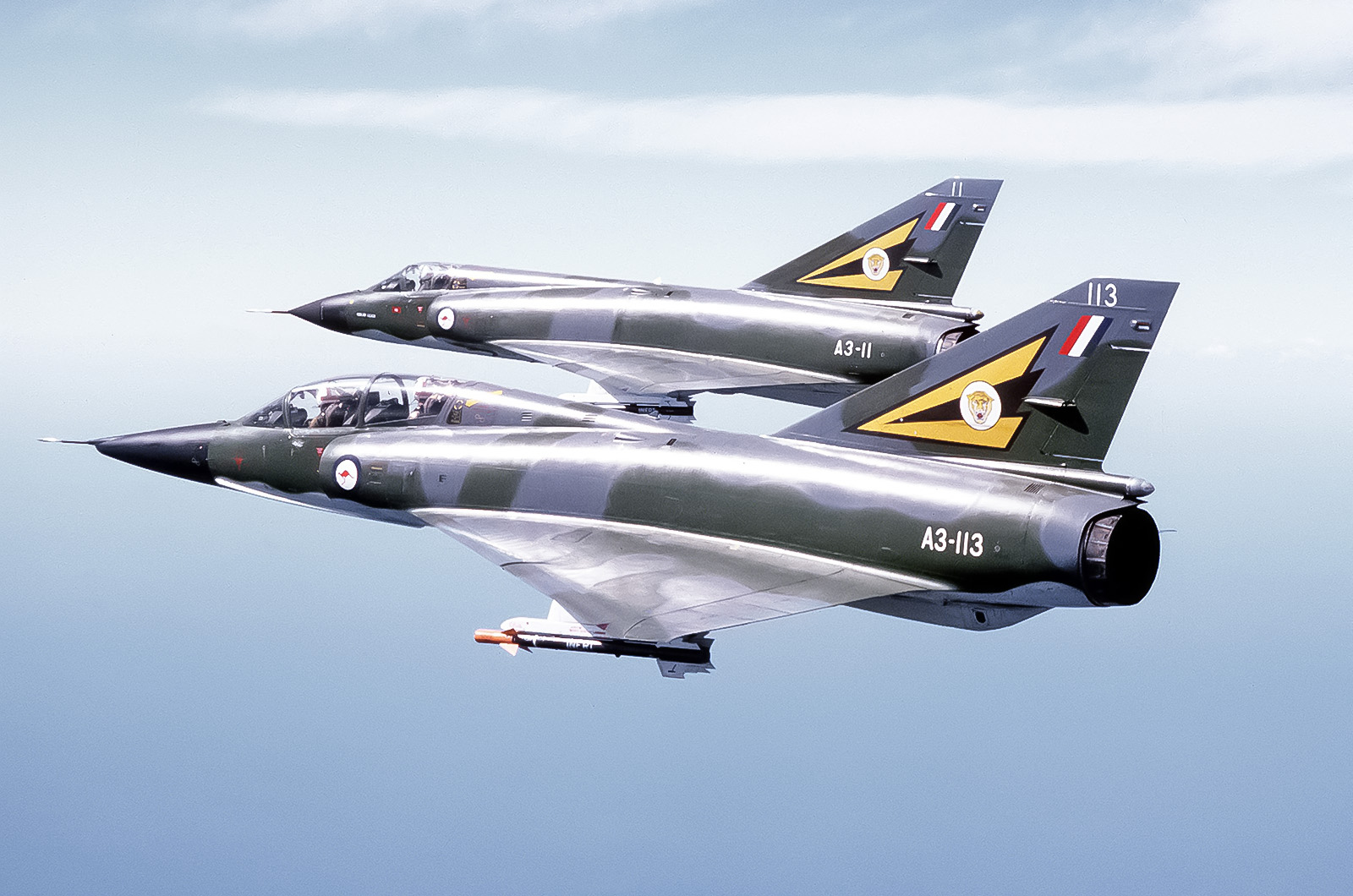
 Mirage III/5/50

The triangular delta wing is strong, can carry a lot of fuel and is efficient for supersonic flight. French companies had been studying the delta for some time; in 1942 the Payen PA-22, with an unorthodox delta with straight wing large foreplanes flew, followed in 1954 by the Payen Pa 49 Katy.

The Mirage story started with the tiny MD.550 Mystère Delta, which flew in 1955, as a prototype for a mixed propulsion (jet and rocket) light fighter. This proved too small, leading to the scaled-up Mirage II and the even more ambitious Mirage III. The Mirage III first flew 17 November 1956 and entered service in 1961.

Back to top

The Mirage III was not the first delta-winged warplane to enter service: the British Gloster Javelin (a tailed delta) entered service in February 1956, followed, in the same year, by the pure delta Convair F-102 Delta Dagger and Douglas F4D Skyray in April and the Avro Vulcan bomber in September.

The sharp, sleek Mirage, with its muscular semi-circular shock-cone inlets, was a thing of beauty.  As well as being wonderful to look at, the Mirage repeatedly proved itself in combat. The III series grew with the 5 and 50, and proved a success with export customers.


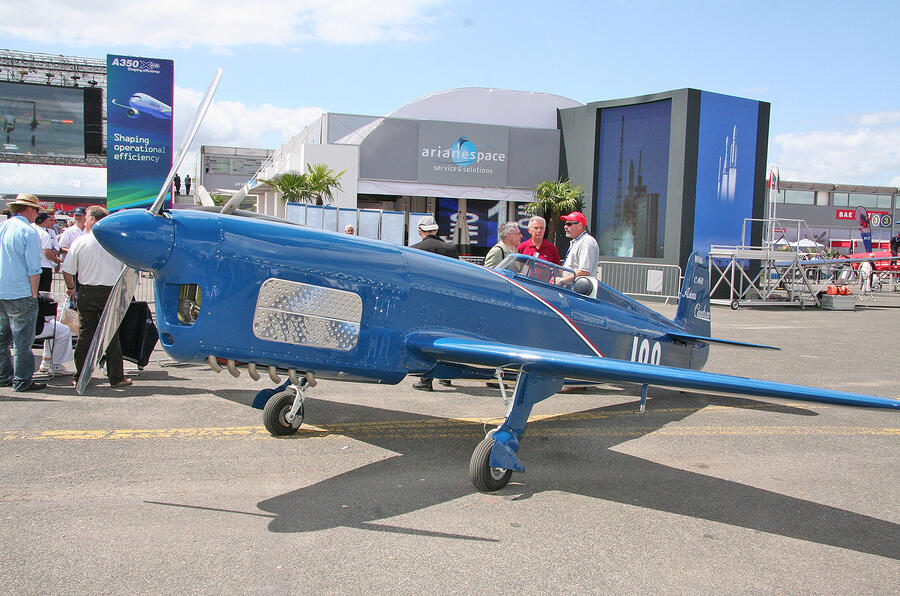
7: Caudron racers

The Caudron C.450 and C.460 were race planes built for the Coupe Deutsch de la Meurthe race of 1934, and they were very fast - and looked it… Replete in French Racing Blue with an almost obscenely elongated nose section, they certainly looked like racers.

The C.450 took first place in the race, piloted by Maurice Arnoux, with another a C.460 taking third, piloted by Albert Monville. Despite the effort to fit the aircraft with a retractable undercarriage, the 460s had technical issues, so it competed with the undercarriage in the down position.

Thanks to the supercharged Renault 456 six-cylinder inverted air-cooled engine, the Ratier two-position variable-pitch propeller, and a light, clean airframe of largely wooden (spruce and birch plywood) construction, the Caudrons were very successful, winning several races and snatching airspeed records. The aircraft reached speeds of around 300mph (482km/h).

This entry caused debate among those polled, as the C.460’s forebear, the Caudron C.362, had a spatted undercarriage. A spatted undercarriage is non-retractable, with streamlining coming from a fairing that covers part of the wheel. Some preferred the spatted aircraft, others the clean look of the 450/460. To some controversy, the 450/460 garnered considerably more votes, but to be fair any in this series of worthy of inclusion.


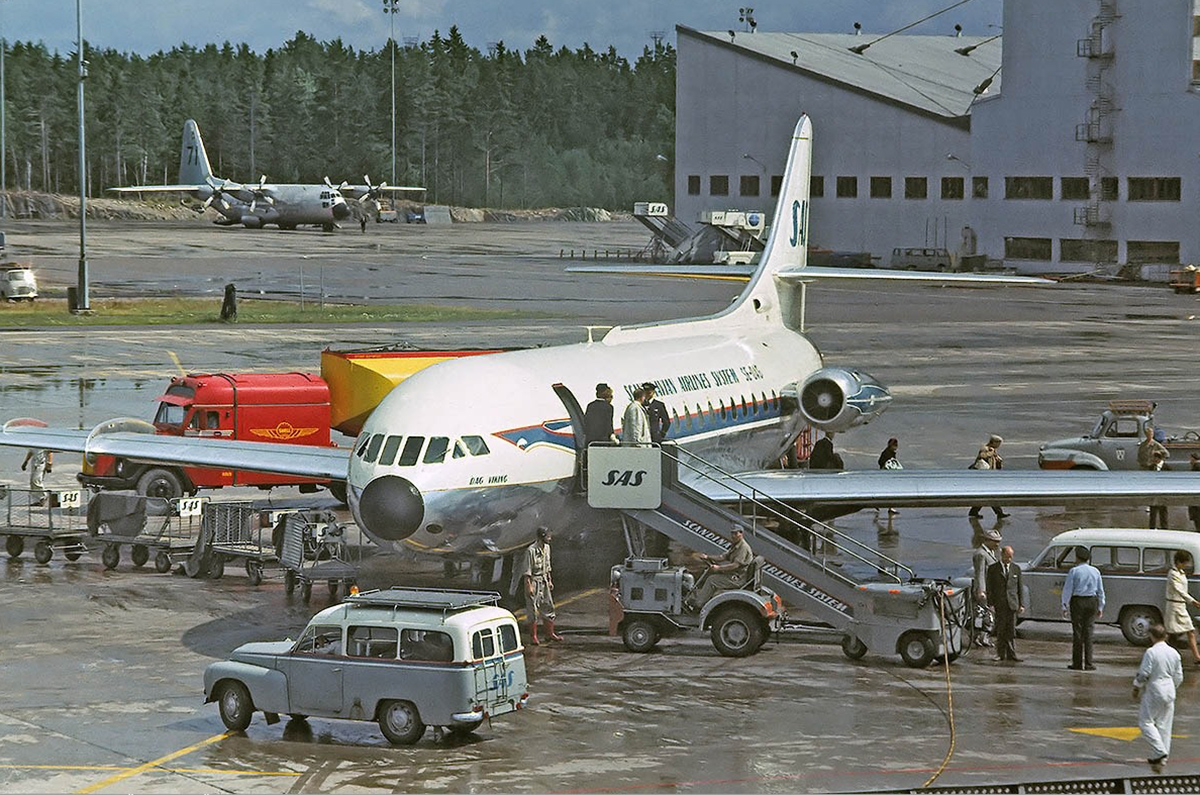
6: Sud Aviation SE 210 Caravelle

 Sud Aviation SE 210 Caravelle

Unbearably beautiful, the Caravelle featured a wealth of innovations and there are many reasons why it was a technological masterpiece that inspired love in those that came close to the French jetliner.

Back to top

Whereas competitors had engines in or under the wings, noisily close to most areas of the cabin, the Caravelle’s two engines were neatly tucked away in nacelles at the rear end of the aircraft. It was said that the noisiest seat on board the Caravelle was only as loud as the quietest seat in the quietest rival airliner.

To demonstrate this quietness, guitarist and singer Sacha Distel, accompanied by his orchestra, took a trip aboard the Caravelle III Alsace to record a single inside the aircraft on 17 April 1959. In addition to musical instruments - including a 200kg piano - a recording studio was installed.  The recording was started at an altitude of 34,450 feet (10,500 metres).

The distinctive windows were passenger pleasers: the higher section was narrow to limit the risks of glare due to the sun, and the lower wider part gave a better view down, allowing the travellers to more easily admire the often epic landscape visible from 10,000 metres in the sky.


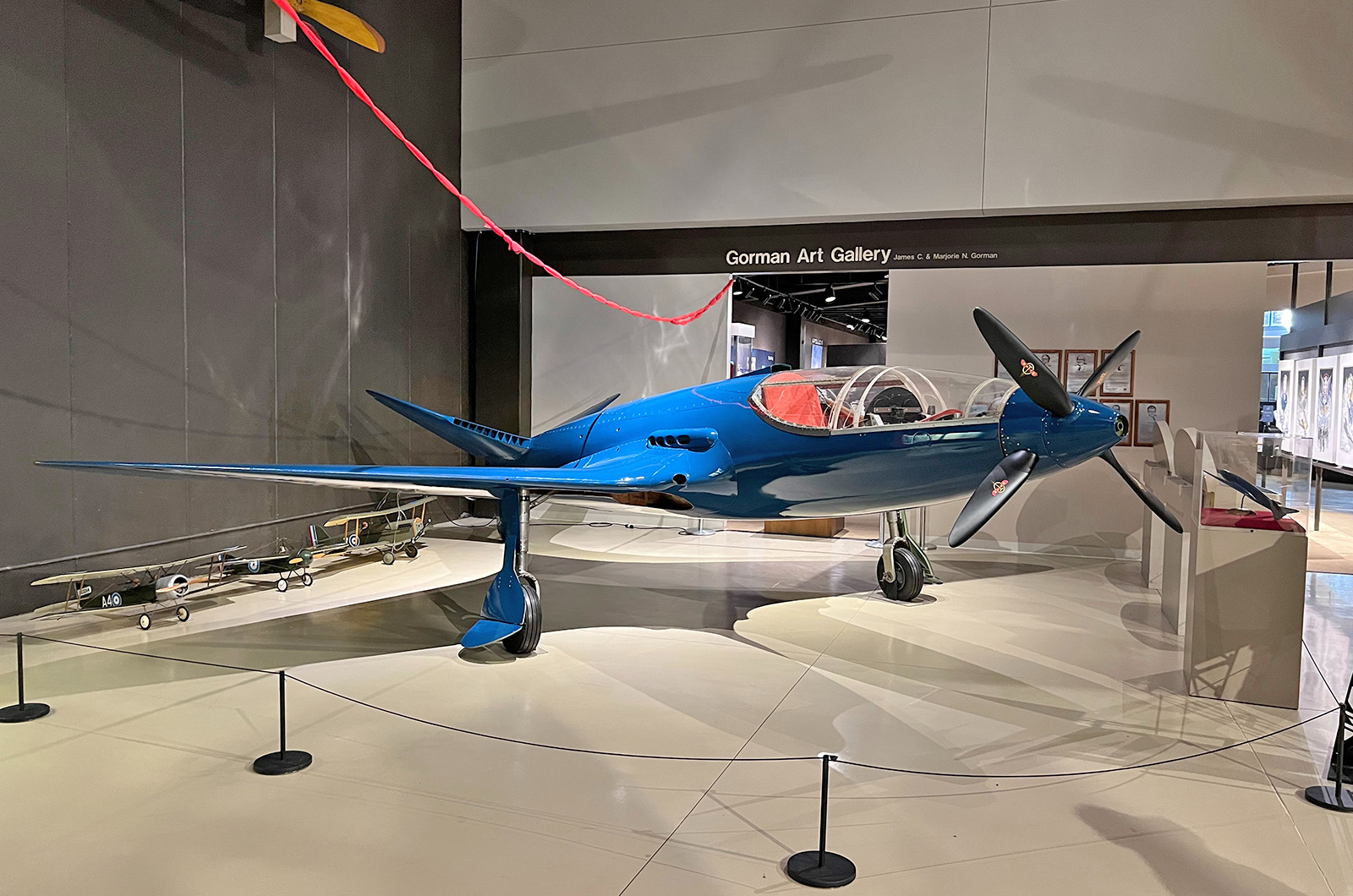
5: Bugatti 100P

 Bugatti 100P

Bugatti is a name synonymous with dream-machine cars of the 1920s and 1930s. These gorgeous cars scorched a reputation for unbeatable performance and exceptional good looks. A less well-known fact is that Bugatti were also working on building the world’s fastest aeroplane.

Bugatti asked Belgian engineer Louis de Monge to design a beautiful, technologically advanced aeroplane of unique configuration. The aircraft was named the 100P, and it was the very smallest possible design you could fit the engines, undercarriage, pilot and enough fuel for a 1000-kilometre run.

Bugatti was keen to use his straight inline eight cylinder engine of approximately 4.7 litre capacity. Louis studied the engine, looked at all the latest aerodynamic advances and concluded that he could beat the existing speed record, which at this time was held by Macchi M.C.72 seaplane at 440 mph (708km/h).

This radical Art Deco masterpiece was as advanced as it was beautiful. Fate, in the form of the German invasion of France, conspired against it flying. It seemed that the Bugatti 100P was destined never to leave the ground. However, a replica flew in 2015, but crashed on its third flight, tragically killing pilot Scotty Wilson.

Back to top

4: Dassault Mirage IV

 Dassault Mirage IV

Weighing in at 32,000 kg, capable of rocket-assisted take-offs, a top speed of Mach 2.2 — and the ability to deliver a nuclear holocaust — few aircraft were as exciting as the Mirage IV strategic bomber. Combining hideous lethality with graceful lines, and an excellent recce capability, this Cold War warrior served France from 1964-2005.

According to former Mirage IV pilot, Jean Copponnex, “The largest armed warplane in the French Air Force plane could not be more impressive! Twice the size of the Mirage III, an internal fuel capacity allowing for more than two hours of range, the possibility of flying at Mach 2 for several tens of minutes, and refuelling in flight.”

The Mirage IV was big, fast and very beautiful. It also had the potential and performance to be more than a bomber, according to Copponnex: “Rare, unofficial ‘confrontations’ with real fighters have shown that it probably would have been a potent fighter, especially with more powerful engines.”

He continued, “The finesse of its airframe allowed for fantastic performance... It was ideally suited to the missions for which it was designed: high altitude and high Mach speeds, and later very low altitude, high speed as well as being able to navigate anywhere on the planet autonomously.”


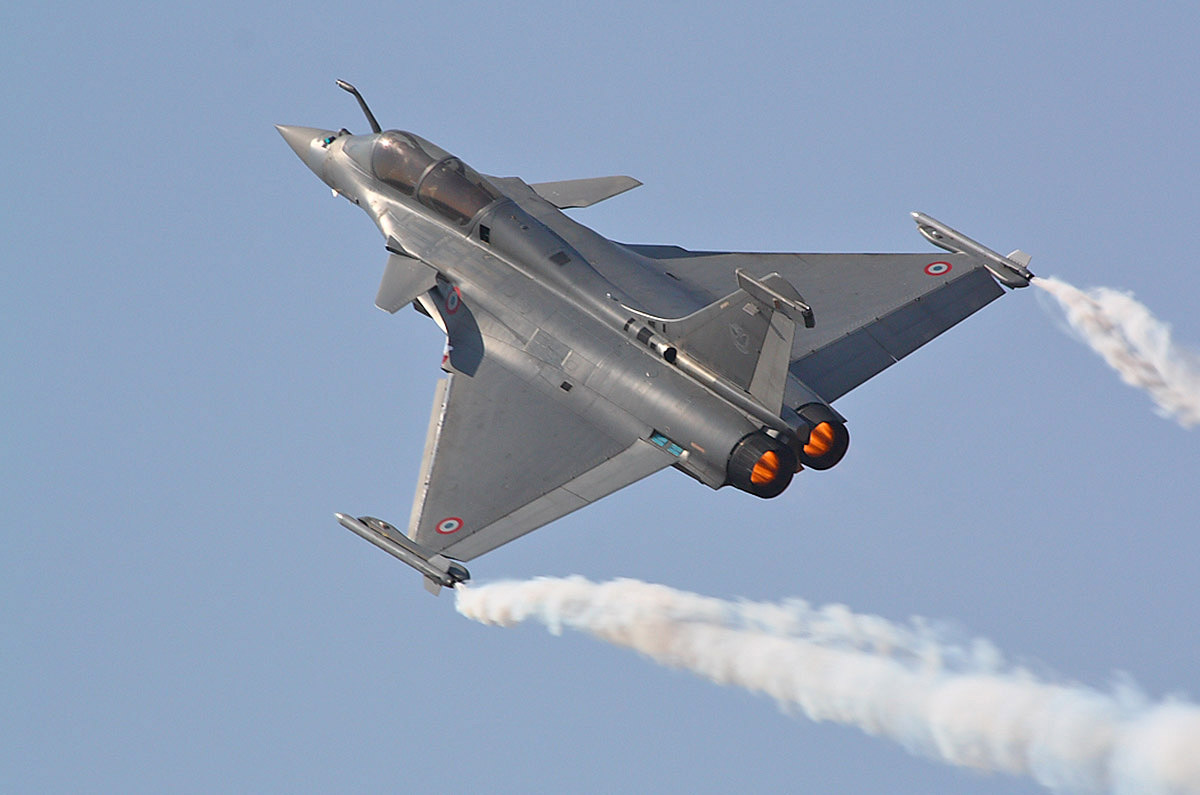
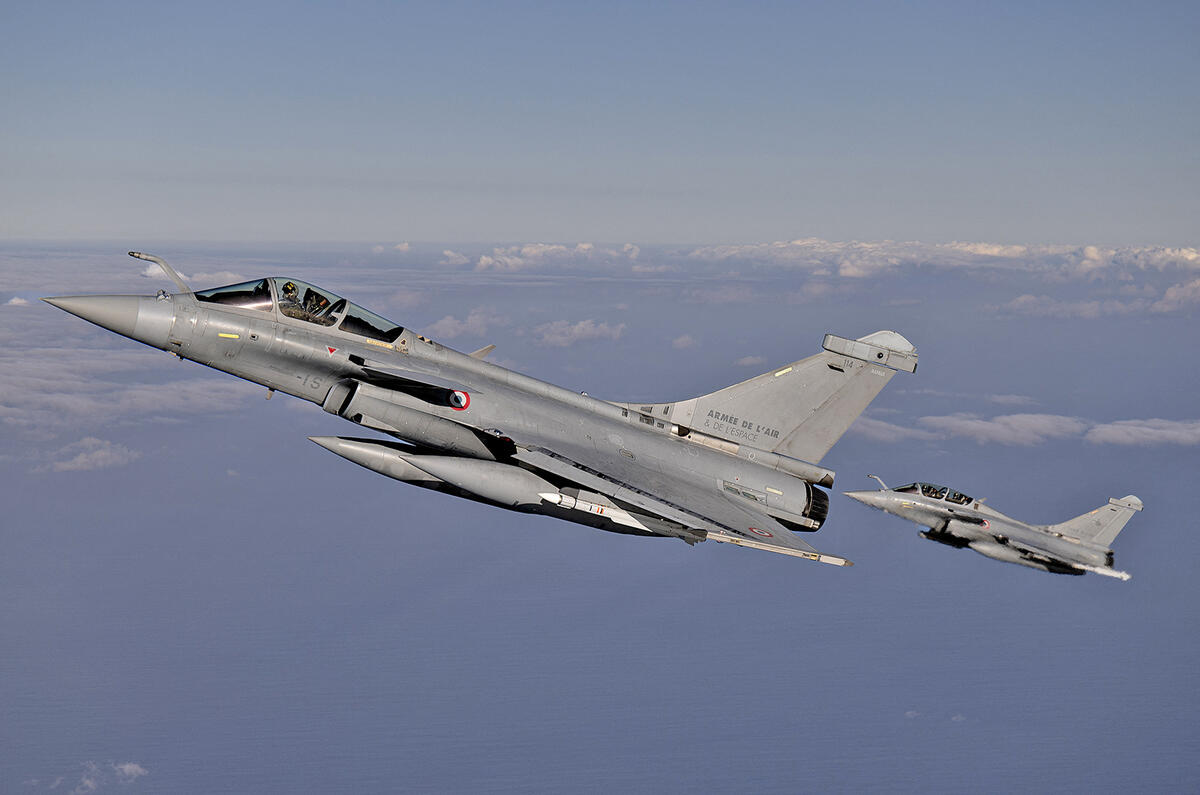
3: Dassault Rafale

 Dassault Rafale

Of the ‘Eurocanard’ fighters, the collaborative Typhoon, Swedish Gripen and French Rafale, the latter is generally considered the most beautiful. It is far curvier than the Typhoon, far more predatorial than the boxy-intaked Gripen and is overall more flowing in form than either.

The Rafale’s forward fuselage is a sculpture in its own right, somewhat like a boat hull, and sensuously feminine. The canard foreplanes are more aesthetically positioned than those of the Typhoon and more in proportion than those of the Gripen.

The kidney-shaped air intakes are delightful. The combination of t-shaped frontal fuselage and kidney shaped intake is like nothing else, other than perhaps the TF-102, which certainly lacked the Rafale’s beauty. The serrated zig-zag panel lines, there to aid stealth, are also a neat design feature.

Back to top

Until the 1950s, France had a reputation for making either the ugliest or most beautiful aircraft. From the mid-1960s, France seemingly (almost) always made gorgeous aircraft. The Rafale is a strong heir to this legacy of attractive jet aircraft as well as being an extremely capable multi-role combat aircraft available in both land-and carrier-based variants.


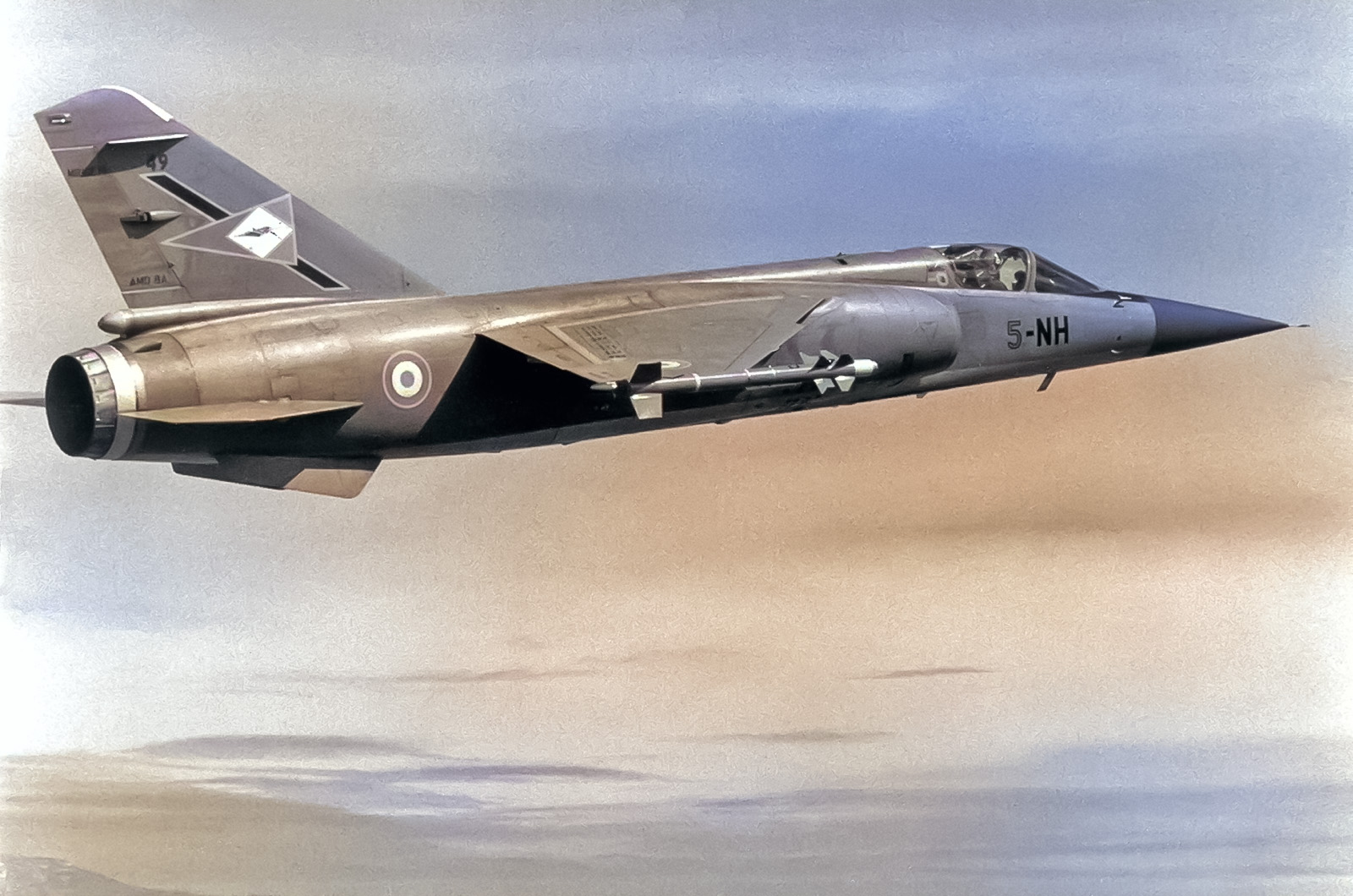
2: Dassault Mirage F1

 Dassault Mirage F1

What makes a Mirage a Mirage? Seemingly, not the big delta wing, as the Mirage F1 of 1966 did not have one.  Unlike its earlier (and later) family members that entered service, the F1 had a swept wing mounted high on the fuselage.

The first Mirage to fly with such a wing was the IIIF2. The new cropped delta wing combined lower weight, short-field performance and pleasant handling. The Mirage F1 had an aggressive, uncluttered appearance with good proportions. It was swift at Mach 2.2+, and proved effective in service.

An attractive feature of the F1 was the 'dogtooth’ on the wing; in aerodynamics a dogtooth is a small, sharp break in the leading edge of a wing, used to prevent separated flow from progressing outboard when the aircraft is flying nose high to the direction of travel (known as a ‘high angle of attack’).

The Mirage F1 kept the variable geometry variable conical centre-body intakes of the III/5/50 series. The centre-body moves in and out of the intake as appropriate for different airspeeds. At low speeds, extra power can be achieved with the aid of ‘suck-in’ auxiliary doors on the side of the main intakes.


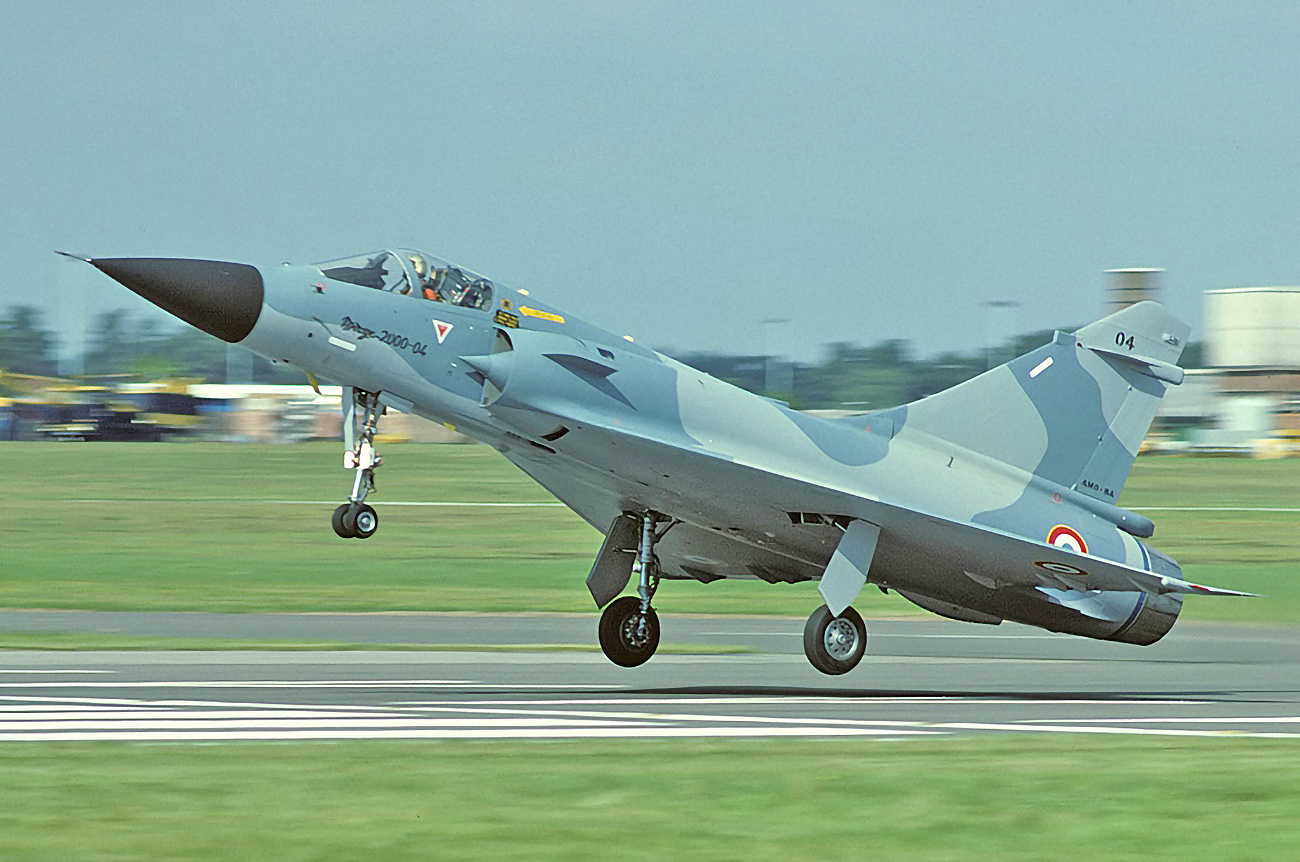
1: Dassault Mirage 2000

 Dassault Mirage 2000

Superficially, the late seventies Mirage 2000 is similar to the Mirage III series, but it was an utterly different machine embodying some of the then latest innovations in aviation, including fly-by-wire and inherent instability (most modern fighter aircraft have reduced stability to increase manoeuvrability).

The Mirage 2000 had a twin-engine sibling, the massively impressive Mirage 4000, which failed to make it into the top ten. The 4000 failed to enter full series production or service but proved helpful in developing the Rafale. The 4000 also featured the world’s first carbon graphite tail

Back to top

The film Les chevaliers du ciel (also known as Sky Fighters) from 2005 was essentially the French Top Gun, doing for the Mirage 2000, what the American movie did for the F-14 Tomcat. The Mirage 2000 proved a glamorous star in some truly draw-dropping flying scenes.

Follow Joe Coles on Substack, Twitter X  or Blue Sky. His superb Hush-Kit Book of Warplanes is available here.

If you enjoyed this story, please click the Follow button above to see more like it from Autocar

Photo Licence: https://creativecommons.org/licenses/by/4.0/deed.en

Join our WhatsApp community and be the first to read about the latest news and reviews wowing the car world. Our community is the best, easiest and most direct place to tap into the minds of Autocar, and if you join you’ll also be treated to unique WhatsApp content. You can leave at any time after joining - check our full privacy policy here.

Add a comment…