Currently reading: 9 of the Best warplane camouflage designs

Top 10: Best warplane camouflage designs

Knowing that being seen can mean destruction, warplanes have adopted camouflage since the hair-raising flying of the first world war.

Sometimes from art, sometimes from science and sometimes just as an exercise in morale, warplanes have donned a multitude of wildly different colours and schemes in pursuit of a decisive or momentary advantage. Here are 9 extremely pleasing examples of aircraft camouflage:


10: Reconnaissance Spitfires
 Reconnaissance Spitfires

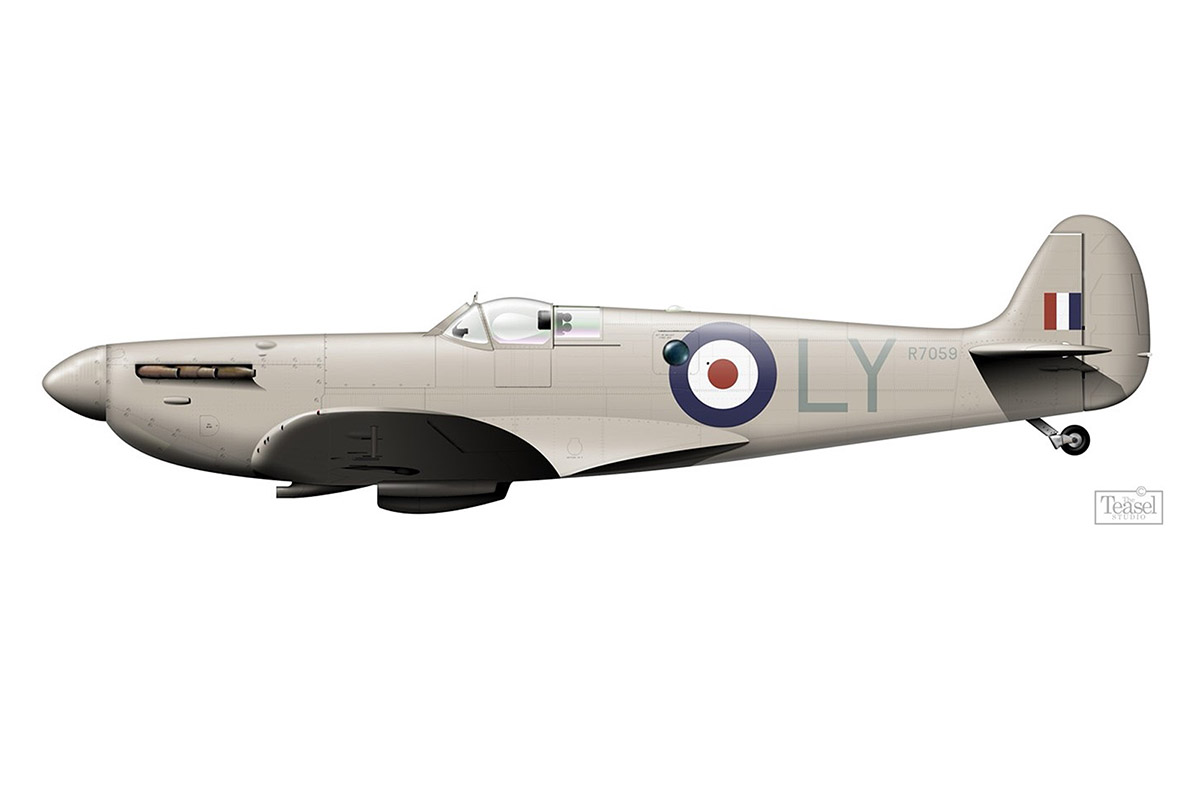
Photo Reconnaissance Unit (PRU) Spitfires were among the most capable reconnaissance aeroplanes of the Second World War. They used several different camouflage schemes. One of the early schemes was a pink that worked well at dawn and dusk.

Spitfire R7059, a Mark I PR Type G (later re-designated Spitfire PR Mark VII), belonged to B flight of No. 1 Photographic Reconnaissance Unit Detachment based out of RAF Heston in 1941. The artwork shows it in camotint pink for the dawn/dusk low-level recce role. The actual shade of pink is a subject of much heated debate.


10: Reconnaissance Spitfires
 Reconnaissance Spitfires

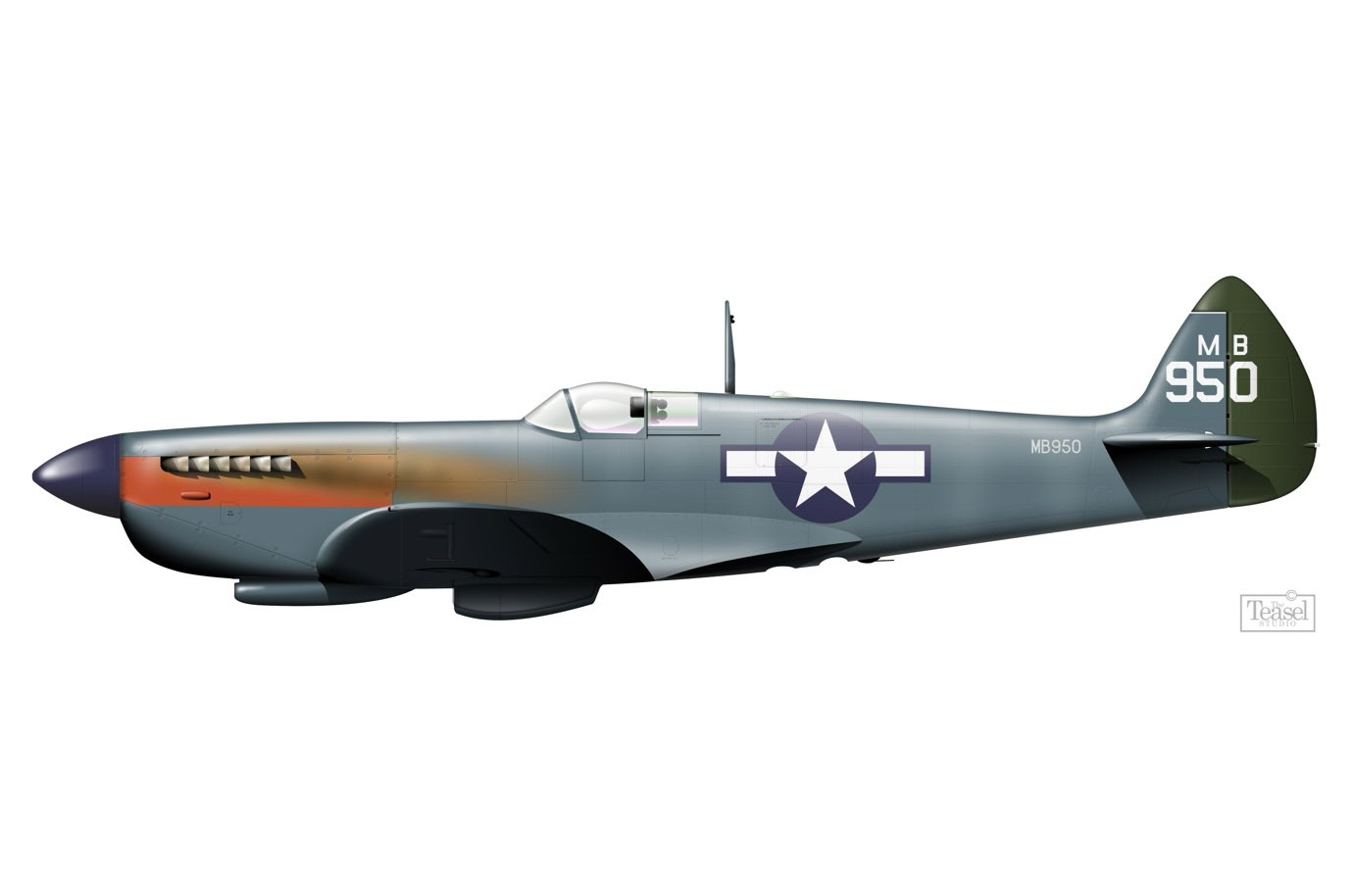
Various Reconnaissance Spitfires received other grey, white, green and blue-based schemes, including greenish-blue schemes with the Soviet Air Force and blue USAAF aircraft. Some RAF Spitfires used the standard disruptive uppers and light undersides.

By October 1940, most PRU Spitfires wore overall 'PRU Blue', which proved very effective at high altitudes. The colour was a mixture of cerulean and Prussian blue. No 2 PRU Royal Blue was darker and better suited to high-altitude use in the Middle East.


9: Mean and green?
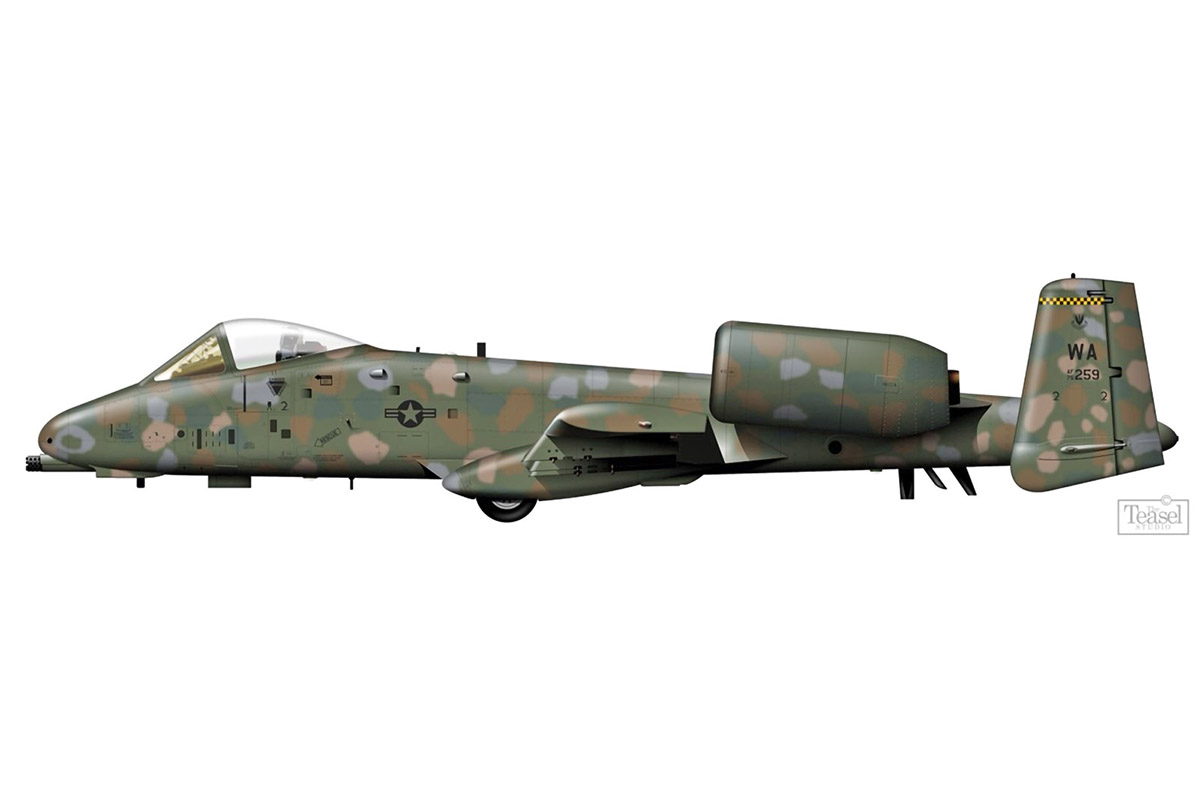
 Mean and green?

This is an A-10 in one of four camouflage schemes evaluated as part of the Joint Attack Weapons System (JAWS) 2 exercise in November 1977. It was essentially a single-colour base coat, with the colour and pattern of the temporary spots changed to suit local geographical conditions. The adoption of the Europe One ("Lizard") scheme killed the JAWS concept.

Aircraft camouflage involves several key principles: colour-matching, disruption of form, and reflectiveness. Consideration of where the threat will likely be viewing the aircraft from (above or below, etc.) and how manoeuvring will affect the camouflage effect (for example, highlighting a pale belly against a dark mountainous background) is vital.


9: Mean and green?
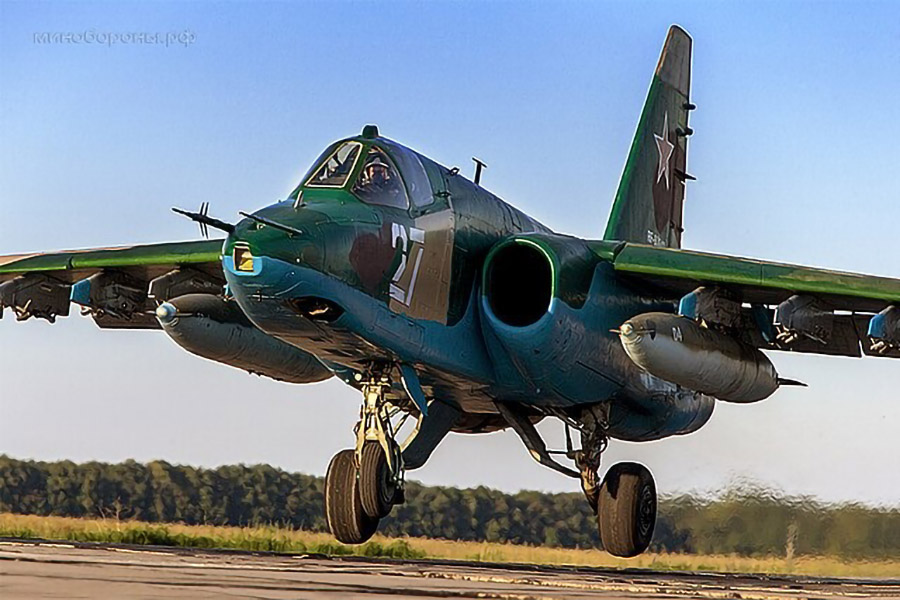
 Mean and green?

Ground attack aircraft expected to operate at a low level held onto green and tan schemes longer than dedicated fighter aircraft, which essentially went grey in the 1990s. Some countries, most notably Russia, still use a second world war-style camouflage of two-colour uppers and light underside on some tactical aircraft (Su-25 shown).

Another consideration is how specific to go; if the camouflage is overly specialised, it can make the aircraft more visible. An aircraft perfectly painted to match the desert will stand out like a sore thumb against the sea. As well as night, weather conditions can massively vary an environment's light and colour.


8: Swedish splinter
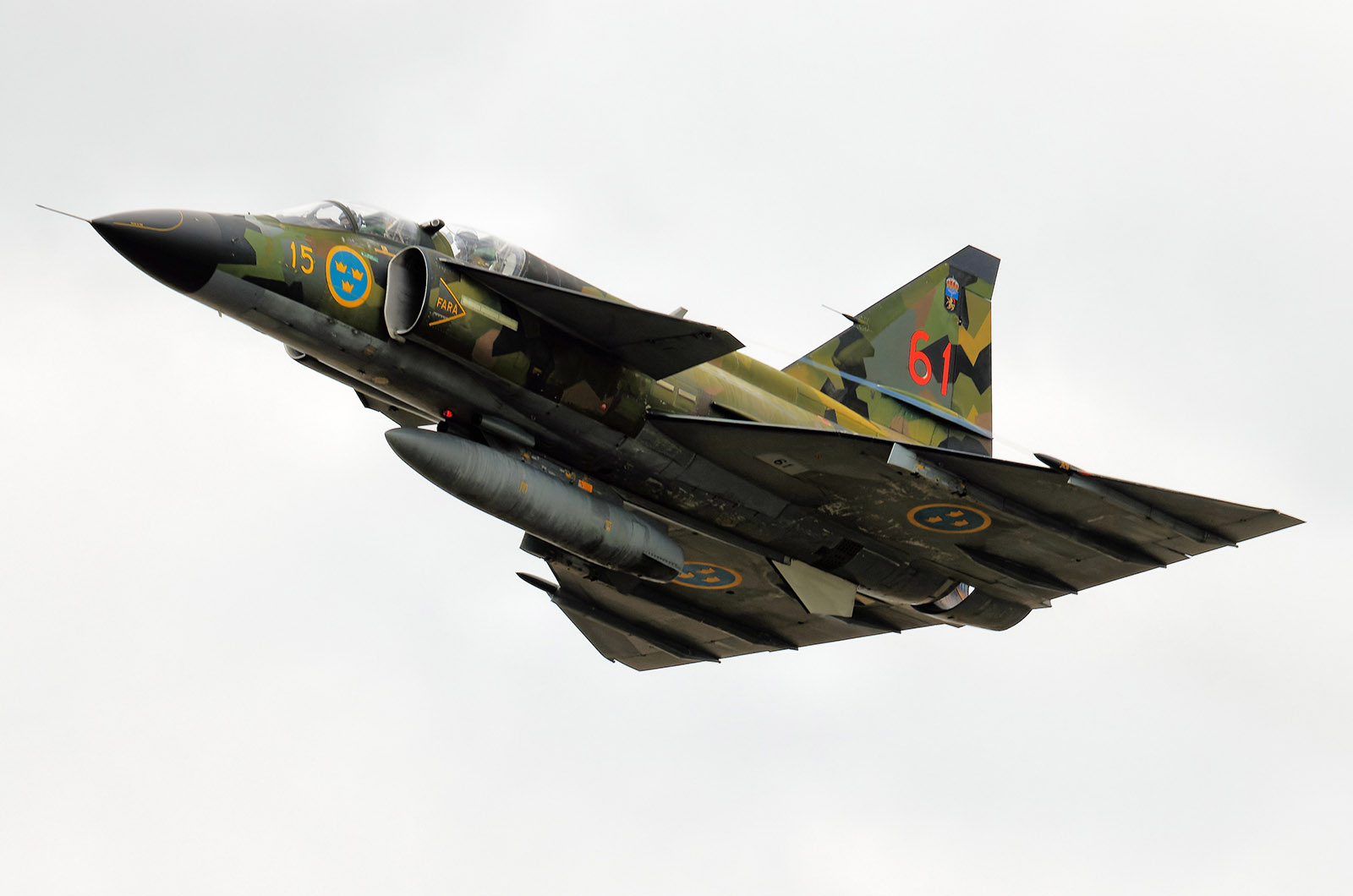
 Swedish splinter

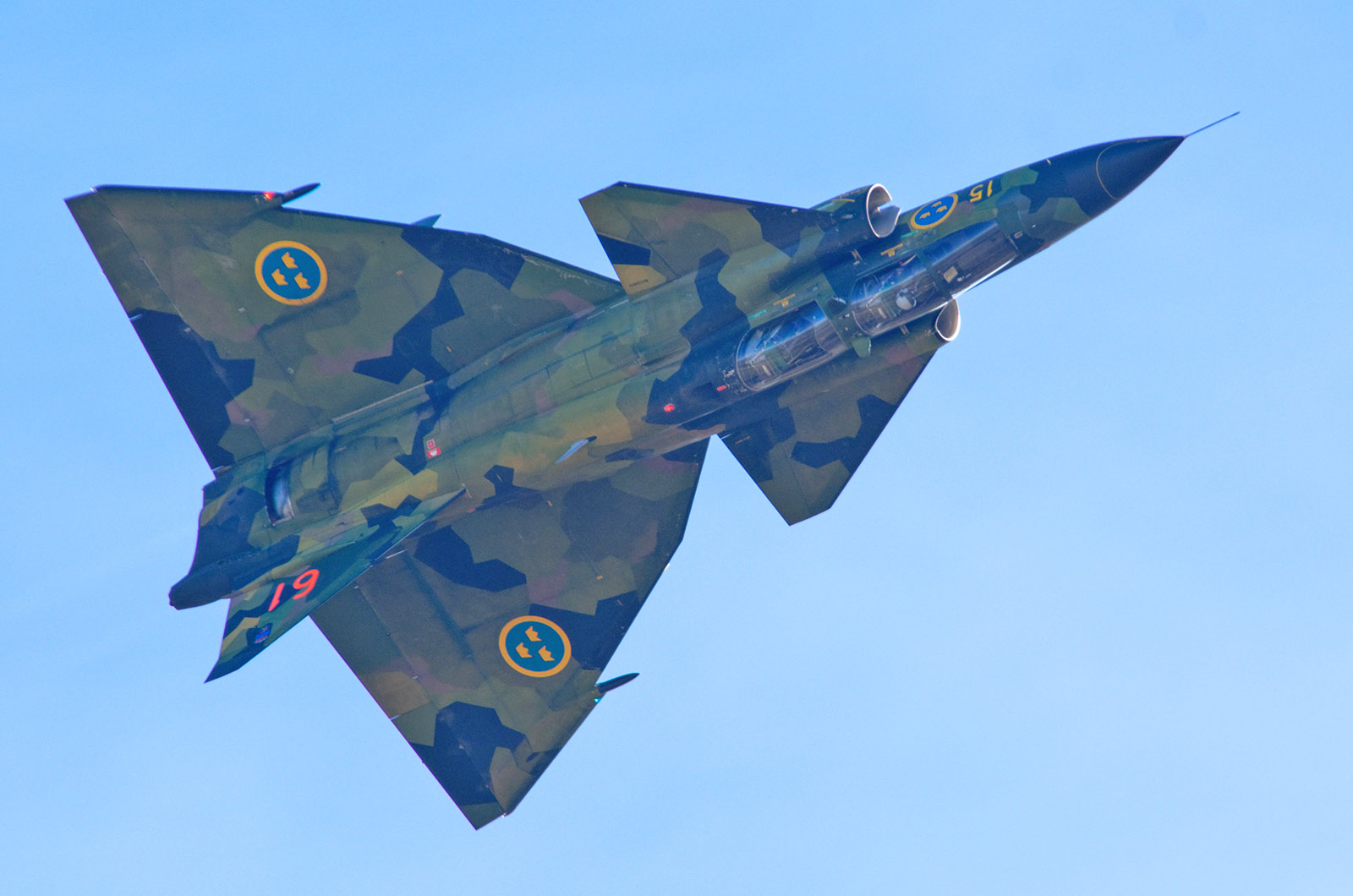
The iconic Swedish FOA scheme was first developed as a long-distance vehicle camouflage, and it evolved from intense studies based on aerial observation. Its angular 'splinter' camouflage was applied to Saab 37 Viggen combat aircraft.

Back to top

Sweden is a highly forested country, with forests covering roughly 70% of its land area. The scheme is perfect for operating over forests. It is also effective for dispersed basing, a tactic built into Swedish defence planning and training.


8: Swedish splinter

 Swedish splinter

The FOA scheme varies but generally features blackish green, dark green, light green, and sand brown. Scale aircraft modellers consider it one of the most challenging schemes to reproduce, but many enthusiasts love it.

FOA is a 'splinter' scheme. 'Splinter' refers to the colour sections' sharp angular shapes. One of the earliest forms of this scheme was a German scheme used for military tent fabric from the 1930s, which was later used in German Army uniforms, known as Splittertarnmuster. Angular splinter-like schemes were also used on wartime Luftwaffe aircraft, including some Arado Ar.234s and Do 335s.


7: Fake cockpits

 Fake cockpits

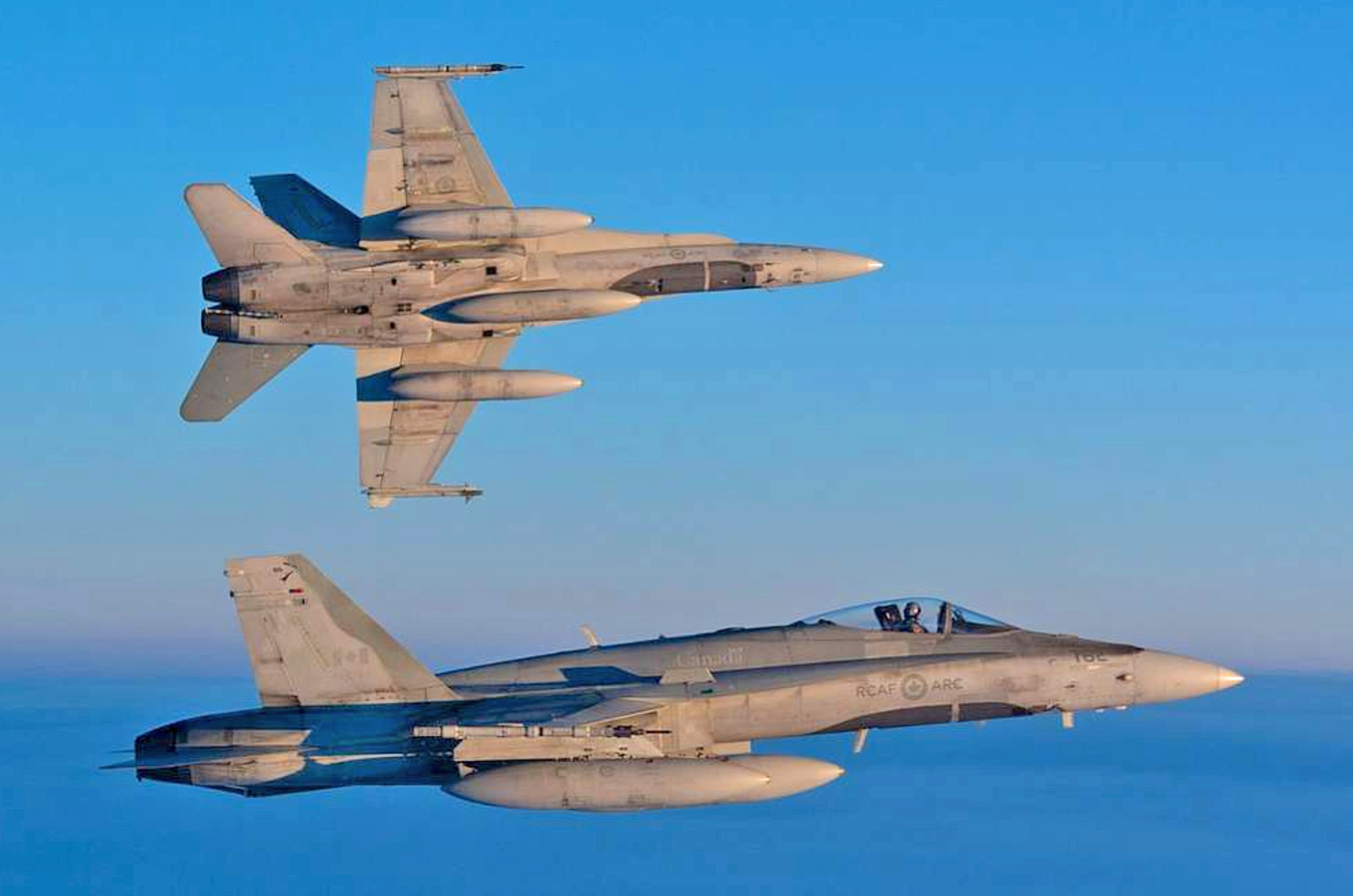
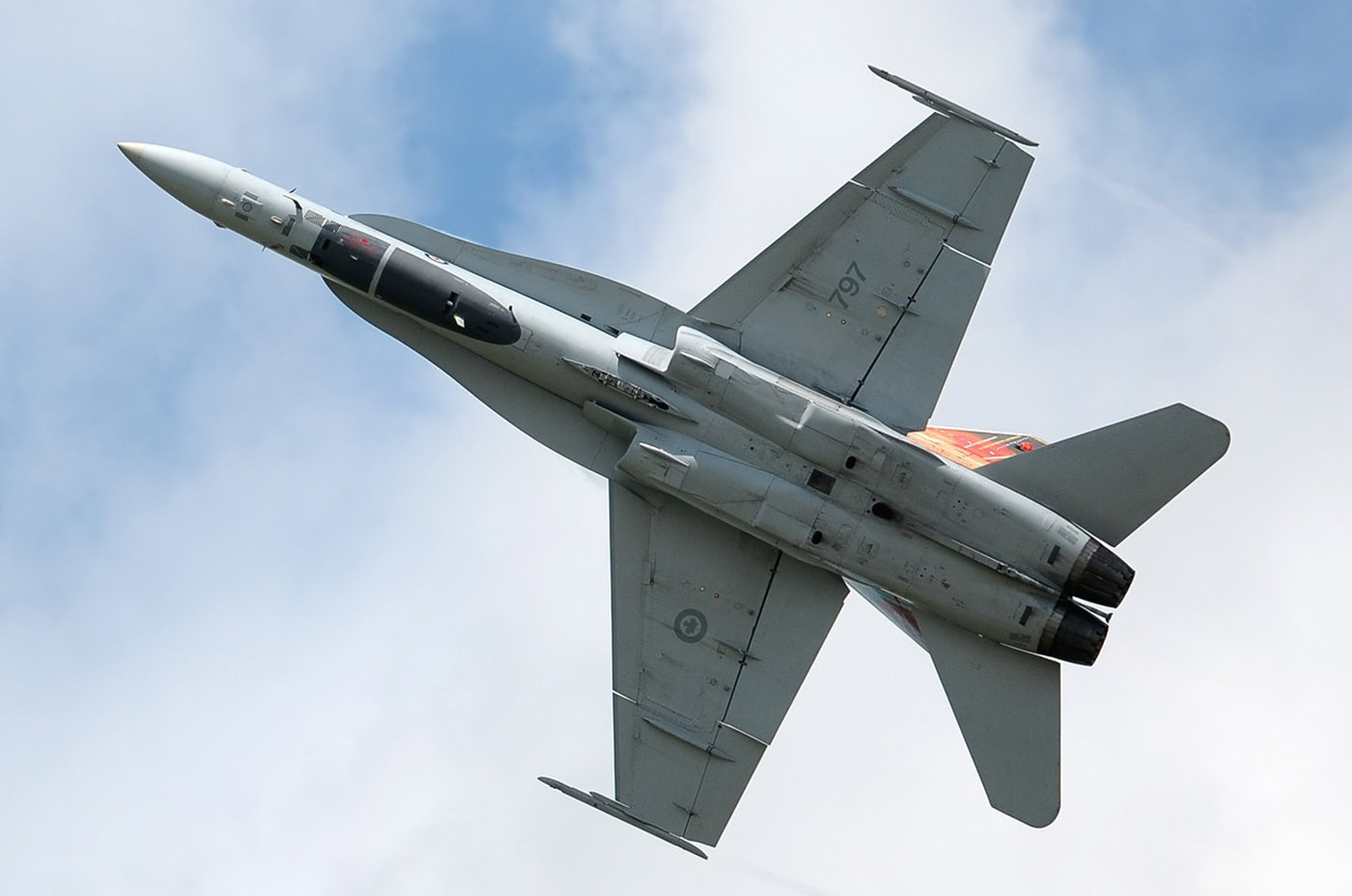
In nature, mimicry or visual deception is often used to confuse potential predators. Forms of visual deception are also used in aircraft camouflage. The most popular is the fake canopy, developed by aviation artist Keith Ferris. This simple technique is said to be effective.

It consists of the image of the dark outline of an aircraft canopy on the underside of an aircraft's nose. In 'within-visual range' combat or the 'dogfight', a split second of confusion can have deadly consequences; the fake canopy may cause the viewer to believe the aircraft is the other way up.


6: Fake cockpits

 Fake cockpits

Aircraft types utilising fake canopies include Italian Navy Harriers and Canadian Air Force F/A-18 Hornets. Though some doubt the effectiveness, other pilots have testified to near collisions caused by fake canopies causing disorientation.

Deception camouflage was the first form of camouflage used on a military aircraft. The Dunne D.1 glider of 1907 was a tailless biplane with a swept wing featuring a secret conical wing surface. Thin white lines of tape with misleading angles were placed on its black covering to confuse any snooping eyes.

Back to top

6: Ferris

 Ferris

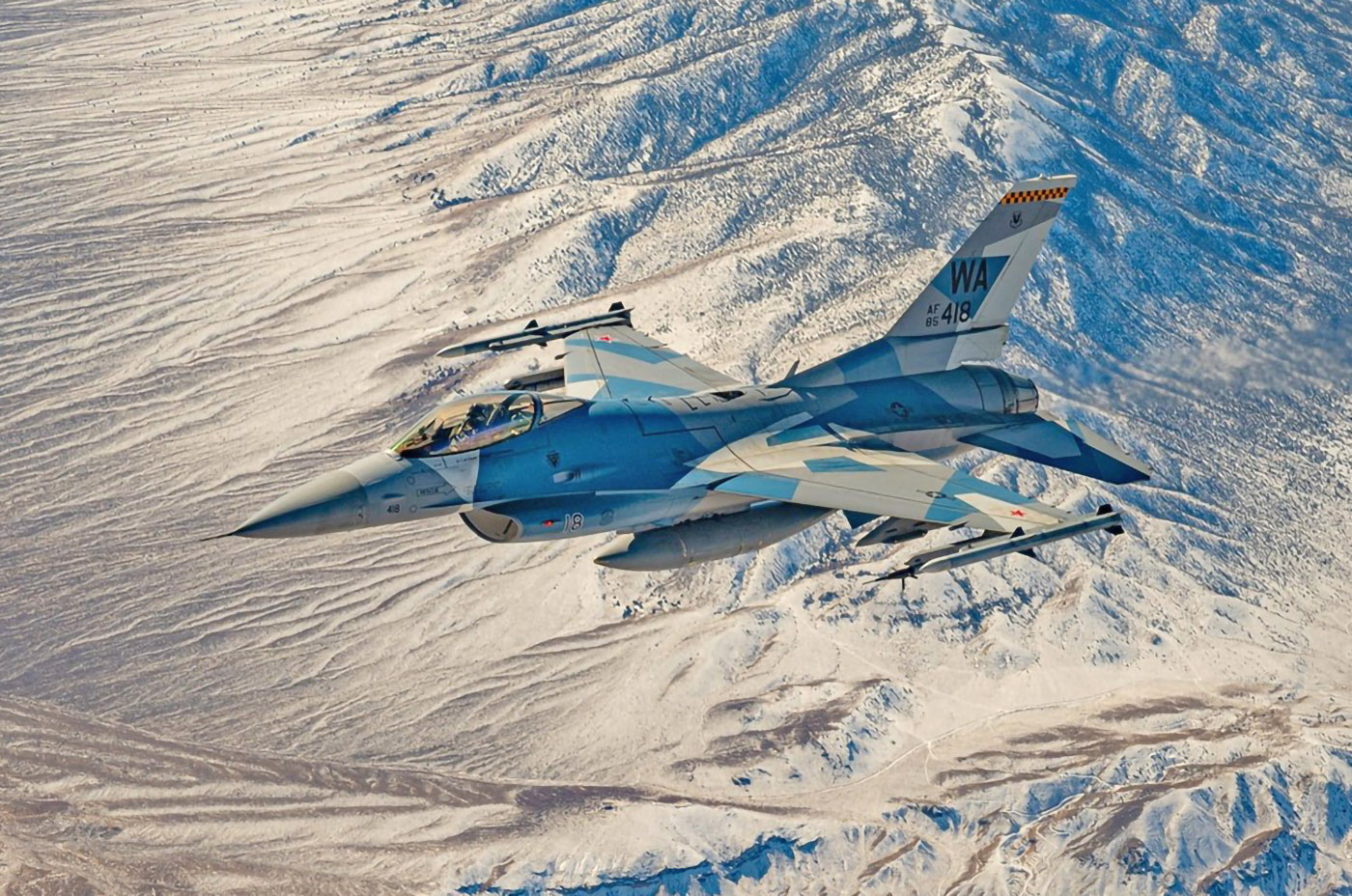
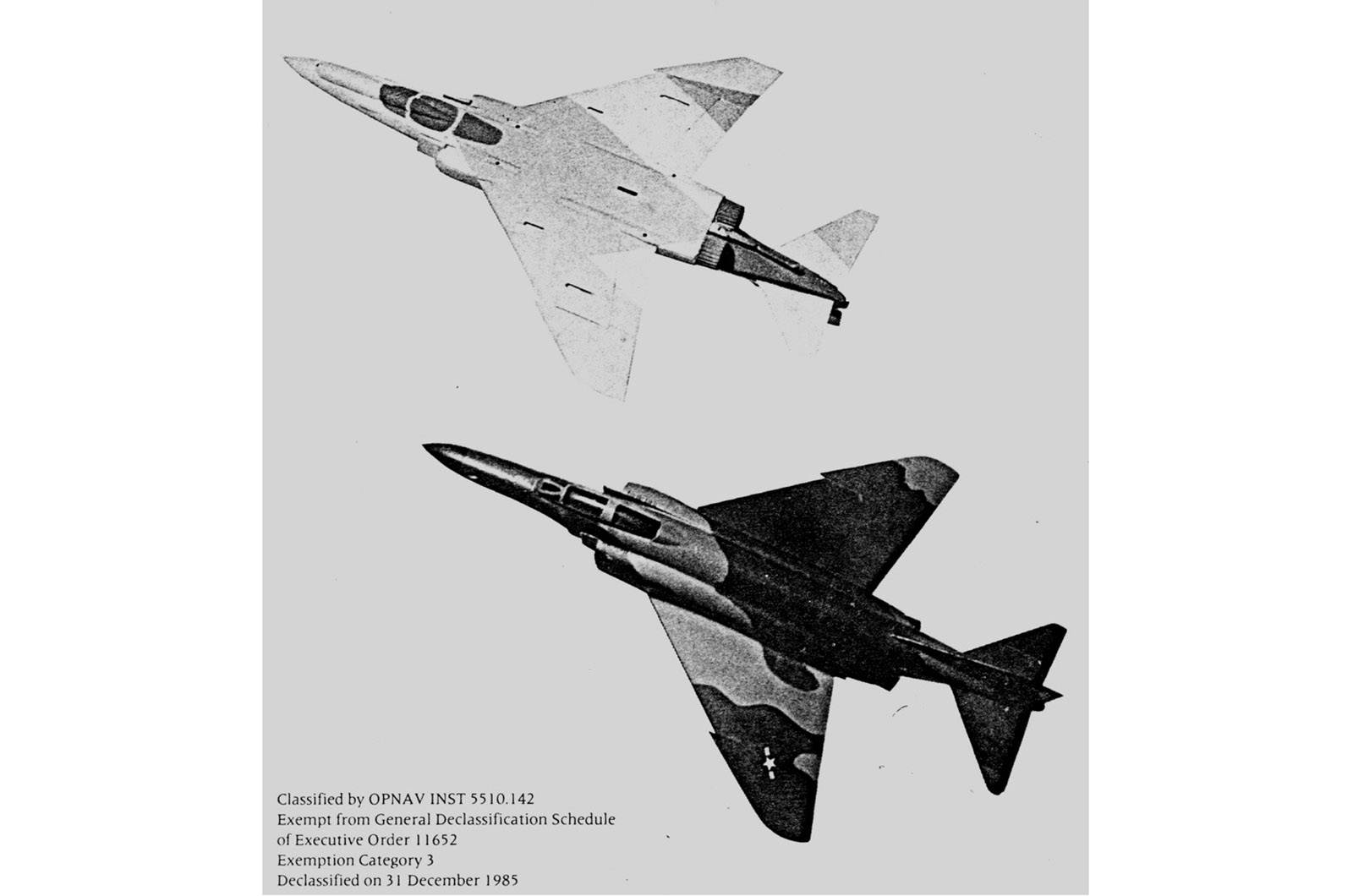
A 64th Aggressor Squadron F-16 in a striking splinter scheme. Aggressor aircraft portray hostile aircraft in training exercises to teach aircrew air combat skills. Their range of schemes both highlights their dissimilarity from 'friendly' aircraft and gets aircrew familiar with schemes that may be worn by hostile aircraft.

This scheme is based on schemes worn by Russian 'Flanker' aircraft, themselves influenced by the work of US aviation artist and camouflage pioneer Keith Ferris. The large asymmetrical shapes with clear-cut boundaries help break up the shape of the aircraft visually.


6: Ferris

 Ferris

The Keith Ferris Camouflage Paint System was an innovative, experimental, deceptive paint scheme. Inspiration came in the late 1970s after Ferris returned from deployment with the first F-4E squadron sent to Southeast Asia. Ferris was shocked at how visible green and brown tactical schemes were at medium or high altitudes.

Ferris worked to create schemes that worked at different altitudes and made it difficult to determine which way the aircraft was turning. One scheme he proposed used a jagged pattern. Key principles included removing bright colours and black, embracing grey tones with a matte finish and asymmetric patterns, and toning down insignia.


5: Desert

 Desert

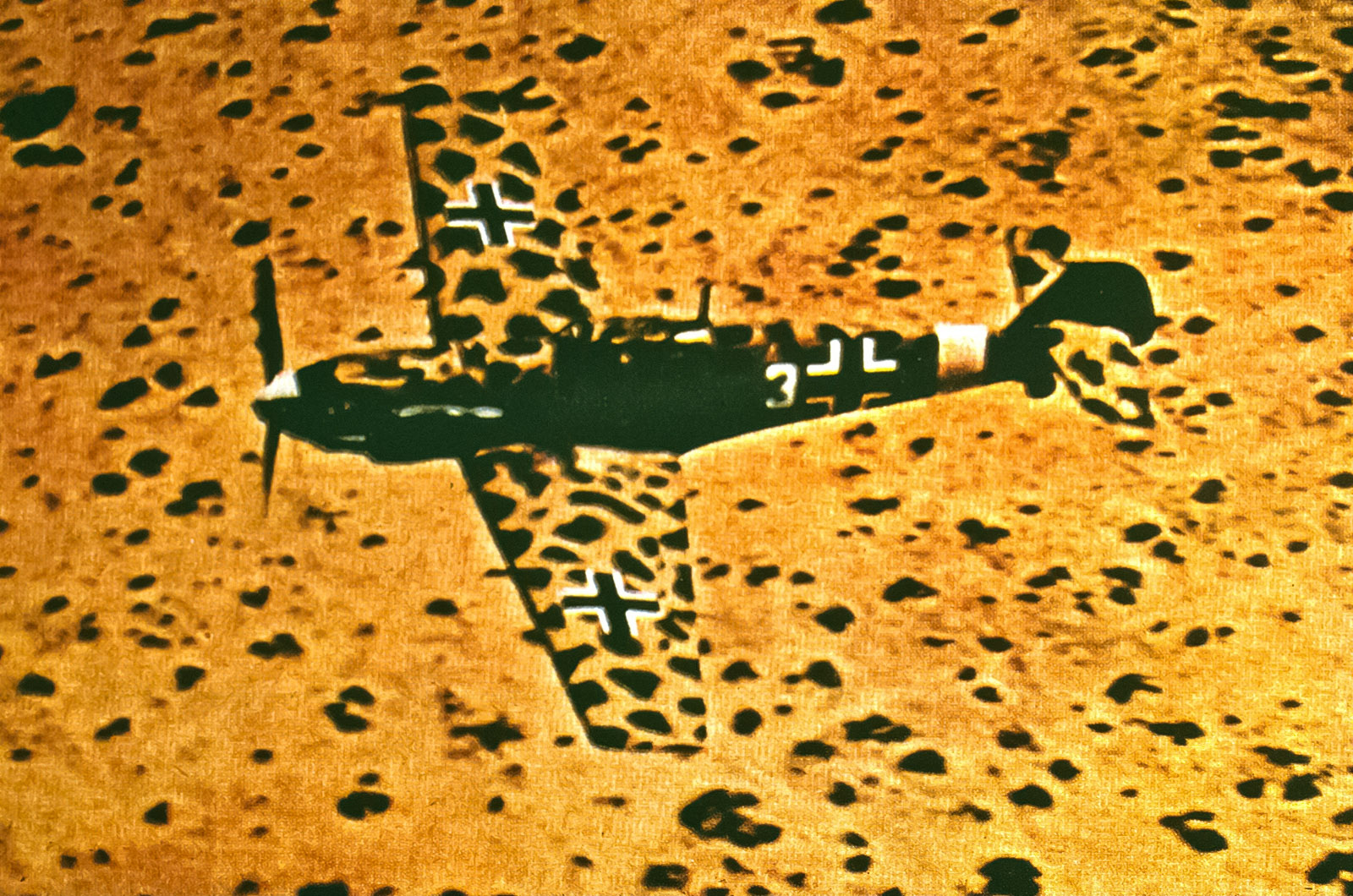
Perhaps the most famous photograph highlighting the effectiveness of good aircraft camouflage is this image of a Luftwaffe Messerschmitt Bf 109 above the desert in North Africa. The sand tone is very well matched, and the dark sections are an excellent match for the shade and scale of the shadows of rocks.

Several approaches to desert camouflage have been employed, many of which use sand, brown, and pink tones. There is a surprising amount of variation in colour in different deserts, and the colour changes dramatically across the day.


5: Desert

 Desert

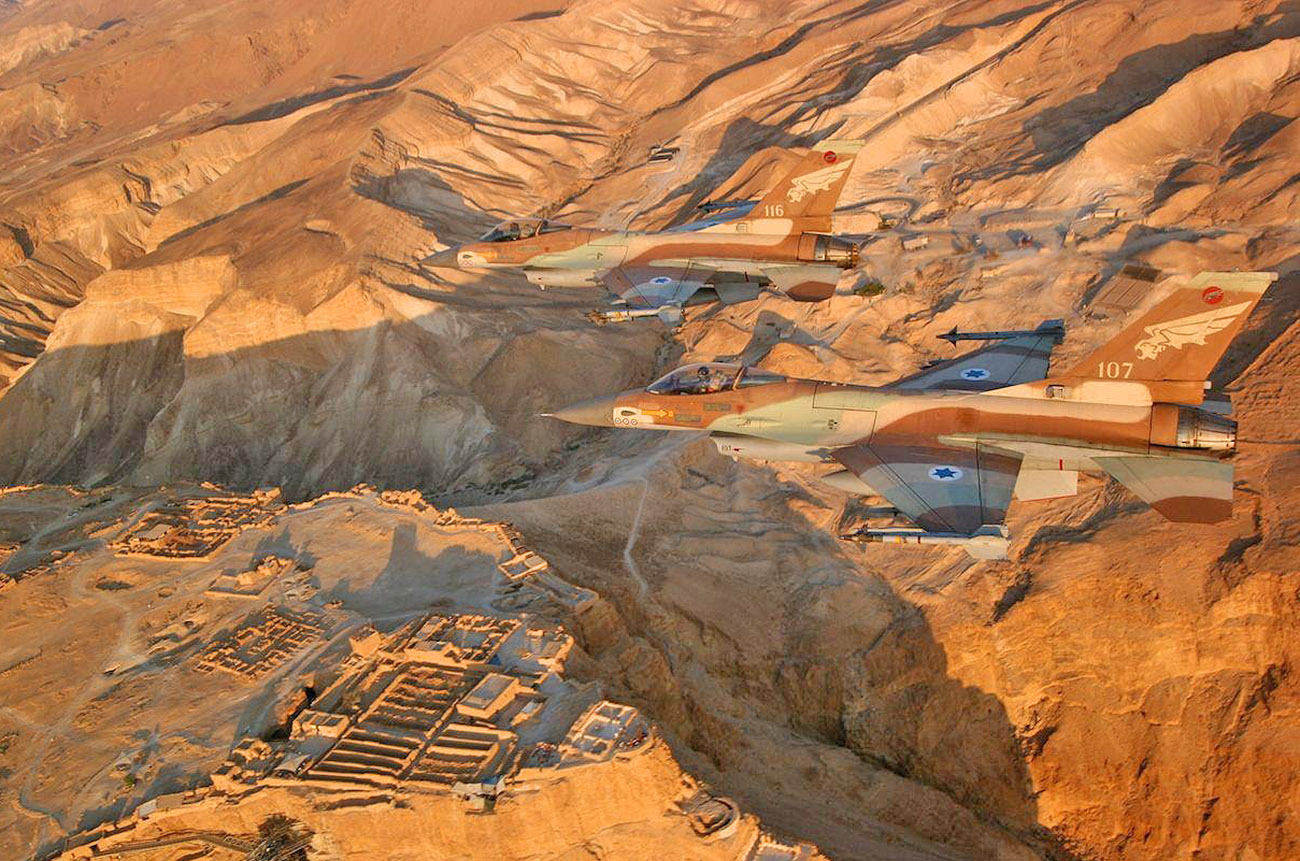
The North Africa campaign in the second world war saw the widespread use of aircraft desert camouflage. Many warplanes were also painted in desert camouflage during the various Arab-Israeli wars, the 1980s Iran-Iraq War, and the 1991 Gulf War. More recently, many air forces have moved away from low-altitude attacks, meaning grey can remain even for desert operations.

Back to top

These Israeli Air Force F-16s use a three-tone scheme well-suited to the arid landscape. It consists of a sand tone, a brown and a light pistachio green. The elongated forms work well with the shapes seen in the natural environment.


4: Lockheed Have Blue camouflage

 Lockheed Have Blue camouflage

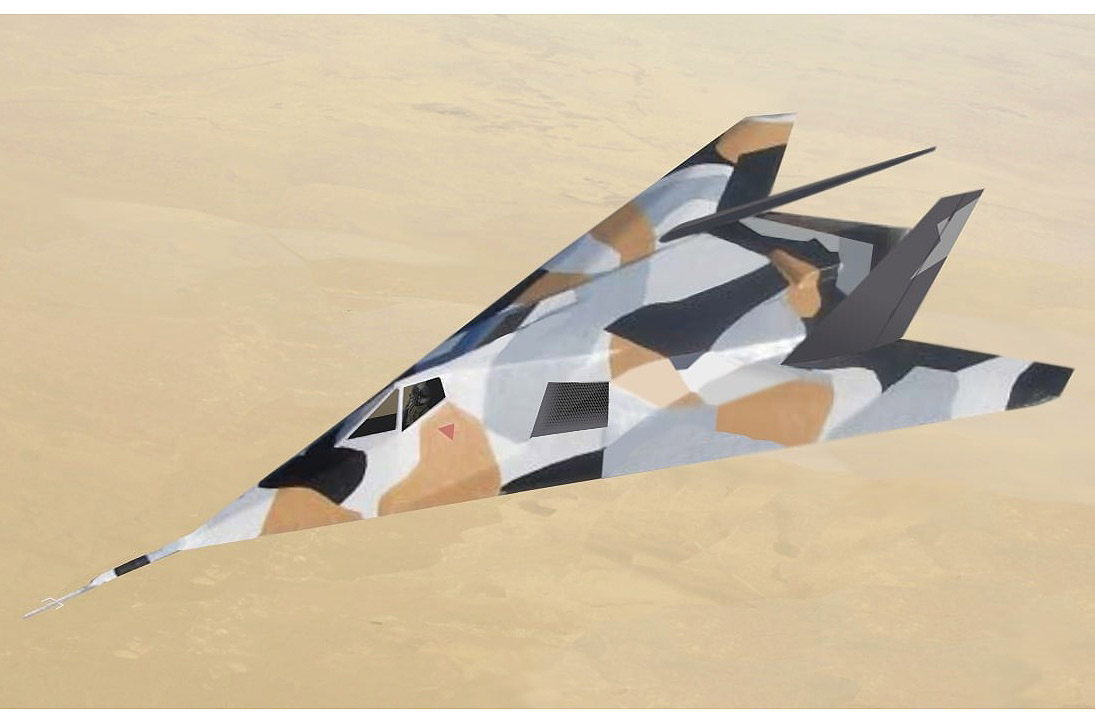
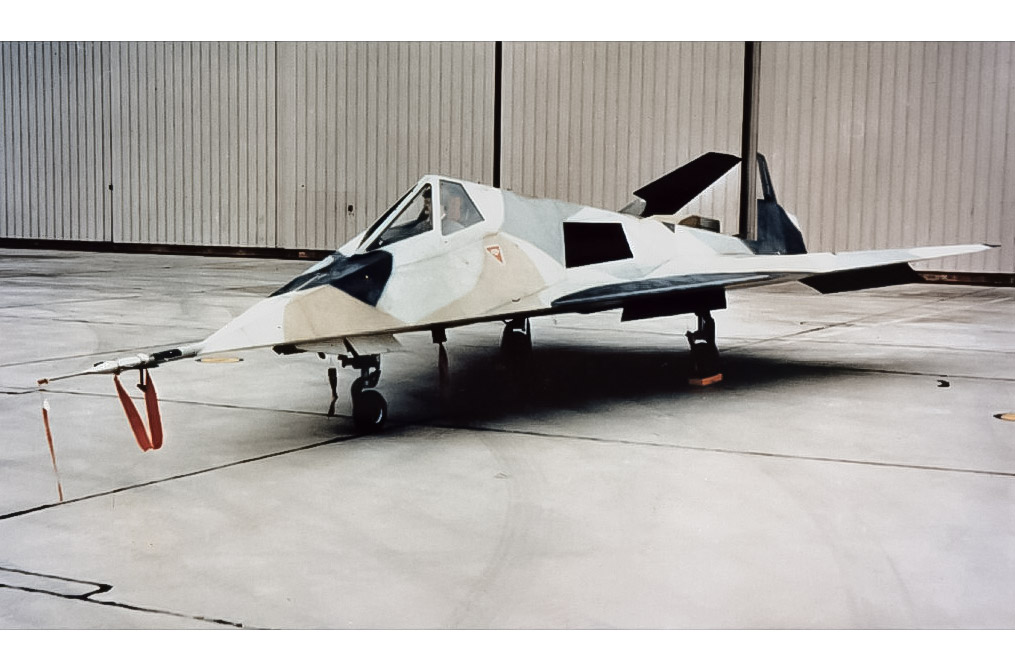
The Have Blue test aircraft was utterly radical in shape and concept. Aerodynamic efficiency was sacrificed for reflecting radar waves, resulting in a fiercely swept wing, inward-canted vertical stabilisers, and a weird mass of flat surfaces. It was nicknamed "the Hopeless Diamond"—a playful title based on the faceted Hope Diamond.

Hiding its shape from prying eyes was extremely important, as its shape revealed its concept. The Have Blue was uniquely painted in a scheme devised by the chief technical engineer Alan Brown. It consisted of three colours, each with three tones, to make the aircraft's characteristic faceting hard to notice.


4: Lockheed Have Blue

 Lockheed Have Blue

Blue first flew on December 1 1977, and the concept would define the later Lockheed F-117 Nighthawk' Stealth fighter'. The Have Blue was considerably smaller than the F-117 and had canted-in tail surfaces rather than out, as with the later F-117.

Key to the stealth is the shape of the aircraft. The Have Blue's angular form reflected radar waves away from the transmitters that sent them. As the shape revealed the concept, Have Blue was highly classified and kept secret for a long time.


3: Snow

 Snow

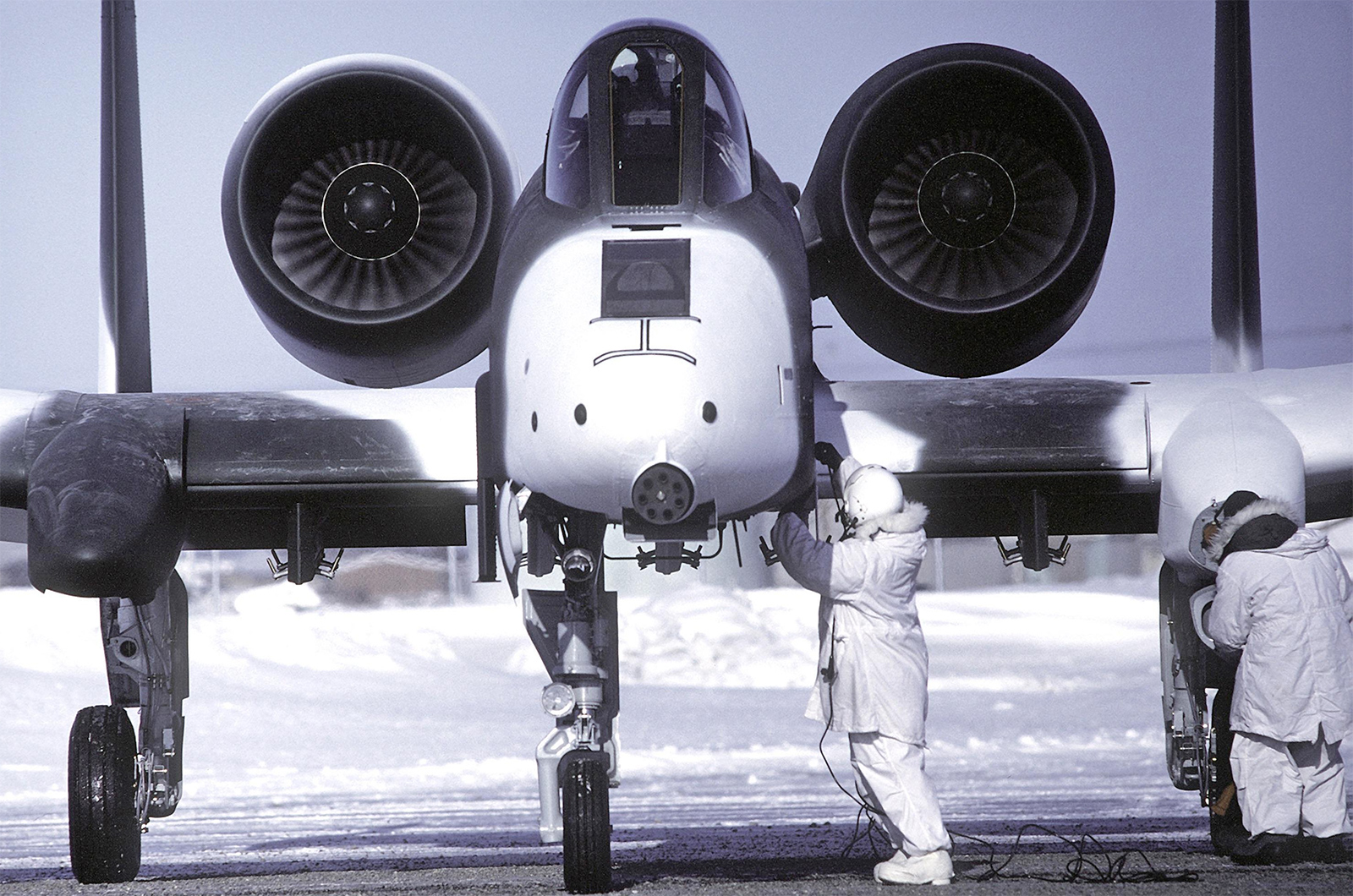
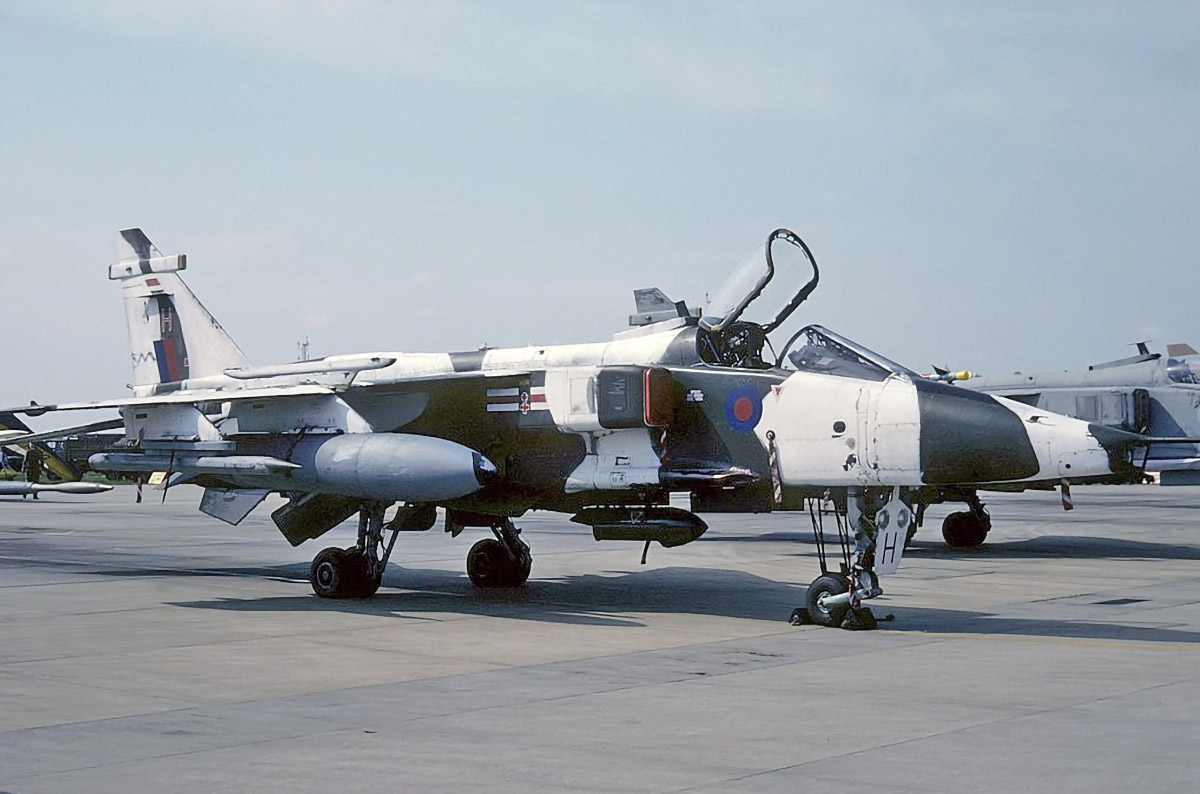
For many countries, the most radical change in environmental colours comes with the snow and ice of winter. For others, parts of the country are always snow-covered. Green and grey aircraft can stand out like a sore thumb against such white backgrounds, which is why many combat aircraft adopt temporary winter schemes.

The widest-spread example was during the second world war in the Soviet Union, in which thousands of aircraft were painted in winter schemes. There was massive variation in winter camouflage schemes.

Back to top

2: Snow

 Snow

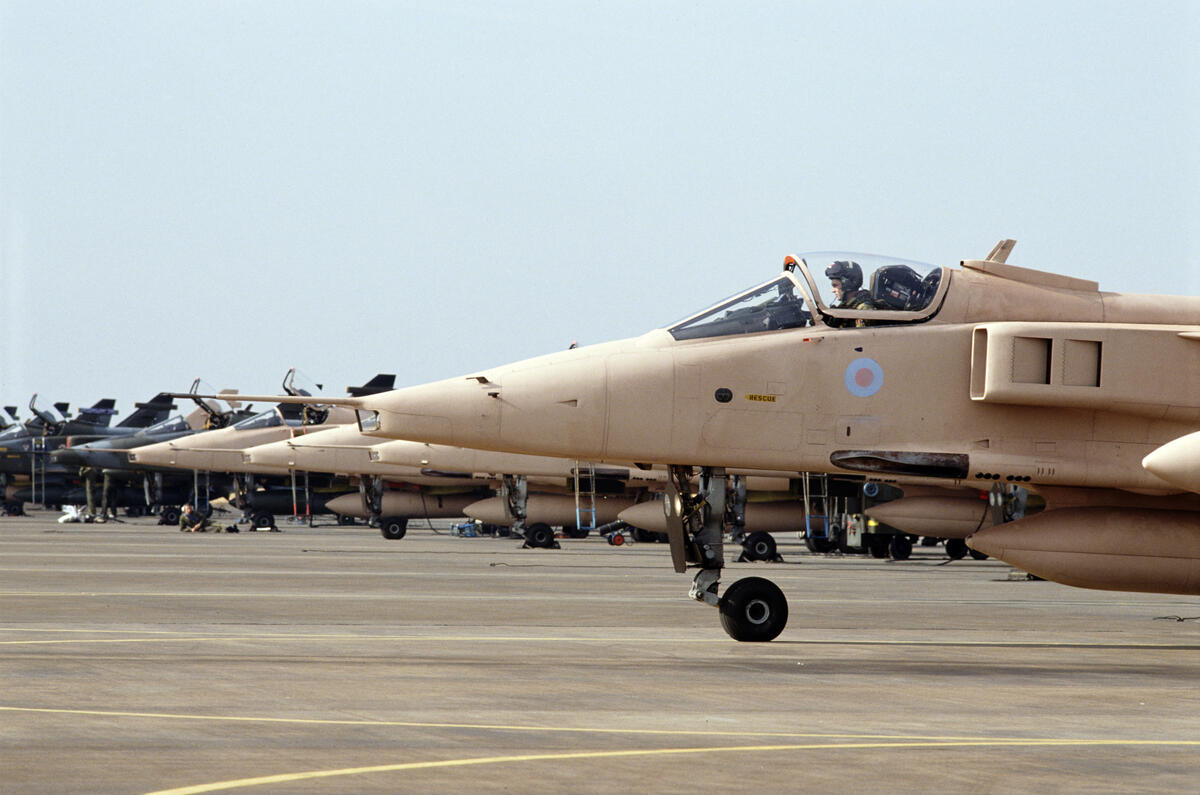
Some aircraft were carefully painted all-white, others messily and temporarily painted or sprayed in messy whites or greys, often over the greens of their standard scheme. Many of these schemes were highly effective, so finding and recovering crashed aircraft in the snow was hard.

In the Cold War, NATO aircraft often trained in the north of Norway. For such exercises, aircraft types painted with water-based temporary camouflage included RAF Harriers and Jaguars (pictured), and USAF A-10 Thunderbolt II.


1: Lozenge

 Lozenge

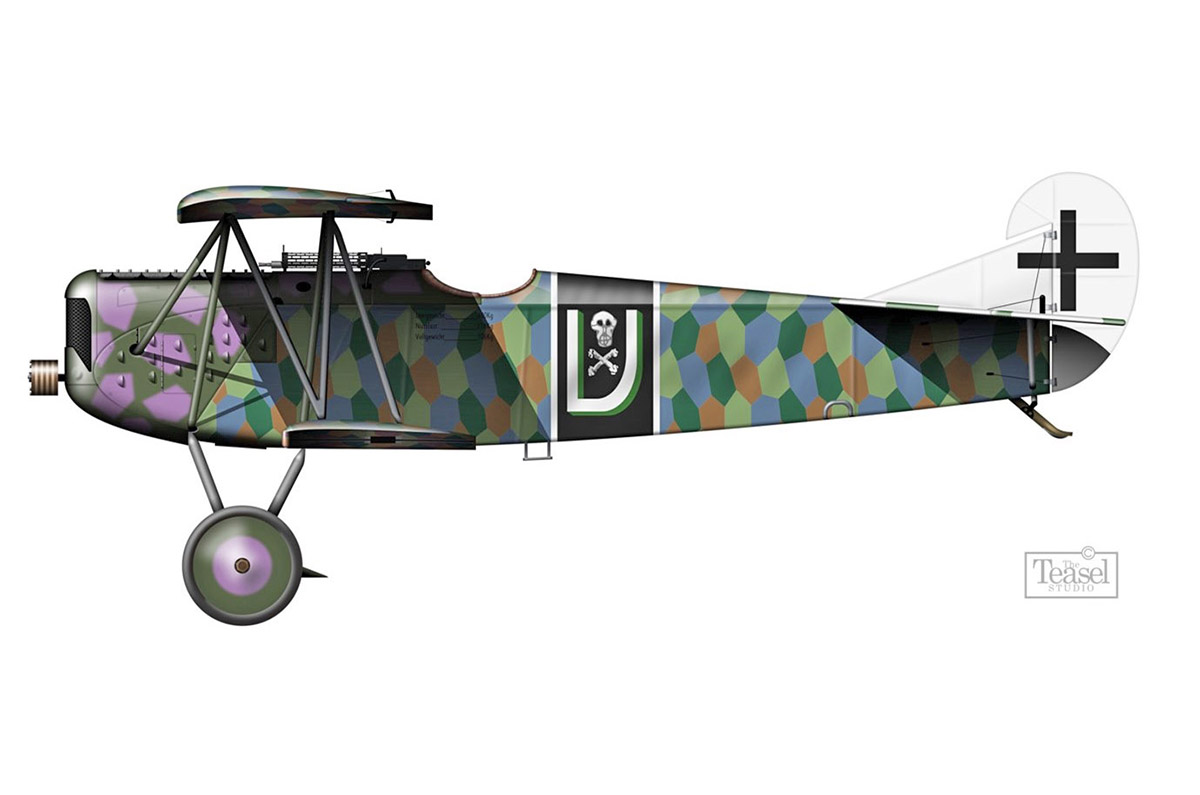
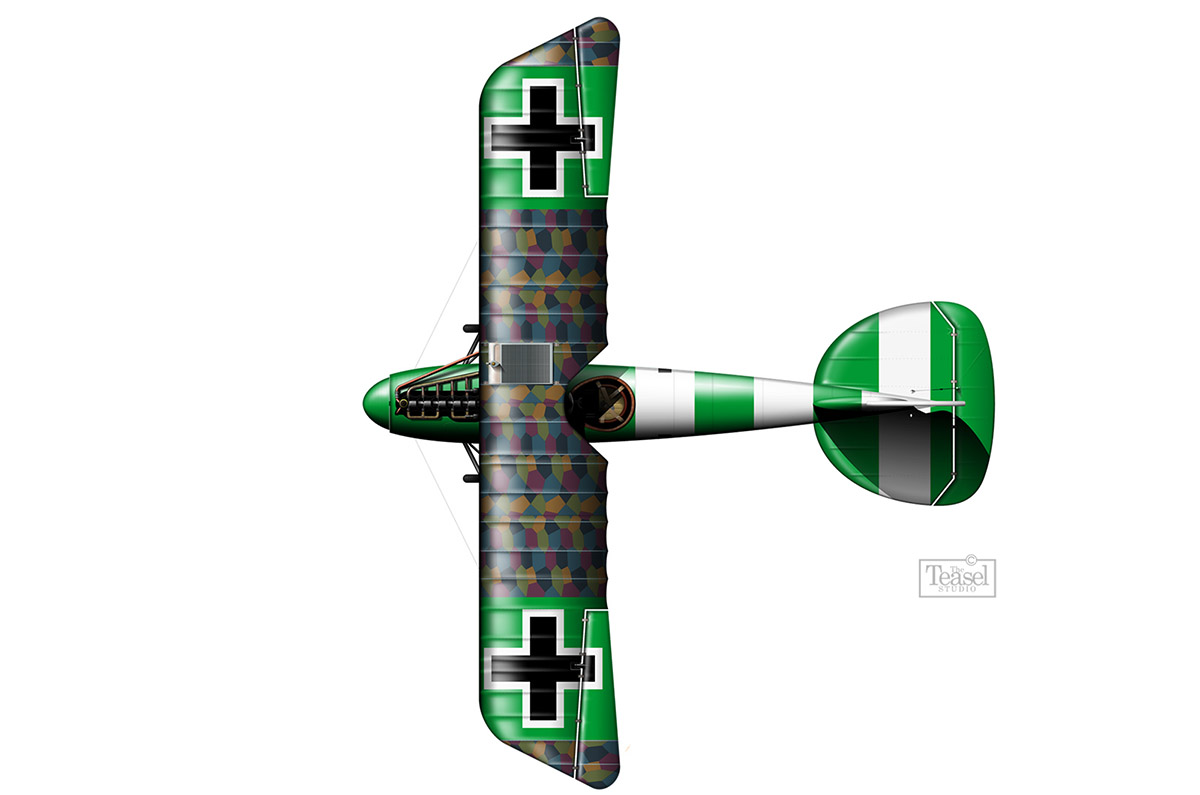
Aero engines in World War One were laughably low-powered by modern standards, and as a result, any means to reduce airframe weight was potentially invaluable. This was the main reason for the German adoption of preprinted 'lozenge' fabric, as it removed the need to cover an aircraft in heavy paint.

Experiments with various patterns, including a three-colour background and circular dots of different sizes, led to the basic duo of four and five-colour patterns. Fokker generally used the four-colour palette as on this D.VII. Different shades were produced for upper and lower surfaces and for nocturnal operations. Both the Army and Navy produced lozenge fabrics for their exclusive use.


1: Lozenge

 Lozenge

Originally developed to diminish the highly visible yellow colouration of observation balloons, the fabric had to be lightweight. The recently discovered indanthrene dyes employed were highly colourfast and durable. Lozenge patterns were not intended to explicitly hide the aircraft but to break up its outline and make it less easily recognised.

Yet the scientific rigour with which the camouflage of lozenge fabrics had been developed, along with the weight savings they delivered, was effectively abandoned in the frontline. Virtually all German aircrew liberally applied vast quantities of paint onto their machines to produce elaborate personal markings, such as these obscuring the five-colour lozenge on the Albatros D.Va of Helmut Dilthey.


Follow Joe Coles on Substack, Twitter X  or Blue Sky. His superb Hush-Kit Book of Warplanes is available here.

If you enjoyed this story, please click the Follow button above to see more like it from Autocar

Photo Licence: https://creativecommons.org/licenses/by/4.0/deed.en

Join our WhatsApp community and be the first to read about the latest news and reviews wowing the car world. Our community is the best, easiest and most direct place to tap into the minds of Autocar, and if you join you’ll also be treated to unique WhatsApp content. You can leave at any time after joining - check our full privacy policy here.

Add a comment…