Currently reading: Secret weapons of the Luftwaffe during World War 2

Secret weapons of the Luftwaffe during World War 2

As Nazi Germany staggered toward its chaotic end, desperation drove it to embrace radical - and often bizarre - technological experiments in a frantic attempt to reverse the tide of war.

Nowhere was the embrace of wild technology more evident than in military aviation, where no concept was too extreme and no configuration too unorthodox to be tried. Here are 23 secret weapons of the Luftwaffe – all of which failed to save Hitler and his regime:


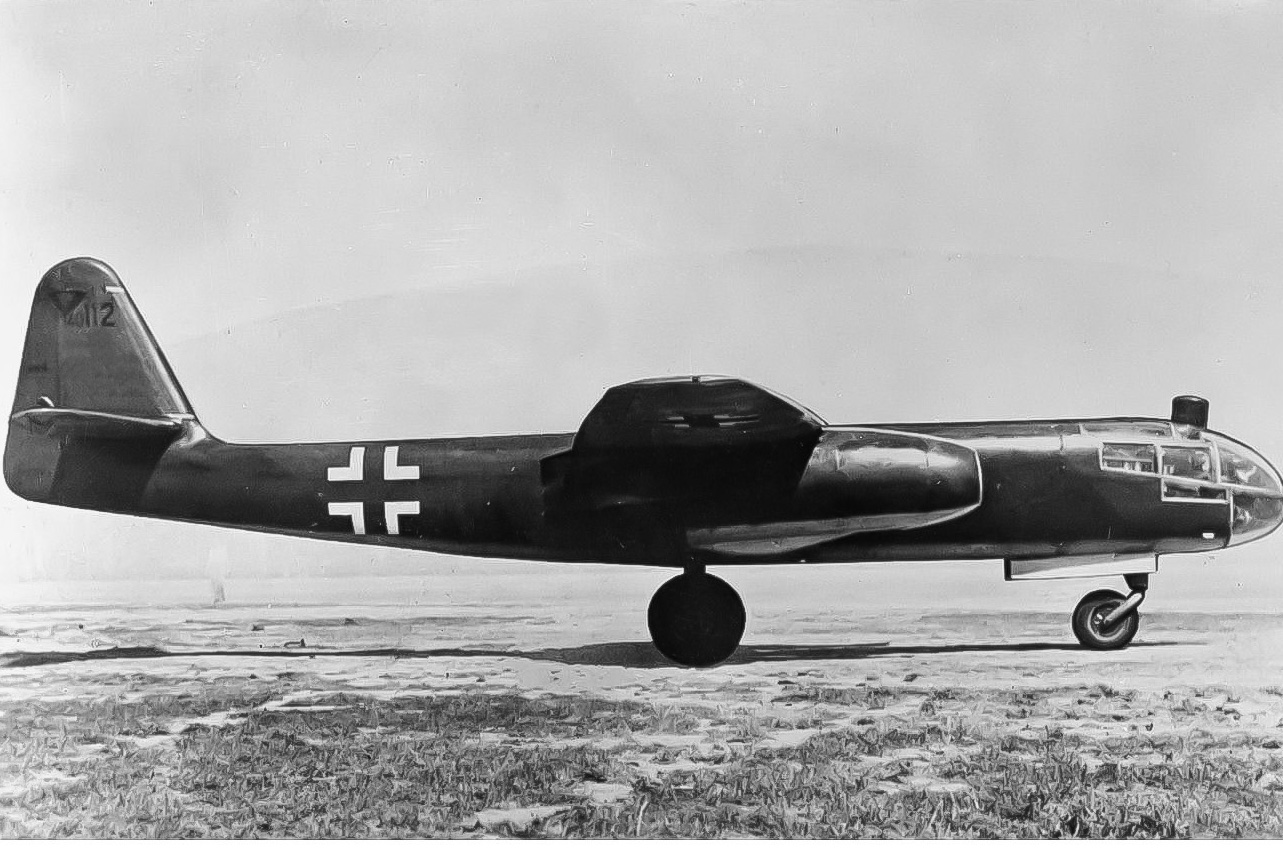
23: Arado E.381
 Arado E.381

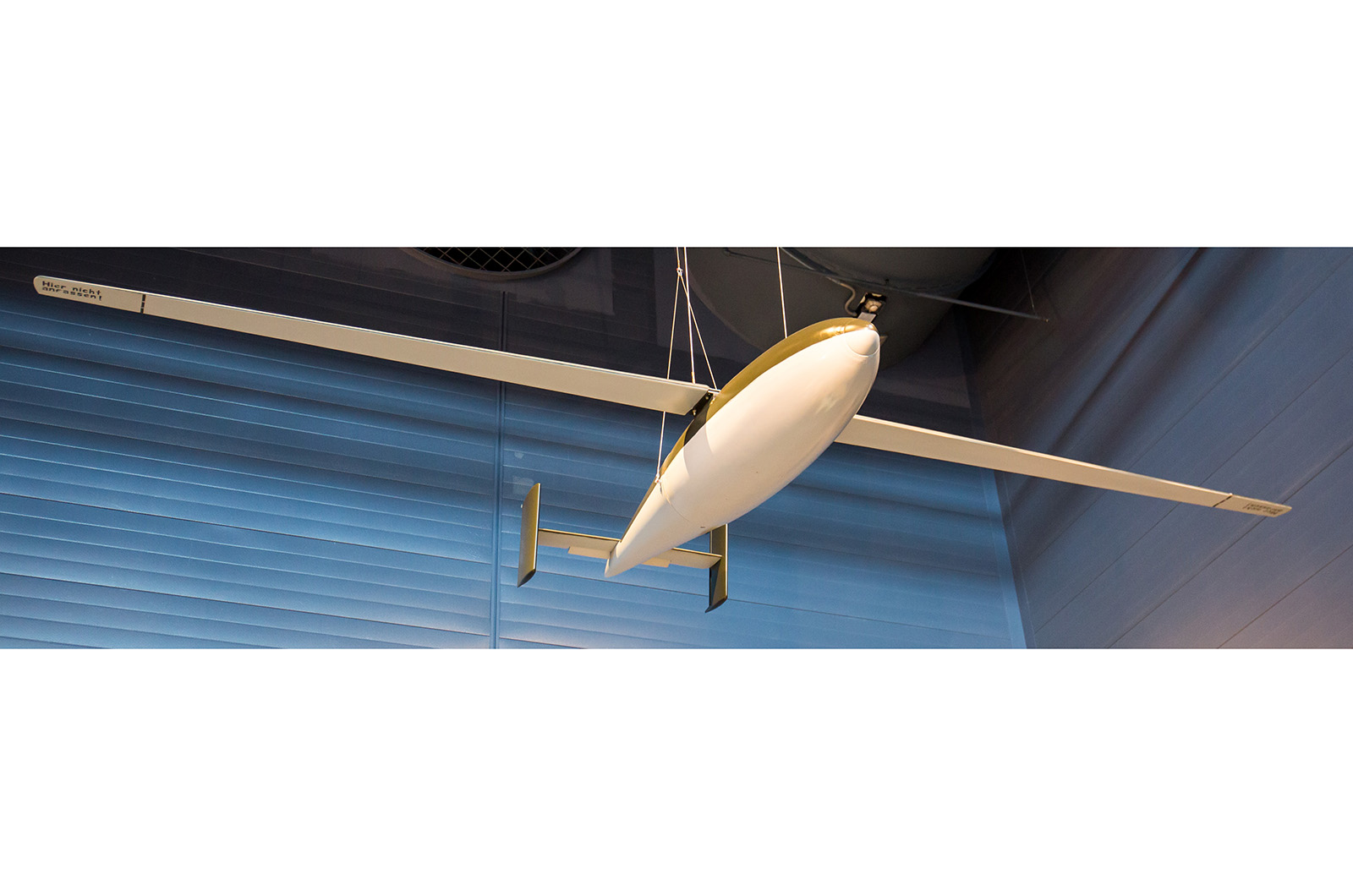
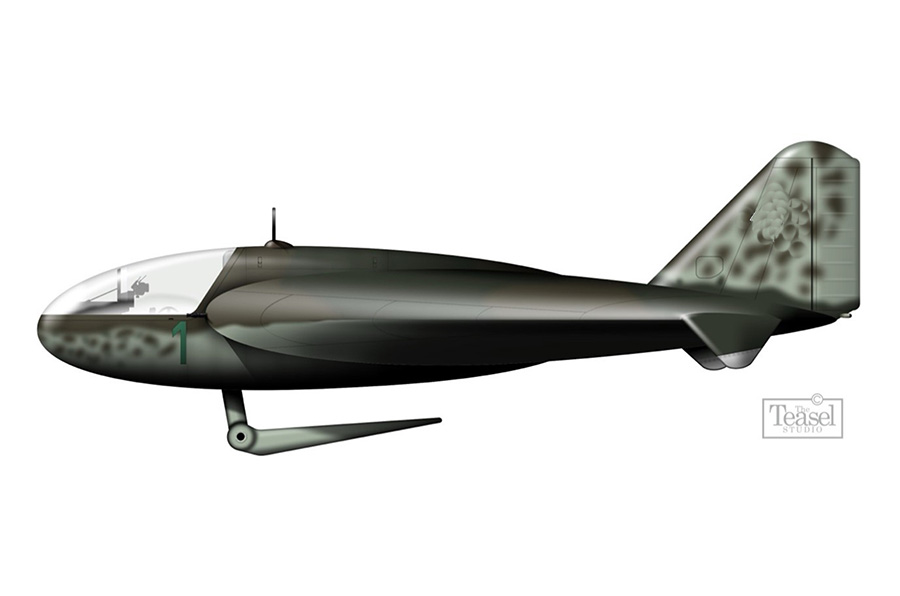
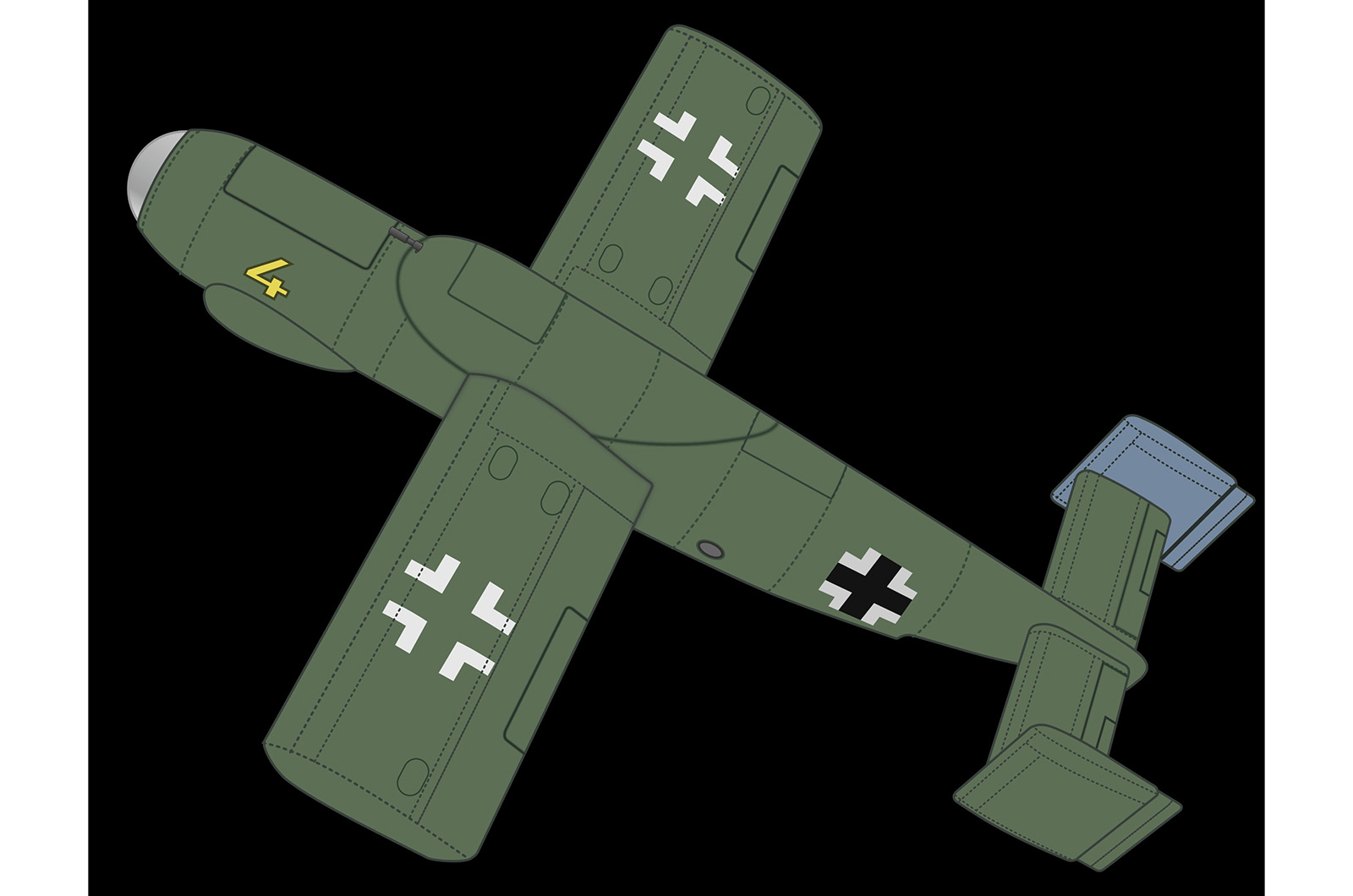
The Kleinstjäger, literally ‘Smallest fighter’, was a proposition to maximise the survivability of fighters attacking Allied bombing raids by minimising their size, offering a tiny target to gunners. The frontal cross-section of the E.381 was just a quarter of that of a Messerschmitt 109, and the aircraft was heavily armoured.

Pilot comfort was not paramount in the Kleinstjäger’s design. The unlucky airman was to be housed in a lying flat position within an armoured tube with no windows, save for a circular armoured windscreen. A 30mm cannon was mounted above him, and tanks of highly toxic fuel were placed on either side of his legs.


23: Arado E.381
 Arado E.381

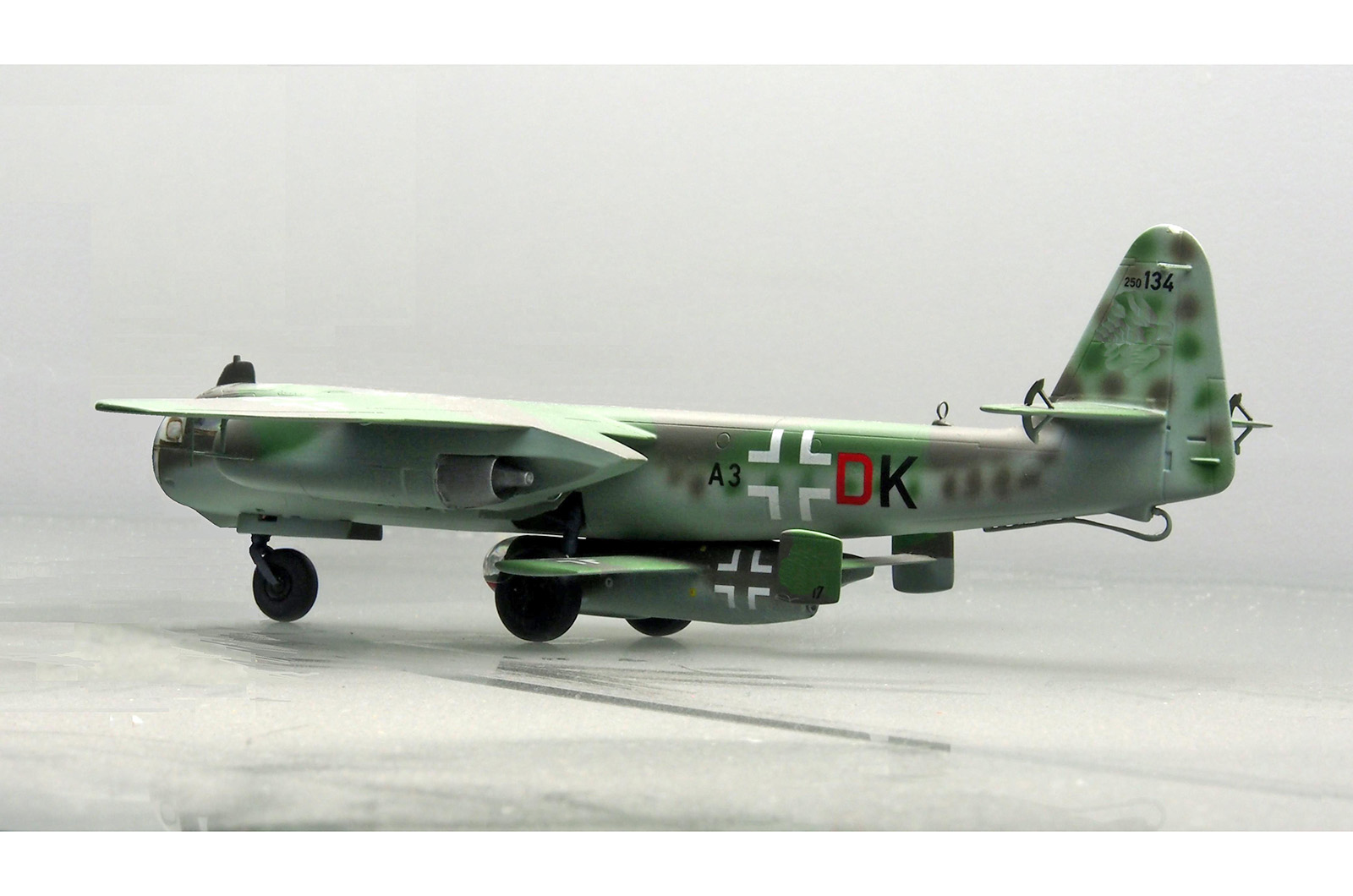
Air-launched from a four-engined Ar 234C, the E.381 would ignite its rocket motor and make a maximum of two attacks on enemy bombers before using its speed to escape. A braking parachute would slow it sufficiently to allow it to land on a skid.

Although some glider prototypes were built for testing, the E.381 proved too much even for the dying gasps of the Third Reich, for although the Kleinstjäger itself might be largely immune to interception, its Arado mothership was not. Furthermore, the fuel required for the Ar234 to carry the fighter to altitude was prohibitive for oil-starved Germany, and the project was abandoned.


22: Bachem Ba 349 Natter
 Bachem Ba 349 Natter

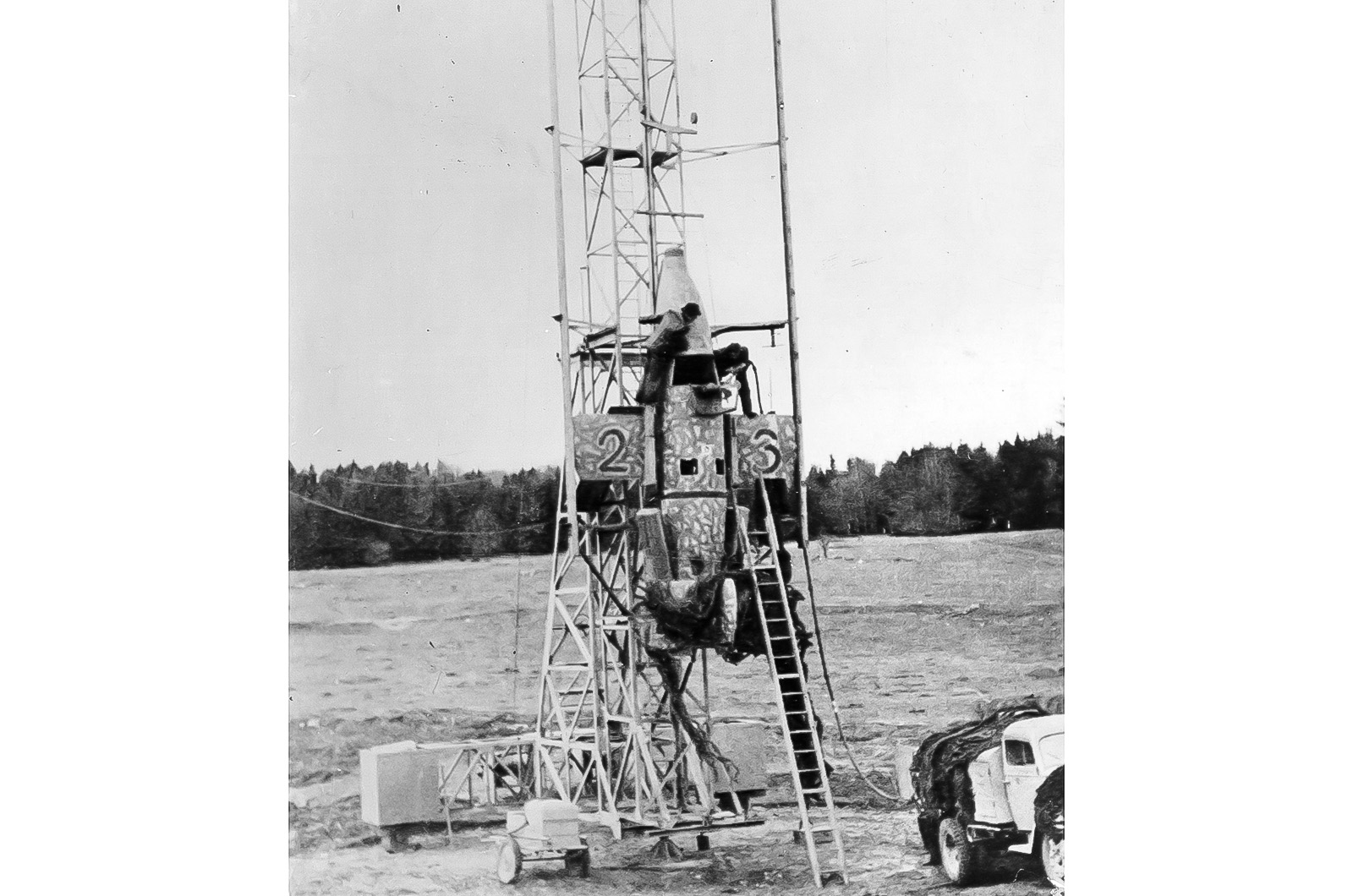
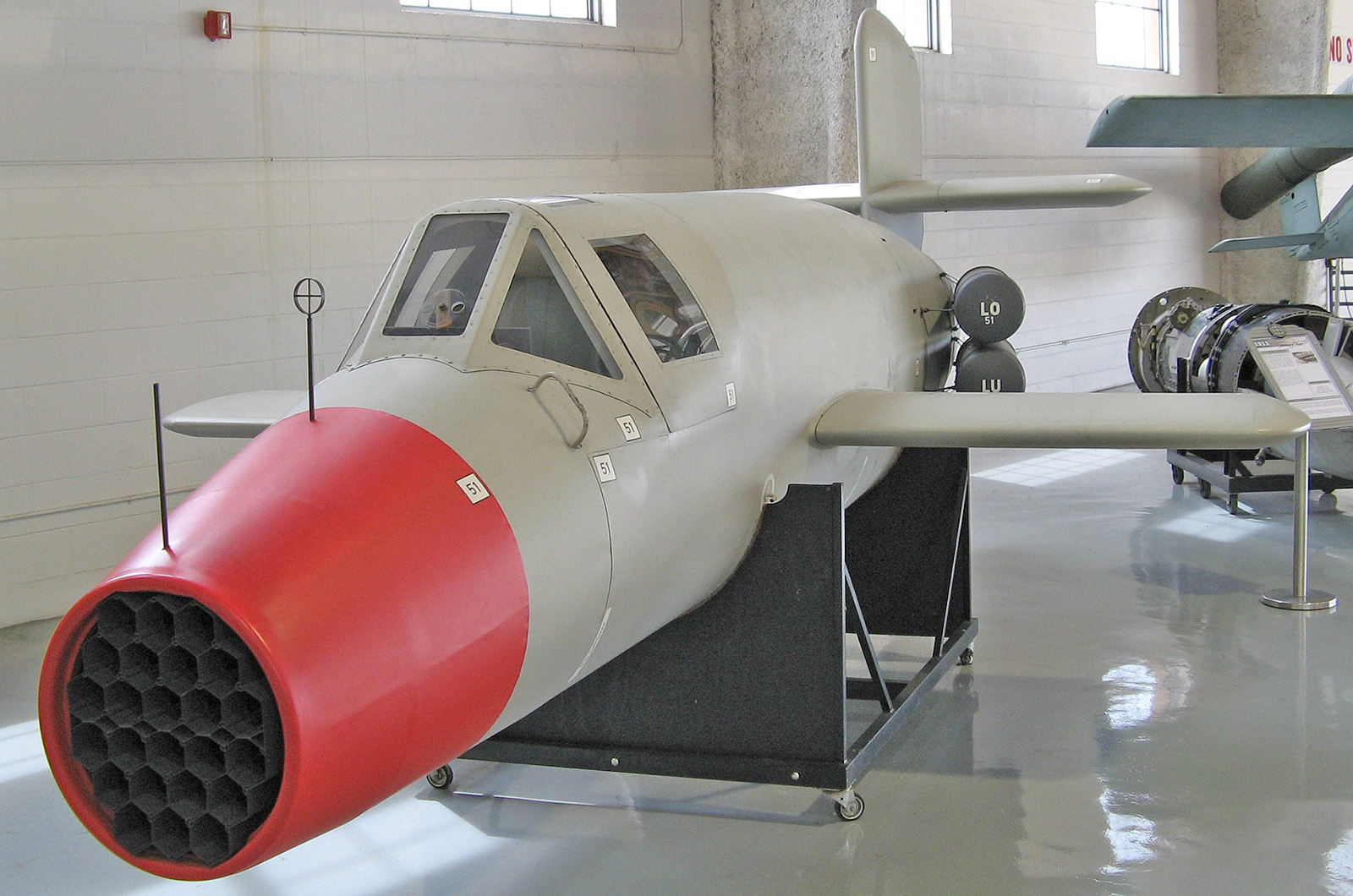
It’s never a great comfort to a pilot if your aircraft is not intended to (entirely) survive being used. The pilot of the Natter (‘grass snake’) was intended, at least, to be safely parachuted back to earth, along with its precious rocket engine. The rest of the wooden aircraft was disposable.

An SS project, Erich Bachem’s wonder weapon is perhaps better viewed as a human-guided surface-to-air missile. The Natter was to be launched and flown automatically to the altitude of attacking bombers, then the pilot would aim the aircraft and fire its armament of 33 R4M rockets.


22: Bachem Ba 349 Natter
 Bachem Ba 349 Natter

Following the engagement, the pilot jettisoned the nose, released his seatbelt and operated a braking parachute at the rear of the aircraft, ejecting him forwards to make a conventional parachute descent. In tests, the Natter proved to be an excellent glider, and the whole system had functioned as planned with a dummy pilot.

The only manned powered flight was a disaster: after becoming the first human ever to be vertically launched by a rocket-powered vehicle, Lothar Sieber was killed when his Natter crashed 32 seconds after launch. Designer Erich Bachem survived the war, however, and produced a range of successful ‘Eriba’ caravans.


21: A: Blohm and Voss BV 40
 Blohm and Voss BV 40
Back to top

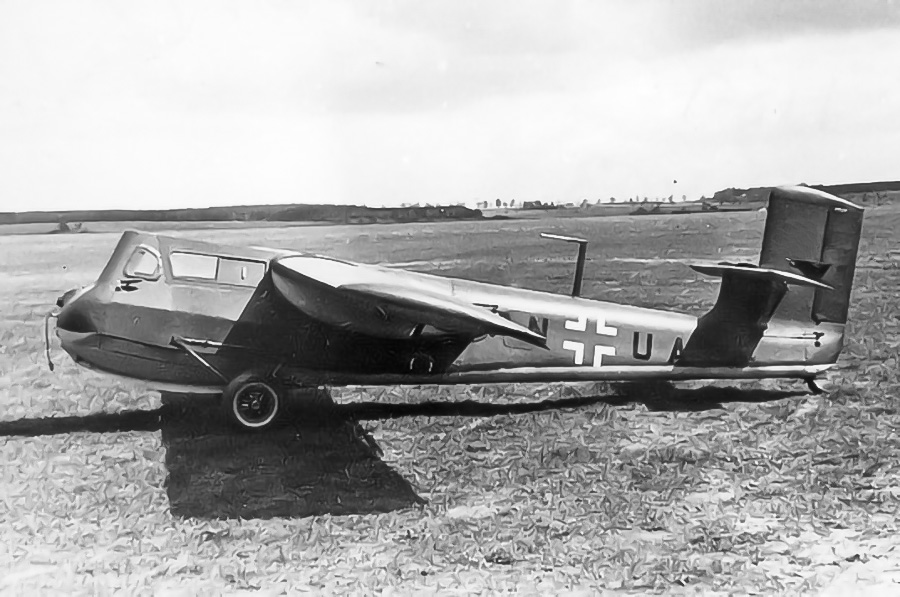
Blohm & Voss proposed a small armoured glider that could effectively destroy Allied bombers by diving at high speed and ramming the aircrafts’ tails. A 30mm cannon was added to the design to neutralise the rear gunner; the ramming idea was then dropped entirely, replaced by conventional gun attack.

The tiny BV 40, with a prone pilot, was to be towed to release altitude, then dive at 560mph, shoot down a bomber and escape. Although concerns were raised about the vulnerability of both glider and tug whilst climbing to altitude, 21 BV 40s were ordered and six built. Ironically, all were destroyed in a bombing raid on 6 October 1944.


20: Blohm & Voss BV 246

 Blohm & Voss BV 246

Blohm & Voss continued with the glider theme with the BV 246 Hagelkorn (Hailstone). This was a glide bomb, designed to be released up to 130 miles from its target and glide towards it in a high-speed dive. The remarkable aspect of this design was that the slender wings of the Hagelkorn were made of cement.

Testing proved the weapon was woefully inaccurate, but in 1945, its accuracy was revolutionised by the Radieschen passive seeker, which homed in on Allied radar transmitters, making it the world’s first anti-radiation weapon. Around 1000 were built, but none were ever used in combat.


19: Messerschmitt Me 263

 Messerschmitt Me 263

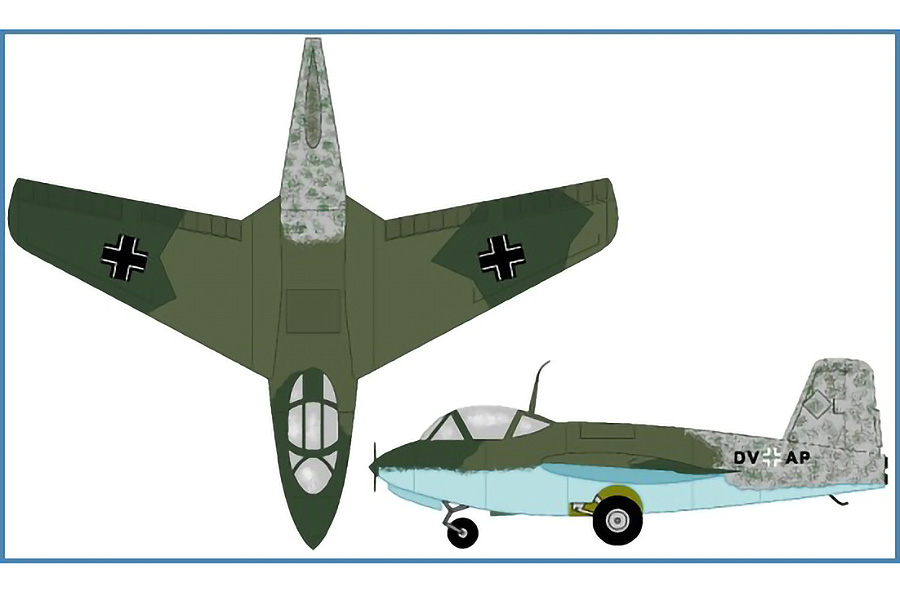
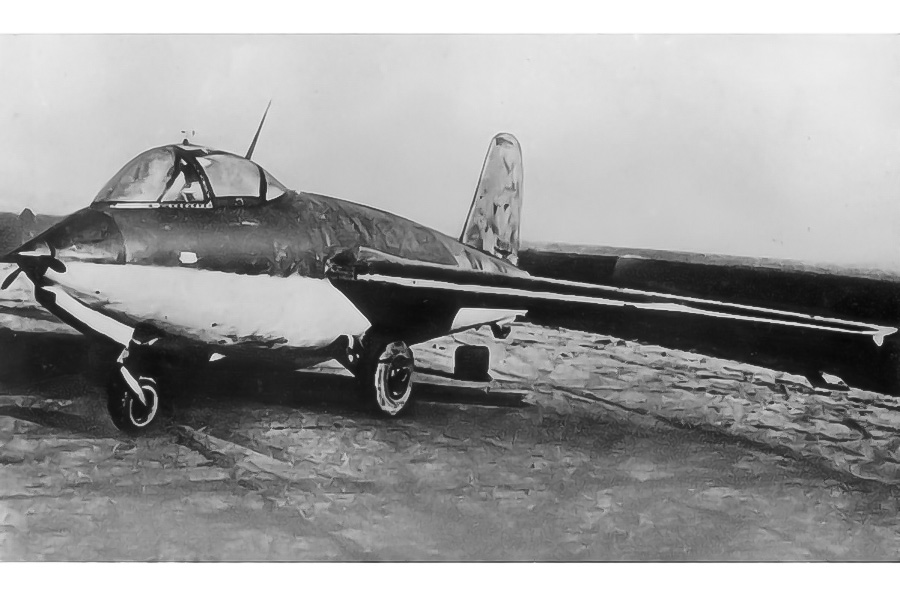
The rocket-powered Me 163 Komet was notable for being - by far - the conflict’s fastest aircraft. It was also one of the least practical, as it was loaded with dangerous features. As far as the Luftwaffe was concerned though, its 8-minute endurance was by far its worst failing.

The Komet’s successor, therefore, inherited the horrifically volatile fuel of the Me 163 and its questionable tailless layout - due to an aerodynamic quirk, the aircraft was prone to entering an unrecoverable ‘graveyard dive’ if speed exceeded Mach 0.84 - but featured a new engine that allowed a 12-minute endurance.


19: Messerschmitt Me 263

 Messerschmitt Me 263

Although still brief, the absurdly high rate of climb of the aircraft meant that this 50% increase in powered flight time made a meaningful difference in intercepting Allied bombers. A retractable undercarriage was also fitted, a welcome improvement on the skid fitted to the 163, the cause of many landing accidents.

Back to top

Unfortunately for the new rocket plane, it was not part of the Emergency Fighter Programme, and resources were difficult to acquire. Nonetheless, a prototype was completed and flown as a glider, but no powered flight was made before the end of the war. The design was subsequently developed by the Soviet Union into the postwar MiG I-270.


18: Mistel

 Mistel

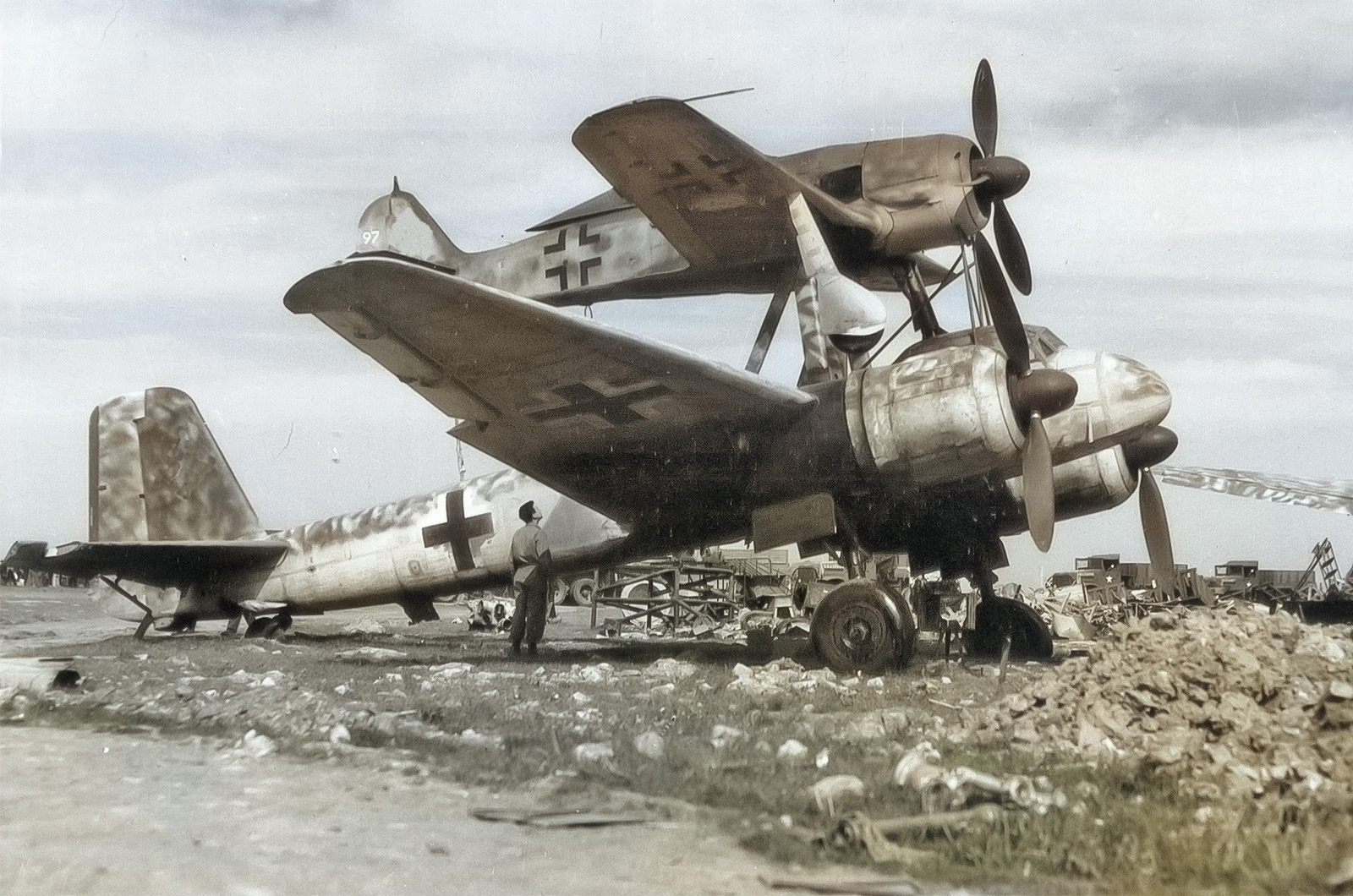
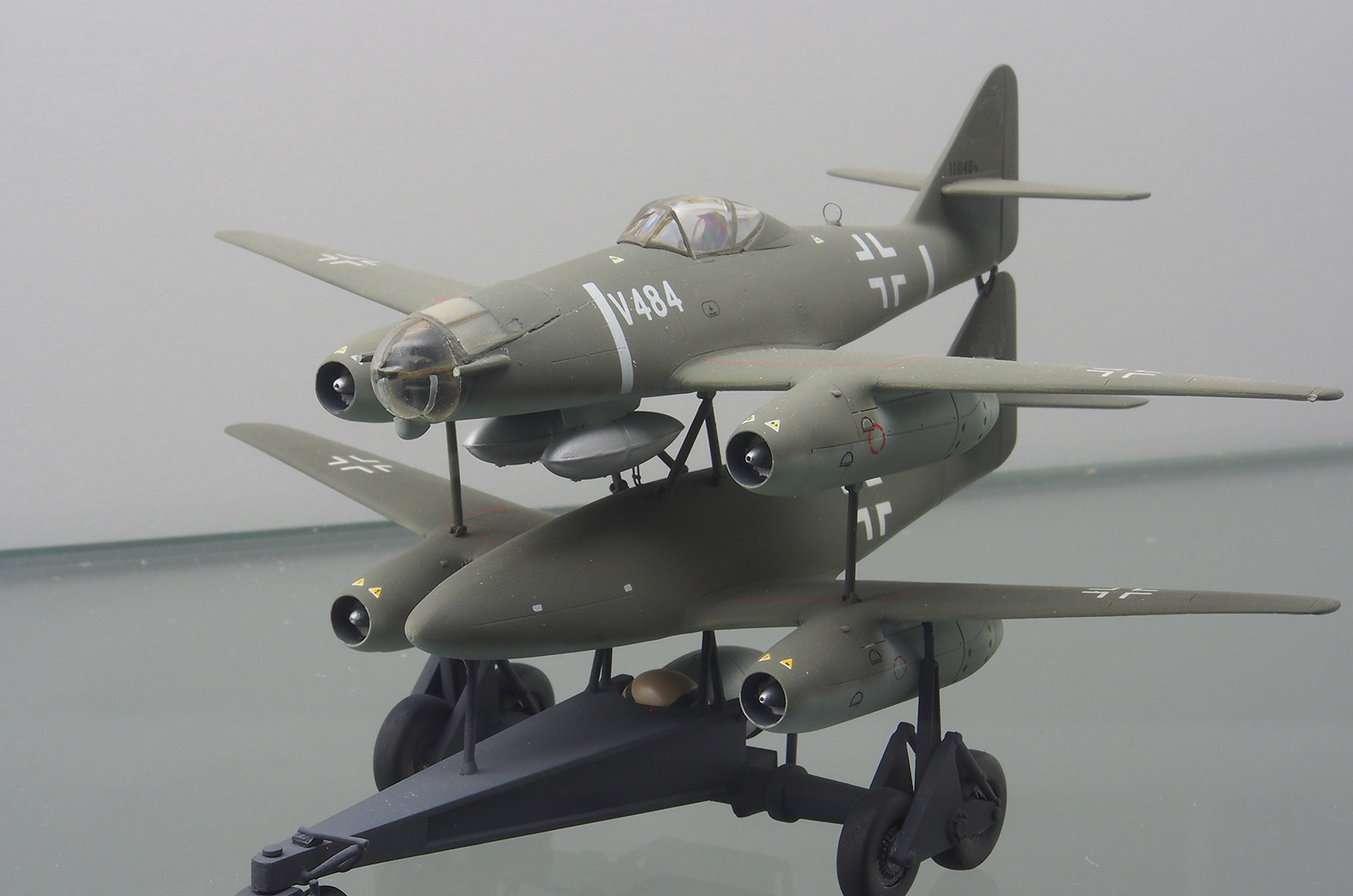
Although late war Germany was short on fuel, aircrew, and raw materials, two things it possessed in abundance were obsolete aircraft and crazy ideas. The remarkable Mistel project was an intriguing scheme to utilise unwanted obsolete bombers as flying bombs.

Comprising a Bf 109 or Fw 190 mounted on the back of an explosive-laden Ju 88, the Mistel composite would fly directly at the target before the fighter detached to escape, leaving the unmanned bomber to continue directly into, and hopefully destroy, the target.


18: Mistel

 Mistel

Operational Mistels replaced the Ju 88’s cockpit with a shaped explosive charge of nearly two tonnes and a prominent detonator. Mistels attacked the D-Day invasion fleet in 1944 and struck bridges in an attempt to halt the advance of Soviet armies into Germany. The effects, however, were negligible and delayed the Red Army only slightly.

Ultimately, the Mistel failed due to the absence of a means to accurately steer the bomber onto its target. To answer this, a projected Mistel featured a Me 262 fitted with a nose cockpit for a crewman to direct a second uncrewed and explosive-packed Me 262 onto its target. However, it remained unbuilt by VE Day.


17: Focke-Wulf Ta 183

 Focke-Wulf Ta 183

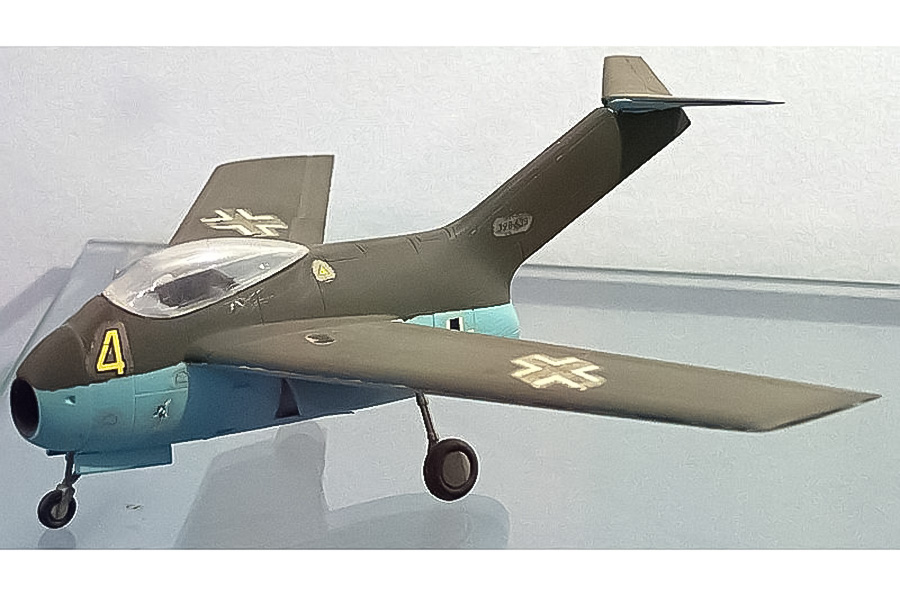
The Focke-Wulf Ta 183 Huckebein was envisaged as the Luftwaffe’s jet successor to the Me 262, but never developed beyond model form before the Reich’s collapse. Designed by Kurt Tank and Hans Multhopp, it was nicknamed “Huckebein” after a mischievous raven from a popular children’s book and, post-war, influenced Argentina’s Pulqui II project under Tank’s direction.

The Ta 183 combined boldly swept wings, a compact fuselage, and Heinkel’s HeS 011 turbojet, though prototypes were to rely initially on the Jumo 004B. A rocket boost option was mooted, intended to deliver an exceptional rate of climb for the aircraft’s primary role as a bomber interceptor.

Back to top

17: Focke-Wulf Ta 183

 Focke-Wulf Ta 183

Aerodynamically daring, the design placed its wings unusually far forward and was built largely of wood to conserve aluminium. The wing was fitted with elevons for both pitch and roll control, though stability fears lingered. Four MK 108 cannons formed the main armament, with provision for bombs or guided missiles mounted semi-internally beneath the fuselage.

By mid-1944, Germany’s Emergency Fighter Programme initially favoured Junkers’ EF 128 but then decided the Ta 183 was the better design after all and sixteen prototypes were ordered, with a first flight due in May 1945. But Focke-Wulf’s factory in Bremen was captured by British forces before the prototypes could be completed.


16: Junkers Ju 390

 Junkers Ju 390

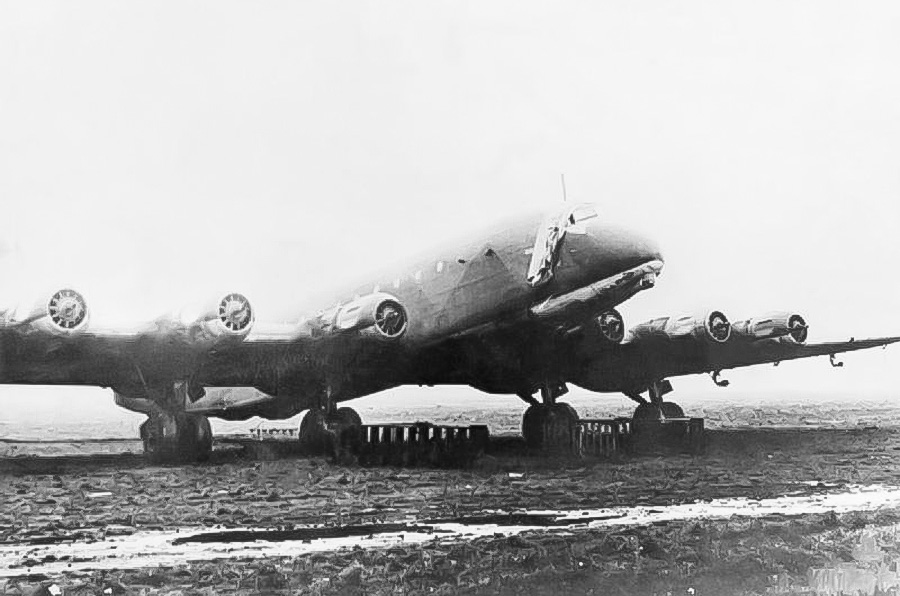
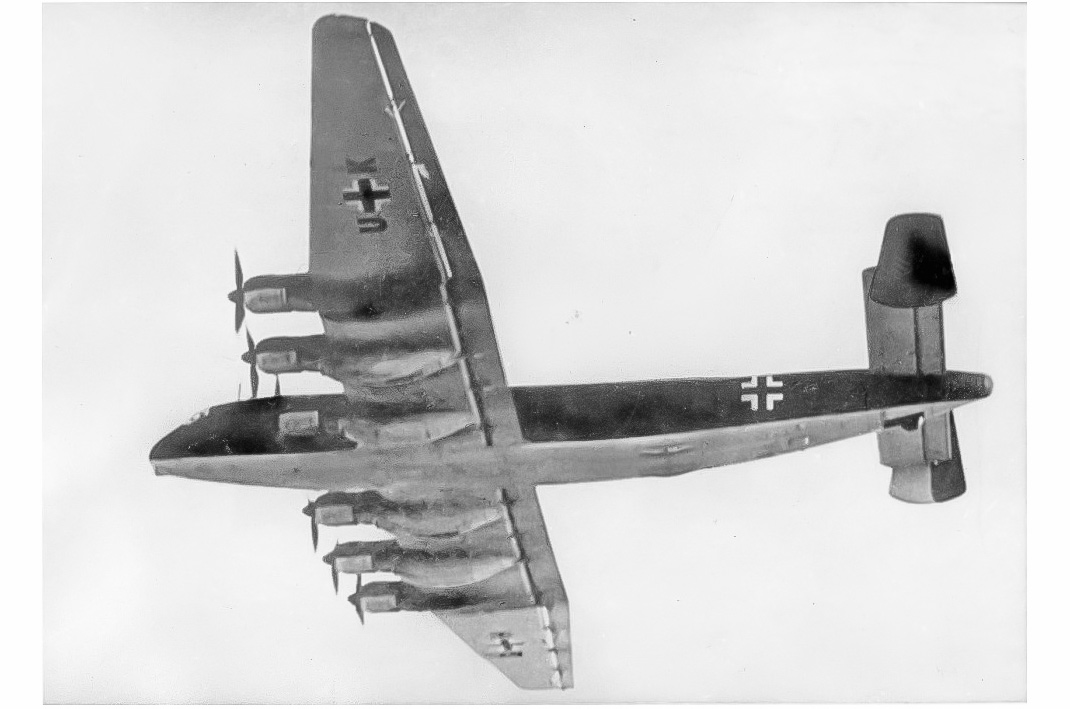
The Junkers Ju 390 was conceived as a long-range strategic aircraft, effectively a stretched derivative of the impressive Ju 290, equipped with six BMW 801 engines. Its immense wingspan and expanded fuselage hinted at intercontinental ambition, and it was Junkers’ candidate for the Amerikabomber competition to create a transatlantic aircraft to attack the US.

Tales persist of a Ju 390 flight from France to within sight of the American coast in 1944, a flight to Cape Town (in South Africa) and back, and a transport flight to Japan over the North Pole. Documentary evidence remains persistently elusive for all these claimed flights, and most historians doubt any of them occurred.


16: Junkers Ju 390

 Junkers Ju 390

What is certain is that two prototypes were completed, and their operational contribution was negligible. One served briefly in transport and reconnaissance roles, but the type was never developed for mass production. Logistical challenges, strained resources and the deteriorating war situation effectively doomed the project.

Nevertheless, the Ju 390 occupies a peculiar place in wartime lore. Its enormous dimensions symbolised German technological ambition as the Third Reich collapsed, while the legends surrounding its transatlantic reach fed post-war fascination. More myth than menace, it endures as a reminder of how desperation bred innovation and how mythology can appear in the absence of hard facts.

Back to top

15: Horten Ho 229

 Horten Ho 229

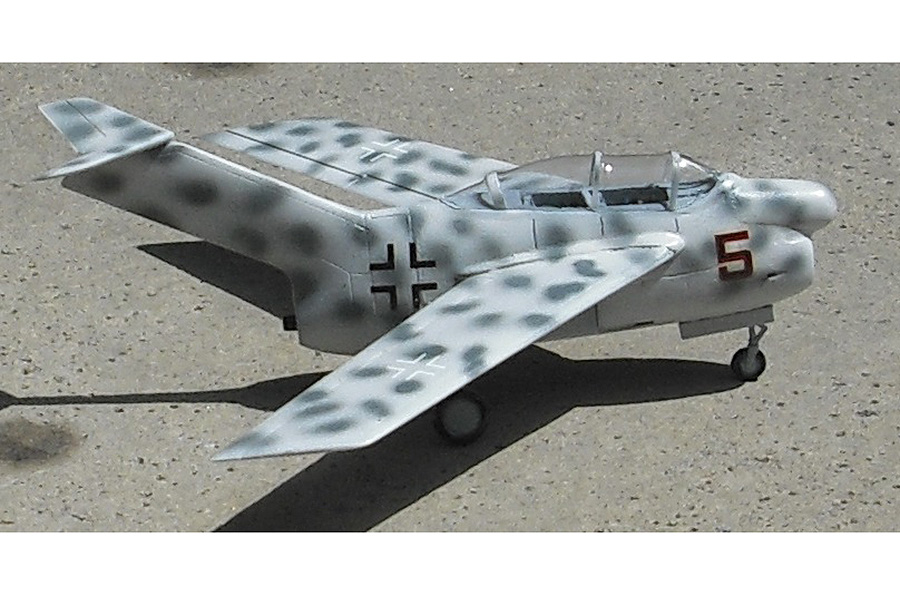
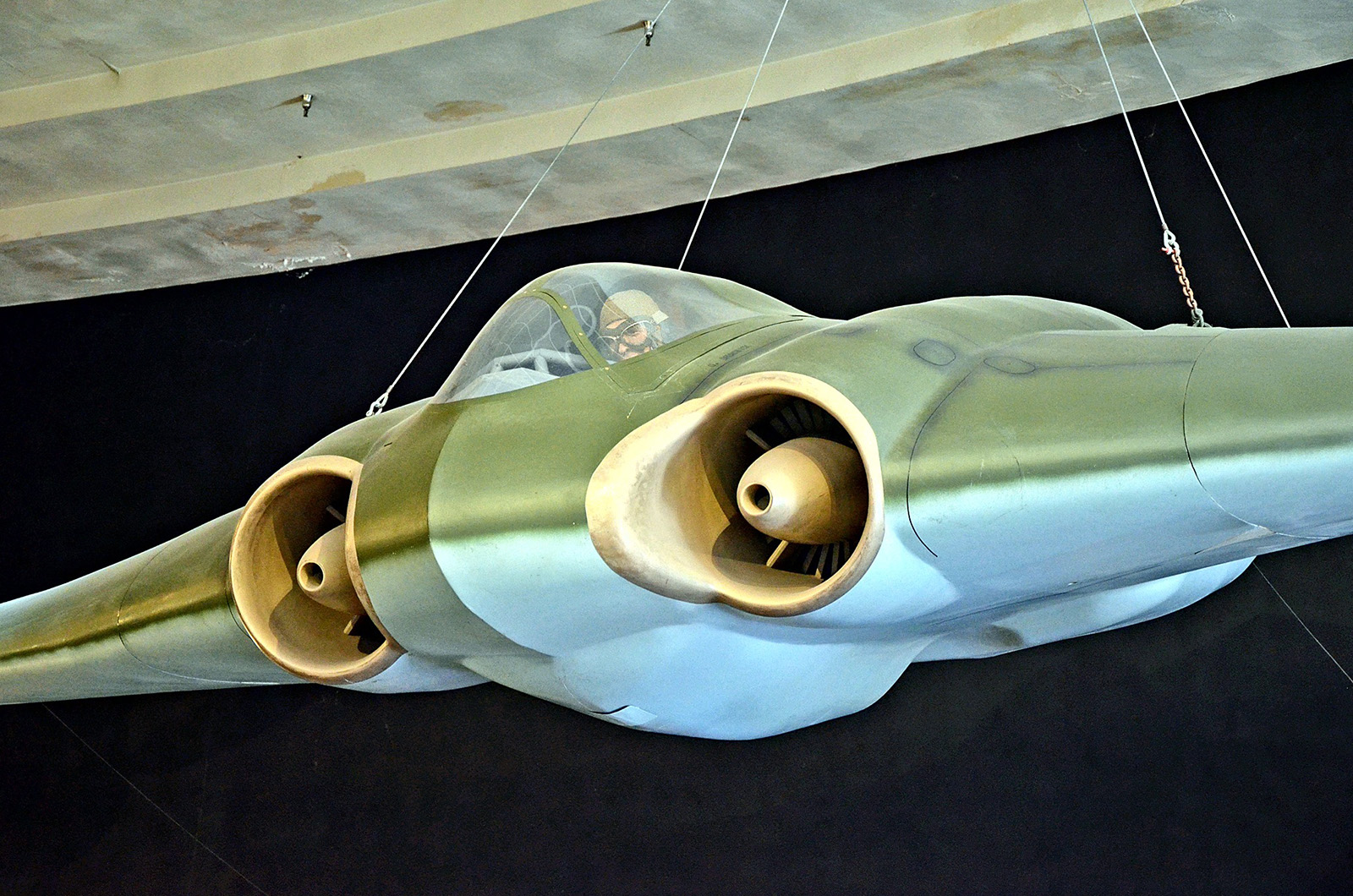
The Horten Ho 229 was a jet-powered flying wing aircraft designed by brothers Reimar and Walter Horten. Its construction made much use of wood and other non-strategic materials due to wartime shortages, while its shape resulted from the Hortens’ long interest in tailless flying wing designs.

Several prototypes were built, beginning with gliders and followed by powered versions fitted with Junkers Jumo 004 turbojet engines, but development was cut short by the end of the war. However, unlike most late-war German projects, the Ho 229 did make it to the flight-test stage, making its first flight on 2 February 1945.


15: Horten Ho 229

 Horten Ho 229

On its third flight, an engine fire led to the loss of the aircraft and the death of test pilot Erwin Ziller. Work continued however, as Luftwaffe chief Hermann Göring was keen on the design and had already ordered a production series of 40 production aircraft from Gotha before the prototype had even flown.
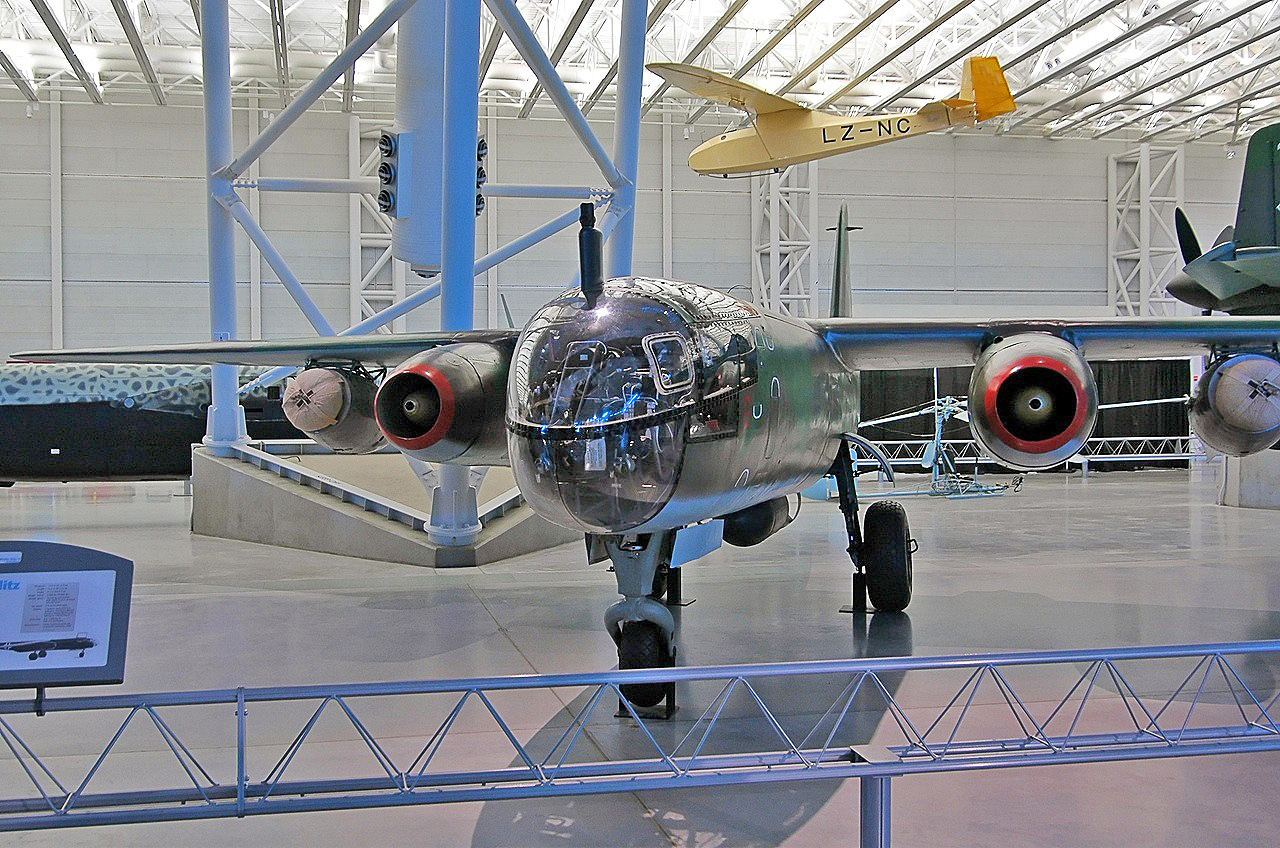
No further aircraft were completed before the end of the war, but today, one nearly complete prototype that was captured and shipped to the US for evaluation is preserved as part of the Smithsonian collection. This is the only genuine German prototype jet to survive the war.


14: Horten H.XVIII

 Horten H.XVIII

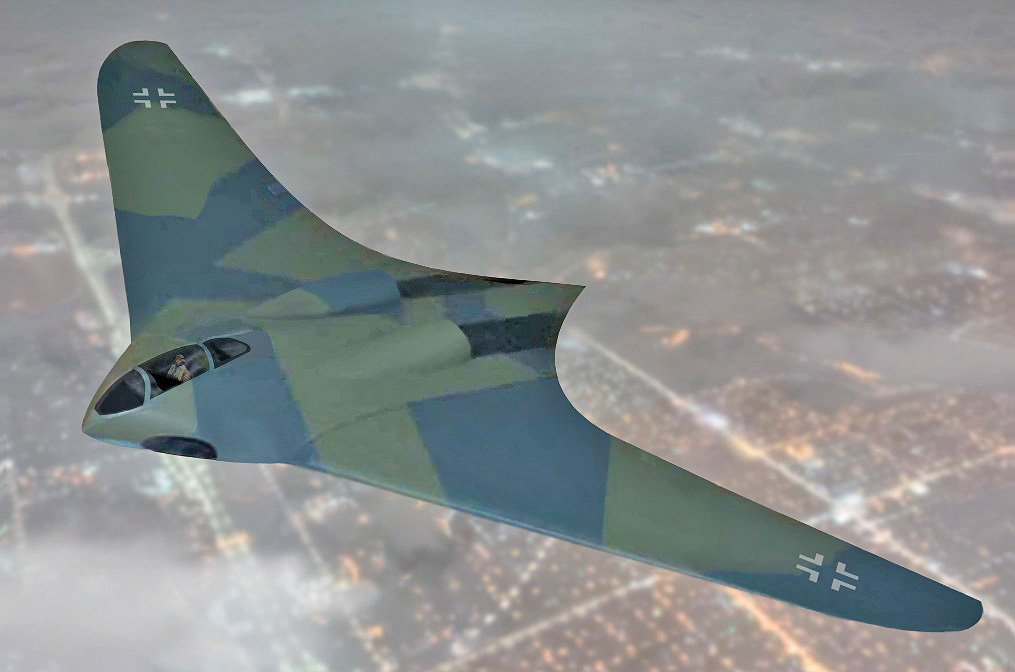
The Horten H.XVIII was another late-war German flying wing project, conceived by the Horten brothers. Intended as a transatlantic bomber, capable of attacking targets in the continental United States, its sleek, tailless configuration promised low drag, fuel efficiency, and potentially reduced radar visibility, though the latter was very much a secondary concern.

Essentially a scaled-up version of the Ho 229 fighter, the H.XVIII was intended to be built primarily of wood and was to jettison its undercarriage after take-off and land on a skid. The project was ultimately abandoned due to Germany’s deteriorating war situation.


13: Arado E555

 Arado E555

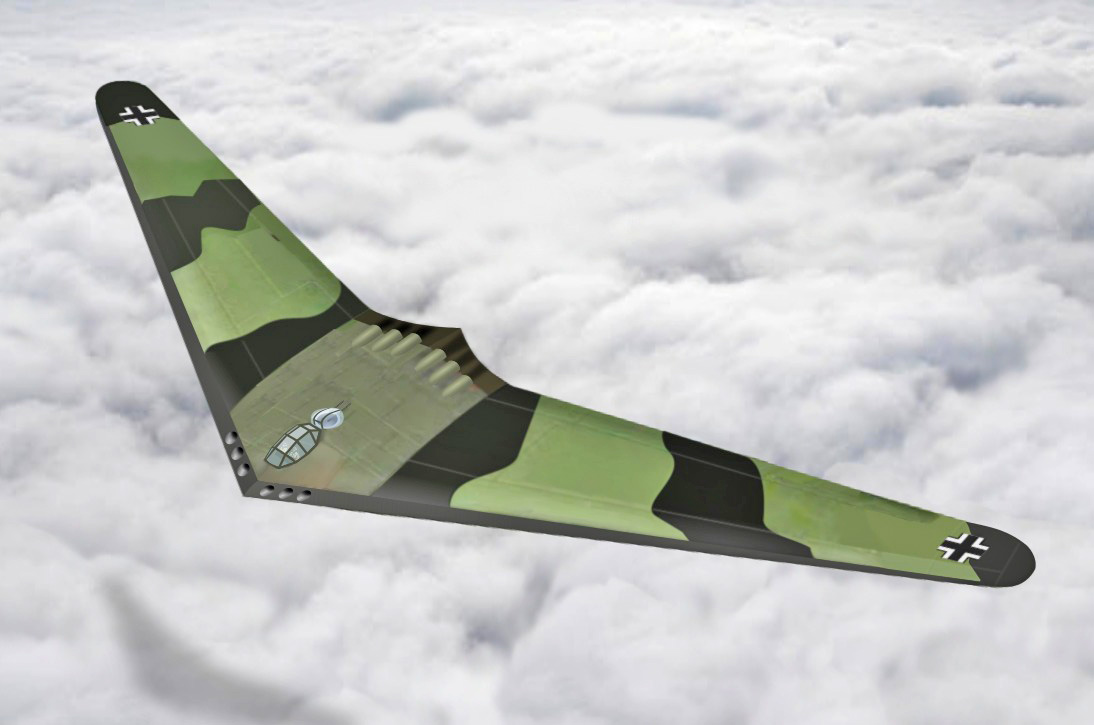
The Arado E.555 was another long-range jet bomber concept intended to strike targets across the Atlantic. Unlike the pure flying-wing of the Hortens, the E.555 featured fins and rudders, external jet engines mounted above the centre section and a small fuselage pod for the crew. Several variants were envisioned, including long- and medium-range models, but none were built.

Back to top

Plagued by technical challenges, resource shortages, and the worsening war situation, like many other German wartime projects, the E.555 demonstrated that whilst German planners were not short on ambition, they were woefully deficient in comprehending the reality of their strategic position.


12: Silbervogel

 Silbervogel

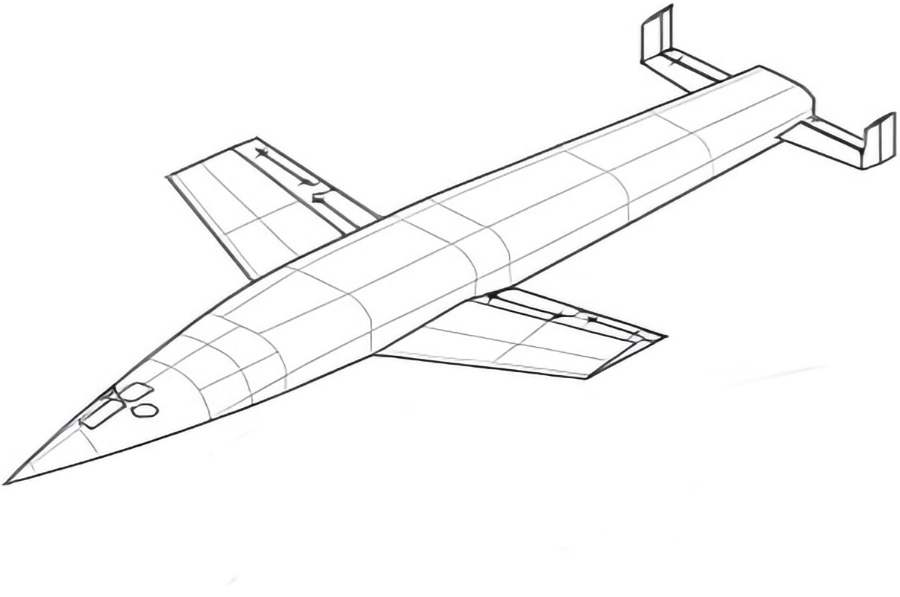
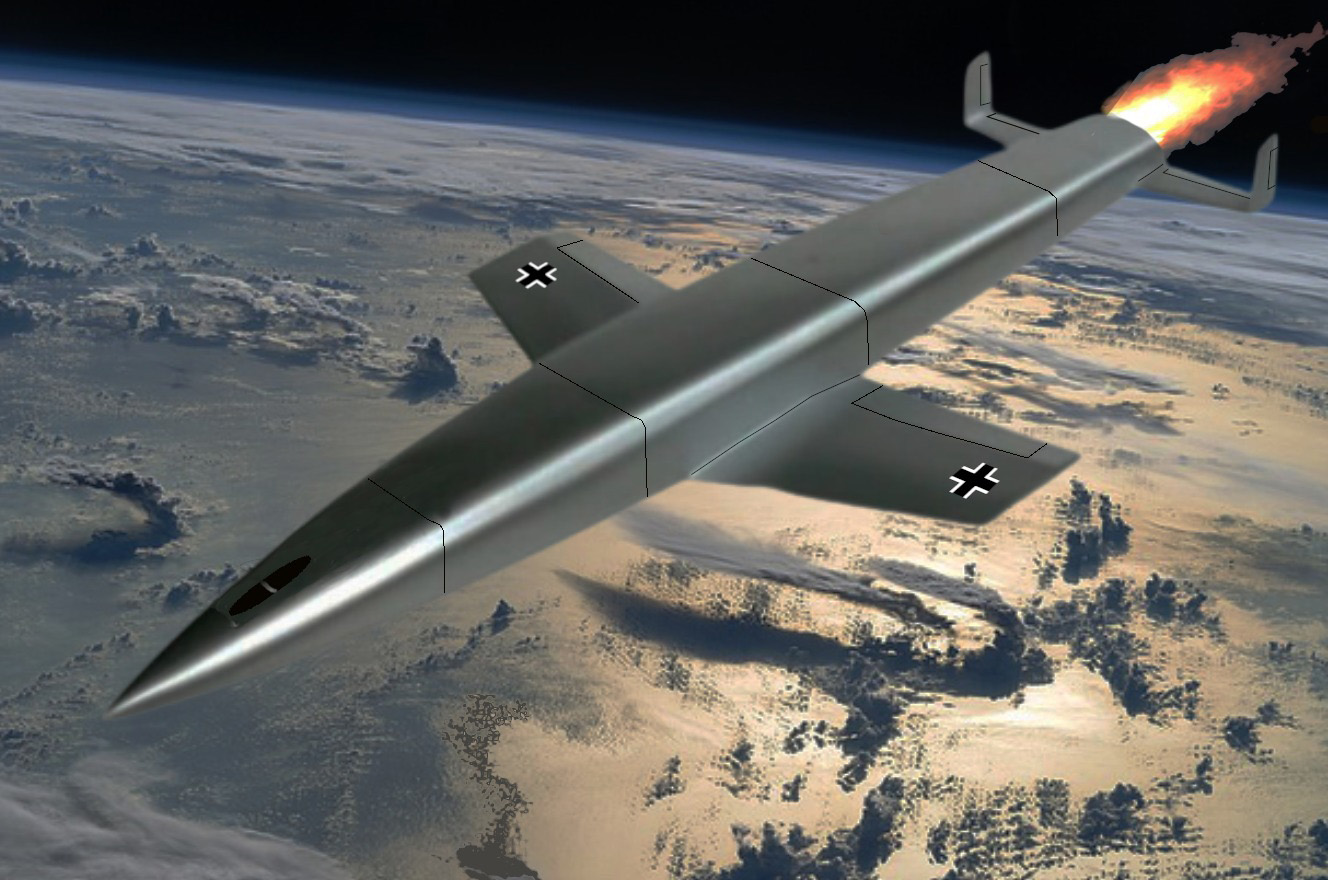
Of all the demented ideas intended to save the Third Reich, the suborbital Raketenbomber was likely the most ludicrous. Yet this was also history’s first serious proposal for a low orbital spacecraft, and, remarkably for a project developed under the pathologically chauvinistic Nazis, was co-designed by a woman.

The brainchild of Eugen Sänger and Irene Bredt, the Raketenbomber, named ‘Silbervogel’ (Silverbird), was, to put it mildly, the most ambitious of the Amerikabomber proposals. Accelerated to 1200mph on a rail-mounted rocket sled, once airborne, its own rocket engine would take it to 13,500mph.


12: Silbervogel

 Silbervogel

After climbing to an altitude of 90 miles, the aircraft would then bounce off the stratosphere in a series of ever smaller skips, allowing it to drop a 8800lb (4000 kg) weapon on the continental US before landing in Japan, a total journey of around 15,000 miles.
Although unbuilt, the project intrigued Stalin enough that an attempt was made in 1949 to kidnap Sänger and Bredt, but it was unsuccessful. Perhaps to celebrate this escape, the two scientists married in 1951. Modern analysis revealed that there was a serious mistake in the calculations of the heat the Silbervogel would experience on re-entry, and it would, if flown, have been destroyed.


11: Focke-Wulf Baubeschreibung Nr.264

 Focke-Wulf Baubeschreibung Nr.264

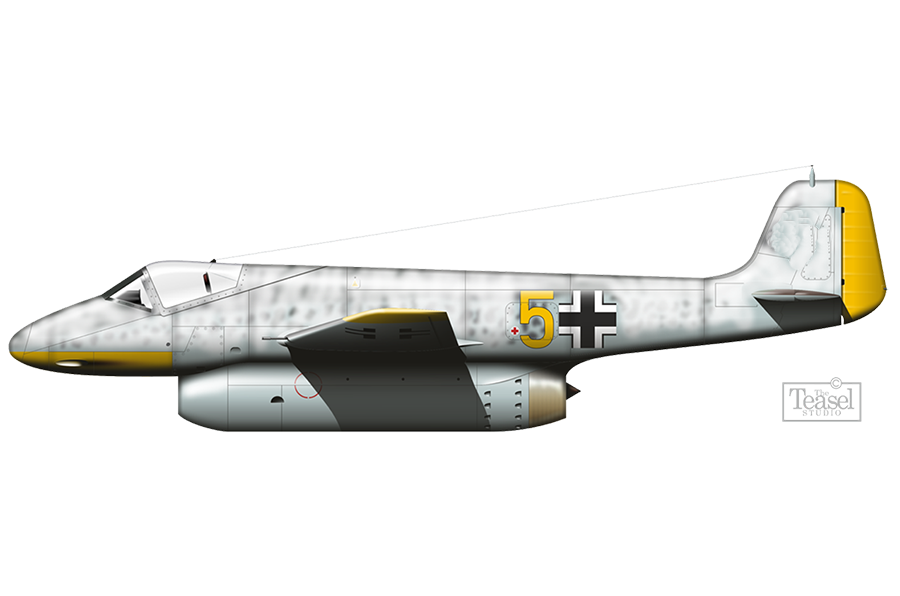
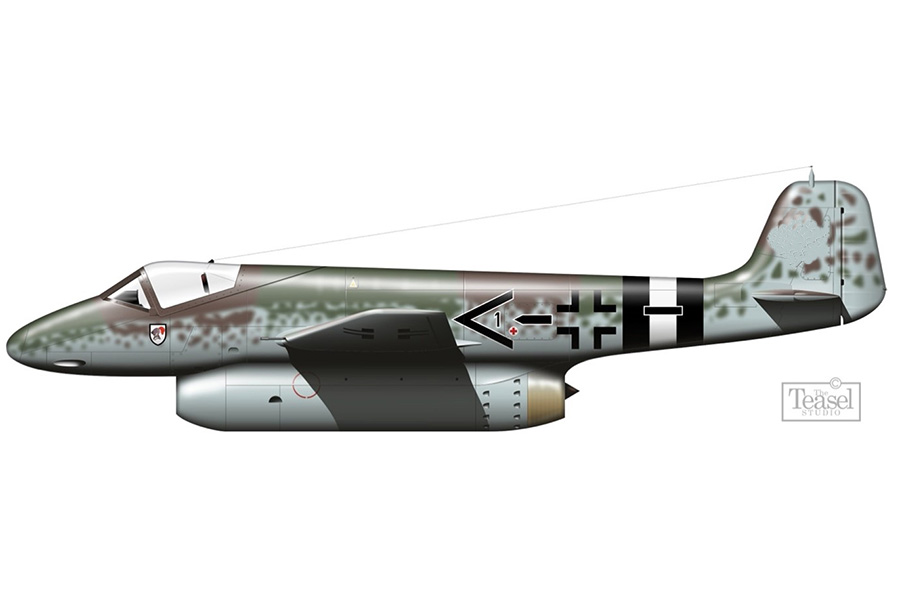
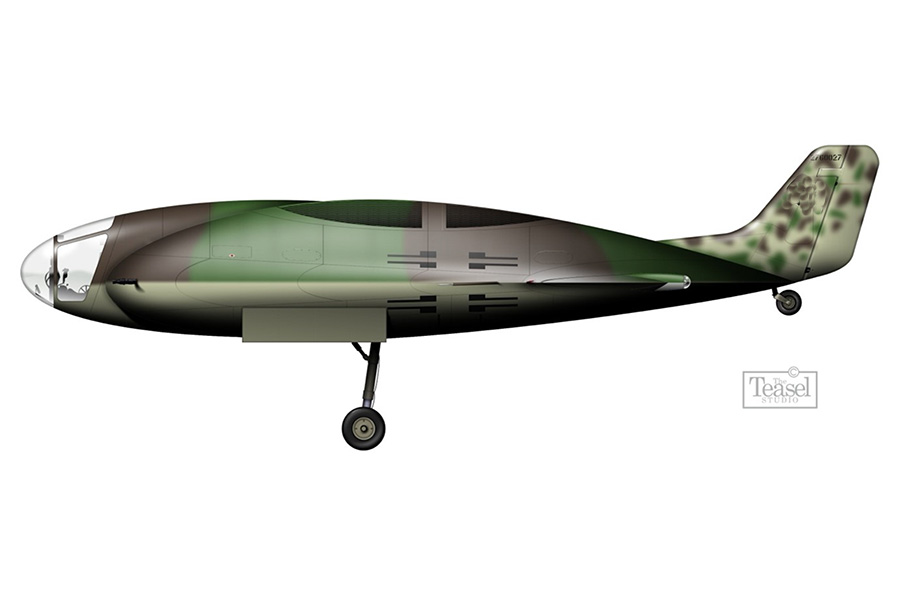
The German Ministry of Aviation (Reichsluftfahrtministerium, abbreviated RLM) was aware of the incredible capabilities of the Me 262, then in development, with its astonishing top speed, but its lack of manoeuvrability and rather lavish use of dwindling materials were issues. With this in mind, in 1943, the need for a single-engine fighter was expressed.

Back to top

An extremely high ceiling and top speed were demanded, with range and endurance secondary. The planned armament was two stubby 30mm calibre MK 108 autocannons in the fuselage straddling the pilot and two of the longer-barrelled MG 151s in the wing roots.


11: Focke-Wulf Baubeschreibung Nr.264

 Focke-Wulf Baubeschreibung Nr.264

With its under-fuselage intake, it foreshadowed later jet aircraft, such as the Crusader and F-16. But this configuration was rejected due to the risk of damage to the aircraft in the event of belly landings. The engine was relocated to the top of the aircraft, which resulted in an unacceptable drop in expected performance.

It was considered that this lack of performance could be resolved with the addition of two rockets. At this point, the twin boom configuration looked like a better solution, and Focke-Wulf explored a design with some similarities to the contemporary De Havilland Vampire, the Flitzer, which never made it past the mock-up stage.


10: Lippisch P.13

 Lippisch P.13

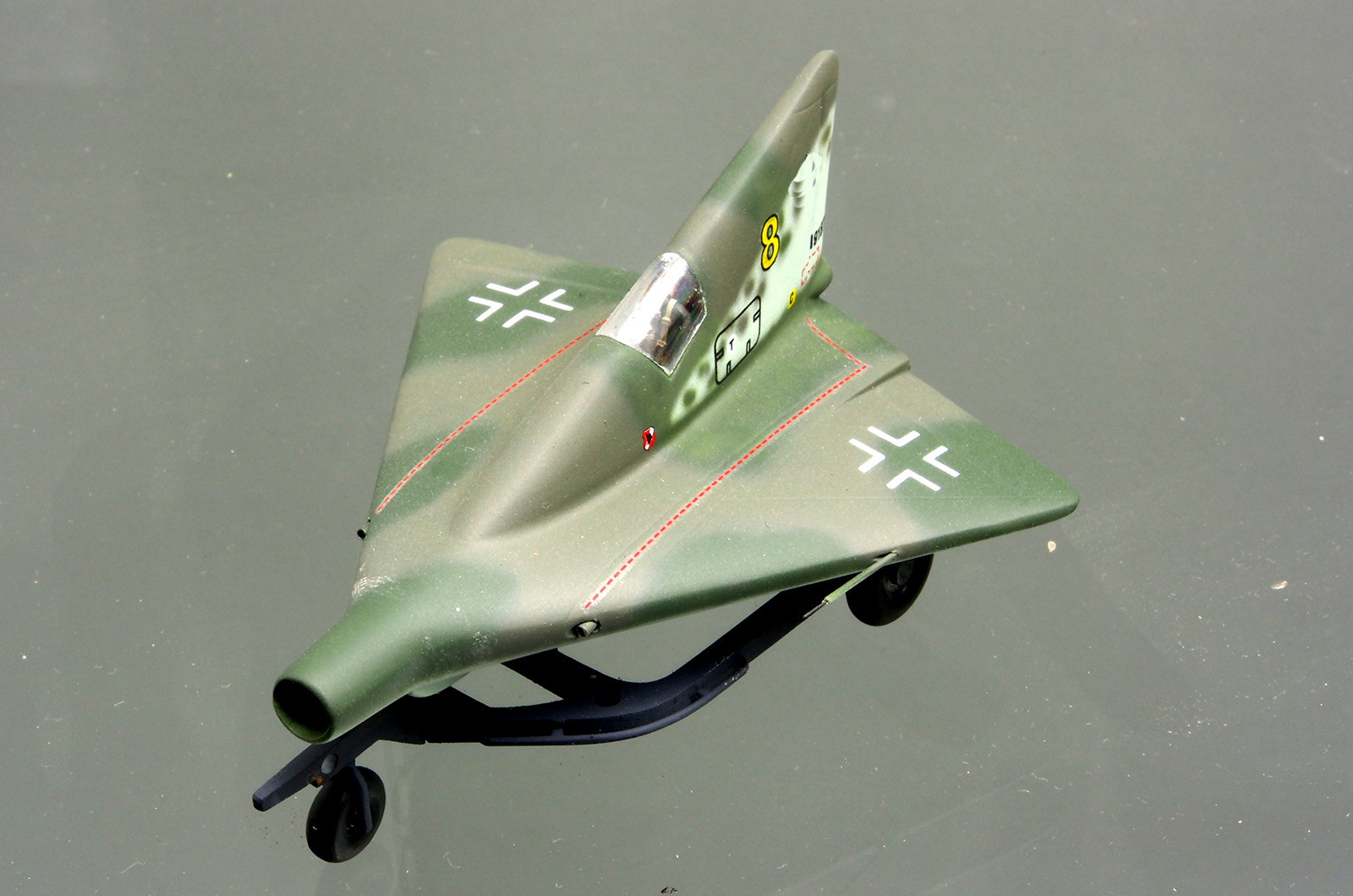
Although it never flew under power, Alexander Lippisch’s incredible tailless delta P.13a did, at least, address Germany’s crippling late-war oil shortage as it was powered by a coal-burning solid-fuel ramjet, feeding powdered coal into a combustion chamber. Take-off would require rockets or a catapult to reach ramjet ignition speed.

Unlike many other projects, the aircraft made it to the hardware stage (sort of): the DM-1 glider was built to explore Lippisch’s delta aerodynamics. Simultaneous wind-tunnel work suggested promising stability at very high speeds, though claims of Mach 2.6 are likely exaggerated.


10: Lippisch P.13

 Lippisch P.13

By the time research was halted as Soviet and Allied forces overran Vienna, Lippisch had moved on to wind tunnel testing the P.13b. This moved the pilot from his cockpit in the huge vertical fin to a more conventional nose-mounted nacelle and featured twin fins of less radical size but retained the coal-powered ramjet.

Meanwhile, the DM-1 glider was whisked away to the US and tested in the full-scale wind tunnel at Langley, revealing flaws in the design which NACA engineers solved by adding sharp leading edges, a much thinner tail fin, and a cockpit canopy from the P-80 jet fighter. The influence this aircraft may have had on subsequent American delta designs is much disputed.

Back to top

9: Focke Rochen

 Focke Rochen

The Focke Rochen was a VTOL concept designed by Heinrich Focke, co-founder of Focke-Wulf. Patented in 1939, the Focke design featured a fuselage with a disc-like planform and an aerofoil profile, earning the nickname "Rochen" (stingray). A central turbojet was intended to drive two large propellers within the fuselage.

The Rochen achieved forward flight by vectoring the downwash from the propellers rearward through a series of ventral louvres. The turbojet exhausts featured primitive afterburners, providing horizontal flight. Development continued after the war, wind tunnel testing took place in Bremen, and Focke submitted another patent for the aircraft in 1957. No full-size Rochen has yet been built.


8: Focke-Wulf Triebflügel

 Focke-Wulf Triebflügel

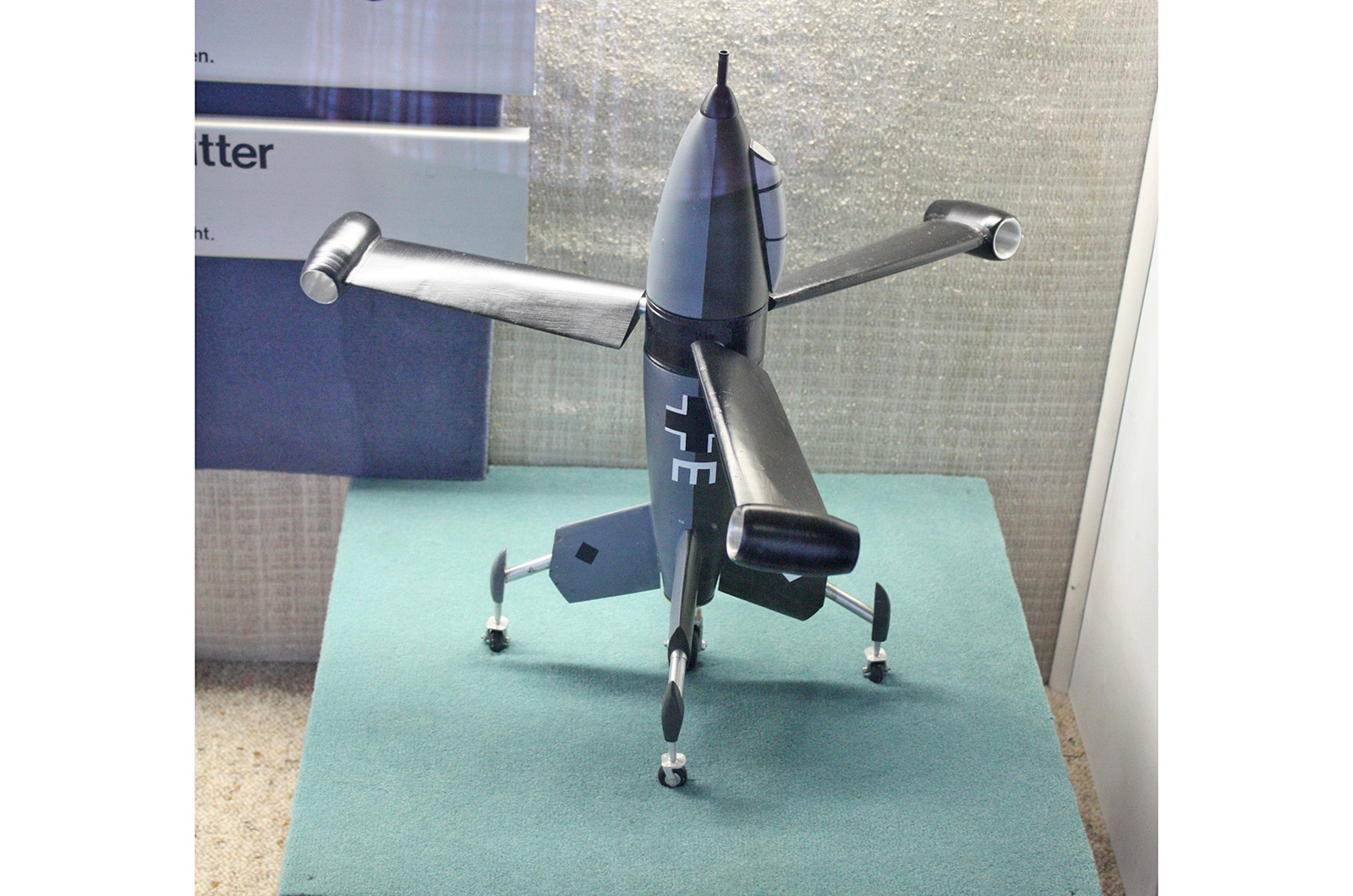
Another Focke-Wulf VTOL project, the Triebflügel, was, if anything, even more crazed than the Rochen. Lift and thrust were provided by a rotor assembly located between the tailplane and cockpit. When sitting on its tail in the vertical position, the rotors would function like those of a helicopter.

When flying horizontally, they became a giant propeller. If that wasn’t insane enough, the rotors were to be powered by tip-mounted ramjets. The whole thing was to land vertically (backwards) on a single huge wheel at the extreme tail, supported by outriggers. Despite the incredibly unconventional design, wind tunnel testing had begun by VE Day.


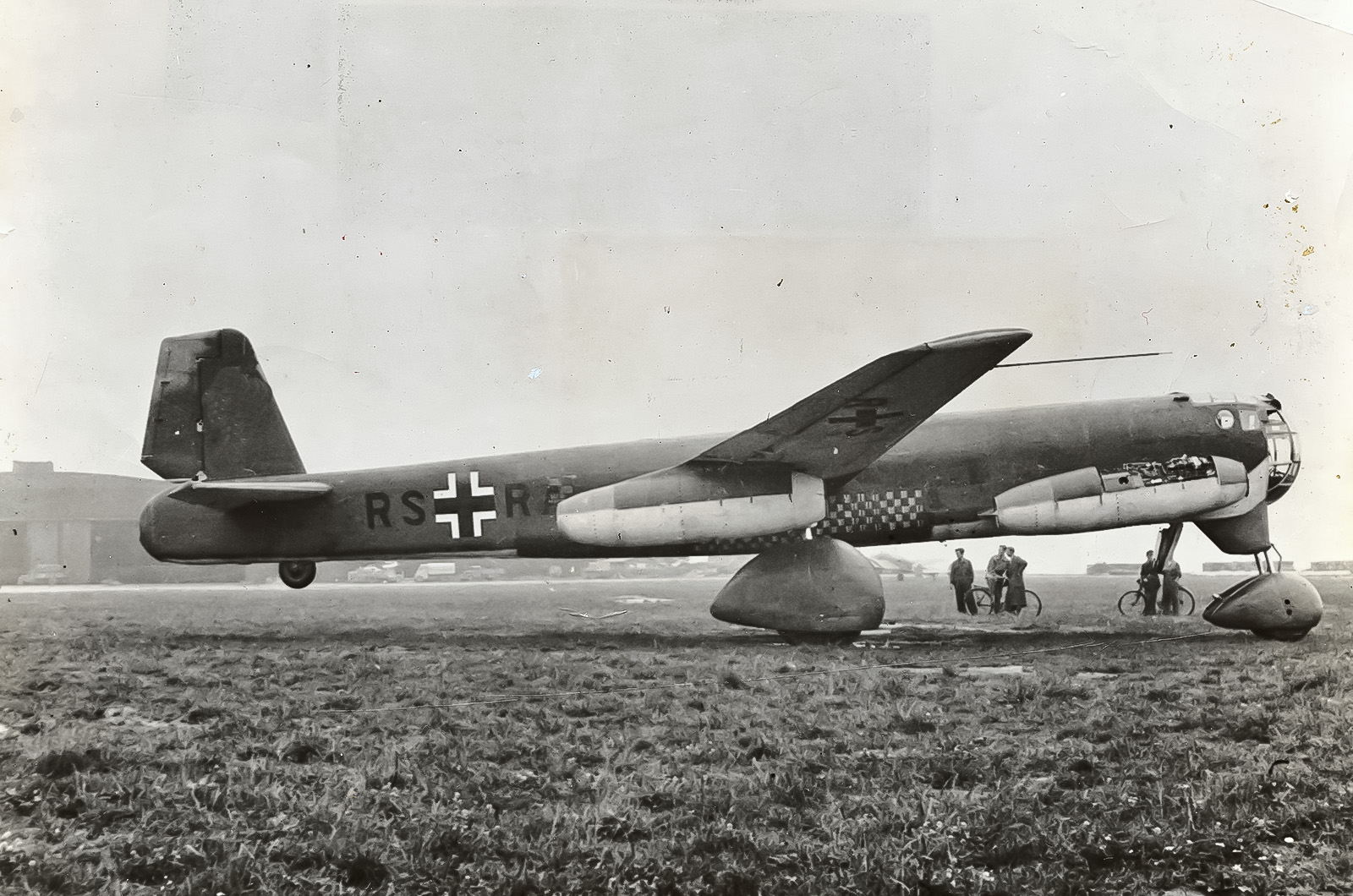
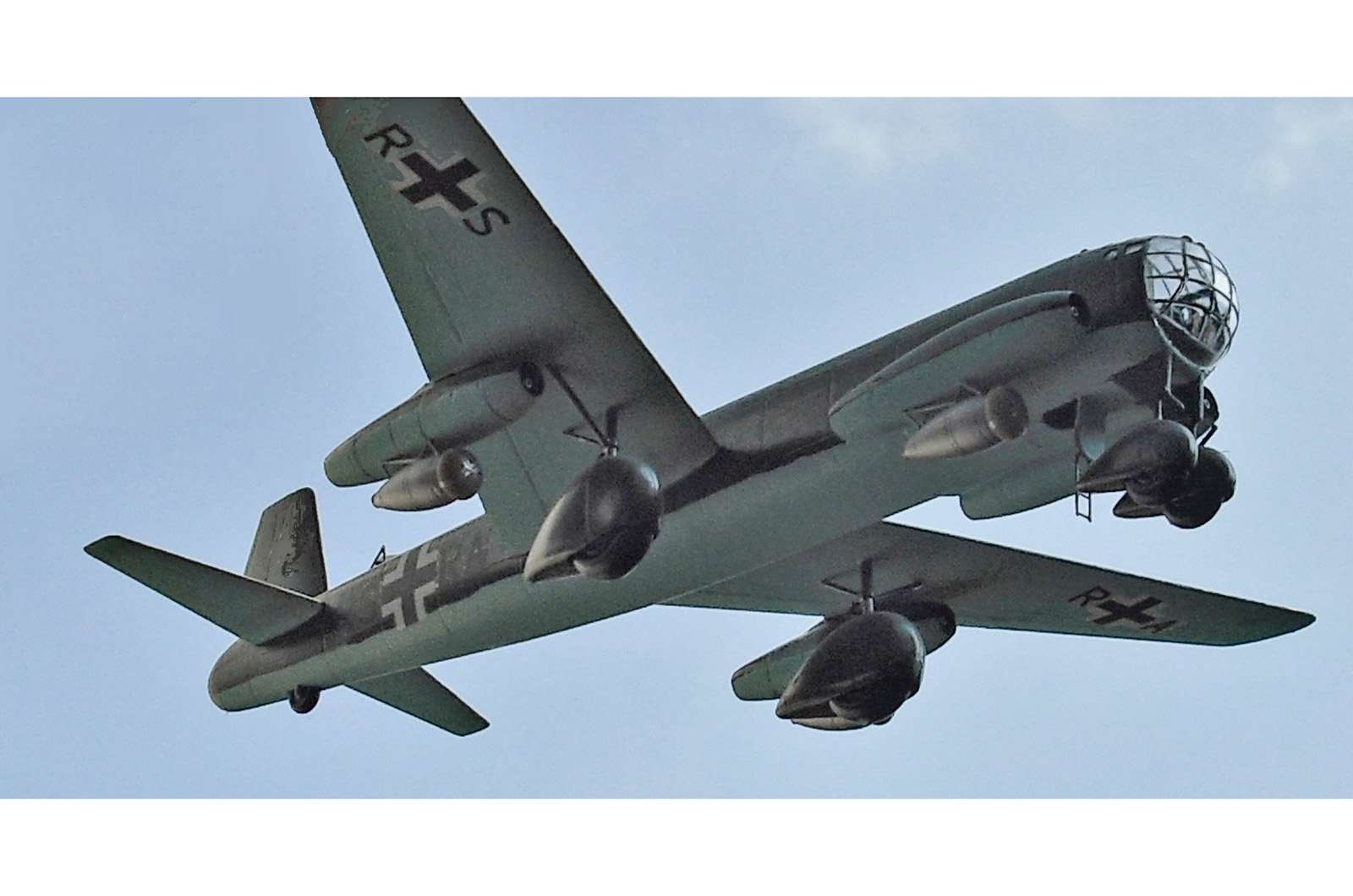
7: Junkers Ju 287

 Junkers Ju 287

The Ju 287 sought to improve the take-off and landing performance of jet aircraft by providing extra lift at low airspeeds using a forward-swept wing designed by Dr Hans Wocke. This design also allowed a single bomb bay to be placed, ahead of the wing, in the ideal position on the aircraft’s centre of gravity.

The aircraft combined the new wing, built from scratch, with the fuselage of an He 177A-3 bomber, the tail of a Ju 188 and, bizarrely, the main and nose wheels were taken from destroyed American Consolidated B-24 Liberators: a remarkable instance of recycling. To save weight and maintain simplicity, the undercarriage was fixed.

Back to top

7: Junkers Ju 287

 Junkers Ju 287

Flight testing began on 8 August 1944, and the aircraft displayed generally excellent handling characteristics, though some issues with wing warping were encountered, a particular problem with forward-swept wing designs. These issues were expected to be resolved in the next prototype with all four engines mounted on the wings.

However, that prototype was incomplete by the end of the war. The remains of the aircraft, Hans Wocke, and his design staff were all captured by the Soviets and shifted to the USSR, where a developed version was flown as the EF.131 in 1947.


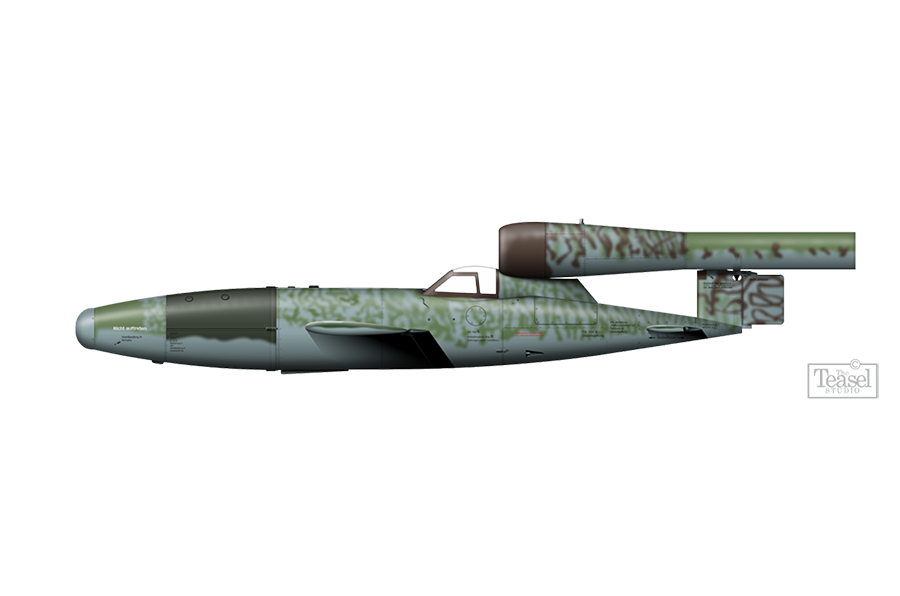
6: Fieseler Fi 103R Reichenberg

 Fieseler Fi 103R Reichenberg

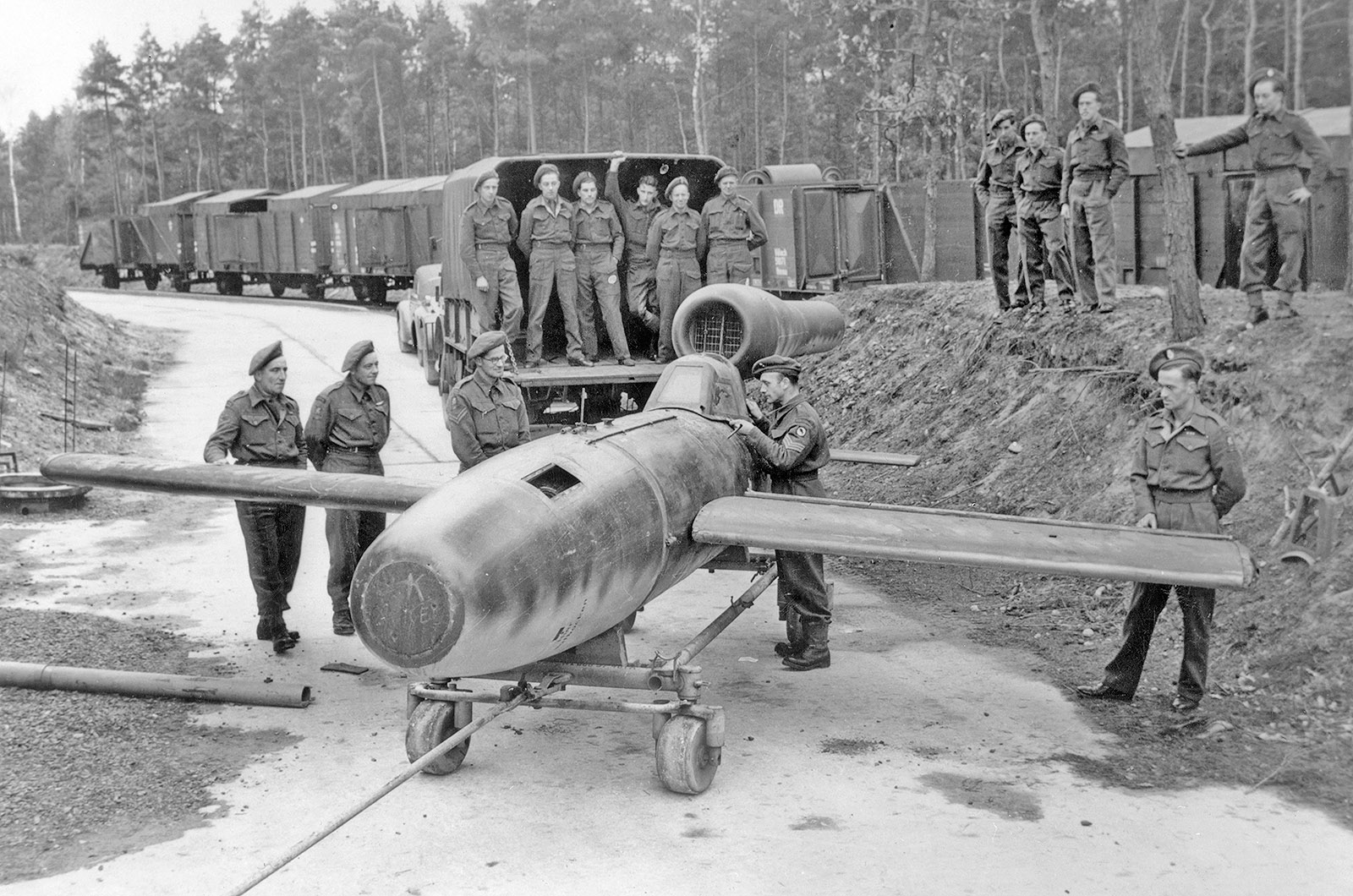
The Fieseler Fi 103R was essentially a V-1 cruise missile with a human as the guidance mechanism. The Reichenberg had a quick development period, probably too quick. The German Research Institute for Sailplane Flight started development in mid-1944 and had a prototype ready for testing within days.

A cramped cockpit with a jettisonable canopy was placed just under the pulse-jets air intake, and flight controls were rudimentary, although straightforward. After release from a carrier aircraft, the Reichenberg was meant to be piloted towards a target and put into a dive, following which the pilot baled out. Pilot survival was optimistically rated as being “most unlikely” (it was estimated at a terrifying 1% due to the proximity of the pulsejet’s intake to the cockpit).


6: Fieseler Fi 103R Reichenberg

 Fieseler Fi 103R Reichenberg

Tricky landing controls ensured that two test articles crashed during developmental trials, and although the designers claimed a distinction between their Selbstopfermänner and the Japanese Kamikaze, to the pilot, there was little difference.

Thankfully for the young men expected to fly this screaming tomb, it was quickly abandoned after armaments minister Albert Speer and KG200 chief Werner Baumbach successfully persuaded Hitler that suicide was not in the German warrior tradition.


5: Dornier Do 335

 Dornier Do 335

Back to top

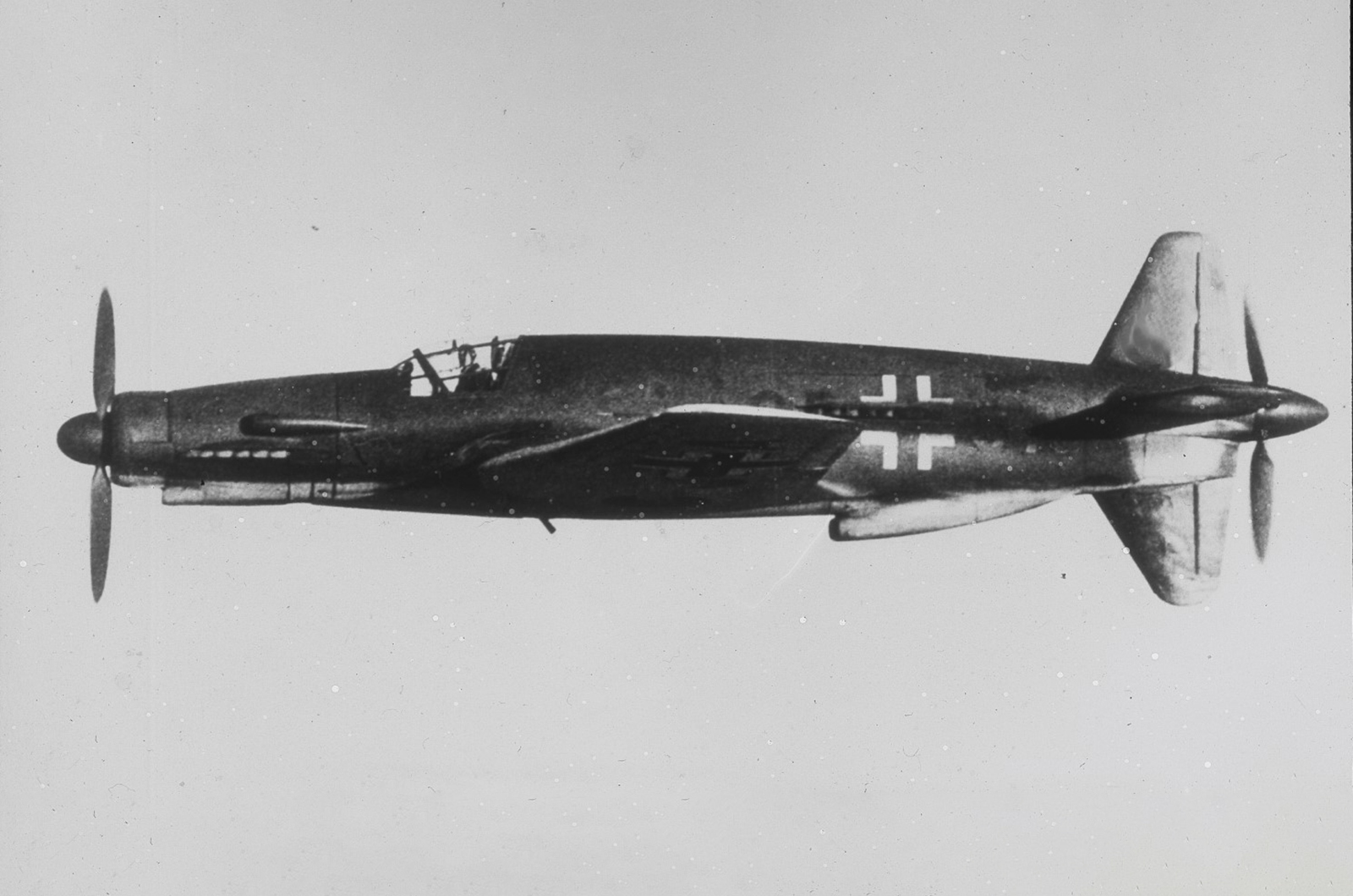
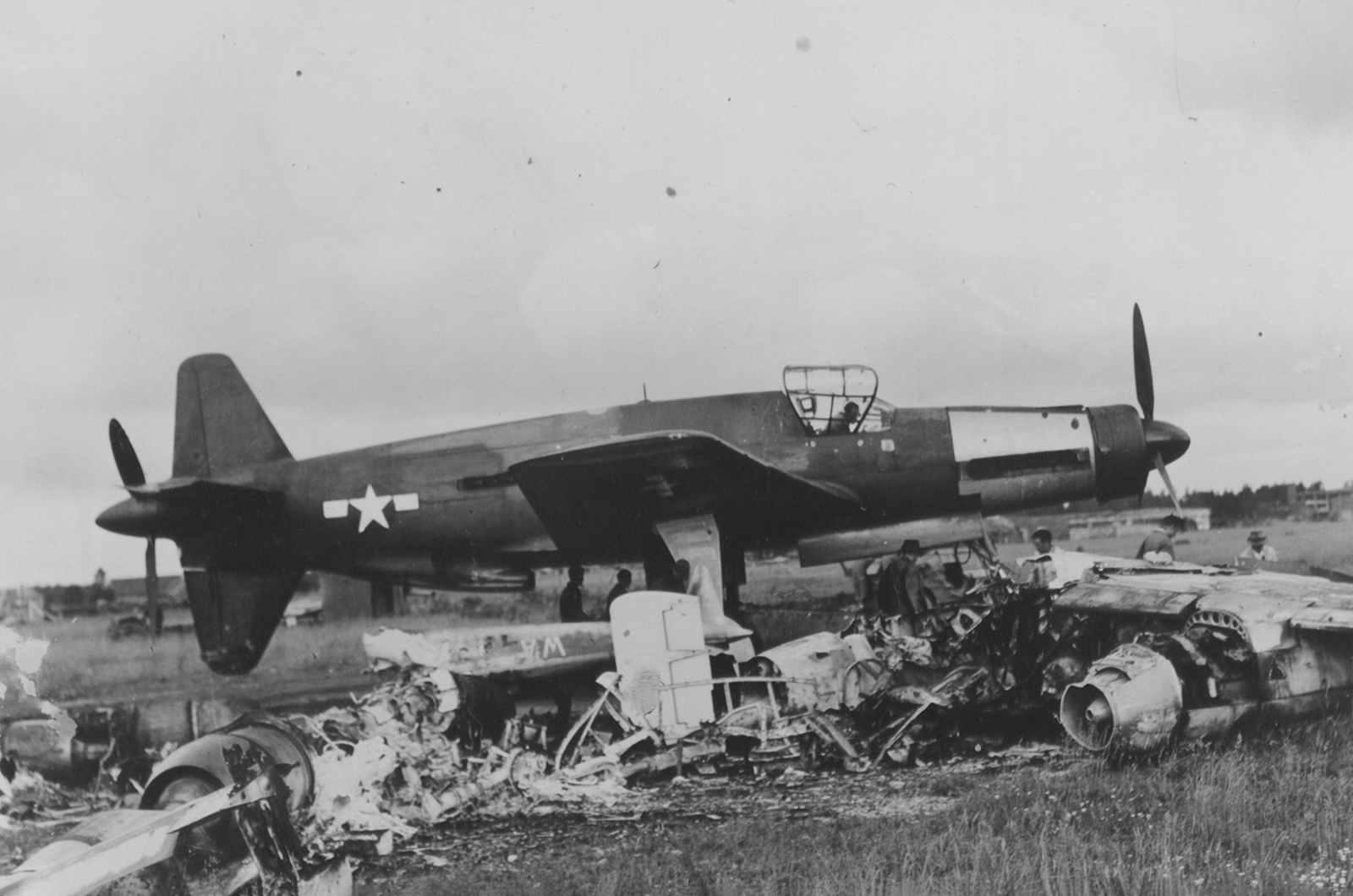
Dornier took a radical approach with its unique Do 335. To minimise the frontal surface area, drawing on earlier experience with the Do 18 and the P.59 (a 1937 patent for a tractor-pusher bomber), the Do 335 adopted the rather weird ‘push-pull’ configuration, with both engines mounted in the fuselage.

The forward engine was in the traditional location with a tractor propeller, but the aft engine was mounted in the middle of the fuselage (for better weight distribution) and connected to an aft push propeller with a driveshaft. The resulting surface area was only slightly higher than that of a comparable single-engine fighter.


5: Dornier Do 335

 Dornier Do 335

A pair of Daimler-Benz DB-603 engines, each producing 1800 hp, allowed for a maximum weight a little higher than a traditional fighter, armed with a 30-mm cannon firing through the propeller hub and a pair of 20-mm cannon in the cowling. The aircraft could carry a lot of fuel and provided a combat range 30% larger than the Focke-Wulf Fw 190 or Messerschmitt Bf 109.

The aircraft was too late to see combat in the Second World War; only 37 were built. Of these, a few reached conversion units for a short duration, but the type did not see combat. The design produced tremendous performance; it topped out at a remarkable 474mph.


4: Heinkel He 162 Volksjäger

 Heinkel He 162 Volksjäger

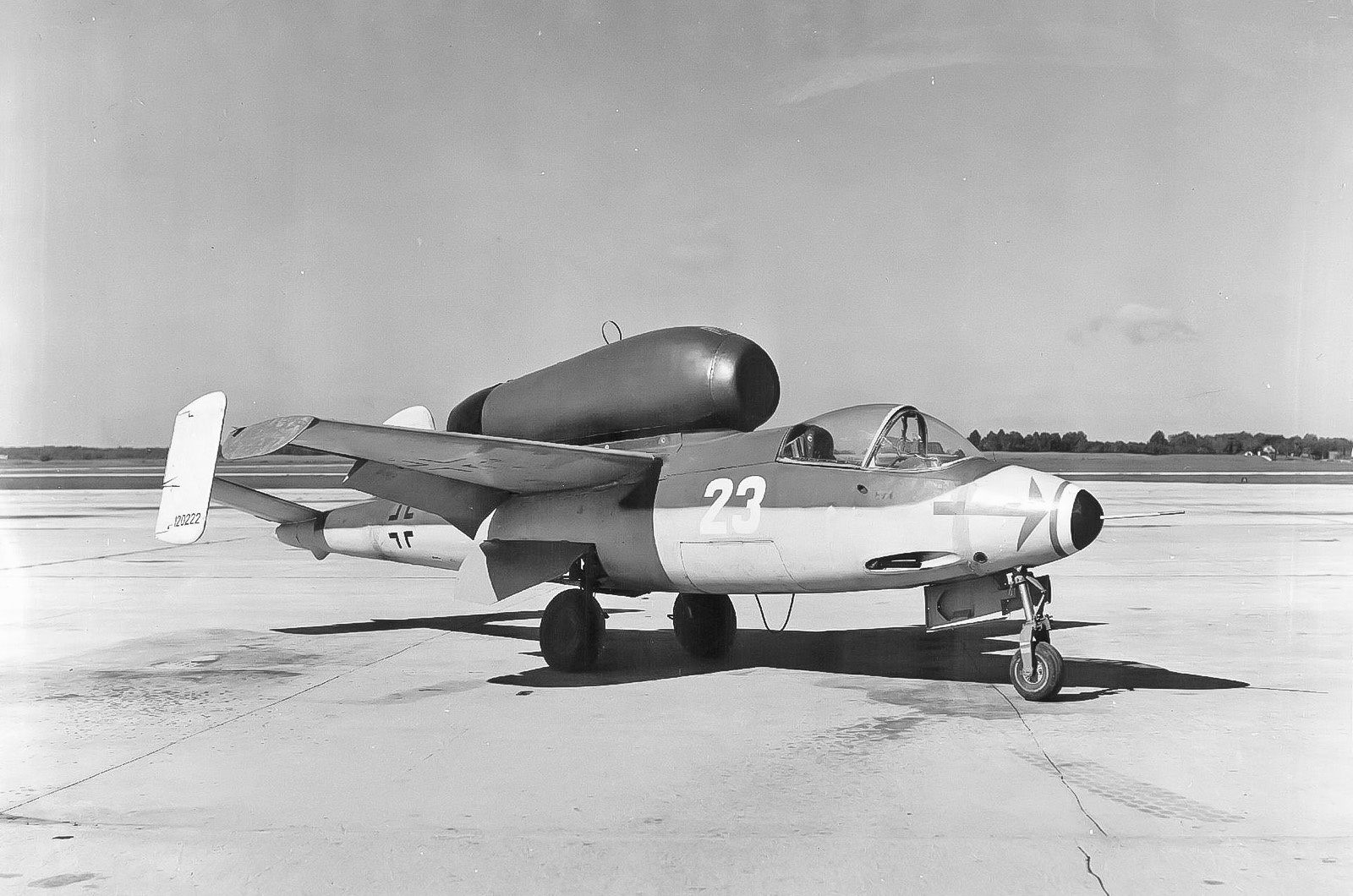
Born in Nazi Germany’s desperate last days, the tiny Heinkel He 162 ‘Volksjäger’ (People’s fighter) was born of the hope that a mass-produced, cheap yet highly advanced design could defend against the hundreds of Allied bombers pummelling Germany. Cheap manufacture came courtesy of the misery of subterranean slave labour and resulted in appalling build quality.

Conception to first flight took just three months. It was an extremely innovative design combining the new technologies of jet propulsion and ejection seat that was intended to be flown by young, fanatical men (and boys), minimally trained on gliders. Though an impressive achievement and capable of 550mph, it was difficult to fly.


4: Heinkel He 162 Volksjäger

 Heinkel He 162 Volksjäger

Back to top

In the final days of the project, it became apparent that jet engines were too costly and used too many valuable materials. A simple solution was considered: the replacement of the jet engine with one or two pulse jets as used on the V-1 missile.

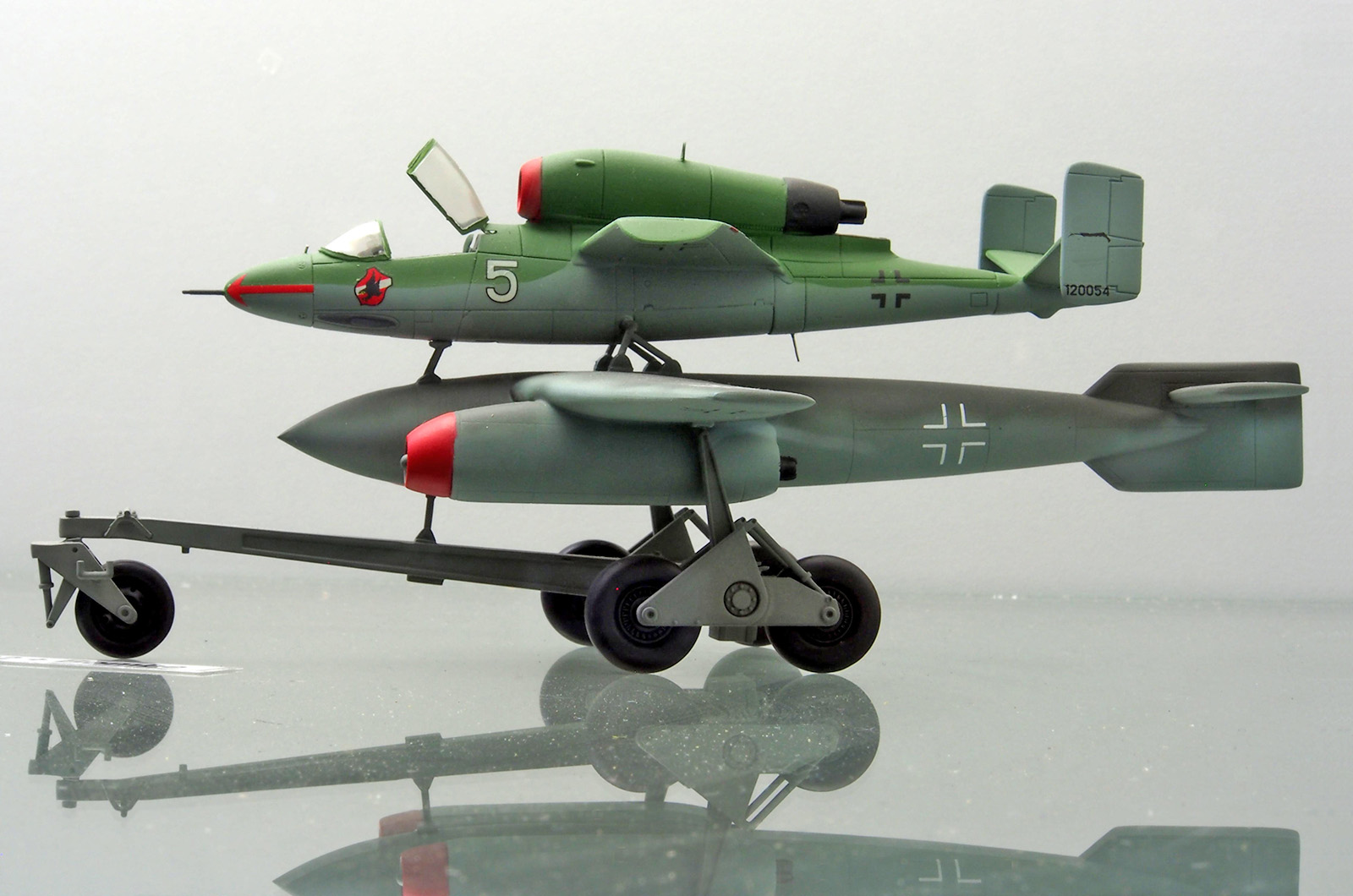
Another proposal was for an He 162 to form the upper component of a Mistel composite, atop a massive air-launched bomb, the Ar 377 or Ju 268, to guide it near its target and then detach. The bomb (or missile or drone, depending on how you wish to define it) was essentially a twin-engine jet bomber in its own right.


3: Arado Ar 234 Blitz

 Arado Ar 234 Blitz

Amazingly, the fastest pure bomber of the war was over 100mph faster than the speediest operational fighters of 1939. Initially too ambitious, the Ar 234 combined jet propulsion with a jettisonable trolley undercarriage (massive fuselage fuel tanks left no room for undercarriage), rocket-assisted take-off, cabin pressurisation and an ejection seat. It first flew on 22 August 1943.

Somewhat simplified, with a conventional undercarriage fitted in a larger fuselage, the first B-series aircraft first flew on 10 March 1944. The Ar 234 was used for reconnaissance and bombing. Though fast, it was not invulnerable and suffered from poor rearward visibility and relatively poor manoeuvrability at lower speeds.


3: Arado Ar 234 Blitz

 Arado Ar 234 Blitz

The world’s first jet bomber attack took place on Christmas Eve 1944. III./KG 76, under the command of Hauptmann Dieter Lukesch, dispatched nine Arado 234B-2s each armed with a single 500 kg (1,100-lb) bomb to attack rail yards at Liège during the Ardennes offensive.

The mission was a success with all bombers returning safely. Around a week later, on New Year’s Day, III./KG 76 attacked Allied airfields with six aircraft. Further missions followed across January. In March, Arado bombers were tasked with halting US advances across the Rhine at Remagen; five attempts were made, and five Arados were lost.


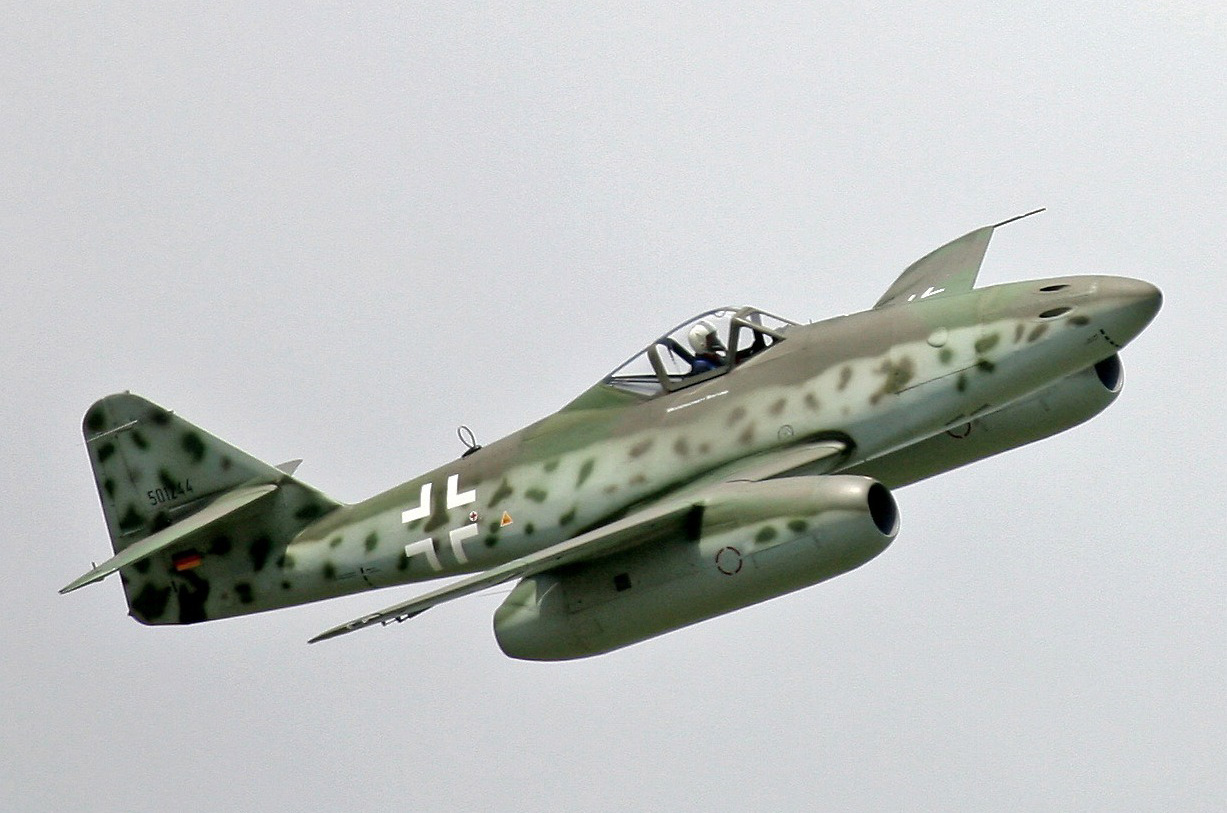
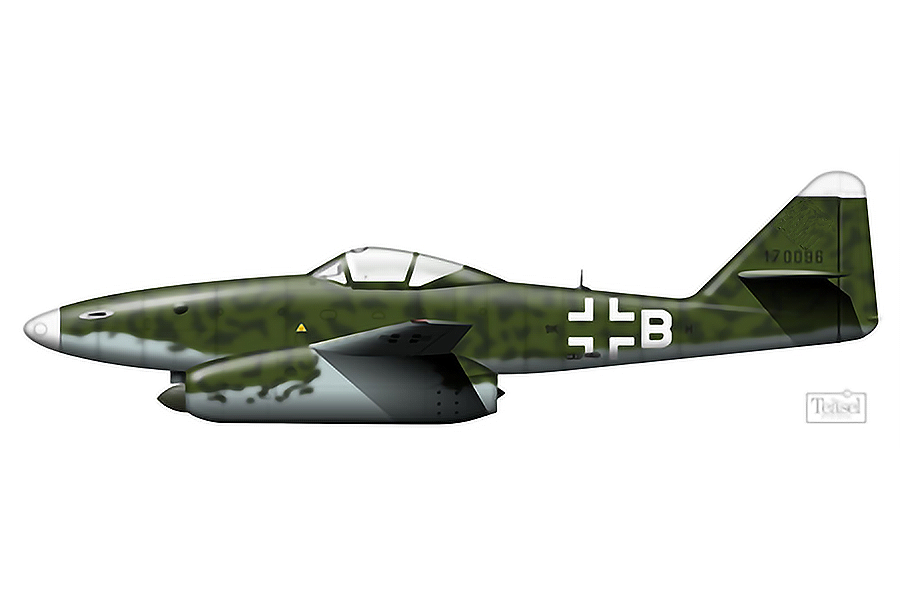
2: Messerschmitt Me 262A-2 Sturmvogel ‘Stormbird’

 Messerschmitt Me 262A-2 Sturmvogel ‘Stormbird’

Back to top

As with several aircraft on this list, 262 production was aided by slaves from concentration camps. The Me 262 was primarily a fighter, but it also saw combat as a light bomber, and much has been made of Hitler’s ‘mistaken’ May 1944 edict that this jet should be developed as a bomber, delaying the Me 262’s service entry and negating its perceived ‘correct’ use as a fighter.

The reality is more nuanced: the D-Day landings were imminent, the Me 262 was not yet in production, and the small number of fighters that could be built in time would, at best, have a limited effect against overwhelming Allied numerical supremacy. However, attacks from as few as 50 (uninterceptable) fighter-bombers against troops on the beach could possibly have proven decisive.


2: Messerschmitt Me 262A-2 Sturmvogel ‘Stormbird’

 Messerschmitt Me 262A-2 Sturmvogel ‘Stormbird’

But the invasion occurred before the Me 262 was available, and the question was rendered academic. Both fighter and fighter-bomber versions had been planned since the beginning of the programme, and ultimately the Me 262A-2 became the definitive bomber variant, able to carry two 250kg bombs.

The Sturmvogel was slower than fighter Me 262s, yet even loaded with bombs, it was still faster than any other bomber, and almost every Allied fighter, but it achieved little. Flying fast to avoid interception, bombing accuracy was poor, but the greatest problems were a lack of fuel and aircrew, and most Sturmvogels never saw action at all.


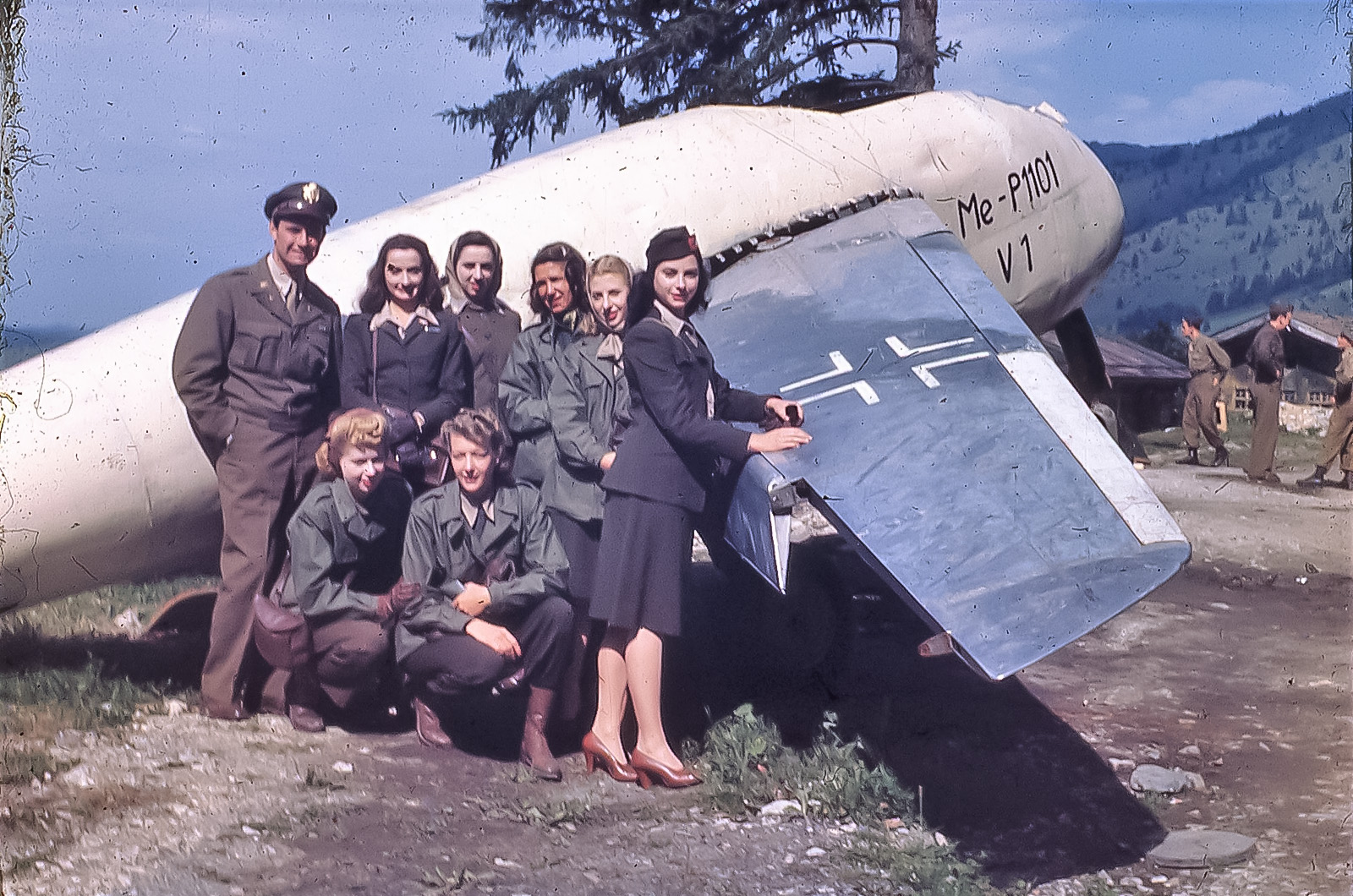
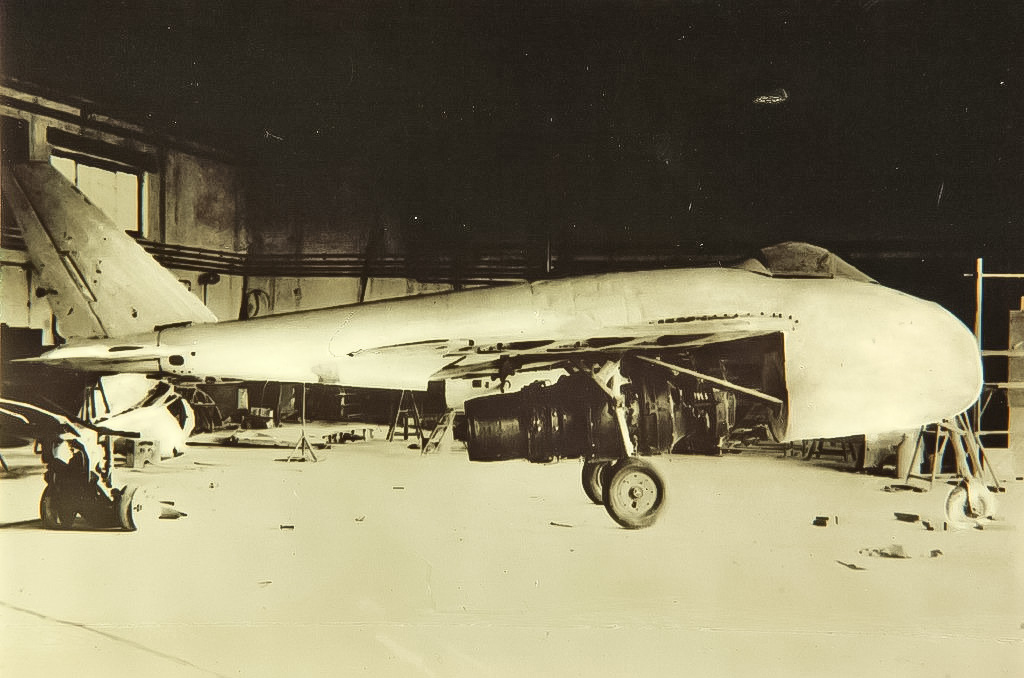
1: Messerschmitt P.1101

 Messerschmitt P.1101

The Messerschmitt P.1101 was a late-war German jet fighter prototype, created under the Emergency Fighter Programme. Its most notable innovation was ground-adjustable variable wing sweep. This concept was a direct precursor to postwar variable geometry ‘swing wing’ designs, which could alter their wing geometry in the air.

Developed under Dr Woldemar Voigt, the P.1101 featured a short fuselage, tricycle landing gear and a boom-mounted tail. Twin intakes fed the planned HeS 011 engine. By August 1944, the design was refined with a slimmer nose and revised wings, but development was delayed by difficulties, including the cramped armament installation and complex landing gear.

Back to top

1: Messerschmitt P.1101

 Messerschmitt P.1101

Despite losing to Focke-Wulf’s Ta 183, funding continued for a P.1101 prototype. Built at Oberammergau, the V1 prototype incorporated Me 262 wing sections, a single nose intake and adjustable sweep angles of 30–45 degrees. A Jumo 004 engine replaced the unavailable HeS 011. Planned armament included MK 108 cannons and Ruhrstahl X-4 guided missiles.

Captured by US forces, the 80% complete prototype was shipped to America. Though too damaged to be completed or flown, its ‘swing-wing’ concept was developed upon by Bell aircraft to produce the externally similar but more advanced Bell X-5, the first aircraft capable of changing its wing sweep in flight. The world would have to wait until the F-111 in 1967 to have an operational variable geometry or ‘swing wing’ aircraft.

Follow Joe Coles on Substack, Twitter X  or Blue Sky. His superb Hush-Kit Book of Warplanes is available here.

If you enjoyed this story, please click the Follow button above to see more like it from Autocar

Photo Licence: https://creativecommons.org/licenses/by/4.0/deed.en


Join our WhatsApp community and be the first to read about the latest news and reviews wowing the car world. Our community is the best, easiest and most direct place to tap into the minds of Autocar, and if you join you’ll also be treated to unique WhatsApp content. You can leave at any time after joining - check our full privacy policy here.

Add a comment…