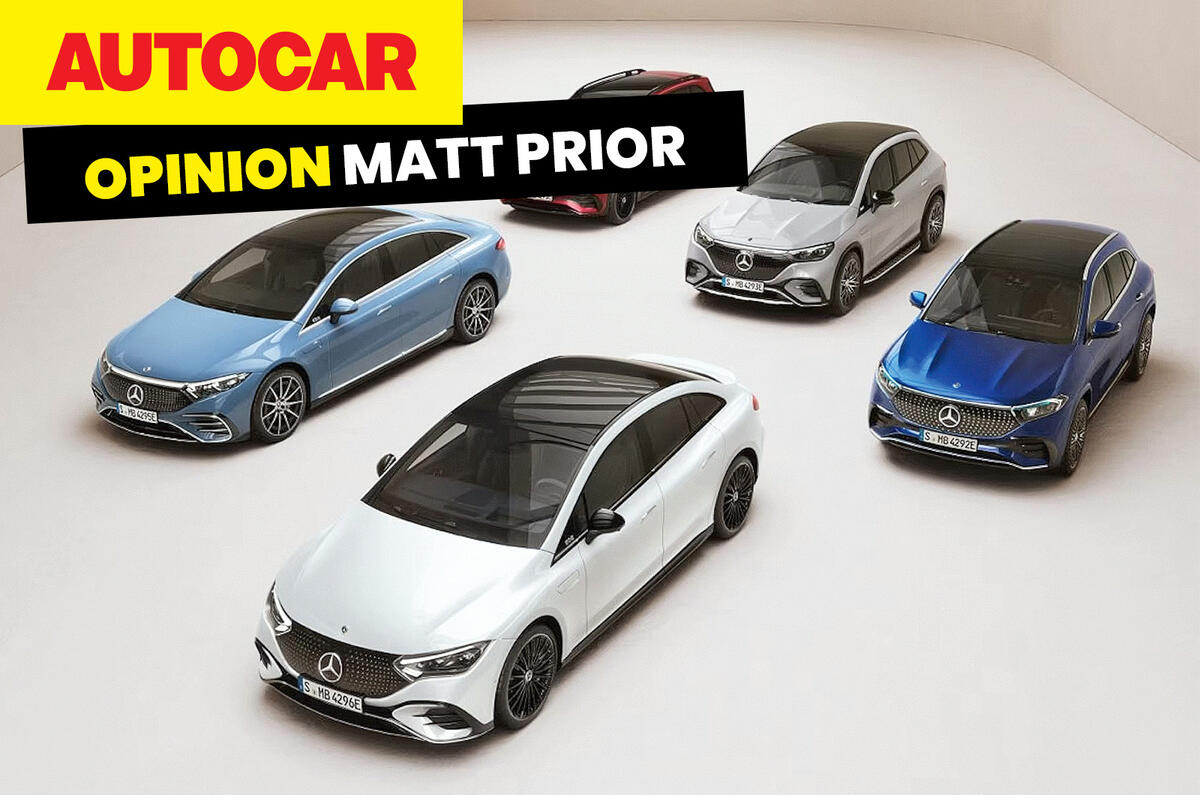

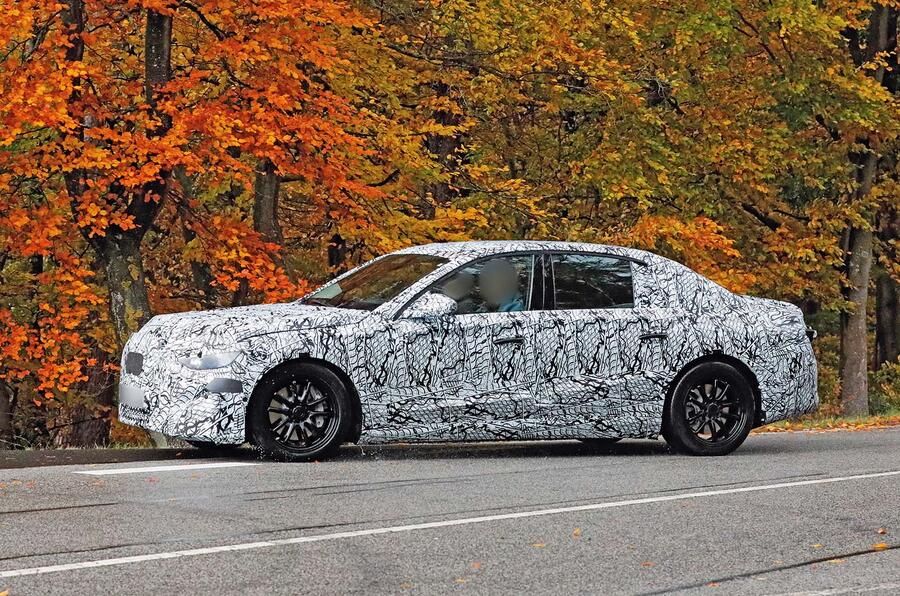
Our spy shots of the next-generation Mercedes-Benz E-Class suggest that what's going to happen next with that car is what happened with the GLC over the summer: an end to the weird, soap bar-looking EQ electric models and an alignment with the combustion models.
"If you were told this was the next-gen combustion GLC, you would say 'yes, it's the next logical step: it looks like a GLC'," boss Ola Källenius said of Mercedes' new electric SUV last month. And I think it's now safe to assume that Mercedes' next E-Class-sized electric executive saloon will be very much integrated into the range as an identifiable E-Class variant too.
Internal documents apparently describe the EQE replacement as having an "iconic E-Class three-box design", with a "very status-oriented wheelbase offering maximum space and comfort". In other words, it will be a big Merc.
This strikes me as an inherently sensible move. Mercedes' ultra-streamlined EQ EVs haven't achieved the same resonance as its traditional-looking ICE cars. The E-Class, like the S-Class and to a lesser extent the SUVs, have such a strong reputation that they would be barmy not to tap into it.
In EQ, Mercedes created a new brand that didn't outwardly signal the values that existing models had spent - by individual model line - decades establishing. The first unibody Ponton-series Mercedes, whose lineage can be drawn directly to the modern E-Class, arrived in 1953. Why would one decide that reputation was no longer important?
Reintegrating an electric executive saloon back into the traditional fold makes particular sense to me, then: it's the E-Class you've known and respected all your life but now it offers the option of a zero-emissions powertrain. Smart.
Stellantis likes doing the same, because it means it can build one model and be flexible about the proportion of powertrains that it fits: it views electric propulsion as just an alternative to a petrol or diesel or hybrid system, figuring that what you actually want is a Peugeot 208 or a Vauxhall Astra, then secondarily you're just choosing how best to power it.
And if more people want EVs, fine: the factories just build fewer petrol ones, rather than having entire models at the mercy of EV adoption rates. I'd think that, by now, we would see the start of consensus on what works best for car makers when it comes to this (electric-only and new brands excepted, of course) and that for legacy manufacturers (for want of a better phrase for them), giving customers the cars they know and like, just with differing levels of electrification, would be the answer.