
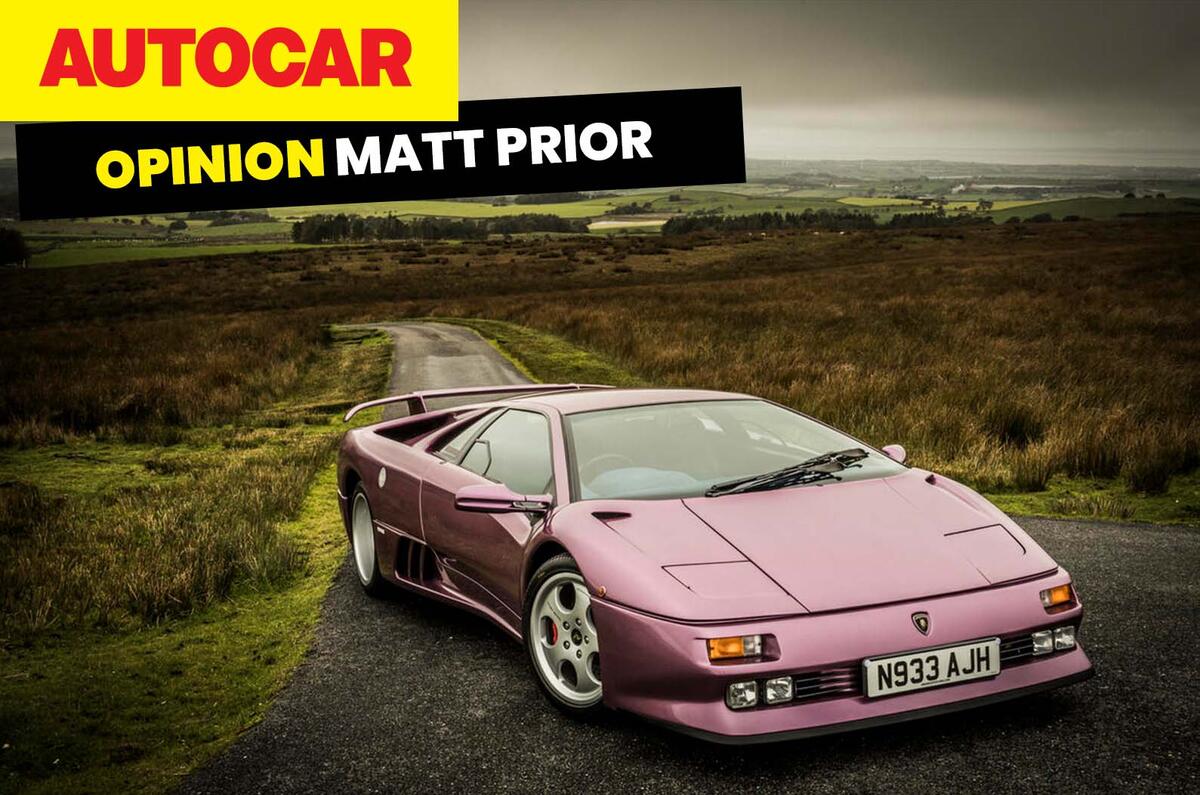
Eek, graunch, oops, sorry. There will be a set of exclamations, crunches and apologies such as these if I'm driving a car that grinds its nose on a driveway ramp or speed bump or grounds out over an undulating road.
I apologise because I feel like I've let the car down. Yet, as time goes by, I'm less and less convinced that it's my fault.

So why the apology? Is it a natural part of being English? Like saying sorry to someone who happens to be wanting to walk through a door at the same time as me? Oops, my bad. Or like feeling similarly in restaurants when not everything will fit on a table?
Oh dear, what a muddle, let me move my drink and that little vase with the artificial flower in it-sorry-so there's room for the saag aloo.
How many times have I apologised like this over the years? Dozens, certainly. Hundreds, maybe. And I think I've had enough of it.
Not one of those times was I responsible for how low a car was or how small a restaurant table was. So why on earth was I apologising? Car makers know what the roads are like, just as restaurateurs know exactly how much their average customer is likely to order.
So, genuinely reluctant though I am to criticise a hospitality industry that needs all the help it can get, how about making the tables a tiny bit bigger?
And, more pertinently to my day job, why make road cars that can't be driven onto driveways, into car parks or over shoddy roads without significant risk of underbody gravel rash or, worse, cracked splitters or diffusers? Give it a rest; ease off the downforce a bit and give them more ground clearance, for heaven's sake.
Manufacturers may argue that they fit hydraulic nose lifters to avoid this sort of damage. And it's true that any time I get into a car that has a button that raises the front end clear of harshly angled driveways, I am, for a brief moment, grateful.
Yet then I'm also fearful. For one, exactly how low is this car? For two, how long will that nose lift take to actually raise? And at what speed will it happen? Some are painfully slow or will refuse until the car is moving at a crawl.


Join the debate
Add your comment
How many definitions of a supercar are there?, why should a million pound car be anymore exciting that a ten thousand pound car?
The Bristol Fighter looks/looked usable; fairly narrow, decent ground clearance.
Why do we make jewlery out of gold when it's a soft metal and prone to scratches and damage? Because it's precious, and if you can maintain it correctly you are socially demonstrating that you are both meticulous and not performing constant manual labour. Alternatively, if that isn't possible for the owner, they can wear and use it sparingly to maintain the appearance. Supercars are the same cultural object, how is that not obvious?The solution is to add technology, which we do, and then everyone complains because with cars in particular, there is the fantasy of control. You can't have it both ways and very few companies can walk that tightrope.