Access control:
Open
Include in Apple News:
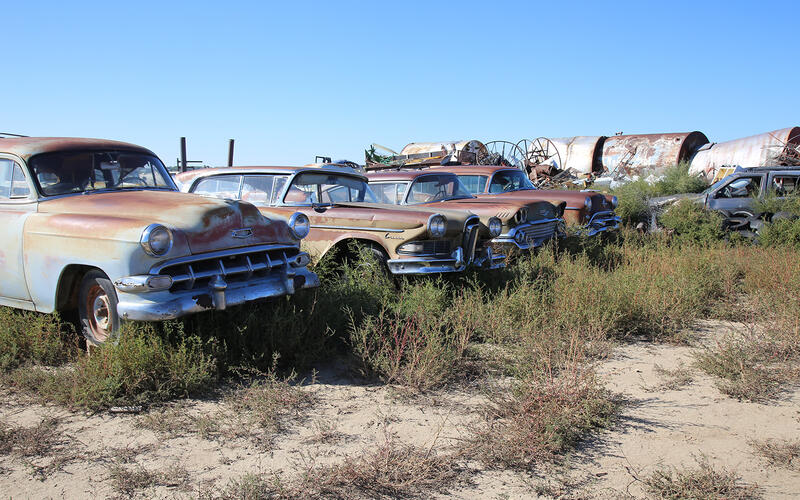

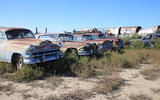
Founded in 1968, the yard holds thousands of vehicles, many of which have sat here for decades. Owner Don Woller can recall the story behind a surprising number of them, from how they arrived to what’s been removed over the years. That knowledge, combined with the sheer scale, makes it feel less like a typical salvage yard and more like a private collection that just happens to sell parts and project vehicles.
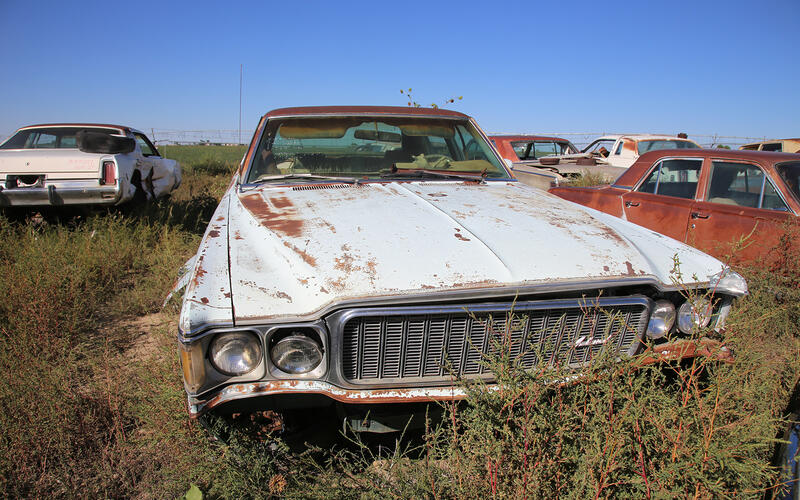
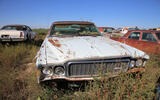
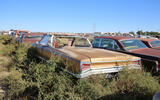
This 1971 AMC Ambassador is from a model line that totalled 41,674 units that year, modest compared with its Ford, GM and Chrysler rivals. Limited collector interest for many years means relatively few survive today, making cars like this an increasingly uncommon find.
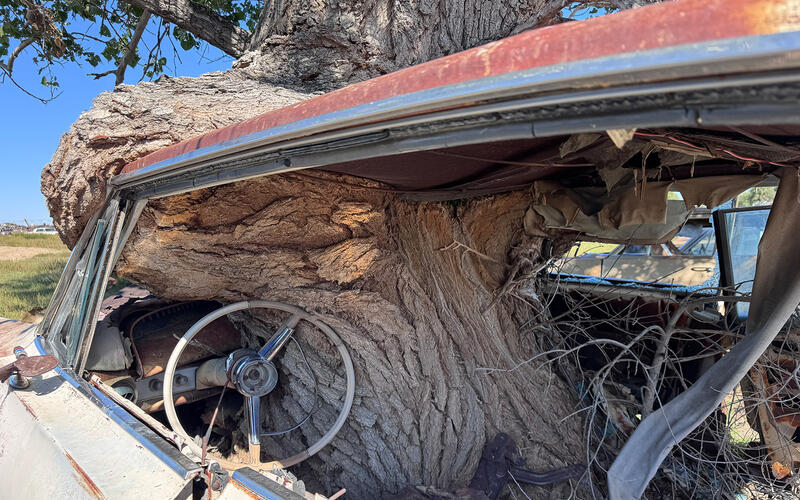
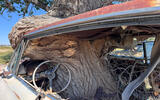
Over the years we’ve photographed trees pushing through engine bays and even the odd headlight bezel, but this is the first time one has come straight through a windshield, and it’s easily the biggest yet. This 1964 Chevrolet was parked here in the early days of the yard, when flooding left the ground too soft to recover it. It was left where it sat, the tree took root, and the rest is history, with the car now well and truly rooted in place.
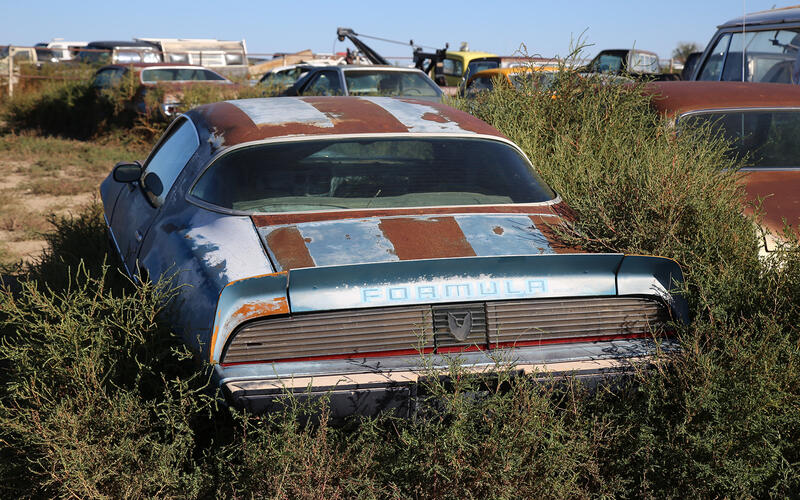
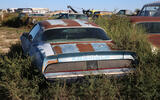
This 1979 Pontiac Firebird Formula is listed as a project car and looks like a promising one. Originally a 305 V8 with automatic transmission, power steering, disc brakes and air conditioning, it’s a well-equipped example. The engine is said to run and the transmission works, with good glass and a solid underside showing no visible rust holes.
There’s evidence of a light knock to the left front, but overall it appears straight and complete, making it a worthwhile base for restoration.
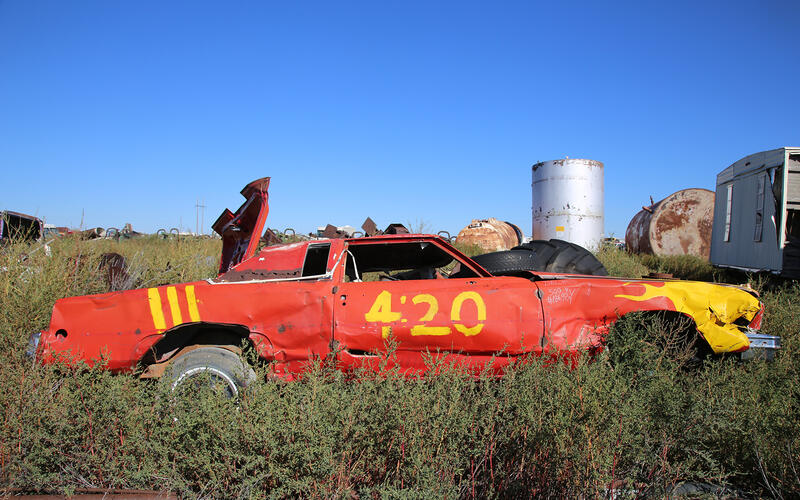
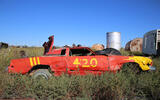
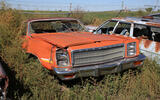
Here’s a 1973 Cadillac Eldorado that’s had a hard life. It’s an ex-demolition derby car, and it shows. Every panel is folded and there isn’t a straight line left on it, yet it still made the inventory list. Maybe the running gear is still good.
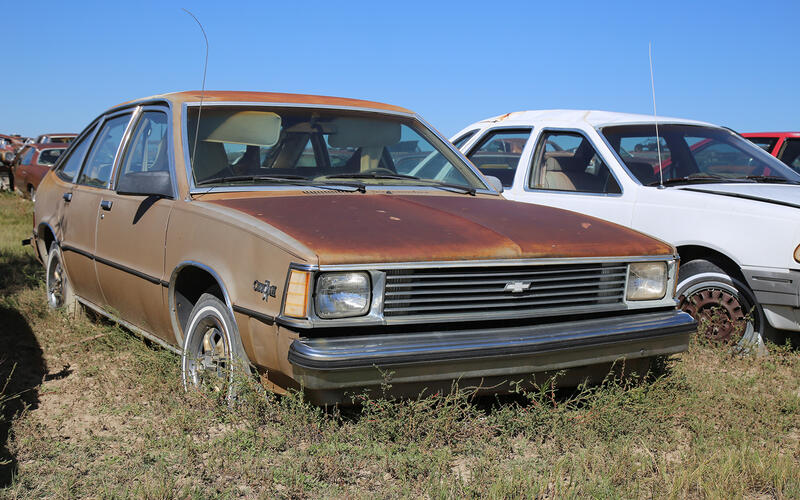
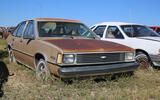
Chevrolet launched the Citation in 1980 as its first front-wheel-drive car, and it became America’s best-selling model almost overnight. This later Citation II version, introduced in 1984, was a facelifted attempt to move on from early brake and build issues that had already dented its reputation.
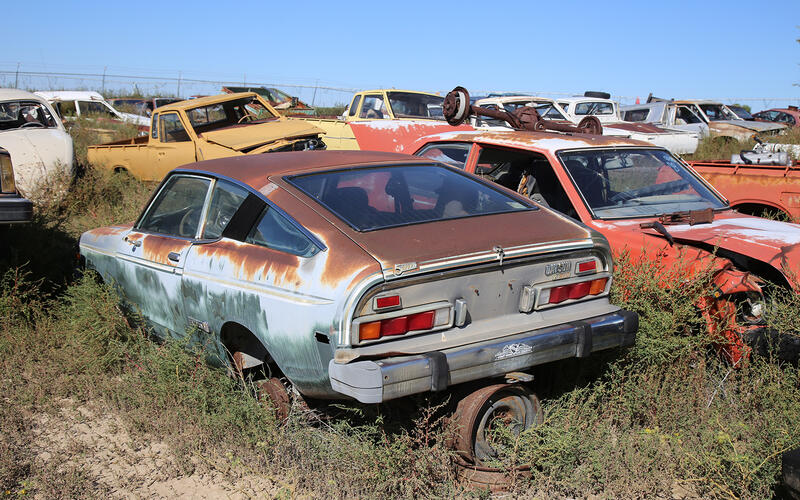
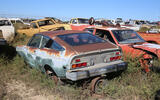
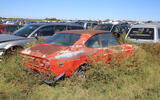
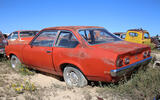
The B210 coupe was one of the cars that helped establish Datsun in the US during the 1970s, offering simple, economical motoring at just the right time. Light, reliable and once everywhere, it is now almost extinct, with most having long since rusted away or simply been used up and discarded. This one appears not to have yielded a single usable part yet.
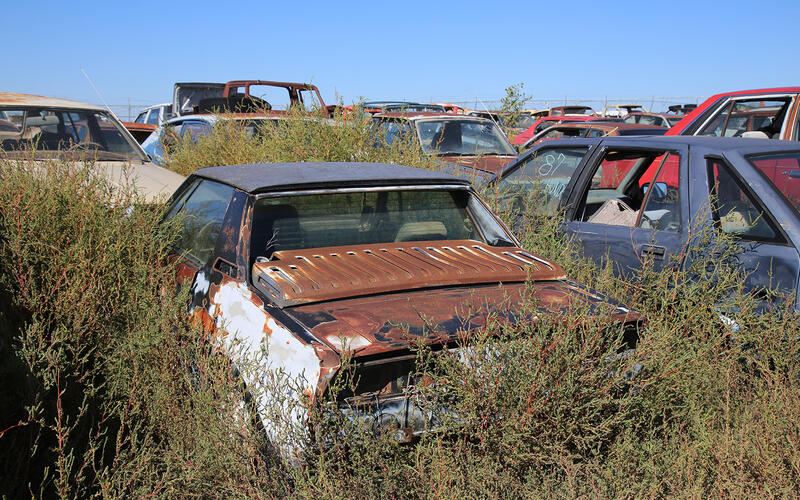
The Fiat X1/9 was launched in the early 1970s as a mid-engined sports car with sharp Bertone styling and handling to match, effectively a baby supercar for the masses. The US was its biggest market, taking a large share of production, and it even outlived Fiat’s withdrawal there under Bertone branding. Rust was never far away, though, and many simply dissolved. This one appears to be following the usual script.
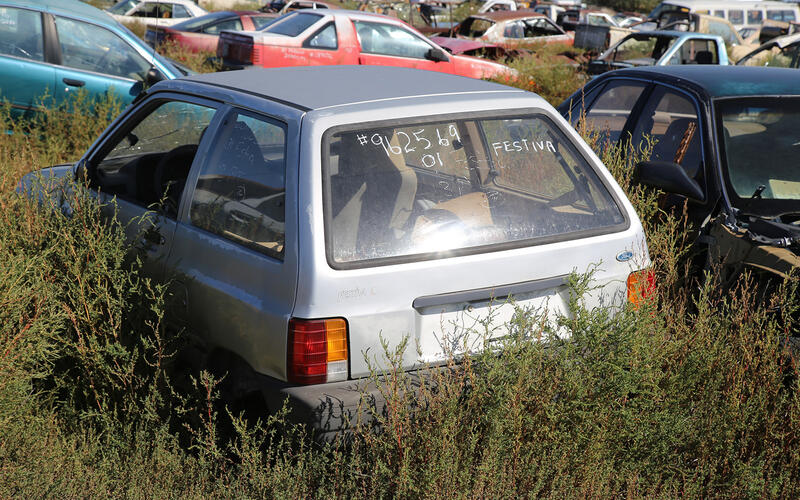
The Ford Festiva was never really a Ford at heart, but a Mazda-based design built by Kia in South Korea and sold under the blue oval badge as basic, budget transport. Cheap, light and dependable, it did exactly what was asked of it, which is why so many were driven into the ground. This is a 2001 example.
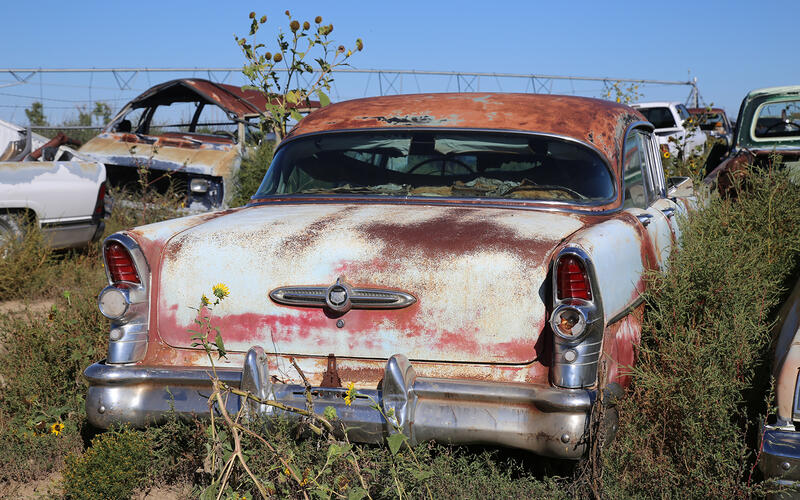
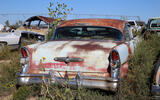
Lamar, Colorado averages around 300 days of sunshine a year and just 12–13 inches of rainfall, which helps explain why cars like this 1955 Buick Special can sit out in the open for decades without rusting away. The paint burns away, the trim dulls and the interior bakes, but the metal underneath survives far better than it would in wetter climates.
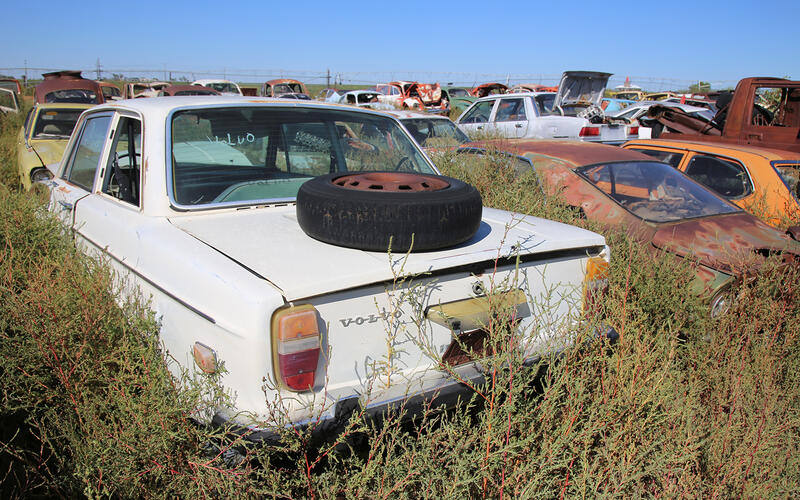
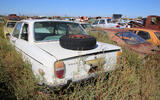
The Volvo 142 was part of the 140 series that cemented Volvo’s reputation for building cars that would outlast almost anything else on the road. Launched in the late 1960s, it brought disc brakes all round, a rigid safety cell and proper crash engineering into the mainstream long before most rivals caught up.
In the US it built a loyal following for exactly that reason. This one’s story ended more abruptly, with the misshapen hood pointing to a front-end crash that parked it here for good.
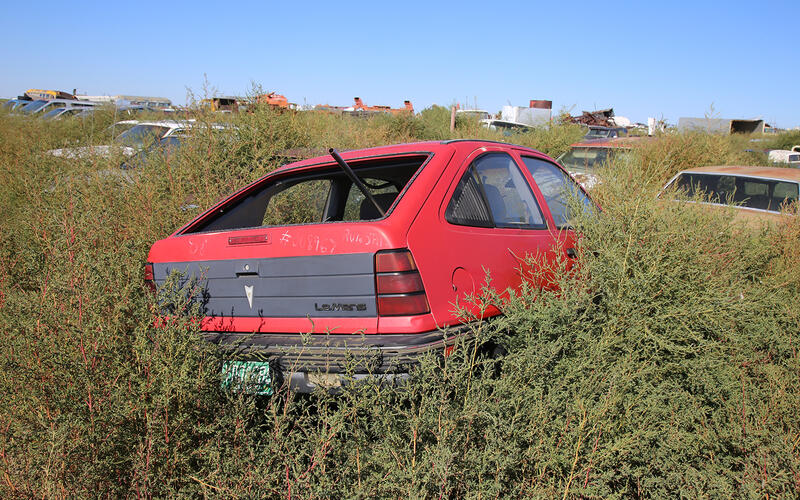
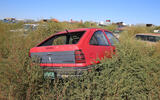
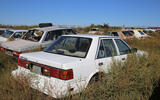
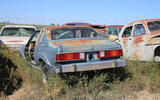
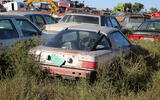
The 1988 Pontiac Le Mans was part of GM’s attempt to sell imported small cars in the US, based on the Opel Kadett but built by Daewoo in South Korea. While it sold strongly in Europe as the Kadett, American buyers never really took to this version, and sales were short-lived. These have all but disappeared now, which probably says more about how they were regarded than how they were engineered.
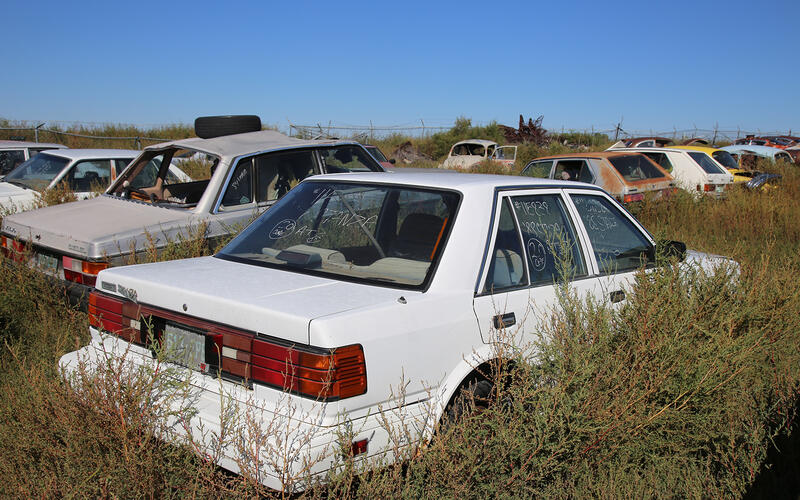
This 1988 Nissan Stanza was built in Smyrna, Tennessee, as part of Nissan’s push to localize production in the US during the 1980s. Sensible, well-made and entirely unremarkable, it was bought to do a job and quietly got on with it. The lack of rust here says more about Lamar’s dry climate than anything Nissan engineered into it.
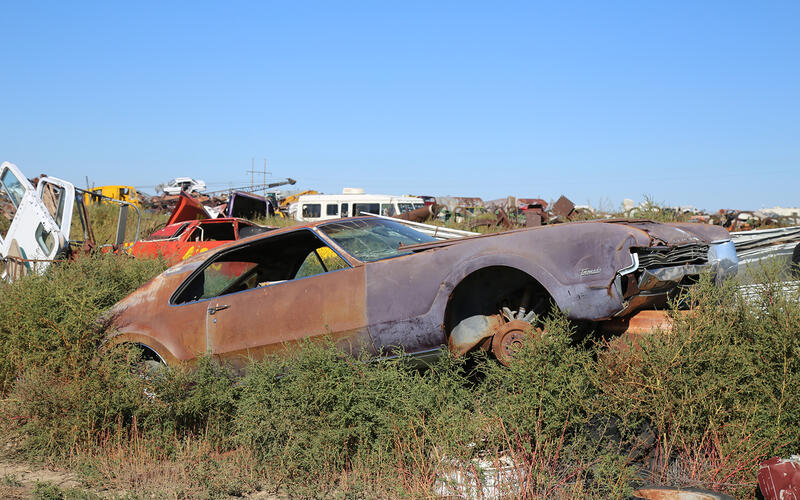
The 1966 Oldsmobile Toronado was the first American car to combine a massive V8 engine with front-wheel drive. Its name sounds like a typo, but Oldsmobile chose it deliberately, echoing “tornado” while creating something distinctive and trademarkable, with just enough exotic flavour to fit the era’s taste for grand, expressive model names.
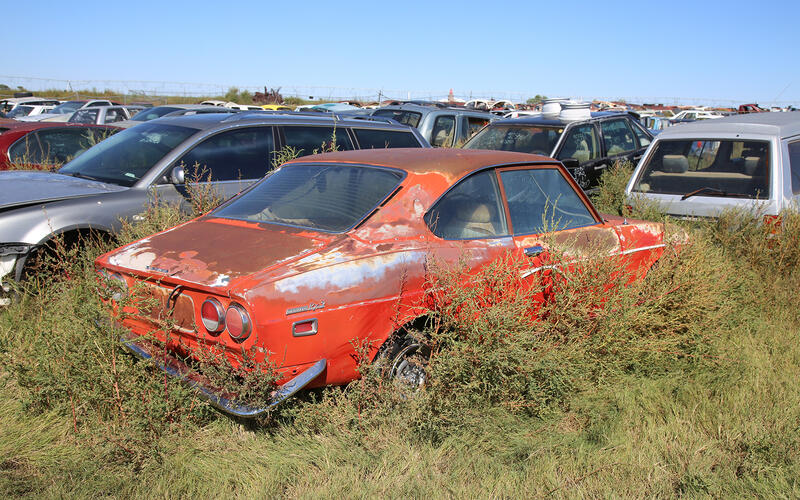
The Mazda RX-2 helped introduce Mazda’s rotary engine to a wider audience beyond Japan, arriving in the US in the early 1970s as the brand looked to stand apart from conventional piston rivals. Powered by the 12A rotary, it was light, smooth and unusually eager for its size, but poor fuel economy and emissions issues meant most didn’t last.
That makes this coupe a rare survivor, one of a handful of similarly aged Mazda parts cars in the yard.
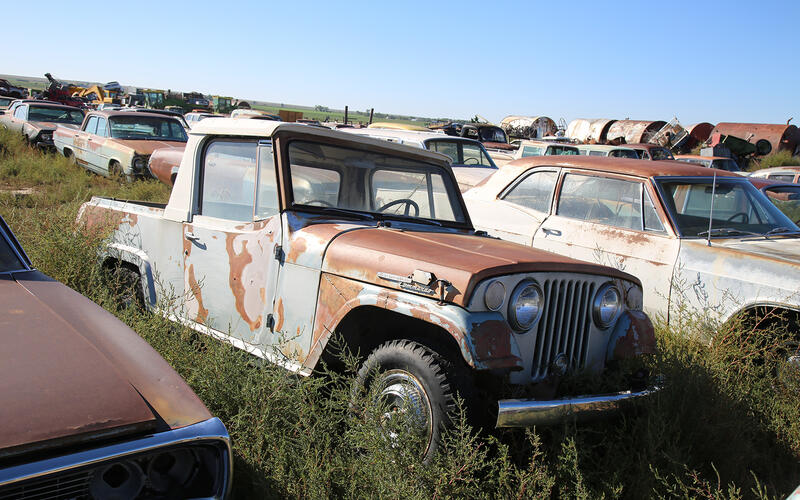
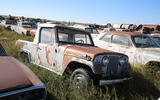
The Jeepster Commando pickup was the rarest version of Kaiser Jeep’s late-1960s recreational 4x4, built from 1967 before the model passed to AMC in 1970. Based on CJ-6 underpinnings with a 101-inch wheelbase and standard four-wheel-drive, it was offered with either the old ‘Hurricane’ four-cylinder or the far more popular 225ci Dauntless V6.
Conceived to rival the Ford Bronco and International Scout, it never sold in big numbers, especially in pickup form.
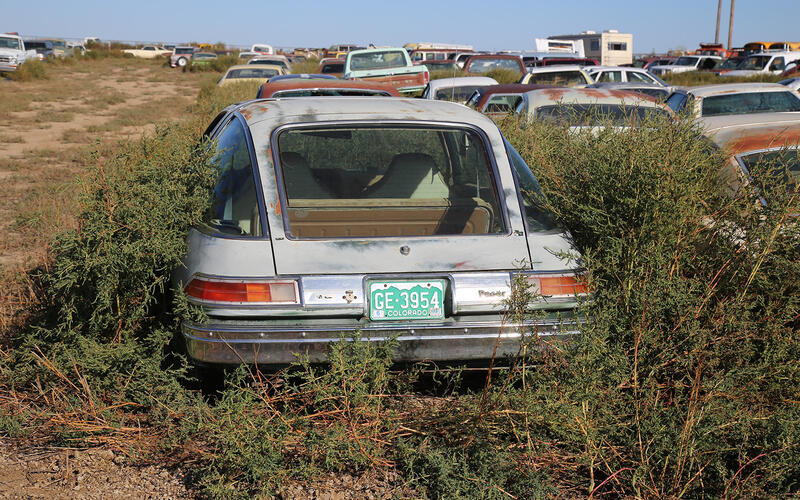
The AMC Pacer was one of the boldest designs of the 1970s, its wide, fishbowl-like cabin created to maximise interior space on a compact footprint. Originally intended for a rotary engine before that plan fell through, it instead made do with AMC’s straight-six, as seen here with the 258 and automatic transmission.
This 1976 example was still running and driving when it arrived back in 1999, and with good glass and a solid underside it remains a decent base today. The engine runs and the transmission works, with relatively little rust showing, even if the interior has long since given up. Awkward when new and unfashionable for years, the Pacer has since become an unlikely cult classic.
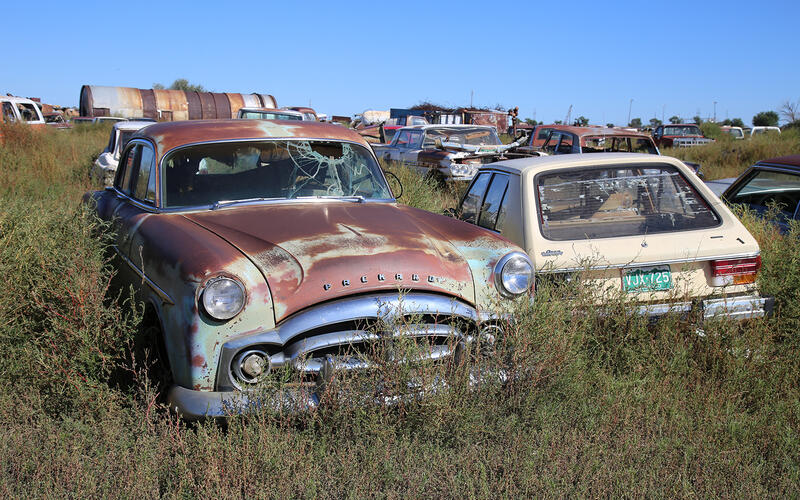
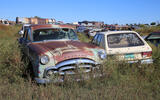
This 1951 Packard doesn’t appear in the project cars section of the Woller Auto Parts website, suggesting it’s being kept purely for parts. Ignore the smashed windshield and it looks remarkably solid, with the Colorado climate clearly having been kind to the metalwork. Parked alongside a humble Omni, it also serves as a reminder of just how large these post-war Packards really were.
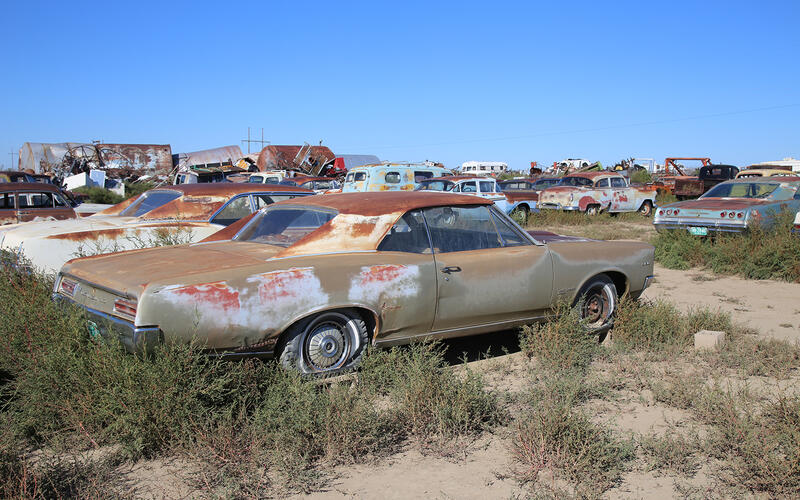
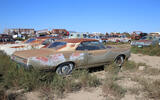
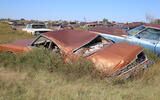
This 1967 Pontiac Tempest is listed as a project car, and it looks like a solid starting point. Powered by a 326 V8 with a three-speed column shift, it appears largely original, right down to its weathered paint. It even carries a GTO hood. The engine is said to run and the transmission works, while the body shows only minor rust and the glass is all intact. With a straight structure and plenty of potential, it wouldn’t take much to bring this one back.
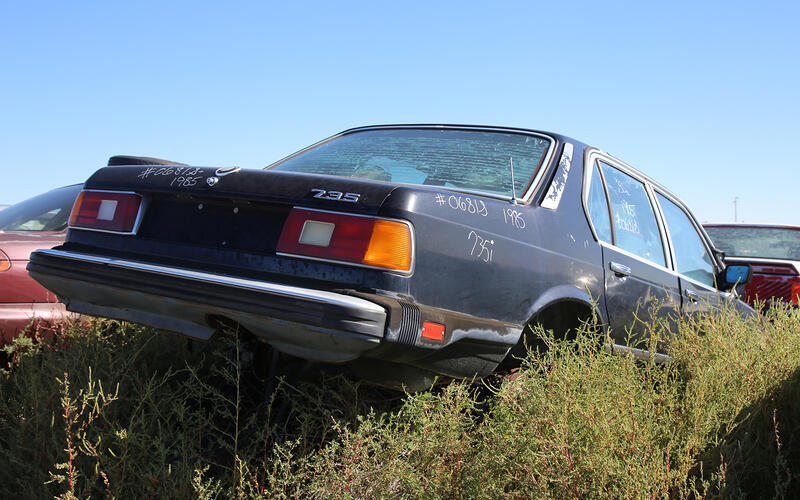
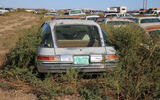
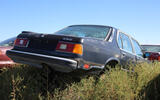
This 1985 BMW 735i is part of the E23 range, BMW’s first 7 Series and the model that helped establish the brand in the luxury sedan market. Powered by a 3.5-litre straight-six, it mixed understated looks with strong performance, but like many complex executive cars of the era, high running costs and ageing electrics eventually caught up with them.
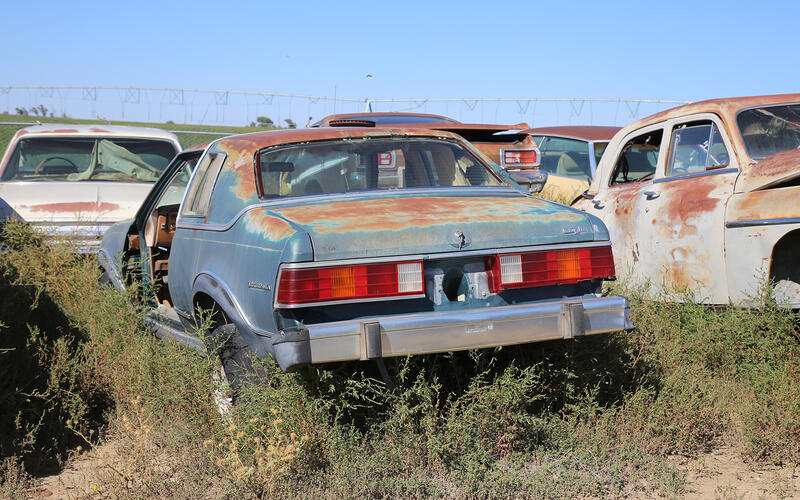
The AMC Eagle was years ahead of its time, effectively creating the crossover long before anyone used the term. This is the two-door coupe version, launched for 1980, combining a conventional car body with raised suspension and full-time four-wheel-drive for genuine all-weather ability. Often paired with an automatic, it was a clever idea that never quite caught on, but today it looks remarkably forward-thinking.
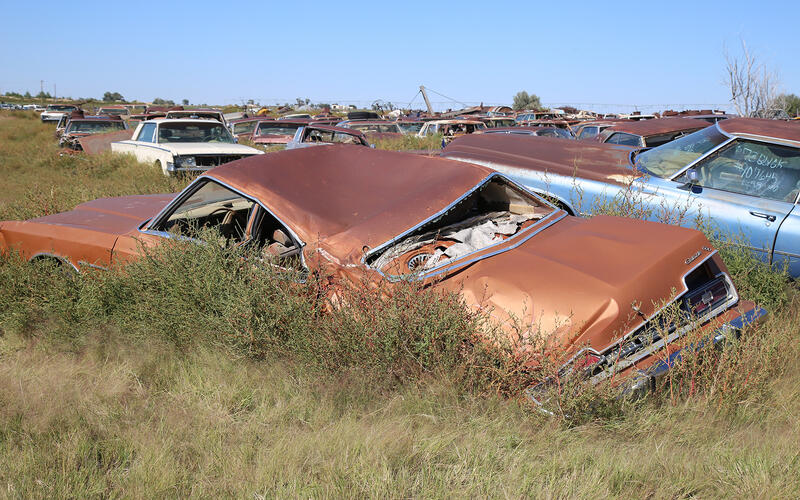
What happened here is anyone’s guess, but that roof looks more like it’s been crushed from above than damaged in a conventional crash. Whether it happened on the road or later in the yard, it’s surprising this 1973 Ford Galaxie 500 has lasted this long in such condition.
Ford dominated the US market at the time, and full-size cars like this were once everywhere. The body may be finished, but there’s every chance the running gear still has some life left in it.
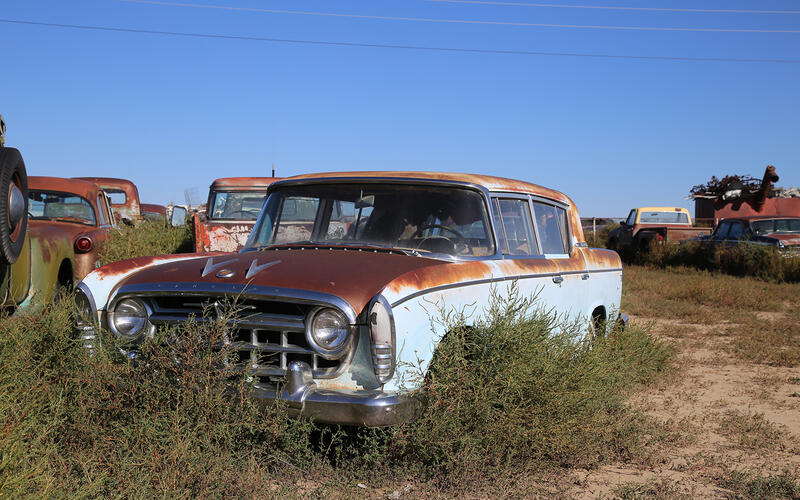
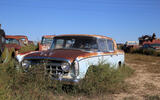
Don Woller bought this 1957 Nash Rambler in the early 1970s, when it was still a runner, and it’s been here ever since. It appears to retain its straight-six and three-speed manual, with everything still in place. The engine turns, the glass is intact and, aside from some floorpan rust, it remains a notably complete car for something that’s been sitting this long.
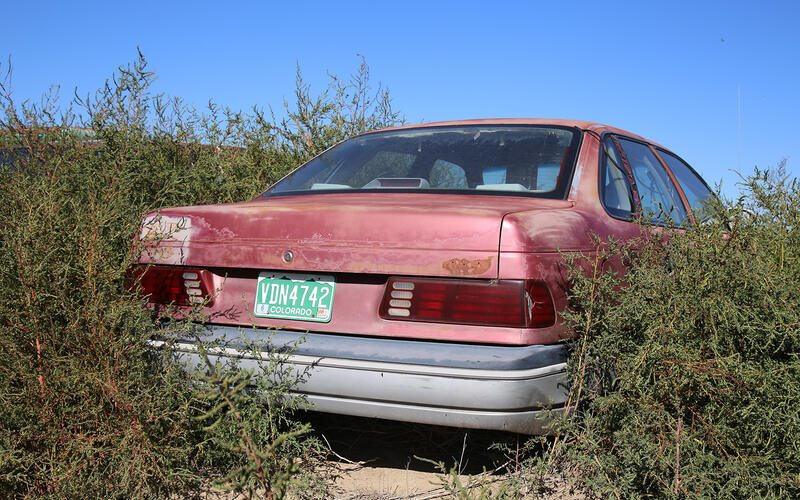
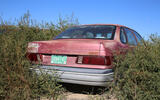
The Ford Taurus rewrote the rulebook for American family cars when it arrived in 1986, its smooth, aerodynamic shape a world away from the boxy norm. Hugely successful at the time, it became one of the best-selling cars in the US, once a fixture on virtually every street corner. Today, though, they’ve all but disappeared, a former everyday sight now edging quietly towards extinction.
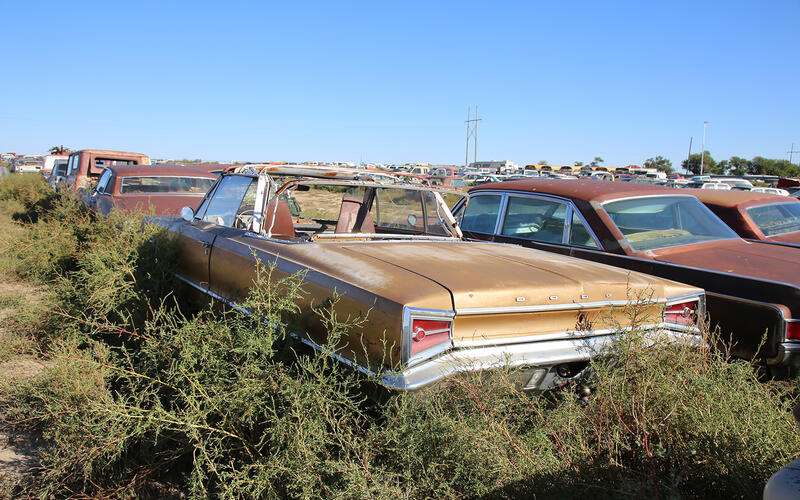
Nothing remains of this 1965 Dodge Polara convertible’s ragtop, and the interior has paid the price. Lamar may be dry, but the little rain it does get has taken its toll, leaving even the dashboard in pieces. Of the 75,100 Polaras built that year, just 1416 were convertibles, making this a rare car.
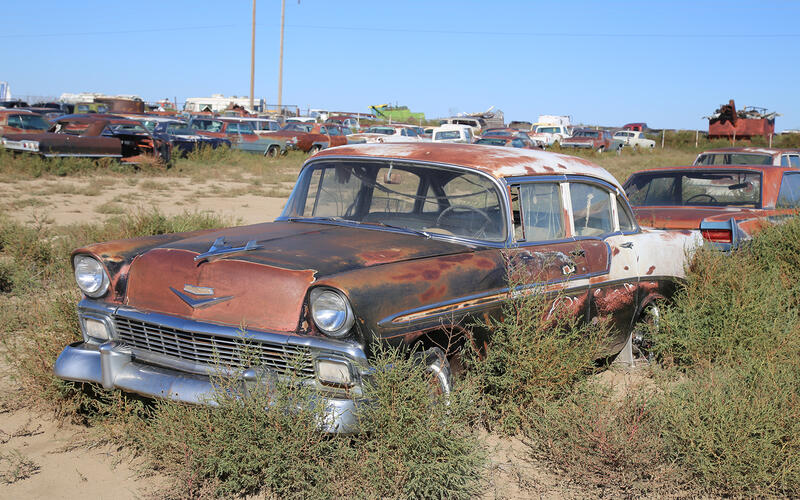
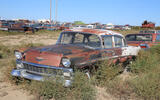
Don Woller bought this 1956 Chevrolet Bel Air in the early 1970s, and while it still carries its original paint, there’s not much left of it. Lamar’s 300-plus days of sunshine a year have taken their toll, bleaching it back to bare metal in places. Beneath that it remains a solid car, with a strong chassis and only localized rust to the body. Originally a V8 automatic, it still runs, and is largely intact.
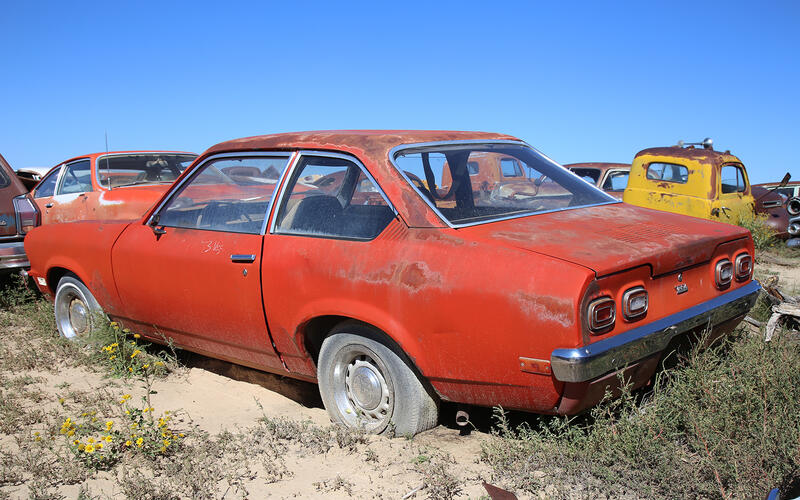
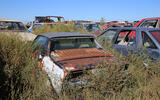
The Chevrolet Vega arrived in 1970 with big expectations, pitched as GM’s answer to the growing wave of compact imports. It sold strongly at first, but a reputation for rust and fragile aluminium engines quickly caught up with it. Once a common sight, they’ve now largely disappeared.
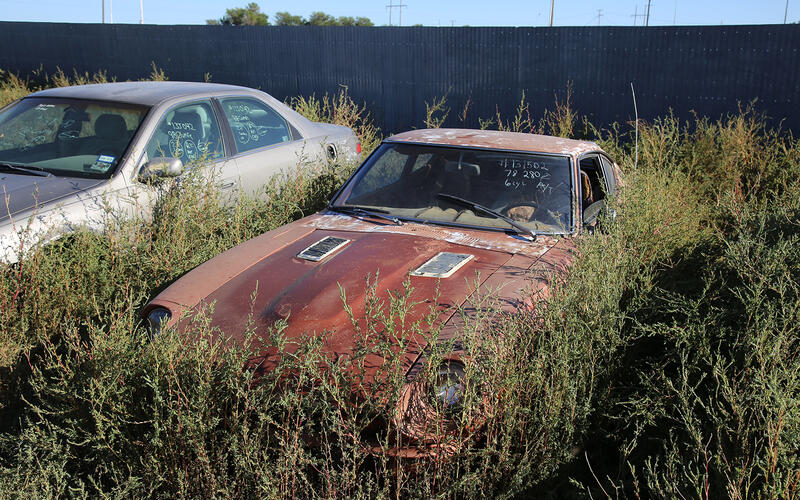
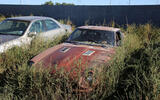
The Datsun 280Z marked the final evolution of the original Z-car line, introduced in 1975 with fuel injection to meet tightening US emissions rules. By 1978 it had become more refined than the earlier 240Z, but still retained the long-bonnet, rear-drive layout that made the series such a hit. This one has clearly been left exposed for years, with the open window doing the interior no favours.
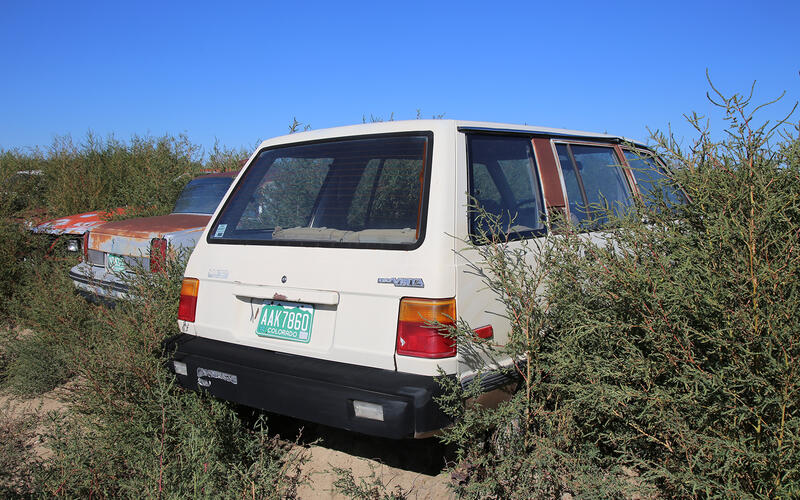
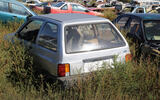
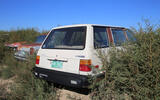
The Dodge Colt Vista was Mitsubishi engineering in American clothing, a compact MPV before anyone really called them that. With its tall roof, sliding rear doors and three-row layout, it quietly did the job of a family hauler years before the minivan boom took off.
Built in Japan by Mitsubishi but imported and sold through Dodge and Plymouth dealers, it carries the “Imported for Plymouth” badge as a nod to that arrangement, at a time when Mitsubishi didn’t yet have its own dealer network in the US. Most were used hard and discarded, which is why you almost never see one now.
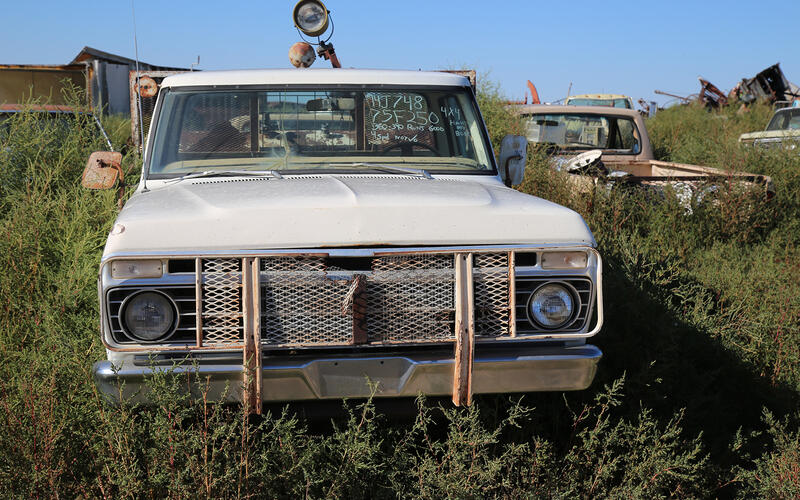
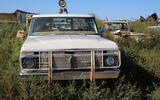
The Ford F-250 has long been the backbone of American work fleets, and by the mid-1970s it had become a tough, no-nonsense heavy-duty pickup built to take punishment. This 1975 example still wears the marks of its working life, from the heavy grille guard to the roof-mounted spotlight, while the windshield notes suggest a 4x4 with a 360 or 390 V8, four-speed and “runs good.”
Now sitting idle, it looks very much like a retired workhorse put out to pasture.
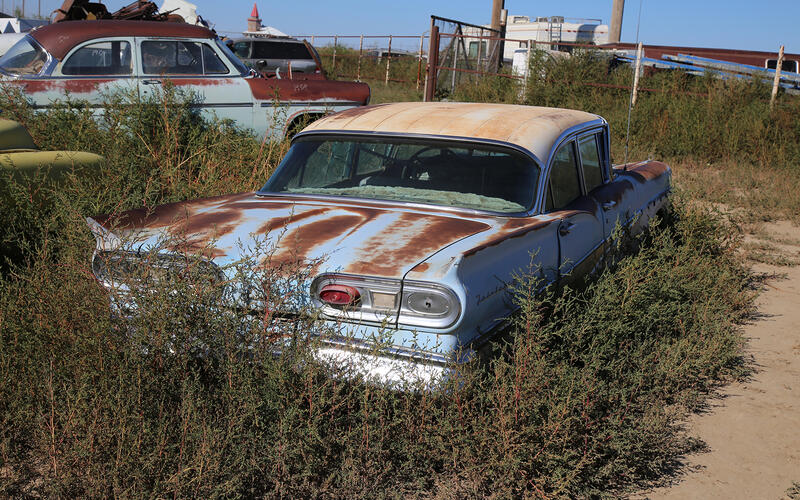
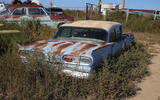
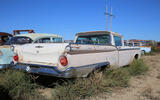
This 1958 Ford Fairlane 500 has been off the road since a minor knock parked it up in 1968. Under the sunburnt paint sits a 352 V8 with automatic transmission, and despite decades of inactivity it remains complete, with good glass and a solid structure.
There’s some rust to the lower body, but nothing too alarming, and the odometer shows just 45,791 miles, likely reflecting how early its working life was cut short. It’s listed as a project car rather than a parts donor, and in a yard like this you could probably fill the trunk with spares before dragging it home.
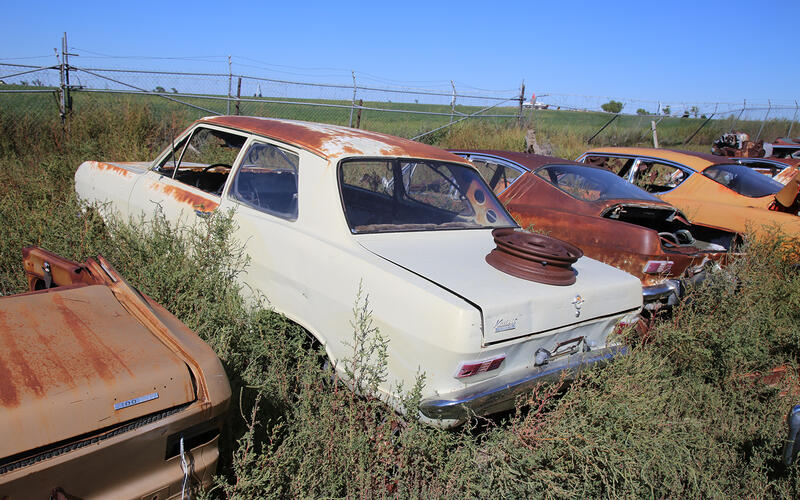
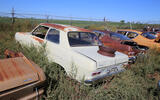
We counted at least 20 Opel Kadetts in various body styles at Woller Auto Parts, including this two-door sedan, making it a surprisingly rich source of spares. But it does raise the question of how many people are restoring these relatively undesirable German-built cars today. The Kadett was imported into the US and sold through Buick dealerships, yet few seem to have survived in the hands of enthusiasts.
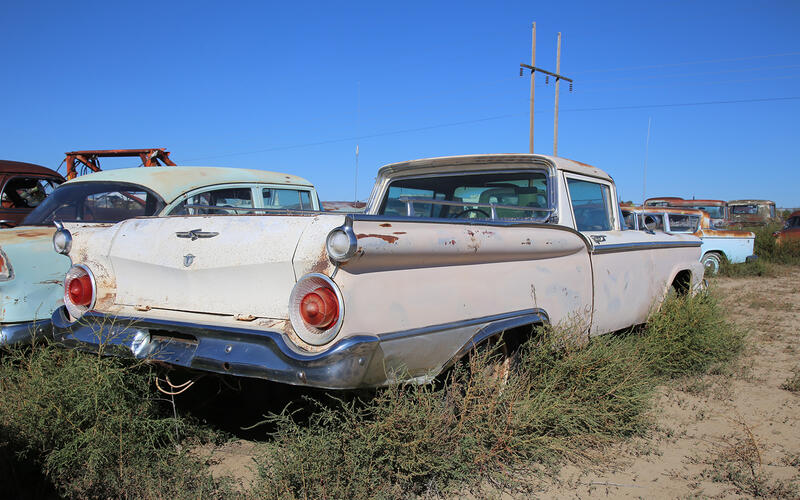
The Ford Ranchero was one of the more unusual automotive ideas, a car and pickup rolled into one, beating Chevrolet’s El Camino to market by a couple of years when it launched in 1957. This 1959 example comes from the second-generation run, sharing its styling with the full-size Ford range of the time.
Don Woller bought it back in 1983, when it was driving perfectly and even had new brakes fitted, though you might not want to test that claim four decades on. It’s a six-cylinder with a three-speed manual, still complete but now showing rust in the rockers. This one really ought to be saved.
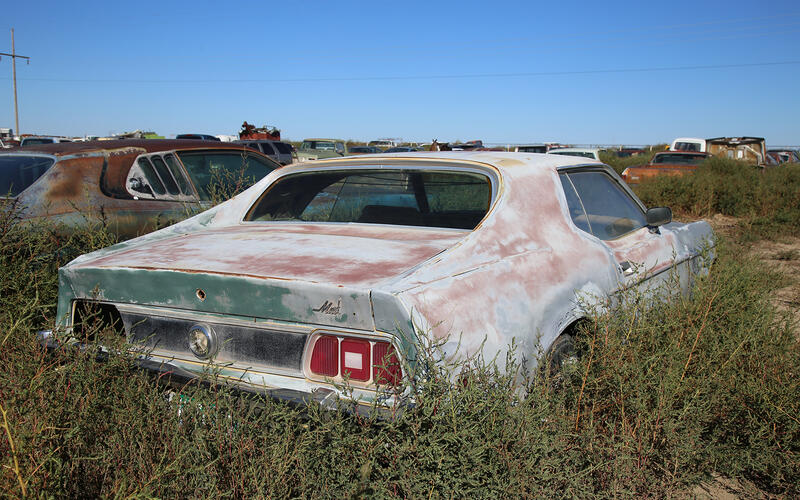
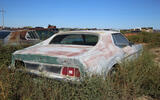
The 1973 Ford Mustang marked the end of the original Mustang era before the smaller Mustang II arrived a year later. This V8-powered example still retains its original 351 Cleveland engine, but years off the road have taken their toll. The brakes are gone, the interior is shot, and the engine sits partially dismantled, yet beneath it all the car appears surprisingly solid, with only minor rust showing around the quarter panels.
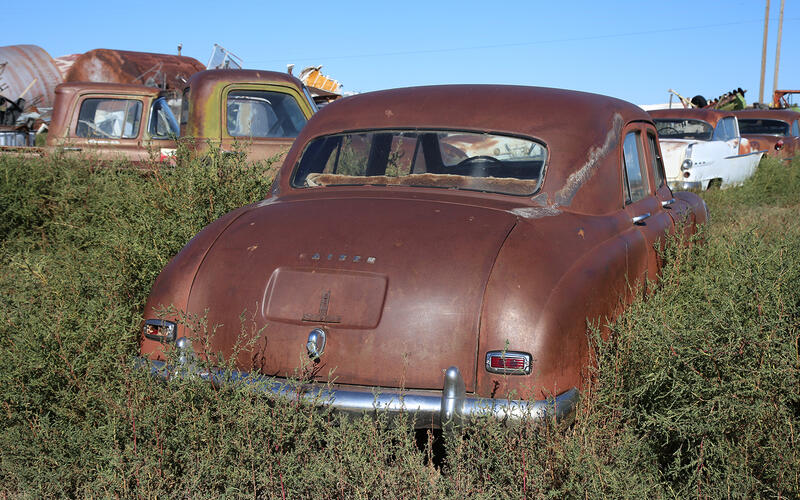
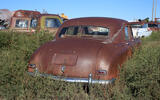
The 1947 Kaiser Custom was one of America’s first genuinely new postwar car designs, arriving while many rivals were still relying on updated prewar bodies. Kaiser-Frazer built more than 139,000 cars for the 1947 model year, an impressive achievement for a brand-new automaker trying to challenge Detroit’s Big Three.
Powered by a Continental flathead six, the roomy four-door sedan prioritized comfort and modern styling over outright performance.
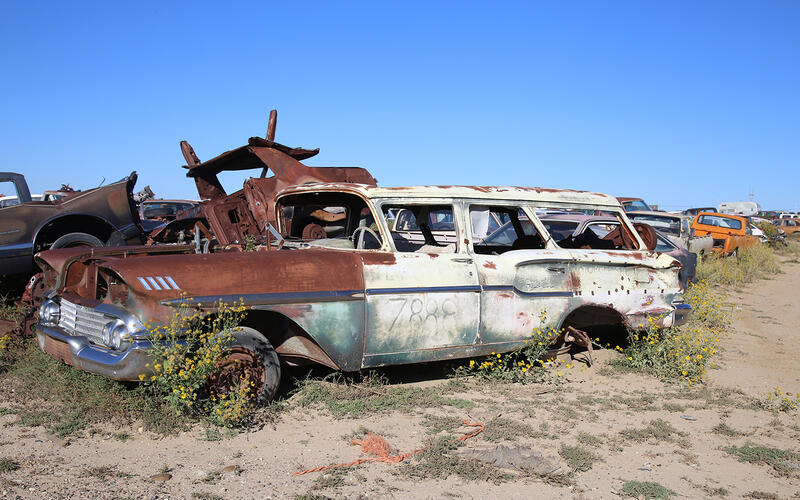
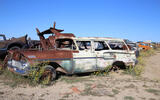
The 1958 Yeoman was Chevrolet’s budget-priced station wagon, sitting beneath the Brookwood and Nomad in the lineup. Built for just one year, the Yeoman came with minimal trim and a six-cylinder engine as standard, although V8 power was optional.
Four-door versions like this were far more common than the rare two-door model, but survivors are still thin on the ground today. This example has long since sacrificed much of its glass and interior, although some useful sheet metal and trim pieces clearly remain.
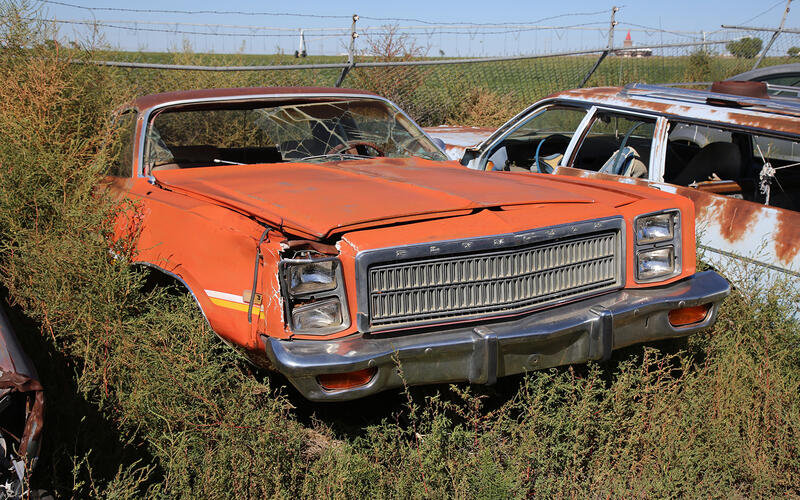
This battered 1978 Plymouth Fury is exactly the sort of parts car that helped make Woller Auto Parts famous among American classic car enthusiasts. Don Woller’s Colorado yard contains around 5000 vehicles, with roughly 1,000 dating from the 1971-80 period alone. The Fury sat in Chrysler’s full-size range as dependable everyday transportation rather than anything sporty or glamorous.
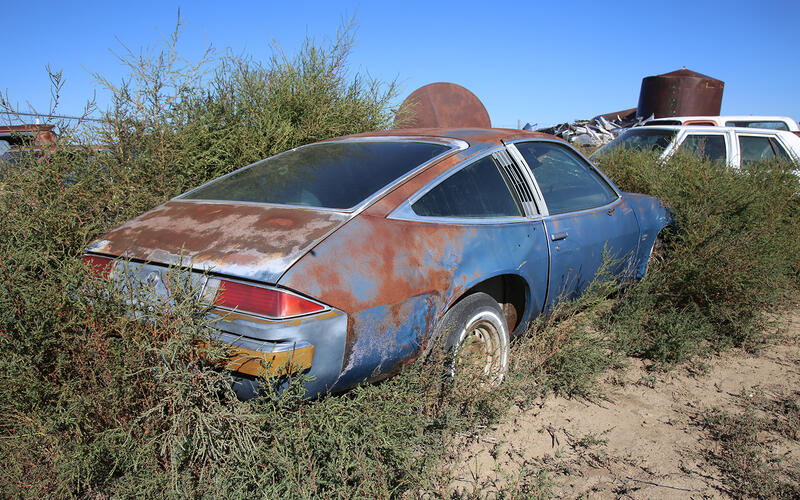
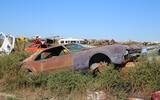
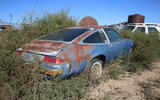
The Chevrolet Monza 2+2 was originally developed around GM’s abandoned rotary-engine program. Chevrolet had planned to launch the sporty hatchback with a Wankel engine to rival Mazda, and the project got close to production before the 1970s fuel crisis and emissions concerns killed it off. Instead, the Monza went on sale with conventional piston engines.
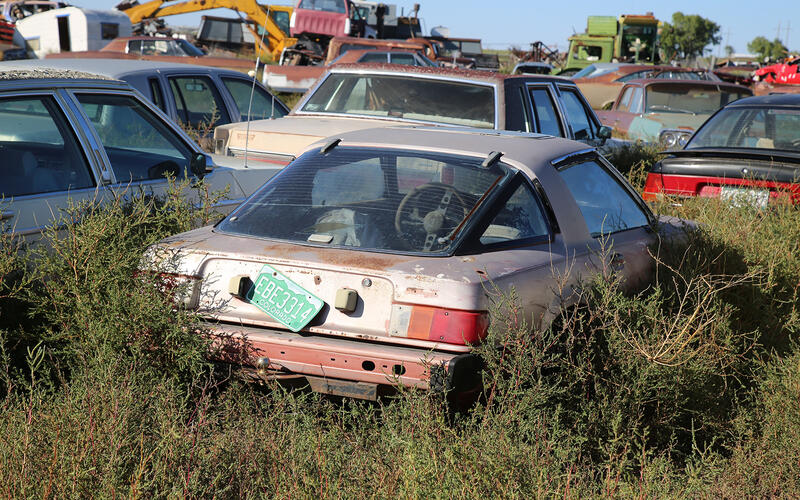
Mazda, meanwhile, refused to give up on the rotary. Introduced in 1978, the first-generation Mazda RX-7 became the world’s best-selling rotary-powered sports car, with more than 470,000 examples built in its original SA/FB form and over 800,000 RX-7s produced across all three generations.
Light, affordable and genuinely entertaining to drive, the RX-7 helped turn Mazda from a struggling niche auto maker into a serious global performance brand.
If you enjoyed this story, please click the Follow button above to see more like it from Autocar