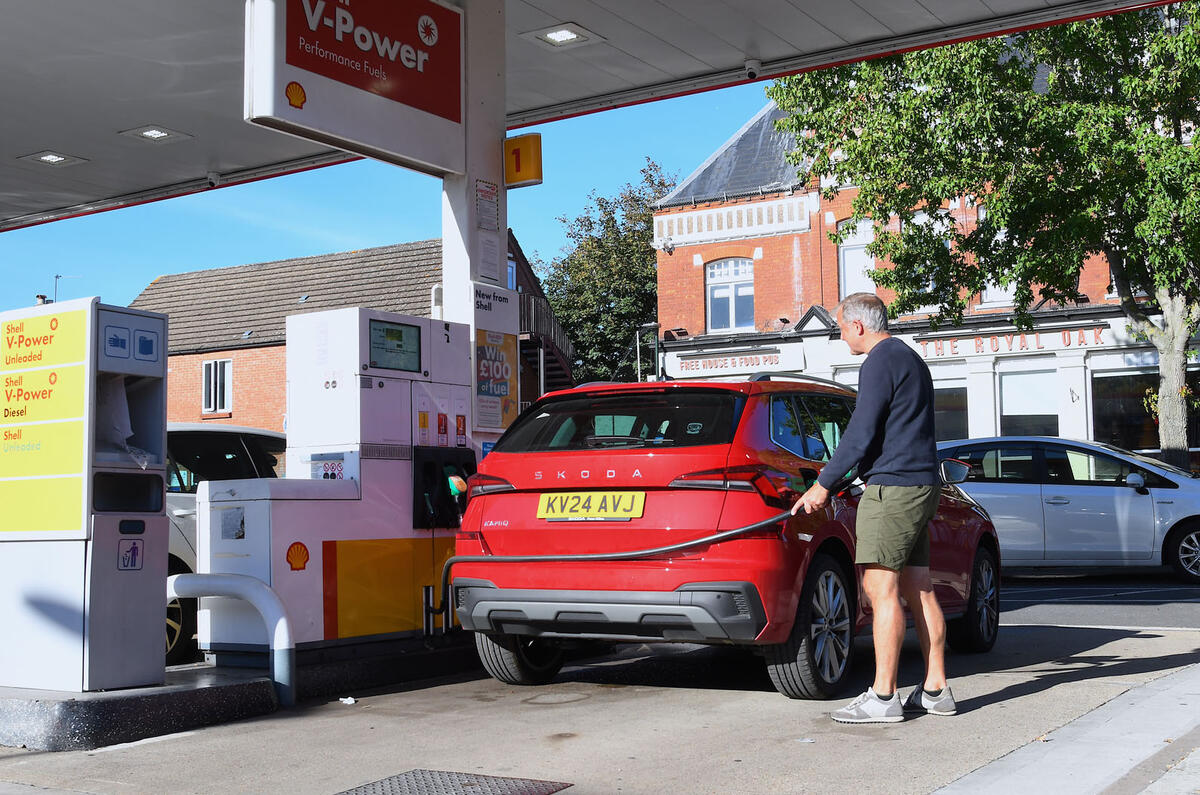
Fuel prices are rising to some of the highest levels recorded in years as war in the Middle East pushes up the wholesale costs of oil.
Over the past three weeks, prices of petrol have shot up 10p per litre and diesel 20ppl, according to research by the RAC.
This means the cost of filling up the average 55-litre family car – such as a Volkswagen Golf – now costs around £11 more, at £79 in total for petrol or £88 for diesel.
For diesel, the average pump price has climbed above 161ppl for the first time since November 2023, and data suggests it is on course to hit 170ppl soon.
This is because UK refineries are unable to meet the demand for diesel, so most is shipped in from abroad.
While diesel comes from the same raw material (crude oil) as petrol, the refining process takes much longer.
These rising prices are having a big effect on drivers – and AA president Edmund King told Autocar that people are “becoming more cost-conscious and selective about how they use their cars”.
He even claimed that AA patrols “have observed slower motorway speeds as drivers try to conserve fuel”.
The situation, which has been brought about due to disruption in the Strait of Hormuz, has reinforced a belief among the public that fuel prices rise quickly when oil prices go up but fall much more slowly when they come down.
Why pump prices rise quickly
Analysts say this is nothing new and has been seen in fuel markets for decades.
Nigel Driffield, a professor of strategy and international business at Warwick Business School, said the main issue is that drivers misunderstand how fuel prices work. Forecourts typically price fuel based on what the next delivery will cost, not what they paid for the fuel already in their tanks.
He compared it with other retail markets, saying: “If the world price of fridges suddenly goes up, retailers don’t keep selling the ones in their warehouse at the old price if they know the next shipment will cost more.”
Many drivers also believe petrol stations are selling fuel bought months earlier at lower prices, but Driffield said this too is a misunderstanding.
“A typical forecourt doesn’t have anything like three months of supply under it,” he explained. “In most cases, you’re looking at roughly a couple of weeks’ worth of fuel.”
Even so, many drivers still believe that fuel retailers are making unusually large profits when prices at the pump increase dramatically.
Are forecourts really profiteering?
Gordon Balmer, executive director of the Petrol Retailers Association (PRA), which represents independent forecourts across the UK, said pump prices sometimes have to rise quickly when wholesale fuel costs increase.
“I don’t think that criticism is fair," he said. "There are a number of different ways retailers buy fuel. If the wholesale price rises overnight and you take delivery the next day, unless you reflect that increase at the pump, you’re going to make a loss."