
"The St Bernard is a high pass, opening late and closing early.
"It is one of the very few ways across this part of the Alps, and in summer the motorist may find himself behind strings of coaches and oil tankers climbing majestically in their lowest gears, at a rate which is slow, over-heating and exceedingly tedious for a holiday car. At the end of the summer the pass grows dangerous, as the wild gusts hurl great masses of snow about, and poor workers who are returning late to Italy after the Swiss season are often overwhelmed."
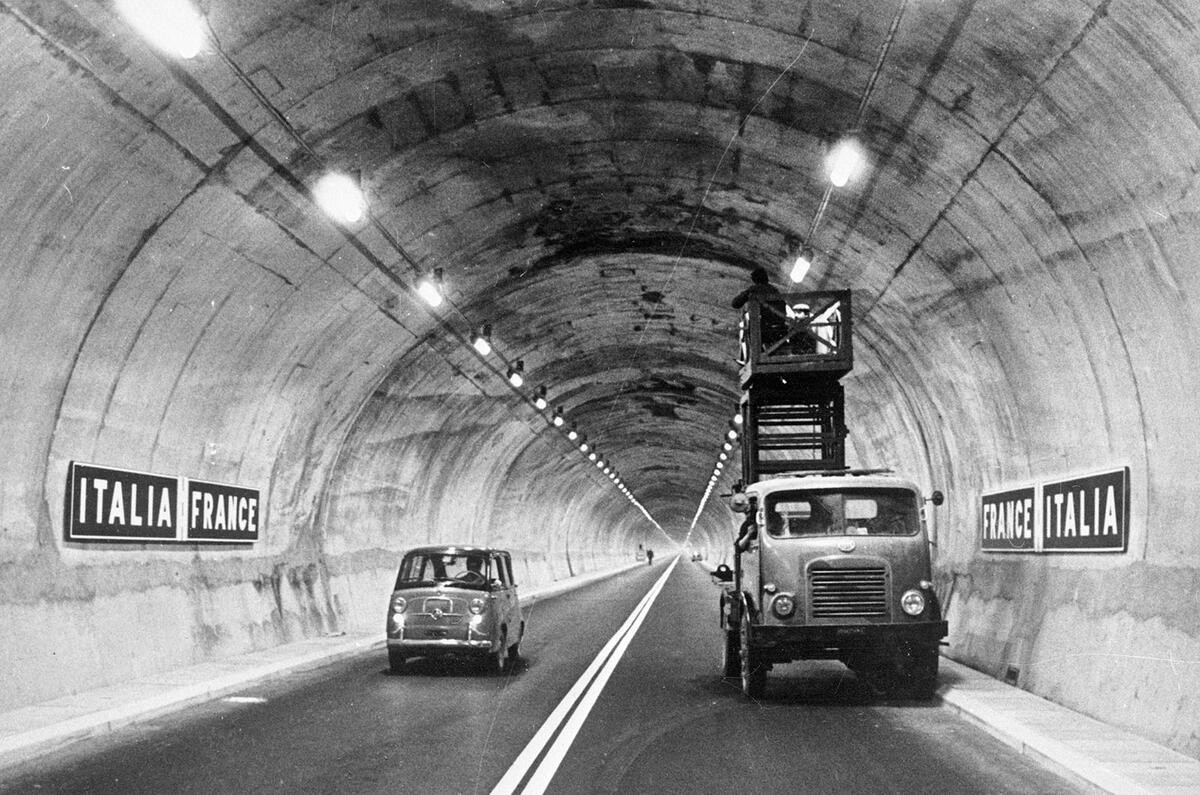
This Autocar description should make modern drivers very grateful for the Great St Bernard Tunnel, and indeed the Mont Blanc Tunnel just a few miles west on the French-Italian border, both of which were bored in the early 1960s, "certainly drawing Italy closer to the rest of Europe by land communications".
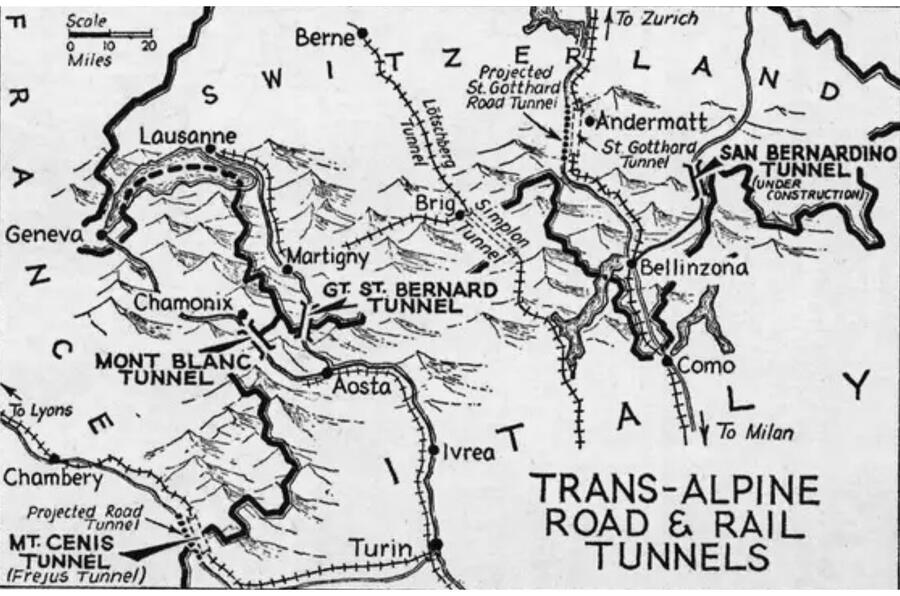
The idea for an underground road connection between the ski resort of Chamonix and the Aosta Valley dated back to at least 1937, when Autocar first reported on plans to "move Paris and Rome 120 miles or so closer to one another", as motorised vehicles grew rapidly more numerous.
France and Italy fighting a war against one another rather complicated matters, so an agreement on boring through Europe's tallest mountain wasn't reached until 1949 - and not ratified by both parliaments until 1957.
The tunnel was set to be 7.4 miles long and 7.0 metres wide and take three years to finish, with the total shared cost projected at nearly £7m (or £145m in today's money). Meanwhile, the complementary 3.4-mile Great St Bernard Tunnel was going to be funded in its £6.5m entirety by private enterprise - and carry not just vehicles but also a new pipeline delivering crude oil from the seaport of Genoa to a refinery up in Collombey-Muraz.
Enjoy full access to the complete Autocar archive at the magazineshop.com
Boring on the Italian sides of both started in 1958, with the builders entering an informal race - in which the Mont Blanc team soon fell behind, due to internal flooding. "Inhabitants of the Aosta Valley are claiming that this confirms the legend that there are subterranean lakes and hidden deposits of uranium and precious metals in this mountain," noted Autocar.
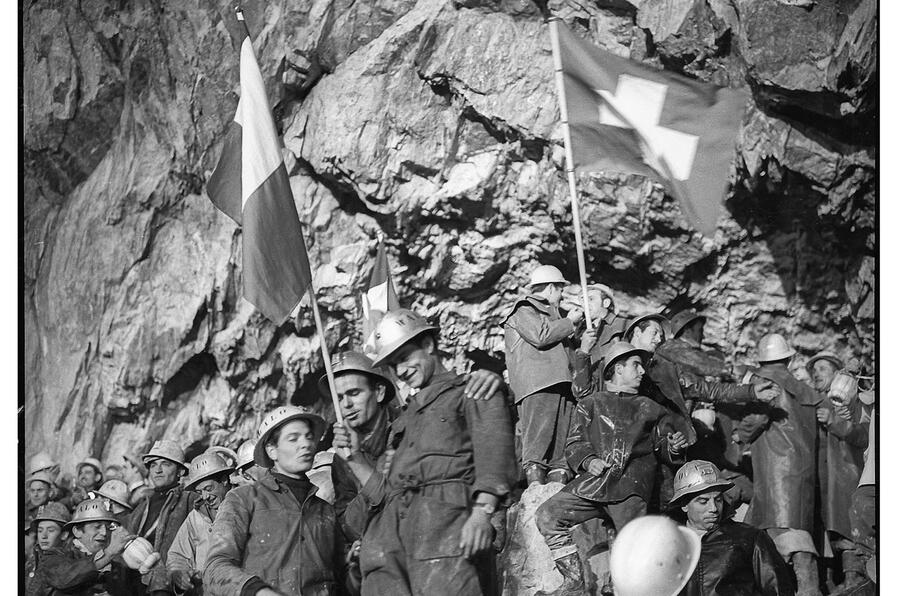
Their rivals won by a month, as in April 1962 "a strong blast of explosive removed a few feet of rock separating Italy from Switzerland, and opened a new route between southern and northern Europe".