Currently reading: Talking trash: How Dennis Eagle made Britain a bin lorry big-shot

Leamington Spa-based firm can trace routes back to 1895 when it started making chassis for fire engines

"Whenever we say to people we work at Dennis Eagle, they say: 'Dennis? Oh, the fire engines."

As reputations go, you could do worse than be associated with producing emergency response vehicles, but if you haven't actually had anything to do with them for more than two decades, and have since become a market leader in quite another area, the misconception is probably a bit frustrating.

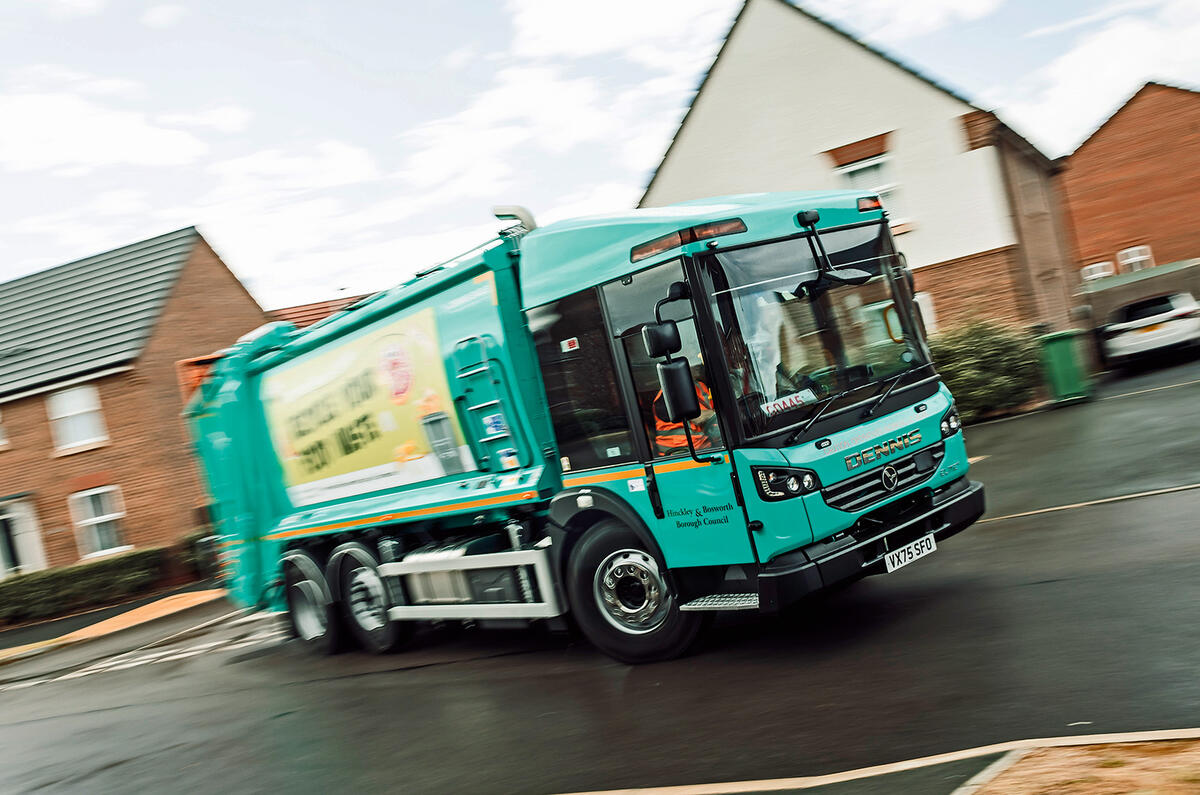
"It wasn't us that manufactured the fire engine. We manufactured the cabin at our plant in Blackpool, yes, but it was in 2004 they stopped manufacturing it," explains the company's managing director, Keith Day. "We've got thousands of these driving around the streets now that seem to be invisible," he says, gesturing out of the window of the firm's Warwickshire factory at the ranks of gleaming new bin lorries awaiting delivery to their new owners.

Dennis Eagle, like all the very best automotive-adjacent institutions (cough), was started in 1895, originally as Dennis Brothers, a maker of lawnmowers and bikes that later branched out into building chassis for a wide range of commercial vehicles, including - you guessed it-fire engines.

Today's company was formed in the mid-1980s when Dennis merged with vehicle body manufacturer Eagle Engineering and opened a factory in Leamington Spa, which over the past four decades has grown to become one of the country's most important vehicle plants.

Back to top

The site currently produces roughly 32 lorries a week of various shapes and sizes - mostly derivatives of Dennis Eagle's own Elite and electric eCollect models, but the firm is more than happy to plop one of its bodies on the back of a chassis cab from Mercedes, Volvo or Scania, some of its biggest rivals in the sector.

The company builds almost everything in the UK, where it employs more than 1000 people - and the domestic market is its biggest, accounting for around 80% of its total output.

This thriving operation is an unusually reassuring indication of the health of UK industry and Day thinks the firm's commitment to local manufacturing is a key ingredient of its success. "We're very UK-centric from a customer point of view - and people buy from people," he tells us, having taken a quick break from giving a factory tour to a gaggle of representatives from one of London's biggest boroughs.

"It really helps when you can bring customers on to the manufacturing site and show them around: they can meet the people and that helps to establish that relationship with customers," he says. Certainly, our own access-all-areas tour of the facility is exciting enough to instil in me a new-found sense of appreciation and admiration for these 'invisible' heroes of UK infrastructure.

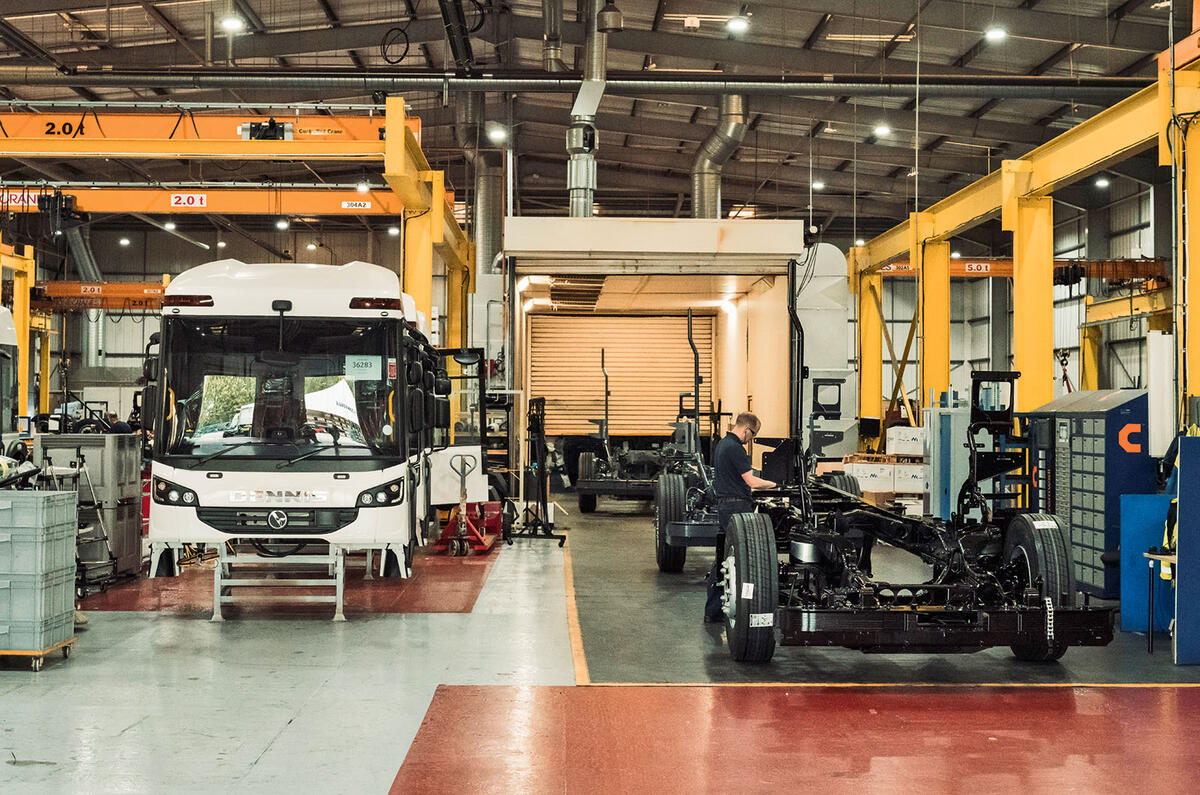
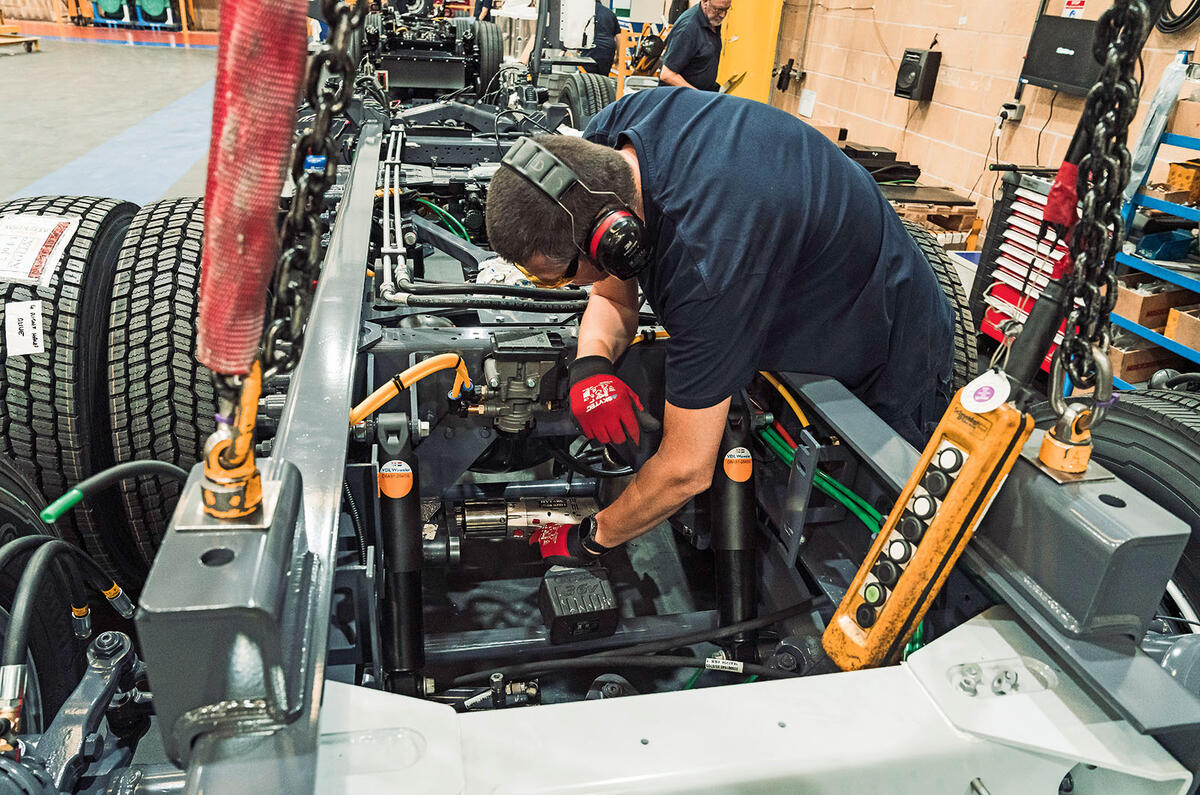
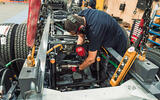
Our first stop is the chassis assembly hall, where 50 workers zip nimbly between the rails of limo-length ladder frames, routing brake systems, nipping up fuel lines, connecting up driveshafts and finally sliding the whole assembly underneath a cab - all mostly by hand.

Back to top

Even at this early stage, it's plain to see just how much variation there is between each order: there are standard-length chassis with three axles and shorter twin-axle variants for the world's tightest city streets; some frames are black while others are 'Veolia grey'; and some even have entirely bespoke suspension and tyre specs. "We had a really interesting one that we built up for collecting refuse on a beach. It looked like a monster truck," recalls sales and marketing boss Lee Rowland.

He says part of the reason that the assembly procedure remains so "incredibly manual", even as the trucks themselves become increasingly complex and automated, is that it affords Dennis Eagle the flexibility it needs to cater to the wildly different needs of its customers.

"No two councils collect waste the same way, so no two contracts for trucks are the same. They all have very slight differences and variations and we've always been very, very good at accommodating it," says Rowland. "That customer focus side is quite important. It's necessary for the market," he adds.

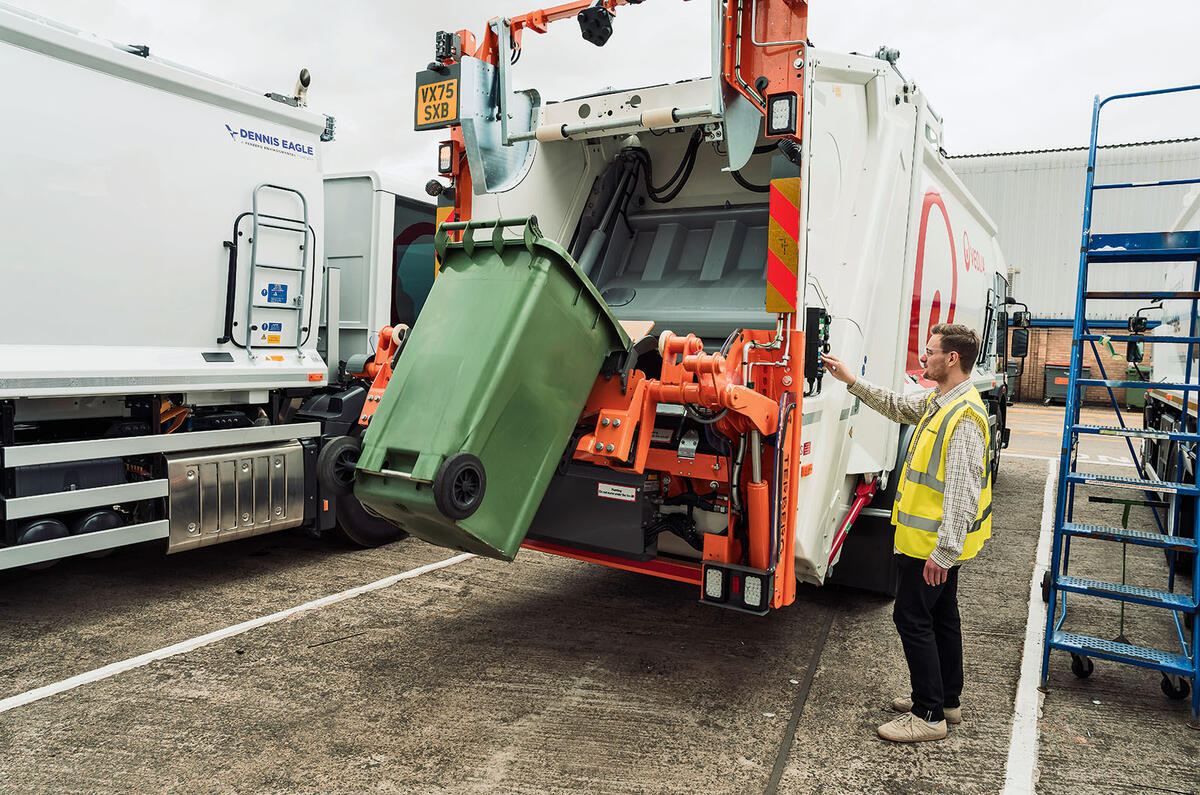
The ethos of flexibility carries over into building two, where hulking bodyshells - some the size of small bungalows, at 27,000 litres - are being noisily, smokily bent and welded into shape, ready to be filled with all manner of intimidating-looking mechanisms for separating, crushing and unloading rubbish.

After that, it's on to one of the gargantuan paint booths to be decorated in the chosen livery of their buyers (split roughly 50:50 between councils and private contractors) and, finally, the finished articles are parked up for a rigorous round of pre-delivery testing and evaluation.

It's a fascinating and precise production process that has been honed over decades, seemingly to the point of perfection, and it's only set to get busier - with plans to start increasing output of chassis and body components from early next year and capacity beyond that to add a whole second shift if it's ever needed.

Back to top

Of all the different strands of the automotive industry, surely this must be one of the more 'future-proof, I posit to Day, given society's ceaseless propensity to generate ever-greater mounds of waste. "There's always going to be a requirement for it," he agrees, adding that there's plenty of scope for development, too, to explore new and more efficient ways of collecting, separating, sorting and disposing of all the different types of rubbish.

Crucially, though, even as Dennis Eagle eyes a future of stable growth, it won't stray far from what it does best. "The vision statement is 'innovative refuse collection vehicles for safer, cleaner communities' - and that's our niche. We've got to understand what our niche is and really focus on that," says Day.

"The danger is that if you try to move away from that, you get distracted and you can end up spending a lot of money on something that's not going to be cheaper." The outlook, then, is totally rubbish - and Dennis Eagle couldn't be happier about it.

So what's it like to drive?

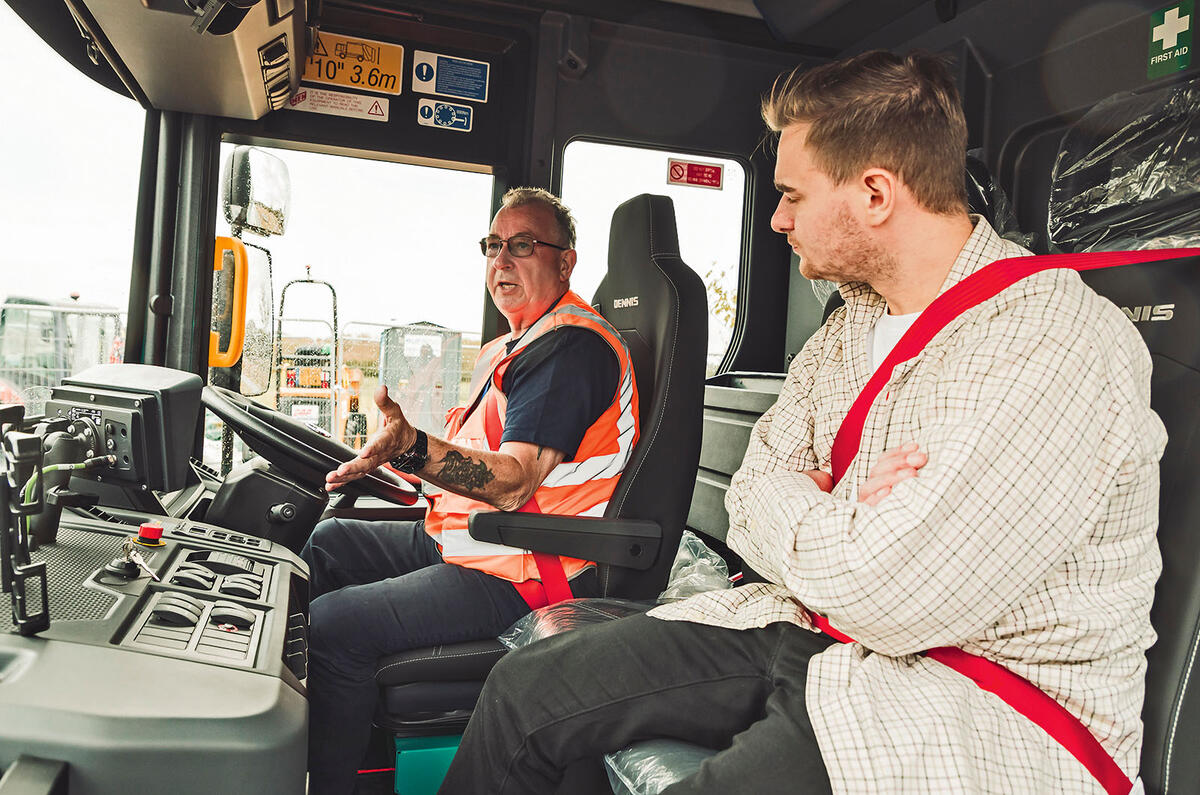
"If you can drive a car, you can drive one of these," says Tony Darby, dispatch co-ordinator for Dennis Eagle's pre-delivery inspection team, as he pivots a brand-spankers Elite+ deftly around a tightly packed Warwick housing estate.

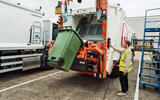
Fresh from the production line, this six-wheeler is just a few days from entering service with Hinckley & Bosworth Borough Council and it's a stark demonstration of just how far bin lorries have come since the early days. USB ports, massive cupholders, Bluetooth surround-sound audio, iPad mounts, ambient lighting - we've got all the mod cons of the average premium SUV in here and it certainly doesn't feel all that different from a modern car in its manoeuvrability and pace.

Back to top

"Oh, they've got some speed on them," says Darby as he winds up the 7.7-litre Volvo diesel engine for a stretch of dual carriageway and we surge effortlessly from 30-50mph. Minutes later, the Elite impresses again when we reach the end of a cul-de-sac and Darby spins it around about as quickly and easily as if he was driving a Ford Fiesta.

Next time you're whining about being woken up when the bins are collected at 6am, remember: those are among the UK's best drivers and most amazing machines out there.

Join our WhatsApp community and be the first to read about the latest news and reviews wowing the car world. Our community is the best, easiest and most direct place to tap into the minds of Autocar, and if you join you’ll also be treated to unique WhatsApp content. You can leave at any time after joining - check our full privacy policy here.

Felix Page

Felix Page
Title: Deputy editor

Felix is Autocar's deputy editor, responsible for leading the brand's agenda-shaping coverage across all facets of the global automotive industry - both in print and online.

He has interviewed the most powerful and widely respected people in motoring, covered the reveals and launches of today's most important cars, and broken some of the biggest automotive stories of the last few years. 

Add a comment…