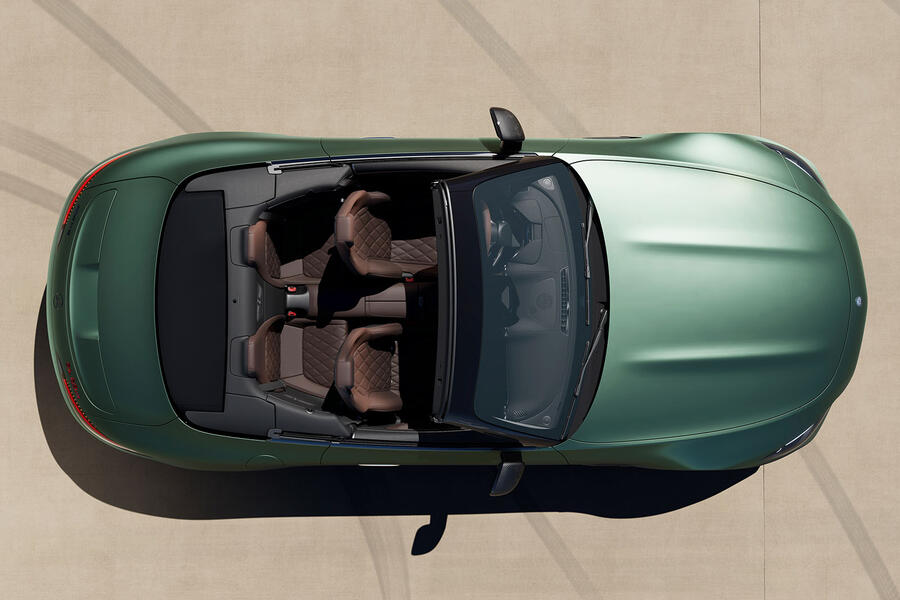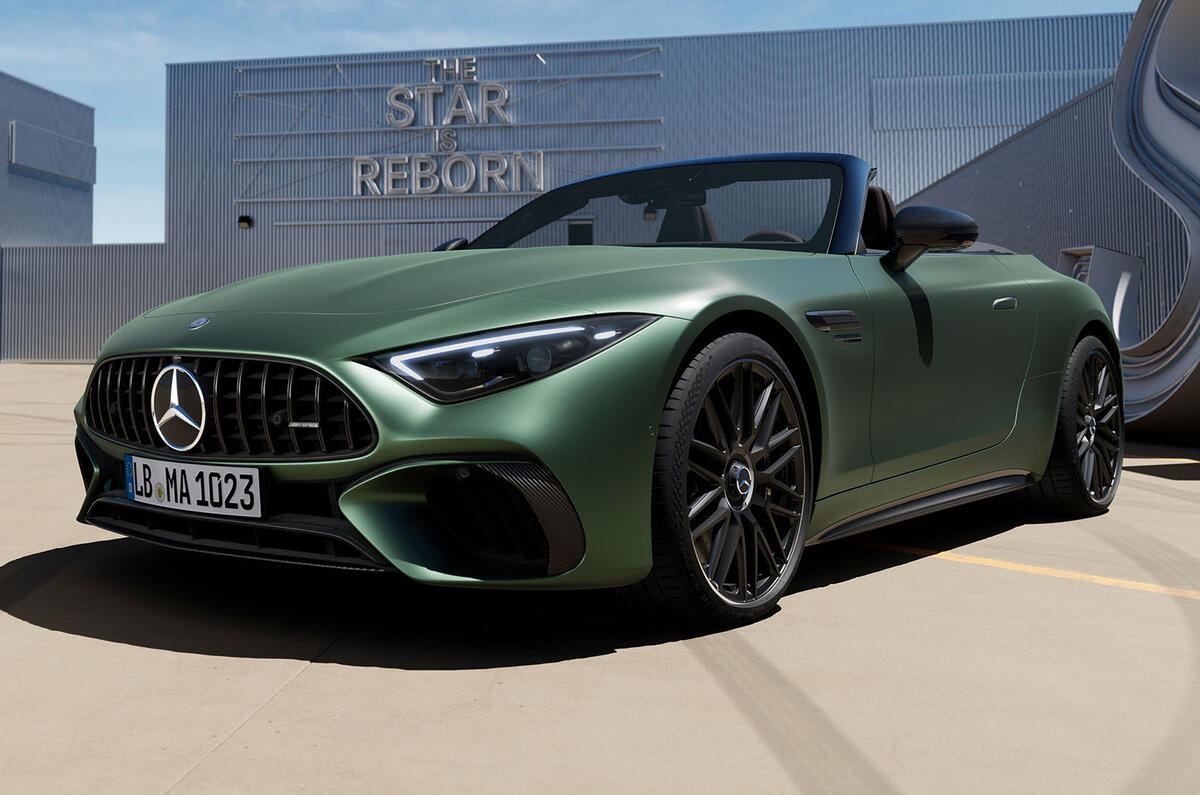
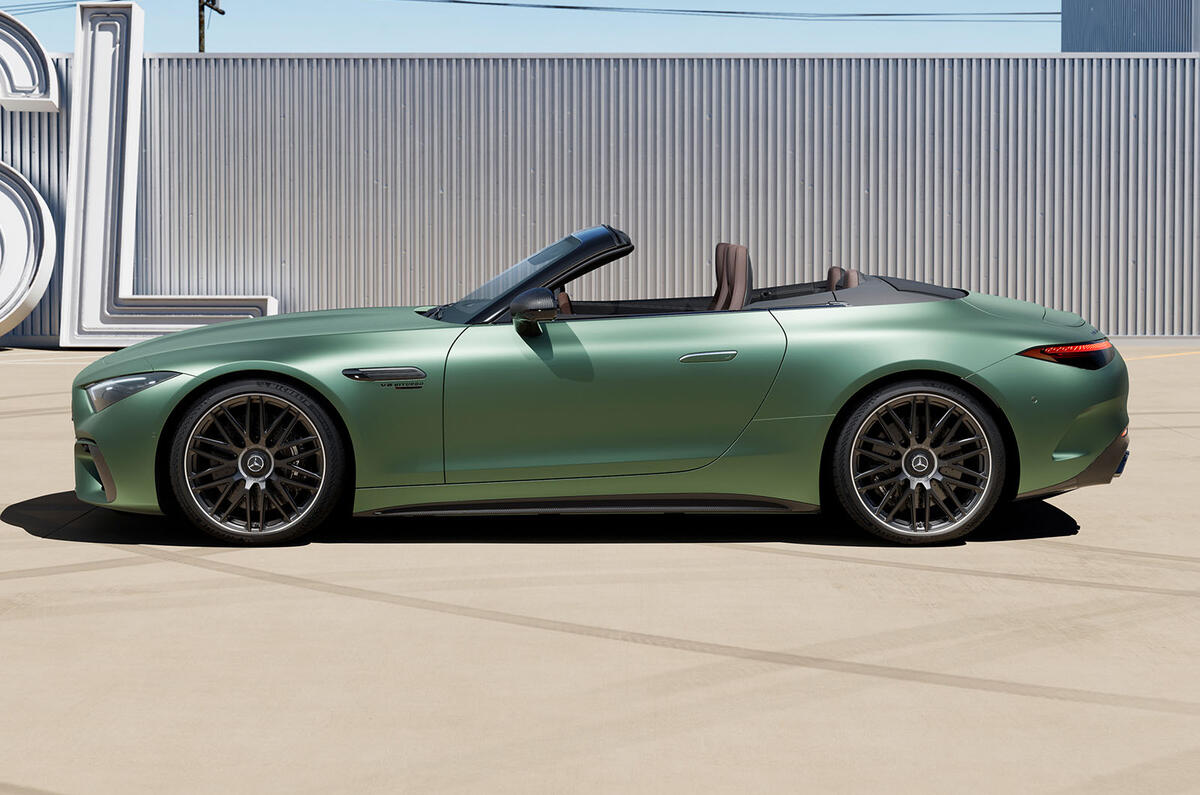
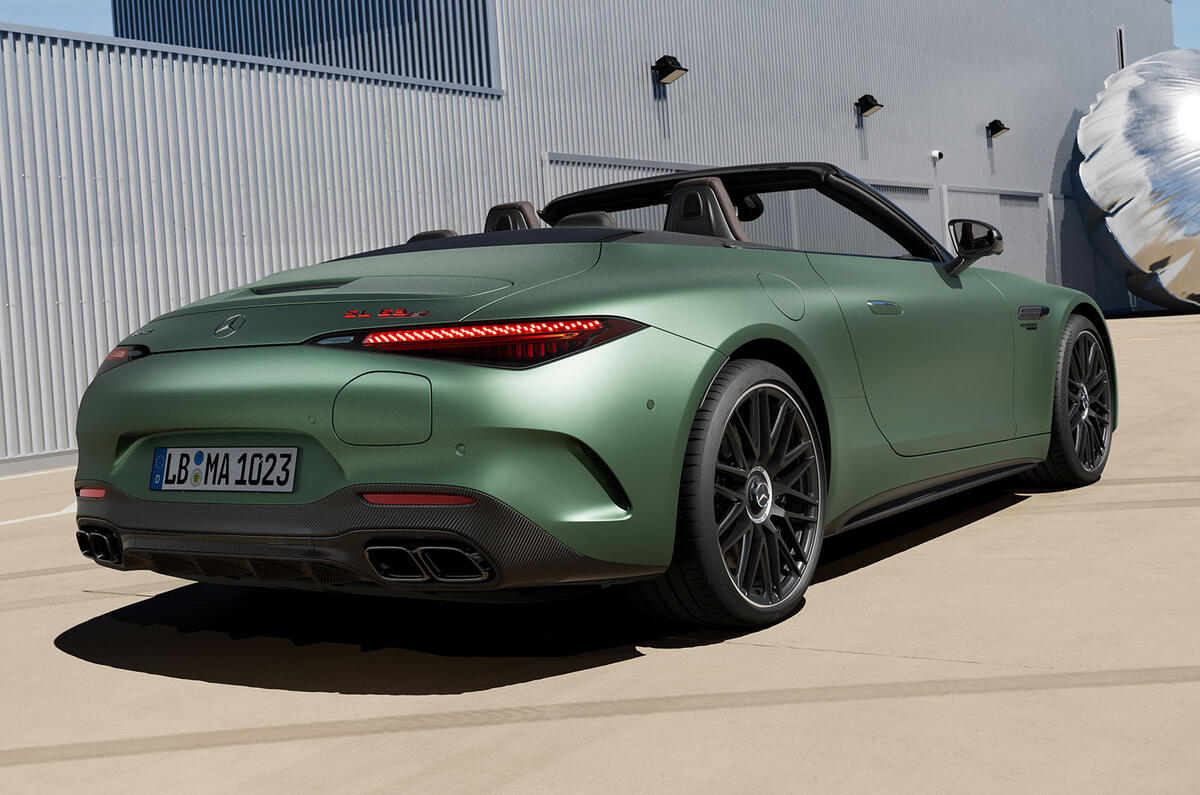
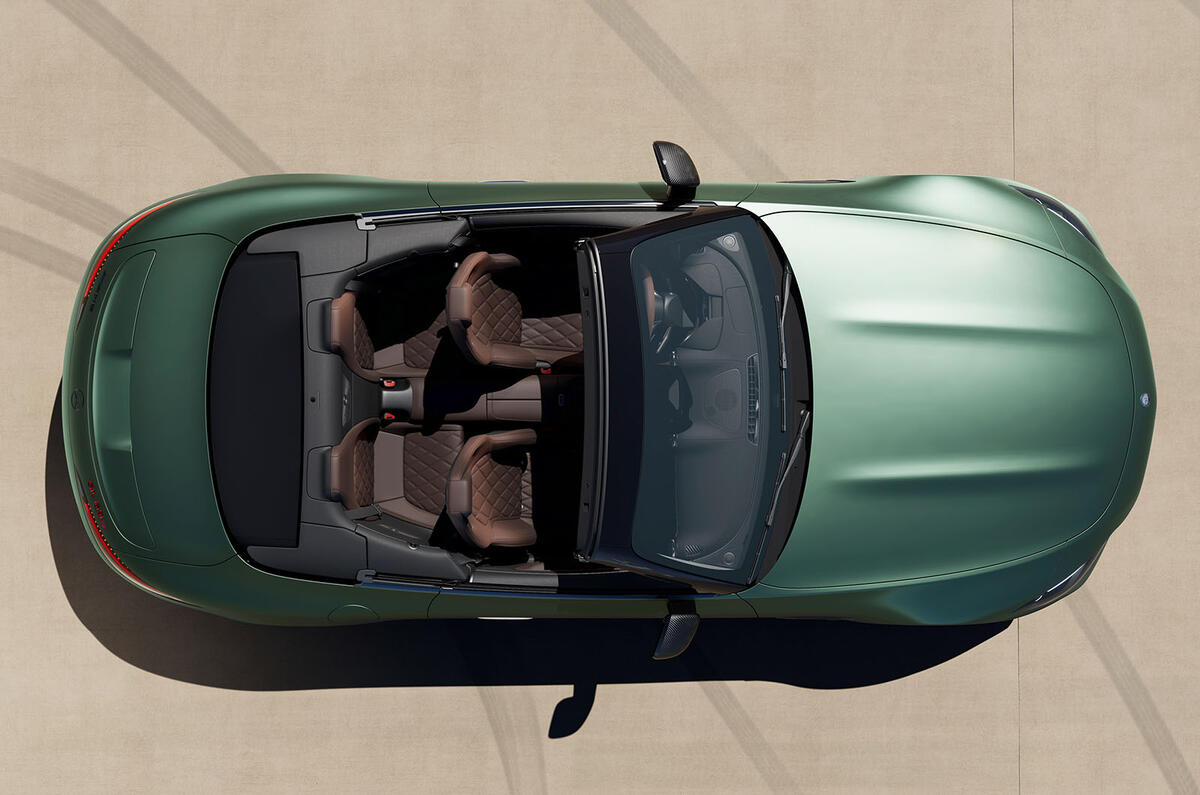
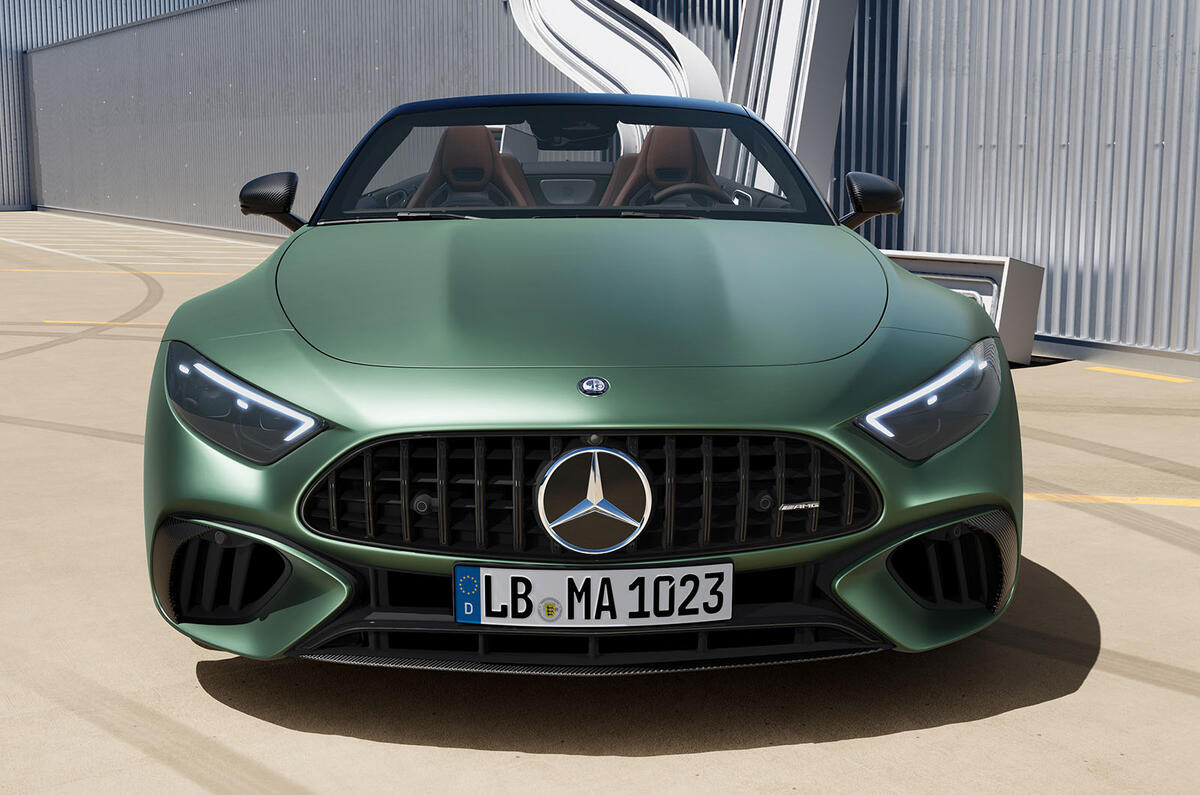
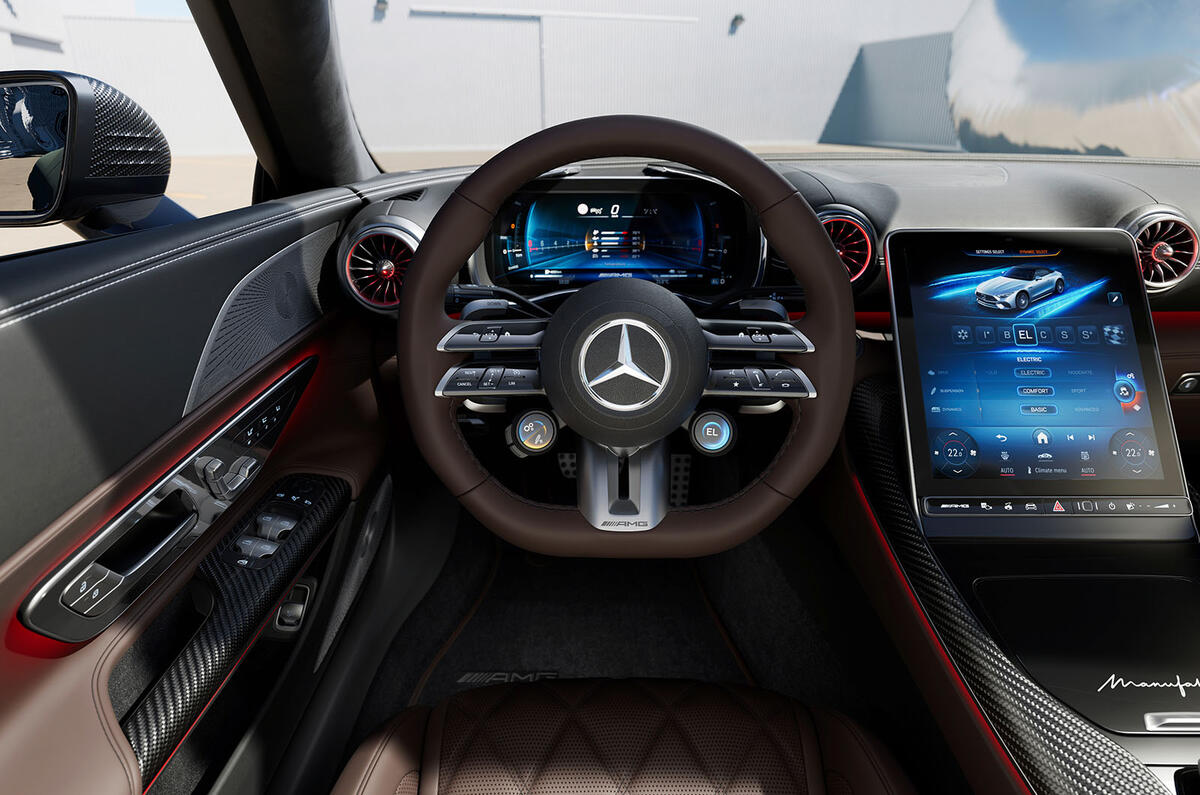
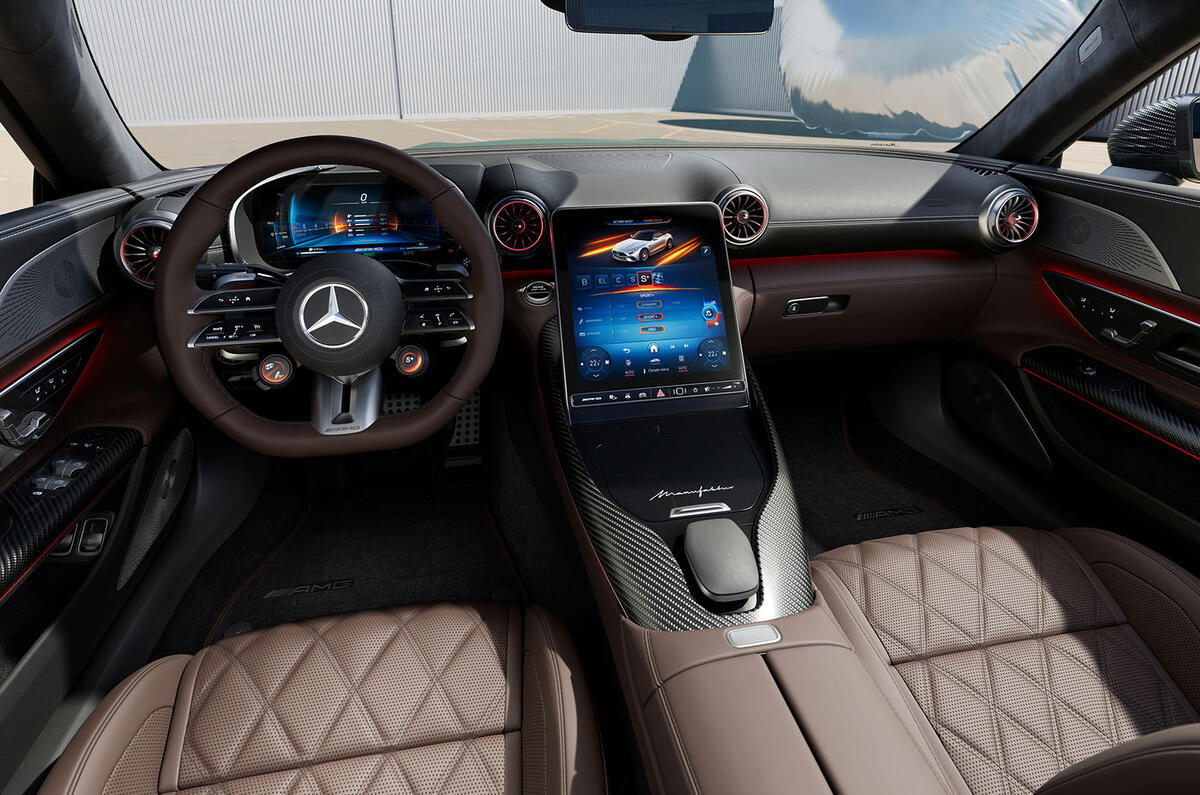
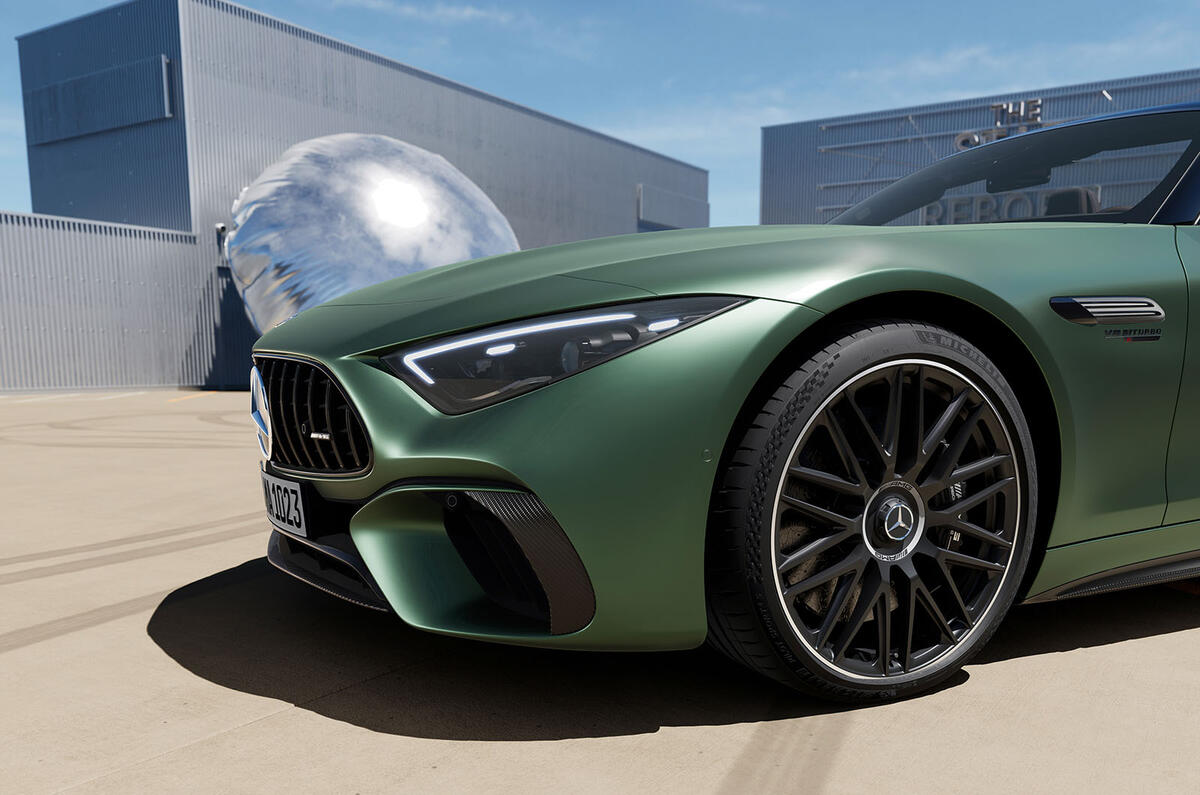
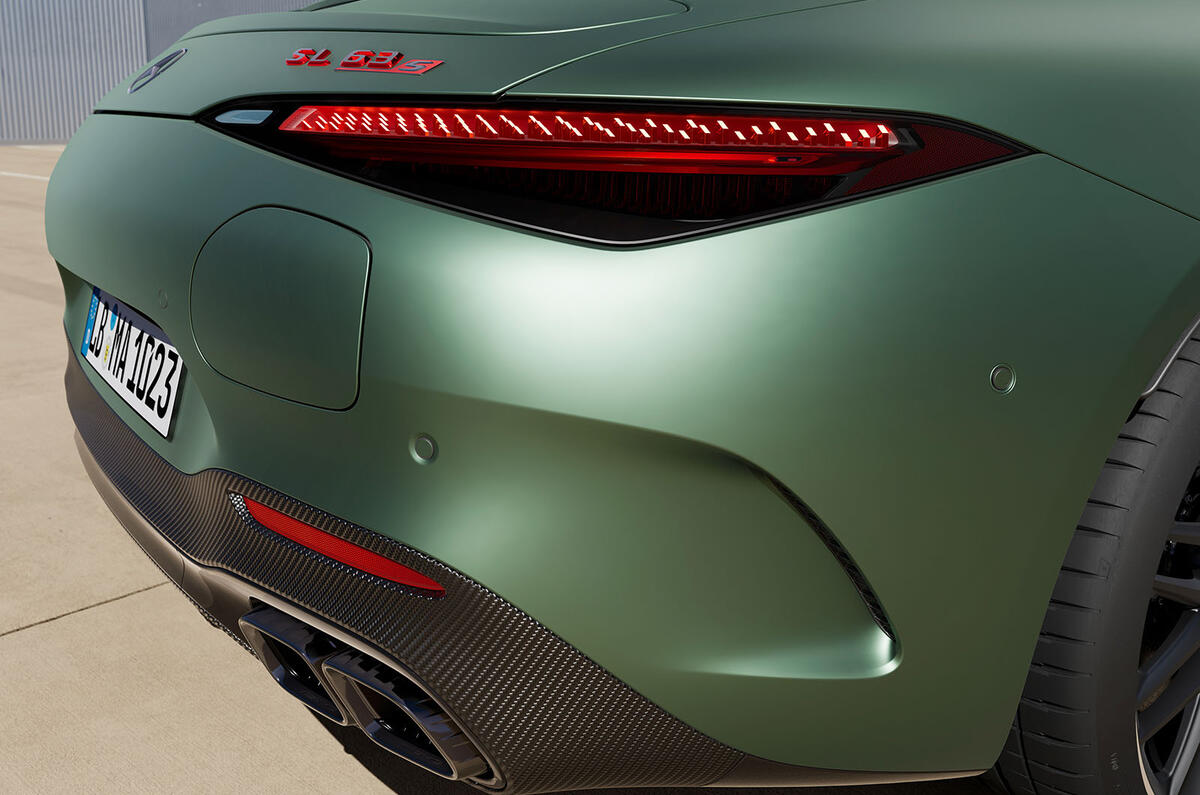
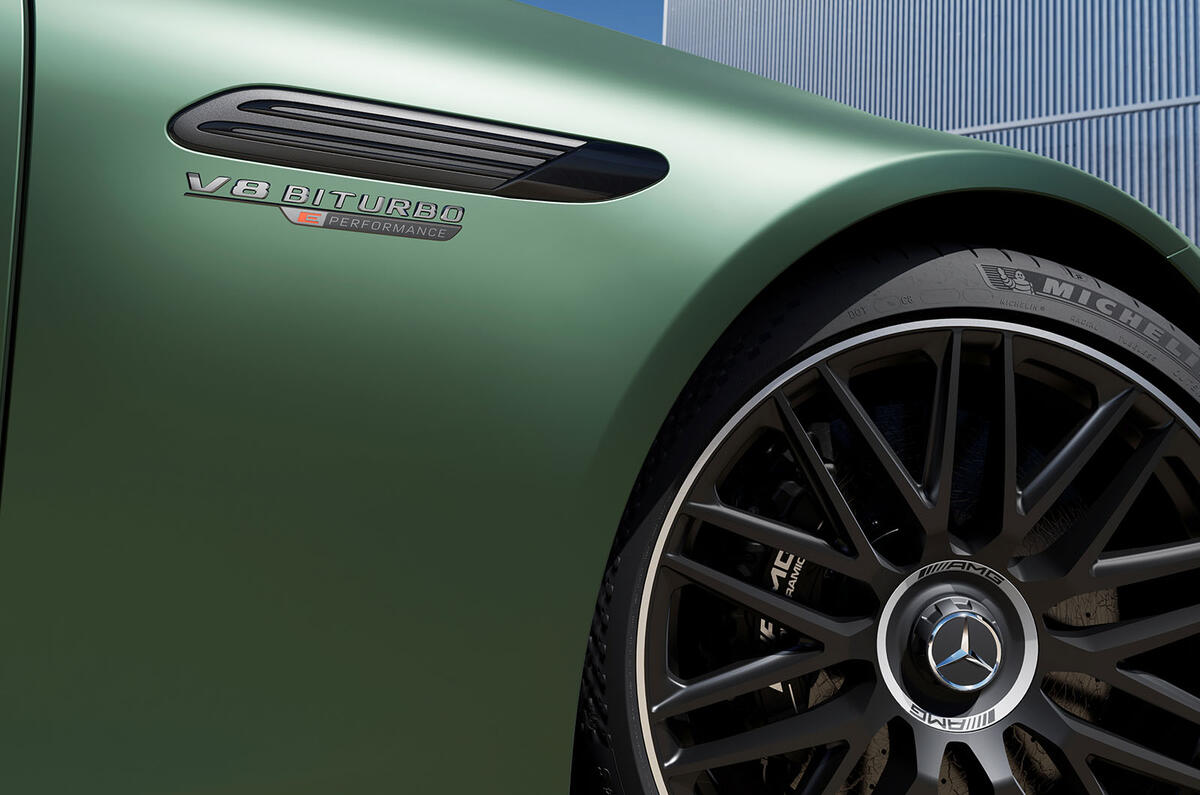
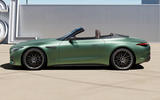
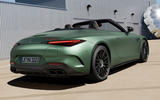
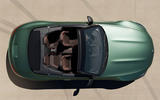
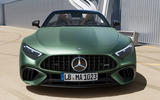

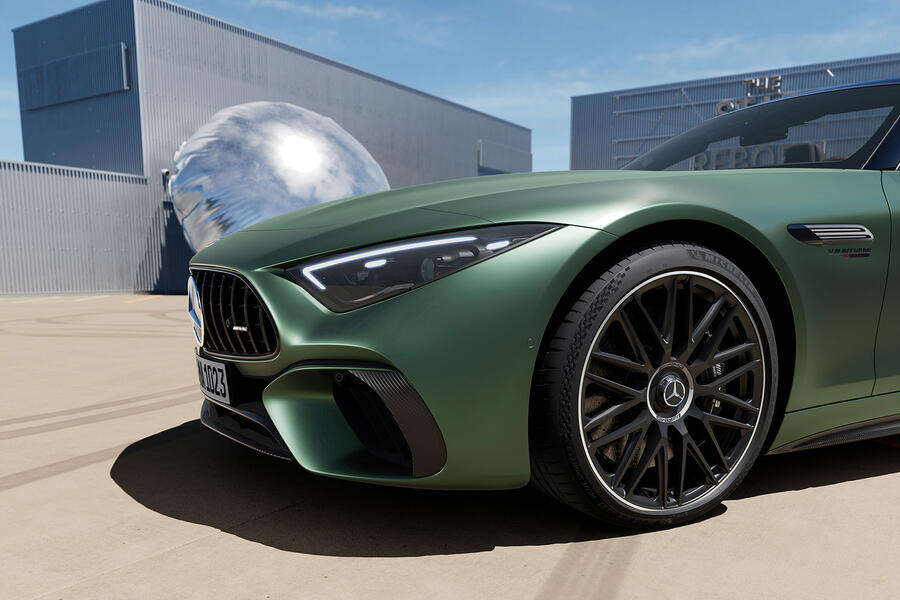
Mercedes-AMG has unveiled the SL 63 S E Performance as the first hybrid version of its drop-top grand tourer - and the most powerful variant yet.
It's the fifth plug-in hybrid from the AMG performance division and will be one of the fastest convertibles on sale when it lands next year.
It gets broadly the same powertrain set-up as the GT 63 S E Performance and S63 E Performance saloons. Power comes from a 4.0-litre twin-turbocharged V8 that produces 603bhp on its own. This is paired with a 201bhp electric motor mounted at the rear for a combined output of 804bhp and that jaw-dropping 1047lb ft torque figure.
As a result, it gets a McLaren 750S-baiting 0-62mph time of 2.9sec and a top speed of 196mph, making it only slightly slower than the Ferrari 296 GTS and Porsche 911 Turbo S Cabriolet.
Stopping power comes from carbon-ceramic brakes clamped by bronze-coloured callipers specific to the PHEV.
AMG CEO Michael Schiebe said: "With this unique concept, we offer our customers not only superior performance but also the option of all-electric driving.
"Extensive equipment options and the high-quality materials used also make the SL one of the most exclusive roadsters on the market - a real dream car."
The motor is attached directly to the rear axle and works to boost power under acceleration, when overtaking and getting off the line.
It's connected to a two-speed gearbox that works with the seven-speed automatic gearbox mated to the engine and can send its power to the front wheels when the rears begin to lose grip - a hallmark of the German brand's P3 performance powertrain.
The car also has rear-axle steering as standard to aid both low- and high-speed manoeuvrability.
To aid grip in high-demand situations, a mechanical limited-slip differential is attached to the back axle, above which is mounted a "lightweight, high-performance" 400V battery developed with know-how from the Mercedes-AMG Formula 1 team.
The battery is said to provide a continuous and reliable delivery of performance in high-demand situations, with particular attention paid to improved cooling. It allows the car to travel eight miles on electricity alone but wasn't developed to provide "the longest possible range".