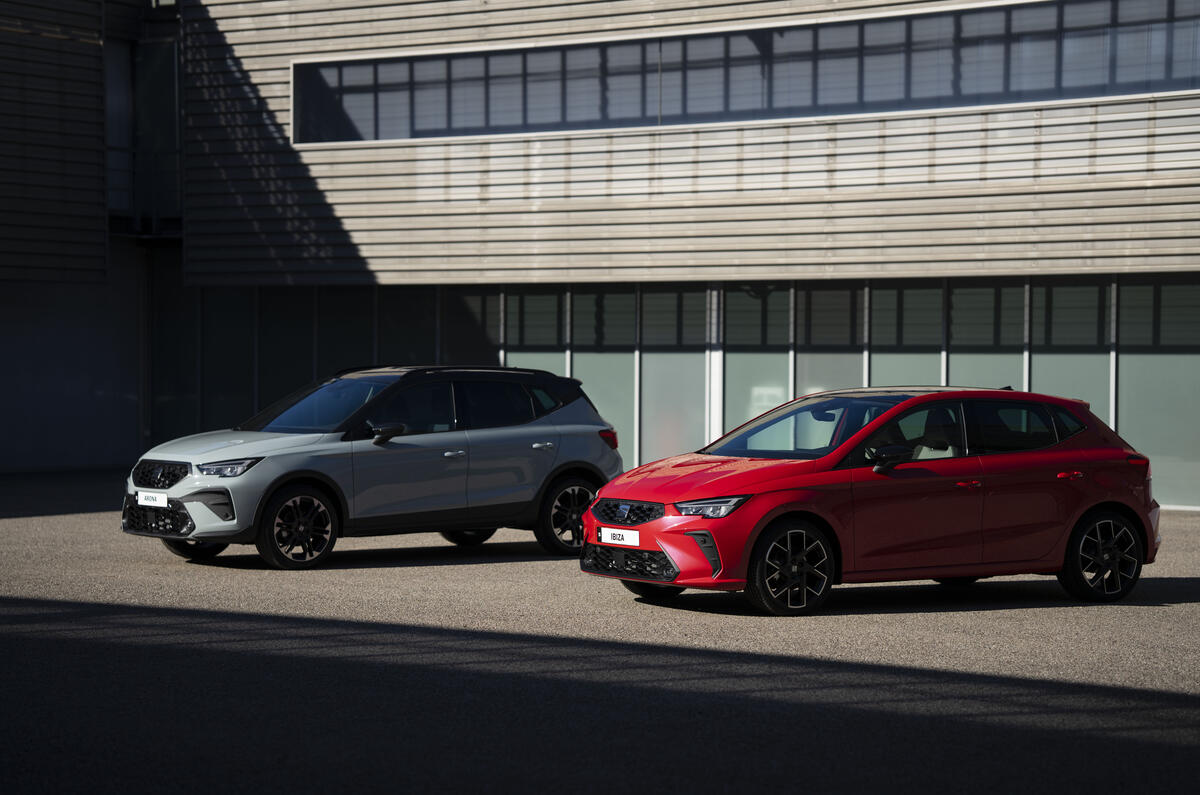

The Volkswagen Group is considering phasing out the Seat brand by 2029, as part of a sweeping programme to simplify its operations and cut costs.
The proposal, which has reportedly already been approved by Volkswagen's management board, is due to go before the supervisory board tomorrow (Friday 4 September), according to German media reports.
Under the plan, Seat would disappear from Volkswagen Group's brand portfolio by the end of the decade, with financial resources instead concentrated on Cupra – the performance-oriented offshoot launched as its own brand eight years ago but now comfortably outselling the brand from which it emerged.
The Volkswagen Group has officially declined to comment on the reported decision. A spokesman said internal documents are discussed and approved by the appropriate bodies and that the company wouldn't pre-empt that process.
In a statement sent to Autocar, Seat Cupra UK didn't deny the reports but said: "The entire industry, including the Volkswagen Group and, of course, Seat S.A., is undergoing a profound transformation, driven by our commitment to electrification.
"The global context has changed significantly, with a strong impact on the automotive sector, particularly over the past year. Therefore the Volkswagen Group is working on a transformation plan for the entire Group business to strengthen its competitiveness and efficiency.
"The goal is to make the entire Volkswagen Group and respective entities more efficient and leaner and to capture technological synergy potential consistently. This strategy has been discussed in several supervisory board meetings.
"No decisions have been taken at this stage. We will inform about any strategic decisions affecting Seat SA in due time."
Seat was founded in 1950 and for decades has served as Spain's national car maker. Cupra, meanwhile, existed as the badge applied to Seat's fastest models before being established as a separate marque in February 2018, following the Volkswagen Group’s failed attempts to purchase Alfa Romeo.
Eight years later, Cupra is set to effectively succeed its parent brand.
The reasoning behind Volkswagen's proposal is reflected in the Spanish brands' sales figures: Cupra delivered a record 170,100 cars during the first half of 2026, compared with 129,600 for Seat.
Cupra accounted for almost 57% of the pair's combined 299,700 deliveries from January to the end of June.
The direction was already clear last year. Cupra sales rose 32.5% to a record 328,800 cars in 2025, while Seat deliveries fell 17% to 257,400.
It meant Cupra outsold Seat by more than 71,000 cars in just its seventh year of independence.
Cupra has now sold more than one million cars globally since its creation and has expanded well beyond rebadged performance versions of Seat models.
Cupra was initially dependent on Seat-derived cars and shared showrooms, but the Volkswagen Group has progressively given it its own products, design identity and positioning.
The result is that what began as an attempt to extract greater margins from Seat's sporting heritage has evolved into a substantially more valuable proposition in its own right, with Cupra providing higher profitability.