


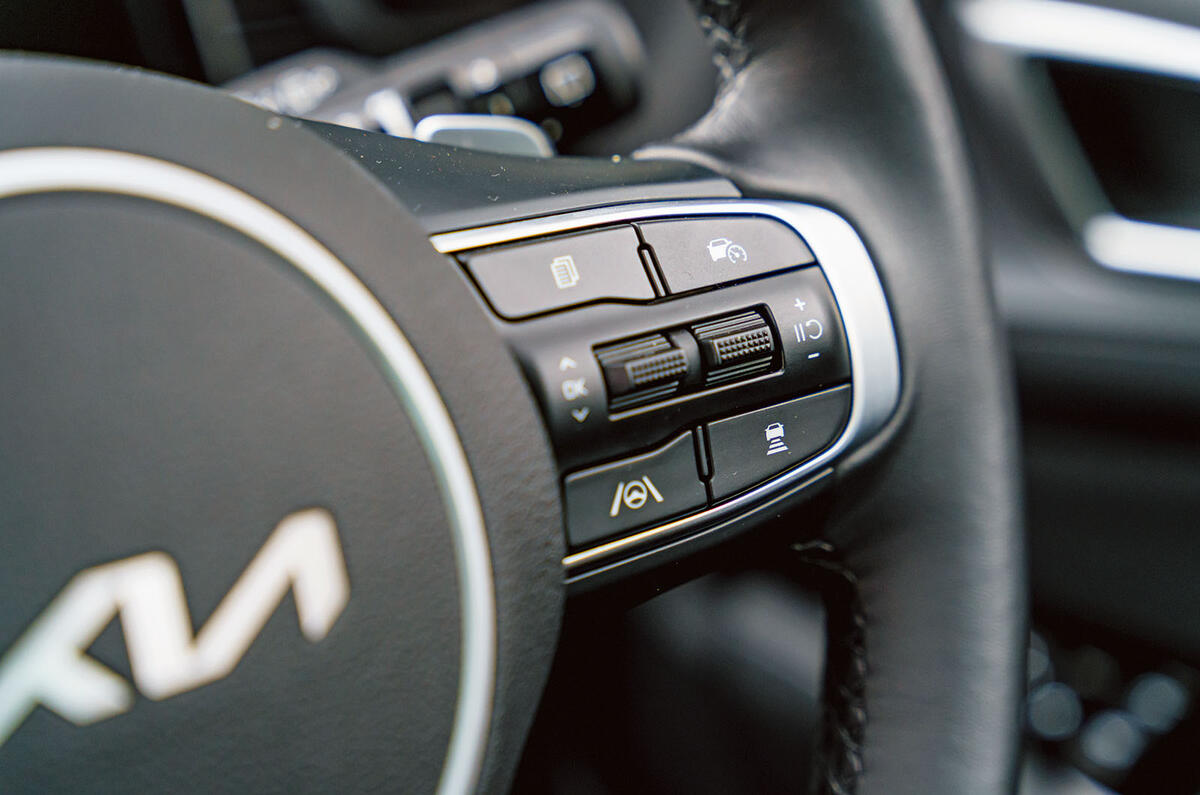





Safety systems designed to support motorists are coming under closer scrutiny as road casualty rates flatline and concern grows that drivers are switching the technology off.
Advanced driver-assistance systems (ADAS) are now standard across all new vehicles, at least to varying degrees. They include blindspot and lane departure warning, emergency brake assist and adaptive cruise control.
According to a study by the National Highway Traffic Safety Administration in the US, ADAS has the potential to prevent 62% of traffic deaths per year.
The mass adoption of many systems occurred from around 2010-15. However, in the same period, road deaths in the UK have declined only slightly from 1857 in 2010 to 1695 in 2022, while each year from 2012 to 2019 they averaged 1762.
While the causes of road accidents are many and varied, concerns around ADAS’s effectiveness at helping to reduce them has grown to the extent that Euro NCAP has said it will work to improve its evaluation of the technology in the real world, with emphasis on the intuitiveness and user acceptance of systems.

Euro NCAP secretary general Michiel van Ratingen said: “As much as it is a challenge to insist that manufacturers fit the latest safety technologies, the real challenge lies in convincing consumers of their necessity. There is a worrying trend of media and social channels encouraging drivers ‘to turn them off’.
Euro NCAP is working with manufacturers to minimise ‘noise pollution’ in the cabin and the more annoying features of these technologies.”
His organisation isn’t alone in seeking to learn more about how drivers interact with ADAS. Since 2015, the Advanced Vehicle Technology Consortium, based at the Massachusetts Institute of Technology (MIT), has been investigating ADAS and other high-tech vehicle technologies including autonomous systems.