
Robotics in the form advanced driver assistance systems (ADAS) have been here in Europe since 2015, when it became essential for car makers to adopt features such as autonomous emergency braking (AEB) to gain a five-star Euro NCAP safety score.
Drivers of fully loaded 2026 model-year cars will notice how lane-keeping features, which a few years ago may only vibrated the steering wheel, have evolved to positive automated steering input and now to full-blown overtaking assist.
Along with features that physically intervene with the control of the car has come occupant status monitoring (OSM). This electronic big brother can include child presence detection and seatbelt reminders, and it can actively check if a driver is nodding off, looking drowsy or simply being distracted, perhaps rubber-necking an incident on the opposite carriageway.
Whether drivers view these aids as nannying, helpful or simply distracting (because of the beeps and warning lights they trigger), Thatcham Research data makes a strong case for technology to mitigate the problem. Thatcham says impairment or distraction is a contributing factor in 14.8% of UK accidents, and that figure rises to 28% in fatal accidents. OSM can detect the "alertness, attention and availability of the drivers and other passengers in the vehicle."
Thatcham says OSM is the key enabling technology for automation and driver-controlled assistance systems (DCAS), which is the 'hands off, eyes on' type of assistance we see today.
But there's more to OSM than keeping a watchful eye. Last year ZF showed its Lifetec system, which blends camera and sensor data to classify occupants. Airbags and seatbelt systems can tailor responses to each individual, taking into account their seating position irrespective of whether a person is small, large, muscular or petite.
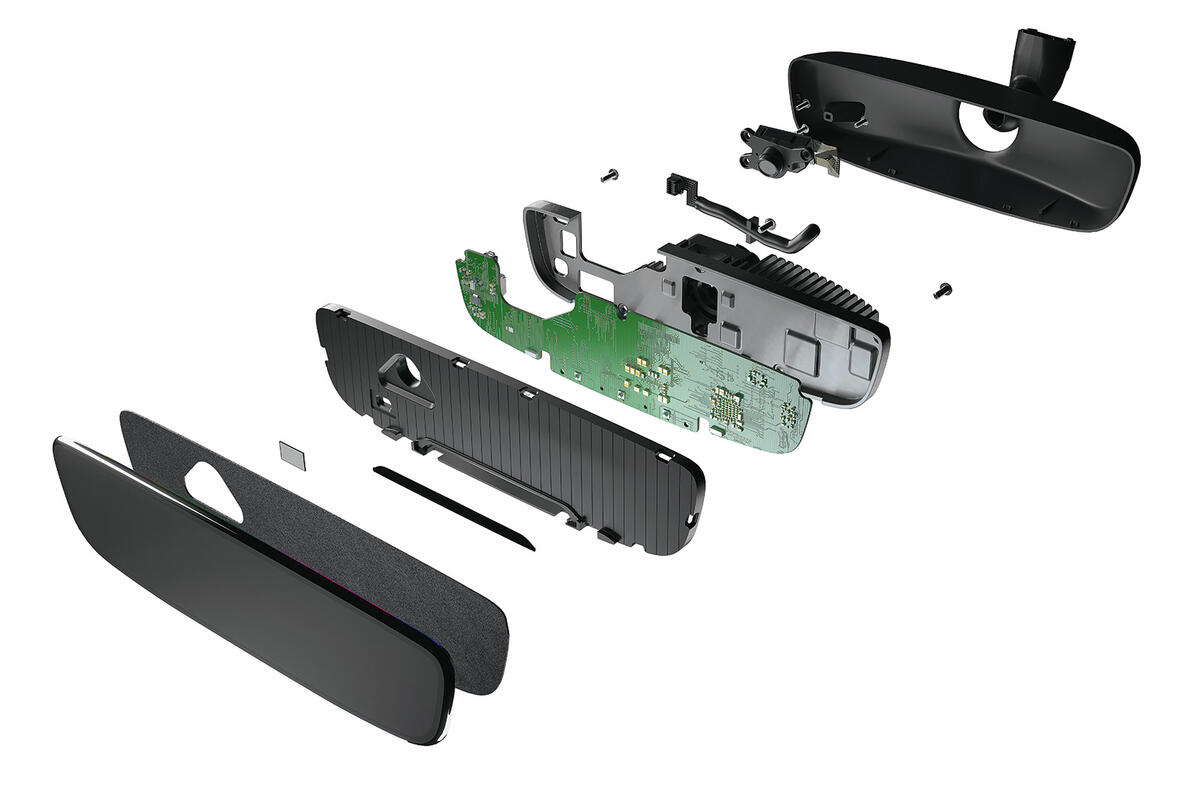
Supply giant Magna has recently been awarded a driver and occupant monitoring system (DMS/OSM) programme with a European manufacturer. The tech is built into the rear-view mirror, which contains 'behind-the-glass camera architecture', and is integrated with the car's central computing systems.
The camera monitors the driver's head, eye and body movements to detect distraction, drowsiness and fatigue. The technology has been in the market for a couple of years now; it's designed as a system and can be scaled to include child presence detection and seat-belt detection. It can also be used to identify specific passengers to enable user-preference memory settings.
Car makers have been developing technologies to read our minds for a number of years. Back in 2011, Mercedes showed a wearable device (the prototype resembled a swimming cap) to monitor 'alpha spindles' in brainwave patterns to establish whether a driver was becoming drowsy.