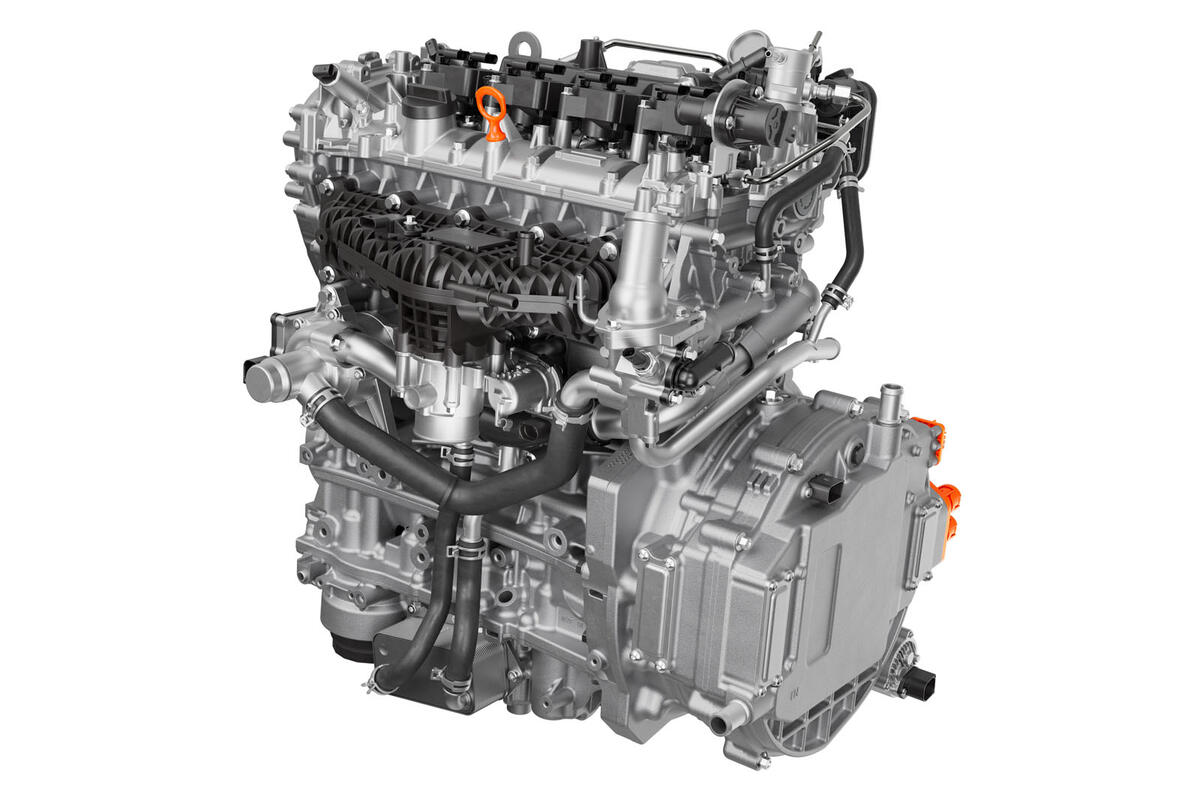
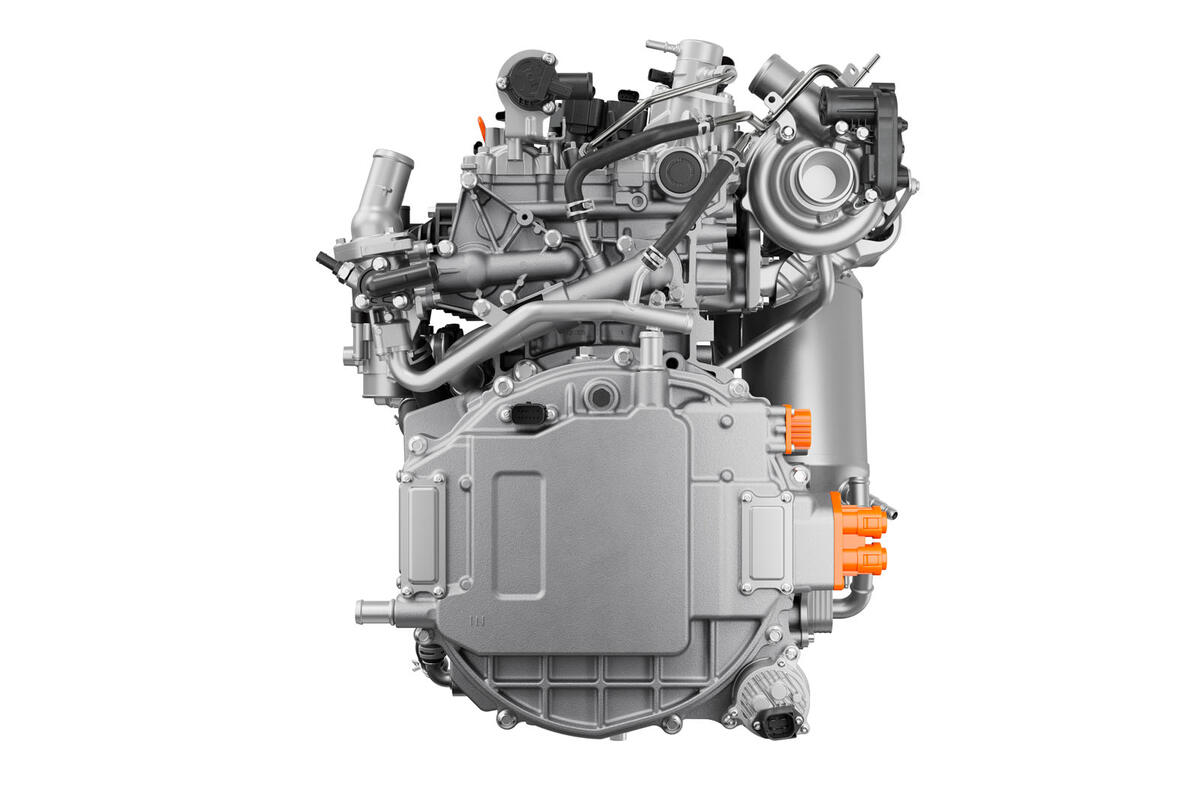
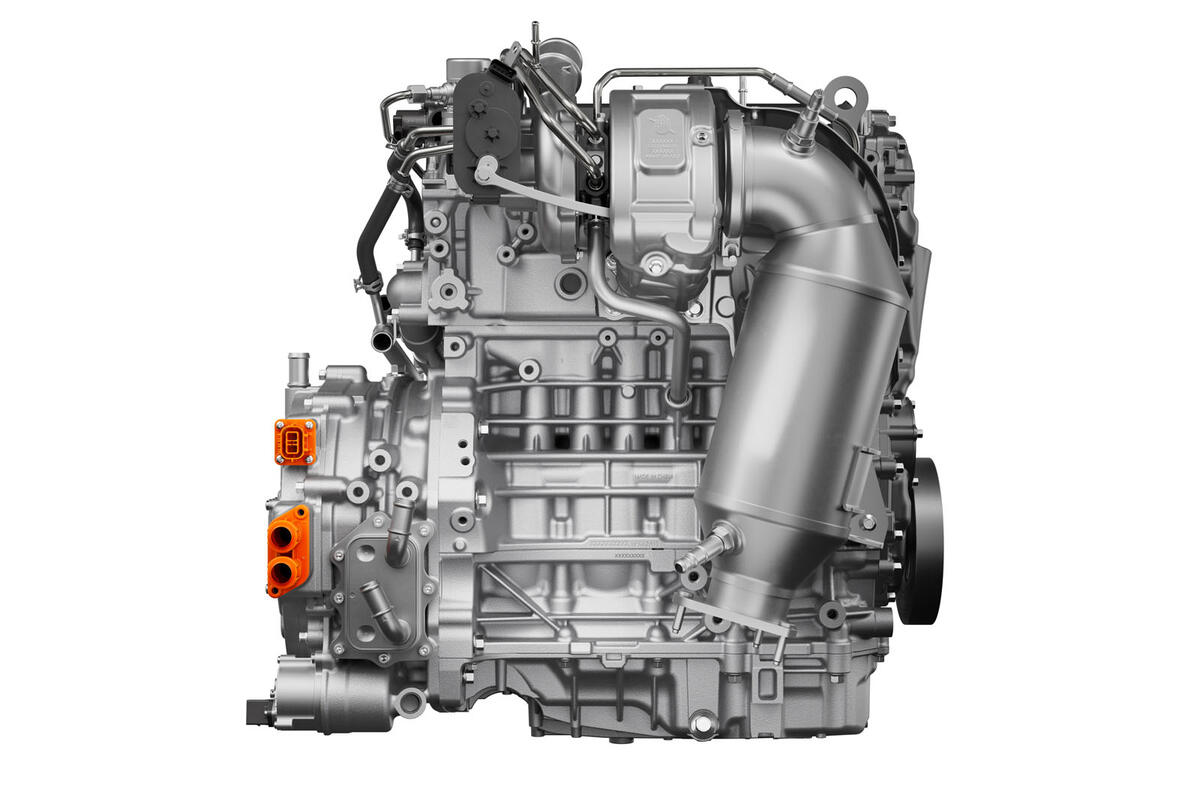

Horse Powertrain, a joint venture of Geely and the Renault Group, has revealed a new range-extender hybrid powertrain with an advanced axial-flux electric motor.
The pancake-shaped axial-flux design is much more compact and power-dense than the drum-like radial-flux design that's commonly used in today’s electric and hybrid cars.
Horse claims its motor is 46% shorter than a similarly specified radial-flux one, making it easier to package in tight spaces, such as on a hybrid car’s gearbox – as it has been in the new 'D20' powertrain.
It also produces 63% more power than a radial-flux motor of the same size, according to Horse, for a total of 141bhp.
Axial-flux motors are rare today, featuring in hybrid supercars such as the Ferrari 296 GTB and SF90 and Lamborghini Temerario and Revuelto. Mercedes-AMG also uses three such motors in its new GT 4-Door Coupé EV, which puts out 1169bhp.
Horse’s application of an axial-flux design is notable in that it isn't used for high performance but rather its packaging and efficiency advantages.
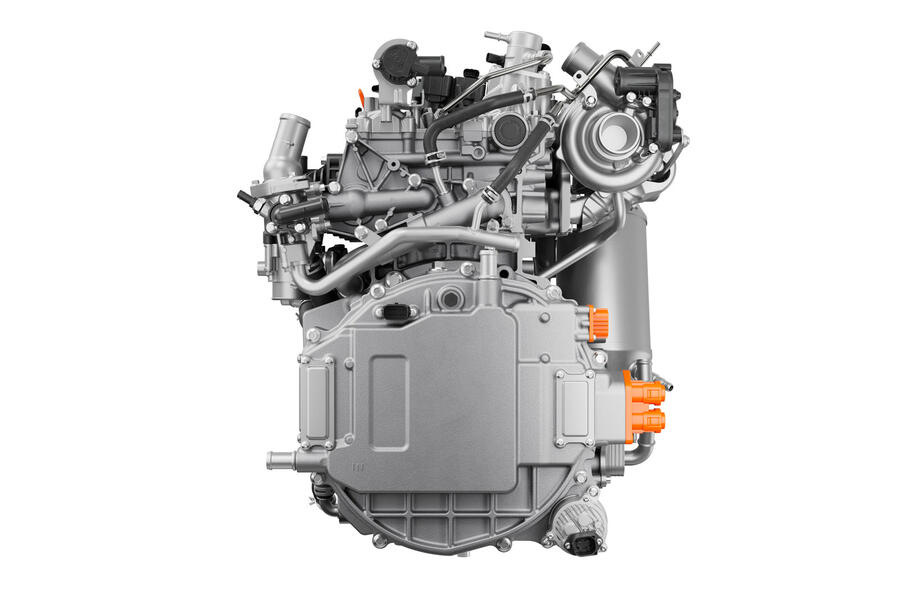
The D20 powertrain matches the motor with a naturally aspirated 2.0-litre engine that runs on methanol and doesn't drive the car's wheels but instead generates electricity.
Horse claims it can fully recharge a 40kWh battery pack using 19.6 litres (4.3 gallons) of methanol.
Methanol is also rare in its use today but is becoming increasingly commonplace in China.
Geely is a significant backer of the fuel: it has supported its use in large taxi fleets and earlier this year revealed a one-make-racing version of its Xingyao 6 saloon powered by the biofuel.
The development of this methanol range-extender powertrain reflects Horse’s strategy to speed up decarbonisation through hybridisation, rather than relying on the industry to put its weight behind full battery electrification.
Speaking to Autocar earlier this year, CEO Matias Giannini explained: “I think that [widespread adoption of EVs] is so far away that I see the opportunity and the obligation that a company like ours has to solve the problem of decarbonisation in the meantime. It is big enough to motivate this company to continue to do what we're doing.”