Currently reading: The ultimate EV bargain? Grab a Nissan Leaf from just £3500

The Nissan Leaf may not tug at the heartstrings but it is a dependable and practical family hatchback

The second-generation Nissan Leaf had big boots to fill.

Not literally, being a 4.5m-long family hatch in the vein of the Volkswagen Golf, but certainly figuratively: its forebear had been a visionary electric vehicle at the cutting edge of battery-powered car tech and was instrumental in helping to move EVs into the mainstream.

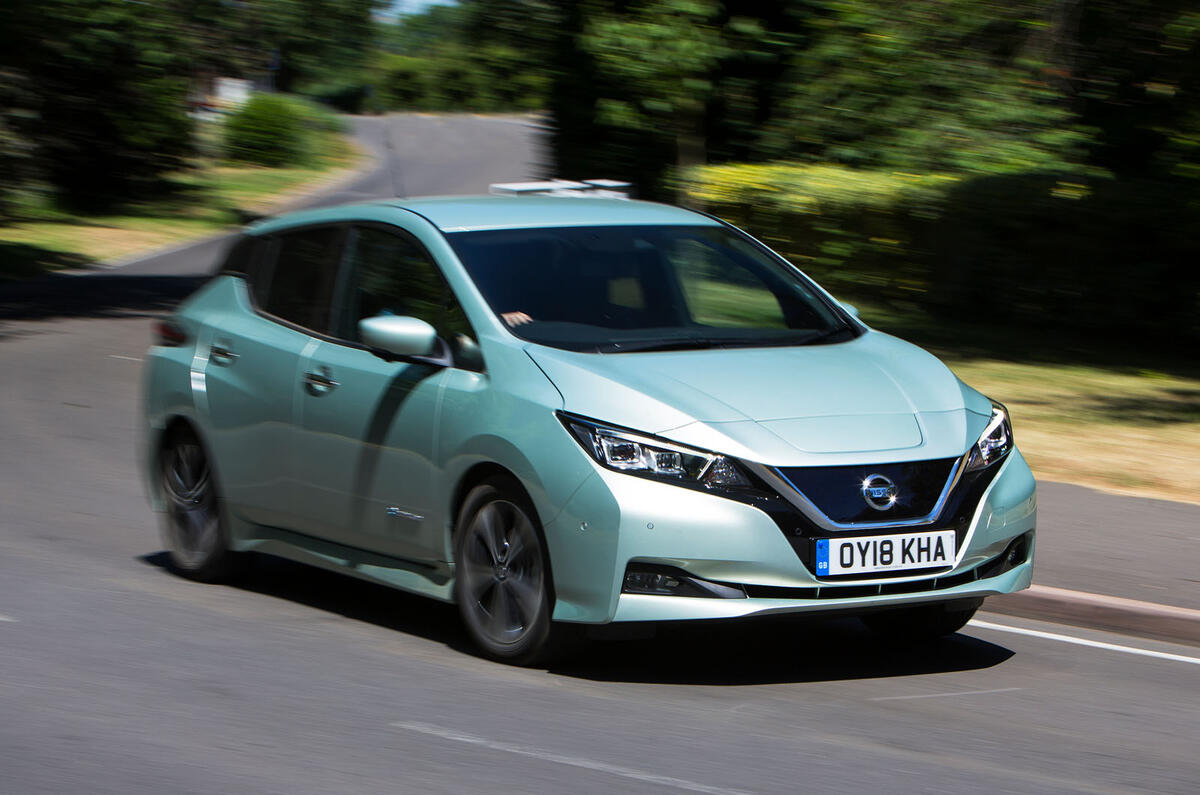
The Mk2, launched in 2018, was not quite so innovative in its conception. But it improved on the Mk1 Leaf in every single way, from the sleek exterior and more comfortable cabin to the chemistry underneath, which allowed for a real-world range of 200 miles.

There's now a freshly launched Mk3 and it's much more advanced again, but that has helped to make used Mk2 prices even more eye-catching: they start at £3500 and rise to around £15,000 - far less than any new full-sized EV alternative.

It's no less practical, either. The 435-litre boot is significantly larger than a Volkswagen ID 3's, making it a capable family load-lugger, although rear leg and head room are slightly compromised by the battery placement beneath the floor. It's also worth noting that pre-2020 cars lack reach adjustment for the steering wheel, an ergonomic demerit for taller drivers.

The dashboard design is refreshingly straightforward, though, eschewing the minimalist, screen-heavy approach of newer rivals in favour of physical buttons for the climate controls. A 7in infotainment screen (later upgraded to 8in) handles navigation and media duties; it feels a bit dated and slow by modern standards, but it is incredibly simple to operate on the move. An e-Golf has a nicer interior, but a far shorter range.
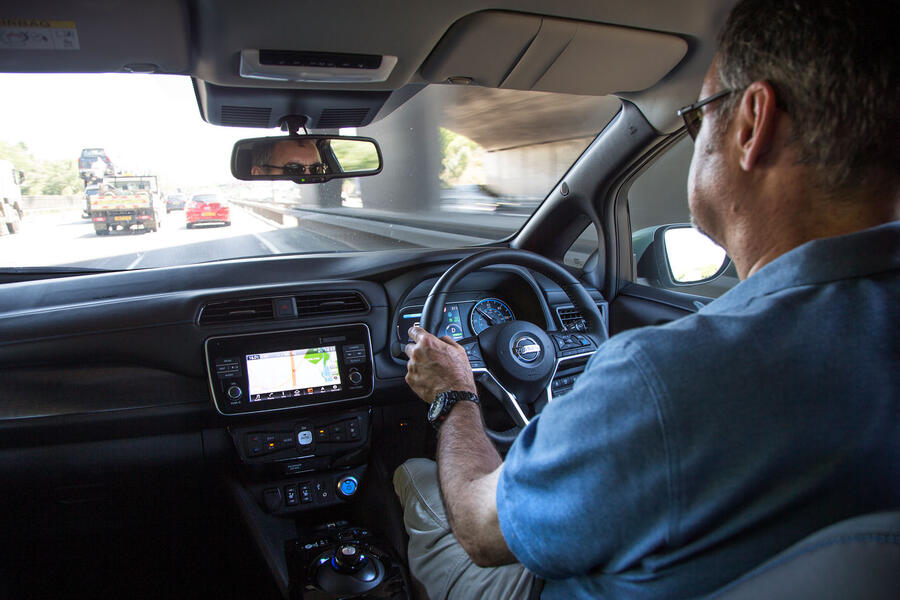
Man driving a 2018 Nissan Leaf

Speaking of range, most Leafs offer an official 170 miles from a 40/39kWh (total/usable capacity) battery. Expect closer to 150 miles in the real world, or less on the motorway or on a cold day. If you're going longer distances, the Leaf can accept up to 50kW through a Chademo public charger, which are getting rarer.

Unless you are using a Leaf as a station car or for the school run, we would recommend the longer-legged 'e+' model, which has a 62/59kWh battery for an official 239-mile range, or around 200 miles in the real world. It can also charge more quickly, at 100kW, for a 20-80% refill in less than an hour - still through a Chademo plug.

Both battery options are pretty efficient by modern EV standards, though, so they're very cheap to run if you're charging from home via a three-pin socket or wallbox.

The Leaf is a fine urban companion. Smooth, remarkably quiet and exceptionally easy to drive, it is at its best trundling around town. But on the open road it remains perfectly competent. Its suspension is set up to deliver comfort rather than handling thrills, yet even if you do push on it remains neutral and easy to gauge on a meandering road.

Back to top

Acceleration is typical of an EV - brisk and instantaneous from a standstill, but tailing off quickly at motorway speeds. The 214bhp e+ is better in that respect than the 148bhp standard model and quick off the mark (0-62mph takes 6.9sec).

In a world full of new EVs, especially larger crossovers, it's easy to forget one of the original pioneers. But unless you need a longer range and quicker charges on the go, a used Leaf is an excellent choice, especially given its strong reliability record and very affordable prices.

An owner's view

Mark Christie: "I bought my 2019 Leaf Tekna in September last year. It had only done 12,000 miles and was in like-new condition, complete with new-car smell and no notable battery degradation. I've since doubled that mileage figure and it has become one of my favourite cars I have owned. It hasn't caused me any problems and remains really cheap to run. When on a long journey, I still don't have too much trouble finding a Chademo charger."

Buyer beware...

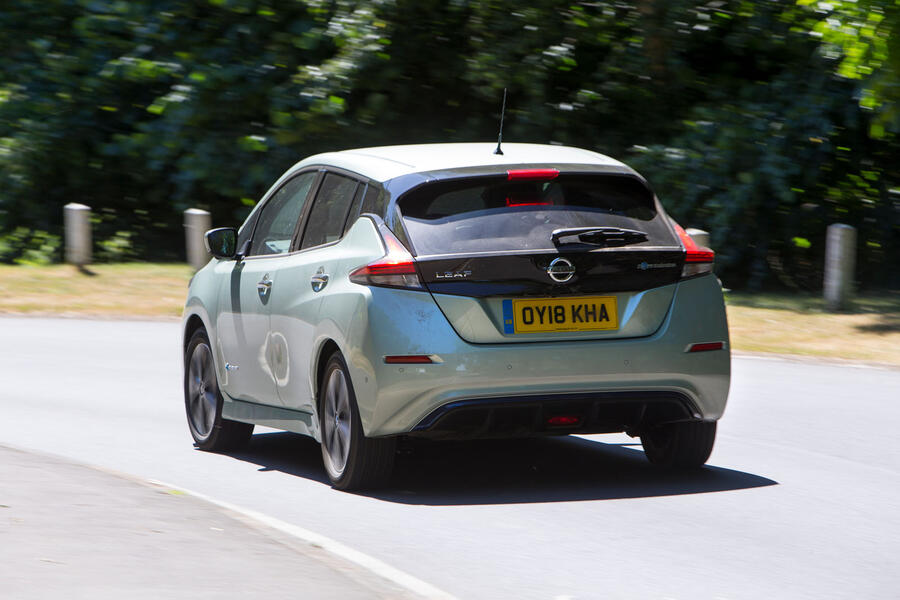
2018 Nissan Leaf – rear

Battery: Longevity has proven vastly superior to the original but, because the Leaf lacks active liquid cooling, the battery can get hot during repeated fast charging, which will degrade its capacity. Use the dashboard graphic to check battery health bars or plug in an OBD2 scanner with the LeafSpy app to get a definitive look at the battery's state of health (SOH).

Suspension: Water can collect in the front strut tops, which can lead to premature rust on the suspension components. Inspect this area for standing water or corrosion and get it as clean and dry as possible. Apply lithium grease yearly to repel water.

Charging: If you will be relying on public chargers, ensure you can still find a Chademo connector locally before taking the plunge - or buy a CCS adapter from a reputable maker online for roughly £500.

Also worth knowing

Standard equipment is generous across the entire range. Base Acenta trim includes a leather-wrapped steering wheel, air conditioning, automatic lights with high-beam assistance, automatic wipers and adaptive cruise control. You also get a 7in infotainment touchscreen with a DAB radio, a reversing camera and wired Apple CarPlay and Android Auto.

Back to top

N-Connecta trim adds tinted rear windows, a 360deg camera, electric folding mirrors and a gloss black B-pillar. Inside, there's synthetic leather and cloth upholstery, gloss black interior trim, heated seats, heated steering wheel and automatic climate control.

Top-tier Tekna models add a Bose sound system and ProPilot driver assistance features, like automated stopping and starting in heavy traffic and automated steering. It will also park itself. As for running costs, annual VED is just £200, while insurance groups range between 21 and 28. Servicing is required every 18,000 miles. Every Leaf's battery is covered by an eight-year/100,000-mile warranty.

How much to spend

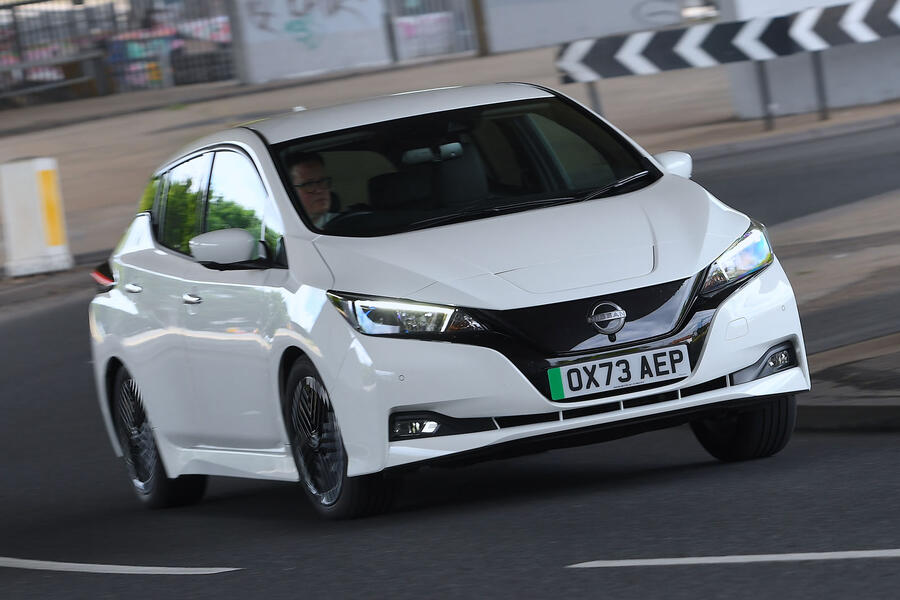
2024 Nissan Leaf driving

£3500-£5499: High-mileage (100,000-plus) cars, most with the smaller 39kWh battery. Many will have been frequently rapid-charged, so it's important to check the battery's SoH before buying.

£5500-£7999: Clean 39kWh Tekna models with average mileages are readily available in this bracket, beside some 59kWh e+ variants.

£8000-£11,999: Post-2022 facelifted cars with refreshed Nissan badging and updated grilles, as well as some very little-used pre-facelift cars.

£12,000-£15,000: Late-2023 and 2024 cars with super-low mileages, representing a massive saving over the original as-new list prices.

Join our WhatsApp community and be the first to read about the latest news and reviews wowing the car world. Our community is the best, easiest and most direct place to tap into the minds of Autocar, and if you join you’ll also be treated to unique WhatsApp content. You can leave at any time after joining - check our full privacy policy here.