
From £36,2258

Hybrid power marks a welcome return to form for the Hyundai Santa Fe rival

The Nissan X-Trail has found itself in a slightly odd place, and a far cry from what it once was. As the brand’s largest SUV in Europe, and one available with seven seats, it is natural to compare it with other seven-seaters such as the Skoda Kodiaq, Kia Sorento, Hyundai Santa Fe and even the behemoth Toyota Highlander.

But that was never the point of the X-Trail. It was launched in 2001 as a fairly no-nonsense Land Rover Freelander-esque 4x4, and Nissan made plenty of noise at the time about the four-wheel drive system (two-wheel-drive versions came much later) and uncarpeted boot.

The X-Trail’s mission remained much the same for the second generation, though it gained more family-friendly sensibilities, and by that point the X-Trail had to share showroom space with the Nissan Qashqai, which for most people fulfilled the same role. So, for the third generation, the X-Trail grew a little and effectively replaced the seven-seat Qashqai+2. And since the Qashqai tends to be a bit smaller than cars like the Kia Sportage and Toyota RAV4, that allowed the two Nissan SUVs to coexist.

The new one mostly picks up where the last one left off. Visually it looks less like a big Qashqai, but in many ways that is still what the X-Trail is. As such, it’s more of a Sportage and RAV4 rival, just one with a small third row of seats.

For 2026, it has been facelifted. It's a bit of a spot-the-difference exercise visually, but there's a refreshed infotainment system. There's something odd going on with the powertrain line-up, though. 

Range at a glance

At launch, this generation of X-Trail was available with one front-wheel drive mild-hybrid petrol engine and two versions of Nissan's e-Power full hybrid system: a standard front-wheel drive and the four-wheel drive e-4orce. With the 2026 facelift, the mild hybrid was dropped. 
Advertisement
Back to top
Version Power
Nissan X-Trail Mild hybrid 163 † 161bhp
Nissan X-Trail E-Power 201bhp
Nissan X-Trail E-Power E-4Orce 210bhp

TRANSMISSIONS

  • 1-spd reduction gear (full hybrid)
  • CVT (mild hybrid)


DESIGN & STYLING

7
Nissan X Trail review 2026 002

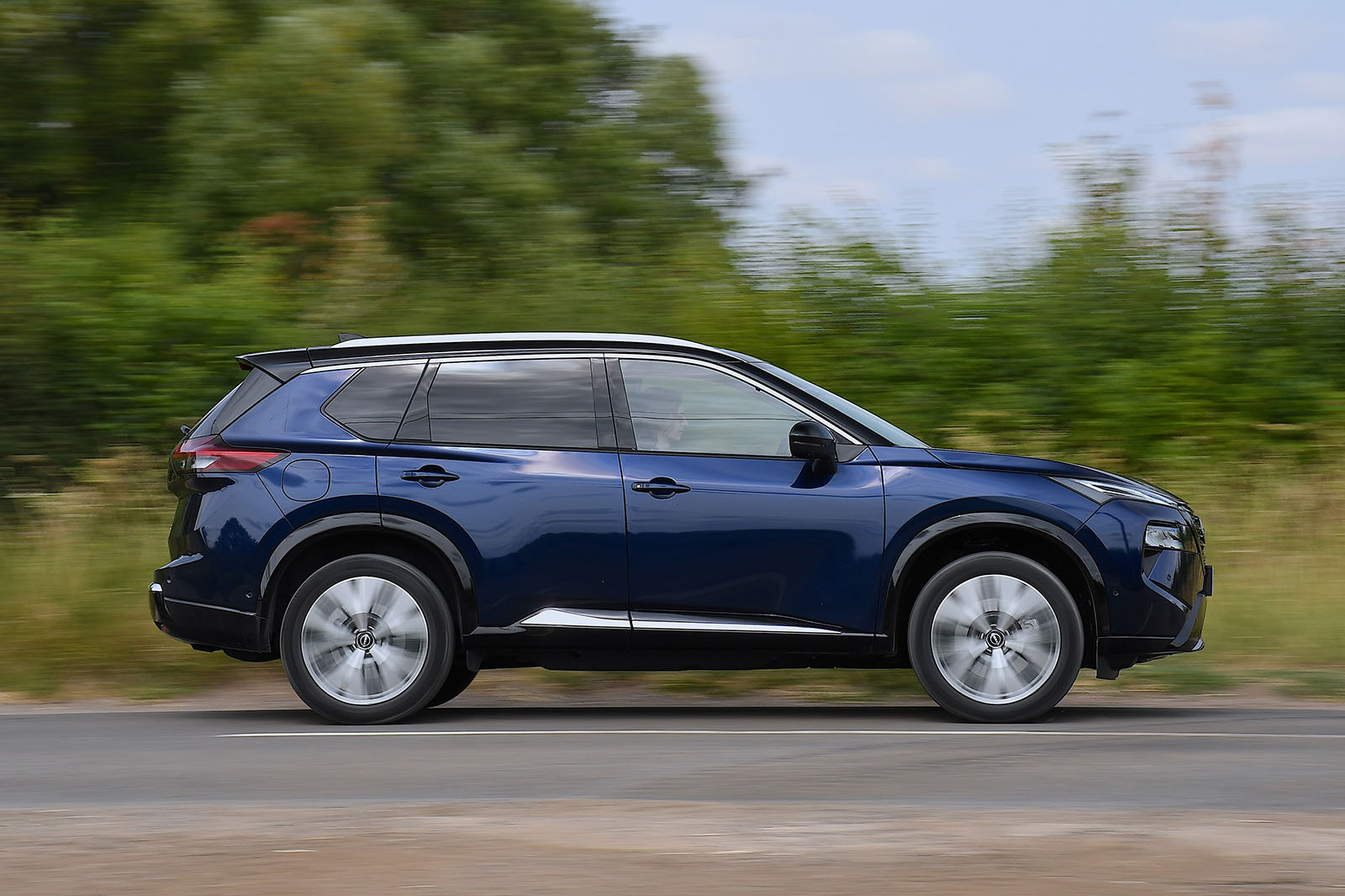
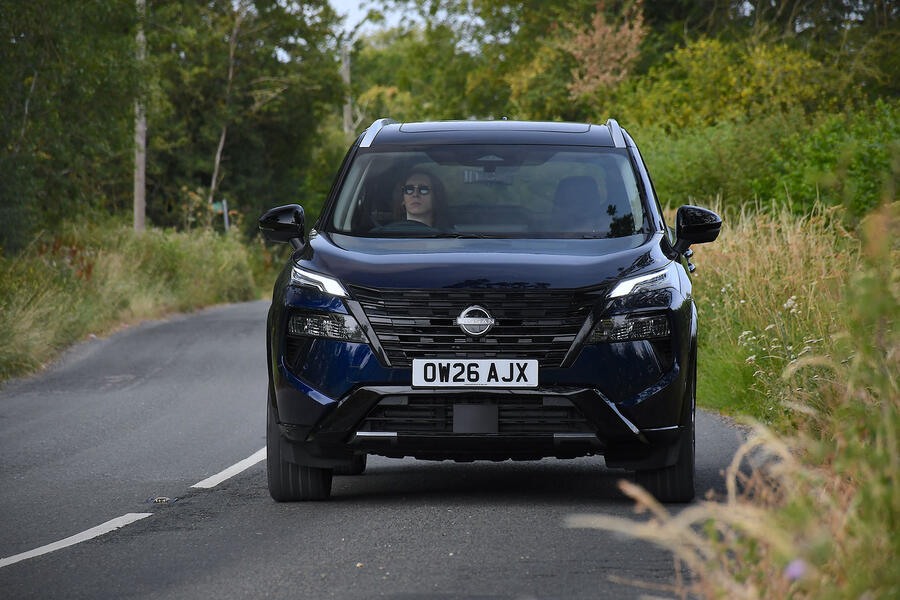
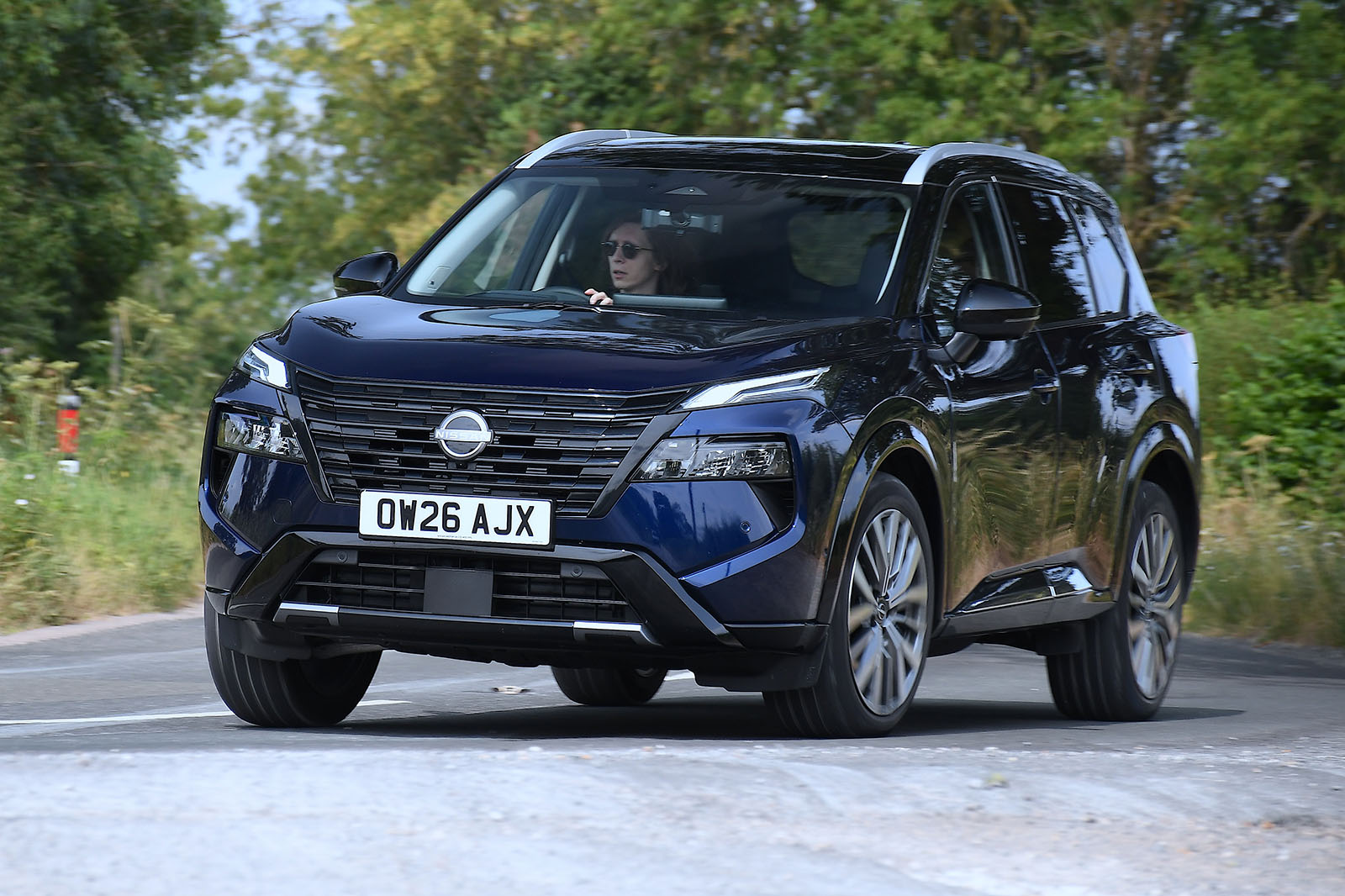
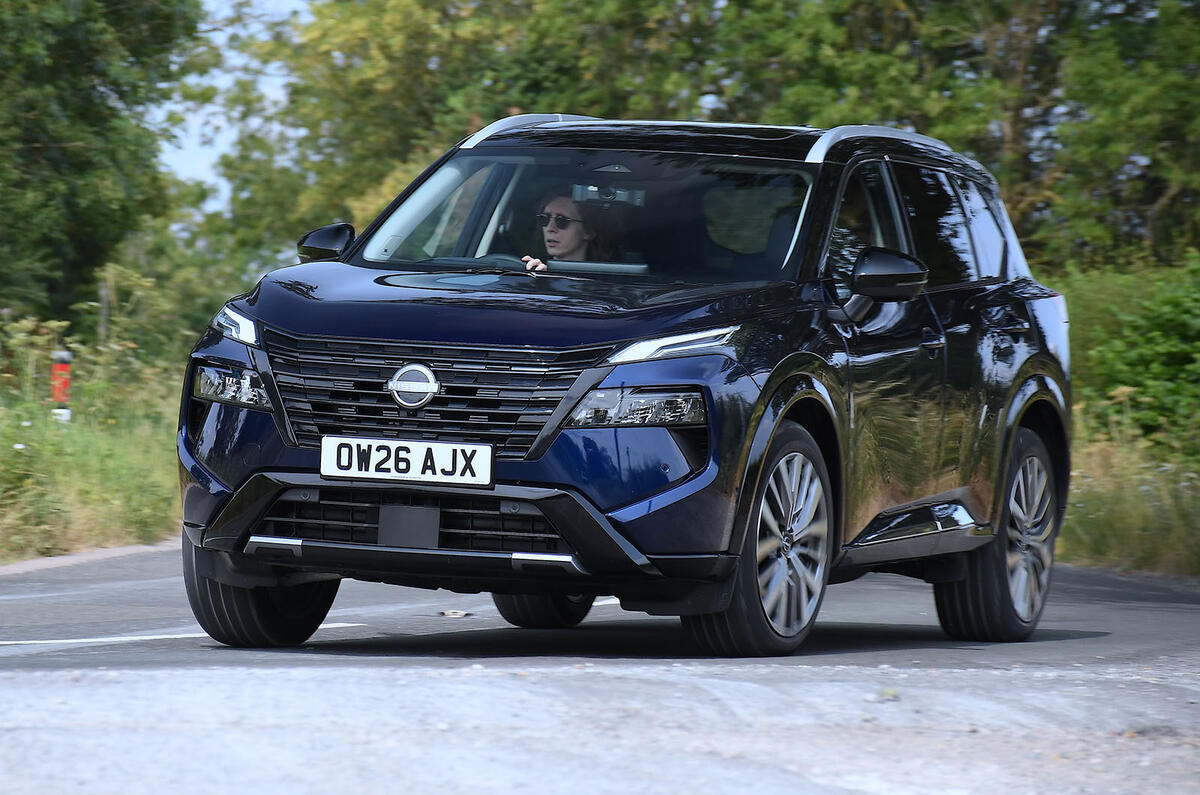
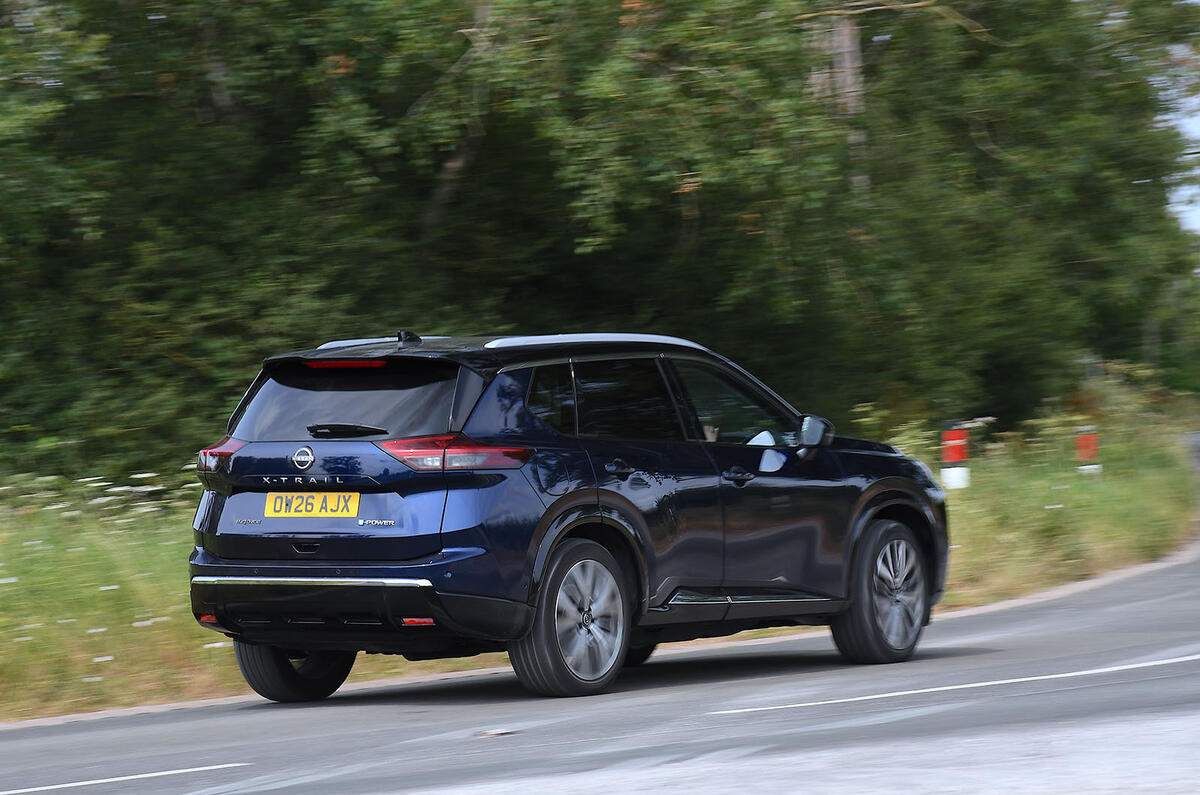
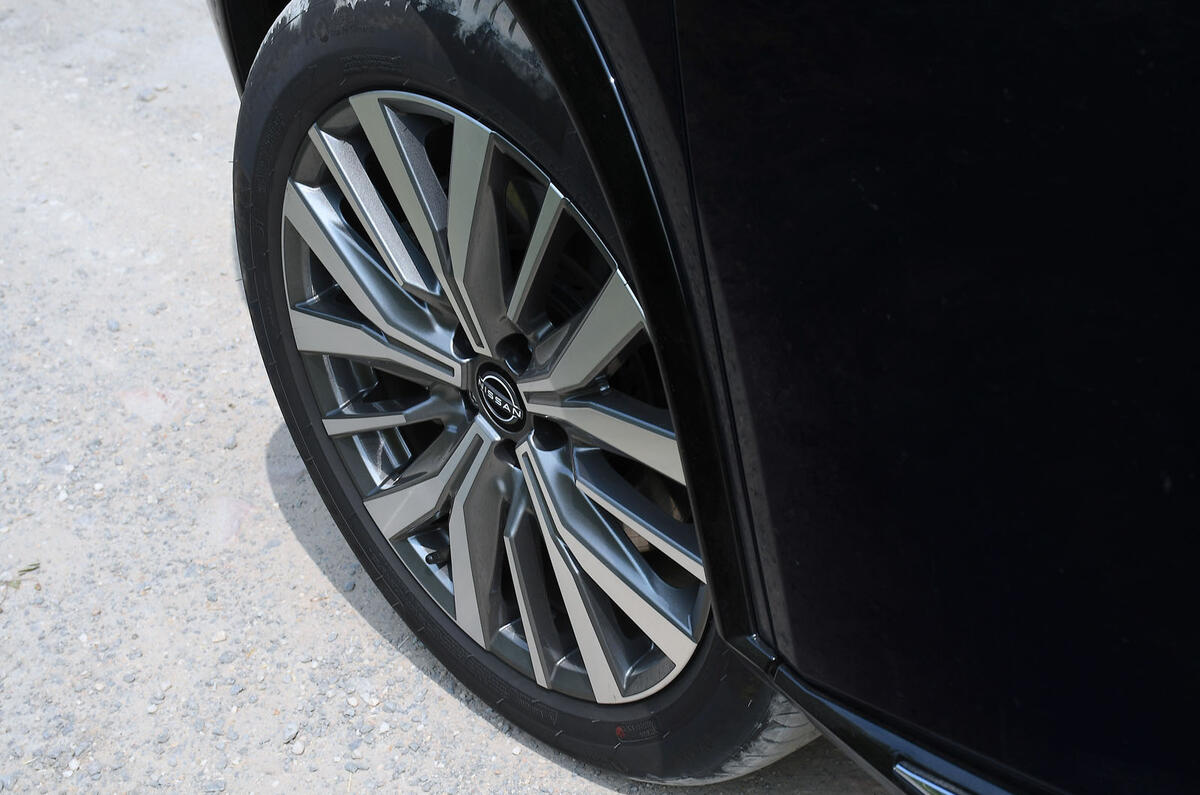
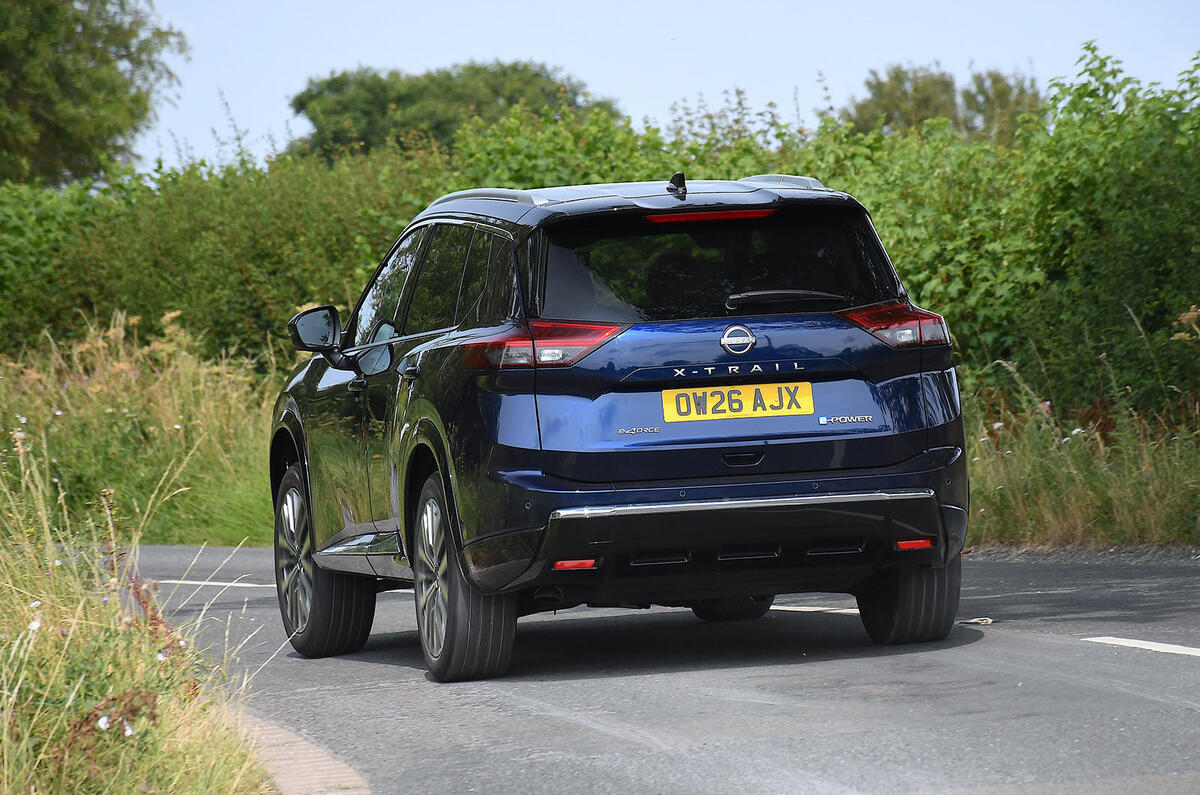
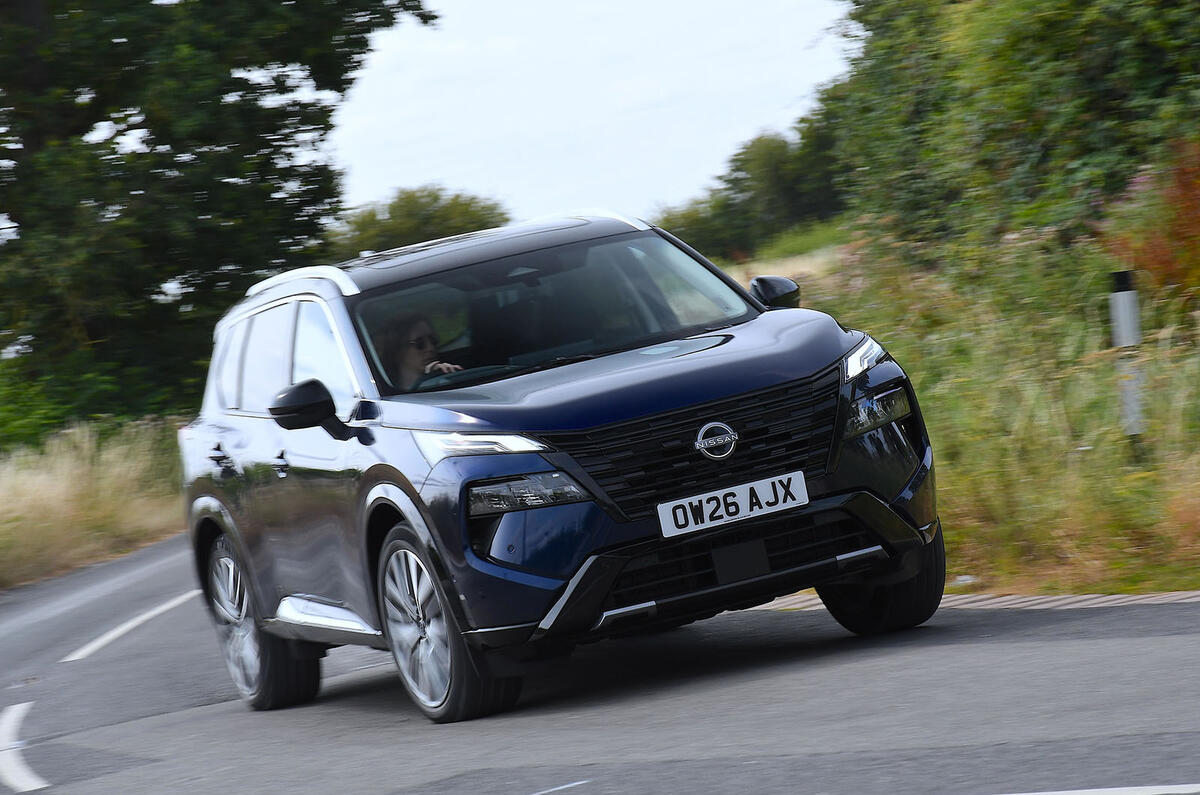
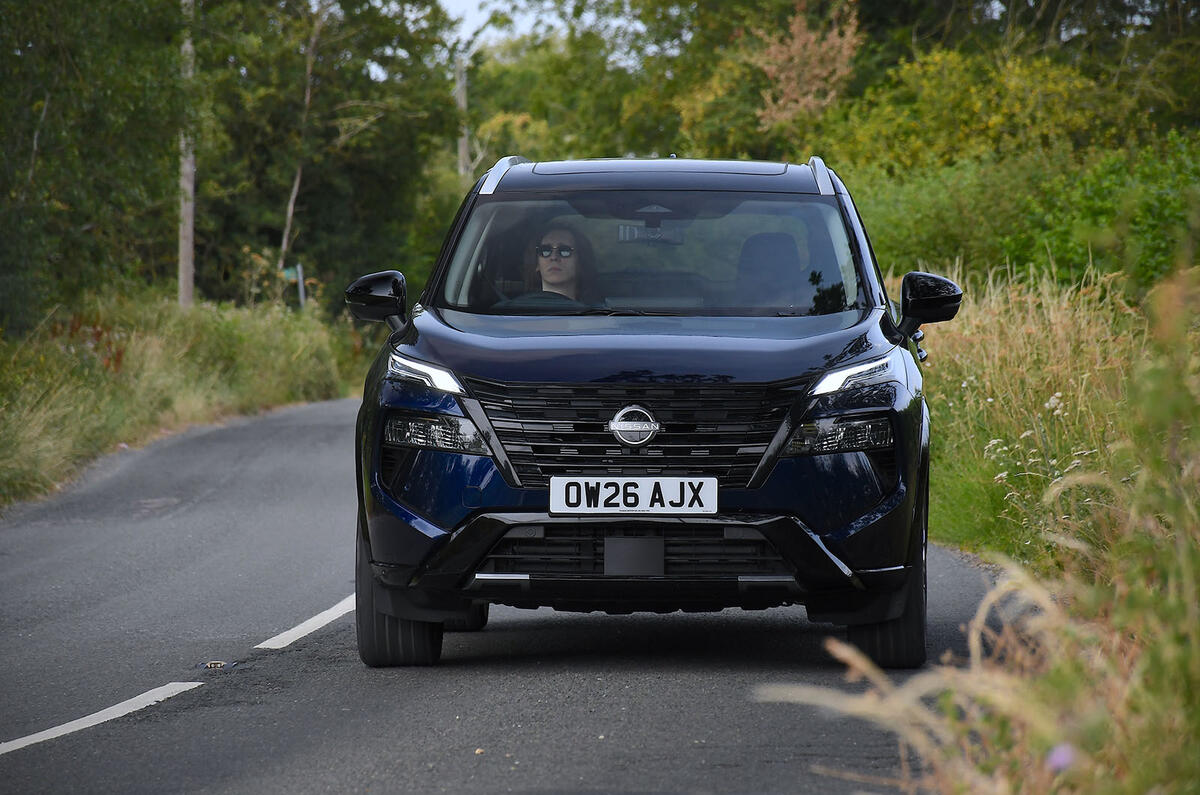
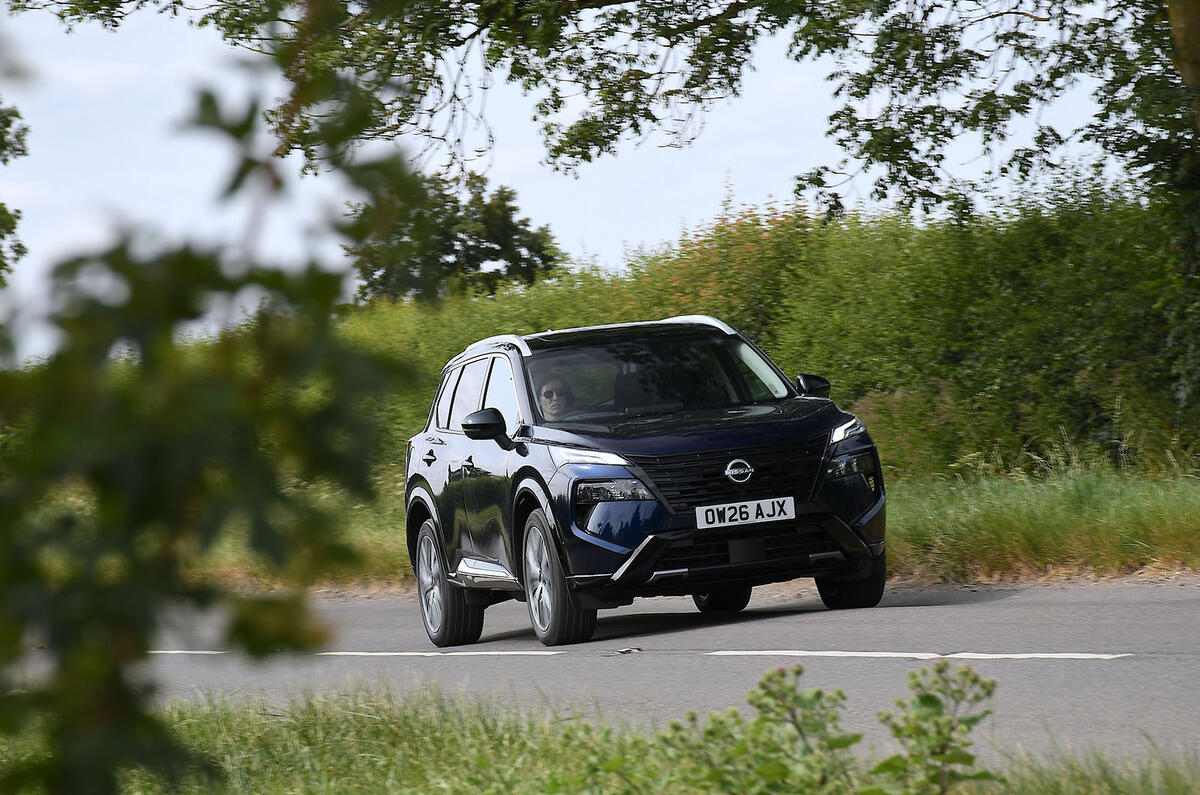
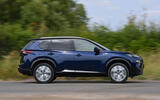
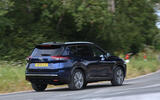
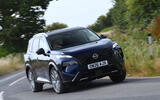
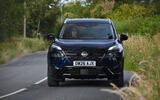
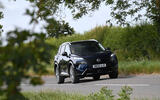
To set the X-Trail apart from its little sibling, the new T33 generation has some more off-road styling. Even so, it retains more rounded features than Hyundai’s predator-grilled Tucson and Santa Fe, and the Skoda Kodiaq, with its chiselled jaw.

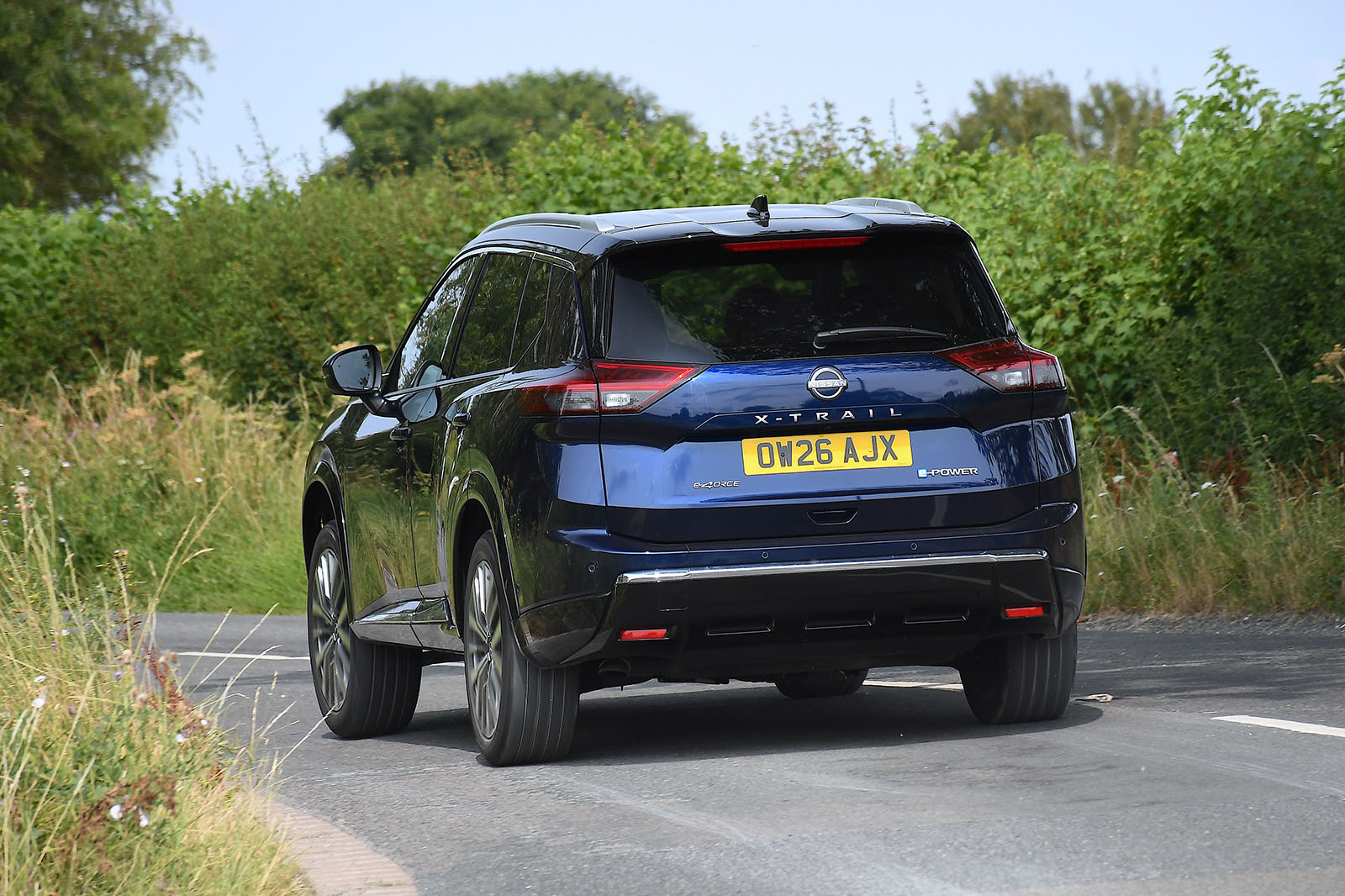
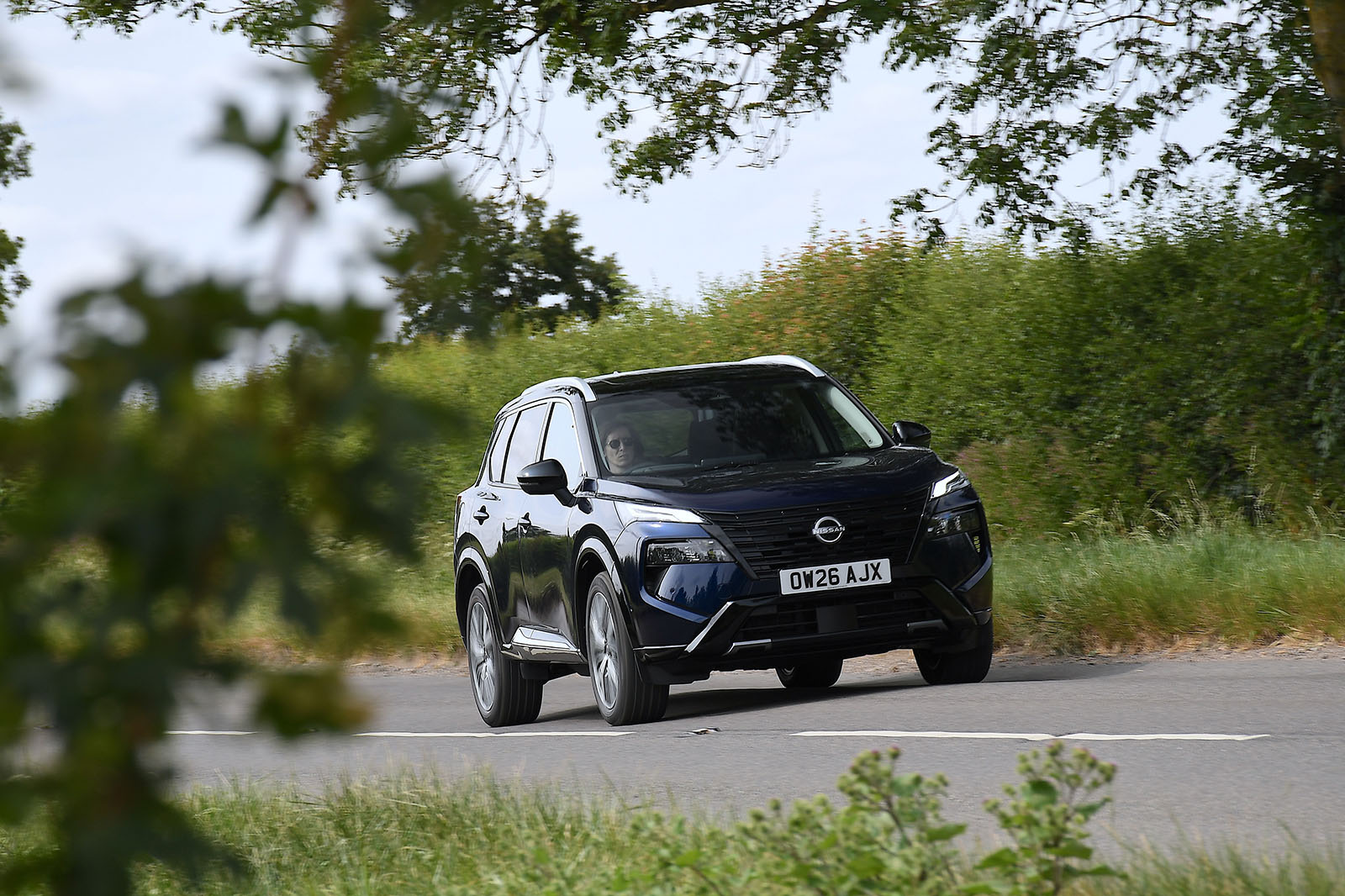
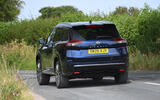
For 2026, the front-end styling has been tweaked to look slightly cleaner, there are new LED lights at the rear, and the rather classy Sukomo Blue of our test car is a new option, along with ‘Coastal Dune’.

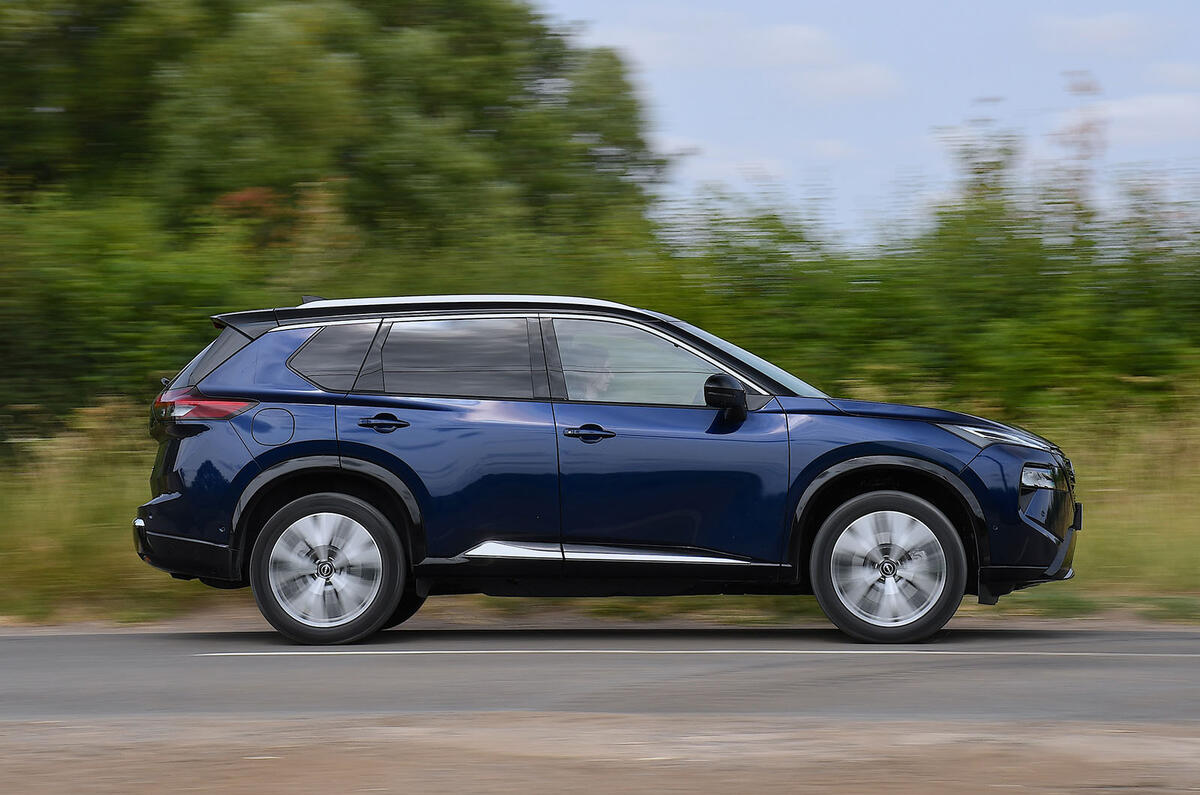
The C-pillar is reminiscent of a dolphin’s fin, says Nissan. That would check out if dolphins swam backwards. It’s less distinctive than the Qashqai’s floating pillar, but the crease over the rear wheel arch adds some interest.

Mechanically, however, the Qashqai and X-Trail are more closely related than ever. They both use the CMF-C platform, which has been developed mainly by Nissan while Renault focuses its development efforts on the CMF-B platform for smaller cars like the Nissan Juke and Renault Captur.

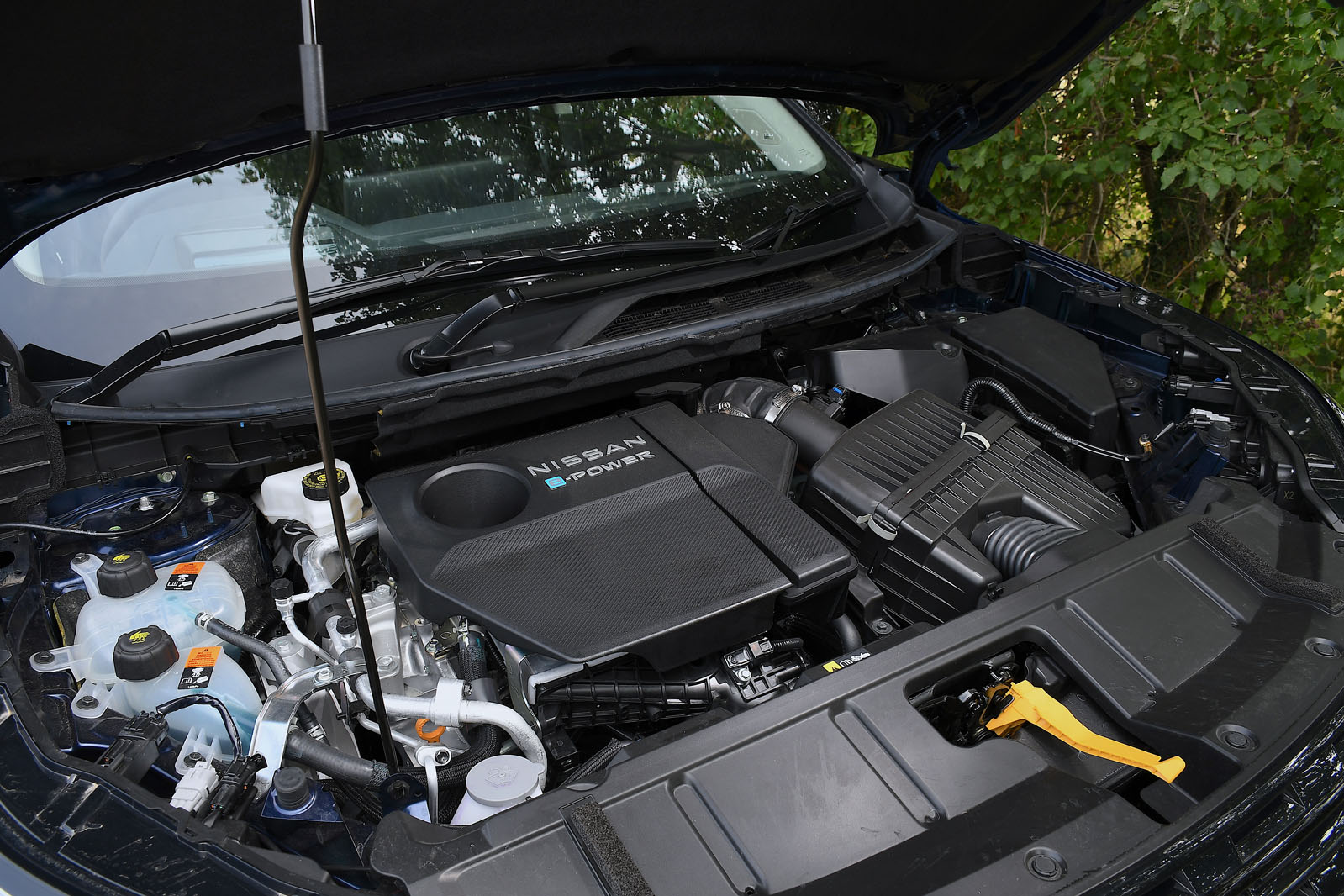
Where Nissan diverges quite significantly from its French partner is on the powertrains for its larger cars. While it borrows Renault’s E-Tech system for the Juke Hybrid, the top-line hybrid X-Trail is powered by Nissan’s own – and very different – e-Power concept. 

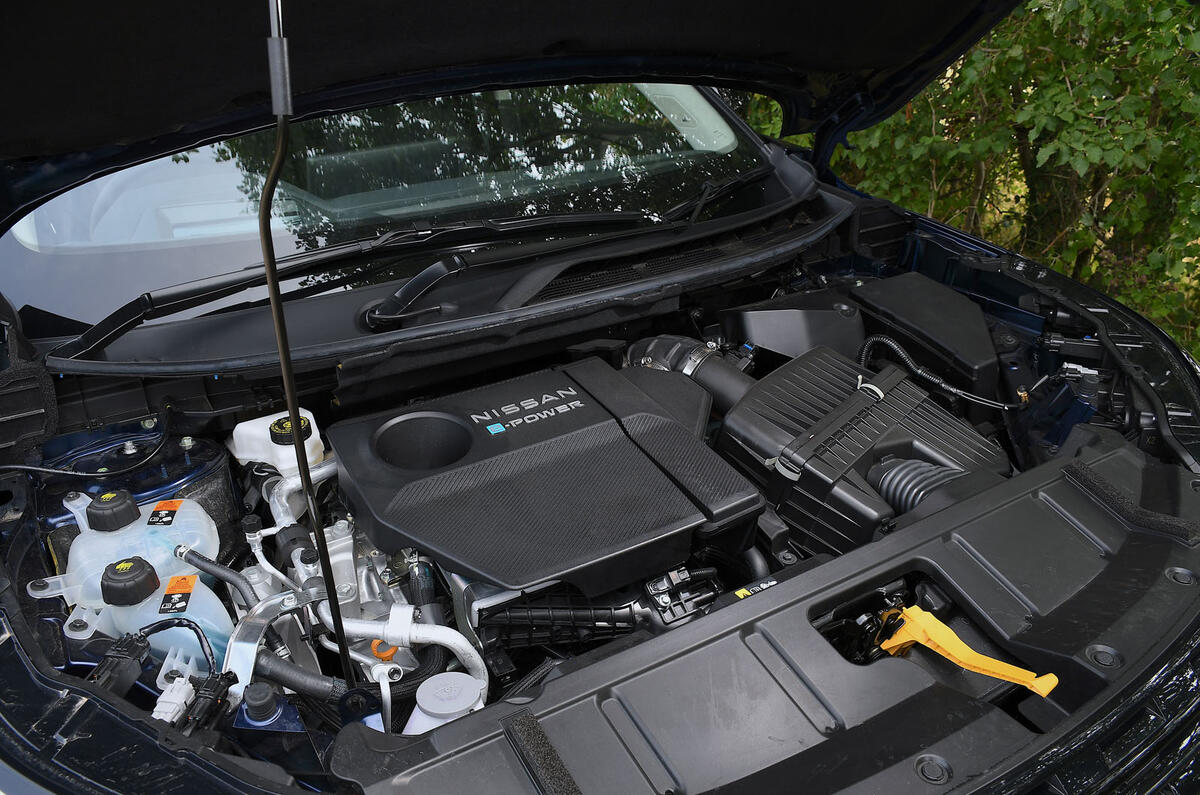
E-Power is unusual in that the petrol engine never drives the wheels. Instead, it drives a generator to charge a 2.1kWh (1.97kWh usable) lithium ion battery under the cabin floor. This in turn feeds a 201bhp, 243lb ft electric motor on the front axle in the standard two-wheel drive version.

Our test car is a four-wheel drive version called e-4orce, where an additional 134bhp, 144lb ft motor drives the rear axle. Normally, in systems where the front and rear motors operate separately, the total power output is the sum of the two, but the X-Trail tops out at only 210bhp rather than 335bhp because the battery is limited in how much it can supply.

One benefit of the e-Power system is reduced mechanical complexity: there is no multi-speed gearbox and the four-wheel-drive model can do without a propshaft. The other benefit, claims Nissan, is that the car feels like an EV to drive (including the possibility of one-pedal driving), but without the need to worry about charging.

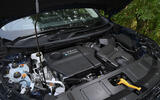
The petrol engine itself is quite fascinating, too. It is a three-cylinder turbocharged unit with a variable compression ratio, a technology Nissan initially launched on Infiniti models. The group has achieved this by putting an adjuster on the crankshaft that can shorten or lengthen the pistons’ stroke, thus changing the total swept capacity and therefore the compression ratio. It can change gradually from an 8:1 ratio under high load, to 14:1 under steady, low load. What’s more, thanks to variable valve timing, it can switch to the Atkinson cycle when cruising for even better efficiency.

Nissan has been developing the ePower concept for a while, rolling out the first generation on the Japanese-market Note. The X-Trail uses the second generation, which has more performance and stamina, and introduced the variable-compression engine. It has since debuted a third generation on the 2025-onwards Qashqai, which ditches the variable-compression engine for a simpler but more fuel efficient version. The American-market counterpart of the X-Trail, the Nissan Rogue is getting the updated system later this year, so we think it's a matter of time before the X-Trail e-Power gets a technical update as well.

For a while, Nissan also offered a mild-hybrid X-Trail for buyers on a tighter budget, although it was dropped for the 2026 facelift. It uses a version of the same variable-compression three-pot as the full hybrid, but in this application it drives the front wheels directly via a conventional continuously variable transmission. As it is only a 12V mild-hybrid system, the belt-driven starter-generator serves mainly to smooth out the start/stop system, though it can also provide a 4.4lb ft boost under acceleration.

INTERIOR

8
Nissan X Trail review 2026 005

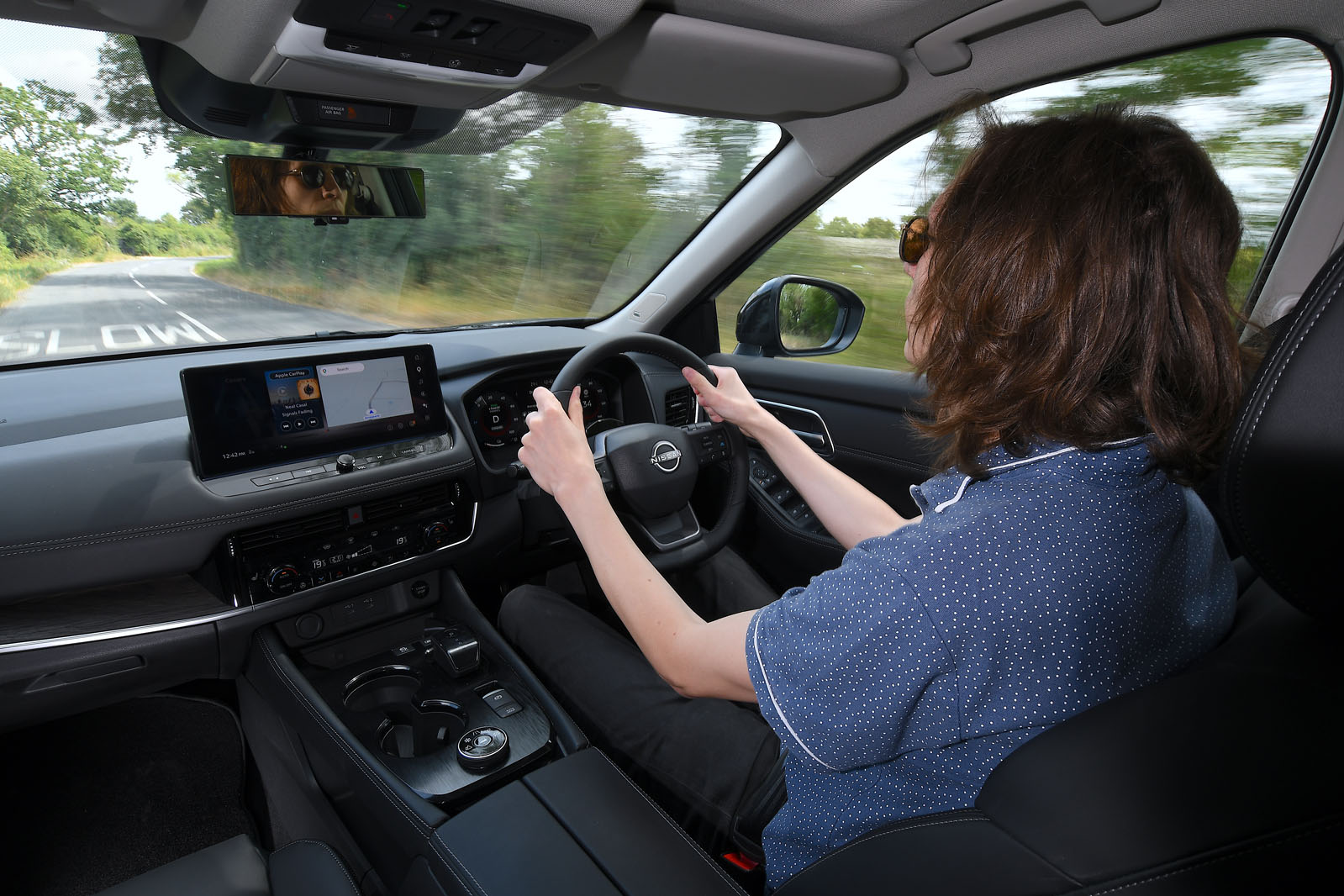
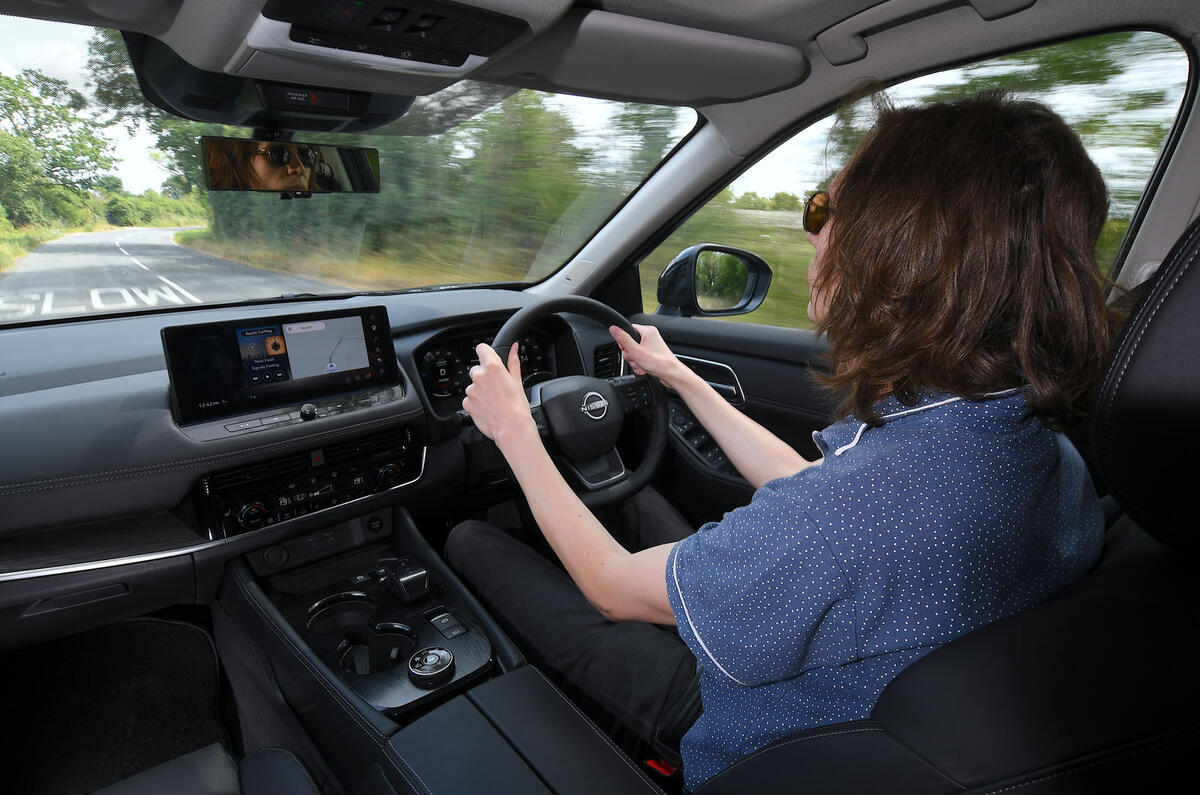
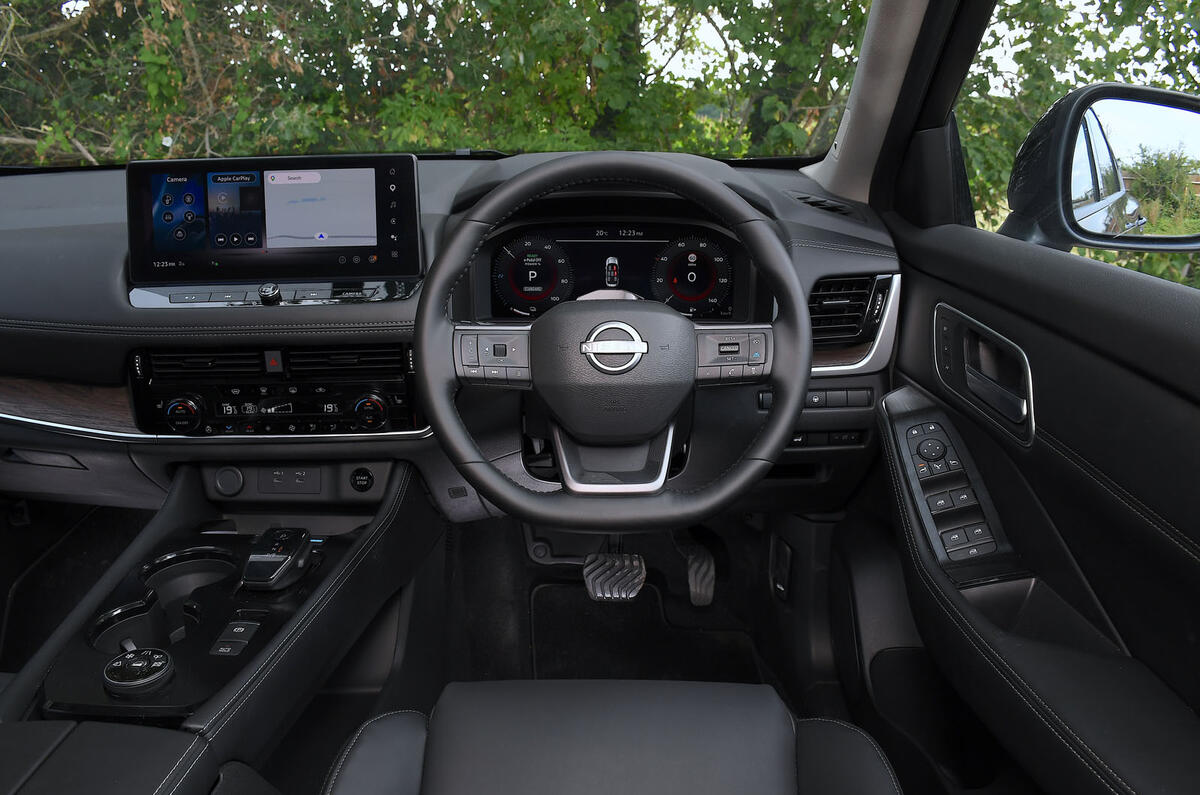
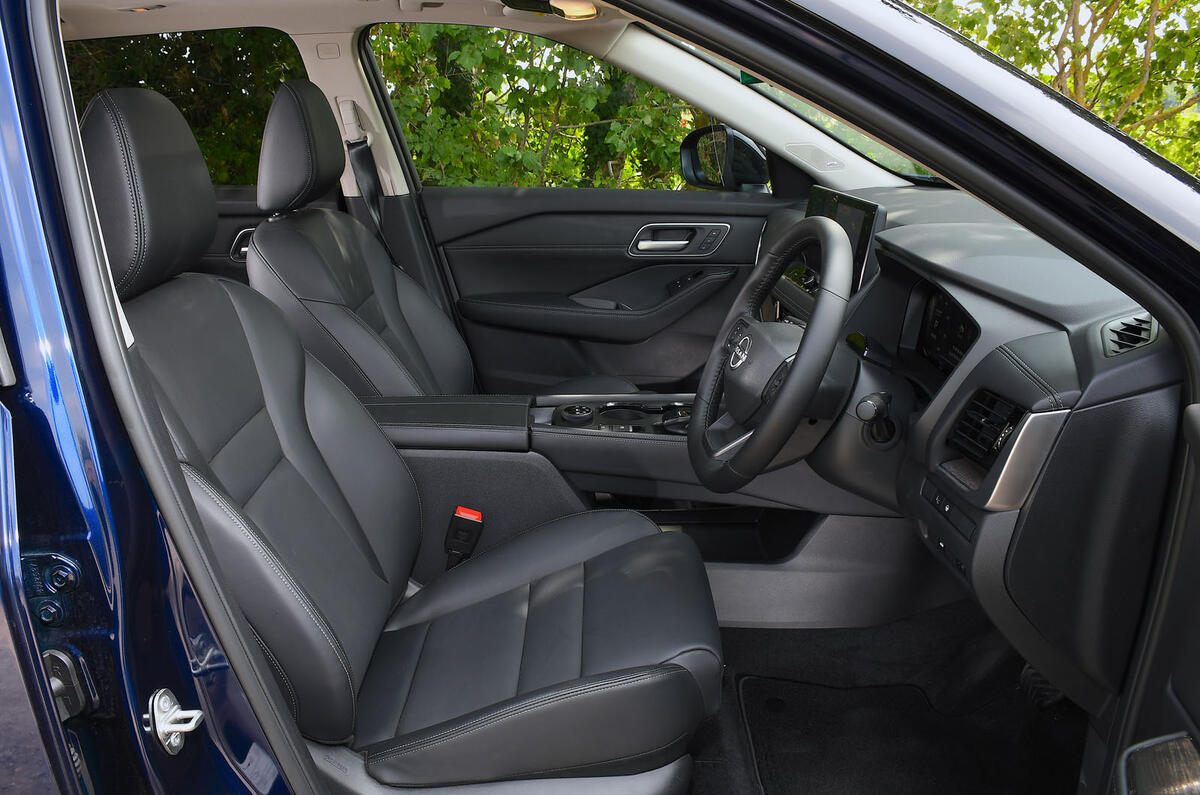
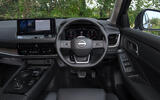
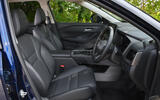
Up front, it’s mostly Nissan Qashqai. Save for some different colours and a new pattern for the piece of trim on the passenger side, the dashboard is the same as in Nissan’s smaller SUV. You might hope to get a bit more for the price premium over the Qashqai, but frankly there is very little to genuinely complain about.

Other cars have a more avant-garde style, but the X-Trail hardly looks dated. There are soft-touch materials as far as the eye can see, and the practical usability is far more carefully considered than in most modern cars. The climate control panel uses all chunky, physical buttons and there’s very little fingerprint-attracting glossy black plastic. 

Nissan is a bit too keen on synthetic leather for my taste. Only entry-level Acenta gets fabric, and you have to pay £1000 extra on Tekna+ to get leather (brown or black). Elsewhere, pleather in mandatory.

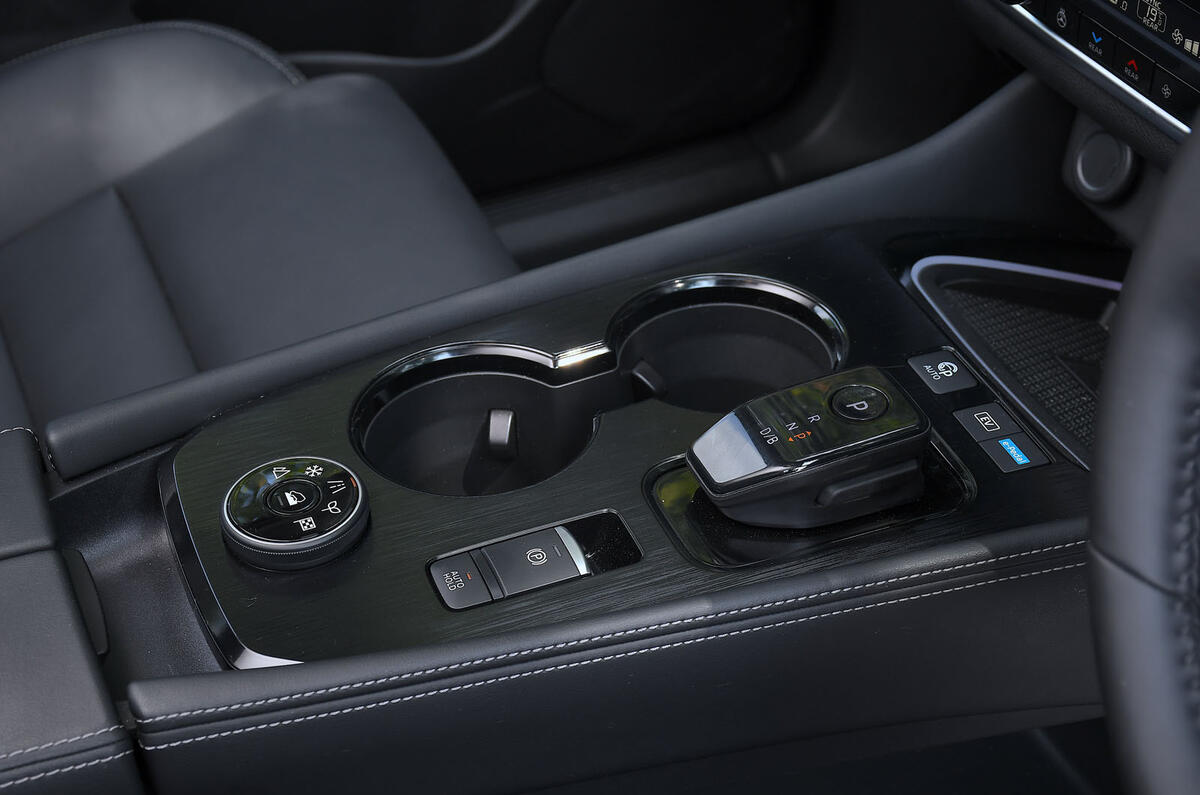
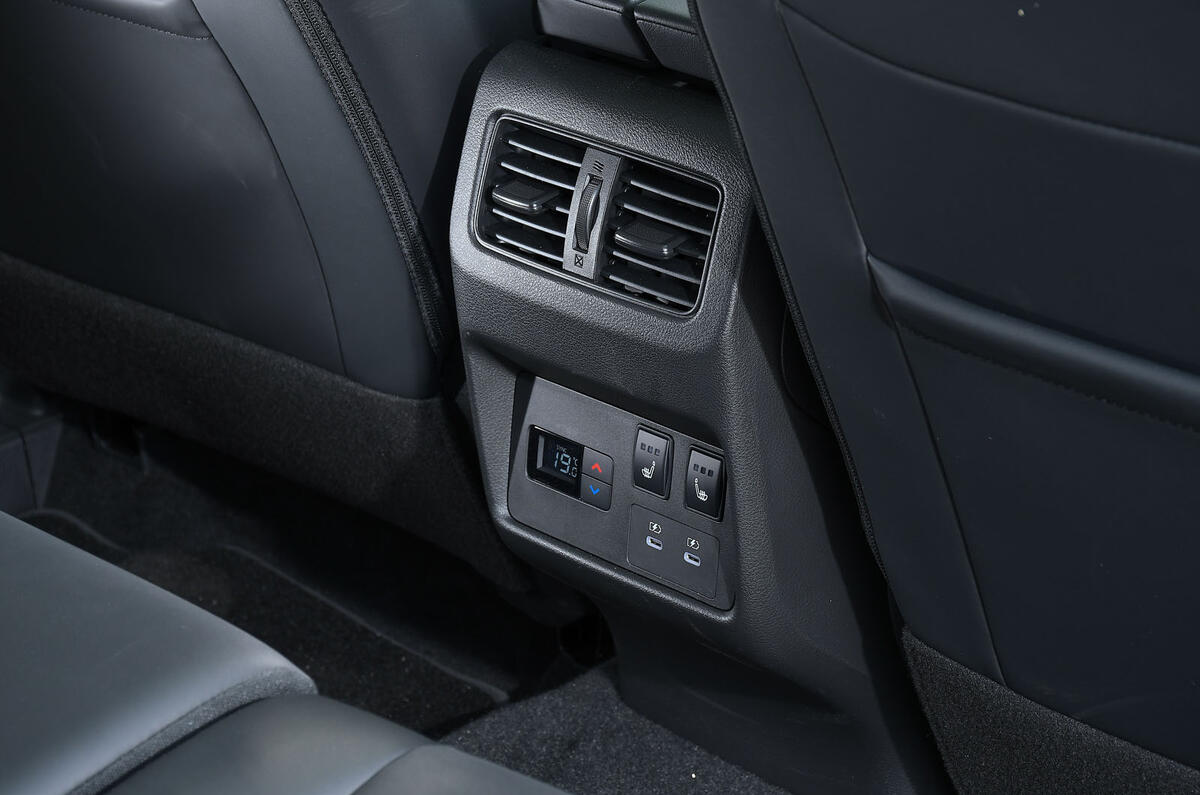
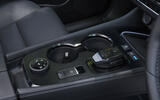
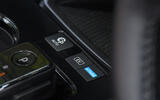
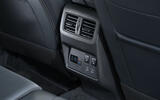
The centre console is the biggest change from the Qashqai. It is a floating design with space beneath. On top, there are generous cupholders, a wireless phone charger, a 12V socket, a USB-A port and a USB-C port. The rear seats also get a USB-A and USB-C port.

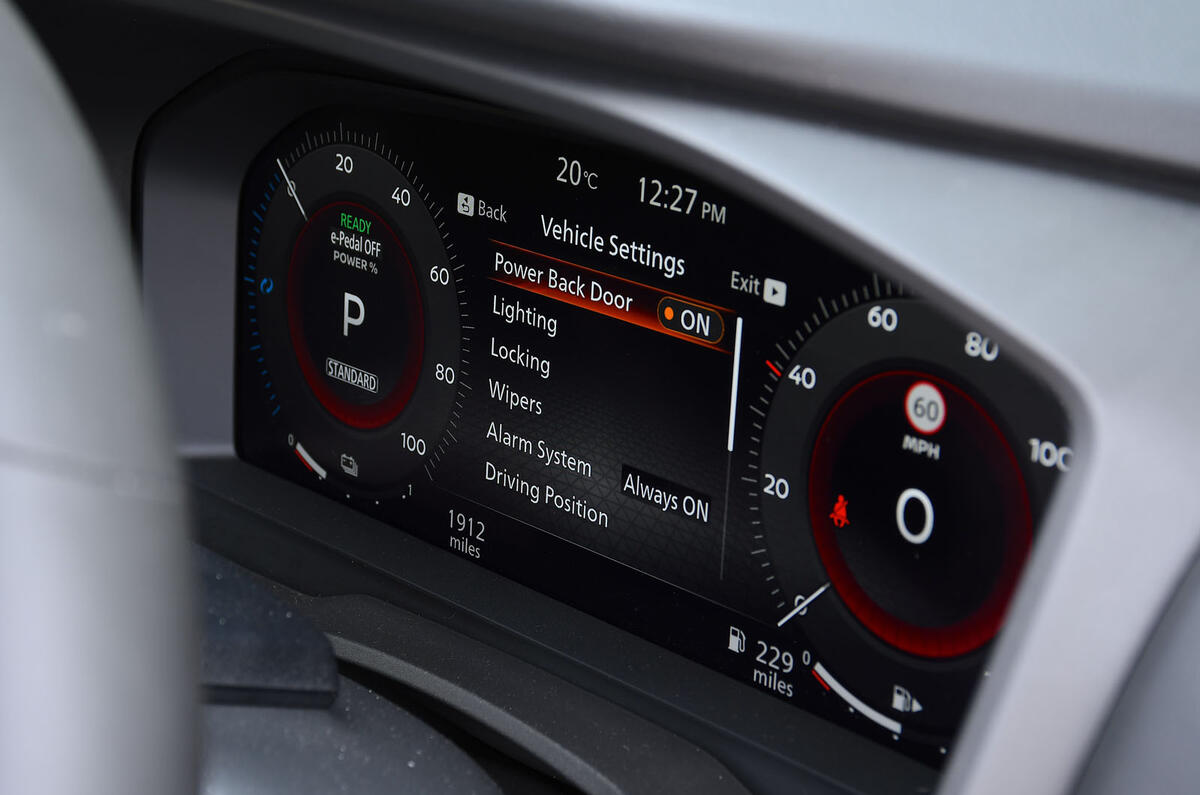
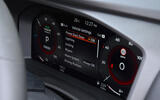
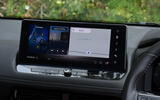
Low-end trims on early cars got a simpler infotainment system and analogue gauges, but the vast majority of X-Trails come with the same 12.3in infotainment system and 12.3in driver display. The latter isn’t hugely configurable but it makes good use of space and is very clear.

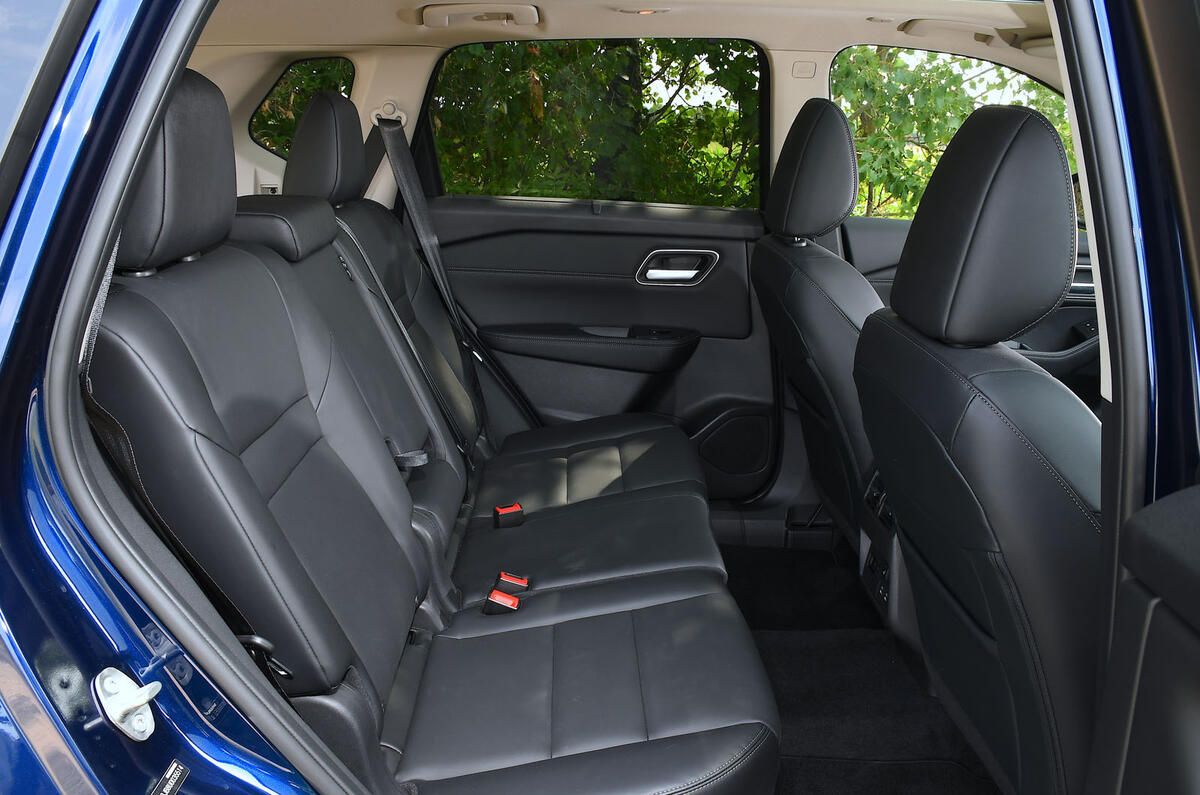
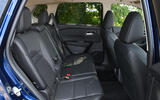
The X-Trail is a brilliant place to be if you’re in the front because the seats are outstandingly comfortable, at least on the high-spec Tekna trim cars we've tested. They're soft but supportive, with lots of adjustment. However, things are less rosy for rear passengers, which is a little disappointing for a family SUV. Those in the second row have more than enough leg- and headroom, but because the hybrid battery is under the cabin, the floor is pushed up and rear passengers will find themselves sitting with their knees up, like in some EVs. They do at least get their own zone for the climate control.

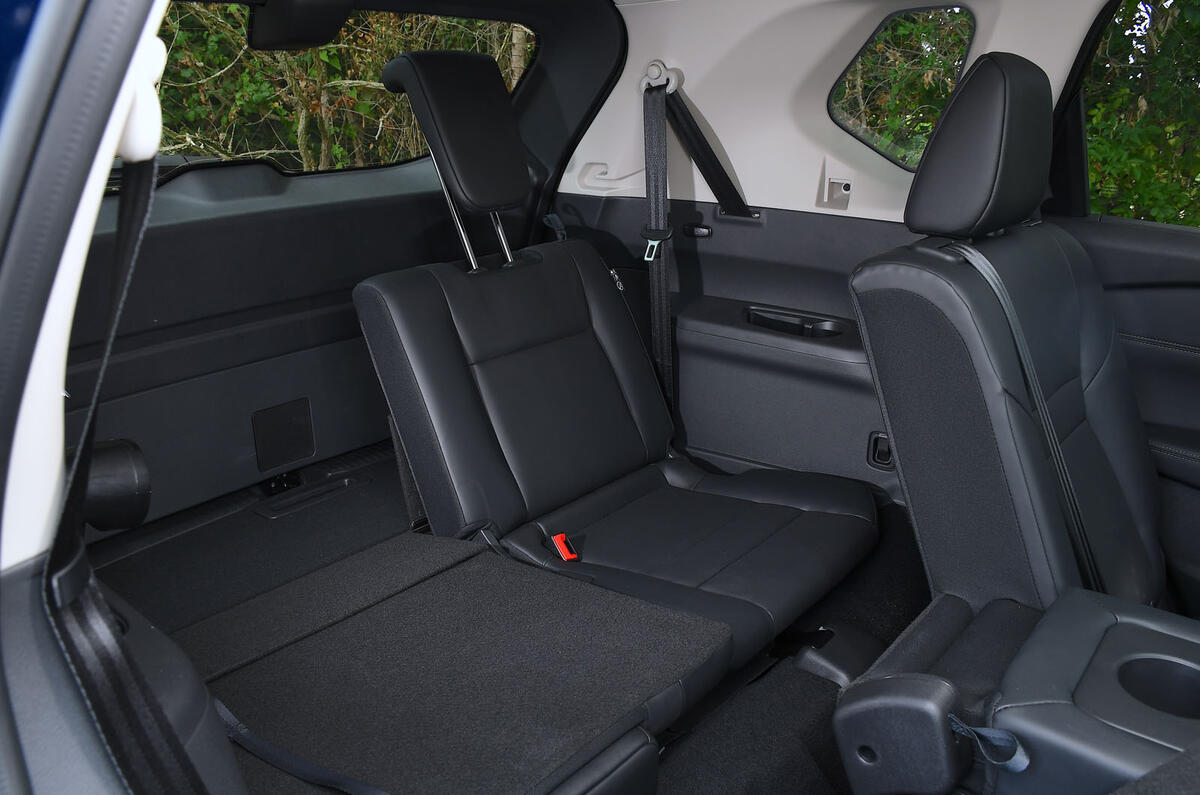
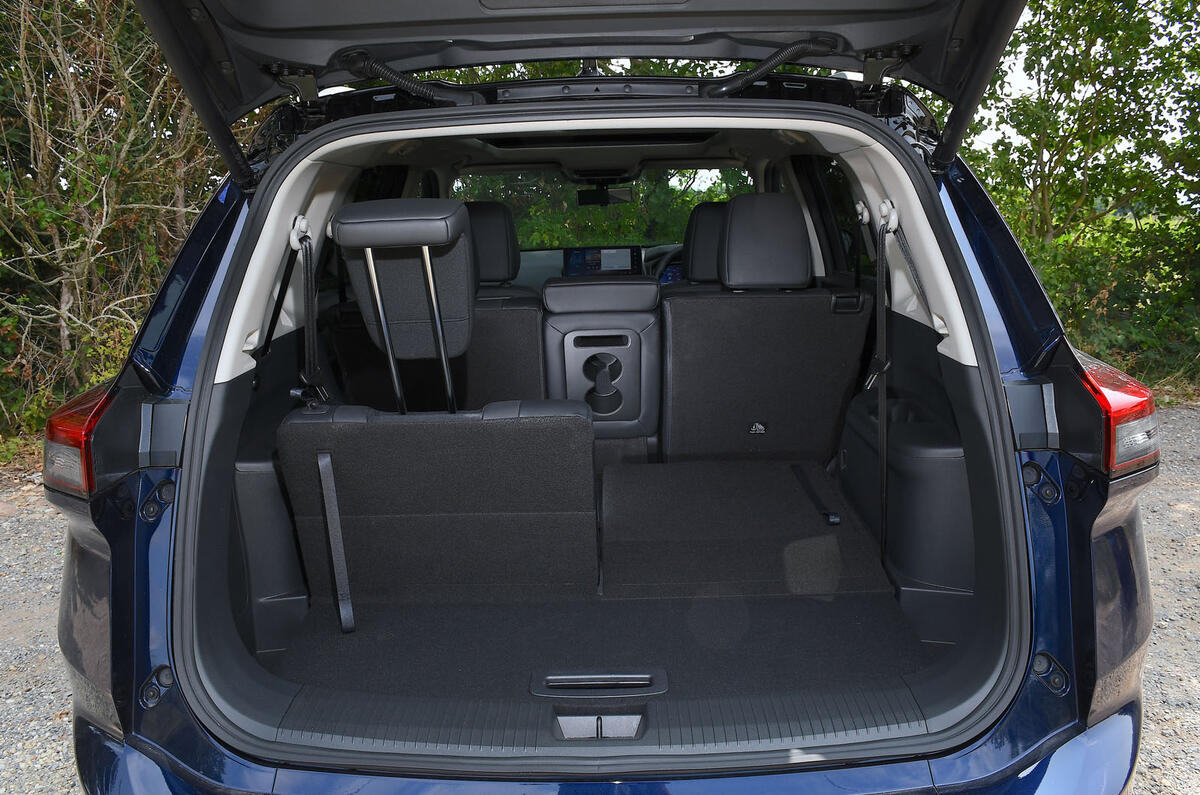
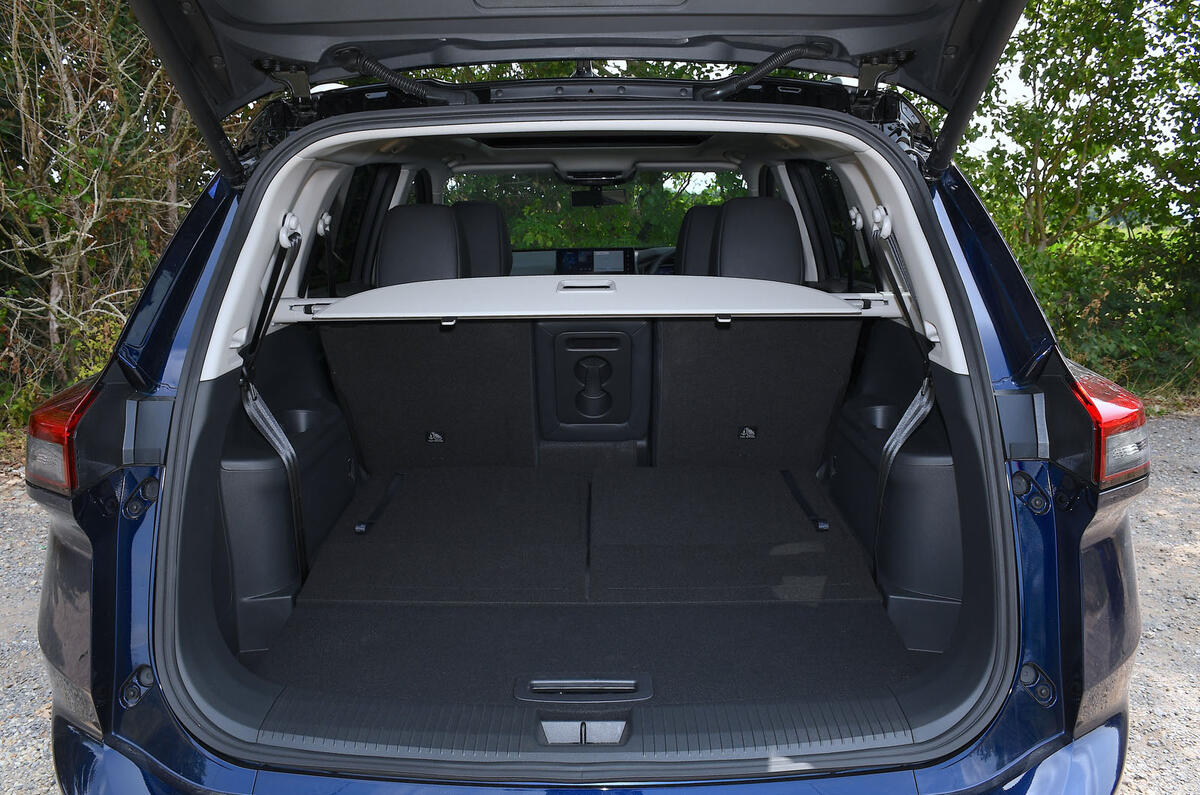
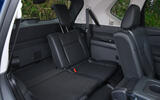
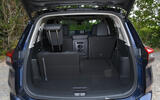
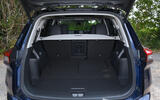
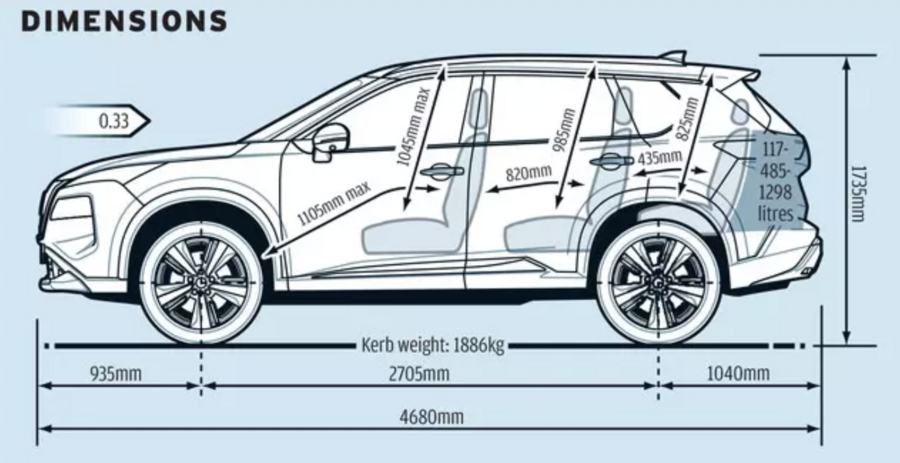
A third row of seats is available as a £1000 option, but those rearmost places should be viewed as emergency seating at best. If you want to make the rearmost seats in the X-Trail usable, even for small children, you have to slide the second row forwards quite a lot. It is worth reiterating that the X-Trail is a smaller car overall than a Kia Sorento or Skoda Kodiaq and is more comparable with the Toyota RAV4 and Kia Sportage, so it might be unreasonable to expect it to offer seven proper seats. It might be best not just stick with the five-seat version and enjoy its 575 litres of boot space (485 in the seven-seat version with the third row down).

Multimedia system

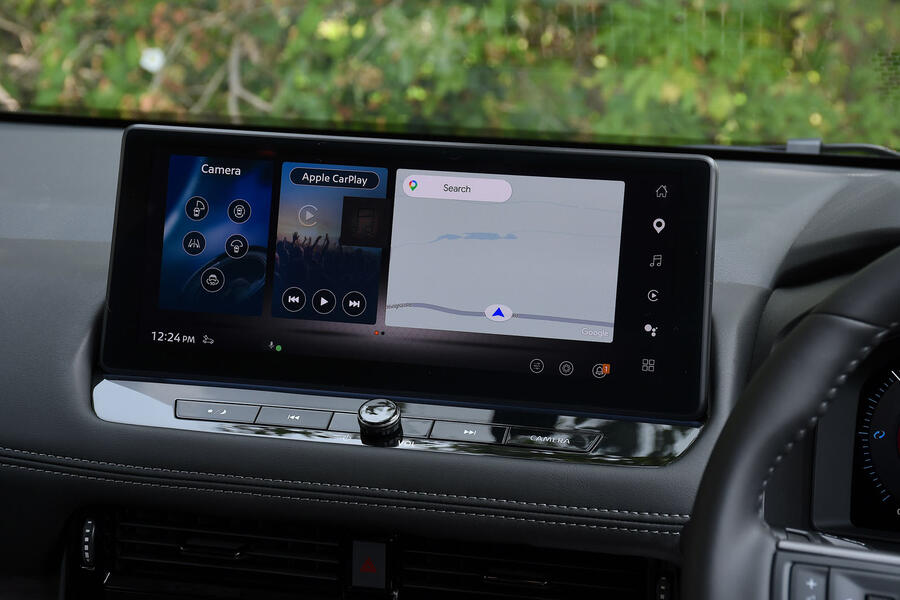
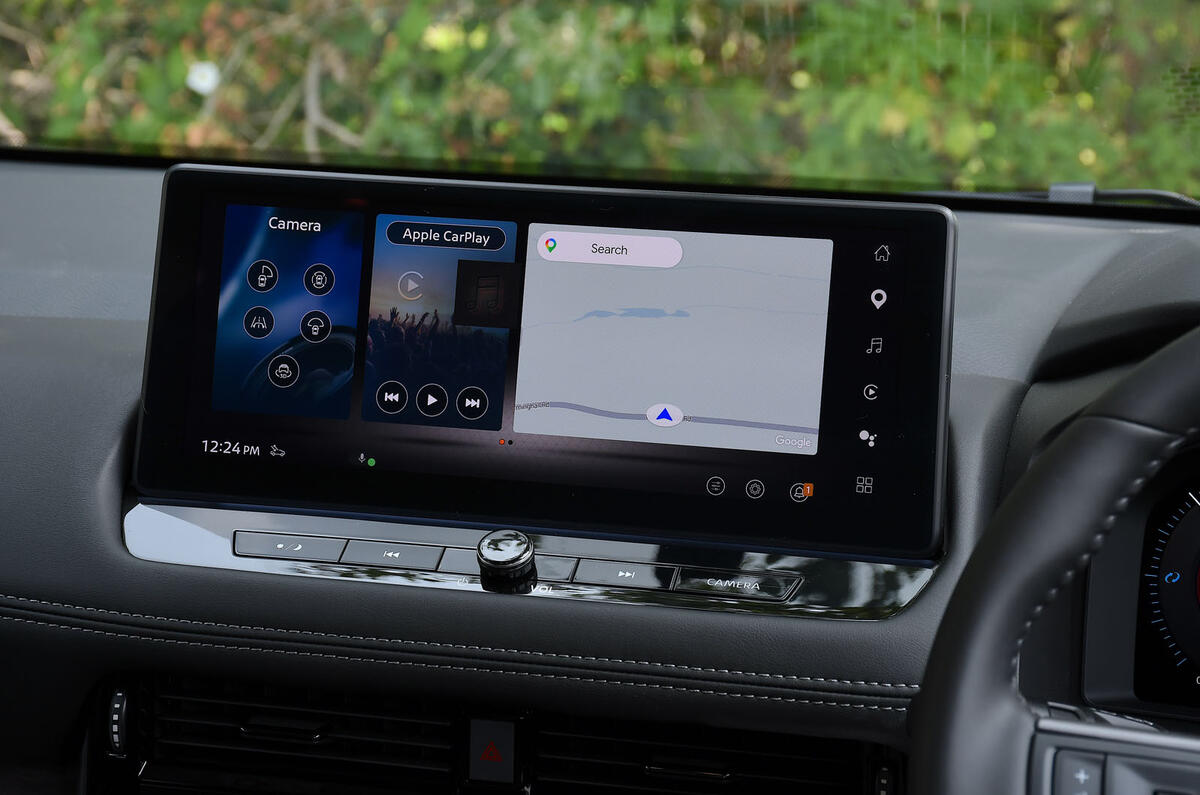
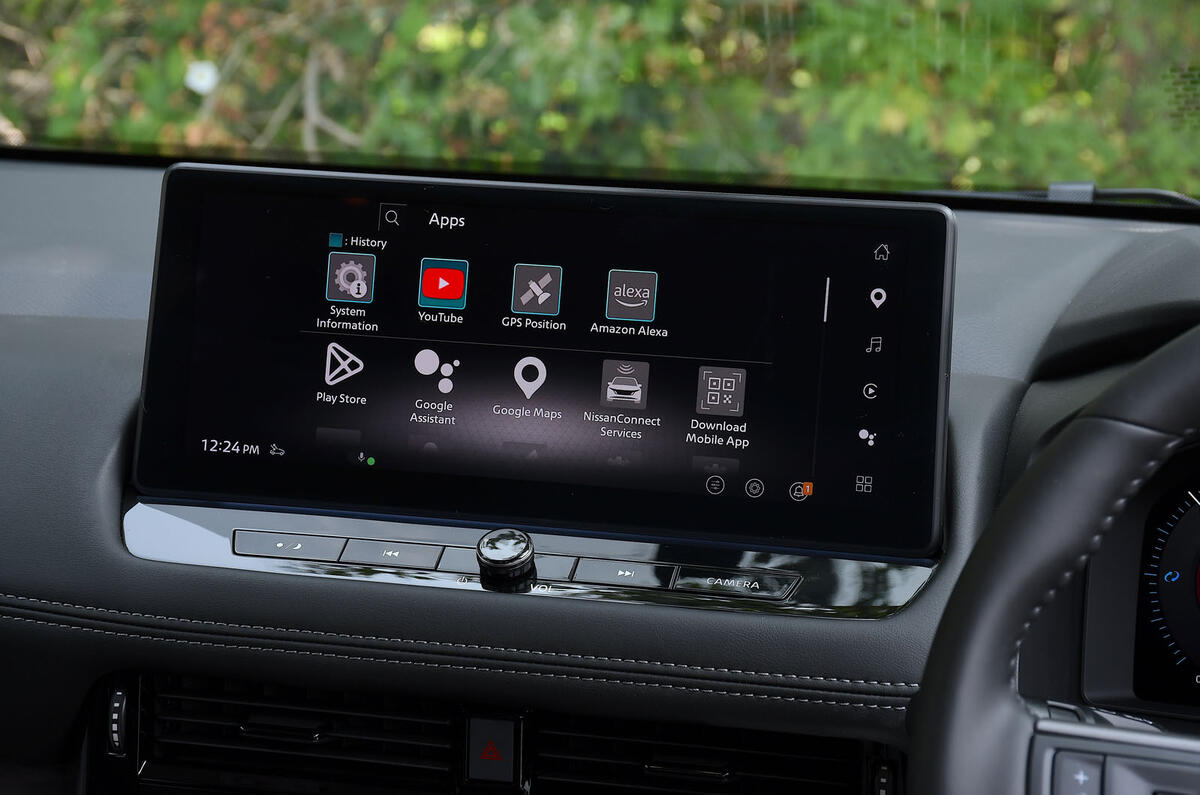
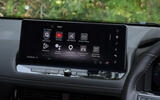
The X-Trail's infotainment system isn't the fanciest or graphically modern interface around, but it actually works very well. The graphics are sharp and the screen boots up and responds quickly. There’s a permanent bar of shortcuts on the right side of the screen as well as a physical volume knob and buttons for the tuning and for switching between day and night mode.

The software is logical and you can customise the home screen. The navigation is the original version was decent, but for the 2026 facelift, it was upgraded to Google Maps, which is very hard to beat. Nevertheless, there is still wireless Apple CarPlay and wired Android Auto.

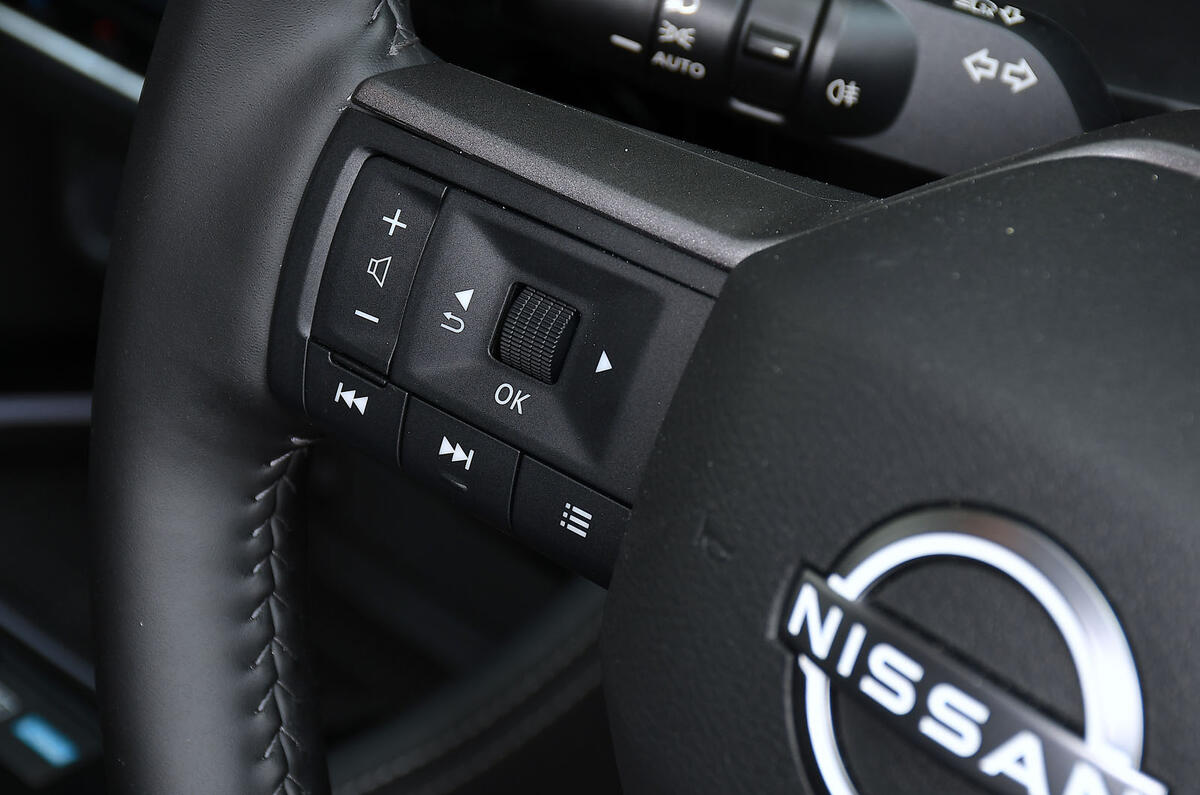
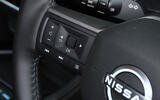
One strange quirk is that the most of the vehicle settings have to be adjusted through the gauge cluster, using the steering wheel buttons, rather than the touchscreen.

ENGINES & PERFORMANCE

9
Nissan X Trail review 2026 021

When we last road tested an X-Trail, it was 2014 and small-capacity diesel engines were all the rage. Thanks to the hybrid drivetrain, today’s X-Trail has a lot more power on tap.

But our e-Power e-4orce (which means it has four-wheel drive) test car's big hybrid battery also adds a lot more weight: Nissan claims 1886kg and our test car even tipped the scales at 1947kg.

If you want to tow, you’re best off with a five-seat mild hybrid, because it’s rated for 2000kg. The 4WD full hybrid isn’t bad either, at 1800kg. The seven-seaters can tow slightly less, and the front-drive full hybrid can pull only 670kg.

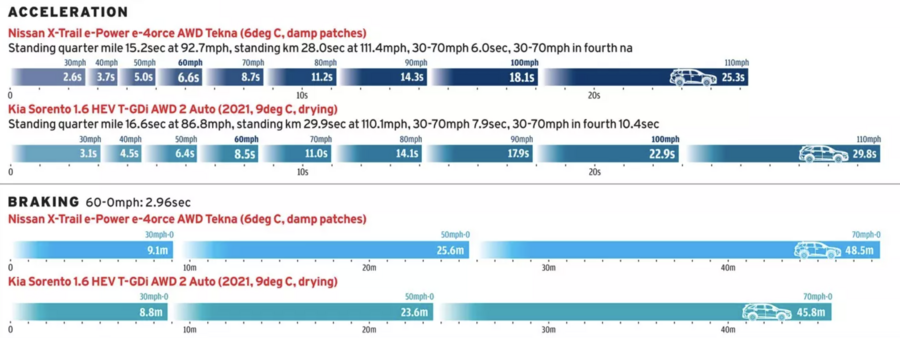
Despite that weight, the X-Trail e-4orce sped to 60mph in just 6.6sec – 4.6sec faster than the diesel from nine years ago. More to the point, it’s considerably quicker than the hybrid versions of the Sportage (7.3sec) and the Sorento (8.5sec) and the Toyota Highlander (8.5sec). It’s not even that far behind the vRS version of the Kodiaq (5.9sec).

Clearly, the hybrid X-Trail offers more than enough performance. More important is the way the car delivers it, and that’s where hybrids can often come unstuck, with wailing CVTs and awkward handshakes between engines and motors. Nissan makes the bold claim that e-Power provides the “EV-drive feeling without the need to recharge”.

The X-Trail gets very close indeed, making it a more pleasant system than Toyota’s. Because the wheels are only ever driven by electric motors, power is generally instant, linear and very quiet. The engine is often running to top up the battery, but it must be smothered in insulation because you wouldn’t know.

It doesn’t completely carry off the EV sensation. Ask for more than, say, 75% power or repeatedly demand strong acceleration and the engine will need to start working harder to generate enough energy to power the motors and keep the battery topped up. At this point, it will maintain a high RPM and you will be able to hear it in the cabin. It’s not an unpleasant noise, and there is enough power in reserve that most of the time you can do without that last 25%. If you floor the throttle in one go, it will take a second before the drivetrain delivers full power, but equally, 80% is plenty for any situation.

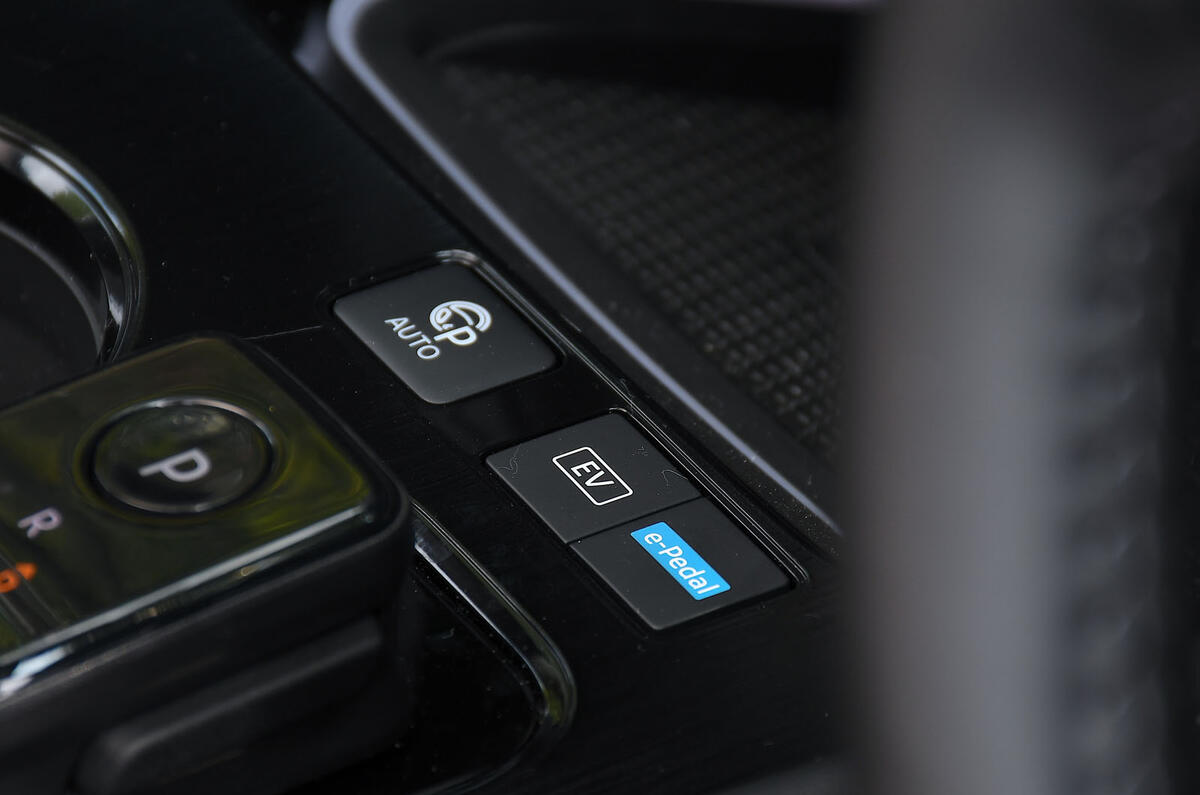
Another upshot of the X-Trail’s mechanical layout is that it has regenerative braking just like an EV. As standard, there is very little regen effect when you lift off the throttle. Engaging ‘B’ mode on the drive selector increases it noticeably and pressing the e-pedal button makes it even stronger. It’s very intuitive but you’ll still need the brake pedal to come to a complete halt, which is a bit of a missed opportunity. Thankfully, that is very progressive as well, making smooth stops a doddle.

We have also tested the now-discontinued mild-hybrid version more briefly. It employs the same engine as the e-Power model but uses it to directly drive the front axle via a CVT, rather than as a generator. In practice, the two-tonne mild-hybrid X-Trail drives well, offering decent engine responsiveness, if not the same immediate torque as its e-Power sibling. The CVT is also smooth, if slightly laggy at times, especially when significantly more power is called for, such as when overtaking or merging. Its accelerator pedal has more resistance and its brakes are a tad less snappy at lower speeds.

RIDE & HANDLING

9
Nissan X Trail review 2026 022

Few people buy a seven-seat SUV for how it handles, but it’s satisfying nonetheless that the X-Trail's steering has reassuring but natural weight as well as very good precision, albeit little feel or feedback to speak of. It self-centres more strongly than most car steering systems do and testers were divided about whether this is a welcome trait or not.

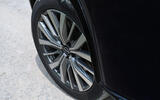
We've tested X-Trails on both Hankook Ventus S1 Evo3 SUV tyres (a surprisingly sporting choice for a family SUV) and Michelin Primacy 5 tyres, and with either option, the X-Trail musters good grip in the wet and dry, as well as responsive turn-in. Were you to carry a bit too much speed in to a corner and run wide, then a decisive lift of the throttle will correct your line very neatly.

The X-Trail uses the Nissan-developed CMF-C platform that is shared with the Qashqai and Renault Austral. Weight distribution of our dual-motor, four-wheel-drive test car was 55% front, 45% rear.

In the e-Power test car, purely electric propulsion means instant torque, which can be too much for some traction control systems to deal with, but again the X-Trail performs faultlessly, and we never experienced any clumsy or intrusive actions from the safety systems. Even when provoked on the test track, the stability control very neatly kept the car pointing the right way. Our four-wheel drive test car also felt nicely balanced on the power.

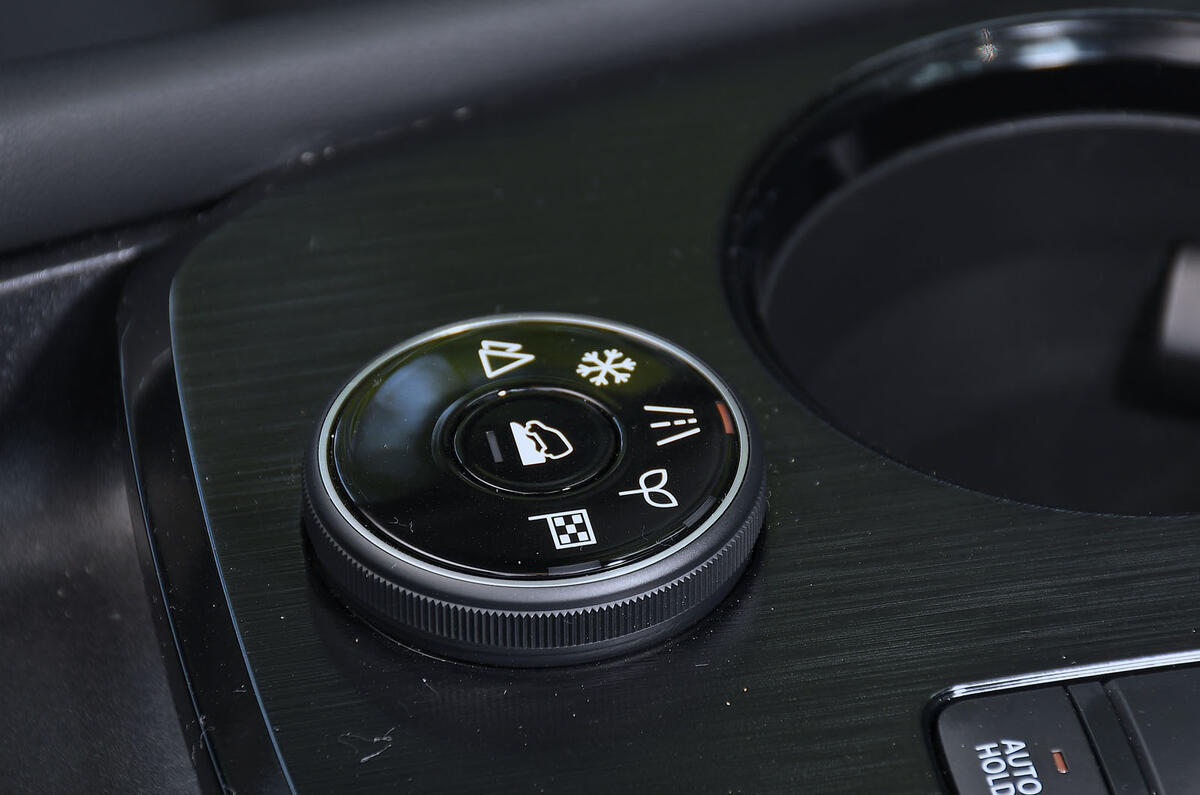
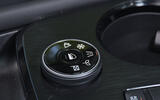
The four-wheel-drive model has a rotary drive mode switch with Off-road and Snow modes, in addition to the usual Eco, Normal and Sport modes. While we didn’t attempt any challenging off-roading, the X-Trail coped fine with a muddy path, but the aerodynamic flaps in front of the front wheels did scrape when doing a three-point turn on a moderately steep verge.

Comfort and isolation

The X-Trail’s EV-like weight doesn’t seem to hurt its handling too much, but on the flip side it does suffer from a kind of restlessness to the ride that we often see on electric cars. Despite tallish tyre sidewalls, the X-Trail just doesn’t deal with short imperfections especially well and it’s a bit crashy at low speed.

Comfort does improve with speed, making the X-Trail a generally very relaxing long-distance cruiser. Potholes that would send a jolt through the structure of many cars are shrugged off, and the car takes long-wave bumps in a very relaxed manner, although there is a hint of floatiness. It magnifies the contrast with the low-speed ride, which is unfortunate.

The seats contribute to the overall picture of comfort. They’re lifted from the Qashqai and are just as soft but supportive as in that car. The driving position is spot on too, with plenty of adjustment, which gives you the choice of whether you want to sit fairly low or elevated.

On noise refinement, the X-Trail puts in only an average performance. At lower speed, there’s a fair bit of suspension noise, and on the motorway, more road noise finds its way into the cabin than in rivals. We recorded 69dBA at 70mph, versus 66dBA in the Sorento HEV AWD and the RAV4 PHEV.

Assisted driving notes

Adaptive cruise control and blindspot assist are standard across the range, but to get Nissan’s full assisted driving suite, called ProPilot, you must upgrade to at least Tekna trim. That adds active lane following, automatic speed limit adjustment and Navi-Link, which will slow the car for bends.

The adaptive cruise control was supposedly improved for the 2026, but we didn't notice an obvious difference. In any case it's one of the better such systems as it's generally fairly smooth and anticipates reasonably well, with very smooth automatic lane following that can be turned on and off using a physical button. We would have like to see an option to switch to normal non-adaptive cruise control, though.

Navi-Link is best disabled, as we’ve yet to find a curve on the motorway that can’t be taken at 70mph. The automatic speed adjustment is best kept on the setting that waits for you to confirm before changing the speed, because the speed sign recognition is better than most but far from infallible. We didn’t have any false warnings from the collision avoidance.

The mandatory safety systems, including the lane-keep assist, driver monitoring and overspeed warning are typically irritating, but can all be switched off very easily in one go with just a few presses of the steering wheel buttons.

MPG & RUNNING COSTS

7
Nissan X Trail review 2026 001

The X-Trail straddles the segments. It's bigger and more expensive than an equivalent RAV4 or Sportage, but slightly smaller and cheaper than the Sorento and Skoda Kodiaq. As such, it's fairly well-priced.

Being a hybrid, you'd expect it to be very economical, but in that respect, it is a little disappointing. Over the course of a week, fuel consumption settled in the high 30s, which is decent enough for a large SUV and similar to what you can expect from a Kia Sorento Hybrid, but nothing special either. The related (but smaller) Qashqai has a newer version of the same e-Power hybrid system, and easily manages 50mpg.

Spec advice? Mid-range N-Connecta gets the better infotainment system, so we’d go for at least that. Tekna brings quite a lot of upgrades such as heated seats, a 40/20/40 folding second row, the full ProPilot and a head-up display. Annoyingly, it also gets saddled with leatherette seats.

The X-Trail is somewhat meanly equipped. You have to go for the top trim to get heated seats, and ventilated seats or matrix headlights aren’t even an option.

VERDICT

Nissan X Trail review 2026 025

First with the Qashqai and now with the larger X-Trail, Nissan seems to be on a bit of a roll with cars that aren’t flashy but just work.

We have a few reservations. The interior should be a bit more accomodating for rear passengers, and the fuel economy from this generation of e-Power hybrid system is nothing special.

However, fundamentally the X-Trail is a relaxing, frustration-free place to spend time thanks to sensibly laid-out controls and, in the hybrid, a powertrain that doesn’t require any managing from the driver yet musters a surprising amount of performance when called upon. It also handles gamely for a big family SUV and is fairly well-priced. If you're after a big SUV with occasional space for seven, the X-Trail is highly recommendable. 

Illya Verpraet

Illya Verpraet Road Tester Autocar
Title: Road Tester

As a road tester, Illya drives everything from superminis to supercars, and writes reviews and comparison tests, while also managing the magazine’s Drives section. Much of his time is spent wrangling the data logger and wielding the tape measure to gather the data for Autocar’s in-depth instrumented road tests.

He loves cars that are fun and usable on the road – whether piston-powered or electric – or just cars that are very fit for purpose. When not in test cars, he drives an R53-generation Mini Cooper S or a 1990 BMW 325i Touring.