

Dominance in air combat at low altitude demanded rapid acceleration, sharp roll and pitch response, and the ability to sustain energy in tight, fast-moving engagements.
Control precision and engine responsiveness were crucial, and the margin for error was tiny. Fighters in this environment generally fell into two schools: energy fighters, which exploited speed, climb, and momentum to control the fight, and angle fighters, which relied on instantaneous turn rate, nose authority, and control harmony to prevail at close range.
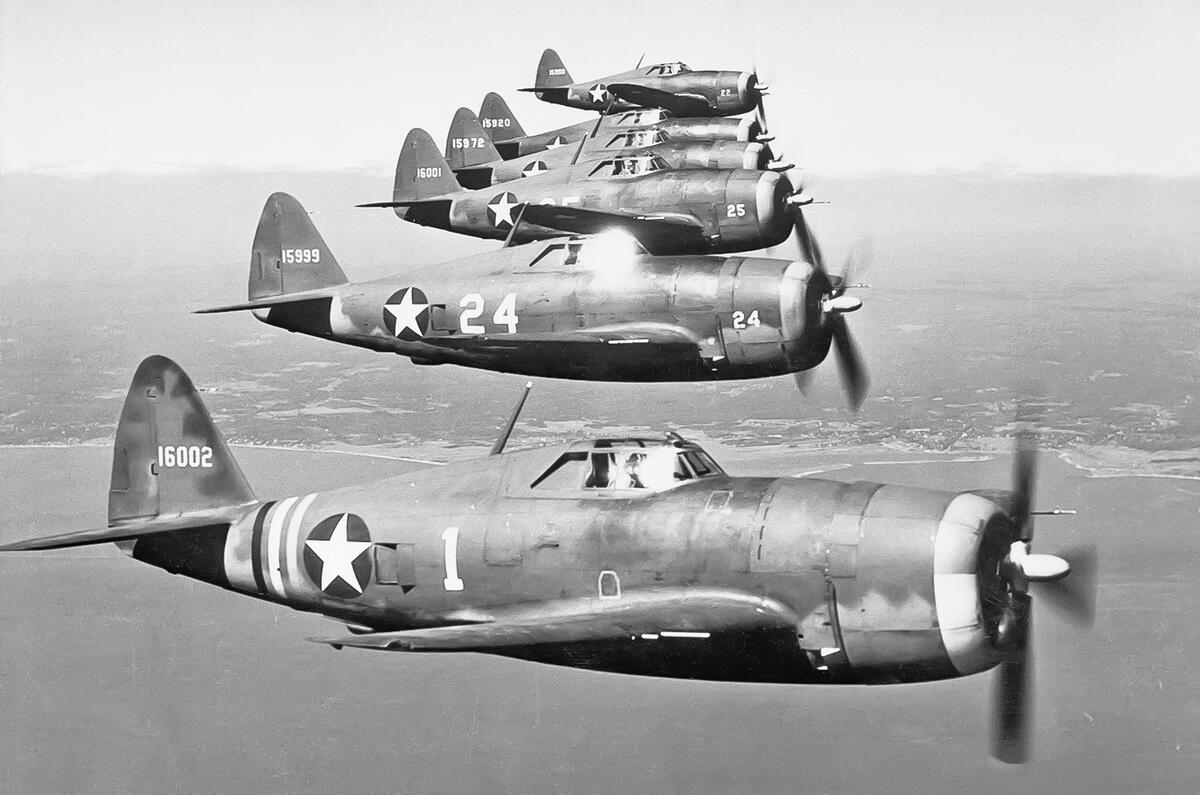
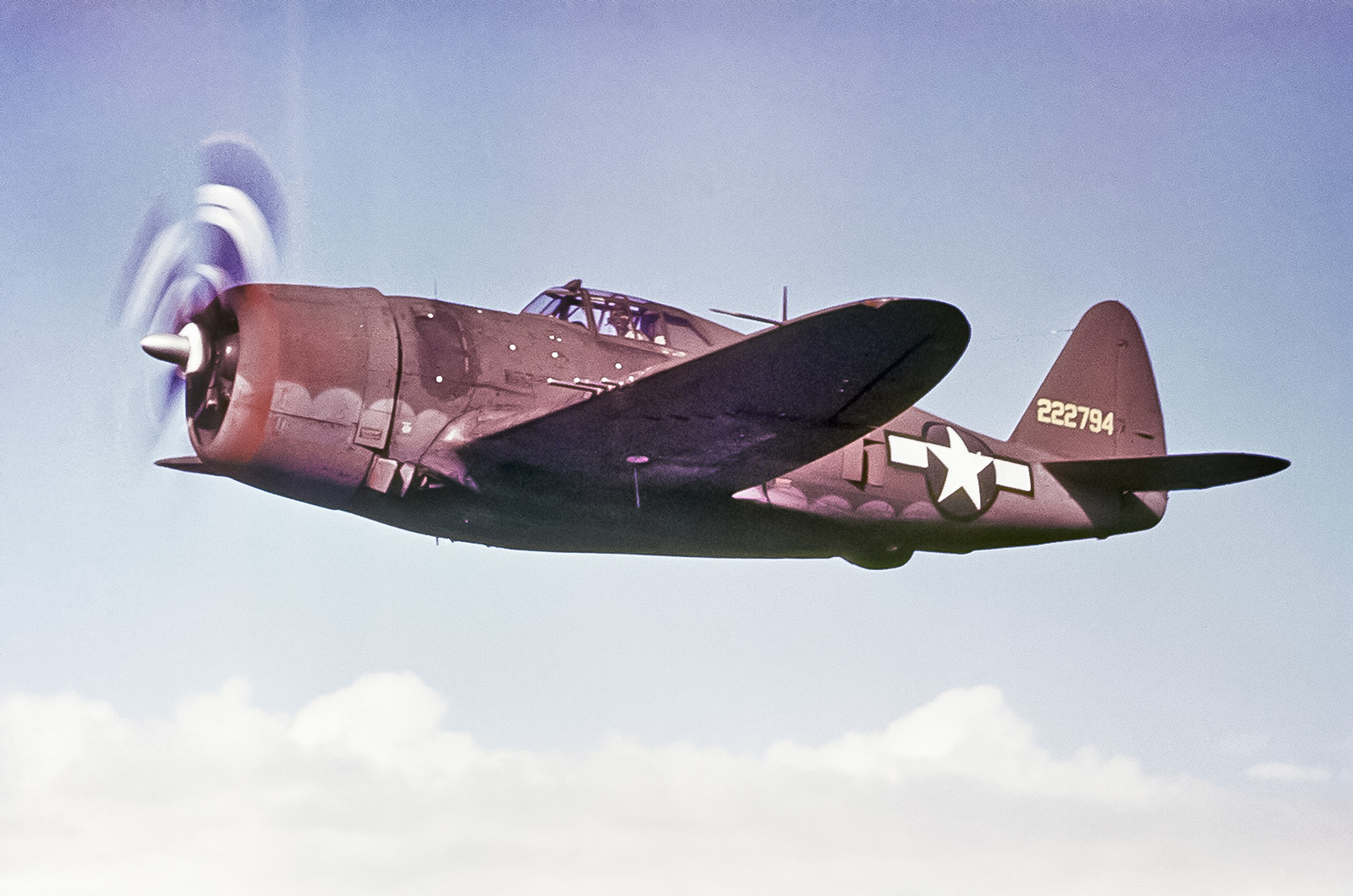
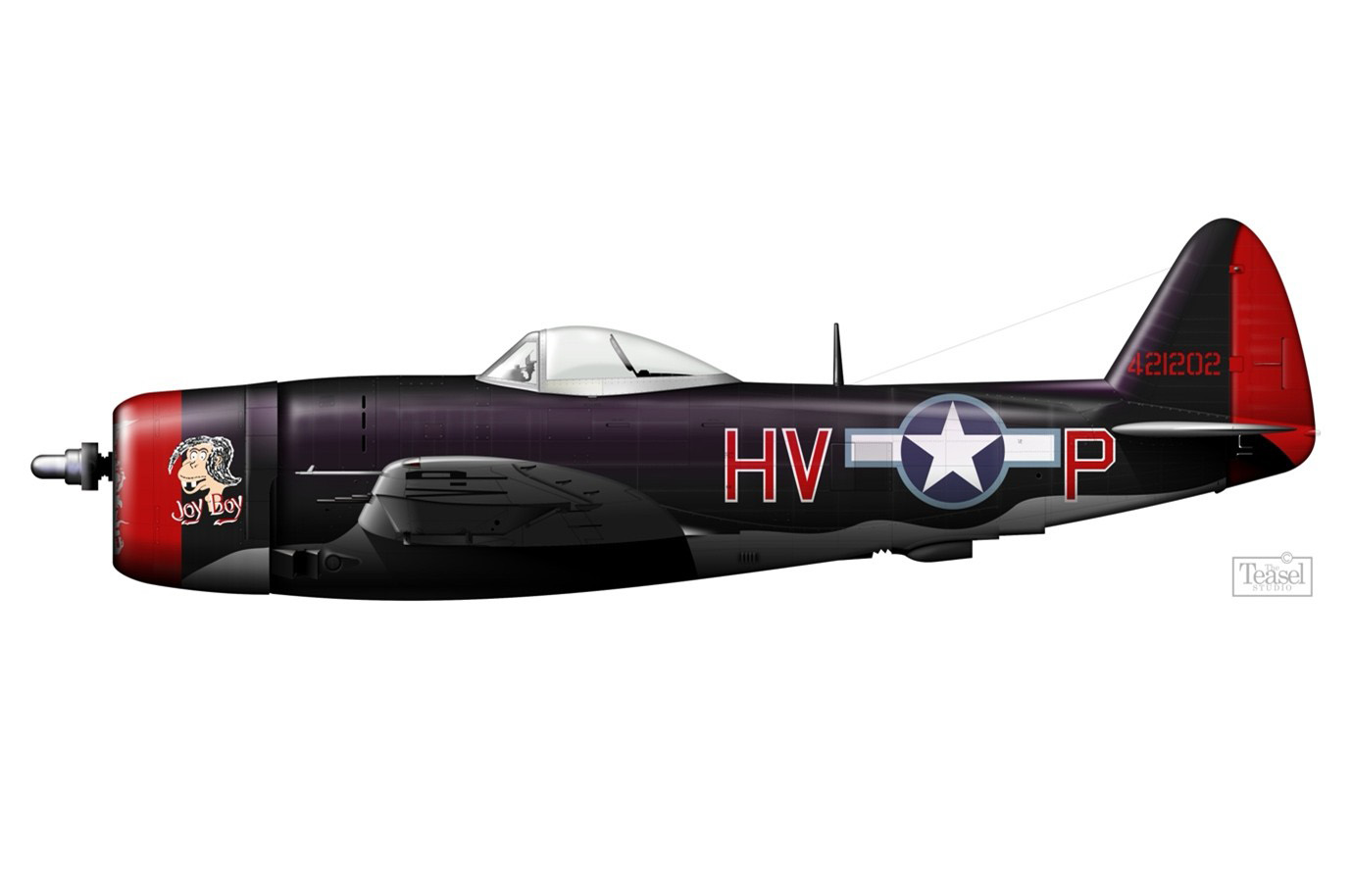
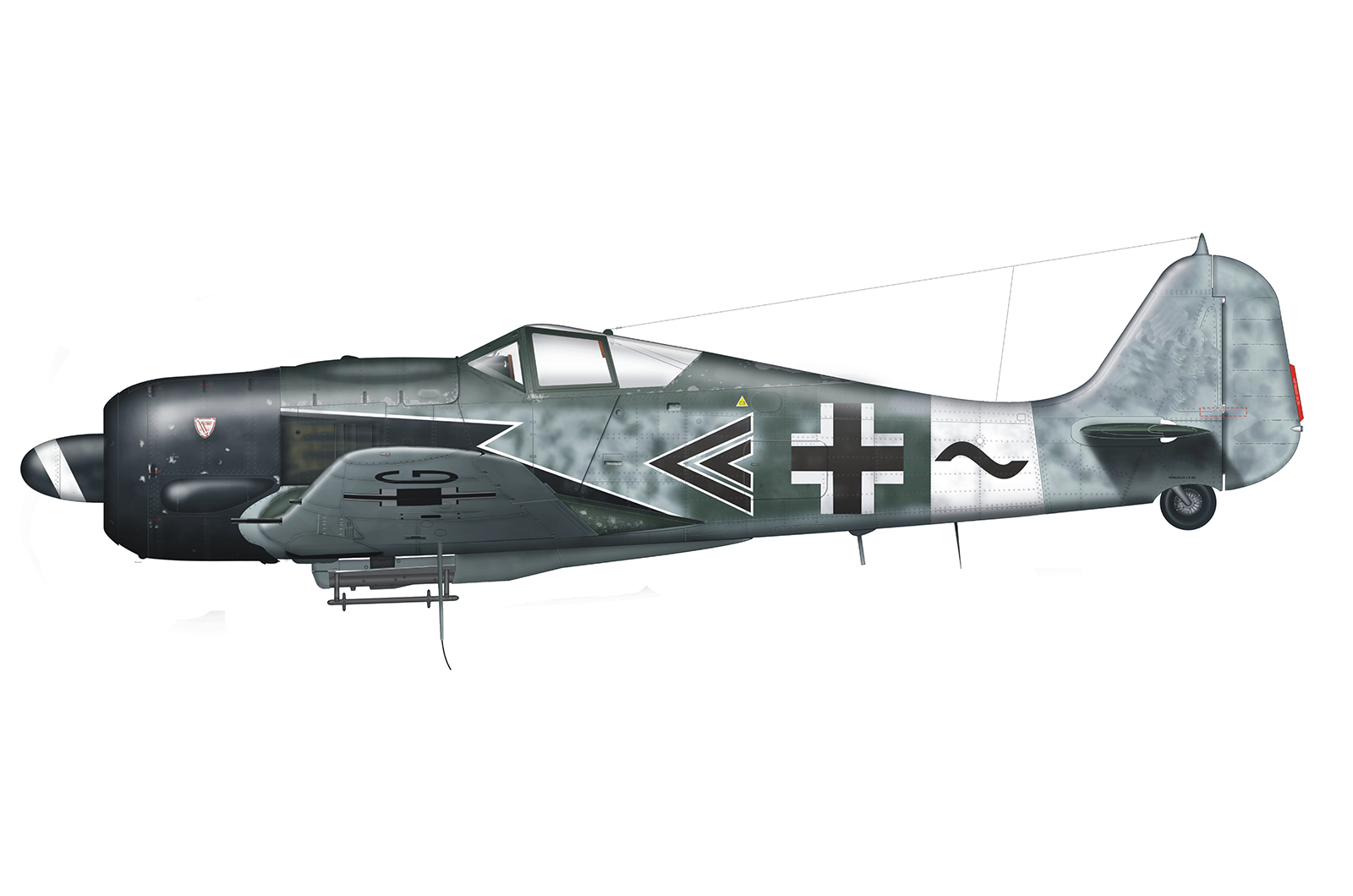
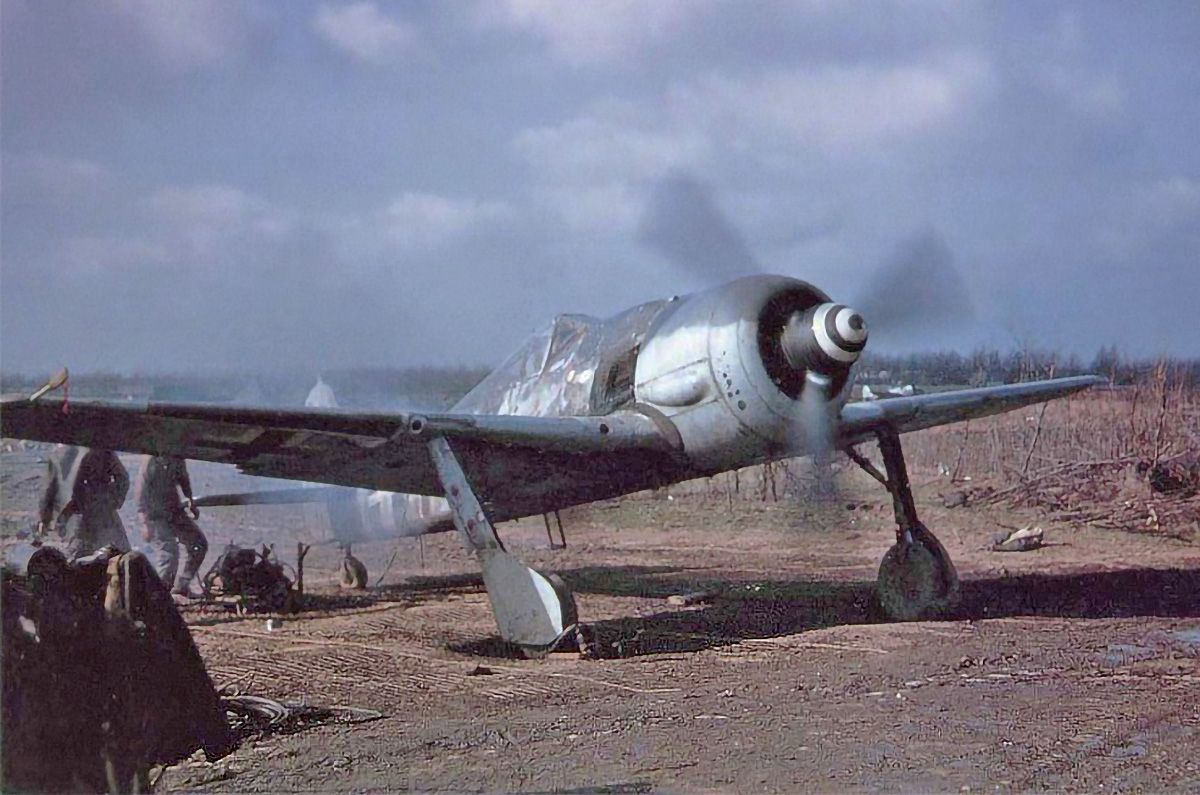
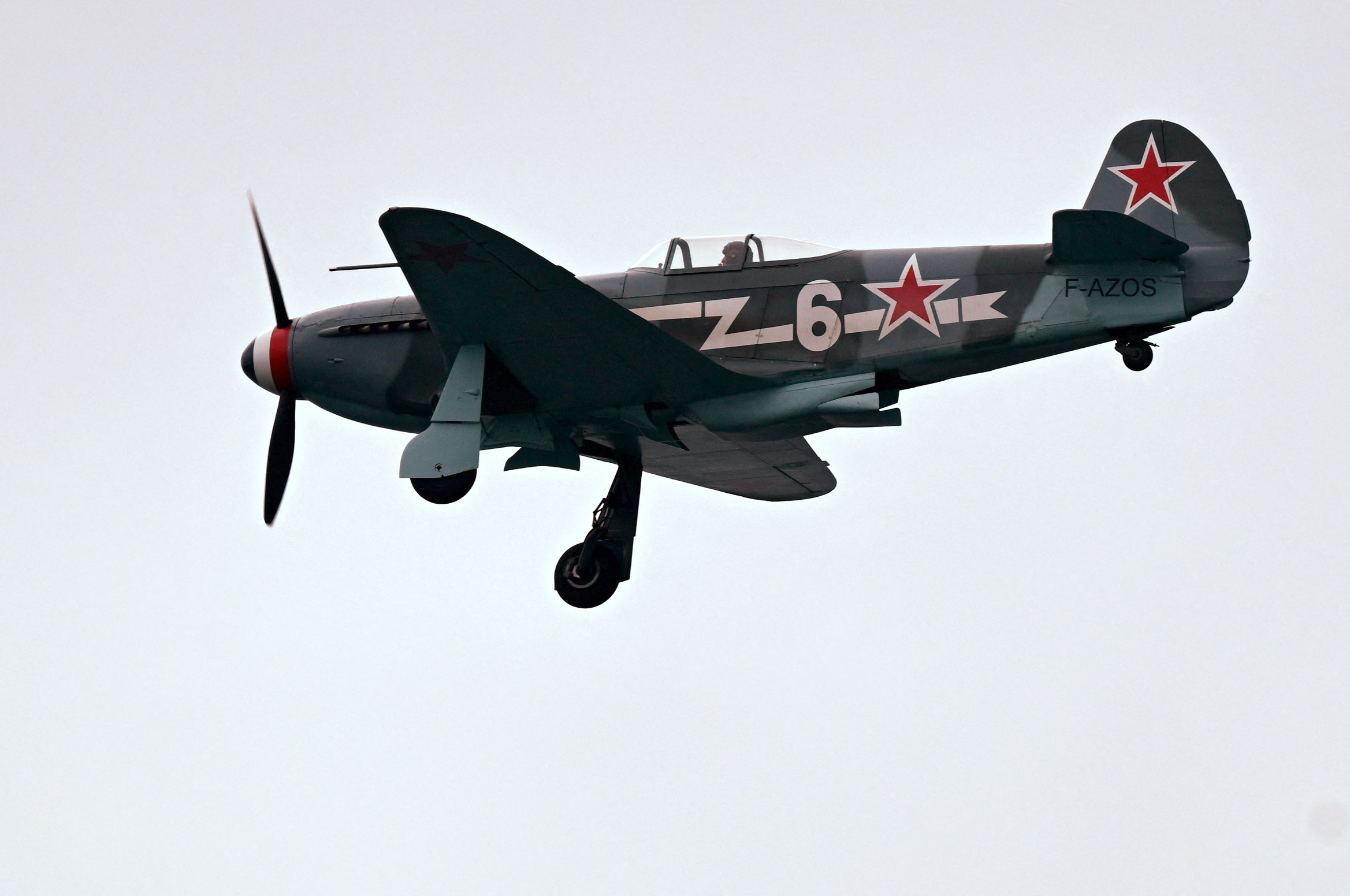
At the extremes were aircraft like the massive P-47 Thunderbolt (pictured), an almost pure energy fighter built to strike and disengage at will, and the tiny Yak-3, a near-perfect angle fighter whose light structure and explosive agility made it formidable in a turning fight. A few designs, notably the Focke-Wulf Fw 190, blurred the line—combining exceptional roll rate and acceleration with enough turning ability to threaten dedicated angle fighters.
There was a great deal of low-level air combat, from the Eastern Front’s sprawling plains to the chaotic skies over Western Europe. This list of the twelve best low-altitude fighters celebrates aircraft that excelled in these frenetic, dangerous conditions—machines that could accelerate quickly, turn hard without bleeding energy, and deliver decisive firepower where reaction time was measured in fractions of seconds. Each entry proved itself formidable in the most demanding theatres of war, and we will judge them on their potency in the air-to-air domain.
12: North American P-51 Mustang
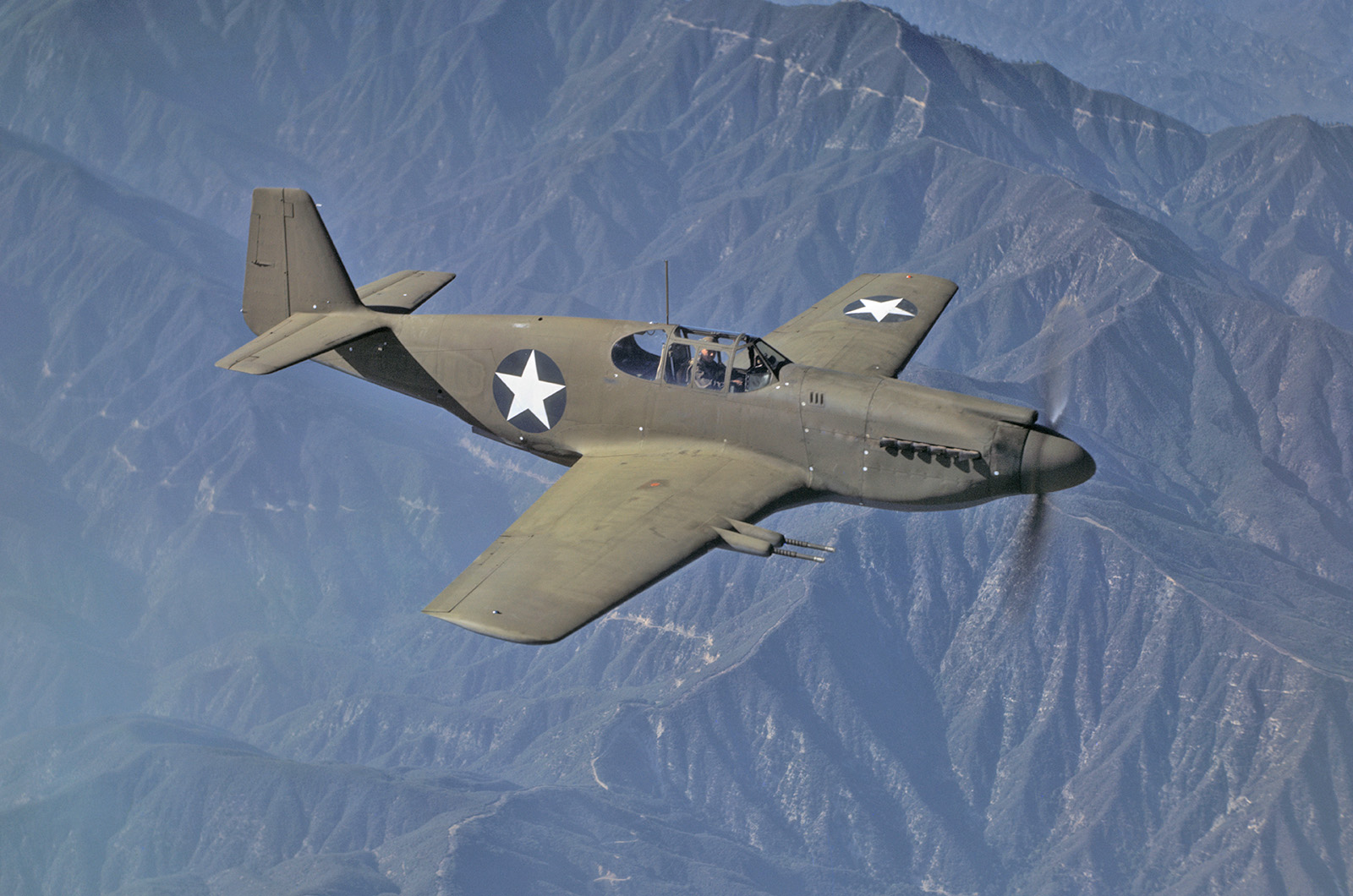
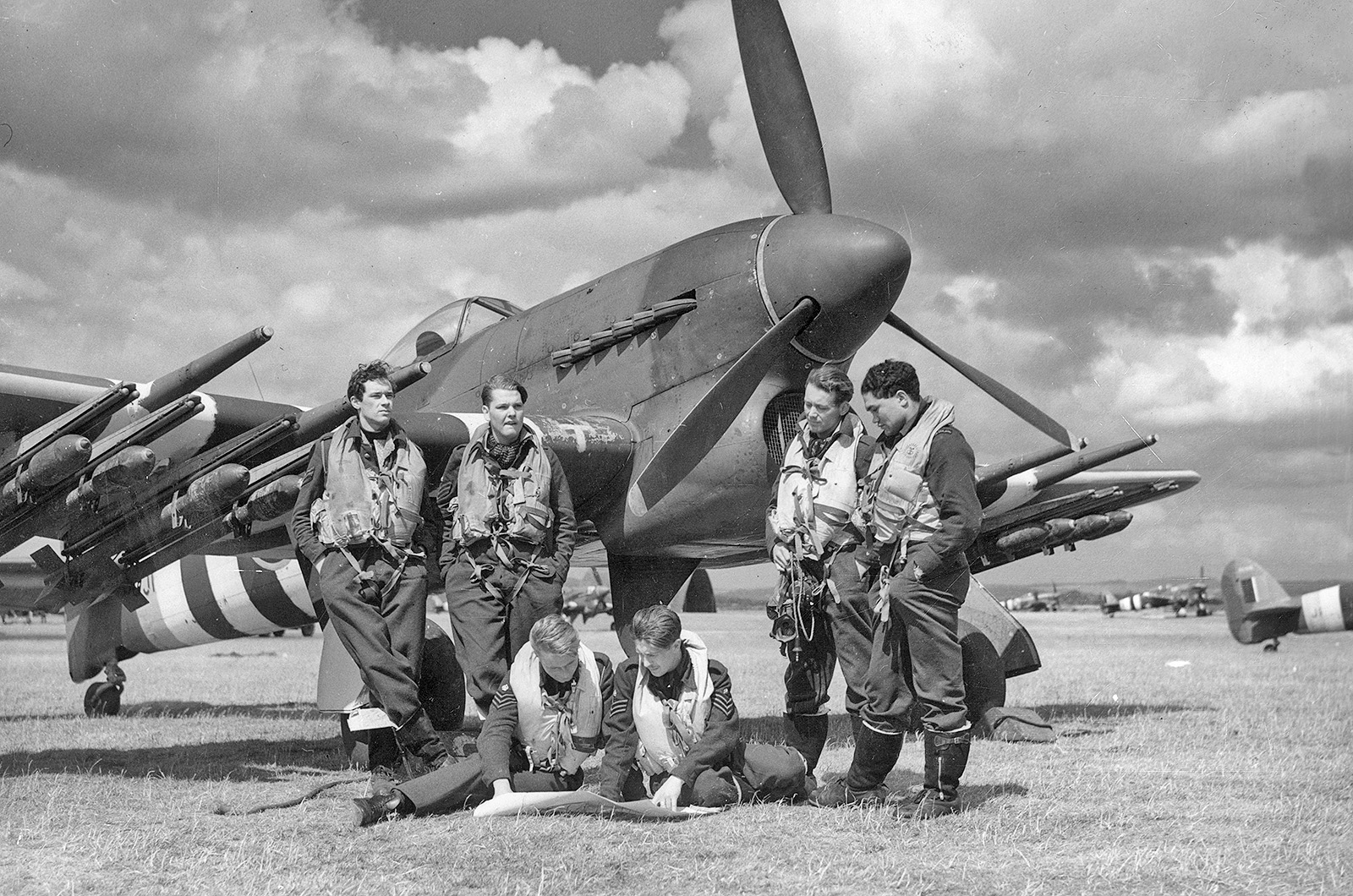
The Mustang Mk I entered RAF service in early 1942, over a year before the USAAF flew the type in combat. While the P-51 is famed as a high-altitude escort, the early, often derided Allison-engined variants were no slouches in low-level air combat. Compact, fast, and agile, they could reach 377 mph (607 km/h) at an altitude of 1000 ft (305 m). Lightweight and effective throttle response supported rapid, aggressive manoeuvres of these V-1710 series-powered fighters at treetop level.
The Allison Mustangs typically carried four, and in some versions six, .50-calibre Browning machine guns (a relatively small number of RAF Mustang IAs were even fitted with four 20-mm cannons). Although gun spacing was wider than on later variants, which is not ideal for the short distances typical of low-level engagements, their armament was deemed effective.
12: North American P-51 Mustang
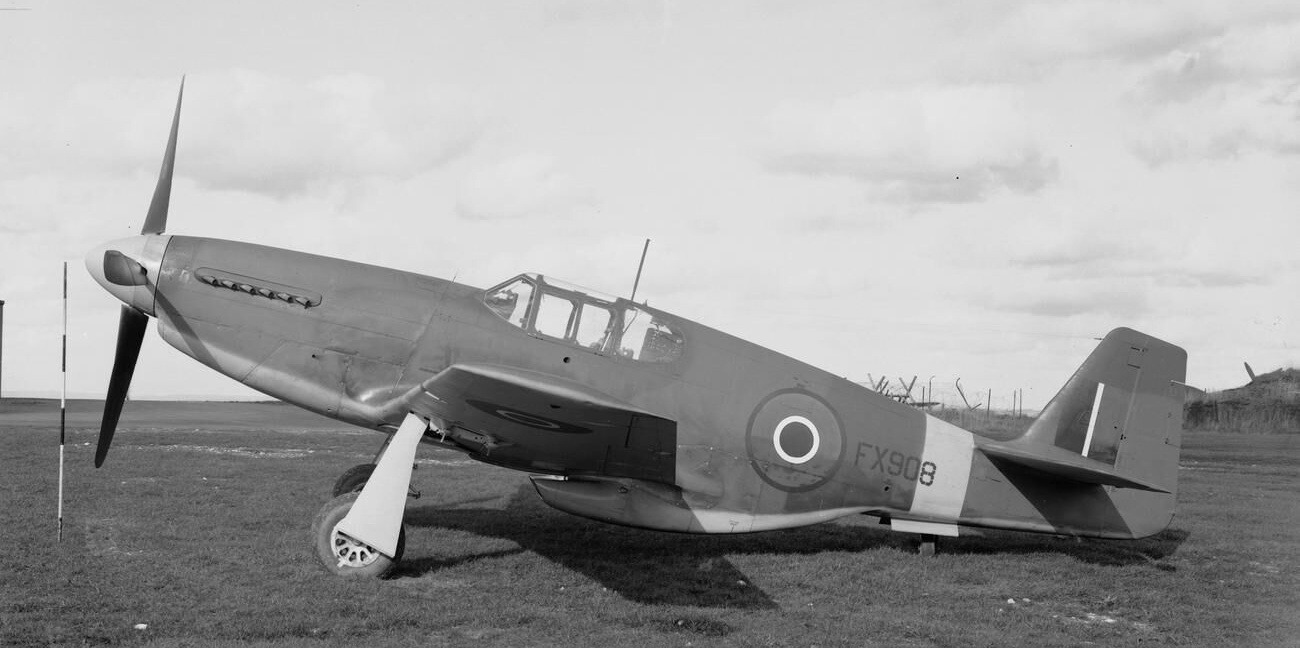
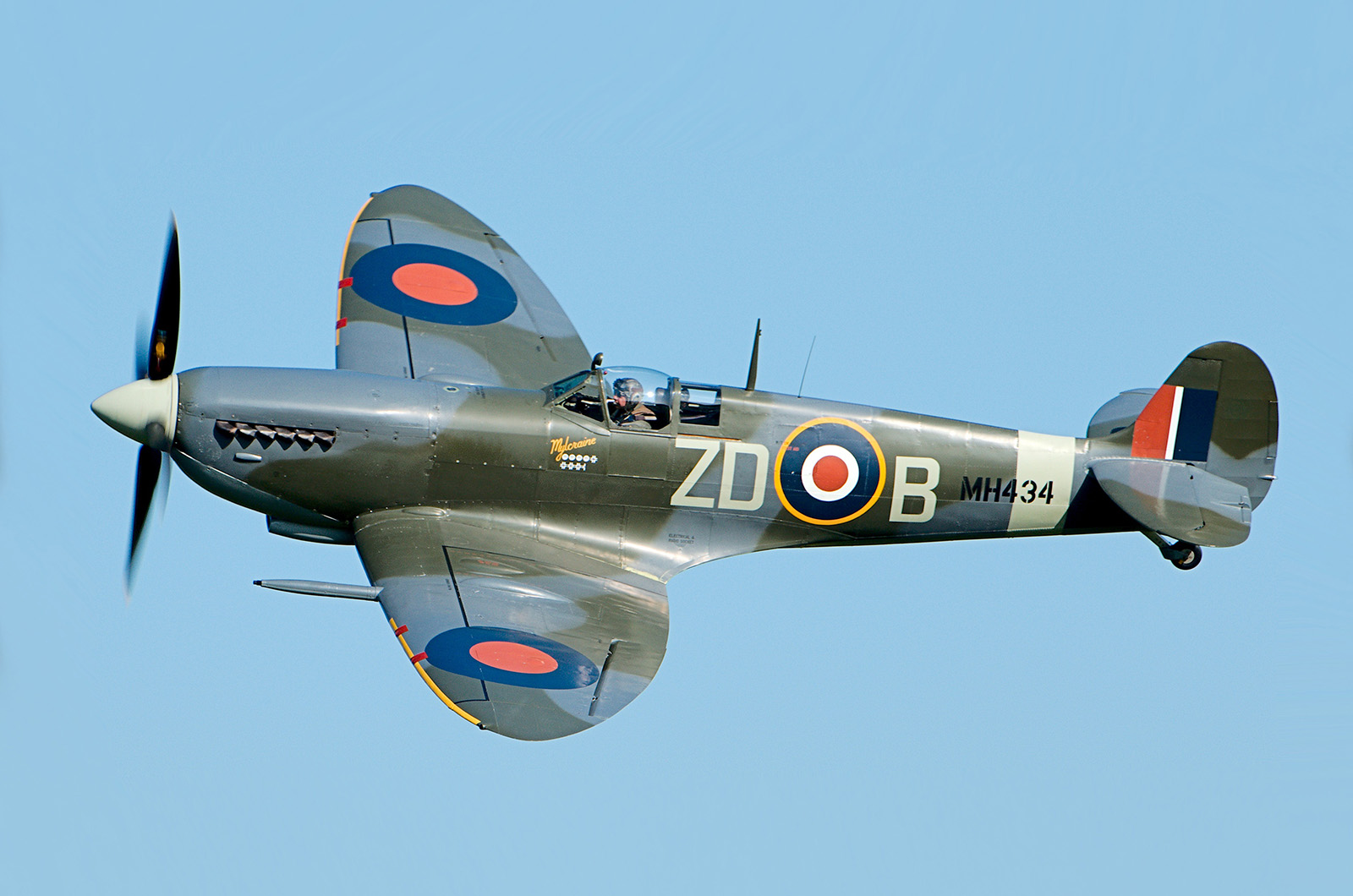
In tests, the British were particularly impressed by the Mustang’s roll rate, which exceeded any modern fighter they had tested, as well as its range—around twice that of the Spitfire Mk V—and high diving speed. The rapid roll was especially valuable, as the fast-rolling Fw 190 had become a serious threat by late 1941. Although primarily tasked with reconnaissance and ground-attack missions, RAF Mustangs intercepted low-flying fighters and escorted ground-attack formations. Across all variants, RAF Mustangs scored a total of 185 aerial victories.
Later Merlin-engined P-51B/C/D variants shifted the Mustang’s emphasis towards high-altitude escort. Additional fuel, armament, and equipment increased weight and wing loading, slightly degrading low-level handling. Merlin-powered Mustangs could inadvertently snap roll if turned too hard, which could overstress the airframe. While still fast and formidable 'on the deck', they were less optimised for treetop combat. However, the Merlin engine’s improved low- and medium-altitude performance, combined with the P-51D’s bubble canopy, offered pilots superior acceleration, energy retention, and all-around visibility in low-level combat.




Add your comment