News that the British government had agreed to adopt European plans to fit speed-limiting devices to cars from 2022 is bound to depress anyone who loves driving, given that our enjoyment is largely based on control of our vehicles.
However, those who don’t feel as we do about driving are likely to anticipate what they will see as knee-jerk criticism and dismiss it.
But there are far bigger and better grounds for criticising the speed governor idea than a mere reduction in driving pleasure.
The wholesale reliance on electronics to control a vehicle’s maximum speed, while relying on a human driver for all the other functions – steering, slowing, gearchanging, overtaking, braking (as opposed to pre-collision braking) and sudden reactions such as obstacle avoidance – has very worrying aspects.
Rather than helping to reduce Europe’s 25,000 road deaths each year, it’s quite likely that this system will simply create a whole new variety of accidents. Here are some of the concerns:
• Inattention: Anyone who drives long distances in tightly speed-limited conditions knows about the problem of inattention and its contribution to a driver falling asleep at the wheel. It happens enough on our motorways already, and in wide-open Australia and the US it is a constant problem.
• Poor mapping: Many of our cars already provide guidance to ruling speed limits, although they don’t yet actually cut our cars’ speeds. Very often these readouts are wrong. Who will map every metre of every road correctly, and update it? Who will make the same limits apply to every car, when limits change all the time? Stand by for unexpected rear-end collisions, or people leaving the road, plus a sharp increase in queues and frustrated drivers.
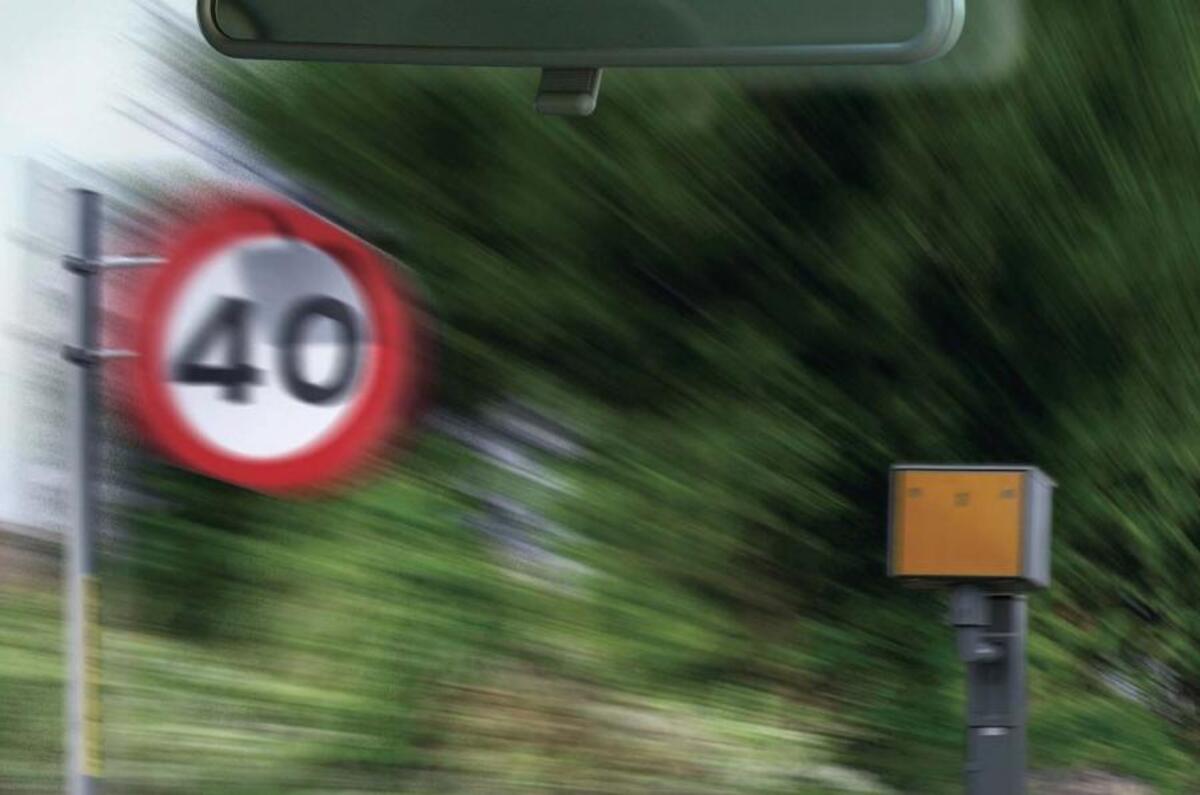
• Variance: Not everyone’s 40mph or 60mph is the same as that of the car driving behind or ahead. In the miles-long convoys that are sure to be created by this – a source of aggravation on their own – frustration is an absolute certainty. And whatever you say about frustration being a mere human frailty, it has huge potential to create head-on collisions as drivers who “can’t take it any more” take chances to get past.
• The ability to drive through the system: It’s said the authorities plan to ‘sell’ this new system to us motorists by making it possible for us to override by pressing harder on the loud pedal. That means that while many of the country’s drivers accept a 50mph limit, many more will learn exactly where and when to go for the override. Result? Further frustration.
• The role of older cars: There are between 25 and 30 million cars on our roads, none fitted with these new devices. Chuck in a few hundred thousand vans and trucks for good measure. At two million new car sales a year, it’ll take 20 years for the car parc to be replaced. For the first decade of the new regime, unrestricted cars will outweigh those with speed limiters. It’s anyone’s guess how this will play out in the traffic, but the presumption must be that it won’t be pretty. As far as the driver of a 2020 Ford Focus is concerned, the driver of the 2023 model will be making a lot of unwarranted and unpredictable speed reductions. More rear-end collisions beckon.

The child-like excitement of the road safety lobby, who speak as if this nonsense were a simple issue whose benefits will be delivered from a particular day in 2022, exposes their extreme naivety. So does the ridiculous assertion from EU commissioner Elzbieta Bienkowska that the package of safety measures she plans “can have the same kind of impact as when seatbelts were first introduced”.
The wonderful thing about seatbelts (and airbags, and electronic stability control) was that they made a car comprehensively safer whatever you did with it. Under the controlled speed limit system, it will be as easy as ever for cars to collide at intersections, drive off roads and rear-end one another because of driver inattention, some of it driven by the new frustration and boredom of drivers. Ironically, it will still be possible for drivers so minded to wilfully exceed speed limits by as much as ever.
Introducing guaranteed generators of driver fatigue and driver frustration, while removing an important avenue of driver discretion, is emphatically not the way to go. It might even make things worse.
What is needed is clever thinking and copious research, by people with a deep understanding of cars and their drivers. This group does not include a bunch of politically motivated types like Ms Bienkowska and the road safety lobby. They cannot understand the implications of the system they’re trying to create, and it seems evident that they don’t even want to find out.
Read more:
Speed limiters, driver monitors to become mandatory in EU
Zero-tolerance policy for speeding under official review

Join the debate
Add your comment
Hmmm...
This is all part of a long campaign to driverless vehicles.
I personally think that either a car should drive or we should. There should be no in-between state. The slow increase of 'driver-aids' and smart motorways does cause people to switch off. Down the M1 or M6 now, it's both extremely tedious and also quite stressful as the traffic is no longer able to flow at a natural rate. People are confused as they are unsure if (when no lower limit is in place) whether or not the mass of cameras will get them. So they stick to 70 and do not change lanes. People creep past each other on all sides and lorries harrass people inches from their bumpers should they obey speeds below that of the lorry limiters. Then there are those weaving to get through the mess. It's awful even when the traffic is light.
All this will just encourage people to switch-on automatic systems and pay no attention to what is around them. Insurance companies will 'reward' use of such systems whilst penalising manual control. Anyone exercising manua control to try and avoid a situation will end up getting blamed if they don't avoid it as the manual over-ride will get the blame. Even if it was the auto-pilots that cause the issue because they had switched off, and weren't aware of what was going on until it was too late and then take over-corrective steering actions, as steering is the only thing not currently monitored...
It's slowly destroying the very thing the people love the car for. Freedom of movement. Instead you'll just hire a pod for any journey and never have your own car. Private transport will be dead.
As the roads get busier, poor driving will be the biggest cause of accidents as it increases frustration of following drivers, who then take greater risks to get past. If you want to reduce accidents then increase driving standards. If you can't be bothered to do that, then wait until you can do fully driverless cars, and make damn sure they driver perfectly according to the law and highway code.
Hmmm...
This is all part of a long campaign to driverless vehicles.
I personally think that either a car should drive or we should. There should be no in-between state. The slow increase of 'driver-aids' and smart motorways does cause people to switch off. Down the M1 or M6 now, it's both extremely tedious and also quite stressful as the traffic is no longer able to flow at a natural rate. People are confused as they are unsure if (when no lower limit is in place) whether or not the mass of cameras will get them. So they stick to 70 and do not change lanes. People creep past each other on all sides and lorries harrass people inches from their bumpers should they obey speeds below that of the lorry limiters. Then there are those weaving to get through the mess. It's awful even when the traffic is light.
All this will just encourage people to switch-on automatic systems and pay no attention to what is around them. Insurance companies will 'reward' use of such systems whilst penalising manual control. Anyone exercising manua control to try and avoid a situation will end up getting blamed if they don't avoid it as the manual over-ride will get the blame. Even if it was the auto-pilots that cause the issue because they had switched off, and weren't aware of what was going on until it was too late and then take over-corrective steering actions, as steering is the only thing not currently monitored...
It's slowly destroying the very thing the people love the car for. Freedom of movement. Instead you'll just hire a pod for any journey and never have your own car. Private transport will be dead.
As the roads get busier, poor driving will be the biggest cause of accidents as it increases frustration of following drivers, who then take greater risks to get past. If you want to reduce accidents then increase driving standards. If you can't be bothered to do that, then wait until you can do fully driverless cars, and make damn sure they driver perfectly according to the law and highway code.
220 killed. And 1493
Those numbers are from people exceeding the speed limit. Not necessarily driving aggressively or too quickly for the conditions, those factors are also covered by the study (of course there may be overlap).
Those numbers might well be higher as well. If there's a fatality due to vehicle speed on a single carriageway A-road it must be difficult to be sure the vehicle was doing 65mph as opposed to 60mph. The numbers are likely where it is clear after the fact that the vehicle was exceeding the speed limit.
Of course we should also focus on the other factors, but it's nonsense the present it as an either/or situation.
There's an easy technical fix to stop this factor, there's not easy technical fixes for the others, though I'm sure there will be in the future.
There's absolutely no evidence, and little logic, to the claim that this intervention will kill more people than it'll save.
Think about the 220 corpses that have died violently in 2017. Think of the shattered bones and ruptured organs. Think of the destroyed families, the grief of parents that have lost children and vice versa. Let me know if you still think your ability to drive criminally fast is more important than reducing that horrific impact, I'd be genuinely interested to hear your justification.