

With the United Nations Climate Change Conference (COP26) and electric vehicles dominating the news, many see synthetic fuels (e-fuels) as an alternative solution to reducing transport emissions.
Clearly, with ICE cars continuing to be driven beyond 2030 and indeed continuing to be sold up until that point, there needs to be a broader answer than simply a route-one electric fix. But are e-fuels really the solution?
In the latest Autocar Business webinar, we were joined by Paddy Lowe, an ex-F1 engineer and founder of Zero Petroleum; Christian Schultze, director of technology research at Mazda Europe; and Steve Sapsford, managing director of SCE, a consultancy firm specialising in sustainable fuels.
What exactly are e-fuels?
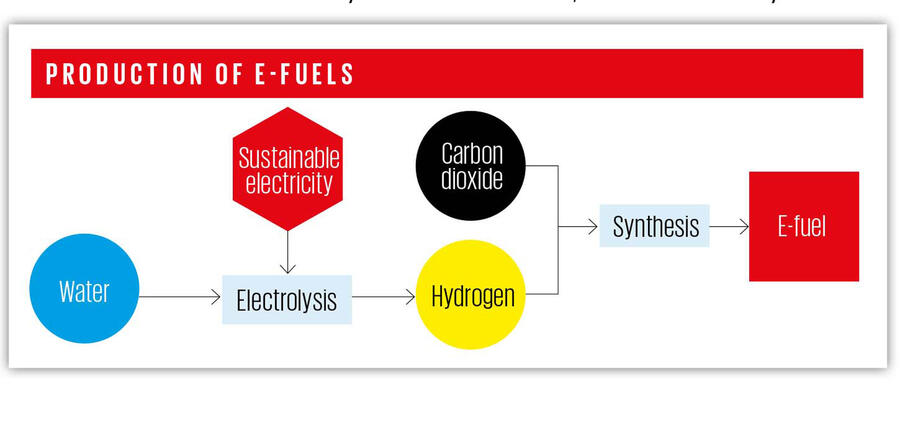
PL: “E-fuels have various names. We actually prefer to call them synthetic fuels at Zero Petroleum, because we thought it’s a more generic name. It’s more user-friendly to the public at large and ‘synthetic’ means made by man, rather than by another process. So in particular, what distinguishes e-fuels from other sources of liquid fuels – biofuels, for instance – is that synthetics are industrially made and they don’t require the use of agriculture. They gain their energy from a renewable source that’s industrial, rather than coming via the biology of a plant.”
SS: “I use ‘sustainable fuels’ to be the catch-all for everything. So I’ve got biofuels under there as well as synthetic fuels. E-fuels are a special version of synthetic fuels that use renewable electricity to generate the hydrogen.
What we need to think about is how effective each of those types can be as time moves on. Some of the synthetics and particularly e-fuels aren’t available in large quantities at the moment, whereas the biofuels are available in much more significant quantities. So I expect to see a shift in use from biofuels through to synthetic fuels over time.”
What does this mean for a major OEM like Mazda?
CS: “We have to find a solution to become climate-neutral, because this is also one of our commitments, by a way that’s compatible to the region. We see different approaches. In Europe, electrification seems to be the major way, but we believe it’s maybe more healthy and faster and safer to take a more technology-open approach. We call it a multi-solution approach to fit the best technology for the people in each region.
“E-fuels aren’t in competition with the electrification route. With having two pathways to follow, we believe we can assure better and faster to reach climate-neutrality.”