Currently reading: Exclusive: Rimac developing solid-state battery for Bugatti

New battery tech and lightweight, potent powertrains could transform EVs

Rimac Technology, the Croatian car maker’s stand-alone engineering division, will “build Rimac out from its position as a start-up” by revolutionising the EV world with solid-state batteries, more power-dense packs, high-performance powertrains and more, its chief operating officer, Nurdin Pitarevic, has told Autocar.

A company that was spawned from its Rimac namesake in 2022 following the deal with the Volkswagen Group to create Bugatti Rimac, Rimac Technology has been developing EV tech for the Croatian hypercar maker and third-party manufacturers.

This has ranged from small hybrid battery systems to full rolling chassis for clients that include everyone from large global manufacturers to low-volume firms. It also develops electronic systems, electric drive units and user-interface components.

Solid-state is on the way

In an exclusive Autocar interview, Pitarevic – Rimac Group CEO Mate Rimac’s second in command – explained that the company is already well advanced with a new range of solidstate batteries. It is working on them with cell maker ProLogium and composite materials experts at Mitsubishi and it aims to put them on the market late this decade.

Pitarevic said he expects testing of the batteries to begin very soon and his “wish would be” that they would have their first application (in what he terms mid-volume production) in a new Bugatti model, due in 2030.

He expects the cost of the new-tech batteries to reach parity with current NMC (standard cell) types by 2035, though he insists Rimac has no wish to make solid-state batteries in big enough volumes to power conventionally priced cars. Perhaps if a bigger OEM were interested in licensing their technology to make batteries for their own cars, they would “look at it”, he said.

A prototype of the solidstate battery has a capacity of 100kWh and is claimed to be between 20% and 30% more energy dense than a conventional battery for the dimensions. It’s also around 30kg lighter, mainly because of weight saved by the light but ultrastiff composite housing contributed by Mitsubishi. The pack can also accept charge much more quickly and in a safer manner.

Although Rimac’s reputation rises ever higher as it develops as a major supplier of premium high-tech components, the company is unlikely to make cars beyond the slow-selling Nevera, according to Pitarevic.

Rimac’s focus today, he said, is on thinking like the end user of an electrifi ed car when it designs EV components. It targets three things: maximising range, improving safety (especially fire safety) and slashing charging times. All three are properties of the solid-state batteries it is rushing to develop.

Back to top

E-axles for EVs and hybrids

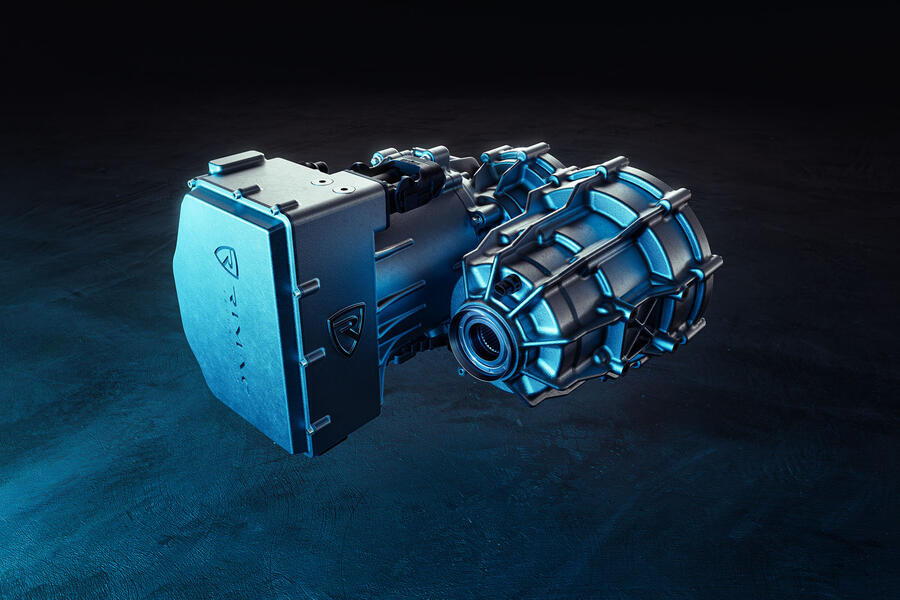
Rimac e-motor

The new e-axles, which combine electric drive motors, gearboxes and control electronics in a variety of light and compact packages, can put out between 200bhp and 470bhp in layouts to suit front-wheel drive, rear-wheel drive and four-wheel drive. Pitarevic also stresses the units’ suitability to both hybrids and pure EVs, and cites BMW, Porsche and Saudi Arabian EV start-up CEER as customers so far – as well as many others that remain anonymous.

This all comes as Rimac prepares its new €300 million (£261m) manufacturing campus, comprising 95,000m2 of production space in Zagreb, Croatia, to create tens of thousands of these tech components every month.

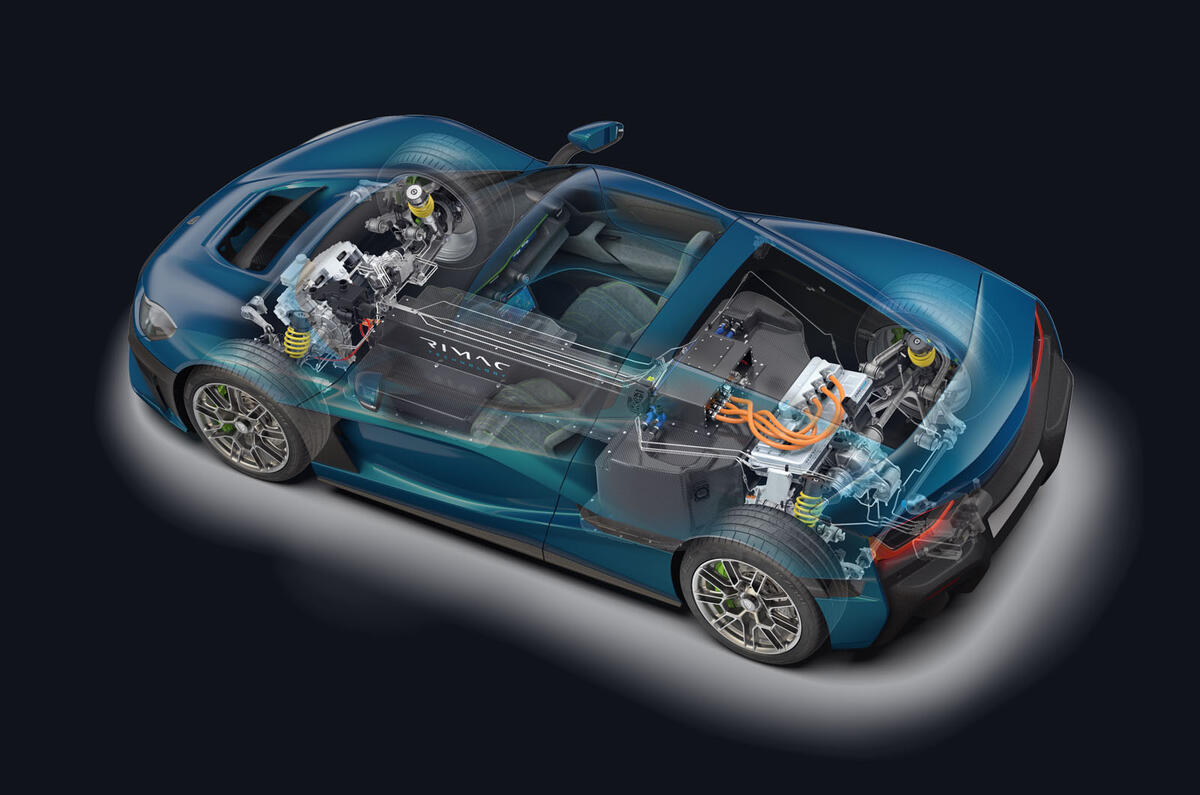
Explaining how quickly e-axle tech is changing, Pitarevic pointed to a number of examples. One was an assembly more or less equal in power and torque to the 1288bhp Nevera’s rear-drive motor. Being built for a powerful new SUV from CEER, this unit weighs just 132kg, instead of the Nevera’s 198kg.

The other was a much smaller package, possibly targeted at a performance coupé or perhaps even a very potent hot hatch, with a suitcase-sized 500bhp power pack weighing just 48kg.

Importance of "unique Rimac culture"

Pitarevic was poached last year by Mate Rimac from a top job in a big-scale manufacturing group, where he was managing 10,000 people in 22 factories around the world.

Asked what drew Bosnian-born, Germaneducated Pitarevic, at 36, to join what is a much smaller Croatian company still in its development phase, he said: “I’d heard about the unique Rimac culture of work and progress and that was very attractive and enough to get me started. Then when I joined, I found three more things I really liked.

“First, no one sends emails to get decisions. They communicate much faster than that. There’s a reluctance to waste time.

“Second, there’s a climate that always encourages innovation. If someone has a good idea, no one – last of all Mate Rimac – is going to stop them trying it.

Back to top

“Third and best of all, there’s no existing old or conventional technology that has to be restructured before we can change to new stuff. We have the best systems, right from the start. Throw in the fact that Croatia, even though it has a very well-educated population, is still 20% to 30% lower on cost than most other European countries and you can see why we’re so proud of our ability to compete with far bigger tech companies that have already been 60 or 70 years in business.”

What of the future? Pitarevic said Rimac Technology will concentrate on being a supplier of highly innovative premium components, not a volume builder: “We like the premium market – the niche market, if you like – where innovation is at least as important to a car’s appeal as performance and power. This is where we believe we can succeed.”

Join our WhatsApp community and be the first to read about the latest news and reviews wowing the car world. Our community is the best, easiest and most direct place to tap into the minds of Autocar, and if you join you’ll also be treated to unique WhatsApp content. You can leave at any time after joining - check our full privacy policy here.

Steve Cropley

Steve Cropley Autocar
Title: Editor-in-chief

Steve Cropley is the oldest of Autocar’s editorial team, or the most experienced if you want to be polite about it. He joined over 30 years ago, and has driven many cars and interviewed many people in half a century in the business. 

Cropley, who regards himself as the magazine’s “long stop”, has seen many changes since Autocar was a print-only affair, but claims that in such a fast moving environment he has little appetite for looking back. 

He has been surprised and delighted by the generous reception afforded the My Week In Cars podcast he makes with long suffering colleague Matt Prior, and calls it the most enjoyable part of his working week.

Join the debate

Comments
2
Add a comment…
xxxx 9 December 2025

Top tip, tone down the boasting of saving 30kg with a 100kwh solid state battery and even that's down to housing. It's not that'll bigger a deal on a 600kg battery.

Peter Cavellini 9 December 2025

So, when's the first 300mph road car going to appear?